

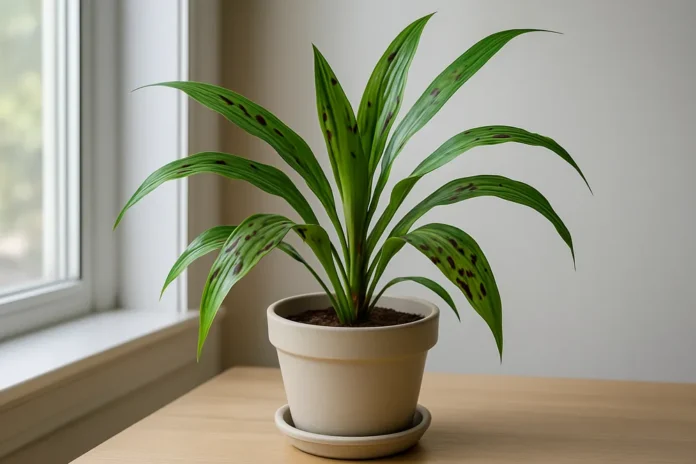
Dracaena leaves usually develop black spots from overwatering, fungal or bacterial leaf spot, cold damage, or buildup from poor-quality water. The exact cause depends on whether the spots look wet, dry, spreading, or concentrated on older leaves.
Seeing dracaena black spots show up almost overnight can be frustrating, especially on a plant that usually looks clean and architectural. In my experience, black spotting on dracaena is rarely random. It usually traces back to moisture sitting where it should not, roots staying too wet, leaves getting chilled, or a disease taking advantage of stress.
The good news is that a dracaena with dark spots is often still very fixable if you catch the pattern early. The key is to look at how the spots appear, where they start, and whether the plant is also showing yellowing, mushy stems, browning tips, or drooping. Those extra clues usually narrow the problem down fast.
Below, I will walk through the most common reasons a dracaena plant gets black spots, what each one looks like, and how I would handle it at home before the damage spreads.
What Black Spots on Dracaena Usually Mean
Black spots are a symptom, not a diagnosis by themselves. On dracaena, they most often come from one of four categories: too much moisture around the roots, leaf spot disease, temperature injury, or chemical stress from salts and minerals. Sometimes pests contribute indirectly by weakening leaves, but they are not the most common reason for black spotting on this plant.
The appearance matters. Small round spots with yellow halos often suggest a disease issue. Large dark mushy patches can point to cold damage or rot. Dry dark flecks near browned margins may be tied to water quality or fertilizer buildup. If the spots are spreading quickly from leaf to leaf, I start thinking about excess moisture and poor air flow before anything else.
- Spots that look wet, soft, or collapsing usually mean tissue damage from too much moisture or cold.
- Spots that are circular and distinct often suggest fungal or bacterial leaf spot.
- Spots mostly on older leaves can happen when roots are stressed or mineral buildup has been going on for a while.
- Spots appearing after a chilly night, draft, or AC blast often point to temperature shock.
When I diagnose dracaena, I do not judge the plant by the worst-looking leaf alone. I compare several leaves from top to bottom. If the newest growth is clean but older leaves are spotting, I suspect root or water-quality stress before I assume a contagious disease.
Overwatering and Soggy Soil Are Common Triggers
If I had to bet on one cause first, I would start with overwatering. Dracaena likes its soil to dry somewhat between waterings. When the potting mix stays wet for too long, roots struggle to breathe, root tissue begins to break down, and the foliage often responds with yellowing, dark patches, and eventually blackened areas.
This problem is even more likely if the plant sits in a decorative cachepot with water trapped at the bottom, if the container has no drainage hole, or if the soil is heavy and compacted. In those conditions, the roots stay damp long after the top inch looks dry. The plant may appear thirsty and droopy, which leads many gardeners to water again and make the problem worse.
Signs the Spots Are Tied to Overwatering
- Lower leaves turn yellow before developing dark or black areas
- The pot feels heavy for days after watering
- Soil smells sour, swampy, or stale
- Leaf spots are accompanied by soft stems or limp foliage
- Roots look brown, mushy, or slough off their outer layer
If overwatering is the issue, the fix is not just watering less often. You also need to make sure the plant is in a pot with drainage and a loose indoor plant mix that does not stay waterlogged. Remove badly affected leaves, let the soil dry down appropriately, and inspect the roots if the plant is declining fast. Trim away rotted roots and repot if necessary.
I like to judge dracaena watering by pot weight, not by calendar. A plant in bright summer light may need water much sooner than one in winter, and fixed schedules are one of the easiest ways to create chronic soggy soil.
Fungal and Bacterial Leaf Spot Can Cause True Black Lesions
Dracaena can develop fungal or bacterial leaf spot, especially when leaves stay wet, air circulation is poor, and the plant is already under stress. These diseases usually start as small dark brown or black dots, then enlarge into more obvious lesions. Some spots have a yellow halo around them, while others merge into irregular blotches.
Bacterial spotting tends to look darker and wetter, sometimes almost greasy at first. Fungal spots are often more defined and dry as they age. In both cases, overhead watering, misting, and crowded indoor conditions can help the problem spread.
What Disease-related Spots Often Look Like
- Small circular or oval spots that expand over time
- Dark centers with yellow margins
- Multiple spots scattered across several leaves
- Spots appearing where leaves stayed wet for long periods
- Damage spreading from one leaf to nearby foliage
Start by isolating the plant from others, especially if you keep a collection of houseplants close together. Remove the most infected leaves with clean scissors and avoid splashing water onto the foliage. Water the soil directly, improve air movement, and give the plant brighter indirect light if possible so leaves dry faster after routine care.
For mild cases, sanitation and drier leaf surfaces are often enough to stop new spotting. If the problem keeps advancing, a houseplant-safe copper-based or broad-spectrum fungicidal product may help with some fungal and bacterial issues, though bacterial infections are harder to fully reverse. The goal is often to stop new damage rather than restore existing spots.
Cold Damage Can Turn Dracaena Tissue Black
Dracaena is a tropical plant, and cold exposure can injure leaf tissue very quickly. If your plant sits near a drafty window, uninsulated door, air conditioner, or heater vent, black spots may actually be areas of tissue collapse rather than a disease. I see this most often after a cold night near glass or after bringing plants home in winter without protection.
Cold injury often creates irregular black or very dark brown patches instead of neat circular spots. The damaged area may feel limp at first, then dry out later. New growth can also distort if the growing tip was chilled.
Clues That Temperature Stress Is the Culprit
- Spots appear suddenly after a cold snap or transport
- Damage is worse on leaves touching a window or near vents
- The black areas are broad, irregular, or water-soaked at first
- Only the exposed side of the plant is affected
Move the plant to a stable location with temperatures generally above 60 degrees Fahrenheit and away from direct blasts of hot or cold air. The damaged tissue will not recover, so trim it off if it bothers you visually. What matters most is whether fresh growth comes in healthy afterward.
Water Quality and Salt Buildup Can Darken Dracaena Leaves
Dracaena is well known for reacting badly to fluoride, chlorine, and salt buildup. More often this shows up as brown tips and margins, but in some plants the damaged tissue deepens into very dark brown or black flecking, especially along leaf edges or at the tips. Repeated overfertilizing can make the same pattern worse.
If you use softened water, that is another possible issue. Water softeners often add sodium, and dracaena is not a fan. Over time, mineral stress damages the leaf tissue and makes the plant more vulnerable to other problems too.
How Mineral Stress Usually Shows Up
- Leaf tips brown first, then darken further
- Margins look scorched or peppered with dark dry spots
- A white crust appears on the soil surface or pot rim
- The plant has been fertilized often or watered with tap water high in minerals
Switching to filtered water, distilled water, or rainwater often helps sensitive dracaena recover over time. Flush the soil thoroughly once in a while to remove accumulated salts, and reduce fertilizer to a light feeding during active growth only. Existing damage stays, but new leaves should look cleaner if water quality was the main trigger.
I pay close attention to where the blackening starts. If the damage begins at the tips and edges and creeps inward slowly, I think about water quality before disease. True leaf spot often appears in the middle of the blade, not just along the margins.
Pests and Secondary Stress Can Contribute
Pests are not the first suspect when dracaena gets black spots, but they can play a supporting role. Spider mites, thrips, and scale damage leaf tissue, leaving stippling, scarring, or weakened areas that later darken. Honeydew from some pests can also lead to sooty mold, which creates a black coating on the leaf surface rather than true spots inside the leaf.
Sooty mold wipes off because it is growing on sticky residue, while black spots caused by disease or tissue death are embedded in the leaf. That distinction matters. If the black area rubs away with a damp cloth, you are dealing with a surface issue, not internal spotting.
Check for These Pest Clues
- Fine webbing under leaves or near leaf axils
- Tiny moving specks or silvery scarring
- Sticky residue on leaves or nearby surfaces
- Raised bumps on stems or leaf undersides
- Black film that wipes off rather than staying in the tissue
If you find pests, wash the plant down gently, isolate it, and use insecticidal soap or horticultural oil according to label directions. Treating the pests will not erase old black marks, but it will prevent fresh damage and help the plant regain strength.
How to Tell Which Cause Is Most Likely
When several causes seem possible, work through the plant systematically. Look at the pattern of damage first, then the growing conditions. Indoor plant problems rarely come from one dramatic event alone. More often, a stressed dracaena gets hit by a second issue that leaves more obvious black spotting.
- Check whether the spots are dry, wet, raised, or wipeable.
- Notice whether the newest leaves are affected or only older ones.
- Feel the soil several inches down and check the pot for drainage.
- Think about any recent cold exposure, drafts, or transport stress.
- Review your water source and fertilizer habits over the past few months.
- Inspect leaf undersides and stems for pests or sticky residue.
If the soil is wet and the plant is yellowing, start with the roots. If the spots are neat circles with halos and foliage has been staying damp, think leaf spot disease. If the damage appeared suddenly after cold exposure, temperature injury is more likely. If blackened tips and edges build gradually, suspect mineral buildup or water quality.
What to Do Right Now to Stop More Black Spots
Once a dracaena leaf has turned black, that tissue will not heal. The aim is to stop new spots from forming and help the plant produce healthy new growth. I prefer a simple correction plan rather than changing everything at once, because too many changes can make diagnosis harder.
- Remove badly spotted leaves or trim out heavily damaged sections with sterilized scissors.
- Let the top part of the soil dry appropriately before watering again.
- Empty any saucer or outer pot so roots never sit in trapped water.
- Keep the plant warm and away from drafts, heaters, and AC vents.
- Water the soil directly instead of wetting the leaves.
- Use filtered, distilled, or rainwater if your tap water is harsh.
- Pause fertilizer until you see stable, healthy new growth.
If the plant smells sour, feels unstable in the pot, or continues yellowing despite drier care, unpot it and inspect the roots. That is usually the turning point between a mild issue and a more serious root problem that needs repotting.
Do not judge recovery by damaged leaves. I always watch the next one or two leaves that emerge after I adjust care. Clean new growth tells you the plant is improving, even if the older foliage still looks rough.
How to Prevent Black Spots From Coming Back
Prevention with dracaena is mostly about consistency. This plant likes bright indirect light, moderate watering, decent air circulation, and protection from temperature extremes. It does not need pampering, but it does punish neglect in very specific ways.
- Use a well-draining indoor potting mix and a pot with drainage holes.
- Water only when the upper portion of the soil has dried enough for your variety and pot size.
- Keep foliage dry and avoid routine misting if disease has been a problem.
- Place the plant away from cold windows and direct HVAC airflow.
- Use low-mineral water when possible, especially for sensitive varieties.
- Feed lightly during active growth instead of frequent heavy fertilizing.
- Inspect leaves regularly so early spotting never gets far ahead of you.
Dracaena often gives small warnings before serious black spotting appears. Brown tips, slight yellowing, and slower growth are all signs to tweak care before the plant crosses into visible tissue damage.
FAQ
Should I Cut Off Dracaena Leaves with Black Spots?
Yes, if the spots are extensive or actively spreading. Remove badly affected leaves with clean scissors so the plant can focus on healthy growth and so possible disease pressure is reduced.
Can Black Spots on Dracaena Go Away on Their Own?
No. Blackened tissue does not turn green again. What can improve is the plant's future growth once the underlying cause is corrected.
Are Black Spots on Dracaena Caused by Too Much Sun?
Direct harsh sun more often causes bleaching, tan scorch, or crispy brown patches than true black spotting. Black areas are more commonly linked to overwatering, disease, cold injury, or mineral stress.
Can I Use Tap Water on My Dracaena?
Sometimes, but dracaena can be sensitive to fluoride, chlorine, and dissolved salts. If you notice repeated tip burn or dark leaf margins, filtered, distilled, or rainwater is usually a better choice.
How Often Should I Water a Dracaena with Black Spots?
Do not follow a fixed weekly schedule. Water only after the soil has dried enough for the plant's conditions, because frequent watering is one of the biggest reasons black spotting starts.
Is Black Spot on Dracaena Contagious to Other Houseplants?
If the cause is fungal or bacterial leaf spot, it can spread in crowded, damp conditions. Isolating the plant and keeping leaves dry helps protect nearby houseplants.
What if My Dracaena Has Black Spots and Yellow Leaves Together?
That combination often points to overwatering or root stress first. Check soil moisture, drainage, and root health before assuming the problem is only on the leaves.
Need the right fix fast? Read our guide to the best houseplant fungicides, watering tools, and indoor potting mixes so you can stop dracaena leaf damage before it spreads.
