

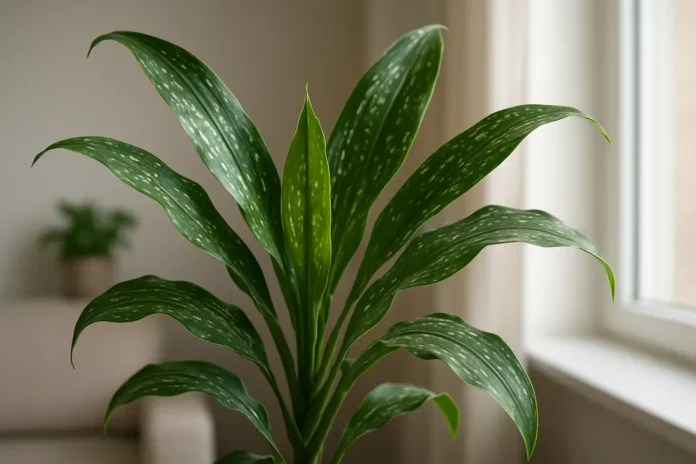
White spots on dracaena leaves are most often caused by sap-sucking pests, hard water residue, fungal leaf spotting, or physical stress from sun, watering, or low humidity. The exact cause depends on whether the spots wipe off, feel raised, or spread over time.
Seeing dracaena leaves with white spots can be frustrating because several very different problems can look similar at first glance. I have seen harmless mineral residue mistaken for disease, and I have also seen early spider mite or scale problems dismissed as dust until the plant started declining.
The good news is that dracaena usually gives you other clues if you know where to look. Whether the spots wipe away, feel crusty, show up with webbing, or turn into tan lesions with pale edges can tell you a lot about what is happening. Once you match the pattern to the cause, white spots on dracaena leaves are usually manageable.
What White Spots on Dracaena Usually Mean
White spotting on dracaena generally falls into four categories: surface residue, pest damage, fungal or bacterial leaf spotting, and environmental injury. Dracaena leaves are broad, smooth, and often dark enough that even small pale flecks stand out clearly, which makes minor issues look more dramatic than they really are.
Before assuming the worst, look closely at the texture and pattern. Spots that sit on the leaf surface and wipe off usually come from mineral deposits, dried spray residue, or dust mixed with guttation. Spots that are raised, cottony, or shell-like often point to pests. Flat lesions that are part of the leaf tissue, especially if they enlarge or develop yellow halos, are more likely to be disease or stress damage.
- If the white mark wipes away easily, think residue or mildew on the surface.
- If it feels raised or bumpy, think scale, mealybugs, or dried sap.
- If the spot is embedded in the leaf and spreading, think leaf spot disease or sun injury.
- If many tiny pale speckles appear along with dull foliage, think spider mites.
When I diagnose dracaena, I do not start with the worst-looking leaf. I compare a newer leaf, a middle-aged leaf, and an older leaf because patterns across different ages often reveal whether the problem is residue, pests, or a stress issue that began weeks earlier.
Mineral Residue and Water Spotting
Hard Water Is a Very Common Culprit
One of the most common causes of white spots on houseplant dracaena is simple mineral buildup from tap water. If you mist the plant, splash the leaves while watering, or let droplets dry on the foliage, calcium and other dissolved minerals can leave chalky specks or rings. This is especially common in homes with hard water.
Dracaena is already known for reacting to water quality, especially fluoride and salt buildup, so it is not surprising that leaf surfaces also show water residue. These spots often look irregular, dusty, or crusty rather than perfectly round. They may appear more heavily near the leaf tips and margins where water dries first.
How to Tell if Residue Is the Problem
- The spots sit on top of the leaf rather than inside the tissue.
- A damp microfiber cloth removes most or all of the mark.
- New spots appear after misting or overhead watering.
- The leaf otherwise looks healthy and firm.
If this is what you are seeing, the issue is more cosmetic than dangerous. Wiping the leaves with distilled water or filtered water usually clears it up. Going forward, water the soil directly instead of wetting the leaves, and skip misting if your tap water leaves noticeable residue on glass or fixtures.
Mealybugs, Scale, and Spider Mites
Mealybugs Can Look Like Tiny Bits of Cotton
Mealybugs are one of the classic reasons dracaena leaves develop white spots. They often gather where leaves join the cane, along midribs, or tucked into tight growth. At first they may look like a few flecks of lint, but they are actually soft-bodied insects covered in white wax.
As they feed, leaves may yellow, curl, or lose vigor. You may also notice sticky honeydew or a dull film on nearby foliage. Small infestations are easy to overlook because the pests hide well and the white wax blends into light spotting.
Scale Insects Can Appear Pale and Crusty
Scale is another likely pest on dracaena, though people often expect it to be brown only. Some scale insects can look off-white, grayish, or tan, especially when small. These pests attach firmly to the leaf or stem and do not wipe away like mineral residue. Heavy infestations can cause spotting, yellowing, slow growth, and sticky leaves.
Spider Mites Cause Fine Stippling Rather than Obvious Blobs
Spider mites usually do not create large white spots. Instead, they cause many tiny pale speckles that make the leaf look stippled, faded, or dusty. On dracaena, this often starts on the undersides of leaves and becomes more noticeable in dry indoor air. Fine webbing is a strong clue, especially near the leaf bases or edges.
- Cottony clusters suggest mealybugs.
- Hard bumps that cling to stems or leaves suggest scale.
- Very fine pale speckling with webbing suggests spider mites.
- Sticky residue nearby suggests sap-sucking pests rather than disease.
If I suspect pests, I inspect the undersides of leaves and the tight spaces where leaves emerge before I treat anything. Dracaena often hides the first insects in those sheltered spots, and missing them is why infestations seem to come right back.
For mild infestations, isolate the plant and physically remove pests first. A cotton swab dipped in isopropyl alcohol works well for mealybugs and small patches of scale. Follow with insecticidal soap or horticultural oil labeled for indoor plants, making sure to coat both leaf surfaces. Repeat applications are usually necessary because eggs and hidden pests survive the first round.
Powdery Mildew and Leaf Spot Diseases
Powdery Mildew Looks Like a Film on the Surface
Although less common indoors than pest problems, powdery mildew can appear on dracaena as whitish patches that look dusty or flour-like. Unlike hard water spots, this growth may spread slowly across the leaf surface and can return after wiping if conditions stay favorable. Stale air, crowding, and damp conditions increase the risk.
Leaf Spot Diseases Are Embedded in the Leaf Tissue
Fungal or bacterial leaf spots tend to start as small pale, tan, or whitish lesions that become more defined over time. The centers may dry out, while the edges look yellow, reddish, or dark brown. On dracaena, these lesions often form where leaves have stayed wet for too long or where damaged tissue gave pathogens an entry point.
If the spots are multiplying, changing shape, or affecting several leaves despite stable care, disease becomes more likely. This is especially true if the plant has poor airflow, sits in a dim corner, or gets water trapped in the crown or leaf axils.
- Surface-like white coating suggests powdery mildew.
- Defined spots inside the leaf suggest fungal or bacterial leaf spot.
- Yellow halos or dark margins increase suspicion of disease.
- Wet foliage and stagnant air make disease more likely.
Remove the worst affected leaves with clean scissors, avoid overhead watering, and improve airflow around the plant. If spotting keeps spreading, a houseplant-safe fungicidal product may help, but cultural correction matters more than spraying alone. Indoor leaf spot problems often linger when leaves stay damp and air movement remains poor.
Sunscald, Low Humidity, and Physical Damage
Too Much Direct Sun Can Bleach Dracaena Leaves
Dracaena prefers bright, indirect light. When it suddenly gets direct afternoon sun, the leaf tissue can bleach and turn pale or whitish. These spots are usually flat, dry, and part of the leaf itself, not something you can wipe off. In severe cases they later turn tan or brown and feel papery.
Dry Air Can Exaggerate Stress Marks
Low humidity alone does not always create distinct white spots, but it can contribute to pale scarring, tip burn, and a dull, stressed appearance. It also encourages spider mites, which means dry air can indirectly lead to white-speckled leaves.
Handling Damage Sometimes Leaves Pale Scars
Dracaena leaves bruise and crease more easily than many gardeners expect. If a leaf was bent, rubbed against a wall, pressed during transport, or scraped during repotting, the damaged area may heal into a silvery-white or pale scar. These marks do not spread and are mostly cosmetic.
A lot of dracaena leaf damage tells its story by shape. Broad bleached patches on the window-facing side usually point to sun, while thin streaks or creases often come from rubbing or folding as the leaf unfurled.
Salt Buildup, Fertilizer Issues, and Guttation Residue
Dracaena is sensitive to excess salts from fertilizer and minerals in water. Most gardeners think of this only as brown tips, but salts can also contribute to white crusting on the soil surface and occasional dried residue on leaves. If the plant pushes moisture to the leaf edge through guttation, the water can dry and leave a pale mark behind.
Overfertilized dracaena may show stressed leaf margins, weak growth, and a generally unhappy look along with spotting that is easy to misread. If you see white crust on the potting mix or rim of the container, fertilizer salts and hard water deposits are likely part of the picture.
- White crust on soil or pot edges suggests salt accumulation.
- Spots near tips and margins may come from dried guttation droplets.
- Heavy feeding can worsen water-quality sensitivity in dracaena.
- Flushing the soil with low-mineral water often helps prevent recurrence.
Use a diluted fertilizer during active growth and feed less often than you would for heavier-feeding tropicals. Every so often, flush the pot thoroughly with distilled, rain, or filtered water to wash excess salts through the drainage holes.
How to Figure Out Which Cause You Are Dealing With
When several possible causes overlap, slow down and narrow it down by observation. White spots are a symptom, not a diagnosis. Your goal is to decide whether the problem is on the leaf, in the leaf, or caused by something feeding on the leaf.
- Wipe one spotted leaf with a damp cloth. If the mark disappears, residue is the likely cause.
- Check the undersides of leaves, leaf bases, and stems for cottony clusters, bumps, or webbing.
- Look for spread. New spots appearing on multiple leaves suggest an active problem rather than old damage.
- Notice location. Only sun-facing leaves point toward light damage, while scattered spotting throughout the plant may suggest pests or residue.
- Inspect the soil surface and pot rim for white crust that hints at salt or mineral buildup.
- Think about recent care changes such as a move to brighter light, heavier feeding, or frequent misting.
This kind of step-by-step comparison usually separates cosmetic issues from real health problems quickly. Old scarred leaves will not heal, so focus most on what the newest growth is telling you.
How to Treat White Spots on Dracaena
If the Spots Are Residue
Wipe the leaves with a soft cloth dampened with distilled or filtered water. Avoid leaf shine products, which can clog the surface and attract more dust. Water the soil directly and reduce misting if it is leaving marks.
If the Spots Are Pests
Isolate the plant right away. Remove visible mealybugs or scale manually, then treat with insecticidal soap or horticultural oil according to label directions. Repeat treatment every 7 to 10 days as needed until no new pests appear.
If the Spots Are Fungal or Mildew-related
Prune off heavily affected leaves, improve airflow, and keep foliage dry. Move the plant where it gets bright indirect light and less crowding. Use a labeled fungicidal product only if the problem continues spreading after care conditions improve.
If the Spots Are From Sun or Physical Injury
Move the plant back from harsh direct sun and avoid abrupt lighting changes. Damaged tissue will not turn green again, but new leaves should emerge normally if the plant is otherwise healthy. Cosmetic scarred leaves can stay until you are ready to prune them.
If Salts and Fertilizer Are Contributing
Flush the potting mix thoroughly and switch to gentler feeding. Use lower-mineral water when possible, especially if your local tap water is very hard. Dracaena often improves when water quality is cleaned up even before you change anything else.
How to Prevent White Spots From Coming Back
Prevention comes down to clean watering habits, steady conditions, and routine inspection. Dracaena is not difficult once you avoid the few things it dislikes most: wet leaves, harsh sun, dry stagnant air, and excess mineral buildup.
- Use filtered, distilled, or rain water if your tap water is hard or high in salts.
- Water the potting mix rather than spraying the leaves.
- Keep the plant in bright, indirect light.
- Check leaf undersides and leaf joints regularly for early pest activity.
- Do not overfertilize, especially in lower light.
- Give the plant enough space for air to move around the foliage.
- Wipe leaves occasionally so dust and residue do not hide developing problems.
I find that regular leaf cleaning does more than keep a dracaena attractive. It also forces you to inspect the plant closely, which means you catch pests and disease earlier, long before white spots turn into a larger problem.
FAQ
Can White Spots on Dracaena Leaves Go Away on Their Own?
Surface residue can be wiped away, but damaged leaf tissue usually does not heal. Once the cause is corrected, the best sign of recovery is clean new growth.
Are White Spots on Dracaena Usually Pests?
Not always. Pests are common, especially mealybugs, scale, and spider mites, but hard water residue and sunscald are also frequent causes.
How Do I Know if the Spots Are Mealybugs or Mineral Deposits?
Mealybugs look cottony and often gather in leaf joints or along veins. Mineral deposits tend to wipe off more easily and usually appear where water droplets dried on the surface.
Should I Cut Off Leaves with White Spots?
Only remove leaves that are badly damaged, heavily infested, or clearly diseased. If the spots are minor and the leaf still functions well, it is fine to leave it.
Can Misting Cause White Spots on Dracaena?
Yes. Misting with hard tap water can leave chalky white residue, and frequent moisture on leaves can also encourage mildew or spotting problems in stale indoor air.
Will Neem Oil Fix White Spots on Dracaena?
Neem oil can help if pests or some fungal issues are involved, but it will not fix mineral residue, sun damage, or old scars. It is important to match the treatment to the actual cause.
Do White Spots Mean My Dracaena Is Dying?
Usually no. Most white spotting issues are treatable or cosmetic, especially when caught early. A healthy root system and normal new growth are reassuring signs.
Need help choosing the right insecticidal soap, fungicide, or low-mineral watering setup for your dracaena? Check our recommended plant care products and treatment guides to fix the problem faster and prevent repeat damage.
