

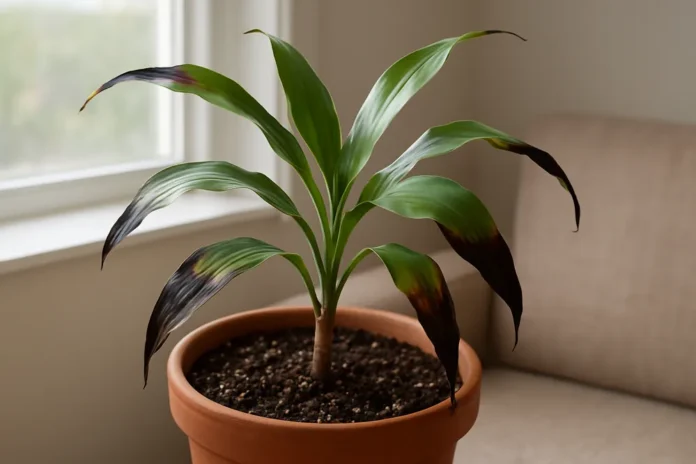
Dracaena leaves usually turn black from excess moisture, cold injury, or chemical stress from tap water salts and fluoride. Fungal or bacterial leaf problems can also darken leaf tips, edges, or whole sections.
When a dracaena starts developing black tips, edges, or blotches, it is usually reacting to stress rather than simply getting old. In my experience, the most common triggers are too much water around the roots, chilly drafts, and mineral buildup from tap water, though disease can also be part of the picture.
The useful part is that blackening leaves often follow patterns. A crisp black tip points in a different direction than a soft black patch near the base of the leaf, and a plant with scattered spots needs a different response than one with widespread darkening. If you look at the texture, the location, and how fast the problem is spreading, you can usually narrow it down pretty quickly.
Below, I will walk through the most likely causes, how to tell them apart, and what to do to help dracaena leaves turning black stop getting worse.
What Black Dracaena Leaves Usually Mean
Black tissue on a dracaena is a symptom, not a diagnosis. The plant is telling you that leaf cells have died, but the reason can range from root trouble to temperature shock. Dracaena are fairly forgiving, but they do react strongly when conditions stay off for too long.
Start by noticing whether the black areas are dry and crispy, soft and mushy, or spotty and spreading. Dry black tips and margins often point to water quality problems, inconsistent watering, or low humidity. Soft black leaves, especially lower leaves, are more often tied to overwatering or rot. Distinct spots with yellow halos can suggest leaf disease.
- Black tips only often suggest salt, fluoride, or dry stress
- Black edges or larger dry patches can come from watering stress or cold drafts
- Soft blackening near the base of leaves often points to excess moisture around roots
- Round or irregular spots that expand may indicate fungal or bacterial issues
When I diagnose dracaena, I look at several leaves instead of the worst one. A single ugly leaf can be old damage, but repeated blackening in the same pattern across newer leaves usually reveals the real cause.
Overwatering and Root Stress
Overwatering is the most common reason I see dracaena leaves turn black. These plants like evenly moist soil for a short time after watering, but they do not like sitting wet. If the potting mix stays soggy, roots lose oxygen, weaken, and may start to rot. Once roots are damaged, leaves often darken from the tips inward or collapse into soft black patches.
This can happen even if you are not watering often. A pot without drainage, a dense mix that holds water too long, or a plant sitting in a dim room can all keep the root zone too wet. In lower light, dracaena use water slowly, so the soil may stay damp much longer than you expect.
Signs Overwatering Is the Problem
- Lower leaves yellow first, then darken or blacken
- Blackened areas feel soft instead of crisp
- Soil smells sour, swampy, or stale
- The pot feels heavy for days after watering
- The cane or stem feels soft near the soil line
What to Do
Let the top portion of the soil dry before watering again. For many indoor dracaena, that means waiting until at least the top 1 to 2 inches feel dry, sometimes more for larger pots. Empty saucers after watering, and make sure the container has a drainage hole.
If the plant is severely waterlogged, slide it out of the pot and check the roots. Healthy roots are firm and pale. Rotten roots are brown, mushy, or stringy. Trim away the damaged parts with clean scissors and repot in a loose indoor plant mix with added perlite or bark to improve airflow.
I would rather underwater a dracaena slightly than keep it constantly damp. If you are unsure, lift the pot before and after watering for a week or two. The weight difference teaches you faster than a calendar ever will.
Cold Damage and Temperature Shock
Dracaena are tropical plants, and cold exposure can turn leaf tissue dark very quickly. A chilly windowsill in winter, an air conditioner vent, a drafty doorway, or leaving the plant in the car too long can all cause blackened leaves. Sometimes the damage shows up within a day. Other times it appears a few days later as water-soaked patches that dry dark.
Cold injury usually affects the leaves that faced the draft or cold glass. The plant may otherwise look fine, which helps separate it from root problems that affect the whole plant more evenly.
- Dark patches appear after a cold night or recent move
- Leaves closest to the window, vent, or door are hit hardest
- Blackened tissue may look wet at first, then papery later
- The soil moisture may be normal, but the damage still spreads across exposed leaves
Move the plant away from cold surfaces and drafts. Keep it in a stable room where temperatures stay roughly between 65 and 80 degrees Fahrenheit. Trim only the dead black portions if the rest of the leaf is still useful, or remove the whole leaf if it is mostly damaged.
Tap Water, Fluoride, and Salt Buildup
Dracaena are sensitive to fluoride and excess dissolved salts, which is why black or very dark brown tips are so common on otherwise healthy plants. This issue builds slowly. The plant may be watered regularly and look decent overall, but the leaf tips keep darkening and crisping no matter what you do.
Municipal water can contain fluoride, chlorine byproducts, and minerals that accumulate in potting soil. Fertilizer salts can do the same, especially if you feed heavily or never flush the pot. Over time, the roots struggle to take up water properly, and the leaf tips are often the first place that shows stress.
Clues That Water Quality Is the Issue
- Black or dark brown tips appear on many leaves at once
- The damage is dry and crispy, not mushy
- White crust forms on the soil surface or pot rim
- The plant has been watered with hard tap water for a long time
- Leaf tips worsen after regular fertilizer use
Switch to distilled water, rainwater, or filtered water if practical. Flush the pot thoroughly every month or two by running water through it until excess drains freely from the bottom. If fertilizer has been used often, pause feeding for a while and resume at a lighter rate only when you see healthy new growth.
I have seen dracaena improve noticeably after nothing more dramatic than a water change. Old black tips will not turn green again, but if the newest leaves emerge cleaner, that is a strong sign you found the problem.
Underwatering and Very Dry Air
Although overwatering gets more attention, dracaena can also develop blackened tips and margins when they get too dry for too long. If the root ball dries hard, roots stop moving water efficiently to the leaves. Low indoor humidity, especially in winter heating season, can make tip damage worse.
This kind of blackening is usually crisp and gradual rather than soft and sudden. The leaves may curl slightly, and the pot may feel extremely light. If the soil has pulled away from the edge of the pot, water may be rushing down the sides instead of rewetting the root ball evenly.
- Leaf tips and margins look dry and brittle
- Soil is bone dry several inches deep
- Leaves may droop or curl before they blacken
- Damage is worse during winter heating or in very dry rooms
Water deeply until excess drains out, then let the top layer dry before watering again. If the soil has become hydrophobic, soak the pot briefly in a sink or basin so the root ball can absorb moisture evenly. Keeping the plant away from heating vents also helps reduce repeat damage.
Too Much Sun or Harsh Light
Most dracaena prefer bright indirect light, not strong direct afternoon sun. If a plant that was grown in softer light is suddenly placed in intense sun, leaves can scorch. Sun damage often starts as bleached or tan patches, but severely damaged tissue can darken and turn black as it dies.
Scorch usually appears on the side of the plant facing the window or outdoors. It is more common after a move to a brighter location, especially in summer.
- Patches appear on the most exposed leaves
- Damage is worse on the window-facing side
- Leaves may first look faded, silvery, or tan before darkening
- The rest of the plant can still look firm and healthy
Move the plant back a little from the window or diffuse the light with a sheer curtain. Trim off badly damaged areas, but focus on protecting new leaves from repeat exposure.
Leaf Spot Diseases and Rotting Tissue
If the blackening shows up as discrete spots, especially with yellow halos or wet-looking centers, disease may be involved. Fungal and bacterial leaf spots are more likely when foliage stays wet, air circulation is poor, or the plant is already stressed by watering mistakes.
Disease symptoms often spread irregularly rather than following the clean tip-burn pattern of salt damage. Spots may enlarge, merge together, and eventually kill larger sections of the leaf.
How to Respond to Suspected Disease
- Remove the worst affected leaves with clean pruners
- Keep water off the foliage and water the soil directly
- Improve spacing and airflow around the plant
- Reduce overwatering and let the upper soil dry appropriately
- Disinfect pruning tools before and after trimming
If the problem keeps spreading quickly, you may need a houseplant-safe fungicide or bactericide labeled for leaf spot, though correction of care conditions matters more than spraying alone. Badly rotted canes or stems are harder to save and may need to be cut back above healthy tissue.
How to Tell Which Cause Fits Your Plant
When several stresses are possible, a quick process of elimination helps. Look at where the blackening started, what the tissue feels like, and what changed recently in the plant's environment.
- Soft black leaves plus wet soil usually point to overwatering or root rot
- Crispy black tips on many leaves suggest salt, fluoride, or inconsistent moisture
- Sudden dark patches after a cold snap suggest temperature injury
- Spots with halos or spreading blotches suggest leaf disease
- Damage on the brightest side of the plant suggests sun scorch
Recent changes are often the giveaway. Think about whether you repotted, fertilized, moved the plant, changed its watering schedule, or had a weather shift. Dracaena often react a week or two after the stress began, so look back a little rather than focusing only on what happened today.
What to Cut Off and What to Leave Alone
Black tissue will not recover, so trimming is mostly cosmetic and helps keep the plant tidy. If only the tip is damaged, you can snip off the black portion by following the natural shape of the leaf. Leave a very thin margin of dead tissue rather than cutting into green tissue, which can create a fresh wound.
Remove whole leaves when they are mostly black, yellowing heavily, or clearly diseased. If the stem or cane itself is turning soft, dark, and mushy, the issue is more serious than leaf damage alone and often requires cutting back to healthy, firm tissue or repotting to inspect the roots.
How to Prevent Black Leaves in the Future
Once a dracaena is back on track, prevention is mostly about consistency. These plants do best when they are not forced between extremes of soggy soil, severe dryness, cold drafts, or heavy salt buildup.
- Use a pot with drainage and a loose, well-aerated mix
- Water only when the upper soil has dried appropriately
- Keep the plant in bright indirect light
- Protect it from cold windows, vents, and sudden temperature swings
- Use distilled, rain, or filtered water if tip burn is a recurring issue
- Fertilize lightly during active growth and flush the soil now and then
- Avoid misting leaves if disease has been a problem
Do not judge recovery by damaged old leaves. Judge it by the quality of new growth. If new leaves come in clean, firm, and evenly colored, the plant is improving even if older leaves still carry scars.
FAQ
Should I Cut Off Black Dracaena Leaves?
Yes, you can trim black tips or remove badly damaged leaves. Black tissue will not turn green again, so pruning helps appearance and may reduce disease spread if spotting is involved.
Can Black Dracaena Leaves Turn Green Again?
No. Once leaf tissue has turned black, it is dead. The goal is to stop the cause so new growth comes in healthy.
How Often Should I Water a Dracaena with Black Leaf Tips?
Water based on soil dryness, not on a fixed schedule. In most homes, wait until at least the top inch or two of soil is dry, then water thoroughly and let the excess drain away.
Is Tap Water Bad for Dracaena?
It can be, especially if your tap water is high in fluoride or dissolved salts. Many dracaena develop dark tips from long-term mineral buildup, so distilled, rain, or filtered water is often gentler.
Can Low Humidity Cause Dracaena Leaves to Turn Black?
Low humidity usually contributes to dark brown or blackened tips and edges, especially when paired with underwatering. It is less likely to cause soft black patches across whole leaves.
What Does Root Rot Look Like in a Dracaena?
Root rot usually comes with soggy soil, a sour smell, soft blackening on leaves, and brown mushy roots. In advanced cases, the cane near the soil line may also feel soft.
Are Black Spots on Dracaena Leaves a Disease?
They can be. If the spots are distinct, spreading, or surrounded by yellow halos, fungal or bacterial leaf spot is possible, especially when the foliage stays wet or the plant is overwatered.
Need the right fix fast? Read our dracaena care and treatment guides to choose the best potting mix, watering setup, and leaf-spot products before the damage spreads.
