

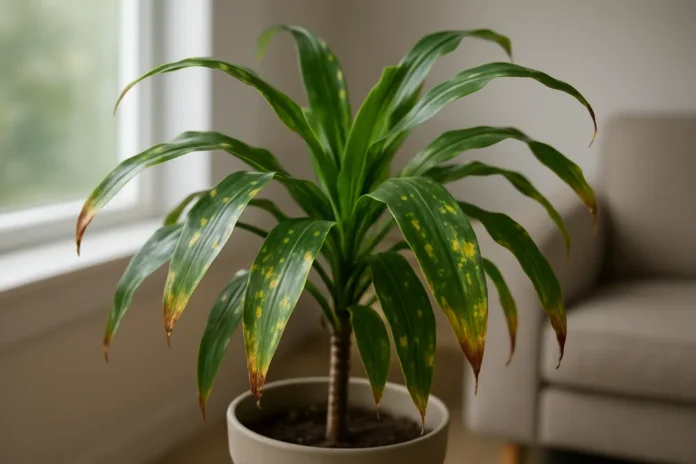
Yellow spots on dracaena leaves are most often caused by too much direct sun, inconsistent watering, mineral or fluoride buildup, or pest feeding. In some cases, they also come from leaf spot diseases or temperature stress.
When a dracaena starts showing yellow spots, I usually treat it as a clue rather than a diagnosis. These plants are tough, but they react pretty clearly when light, water, or water quality is off. The tricky part is that several different problems can create similar-looking spotting at first glance.
In my experience, yellow spots on dracaena leaves are most often tied to too much direct sun, overwatering or poor drainage, fluoride or salt buildup from tap water and fertilizer, or pests like spider mites and thrips. Less often, the spotting comes from a fungal or bacterial leaf issue, especially when leaves stay wet or the plant sits in stagnant air.
The good news is that you can usually narrow it down by looking at the pattern. Are the spots bleached and dry, clustered near the window side, surrounded by brown edges, or paired with limp stems and soggy soil? That pattern tells you far more than the yellow color alone.
What Yellow Spots Usually Mean on Dracaena
Yellow spots are a sign that part of the leaf tissue has been stressed or damaged. Sometimes the tissue is still alive and can stabilize. Other times the spot is the beginning of dead tissue that later turns tan or brown. On dracaena, the most helpful thing is not the color by itself but the shape, size, location, and spread of the spotting.
- Small pale dots or stippling often point to pest feeding, especially spider mites or thrips.
- Larger bleached yellow patches on the side facing a bright window often suggest sun scorch.
- Yellow spots that later develop brown centers can come from water stress, mineral buildup, or leaf spot disease.
- Spots concentrated on older leaves may reflect root stress or accumulated salts more than a new infection.
- Spots paired with mushy stems, drooping, or sour-smelling soil often indicate overwatering and root trouble.
When I diagnose dracaena, I compare several leaves from different parts of the plant before deciding anything. If only the window-facing leaves are affected, I think light first. If the oldest lower leaves show the worst spotting while the pot stays wet, I look much harder at the roots.
Too Much Direct Sun Is a Very Common Cause
Dracaenas like bright conditions, but most varieties do best in bright indirect light rather than direct afternoon sun. If your plant sits in a hot west- or south-facing window, the leaves can develop faded yellow spots or irregular pale patches where the tissue was essentially sunburned. These areas often feel dry and papery later.
Sun-related spotting usually shows up on the side of the plant that faces the strongest light. You may also notice that newer leaves near the top or outer edge are more affected than shaded inner leaves. Variegated dracaenas can be especially quick to show bleaching when light becomes too harsh.
- Spots are most noticeable on the brightest side of the plant
- Patches look bleached, washed out, or yellow before turning tan
- Damage appears after moving the plant into stronger light
- The potting mix may actually be fine, with no signs of root rot or pests
If that sounds familiar, the spotting you already see will not turn green again. What you want is healthier new growth after moving the plant a few feet back from intense sun or filtering the light with a sheer curtain.
Watering Problems Can Create Yellow Spotting
Overwatering and Root Stress
Overwatering is one of the most common dracaena problems, especially indoors where light is lower and soil dries slowly. When roots stay wet too long, they cannot move oxygen properly, and the leaves often show that stress as yellow spotting, yellowing bands, or mottled discoloration. If root rot begins, spots may spread fast and the whole plant can look tired, limp, or dull.
This is even more likely if the plant is in a pot without drainage, a dense peat-heavy mix, or a decorative cachepot that traps runoff water. Yellow spots from overwatering are often accompanied by soft stems near the base, a musty smell, or leaves that yellow and drop more easily than usual.
Underwatering and Erratic Moisture
Dracaena is fairly forgiving, but repeated cycles of getting bone dry and then soaked can stress leaf tissue too. In that case, you may see dry yellow spots that later crisp at the edges, especially on older leaves. Underwatering damage often comes with curled leaf tips, crispy margins, and soil that has pulled away from the pot.
I have better luck watering dracaena by feel rather than by calendar. If the top couple of inches are dry and the pot feels noticeably lighter, that is usually a safer cue than watering every Saturday no matter what.
Fluoride, Salts, and Fertilizer Buildup Often Get Overlooked
Dracaenas are famously sensitive to fluoride and dissolved salts in water. In many homes, yellow spotting starts because the plant is being watered with mineral-heavy tap water or fed more fertilizer than it can use. The stress builds slowly, so the plant may look fine for months before the leaves start spotting and browning.
This problem usually affects older leaves first because they have had more time to accumulate salts. The spots may begin yellow, then turn brown, especially near the tips and margins. You might also notice a whitish crust on the soil surface or around the drainage hole.
- Yellow spotting is paired with brown tips or edges
- The plant is watered with softened, fluoridated, or hard tap water
- Fertilizer has been applied often or at full strength
- There is visible crusting on the pot or soil surface
- Roots seem otherwise firm, and pests are not obvious
If salt or fluoride is the cause, switching to distilled, rain, or filtered water usually helps prevent more damage. Cutting back on fertilizer and flushing the pot thoroughly can also make a big difference over time.
Pests Can Cause Tiny Yellow Spots and Stippling
Small sap-sucking pests are another major reason dracaena leaves develop yellow spots. Spider mites, thrips, and occasionally scale or mealybugs feed by damaging plant cells, which leaves behind pale specks, stippling, or patchy yellow spotting. Indoors, dry air can make spider mites especially likely.
Spider mite damage often looks like many tiny yellow dots spread across the leaf surface. Thrips may create silvery or yellow scarred patches, sometimes with tiny black specks of waste. Scale insects are easier to miss at first because they look like little bumps on stems or leaves, but the leaf tissue around feeding sites can discolor.
- Fine webbing between leaves or at leaf joints suggests spider mites
- Silvery scarring and black specks suggest thrips
- Sticky residue can point to sap-feeding insects
- Spots are widespread but tiny, not large bleached patches
- New growth may emerge distorted when pests are active
If I suspect pests, I look under the leaves first, not on top. A lot of dracaena infestations hide along the midrib or where the leaf base meets the cane, and you can miss them completely if you only glance at the leaf surface.
Leaf Spot Diseases Happen, but They Are Less Common Indoors
Fungal and bacterial leaf spot can also produce yellow spots, though this is usually less common than light, water, or pest issues on houseplant dracaenas. Disease-related spots often have a more defined shape than general stress damage. They may start as small yellow areas, then develop brown or dark centers with a yellow halo around them.
These problems are more likely when leaves stay wet, air circulation is poor, and the plant is crowded. If you mist heavily, water late in the day, or keep the plant where moisture lingers on the foliage, pathogens get an easier start.
- Spots have a distinct border or halo
- Centers turn dark brown or black
- Several spots look very similar in shape and size
- Leaves were frequently wet from misting or splashing
- Damage spreads even though light and watering seem reasonable
If disease is involved, removing badly affected leaves, improving airflow, and keeping foliage dry are the first steps. Mild cases often stabilize once conditions improve. Severe or fast-spreading cases may call for a houseplant-safe fungicidal treatment, depending on the suspected pathogen.
Cold Drafts and Low Humidity Can Make Spotting Worse
Dracaenas prefer stable indoor temperatures. If your plant sits near an icy window, a heating vent, or a drafty exterior door, leaf tissue can become stressed and spotty. Sudden cold exposure may leave pale yellow or tan patches, especially where the leaf touched cold glass.
Low humidity by itself more often causes brown tips than spotted leaves, but it can worsen pest pressure and increase stress from underwatering or mineral buildup. In winter, several minor issues often stack together, which is why a dracaena that looked fine in fall can become spotted by January.
How to Tell Which Cause Is Most Likely
The fastest way to narrow this down is to match the spotting pattern with the plant's conditions. Try to avoid changing five things at once. It is easier to solve when you identify the strongest clue and work from there.
- Look at where the spots are concentrated. Window-facing leaves suggest light stress, while scattered stippling across many leaves suggests pests.
- Check the soil moisture and drainage. Wet, heavy soil and a droopy plant point toward root stress.
- Think about your water source and fertilizer routine. Brown tips plus yellow spotting often fit fluoride or salt buildup.
- Inspect the undersides of leaves and leaf axils for mites, thrips, scale, or residue.
- Notice whether spots have dark centers or halos. That pattern makes leaf spot disease more plausible.
If you are still unsure, start with the basics because they solve the biggest share of cases: moderate the light, improve watering consistency, use better-quality water, and inspect closely for pests. Those adjustments address most yellow-spot problems without harming the plant.
How to Fix Yellow Spots on Dracaena Leaves
Adjust the Light
Move the plant out of harsh direct sun, especially intense afternoon exposure. Bright indirect light is ideal for most dracaenas. If the plant needs to stay near a sunny window, soften the light with a sheer curtain.
Correct the Watering Routine
Water thoroughly, then let excess drain away. Wait until the top part of the mix has dried before watering again. If the potting mix stays soggy for too long, repot into a better-draining houseplant mix and make sure the container has drainage holes.
Improve Water Quality
Use distilled, rain, or filtered water if your tap water is hard or fluoridated. If fertilizer has been used heavily, flush the soil with plenty of fresh water and reduce feeding frequency. Dracaena usually needs less fertilizer than many gardeners think.
Treat Pests Promptly
Rinse the foliage, wipe leaves carefully, and use insecticidal soap or another indoor-plant-safe treatment labeled for the pest you found. Repeat applications as directed, because eggs and hidden insects are often the reason pests seem to come back.
Keep Leaves Dry if Disease Is Suspected
Avoid overhead watering and heavy misting. Remove the worst affected leaves with clean scissors, improve airflow, and isolate the plant from other houseplants until you are sure the problem is stable.
After making a change, judge success by the newest leaves, not the old spots. Damaged dracaena tissue rarely repairs itself, so the real win is clean new growth and a stop to further spotting.
Should You Cut Off Spotted Leaves
You do not have to remove every leaf with yellow spots, especially if only a small area is affected. Leaves still provide energy for the plant as long as a decent portion remains green. I usually leave mildly damaged leaves alone until new growth looks healthy again.
Remove leaves if they are heavily scarred, mostly yellow, infected-looking, or dragging down the plant's appearance. Use clean scissors or pruners, and avoid taking too many leaves at once. If the plant is already stressed, aggressive pruning can slow recovery.
When Yellow Spots Are a Sign of a Bigger Problem
Sometimes leaf spots are only cosmetic. Other times they are the first visible symptom of a root or pest issue that can get much worse. Pay closer attention if your dracaena also has soft canes, a foul smell from the pot, collapsing leaves, rapidly spreading spots, visible insects, or new leaves that emerge damaged.
Those signs mean the plant needs more than a small tweak. In severe overwatering cases, it may need root inspection and repotting. In active pest cases, it may need repeated treatment and isolation. If spotting keeps spreading after conditions improve, disease becomes a stronger possibility.
FAQ
Can Yellow Spots on Dracaena Leaves Turn Green Again?
No. Once a leaf has been damaged enough to form yellow spots, that tissue usually does not recover. Focus on preventing new spots and watching for healthy new growth.
Is Tap Water Bad for Dracaena?
It can be. Dracaena is sensitive to fluoride and dissolved salts, so hard or fluoridated tap water may contribute to yellow spotting, brown tips, and edge burn over time.
Do Spider Mites Cause Yellow Spots on Dracaena?
Yes. Spider mites often cause many tiny yellow specks or stippling across the leaves, and you may also see fine webbing, especially on the undersides and at leaf joints.
How Much Light Should a Dracaena Get?
Most dracaenas do best in bright indirect light. They can tolerate medium light, but harsh direct afternoon sun often causes bleaching, yellow patches, and scorched areas.
Should I Mist My Dracaena if It Has Yellow Spots?
Usually no. Misting does little for humidity and can make leaf spot diseases worse if water sits on the foliage. It is better to improve room humidity more generally and keep leaves clean and dry.
Could Overfertilizing Cause Yellow Spots?
Yes. Excess fertilizer can lead to salt buildup, which often shows up as yellow spotting, browning at the tips or edges, and general leaf stress, especially on older leaves.
When Should I Repot a Dracaena with Yellow Spots?
Repot if the soil stays soggy, smells sour, drains poorly, or you suspect root rot. If the issue is only sun stress or minor mineral buildup, repotting may not be necessary right away.
Need the right fix fast? Read our guide to the best houseplant soils, water filters, and pest treatments so you can stop the spotting and get your dracaena growing clean again.
