

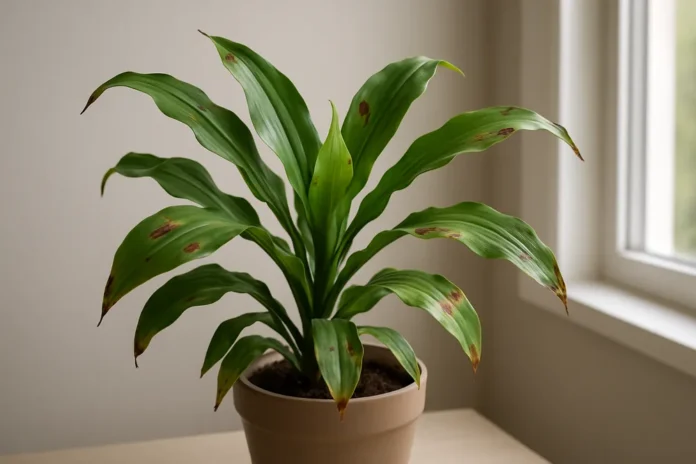
Dracaena leaves usually develop brown spots because of watering stress, fluoride or salt buildup, dry air, too much direct sun, pests, or fungal leaf spot. The exact cause depends on whether the spots are dry, soft, spreading, or paired with yellowing or crispy edges.
A dracaena with brown spots can look worse than it really is, but those spots are still a sign that something in its growing conditions is off. In my experience, dracaenas are forgiving houseplants, yet they react quickly when watering, water quality, humidity, or light is not quite right.
The tricky part is that brown leaf spots do not all mean the same thing. Some are dry and tan from mineral buildup or sun scorch. Others are dark and soft from overwatering or disease. If you match the look of the spots with the plant's recent care, you can usually narrow the problem down pretty fast.
Below, I will walk through the most common causes, what each one tends to look like, and how I would fix the plant without making the problem worse by changing five things at once.
What the Spots Are Telling You
Before you treat anything, look closely at the pattern. Brown spots on dracaena leaves are more useful as a clue than many gardeners realize. Where the spots show up, how large they are, whether they feel dry or mushy, and whether older or newer leaves are affected all help point to the real cause.
- Small tan or rust-colored spots with crisp tissue often suggest mineral injury, dry air, or inconsistent watering.
- Dark brown or blackish spots with yellow halos can point to fungal or bacterial leaf spot.
- Large bleached patches that turn brown later often come from too much direct sun.
- Spots paired with yellow leaves and soft stems often suggest overwatering and root stress.
- Tiny speckling or irregular stippling can be a sign of spider mites or thrips feeding on the leaves.
When I diagnose dracaena damage, I compare at least three leaves from different parts of the plant. If only the sun-facing side is spotted, I think light first. If the oldest lower leaves are hit hardest, I start with watering and salts before I assume disease.
Watering Problems Are the Most Common Cause
Overwatering and Soggy Soil
Dracaenas like evenly moist soil, but they hate staying wet for long stretches. When roots sit in soggy potting mix, they lose oxygen and begin to weaken. Once that happens, the leaves may develop brown spots, soft patches, yellowing, and gradual leaf drop. In severe cases, the spots look dark rather than papery because the tissue is breaking down instead of drying out.
Overwatering is not only about frequency. A pot without drainage, a cachepot that traps runoff, compacted soil, or a plant potted into a container that is too large can all keep roots wet too long.
Underwatering and Uneven Moisture
Dracaenas can also spot when the soil gets too dry between waterings, especially if they swing back and forth between bone dry and soaking wet. In that situation, brown marks are usually drier and more brittle. You may also see crispy tips and margins, curling, or leaves that feel thin and tired.
- If the soil feels wet several inches down for many days, think overwatering or poor drainage.
- If the soil pulls away from the pot and water runs through instantly, think underwatering or hydrophobic mix.
- If symptoms appeared after a change in season, your watering rhythm may simply no longer match the plant's needs.
I do not water dracaena on a fixed calendar. I wait until the top inch or two is dry, then water thoroughly and let the excess drain away. That one habit prevents a lot of brown spotting.
Tap Water Minerals and Fluoride Injury
Dracaenas are famous for reacting to water quality. If your tap water is high in fluoride, chlorine byproducts, or dissolved salts, the leaves may develop brown spots or more commonly brown tips and edges that slowly expand. This is especially common in areas with hard water.
Unlike a sudden sunburn patch, mineral injury tends to build gradually. The damage often starts on older leaves and becomes more noticeable after months of watering from the tap or after repeated fertilizer applications. White crust on the soil surface or pot rim is another strong clue that salts are accumulating.
- Brown tips with scattered dry flecks can indicate fluoride sensitivity.
- A white, chalky residue on the soil suggests mineral buildup.
- Symptoms that continue despite otherwise good watering often trace back to water quality.
If this sounds like your plant, switch to distilled water, rainwater, or filtered water that is known to be low in minerals. Then flush the potting soil thoroughly a few times over several weeks so salts can wash out. Old spots will not heal, but new leaves should come in cleaner if this was the main problem.
Low Humidity and Dry Indoor Air
Although dracaenas handle average home humidity better than many tropicals, very dry air can still contribute to brown spotting, especially in winter. Heat vents, radiators, and strong air conditioning can dry leaf tissue faster than the roots can supply moisture. The result is usually small crispy areas, tip burn, or edges that look scorched.
Humidity alone is not always the sole cause, but it often teams up with inconsistent watering or mineral-heavy water. When several mild stressors stack together, dracaena leaves show it.
- Move the plant away from heating and cooling vents.
- Group it with other houseplants to create a slightly more humid pocket of air.
- Use a room humidifier if your home is especially dry in winter.
- Avoid misting as a main solution if the room already has poor airflow.
Too Much Direct Sun Can Burn the Leaves
Dracaenas generally prefer bright, indirect light. A few varieties can tolerate gentle morning sun, but strong afternoon sun through a hot window often causes trouble. Sunburn usually starts as pale, bleached, or tan patches that later dry out and turn brown.
This kind of damage often appears suddenly after moving the plant closer to a south- or west-facing window, taking it outdoors, or removing a curtain that had been filtering light. The spots tend to appear on the side facing the window rather than evenly across the whole plant.
If sun is the issue, move the plant a little farther from the window or filter the light with a sheer curtain. Damaged tissue will stay damaged, but the goal is to keep new leaves from burning.
Fertilizer Burn and Salt Buildup in the Pot
A dracaena does not need heavy feeding. When fertilizer is applied too often, mixed too strong, or added to already dry soil, roots can burn and leaves respond with brown spots, margins, and tips. This often looks a lot like mineral injury from tap water because both problems involve salts building up around the roots.
I see this most often when a healthy-looking plant gets fed every time it is watered or when slow-release fertilizer was already in the mix and liquid fertilizer was added on top of it. The stress tends to show up over time rather than overnight.
- Pause fertilizer if the plant is stressed.
- Flush the soil thoroughly with clean water to dilute built-up salts.
- Resume feeding only during active growth, and use a diluted houseplant fertilizer.
- Never fertilize a dracaena that is bone dry.
Pests That Leave Spots and Stippling
Not every brown spot comes from care issues. Dracaenas can attract spider mites, thrips, and sometimes scale. These pests pierce the leaf surface and feed on plant juices, leaving behind pale stippling, rusty flecks, or small discolored spots that later turn brown.
Spider mites are especially common in dry indoor conditions. You may notice fine webbing, dusty-looking leaves, or a dull, tired color before you ever spot the mites themselves. Thrips can leave silvery scars and tiny dark specks of waste. Scale insects often look like little bumps attached to stems or leaves.
- Check the undersides of leaves and where leaves join the cane.
- Wipe leaves with a damp cloth to remove dust and make pests easier to see.
- Treat active infestations with insecticidal soap or neem, following label directions.
- Repeat treatment as needed because eggs and hidden pests are easy to miss.
If the spotting looks random but the plant also seems dull and dusty, I always inspect for mites before I blame fertilizer or humidity. Fine speckling from pests is easy to overlook until the infestation is well established.
Leaf Spot Diseases and when to Worry
Fungal and bacterial leaf spot are less common indoors than watering or mineral issues, but they do happen. Disease-related spots are often dark brown with a distinct edge, and they may have a yellow halo around them. Some enlarge over time or merge into bigger blotches. If the room is humid but airflow is poor, disease spreads more easily.
Leaves that stay wet for long periods, overcrowded plant shelves, and splashy watering can all increase the chance of leaf spot pathogens taking hold. In more advanced cases, several leaves may spot at once and the plant can look increasingly blotched rather than simply tip-burned.
- Remove badly affected leaves with clean scissors.
- Avoid wetting the foliage when you water.
- Improve spacing and airflow around the plant.
- Disinfect tools after pruning suspect leaves.
- If the problem keeps spreading, a houseplant-safe fungicide may help depending on the pathogen.
Most home gardeners do not need to jump straight to sprays. Sanitation, drier foliage, and corrected watering solve many mild cases. If stems are also soft or blackening, though, the issue may be more serious root or crown rot rather than a simple leaf blemish.
How to Tell Which Cause Is Most Likely
Because several problems can overlap, it helps to rule them out in a simple order. Start with the growing medium and roots, then move outward to water quality, light, humidity, and pests. That approach avoids chasing symptoms while the real issue stays hidden.
- Feel the soil. If it is constantly wet or sour-smelling, address drainage and watering first.
- Look for crusty residue on the soil or pot. If present, suspect salt or fluoride buildup.
- Check the leaf placement. If the spots are mostly on the window side, suspect sun scorch.
- Inspect both sides of the leaves for webbing, insects, or black specks from pests.
- Watch whether the spots are dry and static or dark and spreading. Spreading lesions deserve more concern for disease.
It is also worth remembering that old damage remains visible. If you corrected the problem last week, the marked leaves may still look rough for months. The real sign of progress is healthier new growth, not spotless old leaves.
How to Fix a Dracaena with Brown Spots
Once you have a likely diagnosis, keep the recovery plan simple. Dracaenas respond best when the main stress is removed and the plant is allowed to settle. Too many changes at once can create a second wave of stress.
- Trim off badly damaged leaves or just the brown portions with clean scissors if appearance bothers you.
- Adjust watering so the top inch or two of soil dries before you water again.
- Make sure the pot has drainage and never leaves the roots sitting in runoff.
- Switch to distilled, rain, or low-mineral filtered water if water quality is suspect.
- Move the plant into bright, indirect light rather than harsh direct sun.
- Hold fertilizer until the plant is actively growing and showing improvement.
- Inspect for pests weekly until you are sure they are not involved.
If the plant is in dense, soggy, or exhausted potting mix, repotting may be worth it. Use a loose indoor plant mix that drains well but still holds some moisture. If roots are mushy or black, trim off the rotten sections before repotting into fresh soil.
The fastest way to tell whether your fix is working is to track the next leaf or two, not the damaged ones already on the plant. Dracaena recovery shows up in cleaner new growth long before the old foliage looks better.
How to Prevent Brown Spots From Coming Back
Prevention comes down to steady care. Dracaenas do not ask for much, but they do best with moderate moisture, bright filtered light, decent airflow, and cleaner water than many common houseplants need.
- Water only when the top layer of soil has dried slightly.
- Use a pot with drainage holes and empty saucers or decorative pots after watering.
- Flush the soil occasionally to reduce salt buildup.
- Keep the plant out of harsh afternoon sun.
- Wipe leaves regularly so you can spot pests early.
- Feed lightly during spring and summer instead of year-round heavy fertilizing.
- Avoid placing the plant right next to heat sources or cold drafts.
If you stay consistent, most dracaenas settle down and produce healthy foliage again. They are not usually difficult plants, but they are very honest ones. The leaves tend to report care issues quickly.
FAQ
Should I Cut Off Dracaena Leaves with Brown Spots?
You can remove badly damaged leaves or trim just the brown portions if the look bothers you. Leave any leaf that is still mostly green, since it still helps the plant photosynthesize.
Can Brown Spots on Dracaena Leaves Turn Green Again?
No. Damaged leaf tissue does not recover. The goal is to stop new spots from forming and watch for healthier new growth.
Is Tap Water Bad for Dracaena?
It can be, especially if your tap water is high in fluoride or dissolved minerals. Many dracaenas do better with distilled, rain, or low-mineral filtered water.
Do Brown Spots Mean My Dracaena Has Root Rot?
Not always. Brown spots can come from root rot, but they can also be caused by underwatering, sunburn, pests, fertilizer burn, or water quality issues. Soft stems and constantly soggy soil make root rot more likely.
Can Low Humidity Alone Cause Brown Spots on Dracaena?
Yes, but it more often contributes alongside other stress such as inconsistent watering or dry heat from vents. Low humidity usually causes crispy tips, edges, or small dry patches rather than wet-looking lesions.
What Do Fungal Leaf Spots Look Like on Dracaena?
They are often dark brown with a defined border and may have a yellow halo. The spots can enlarge or spread to multiple leaves if conditions stay damp and crowded.
How Often Should I Water a Dracaena with Brown Spots?
Water based on soil dryness, not on a fixed schedule. Let the top inch or two dry first, then water thoroughly and allow excess water to drain away.
Need the right fix fast? Read our dracaena care guide and our best houseplant watering tools roundup to prevent more leaf damage and keep new growth clean.
