

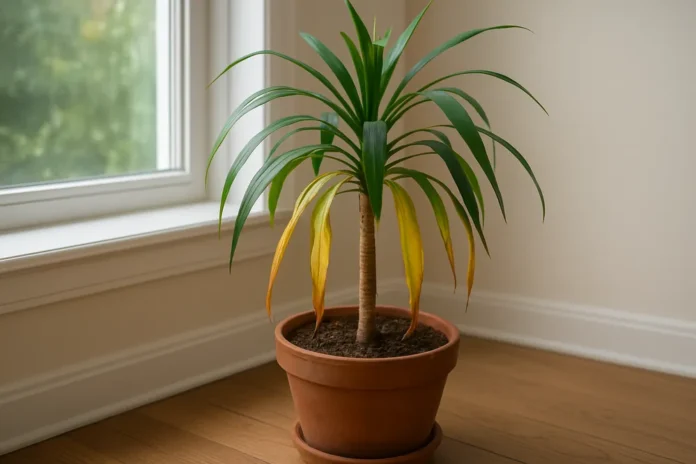
Dracaena usually loses leaves because of watering stress, sudden temperature changes, low light, or normal aging of older lower foliage. Root problems, mineral-heavy tap water, and pests can also trigger leaf drop.
A dracaena dropping leaves can look alarming fast, especially when a plant that seemed fine last week suddenly starts shedding from the bottom or dropping whole clusters. In my experience, dracaena leaf drop is often tied to a few repeat issues: watering that stays too wet or gets too dry, environmental stress, or simple age-related leaf loss.
The good news is that dracaena usually gives clues before things get truly serious. Where the leaves are falling, how they look before they drop, and whether the stem still feels firm can tell you a lot. Once you match the pattern to the cause, recovery is often very doable.
When Leaf Loss Is Normal and When It Is Not
Some leaf drop is part of normal growth. Dracaenas naturally shed their oldest lower leaves as they mature, especially canelike types such as corn plant and marginata. If only the bottom few leaves yellow slowly and fall one at a time while the top stays healthy, that is usually routine aging.
Leaf loss becomes a problem when it is fast, widespread, or affects newer growth. If leaves are dropping from the middle or top of the plant, if several fall in a short period, or if the stems are soft or wrinkled, something is stressing the plant beyond normal aging.
- Usually normal: older lower leaves yellowing gradually, then dropping
- Usually a problem: green leaves falling suddenly
- Usually a problem: many leaves dropping at once after a change in care or location
- Usually a problem: leaf drop paired with brown tips, mushy stems, wilting, or a sour soil smell
When I diagnose dracaena leaf drop, I look at the newest leaves first. If the crown is still pushing healthy growth and only the oldest leaves are falling, I worry less. If the newest leaves are shrinking, spotting, or loosening, I start suspecting root or environmental stress.
Overwatering Is the Most Common Cause
If I had to bet on one cause of dracaena leaf drop indoors, it would be overwatering. Dracaenas like evenly moist soil when actively growing, but they do not want to sit in wet potting mix. Constantly damp roots lose oxygen, and once roots begin to rot, the plant cannot support its leaves properly.
Overwatered dracaenas often show yellowing leaves, soft stems near the base, limp foliage, and leaf drop that speeds up instead of staying occasional. The pot may feel heavy for days after watering, and the soil may smell stale or sour. Sometimes the leaves drop while still partly green because the roots are failing before the leaf fully yellows.
Signs Your Dracaena Is Staying Too Wet
- Soil stays wet more than a week after watering
- Yellow leaves appear across different levels of the plant
- Lower stem feels soft, dark, or weak
- Pot has no drainage hole or sits in trapped runoff
- Fungus gnats are hovering around the soil
This problem is especially common in winter, when indoor light is lower and soil dries much more slowly. A watering schedule that worked in summer can become too frequent once days shorten.
Underwatering Can Also Trigger Sudden Shedding
Dracaenas are fairly forgiving, but they do not like being bone dry for long stretches. If the root ball gets extremely dry, the plant may sacrifice older leaves to conserve moisture. In severe cases, leaves crisp at the edges, curl inward, and then drop.
Underwatered plants usually feel lighter than expected, and the soil may pull away from the sides of the pot. You might also notice wrinkled canes, dry brown leaf tips, and slower growth. Unlike overwatering, the plant often looks dry and tired rather than soft and yellow.
How Underwatering Leaf Drop Looks Different
- Leaf edges and tips turn dry brown before the leaf falls
- Potting mix feels dusty or hardened
- Leaves may droop and curl before dropping
- Stems stay firm instead of mushy
If a dracaena has gone too dry, I prefer a deep, even rehydration over several tiny splashes. Water until excess drains out, then let the mix dry partly again. Repeated shallow watering can leave the center of the root ball dry while the surface looks damp.
Low Light Weakens the Plant Over Time
Dracaenas tolerate lower light better than many houseplants, but tolerance is not the same as thriving. In very dim rooms, the plant cannot produce enough energy to support a full canopy. Growth slows, older leaves are shed more quickly, and the plant may gradually thin out.
Low-light stress often shows up as smaller new leaves, faded color in variegated varieties, leaning toward a window, and slow but steady leaf loss. It is usually not dramatic overnight. Instead, the plant becomes sparse over months.
Light Conditions Dracaena Prefers
Bright, indirect light is ideal. A spot near an east window or a few feet back from a south or west window often works well. Very hot direct afternoon sun can scorch leaves, but a room with only weak interior light can leave the plant struggling.
If your dracaena started dropping leaves after being moved to a darker corner, that shift alone may be enough to explain it.
Temperature Swings and Drafts Cause Stress
Dracaenas like stable indoor temperatures. Cold drafts from windows, blasts from air conditioning vents, and dry heat from radiators can all trigger leaf drop. These plants are tropical in origin, so they do not enjoy sudden cold exposure or sharp shifts between day and night temperatures.
A plant may look fine for several days after a cold night near a window, then begin dropping leaves later. This delayed response is one reason people miss temperature stress as the cause.
- Keep dracaena away from exterior doors that open often in winter
- Avoid placing it directly under HVAC vents
- Do not let leaves press against cold glass
- Aim for temperatures roughly between 65 and 80 degrees Fahrenheit
I see a lot of winter leaf drop that looks like a watering issue at first but is really a location issue. If the plant is near a cold window, heating register, or drafty doorway, the stress pattern can mimic root trouble because leaves yellow and fall in bunches.
Poor Drainage and Root Problems Are Closely Related
Even if you are not watering too often, a dracaena can still suffer if the potting mix drains poorly. Heavy compacted soil, a decorative cachepot with trapped water, or a container without drainage holes can keep roots too wet. The result is the same: stressed roots, poor oxygen flow, and leaf drop.
If you slide the plant from its pot and see brown, mushy roots instead of firm pale ones, root rot is likely involved. At that point, leaf drop is a symptom of below-ground damage, not just a surface issue.
A Better Potting Setup for Dracaena
- Use a container with at least one drainage hole
- Choose a loose indoor potting mix rather than dense garden soil
- Empty any saucer or outer pot after watering
- Repot if the mix has become compacted or stays soggy too long
Water Quality Can Damage Dracaena Leaves
Dracaenas are more sensitive than many houseplants to fluoride and mineral salts in tap water. While this issue more commonly causes brown tips and margins, prolonged buildup can stress the plant enough to contribute to leaf decline and drop, especially in already stressed plants.
You may notice crispy brown tips on many leaves at once, a white crust on the soil surface, or symptoms that continue even though watering frequency seems correct. Fertilizer buildup can create similar stress.
How to Reduce Water Quality Stress
- Use filtered, distilled, or rainwater if your tap water is mineral-heavy
- Flush the potting mix occasionally to wash out excess salts
- Fertilize lightly rather than feeding heavily year-round
- Pause fertilizer if the plant is already stressed and dropping leaves
Pests Can Weaken Leaves Until They Drop
Spider mites, mealybugs, and scale are the main pests I watch for on dracaena. These insects feed on plant sap, and over time they weaken leaves enough to cause yellowing, spotting, and eventual drop. Spider mites are especially common in dry indoor air.
Look closely along the midrib, where leaves join the stem, and on the undersides of foliage. Fine webbing, cottony clusters, sticky residue, or small bumps that do not rub off easily are all warning signs.
Common Pest Symptoms on Dracaena
- Tiny pale speckles or a dull, stippled leaf surface
- Sticky honeydew on leaves or nearby furniture
- White cottony patches from mealybugs
- Brown or tan shell-like bumps from scale
- Progressive yellowing and leaf drop despite okay watering
Mild infestations can often be controlled by wiping leaves clean and treating with insecticidal soap or horticultural oil, but repeated treatment is usually needed because indoor pests rarely disappear after one round.
Repotting Shock and Recent Changes Can Cause Temporary Leaf Loss
Dracaenas can react to change. Repotting, moving to a new room, bringing a plant home from a greenhouse, or changing from one watering pattern to another can all trigger temporary leaf drop. This is especially true if roots were disturbed heavily during repotting or the plant went from bright greenhouse light to a dim corner indoors.
In these cases, leaf drop often starts shortly after the change and then slows once conditions stabilize. If the stems remain firm and new growth continues, the plant is often just adjusting.
Try not to respond to stress by changing five more things at once. A dracaena that is adjusting to one disruption can get pushed further by extra watering, fertilizer, pruning, and relocation all in the same week.
How to Figure Out the Real Cause
Because different problems can lead to the same symptom, the best diagnosis comes from looking at the whole pattern. I like to narrow dracaena leaf drop down by checking moisture, roots, placement, and leaf appearance in that order.
Questions That Help Narrow It Down
- Are only the oldest bottom leaves falling, or are newer leaves dropping too?
- Does the soil stay wet for a long time, or does it become bone dry?
- Is the plant near a draft, vent, or cold window?
- Has it recently been moved, repotted, or brought home?
- Do you see pests, sticky residue, webbing, or unusual spotting?
- Are the stems firm, or are they soft and collapsing?
If you answer those questions honestly, the likely cause usually becomes much clearer. The biggest mistake I see is treating every falling leaf as a watering issue when the plant is actually reacting to low light, cold exposure, or a pest infestation.
What to Do to Stop Further Leaf Drop
Once you identify the likely cause, focus on correcting conditions rather than forcing a quick cosmetic recovery. Dracaenas do not usually replace lost leaves on bare lower stems right away, so the goal is healthy new growth and stopping continued decline.
Best Next Steps for Most Dracaena Leaf Drop Problems
- Adjust watering so the top portion of the mix dries slightly before watering again
- Move the plant into bright, indirect light
- Make sure the pot drains freely and never sits in standing water
- Keep it away from drafts, heater blasts, and cold glass
- Inspect leaves and stems for pests and treat if needed
- Trim away fully yellow or dead leaves after the cause is corrected
If root rot is advanced, repotting into fresh, well-draining mix after trimming dead roots may be necessary. If the canes are soft all the way through, some stems may not recover, but healthy sections can sometimes be propagated.
Judge recovery by new growth, not by damaged leaves getting pretty again. Once a dracaena leaf has yellowed badly or collapsed, it will not bounce back. What matters is whether the next leaves come in firm, upright, and clean.
How to Prevent Leaf Drop Going Forward
Prevention is mostly about consistency. Dracaenas handle average home conditions well when their light, watering, and temperature stay reasonably steady. They struggle when care swings between extremes.
- Water based on soil dryness, not the calendar alone
- Use a draining pot and airy indoor mix
- Place the plant where it gets bright, filtered light
- Rotate occasionally so growth stays balanced
- Use lower-mineral water if leaf tips brown often
- Inspect for pests before an infestation gets established
I also find it helpful to let dracaenas settle into one good location rather than moving them around the house often. A stable environment solves more problems than many people expect.
FAQ
Is It Normal for a Dracaena to Lose Bottom Leaves?
Yes. Older lower leaves naturally yellow and fall as the plant matures. If the top growth looks healthy and the drop is gradual, that is usually normal.
Can a Dracaena Recover After Dropping a Lot of Leaves?
Often, yes. If the stems are still firm and the roots are mostly healthy, correcting the underlying problem can stop the drop and allow healthy new growth.
How Often Should I Water a Dracaena to Prevent Leaf Drop?
There is no fixed schedule that fits every home. Water when the upper part of the potting mix has dried somewhat, then water thoroughly and let excess drain away.
Will Fallen Leaves Grow Back on the Bare Stem?
Usually not in the exact same spots right away. Dracaenas typically continue growing from the top or from branching points, so recovery shows up as new foliage rather than old gaps filling in quickly.
Why Is My Dracaena Dropping Green Leaves?
Green leaf drop often points to sudden stress, especially overwatering, cold exposure, root damage, or a major environmental change. Healthy leaves usually do not fall without a trigger.
Does Tap Water Make Dracaena Leaves Fall Off?
It can contribute, especially if the water is high in fluoride or dissolved minerals. More often it causes brown tips first, but long-term buildup can add stress that worsens leaf loss.
Should I Cut Off Yellow Leaves From My Dracaena?
Yes, once they are mostly yellow or fully dead. Removing damaged leaves can tidy the plant, but fix the cause first so the problem does not keep spreading.
Want to save your plant faster and avoid guesswork? Read our dracaena care guide and our roundup of the best indoor potting mixes so you can fix leaf drop with the right setup.
