

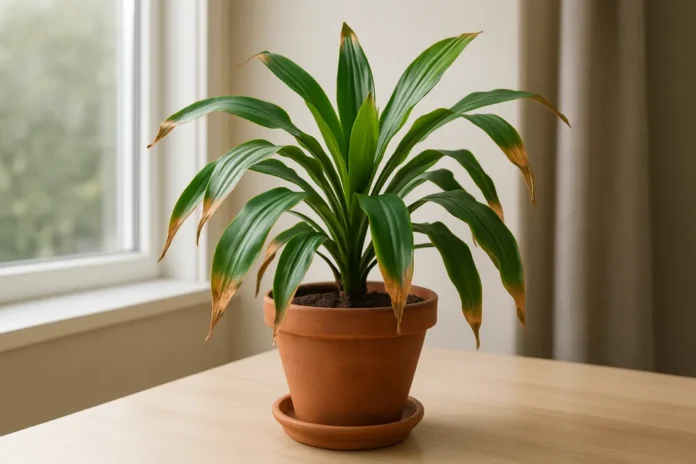
Dracaena leaves usually turn brown because of watering stress, low humidity, fluoride or salt buildup from tap water, or temperature and light stress. Brown tips are especially common when indoor conditions stay too dry or the plant is getting poor-quality water.
A dracaena with brown leaves is one of the most common houseplant complaints I hear from indoor gardeners. The good news is that dracaenas are usually pretty clear once you know how to read the pattern. Brown tips, crispy edges, soft brown patches, and whole leaves drying up can point to different problems.
In most homes, the cause comes down to a short list: watering issues, dry air, mineral-sensitive foliage, fertilizer buildup, or stress from light and temperature swings. Brown leaf tips on dracaena are especially common because this plant reacts faster than many others to fluoride, salts, and inconsistent moisture.
If you look closely at where the browning starts and how the rest of the plant looks, you can usually narrow it down quickly. The goal is not to make old damaged tissue green again. It is to stop the problem so the next flush of growth comes in clean and healthy.
What the Browning Pattern Can Tell You
Before changing your care routine, study the leaves. Dracaena plants often show stress in a very specific way. The exact pattern matters more than many gardeners realize.
- Brown tips with otherwise green leaves often point to low humidity, mineral-heavy water, or salt buildup.
- Brown edges along the leaf margins can mean dry air, inconsistent watering, or excess fertilizer.
- Large soft brown patches may suggest overwatering, root stress, or cold damage.
- Crispy brown leaves from the bottom up can happen as older leaves age out, but widespread crisping usually means the plant has stayed too dry.
- Bleached tan or brown scorch marks on exposed leaves often come from too much direct sun.
When I diagnose dracaena problems, I compare both old and new leaves. If only the oldest leaves are browning, I think about normal aging first. If fresh leaves are showing brown tips, I focus on water quality, salts, humidity, and root stress.
Also check whether the browning is isolated to one side of the plant. A dracaena near a heater vent, cold window, or strong afternoon sun may show damage mostly on the exposed side. A whole-plant issue usually means the roots or overall environment are involved.
Watering Problems Are the Most Common Cause
Underwatering and Inconsistent Moisture
Dracaenas like to dry slightly between waterings, but they do not want to stay bone dry for long stretches. When the potting mix gets too dry again and again, the leaf tips and edges often turn brown and crisp. This is especially common in winter when heaters run and the soil dries faster than people expect near vents.
A severely dry root ball can also become hard and pull away from the sides of the pot. In that state, water may run straight through without fully rewetting the soil, so the plant keeps showing drought stress even after you water.
Overwatering and Root Stress
Too much water can cause brown leaves too. Many gardeners expect yellow leaves with overwatering, and that does happen, but dracaena can also develop brown patches when roots are stressed or rotting. If the soil stays wet for too long, roots lose oxygen, and damaged roots cannot support healthy foliage.
- Soil that stays soggy for several days
- A pot with poor drainage or a cachepot that traps water
- Soft lower stems or a musty smell from the mix
- Leaves that are yellowing and browning at the same time
- Brown areas that feel softer than dry, crispy tips
Dracaenas are more forgiving of slight dryness than chronic sogginess. If you water on a fixed schedule instead of checking the soil, it is easy to keep the mix too wet, especially in low light.
Tap Water and Salt Buildup Often Trigger Brown Tips
This is one of the biggest dracaena quirks. Dracaenas are sensitive to fluoride, dissolved salts, and other minerals commonly found in tap water. Over time, these compounds build up in the soil and show up first as brown tips or brown margins, even when your watering schedule seems reasonable.
If your plant has neat brown tips on many leaves but otherwise looks fairly healthy, water quality is high on my suspect list. Municipal water can vary a lot by region, and softened water is often especially hard on houseplants because it may contain added sodium.
- Brown tips appear on many leaves at once
- The damage starts at the pointy ends first
- A white crust forms on the soil surface or rim of the pot
- You fertilize regularly and use standard tap water
- New leaves emerge but still develop tip burn
If I suspect mineral sensitivity, I switch dracaena to distilled, rainwater, or filtered water for a while and judge success by the next leaves, not the old ones. Existing brown tips stay brown, but cleaner new growth tells you the change worked.
Salt buildup can also come from fertilizer, not just tap water. In many homes, it is actually a combination of the two. That is why flushing the soil occasionally can help, provided the pot drains freely.
Low Humidity and Indoor Air Can Dry the Leaf Tips
Dracaena tolerates average indoor humidity better than some tropical houseplants, but very dry air can still cause brown tips and edges. This tends to show up during winter heating season or in homes with forced-air systems that keep humidity consistently low.
Low humidity damage is often worse when it combines with slight underwatering or mineral-heavy water. The plant may not look dramatically wilted, but the leaf ends slowly crisp and darken. Fragrant dracaena and marginata types both show this issue, though the narrow leaves of marginata make tip burn especially noticeable.
- Tips turn tan, then dark brown and brittle
- The problem worsens in winter
- The plant sits near a heater, fireplace, or warm air register
- The rest of the leaf stays mostly green
- Other houseplants nearby also show dry edges
A room that feels comfortable to people can still be dry enough to stress a dracaena over time. Grouping plants, moving the pot away from dry air blasts, or using a humidifier often helps more than misting, which is too brief to change humidity in a meaningful way.
Too Much Fertilizer Can Burn the Foliage
Dracaena does not need heavy feeding. When fertilizer is applied too often or at too strong a rate, salts accumulate in the soil and the leaf tips respond with browning. The damage can look almost identical to tap water injury, which is why plant history matters.
This issue is most common when a plant is fed year-round, fertilized in winter, or growing in old potting mix that has not been flushed or refreshed. Slow-growing indoor plants use nutrients slowly, so leftover salts can build up long before the gardener notices.
- Brown tips appear after a feeding cycle
- There is crusty residue on the soil surface
- The plant is not putting out much new growth despite regular fertilizer
- Leaf edges darken after concentrated liquid feeds
- The potting mix is more than a year or two old
If overfertilizing is the problem, the plant usually needs less, not more. A mild feeding routine during active growth is plenty for most dracaenas.
Light and Temperature Stress Can Cause Brown Patches
Sun Scorch
Dracaenas prefer bright, indirect light. They can handle moderate light indoors, but strong direct sun, especially through a hot west- or south-facing window, can scorch leaves. Sun damage often appears as pale tan spots that later turn brown and papery.
Cold Drafts and Temperature Swings
Cold windows, drafty doors, and sudden temperature drops can also injure dracaena leaves. Chilling damage may show up as irregular brown patches, drooping, or leaves that darken after a cold night. On the other end, extreme heat from vents and radiators can dry leaves quickly and mimic low humidity stress.
- Browning is concentrated on the window-facing side
- Patches look bleached before turning brown
- The plant sits within reach of direct afternoon sun
- Damage appeared after moving the plant
- The pot is close to an exterior door, drafty window, or HVAC vent
I often see dracaena placed in a spot that seems bright but gets one harsh hour of direct sun every afternoon. That small window of exposure is enough to mark the leaves, and the damage usually lines up with the side facing the glass.
Root Crowding, Poor Drainage, and Old Soil Can Contribute
A dracaena that has outgrown its pot may dry too quickly, struggle to take up water evenly, or sit in compacted old mix that no longer drains well. Any of these conditions can lead to browning. Potting soil breaks down over time, becoming dense and less airy, which stresses the roots.
Root-bound plants can show both dryness and watering problems at once. Water may rush through channels in the pot, leaving parts of the root ball dry while other areas stay too wet. That mixed root environment often leads to chronic brown tips and weak growth.
- Roots circle heavily around the inside of the pot
- The soil dries out unusually fast after watering
- Water runs straight through without soaking in well
- The mix feels hard, compacted, or peat-heavy after many months
- The plant has not been repotted in several years
Repotting is not always the first fix, but if the root zone is compromised, leaf symptoms will keep coming back until the roots have a healthier environment.
Pests and Disease Are Less Common but Still Possible
Brown leaves on dracaena are more often environmental than infectious, but pests can play a role. Spider mites, thrips, and scale insects may cause stippling, dull foliage, and declining leaf health that ends in browning. Severe infestations make the plant more vulnerable to dryness and stress.
Leaf spot diseases are possible too, especially if foliage stays wet, airflow is poor, or the plant is already stressed. Disease spots are usually more distinct than simple tip burn and may have yellow halos or irregular margins.
- Fine webbing or speckled leaves can point to spider mites
- Sticky residue may suggest scale or other sap-feeding insects
- Distinct circular or irregular spots may indicate leaf spot disease
- Rapid decline despite decent watering may mean roots should be checked for rot
- Damage concentrated on tender new growth often suggests pests over humidity issues
If you suspect pests, inspect both sides of the leaves and the leaf axils where foliage meets the cane. A magnifying glass helps because early mite damage is easy to miss.
How to Fix a Dracaena with Brown Leaves
The best fix depends on the cause, but a few steps solve the majority of cases. Focus on improving conditions for new growth rather than trying to repair damaged tissue.
- Check the soil moisture before watering. Water when the top portion of the mix has dried, then water thoroughly until excess drains out.
- Empty saucers and decorative pots so roots are not left sitting in water.
- Switch to distilled, rainwater, or filtered water if you suspect fluoride or salt sensitivity.
- Pause fertilizer if browning is active, especially if you have fed recently.
- Move the plant into bright, indirect light away from harsh afternoon sun.
- Keep it away from heater vents, radiators, exterior doors, and cold window glass.
- Raise humidity modestly with a humidifier or by clustering plants.
- If the soil is compacted or the plant is root-bound, repot into a fresh, well-draining houseplant mix.
You can trim off brown tips for appearance if you like. Use clean scissors and follow the natural shape of the leaf, leaving a very thin brown margin instead of cutting into green tissue. If a leaf is mostly brown, remove it entirely.
Do not change five things at once unless the plant is in obvious trouble. With dracaena, I like to fix the most likely root cause first, then watch the next few leaves. That makes it much easier to tell which adjustment actually helped.
How to Prevent Brown Leaves in the Future
Once a dracaena is stable, prevention is straightforward. This is a plant that rewards consistency more than constant attention.
- Use a pot with drainage and never let water collect around the roots.
- Water based on soil dryness, not the calendar alone.
- Use low-mineral water if your tap water is harsh or fluoridated.
- Feed lightly during spring and summer rather than heavily year-round.
- Flush the potting mix occasionally to wash away excess salts.
- Provide bright, indirect light and rotate the plant for even growth.
- Keep humidity from dropping too low, especially in winter.
- Refresh tired potting mix and repot when roots become crowded.
Some lower leaf loss is normal as dracaena matures. A few older leaves browning and dropping over time is not the same as active tip burn across the whole plant. The key is whether new leaves are coming in healthy.
FAQ
Should I Cut the Brown Tips Off My Dracaena?
Yes, if you want the plant to look neater. Trim with clean scissors and follow the original leaf shape. Keep a tiny brown edge instead of cutting into healthy green tissue, because fresh cuts into live tissue can dry out and turn brown again.
Will Brown Dracaena Leaves Turn Green Again?
No. Brown tissue does not recover. Your goal is to correct the cause so new growth emerges healthy and existing damage does not spread.
Can Tap Water Really Cause Brown Tips on Dracaena?
Yes. Dracaena is sensitive to fluoride and dissolved salts, and many plants show tip burn from regular tap water over time. Distilled, rainwater, or filtered water is often a better choice if this keeps happening.
How Often Should I Water a Dracaena?
There is no fixed schedule that fits every home. Water when the top part of the potting mix has dried out, then water thoroughly and let excess drain away. Lower light and cooler rooms mean the plant will need water less often.
Do Brown Leaves Mean My Dracaena Has Root Rot?
Not always. Brown leaves can come from dryness, low humidity, water quality, fertilizer salts, or sun scorch too. Root rot is more likely if the soil stays wet, the stems soften, or the plant smells sour or musty near the pot.
Is It Normal for Lower Dracaena Leaves to Turn Brown?
Yes, some older lower leaves naturally age, dry, and drop as the plant grows. That is different from widespread browning on many leaves at once, especially if newer leaves are affected.
Does Misting Help Prevent Brown Tips on Dracaena?
Usually not very much. Misting raises humidity only briefly. A humidifier, better plant placement, and more consistent watering do more to prevent brown tips.
Need the right setup to stop dracaena leaf burn for good? See our guide to the best houseplant watering tools, humidifiers, and low-mineral water options for healthier indoor plants.
