

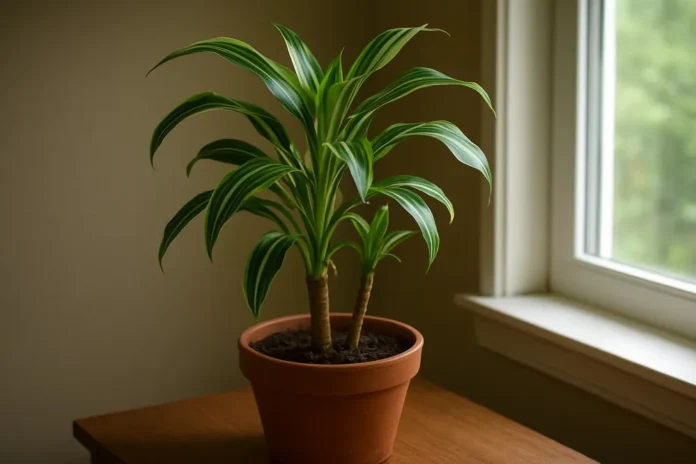
Dracaena usually stops growing because it is not getting enough light, its roots are stressed, or its environment is too cool or inconsistent. Slow growth can also be normal, since dracaena is naturally a moderate to slow-growing houseplant.
If your dracaena not growing problem has gone on for months, you are not imagining it. These plants are often sold as easy, low-maintenance houseplants, but when conditions are just a little off, they can sit still for a very long time without producing much new growth.
In my experience, the biggest reason a dracaena stalls is not one dramatic mistake. It is usually a mix of low light, irregular watering, tired potting mix, or roots that are too cramped or too wet. The good news is that dracaena often recovers well once you correct the main stress point and give it time.
A healthy dracaena will not grow as fast as a pothos or philodendron, so part of the diagnosis is knowing what normal looks like. If the plant is holding color, keeping firm stems, and slowly pushing new leaves from the center or cane tips, it may just be growing at its natural pace.
How Fast Dracaena Should Grow
Before assuming something is wrong, it helps to set realistic expectations. Most dracaena varieties are slow to moderate growers indoors, especially in average home light. A plant may only put on a few inches of height or a small flush of leaves during the active growing season.
Growth is usually strongest in spring and summer. In fall and winter, many dracaenas barely move at all, especially in cooler rooms or near shorter-day windows. If your plant has looked unchanged for a month or two during winter but otherwise appears healthy, that is often normal.
- New leaves emerging slowly from the center or cane tip
- Firm stems and canes with no soft spots
- Good leaf color for the variety
- Little to no growth during winter indoors
- Long pauses after repotting or after moving locations
When I judge dracaena growth, I do not look only at height. I look for subtle progress like tighter leaf crowns, fresh center leaves, or a cane tip that looks fuller than it did a month ago. These plants often grow in small increments that are easy to miss day to day.
Low Light Is the Most Common Cause
Dracaena tolerates low light better than many houseplants, but tolerance is not the same as thriving. In dim rooms, the plant often stays alive while doing almost nothing. It conserves energy, produces fewer leaves, and may hold the same size for a very long time.
A dracaena in the middle of a room, in a dark corner, or behind heavy curtains may be surviving rather than growing. Variegated types usually need even more light than solid green varieties to stay active. Without enough light, the plant cannot make enough energy to support new growth.
Signs Your Dracaena Needs More Light
- Very slow or no new leaves during spring and summer
- Pale or faded variegation
- Long gaps between leaf flushes
- Leaning toward the nearest window
- Lower leaves dropping gradually while the top remains alive
The sweet spot for most dracaenas is bright, indirect light. Near an east window is often ideal. A few feet back from a south or west window can also work well if harsh afternoon sun is filtered. If you move the plant into better light, do it gradually over a week or two so the foliage does not scorch.
Watering Problems Can Stall Growth
Dracaena likes to dry slightly between waterings, but it does not want to stay bone dry for long periods or sit in soggy soil. Both extremes can slow growth. Underwatered plants divert resources away from making new leaves, while overwatered plants struggle because stressed roots cannot take up oxygen and nutrients properly.
The tricky part is that a slow-growing dracaena may not use water quickly, so a fixed schedule often causes trouble. If you water every Saturday no matter what, the soil may stay too wet in winter or in a low-light room. On the other hand, if you forget it for weeks in warm weather, the plant may stop growing from drought stress.
What Underwatering Usually Looks Like
- Dry soil pulling away from the pot edges
- Brown leaf tips or crisp margins
- Drooping leaves that perk up after watering
- Stalled growth during warm months
What Overwatering Usually Looks Like
- Soil staying wet for many days
- Yellowing leaves, especially lower ones
- A heavy pot with damp mix well below the surface
- Soft stems, sour-smelling soil, or fungus gnats in worse cases
I have better results with dracaena when I water by feel, not by calendar. If the top couple inches are dry and the pot feels noticeably lighter, that is usually the right moment.
Root Stress and Pot Problems Are Easy to Miss
If light and watering seem reasonable but your dracaena still is not growing, look below the surface. Roots that are packed tightly into the pot, rotting from excess moisture, or trapped in old compacted soil can all stop growth even when the leaves still look fairly decent.
A severely rootbound dracaena may dry out too fast and struggle to support fresh top growth. A plant in dense, worn-out soil may have the opposite problem, where the root zone stays wet and airless too long. Both situations stress the root system, and without healthy roots, the plant cannot grow well.
Clues the Roots May Be the Issue
- Roots circling heavily inside the pot
- Water running straight through without soaking in
- Soil that has become hard, dense, or shrunken
- Persistent sogginess despite moderate watering
- The plant toppling easily because roots are weak or sparse
If you slide the root ball out and see a thick mat of roots with very little soil left, move up just one pot size. If the mix is sour, muddy, or compacted, refresh it with a well-draining houseplant blend amended with perlite or bark. Dracaena does best in a container with drainage holes, and decorative cachepots should never trap standing water.
Temperature and Seasonal Slowdown Matter More than People Expect
Dracaena grows best in typical indoor temperatures, roughly 65 to 80 degrees Fahrenheit. Growth slows sharply when the plant is kept too cool, especially near drafty windows, exterior doors, or air conditioning vents. Even if the room feels fine to you, cold night temperatures near glass can reduce growth.
Winter is a common time for gardeners to think a dracaena has stalled permanently. In reality, many houseplants pause when day length drops. If your plant is healthy but inactive from late fall through winter, then resumes in spring, that is a seasonal pattern rather than a care failure.
- Keep dracaena away from cold drafts and heater blasts
- Avoid pressing foliage against chilly window glass
- Expect slower growth in short-day months
- Do not force growth with heavy feeding during winter dormancy-like slowdowns
Nutrient Issues and Old Soil Can Hold the Plant Back
Dracaena is not a heavy feeder, but it still needs some nutrition to produce new leaves and stems. If it has been in the same potting mix for years with no fertilizer and no repotting, it may simply be running out of available nutrients. The result is a plant that survives but does not build much new growth.
At the same time, too much fertilizer can burn roots and cause its own growth problems. I see this most often when someone tries to fix slow growth by feeding heavily every week. That can backfire, especially when the plant is already stressed from poor light or wet soil.
A Better Feeding Approach
Use a balanced houseplant fertilizer at a light to moderate rate during spring and summer only, following label directions carefully or even using a diluted dose. If the plant has not been repotted in several years, fresh mix can do as much good as fertilizer because it improves both nutrient availability and root conditions.
When a dracaena is stalled, I rarely reach for fertilizer first. If the plant is light-starved or root-stressed, feeding it more is like pressing the gas pedal with the parking brake on. Fix the environment first, then fertilize when you see active growth returning.
Pests and Hidden Stress Can Slow Growth Without Obvious Damage
Dracaena can host spider mites, mealybugs, and scale, especially in dry indoor air. A mild infestation may not look dramatic at first, but it still drains energy from the plant and slows new growth. Leaves may look dusty, speckled, sticky, or just generally dull.
Stress from relocation can also pause growth. If you recently brought the plant home, moved it to another room, repotted it, or changed watering habits, it may take a few weeks to settle in. Dracaena often responds to changes by conserving energy before it starts growing again.
Check These Spots Carefully
- Leaf undersides for fine stippling or webbing
- Where leaves join stems for cottony mealybugs
- Canes and leaf bases for brown scale bumps
- Newest growth for distortion or weak unfolding leaves
If you find pests, isolate the plant and treat promptly with insecticidal soap, horticultural oil, or hand cleaning depending on the pest. Expect growth to remain slow until the plant has time to recover and produce healthy new foliage.
How to Get Your Dracaena Growing Again
Once you identify the likely cause, the best fix is usually simple and targeted. Dracaena responds better to steady conditions than to constant tinkering. Instead of changing everything at once, correct the biggest issue and give the plant several weeks to show a response.
Practical Recovery Steps
- Move the plant into brighter indirect light if it has been in a dim spot.
- Adjust watering so the upper soil dries slightly between soakings, but do not let the root ball stay parched for extended periods.
- Inspect the roots if the plant has been in the same pot for a long time or the soil behaves oddly.
- Repot into fresh, airy mix if the soil is compacted, sour, or completely rootbound.
- Keep temperatures stable and protect the plant from cold drafts or vent blasts.
- Feed lightly only during active growth and only after the plant is in decent light and healthy soil.
- Check for pests and treat them before expecting new growth.
After you make changes, watch the newest growth rather than the oldest leaves. Old damage usually does not reverse. The best sign of recovery is fresh leaves emerging normally with good color and structure.
Be patient with cane-type dracaenas in particular. They can look static for a while and then suddenly push a flush of leaves once conditions improve. A stalled plant may need a full growing season to show clearly improved momentum.
When Slow Growth Is Normal and Not a Problem
Not every dracaena that grows slowly is unhealthy. Mature plants, plants in lower but acceptable light, and plants during winter often add growth very gradually. If the foliage is firm, the stems are solid, and the plant occasionally produces new leaves, it may simply be doing what dracaena does indoors.
This is especially true if your expectations come from faster tropical houseplants. Dracaena tends to invest in sturdy canes and long-lasting leaves rather than constant rapid expansion. Healthy but modest growth is still success.
- The plant looks healthy overall
- There is no yellowing trend, mushiness, or leaf collapse
- New growth appears occasionally, even if slowly
- The season is fall or winter
- The plant is older and already near the size you want indoors
FAQ
How Long Can a Dracaena Go Without Growing?
A dracaena can appear unchanged for several weeks or even a few months, especially in winter or low light. If it stays healthy in color and texture, a pause is not always a sign of trouble.
Will Dracaena Grow in Low Light?
It can survive in low light, but growth is usually very slow. For better growth, dracaena needs bright, indirect light rather than a dark corner.
Should I Fertilize My Dracaena to Make It Grow Faster?
Only lightly and only during active growth. Fertilizer helps when the plant has decent light and healthy roots, but it will not fix poor growing conditions by itself.
Does Repotting Help a Dracaena Start Growing Again?
Yes, if the plant is rootbound, sitting in exhausted soil, or dealing with drainage problems. Repotting into fresh, well-draining mix can improve root health and support new growth.
Why Is My Dracaena Alive but Not Making New Leaves?
That usually points to low light, cool temperatures, root stress, or a seasonal slowdown. Dracaena often stays alive under mediocre conditions while barely producing new foliage.
Can Overwatering Stop Dracaena Growth Even if the Leaves Still Look Okay?
Yes. Roots can be stressed by excess moisture before severe leaf symptoms appear, and that often leads to stalled growth.
What Time of Year Does Dracaena Grow the Most?
Spring and summer are usually the main growth periods indoors. Growth often slows significantly in fall and winter.
Want to revive a sluggish houseplant faster? Read our guide to the best indoor plant lights, fertilizers, and potting mixes so you can give your dracaena exactly what it needs to grow again.
