

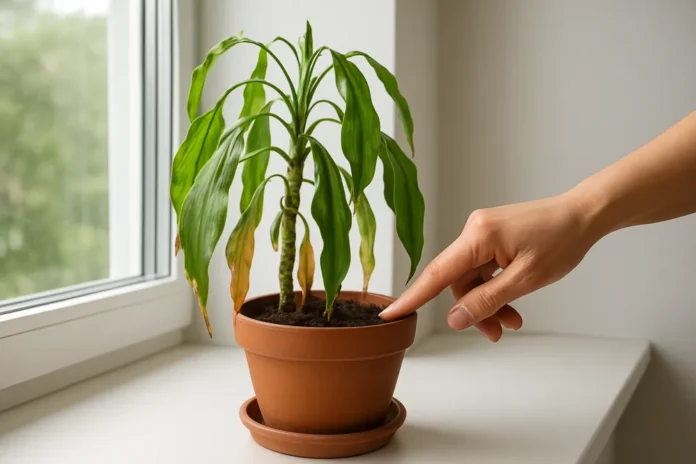
A dracaena usually wilts because its roots are stressed by too much water, too little water, poor drainage, or sudden temperature changes. Low light, root damage, and pests can also make the leaves droop.
A wilting dracaena can look confusing at first because the leaves often droop long before they actually turn yellow or brown. In many cases, the plant is reacting to root stress rather than a problem in the leaves themselves.
I usually start by looking at the potting mix, the weight of the pot, and whether the stems still feel firm. A dracaena that is only thirsty behaves very differently from one sitting in soggy soil, even though both can show the same wilting leaves symptom.
The good news is that dracaenas are often recoverable if you catch the problem early. Once you match the wilt pattern with the plant's recent care, the cause usually becomes much easier to pin down.
What Wilting Looks Like on a Dracaena
Wilting on a dracaena usually shows up as leaves that sag, fold inward, lose their usual arch, or hang limply from the cane. Sometimes the entire plant leans and looks tired. Other times, only the lower leaves droop while the center still looks upright.
This symptom matters because it tells you the plant is struggling to move water properly from the roots to the foliage. That can happen when the soil is too dry, when roots are suffocating in wet mix, or when environmental stress makes the plant lose moisture faster than it can replace it.
- Leaves feel soft and bendy: often linked to dehydration or root stress
- Leaves droop but soil is wet: commonly points to overwatering or root rot
- Leaf tips brown while the whole plant slumps: often tied to uneven watering, dry air, or salt buildup
- Stem feels mushy near the base: a more serious sign of rot
- Only one side wilts: sometimes caused by root damage, sun scorch, or cold draft exposure on that side
When I diagnose dracaena wilt, I compare the oldest leaves with the newest center growth. If the newest leaves are still somewhat firm but older ones are collapsing, the problem often started at the roots or in watering habits rather than from a sudden leaf disease.
Overwatering Is the Most Common Cause
The most common reason a dracaena wilts indoors is overwatering. These plants like the soil to dry somewhat between waterings. When the mix stays wet too long, oxygen levels around the roots drop, fine roots die back, and the plant can no longer take up water normally. Ironically, a plant surrounded by wet soil can wilt because its damaged roots are no longer functioning.
Overwatered dracaenas often look dull and heavy at the same time. Leaves may droop, lower leaves may yellow, and the pot may stay moist for many days after watering. If the soil smells sour or swampy, root trouble is even more likely.
Signs Your Dracaena Is Staying Too Wet
- Soil feels wet several inches down long after watering
- The pot is heavy almost all the time
- Leaves wilt and yellow together
- Brown patches appear near the base of leaves
- The cane or stem base feels soft instead of woody and firm
- The plant is in a decorative cachepot that traps excess water
If this sounds like your plant, stop watering on schedule and let the upper portion of the mix dry before watering again. If the plant is in dense soil, a pot without drainage, or a container much too large for its root ball, repotting into a faster-draining mix is usually the better long-term fix.
Underwatering Can Cause the Same Droopy Look
A thirsty dracaena also wilts, but the clues are different. Dry plants usually feel lighter, and the potting mix pulls away from the sides of the pot. Leaves may curl, wrinkle slightly, or develop crisp brown tips before they fully droop.
Underwatering is especially common when a dracaena sits near an HVAC vent, in a very bright room, or in a porous terracotta pot that dries quickly. It can also happen after the soil becomes so dry that it turns hydrophobic and sheds water instead of absorbing it evenly.
How Dry Soil Wilt Differs From Wet Soil Wilt
- Dry soil wilt: pot feels light, mix looks shrunken, leaf edges may crisp
- Wet soil wilt: pot feels heavy, mix stays dark, leaves may yellow or soften
- Dry soil wilt: plant often perks up within a day after thorough watering
- Wet soil wilt: plant often stays limp even though the soil is moist
If the soil has gone bone dry, I like to water slowly in two passes about 10 minutes apart. The first round breaks the surface tension, and the second usually rehydrates the root ball much more evenly.
For a badly dried-out dracaena, water deeply until excess drains out, then empty any saucer or outer pot. Do not compensate by watering again the next day unless the soil is truly dry. The goal is to restore a normal wet-dry rhythm, not swing from drought to saturation.
Root Rot and Poor Drainage Are More Serious Problems
If your dracaena has been wilting for a while and watering adjustments are not helping, root rot becomes a strong possibility. Root rot usually starts when the plant sits in waterlogged soil, but it is often made worse by compacted mix, lack of drainage holes, or cold indoor conditions that slow evaporation.
Healthy dracaena roots are generally firm and pale. Rotten roots turn brown, gray, or black and feel mushy or stringy. Once enough roots are lost, the plant may wilt continuously because it no longer has enough healthy tissue to support the canopy.
When to Inspect the Roots
- The plant wilts even though the soil is moist
- There is a sour smell from the pot
- The cane base is soft or discolored
- Leaves are dropping quickly
- The plant has been in the same dense soil for years
- Water seems to sit in the pot instead of draining freely
If you unpot the plant and find rot, trim off dead roots with clean scissors and repot into fresh, airy mix. Use a container with drainage holes, and do not water again until the top portion of the mix has started to dry. Some severely rotted canes will not recover, but healthy sections can often be saved.
Light Problems Can Make a Dracaena Droop
Dracaenas tolerate lower light better than many houseplants, but there is a limit. In very dim rooms, they grow slowly, use water more slowly, and become more vulnerable to overwatering. The leaves may droop because the whole plant is losing vigor.
At the other extreme, harsh direct sun can stress a dracaena and cause limp, scorched foliage. Sun damage often shows up as faded patches, bleached streaks, or brown crispy areas on the side facing the window. A plant that was moved suddenly from low light to strong sun may wilt as it adjusts.
Best Light for Preventing Wilt
Most dracaenas do best in bright, indirect light. That means a spot near an east window, a few feet back from a south or west window, or a bright room with filtered light. When light is appropriate, the plant uses water at a healthier pace and maintains firmer leaves.
If your plant is in a dark corner, move it gradually to a brighter position instead of making an abrupt change. If it is in direct afternoon sun, pull it back a bit or diffuse the light with a sheer curtain.
Temperature Shock and Dry Indoor Air Can Trigger Wilting
Dracaenas are tropical plants, so they dislike sudden chills, hot blasts, and sharp environmental swings. A plant placed near a heating vent, exterior door, drafty window, or air conditioner can droop surprisingly fast, even if watering has been fine.
Cold stress is especially common in winter. Leaves may droop, discolor, or collapse after exposure to temperatures below the plant's comfort range. Hot, dry air can also increase moisture loss and make a mildly dry plant wilt faster.
- Keep dracaena away from cold drafts and heating vents
- Aim for stable indoor temperatures rather than frequent swings
- Avoid letting leaves press against icy window glass in winter
- Increase humidity modestly if the air is extremely dry, but do not use humidity as a substitute for proper watering
I often see dracaenas wilt after a room layout change rather than a watering mistake. If the timing lines up with a move near a vent or window, I take that clue seriously before assuming the soil is the only problem.
Pests and Chemical Sensitivity Are Less Common but Real
While watering issues are far more common, pests can also weaken a dracaena enough to cause drooping leaves. Spider mites, mealybugs, and scale insects feed on plant sap and gradually reduce vigor. A badly infested plant may look limp, dusty, or generally off-color.
Dracaenas can also react to fluoride, salt buildup, or excess fertilizer. These problems more often show up as brown tips and margins first, but they can contribute to root stress and wilting over time, especially in containers that are rarely flushed.
What to Look For
- Fine webbing or speckled leaves from spider mites
- Cottony white clusters from mealybugs
- Small brown bumps on stems or leaf undersides from scale
- White crust on soil surface from salt buildup
- Brown leaf tips after frequent fertilizing or use of mineral-heavy water
Treat pests promptly with repeated cleaning and an appropriate houseplant-safe treatment. If salt buildup is the issue, flush the pot thoroughly and cut back on fertilizer. Using filtered or distilled water can help sensitive dracaenas, especially if your tap water is hard or high in fluoride.
How to Figure Out the Cause Quickly
The fastest way to diagnose wilting is to combine several clues rather than relying on one symptom. A droopy leaf alone does not tell you much. Soil moisture, pot weight, leaf texture, root smell, and recent environmental changes tell a much clearer story.
Simple Troubleshooting Checklist
- Feel the top few inches of soil and check deeper down if possible.
- Lift the pot to judge whether it feels unusually light or heavy.
- Look for yellowing, browning, or soft tissue at the base.
- Think about what changed recently, such as watering frequency, light, or room placement.
- Inspect stems and leaf undersides for pests.
- If the evidence is mixed, slide the plant out of the pot and inspect the roots.
This process helps you avoid the most common mistake: adding more water to a plant that is already wilting from root rot. Dracaenas recover best when you fix the actual cause instead of reacting only to the drooping leaves.
What to Do Next Based on What You Find
If the Soil Is Too Dry
Water thoroughly until excess drains out. Let the plant rest in bright, indirect light and return to a routine where the soil partially dries between waterings.
If the Soil Is Too Wet
Pause watering and improve airflow and light if possible. If the pot has poor drainage or the mix is compacted, repot into a better-draining medium before root damage spreads.
If Roots Are Rotting
Trim mushy roots, discard the old soggy mix, and repot into fresh soil. Remove any fully collapsed leaves or stems, but keep all healthy tissue that still feels firm.
If Light or Temperature Is the Issue
Move the plant to a stable spot with bright, indirect light and protection from drafts or heat blasts. Give it a week or two before judging improvement, since stressed dracaenas do not always perk up overnight.
If Pests Are Involved
Isolate the plant, clean the foliage, and repeat treatment as needed. One quick spray rarely solves an indoor pest problem completely.
How to Prevent Wilting From Coming Back
Once a dracaena recovers, prevention is mostly about consistency. These plants do not like extremes. They want a pot that drains well, soil that is allowed to dry moderately between waterings, and a stable indoor environment.
- Use a container with drainage holes
- Choose a loose potting mix rather than heavy, compacted soil
- Water based on soil dryness, not on the calendar alone
- Keep the plant in bright, indirect light
- Rotate occasionally for even growth
- Avoid overfertilizing
- Inspect for pests every few weeks
- Repot when the mix breaks down or drainage slows noticeably
I find that dracaenas do best when I let the plant's pace set the schedule. In winter they usually need less water, and in brighter summer conditions they may dry faster. Paying attention to the pot and soil tells you more than any fixed weekly rule.
FAQ
Can a Dracaena Recover After Wilting?
Yes, a dracaena can often recover if the cause is corrected before the roots or cane are badly damaged. Recovery is fastest when new growth remains healthy and the stem base is still firm.
How Often Should I Water a Wilting Dracaena?
Do not water on a fixed schedule just because the plant is wilting. Water only when the upper portion of the soil has dried appropriately, since both overwatering and underwatering can cause the same droopy look.
Should I Cut Off Wilted Dracaena Leaves?
Only remove leaves that are fully yellow, brown, or collapsed. Slightly droopy but still green leaves can still help the plant recover if the underlying problem is fixed.
Why Is My Dracaena Wilting After Repotting?
Repotting can cause short-term stress from root disturbance, especially if the plant was watered too heavily afterward. It usually improves if the roots stay healthy and the new mix drains well.
Does Low Light Cause Dracaena Leaves to Wilt?
Yes, very low light can contribute to wilting by weakening the plant and slowing soil drying, which often leads to root stress. Dracaenas generally prefer bright, indirect light for stronger growth.
Can Tap Water Make My Dracaena Droop?
Tap water is not usually the main cause of sudden wilting, but mineral salts and fluoride can stress some dracaenas over time. This often shows up first as brown tips and worsening root health rather than instant drooping.
What Does Root Rot Smell Like in a Dracaena Pot?
Root rot often creates a sour, musty, or swamp-like odor. Healthy potting mix should smell earthy rather than foul.
Need help choosing the right fix fast? Read our dracaena care and troubleshooting guide to compare watering methods, soil mixes, and the best products for reviving stressed indoor plants.
