

Note: This article contains affiliate links. If you click on these links and make a purchase, I may earn a small commission at no extra cost to you. This helps support my research and content. Read my full affiliate disclosure here.
A good non woven weed barrier keeps weeds down while letting water and air reach roots. In gardens, raised beds, and landscape beds the right fabric reduces time spent weeding, preserves soil structure, and helps plants establish more reliably. This guide shortlists the top Non Woven Weed Barriers gardeners are choosing for dependable drainage, tear resistance, and long-term ground coverage. We evaluated options on practical garden-focused criteria so you can pick a fabric suited to your soil type and maintenance plan. Read on for the evaluation factors and the top contenders.
Top Picks at a Glance
| Best Overall The best all-around choice for most situations | Super Geotextile 6 oz Non-Woven Geotextile Fabric, 3 x 50 ft |  |
| Best Quality Built to a higher standard if you want something more solid | VEVOR 3ft x 100ft Non-Woven Geotextile Landscape Fabric (8 oz) |  |
| Best Value The sweet spot between price and what you get | Garvee 4 ft x 100 ft Non-Woven Weed Barrier Landscape Fabric (1.8 oz) |  |
| Highest Rated A top-rated pick with lots of positive feedback | REKVEN Non‑Woven Geotextile Landscape Fabric, 3 x 50 ft |  |
| Most Popular A crowd favorite that many people choose with confidence | ECOgardener Premium 5 oz Landscape Fabric, 3 ft x 50 ft |  |
| Best Seller A high-volume bestseller chosen again and again | HOOPLE Premium Non-Woven Landscape Fabric Weed Barrier (3 ft x 100 ft) |  |
Super Geotextile 6 oz Non-Woven Geotextile Fabric, 3 x 50 ft
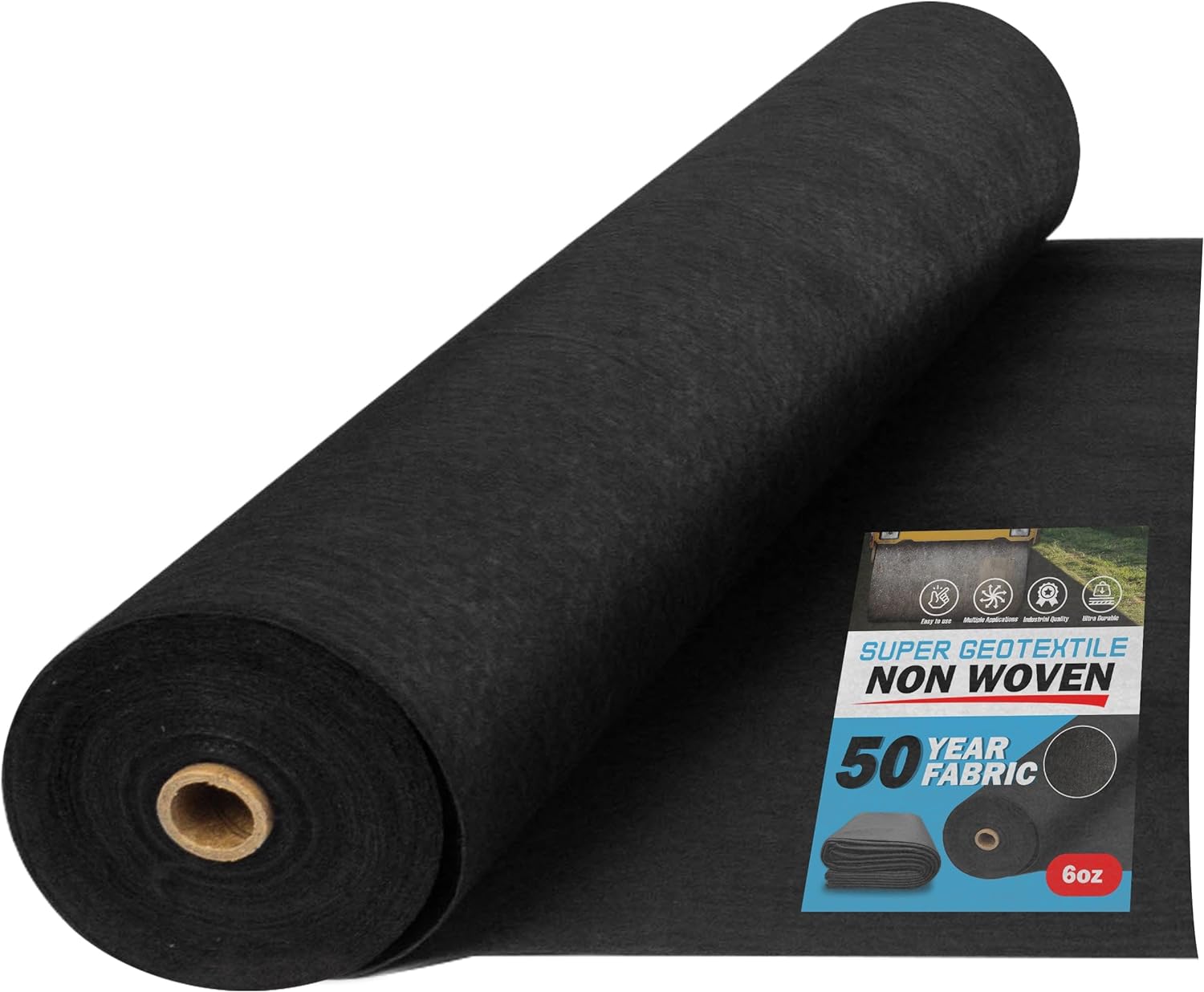
| Weight | 6 ounce |
|---|---|
| Type | Non-woven geotextile |
| Applications | Erosion control, drainage, underlayment, landscaping |
| UV/rot resistance | Yes |
This 6 ounce non-woven geotextile from Super Geotextile is built for heavy-duty soil stabilization and erosion-control work. Installed as a single-piece underlayment or filter layer, it separates soil from aggregate, promotes drainage for French drains and riprap, and reduces washout on slopes and retaining walls. Notable features include its higher fabric weight for tensile strength, UV and rot resistance for extended outdoor life, and availability in long cut lengths to minimize seams. In practice it speeds installation because larger rolls cut down on joins and makes for a more consistent filtration layer beneath gravel, soil, or pond liners. Practical limitations are that it is a fabric only so it must be paired with proper drainage aggregate, stakes or staples for secure fastening, and correct overlap/seam technique on steep sites; it does not replace structural erosion measures like toe-anchors or hard armoring. For performance-focused erosion control this fabric provides a durable, low-maintenance filter layer that holds up under heavy use when installed correctly.
Best for: Gardeners, contractors, and property owners who need a durable, long-lasting fabric to control soil erosion and build reliable drainage solutions on slopes, beds, or pond sites.
Less Ideal for: People looking for a standalone structural solution or a decorative groundcover; those projects requiring immediate hard armoring or vegetation-based erosion control should consider other options.
- 6 oz heavy-weight construction for greater tensile strength and durability
- UV and rot resistant for extended outdoor lifespan
- Available in long single-piece cuts to reduce seams and speed installation
- Functions as an effective filter layer for drainage applications like French drains and riprap
- Fabric must be used with appropriate aggregate, fasteners, and proper installation technique to perform as intended
Verdict: Choose this heavy 6 oz non-woven geotextile when you need a robust, long-lasting filter layer for serious erosion control and drainage projects.
VEVOR 3ft x 100ft Non-Woven Geotextile Landscape Fabric (8 oz)

| Material | Non-woven PP |
|---|---|
| Weight | 8 oz |
| Tensile strength | 350 N |
| Load capacity | 440 N |
| Length | 3ft x 100ft |
This VEVOR geotextile is a non-woven polypropylene landscape fabric built for drainage and erosion control. It unrolls easily for laying under gravel, along French drains, or beneath paths and driveways to separate soil from aggregate while allowing water to pass. The 8 oz needle-punched material and a listed 350 N tensile strength plus 440 N load capacity mean it is sturdier than lightweight weed cloth and stands up to installation in high-traffic or load-bearing spots. Permeable construction helps filter fine soil while promoting water drainage and air exchange, reducing pooling and maintaining healthier substrate. Installation is straightforward since the roll is flexible and can be cut to shape on site. Important limitations are that it is a functional drainage fabric rather than a permanent decorative groundcover and it will require proper overlap and anchoring to prevent shifting; it also will not actively prevent deep-rooted weeds without additional soil or mulch layers. For risk-averse projects where reliable drainage and long-term separation of soil and aggregate matter, this delivers a durable, predictable solution.
Best for: Buyers who prioritize reliable, low-risk drainage solutions for landscapes, paths, or French drains and want a durable fabric that performs predictably over time.
Less Ideal for: Gardeners seeking an all-in-one decorative groundcover or those who need active weed killing without additional mulching or soil amendments.
- Heavy 8 oz non-woven PP construction for increased durability compared with lightweight weed fabrics
- Permeable needle-punched design that allows water drainage while filtering fine soil
- Stated 350 N tensile strength and 440 N load capacity suitable for load-bearing or high-traffic installations
- Flexible roll format that is easy to cut and lay for trenches, French drains, and under gravel
- Not intended as a decorative surface so it needs covering with gravel or mulch for finished appearance
- Requires correct overlap and anchoring during installation to prevent movement or soil intrusion
Verdict: Choose this heavy-duty non-woven geotextile when you need a reliable, permeable fabric to protect drainage systems and keep soil separated from gravel for long-term performance.
Garvee 4 ft x 100 ft Non-Woven Weed Barrier Landscape Fabric (1.8 oz)

| Material Type | Polypropylene (PP) |
|---|---|
| Item Type Name | Weed Barrier Fabric |
| Unit Count | 1 Count |
This Garvee non-woven weed barrier is a utilitarian landscape fabric aimed at covering large areas without frequent replacement. Made from 1.8 oz polypropylene, the bolt provides 400 sq ft of coverage in a single length that is straightforward to cut and lay down. It is typically used beneath mulch, rock, or soil on planting beds, pathways, and slopes to block sunlight and prevent weed seed germination while still allowing water and air to pass through. Notable features include marked stripes to help align rows, claimed high tensile strength for longevity, and compatibility with staples or pins for anchoring. In practice it speeds installation on medium to large jobs and helps retain soil moisture and reduce erosion on gentle slopes. Limitations are that black fabric can show wear over time in high-traffic areas and heavy clay or frequently tilled beds will reduce its effective lifespan; you will also need to pair it with adequate mulching or edging if appearance matters. It is a functional choice for gardeners prioritizing coverage and durability over decorative finish.
Best for: Gardeners and landscapers who want a cost-effective, easy-to-install fabric to cover medium to large areas and reduce weed maintenance without frequent replacement.
Less Ideal for: Those who prioritize ornamental bed appearance without covering fabric or who need a product for beds that are regularly dug and replanted.
- Large continuous coverage (4 ft x 100 ft) reduces seams and installation time
- Non-woven polypropylene construction offers water permeability while blocking sunlight
- Striped pattern aids alignment for neater, faster layout
- Designed for erosion control and compatible with staples or garden pins for secure anchoring
- Black polypropylene will show wear in high-traffic or frequently worked areas
- Not decorative on its own and usually requires mulch or stone cover for appearance
Verdict: Choose this Garvee non-woven fabric when you need an affordable, large-format weed barrier that is quick to lay down and effective at blocking weeds while allowing water through.
REKVEN Non‑Woven Geotextile Landscape Fabric, 3 x 50 ft

| Material | Nonwoven polypropylene (Tough‑Tex) |
|---|---|
| Weight | 4.5 oz/yd² |
| Thickness | 1 mm nominal |
| Package includes | 30 U‑pin staples |
This REKVEN nonwoven geotextile is built to act as a filter fabric for French drains, dry wells, and under‑gravel installations while also serving as a heavy‑duty weed barrier. In practice you unroll the 3 x 50 foot sheet, trim with scissors, and anchor it with the included U‑pin staples; its 4.5 oz/yd² construction and 1 mm nominal thickness make it flexible enough to conform to trenches and contours while still resisting tear during installation. Because it is permeable it allows water, air, and nutrients to pass while keeping soil from migrating into aggregate beds, which helps maintain drainage performance and prevents gravel from sinking into mud. The fabric is made of polypropylene so it resists moisture, mold, and pests and is safe around plants since it has no chemical treatments. Limitations are its sensitivity to prolonged direct UV exposure so it should be covered with gravel or mulch, and its 3 ft width means wider runs require overlapping seams and additional pins for secure installation.
Best for: Gardeners and landscapers who prioritize a long‑lasting, reliable drainage underlayment or weed barrier for ditches, French drains, and under‑gravel paths and want a fabric that performs as a true filter rather than a solid sheet.
Less Ideal for: People needing a UV‑exposed surface fabric or a single wide roll to cover large areas without seams should consider alternatives designed for direct sunlight or wider widths.
- Permeable nonwoven polypropylene that separates soil from aggregate while allowing drainage
- 4.5 oz/yd² weight and 1 mm nominal thickness provide durability for trench and underlayment use
- Includes 30 U‑pin staples so the fabric can be anchored immediately during installation
- Resists moisture, mold, and pest intrusion without chemical treatments, safe for planting areas
- Not intended for prolonged UV exposure and should be covered with aggregate or mulch
- 3 ft width requires overlaps for wider trenches and may increase installation time
Verdict: A dependable permeable geotextile for French drains and under‑gravel work that keeps soil out of the aggregate and comes ready to anchor.
ECOgardener Premium 5 oz Landscape Fabric, 3 ft x 50 ft

| Fabric weight | 5 oz |
|---|---|
| Construction | Two-layer needle-punch |
| Intended use | Weed barrier for garden beds and landscaping |
| Installation | Use with landscape staples or pins |
| Permeability | Allows water and air flow |
This ECOgardener 5 oz landscape fabric is a professional-grade weed barrier meant for garden beds, raised beds, and other landscaped areas where long-term weed control and soil moisture retention matter. Made with a two-layer needle-punch construction, the fabric lies flat and resists tearing during installation; the felted side is intended to face down so the material grips soil. It is porous enough to let water and air reach roots while slowing weed emergence, and it is commonly installed under mulch or gravel using landscape staples or pins. Practical benefits include reduced hand-weeding, lower mulch consumption, and a neater bed edge when used with bricks or borders. Limitations are that it does not eradicate established perennial weeds at the roots and will need cutting for plantings and occasional maintenance where roots find cracks; it is also a permanent barrier that can complicate future bed renovation if not removed. For gardeners seeking long-lasting weed suppression, it performs as advertised, but expect some upfront work to fit it around existing plants and borders.
Best for: Gardeners who value a durable, low-maintenance ground cover and want a proven product that reduces time spent weeding and mulching in planted beds.
Less Ideal for: People planning frequent bed redesigns or those who prefer to cultivate soil without any permanent barrier, since the fabric complicates major renovations.
- Heavy two-layer needle-punch construction resists tears and holds up during installation
- Permeable design allows water and air to reach plant roots while blocking light to weeds
- Helps conserve soil moisture and reduces the frequency and volume of mulch needed
- Straightforward installation with staples or pins and compatible with mulch or gravel top layers
- Will not kill or remove established perennial weeds that grow through or around edges
- Requires cutting and fitting around existing plants which adds installation time
Verdict: Choose this fabric if you want a durable, professional-grade weed barrier that markedly reduces weeding and conserves soil moisture in established beds.
HOOPLE Premium Non-Woven Landscape Fabric Weed Barrier (3 ft x 100 ft)

| Material | Non-woven polypropylene |
|---|---|
| Length | 100 ft |
| Width | 3 ft |
| Item model number | NON-WOVEN FABRIC |
The HOOPLE non-woven landscape fabric is a thick, tear-resistant ground cover intended for garden beds, pathways, and under gravel or mulch to reduce weed growth. It unrolls easily and can be cut to fit planting beds or around established plants; once laid and covered with mulch or gravel it blocks sunlight to prevent most weeds while still permitting water and air to reach roots. Notable features include UV resistance, high tensile strength, and permeability that supports soil moisture and root respiration. Practical benefits are reduced weeding time, better soil moisture retention, and a stable base for walkways or driveways. Limitations are that it is not a permanent barrier against deep-rooted or persistent weeds and requires correct installation and overlap at seams to avoid gaps; it also must be lifted or cut to transplant or sow seeds directly through the fabric. For risk-averse gardeners it offers a reliable, low-maintenance way to control most surface weeds when paired with proper site prep and covering materials.
Best for: Buyers who prioritize dependable, low-maintenance weed control and want a product that performs reliably with straightforward installation and conventional mulching or gravel coverage.
Less Ideal for: Gardeners planning to frequently replant, sow seeds directly into beds, or those who need a permanent barrier against aggressive deep-rooted perennials.
- Thick, tear-resistant non-woven polypropylene that stands up to foot traffic and weather
- Permeable construction allows water and air to reach plant roots while blocking sunlight to suppress weeds
- UV resistant for longer outdoor life without rapid degradation
- Easy to unroll and cut to shape for different garden layouts
- Not a complete solution for deeply rooted or perennial weeds that can grow through or around the fabric
Verdict: Choose this heavy-duty non-woven fabric when you want a durable, easy-to-install weed barrier that preserves soil airflow and moisture while cutting routine weeding.
Choosing the Right Non Woven Weed Barrier: Key Factors to Consider
Drainage Performance
How quickly water moves through the fabric affects root health and standing water. Non woven fabrics are designed to allow water to pass vertically and laterally, but weave density and fiber composition vary. In heavy clay soils you want faster through-drainage to avoid waterlogging, while in sandy soils moderate retention helps preserve moisture.
Look for materials with tested water flow rates or clear manufacturer guidance on permeability. Poor drainage forces gardeners to cut holes or lift fabric frequently, which reduces effectiveness and increases maintenance.
Tear Strength and Durability
Garden beds see foot traffic, trowels, and composting activity that can snag or tear weak fabric. Tear strength determines how well a barrier resists rips when edges are pulled or when tools contact the surface.
Stronger, puncture-resistant fabrics hold up around borders, pathways, and under mulch. Even when not walked on often, seasonal freeze-thaw cycles and root growth can stress the material, so durability is a long-term cost saver.
UV Resistance and Expected Lifespan
Sun exposure degrades many synthetic materials. UV-stabilized non woven fabrics maintain structural integrity longer in exposed beds and sunny mulched areas. Lifespan expectations vary from a single season to many years depending on UV treatment and fabric thickness.
If you plan to leave fabric exposed under mulch or around ornamental beds, choosing a UV-rated option reduces the need for replacement and disturbance of plants later on.
Breathability and Soil Health
Roots and soil organisms need oxygen. A fabric that blocks air will harm soil biology and limit root expansion. Non woven barriers typically perform better than impermeable sheeting because they allow gaseous exchange while suppressing weed germination.
Consider how the barrier interacts with compost additions and topdressing. A breathable material encourages microbial activity and supports nutrient cycling, which benefits long-term plant vigor.
Installation and Handling
Wide rolls, flexibility, and ease of cutting reduce installation time. Fabrics that lie flat and resist bunching make for neater beds and simpler edging. The availability of wider widths can minimize seams and reduce points where weeds can intrude.
Also consider whether the fabric takes staples or pins well and how easy it is to tuck under edging. Faster, less fiddly installation encourages correct use and better long-term results.
Compatibility with Planting and Mulch
Decide whether you need a fabric that supports planting through pre-cut holes, slit planting, or that can be left intact with mulch layered on top. Some non woven barriers are easier to place plugs or seedlings through without ripping, while others perform best when used only under decorative or organic mulch.
The interaction with chosen mulch matters. Coarser organic mulches may shift and expose fabric edges; finer mulches compact and sit differently on the surface. Matching the barrier to your planting method and mulch choice reduces maintenance and plant stress.
When Non Woven Fabric Is the Right Choice
Non woven weed barriers are a good fit when you need a balance of water permeability and weed suppression without sealing the soil. They are particularly useful in perennial beds, around shrubs, and under decorative mulch where air and water exchange matter.
Use non woven fabric when you want to preserve soil structure and support beneficial organisms while cutting down on surface weeds. For vegetable beds where you dig and rotate crops frequently, lighter-duty or removable approaches may be preferable.
- Supports soil breathing better than impermeable plastic
- Works well under bark, gravel, and larger decorative mulches
- Less suited to beds that need frequent deep turning
Preparing the Bed and Laying Fabric
Clear perennial weeds and remove large roots before installing fabric. Smooth the soil surface so the material can lie flat; bumps and voids create pockets where weeds can establish.
Overlap edges by a few inches and secure with landscape staples at regular intervals. Cut planting holes only where you plan to put plants and keep seams tight to reduce weed intrusion.
- Remove persistent root systems first for best results
- Use enough staples to prevent wind lift and shifting
- Allow for irrigation layout and do not obstruct drip lines
Combining Fabric with Mulch and Soil Amendments
Apply a layer of mulch over the fabric to block light and stabilize temperature. Organic mulches also improve soil as they break down, but factor in their thickness so the fabric does not become exposed or buried too deeply.
Add compost and amendments before laying the barrier to avoid burying nutrient-rich material under fabric. If you plan to topdress annually, choose a fabric that stays effective beneath the added layer.
- Leave at least 2 to 3 inches of mulch above the fabric for protection
- Avoid piling soil on top of fabric when the goal is long-term weed suppression
- Check edges after heavy rain to ensure mulch has not shifted
Common Installation Mistakes to Avoid
Do not cover fabric with soil expecting it to suppress weeds; buried edges often invite rooted weeds to grow through disturbed seams. Also avoid cutting large, permanent holes that encourage weed entry around plants.
Avoid stretching the fabric tight across slopes without anchoring it. Tension can cause tears and gaps as the ground settles or freezes and thaws.
- Do not use fabric as a long-term substitute for addressing underlying weed roots
- Avoid excessive cutting and patching that creates entry points for weeds
- Ensure proper anchoring on slopes and borders to prevent movement
Caring for Beds with Non Woven Barriers
Inspect fabric edges annually and repair small tears promptly to prevent weeds from establishing in gaps. Refresh mulch where needed and re-anchor loose sections after storms or heavy foot traffic.
When transplanting or adding plants, make clean cuts and avoid tearing to extend the useful life of the barrier. If you plan to remove the barrier later, lift sections gently rather than ripping.
- Patch early to avoid larger repairs later
- Keep an eye on weed growth at seams and edges
- Replace only when UV degradation or persistent damage reduces effectiveness
How We Chose the Best Non Woven Weed Barrier
We focused on attributes that matter for real garden use rather than marketing claims. We evaluated fabric drainage ability and water flow to ensure irrigation and rainfall pass through readily. Durability and tear resistance were assessed to predict how the material holds up under foot traffic, tool contact, and seasonal shifts. UV stability and expected lifespan were included so the fabric will last multiple seasons where needed. Breathability and root-friendly properties were judged to avoid suffocating plants and to support healthy soil biology. Installation friendliness and available widths were considered for ease of use across beds, borders, and slopes. We excluded products aimed primarily at temporary construction or erosion-control fabrics that are not designed for planting beds. Our final list reflects these filters so the picks are well suited for everyday garden and landscape applications.
FAQ
Will non woven weed barrier stop all weeds?
Non woven barriers significantly reduce surface weed germination by blocking light, but they do not stop weeds that re-sprout from roots underneath. Persistent perennial roots should be removed before installation for best results.
Can I plant through non woven fabric?
Yes. You can plant by cutting holes or slits for individual plants or by creating larger openings for groupings. Take care to make neat cuts to avoid enlarging holes and creating paths for weeds.
How long does non woven fabric typically last in a sunny bed?
Lifespan depends on UV treatment and fabric weight. UV-stabilized options last multiple seasons, while untreated fabrics degrade faster. Inspect fabric annually and expect a range from a few seasons to many years depending on exposure.
Is non woven fabric safe for soil organisms and roots?
Non woven fabrics designed for gardens allow air and water exchange, which supports soil life better than impermeable sheeting. Choosing a breathable option helps maintain healthy microbial and root activity.
Can I use non woven barrier under gravel or pathways?
Yes. It can separate soil from aggregate and reduce weed growth in paths, provided the fabric is strong enough to resist puncture and is properly anchored to handle foot traffic.
Final Verdict
Prioritize drainage, tear resistance, and UV stability when choosing a Non Woven Weed Barrier. The right balance will depend on your soil type, whether beds receive heavy foot traffic, and how you plan to mulch and plant. Expect to trade off absolute weed elimination for breathable soil conditions that favor plant health. Focus on materials that match your garden maintenance plan and install them carefully to minimize seams and tears. With the right fabric and correct installation, you can reduce weeding time while supporting healthier soil and plants.
