

Note: This article contains affiliate links. If you click on these links and make a purchase, I may earn a small commission at no extra cost to you. This helps support my research and content. Read my full affiliate disclosure here.
Picking the right planter for succulents matters more than many gardeners expect. Succulents need quick-draining containers sized to match compact root systems, and the wrong pot can cause chronic overwatering or stunted growth. This guide presents our six shortlisted planters for succulents, each chosen for how it performs in real indoor, balcony, and outdoor rock garden situations. We'll evaluate practical factors like drainage, material, and pot size so you can match a container to your plant habits and location. Read on to find a planter that keeps succulent roots healthy and reduces maintenance needs.
Top Picks at a Glance
| Best Overall The best all-around choice for most situations | ARTKETTY 10-inch Ceramic Succulent/Bonsai Planter with Wood Stand |  |
| Best Quality Built to a higher standard if you want something more solid | LE TAUCI Ceramic Succulent Planters, Set of 2 (8" & 6.5") with Drainage Hole |  |
| Best Value The sweet spot between price and what you get | Ceramicfor 6-inch Glazed Ceramic Planter with Drainage Hole and Saucer |  |
| Best Budget The cheapest option that still gets the job done reliably | SQKH 4-inch Plastic Plant Pots 6-Pack with Drainage Trays |  |
| Highest Rated A top-rated pick with lots of positive feedback | sietpoek 5.5" Ceramic Succulent Planter Set of 4 with Drainage Saucer |  |
| Most Popular A crowd favorite that many people choose with confidence | ZOUTOG 6-Pack 3.1" Ceramic Succulent Pots with Bamboo Tray |  |
ARTKETTY 10-inch Ceramic Succulent/Bonsai Planter with Wood Stand

| Material Type | Ceramic |
|---|---|
| Other Special Features of the Product | Drainage Hole |
| Mounting Type | Free Standing |
| Plant or Animal Product Type | Bonsai |
This ARTKETTY 10-inch ceramic planter is a shallow, decorative bowl intended for succulents, cacti and bonsai where good drainage and a low profile are desirable. It ships with a small wood stand and a mesh pad so you can display the pot elevated while protecting the stand from moisture. The glazed ceramic is fired at high temperature for a smooth finish that resists staining and looks polished on a windowsill or patio. The built-in drainage hole helps prevent root rot when used with well‑draining soil and the shallow depth suits rosette succulents, echeverias and small bonsai styles. Because it is low and wide the pot works best for shallow-rooted species or as a decorative grouping rather than for tall, fast-growing plants. The planter is free‑standing and fairly light, so you should place it on a stable surface or tray outdoors. Overall it is a practical, attractive choice for showcasing succulents with the convenience of a stand and drainage-ready design, but gardeners needing deeper root volume should consider a deeper pot instead.
Best for: Buyers who want an attractive, low‑profile planter to showcase succulents, cacti or small bonsai on a windowsill or patio and who prioritize good drainage and presentation.
Less Ideal for: Growers who need deep root space for larger plants, heavy potting mixes, or for planters that must withstand rough outdoor conditions year‑round.
- Glazed ceramic finish provides an attractive, durable surface
- Included wood stand elevates the planter for better display and airflow
- Drainage hole and mesh pad support proper water runoff for succulents
- Shallow, wide shape is well suited to rosette succulents and small bonsai arrangements
- Shallow depth limits suitability for deeper‑rooted or fast‑growing plants
- Ceramic material can chip or crack if dropped or frozen outdoors
Verdict: A stylish glazed ceramic shallow planter with a stand and drainage that makes it an easy, attractive choice for displaying succulents and small bonsai.
LE TAUCI Ceramic Succulent Planters, Set of 2 (8" & 6.5") with Drainage Hole

| Material Type | Ceramic |
|---|---|
| Finish Types | Glazed |
| Other Special Features of the Product | Drainage Hole |
| Mounting Type | Tabletop |
| Unit Count | 2 Count |
These LE TAUCI planters are built for succulent care and display. The set includes an 8-inch and a 6.5-inch shallow pot with wide mouths that make arranging clusters, echeverias, or small aloe offsets easy while promoting airflow around roots. Their footed design lifts the pots slightly for added circulation and a cleaner shelf or windowsill look. Each pot has a drainage hole plus a removable plug and includes a mesh pad to prevent soil loss and splashing, so you can choose active drainage for healthy succulents or seal the hole for moisture-sensitive placements. The thick, high-fired ceramic and glazed finish feel sturdy and wipe clean, and the reactive glaze gives each piece slight color variation for a handcrafted appearance. Expect the shallow profile to limit soil volume, which is ideal for succulents but means more frequent watering checks for any larger or fast-growing plants. Also these are indoor tabletop planters and not suited for heavy outdoor exposure or very large root systems.
Best for: Buyers who prioritize healthy succulent performance and tidy indoor display will appreciate these pots for windowsills, desks, and shelves where drainage control and airflow matter.
Less Ideal for: Not a good fit for gardeners who need deep pots for large root systems or planters intended for full outdoor use or heavy-duty landscaping.
- Wide-mouth, shallow shape makes arranging multiple succulents simple
- Drainage hole plus removable plug and mesh pad gives flexible watering control
- Footed base improves air circulation and reduces surface staining
- High-fired glazed ceramic is sturdy and easy to wipe clean
- Shallow soil depth limits use to small succulents or slow growers
- Designed for indoor tabletop use only, not for prolonged outdoor exposure
Verdict: A practical, attractive pair of shallow ceramic planters that give succulent growers reliable drainage control and a clean, elevated display.
Ceramicfor 6-inch Glazed Ceramic Planter with Drainage Hole and Saucer

| Material Type | Ceramic |
|---|---|
| Capacity | 2.5 liters |
| Other Special Features of the Product | Drainage Hole, Fade Resistant, Weather Resistant |
| Mounting Type | Tabletop |
| Finish Types | Glazed |
This 6-inch glazed ceramic planter is designed for everyday indoor use with small plants such as succulents, cacti, herbs, and other tabletop specimens. Made of fired ceramic, it feels sturdy and has a clean modern finish that suits windowsills and desks. The built-in drainage hole plus the included saucer make it easy to avoid overwatering and keep surfaces tidy, and the lightweight saucer detaches for routine watering and cleaning. Its weather and fade resistant glazing helps retain appearance in bright light, although ceramic can chip if knocked or dropped and is not frostproof for unprotected outdoor winter use. The pot’s modest volume fits single succulents or small mixed arrangements but will require repotting sooner for faster-growing plants. Overall it is a simple, attractive planter that emphasizes water management and display for small indoor plants while trading off large capacity and outdoor durability.
Best for: Buyers who want a tidy, low-maintenance indoor planter to grow single succulents, small cacti, or herbs and who prioritize reliable drainage and a clean look.
Less Ideal for: Not a good choice for gardeners who need large-capacity planters, heavy outdoor use in freezing climates, or rugged pots that tolerate frequent rough handling.
- Includes drainage hole and matching saucer to manage excess water and protect surfaces
- Durable high-temperature fired ceramic with glazed finish that resists fading
- Compact 6-inch size fits windowsills, desks, and small planting projects
- Comes with a drainage net and saucer for cleaner potting and easier watering
- Ceramic can chip or crack if dropped and is not suited for unprotected freezing conditions
- Limited soil volume means more frequent repotting for vigorous plants
Verdict: A compact glazed ceramic pot with a drainage hole and saucer that makes growing and caring for single succulents simple and tidy.
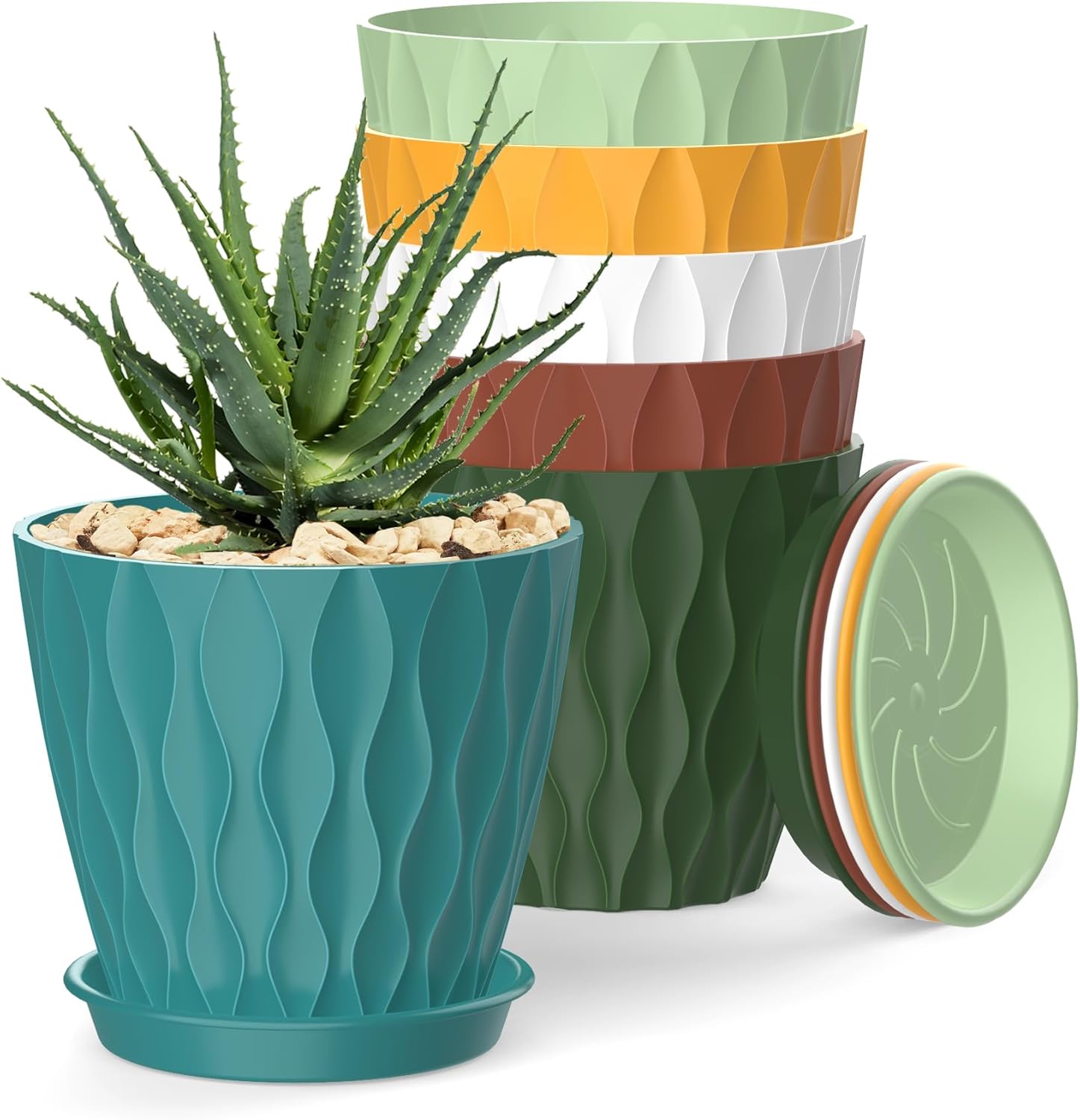
SQKH 4-inch Plastic Plant Pots 6-Pack with Drainage Trays
| Unit Count | 6 Count |
|---|---|
| Material Type | Plastic |
| Other Special Features of the Product | Drainage Hole |
| Indoor Outdoor Usage | Indoor, Outdoor |
These SQKH 4-inch pots are a straightforward, budget-minded option for growing succulents and other small plants. The set includes six lightweight polypropylene pots and matching trays, so you can pot multiple plants or swap soil without buying extras. Each pot has many drainage holes in the base and a small saucer to catch excess water, which helps prevent root rot on drought-tolerant succulents when used with a well-draining mix. The matte finish and subtle ribbed design look tidy on windowsills and shelves. Because the pots are plastic they resist cracking and will hold up outdoors in sun better than thinner plastics, but they are basic in appearance and not designed for long-term decorative display. The 4-inch size limits larger root systems, so plan to repot succulents as they grow. For growers who want a simple, inexpensive starter set that emphasizes function and drainage, these deliver good value; if you need decorative ceramic planters or much larger containers you should consider other options.
Best for: Budget-conscious indoor gardeners who need a practical starter set for succulents, propagations, or grouping small plants on windowsills and shelves.
Less Ideal for: Collectors seeking decorative ceramic or designer pots or growers who need larger containers for mature plants.
- Six-pack gives enough pots for multiple succulents or propagation projects
- Multiple drainage holes per pot plus included trays reduce risk of overwatering
- Made from thicker polypropylene that resists cracking and sun brittleness
- Matte, simple design fits unobtrusive indoor or balcony displays
- Small 4-inch size requires repotting as plants mature
- Basic plastic finish is functional but not decorative for display-focused setups
Verdict: A no-frills, affordable six-pack of small plastic pots that gives succulents reliable drainage and good value for starter collections.
sietpoek 5.5" Ceramic Succulent Planter Set of 4 with Drainage Saucer

| Material Type | Ceramic |
|---|---|
| Capacity | 1.78 liters |
| Number of Pieces | 4 |
| Other Special Features of the Product | Drainage Hole, Portable |
| Indoor Outdoor Usage | Indoor |
These 5.5-inch glazed ceramic planters are designed for small succulents, cacti, herbs and other petite houseplants. Each pot includes a drainage hole with a mesh filter and a connected saucer that helps catch runoff, so they are practical for regular watering without leaving puddles on windowsills or shelves. The set of four gives consistent styling for grouped displays and the ceramic construction provides stability and an attractive glossy finish that suits modern interiors. Because they are made from kaolin clay and glazed, they retain moisture differently than terracotta, which can be beneficial if you prefer less frequent watering. The pots are labeled for indoor use and are best on floors, shelves, or countertops where the attached saucer can sit flat. Downsides to note are the fixed saucer design, which can make thorough cleaning or repotting slightly more awkward, and the small internal volume limits larger root systems, so they are not suitable for fast-growing or large plants.
Best for: Buyers who want reliable, low-maintenance indoor planters for succulents or small houseplants and prefer consistent, stable pots that minimize mess from watering.
Less Ideal for: Gardeners who need larger containers for fast-growing plants or those who prefer unglazed, highly breathable pots for very dry-soil growing methods.
- Drainage hole with mesh filter prevents soil clogging and supports healthy root drainage
- Attached saucer catches excess water to protect surfaces from runoff
- Glazed ceramic construction is stable, durable, and offers a clean modern look
- Sold as a set of four for consistent styling across multiple plants
- Attached saucer can make cleaning and repotting more awkward
- Small capacity limits use to succulents and other compact plants
Verdict: A dependable set of glazed ceramic planters with drainage and saucers that makes watering succulents cleaner and easier indoors.
ZOUTOG 6-Pack 3.1" Ceramic Succulent Pots with Bamboo Tray

| Unit Count | 6 Count |
|---|---|
| Material Type | Bamboo, Ceramic |
| Other Special Features of the Product | Drainage Hole, Lightweight, Portable |
| Indoor Outdoor Usage | Indoor, Outdoor |
These ZOUTOG succulent pots are a practical set for staging small succulents, cacti, or desktop herbs. Each glazed ceramic pot is about 3.1 inches across and includes a drainage hole plus a removable bamboo tray to catch runoff, so you can water without risking soggy roots or tabletop mess. The set of six makes it easy to create a coordinated grouping on a windowsill, desk, or shelf; the ceramic finish looks clean and neutral in most interiors. Because the pots are fired ceramic they feel sturdy and show a consistent finish, and the lightweight design keeps them easy to move when reorganizing arrangements. Limitations to note are the small internal volume, which restricts them to young plants or very shallow-rooted succulents, and the bamboo saucer will eventually weather if left wet frequently. These are best for someone who wants a neat, uniform display of many small plants rather than larger specimens or long-term outdoor planting.
Best for: Buyers who want a low-risk way to display multiple small succulents or starter plants indoors and value consistent, tidy presentation across a grouping.
Less Ideal for: Gardeners who need larger pots for established succulents, deeper-rooted varieties, or permanent outdoor planting should choose bigger containers.
- Includes drainage holes and removable bamboo trays to prevent overwatering and surface stains
- Set of six provides a coordinated display for multiple small succulents
- Glazed ceramic construction gives a clean, durable finish that suits indoor tabletop use
- Small capacity limits use to seedlings, offsets, or very small succulents rather than mature plants
- Bamboo trays can degrade over time with repeated exposure to standing moisture
Verdict: A reliable six-pack of small glazed ceramic pots with drainage and bamboo trays, ideal for neatly displaying multiple young succulents indoors.
Choosing the Right Planter for Succulents: Key Factors to Consider
Drainage and Water Flow
Succulents are adapted to dry conditions and need soil that dries out between waterings. A planter that allows excess water to escape quickly reduces the risk of root rot and fungal problems. Consider whether the pot has factory-drilled holes or a design that makes it easy to add them. Also think about how the pot shape guides water movement; narrow-bottomed pots can trap moisture while shallow, wide pots speed evaporation.
For indoor use, pairing a pot with a drainage hole and a saucer is often the best approach. For glazed or sealed containers without holes, plan for a thick drainage layer and very well-draining soil, and expect to water more conservatively.
Pot Material and Moisture Retention
Different materials hold and release moisture in distinct ways. Unglazed terracotta breathes and sheds moisture quickly, which helps prevent soggy roots but may dry out faster on hot windowsills. Glazed ceramic and plastic retain moisture longer, which can be helpful in very dry interiors but raises the need for strict watering control.
Think about the environment where you'll keep the plants. On a shaded balcony, a moisture-retentive pot can reduce watering frequency. In a bright, warm indoor spot, a porous material will protect succulents from staying too wet between waterings.
Size and Root Volume Match
Succulents generally prefer snug quarters rather than oversized pots. A too-large container holds excess soil that stays wet longer and encourages root rot. Choose a pot that leaves enough room for a modest rootball and a small margin for growth, especially for rosette-forming varieties.
Also account for trailing or clumping habits. Taller, narrow pots suit upright columnar types, while shallow, wide pots are better for low rosettes and arrangements that show off surface texture.
Access for Repotting and Maintenance
Planters should make it reasonably straightforward to repot, divide, or inspect roots when needed. Wide rims or straight sides ease extraction of compact rootballs, and removable inner pots or liners simplify work in crowded collections. Consider whether the pot's lip or glazing could chip during handling, and whether the pot's weight will be a problem when moving planted succulents.
If you frequently rotate plants or change displays, choose pots that are light enough to lift full of substrate and that have rims or feet that provide secure grip points.
Aesthetics and Display Considerations
Planters are part of the composition when arranging succulents, so style matters. Low-profile pots highlight rosettes and top-dressing, while hanging or wall-mounted planters work better for trailing varieties. Color and finish influence heat absorption; dark glazed pots can warm more in sun and accelerate drying while pale finishes reflect light and stay cooler.
Balance the look you want with functional needs. A decorative container can be used if it allows for a proper drainage strategy or an inner liner that maintains appropriate moisture behavior.
Durability and Weather Exposure
Think about where pots will live through seasons. Terracotta can crack with freeze-thaw cycles, while plastic and glazed ceramics usually resist cold better. UV exposure can degrade some plastics over time, causing brittleness and fading. For outdoor placements that see wind or heavy rain, choose pots with stable bases and finishes that withstand occasional weather extremes.
Indoor placements require less weather resistance but may demand scratch-resistant finishes if pots sit on wood surfaces or are moved often.
Sizing Succulent Arrangements
Match pot dimensions to plant habit and long-term plan. For single rosettes choose shallow, wide pots that show the foliage and allow surface soil to dry quickly. For columnar or taprooted species, select deeper pots that let the root grow downward without excess lateral soil.
When planting mixed arrangements, use a shallower shared container sized to give each plant a small individual space. Leave visible soil surface area for decorative gravel or sand top-dressing to improve appearance and reduce splash during watering.
- Single small rosettes: 2 to 4 inches wider than the plant
- Clusters or mixed bowls: shallow containers with several drainage points
- Trailing varieties: consider hanging pots or wide brim planters
Potting Mix and Layering Tips
A gritty, fast-draining potting mix is critical. Blend coarse sand, perlite, or pumice with a light organic base to create a mix that sheds moisture rapidly. Avoid regular garden soil which compacts and stays wet.
Use a modest gravel or pumice layer at the base only when the container is nonporous and lacks a drainage hole. For pots with holes, rely on the right soil blend and a piece of coarse material like crushed terracotta or a shard to prevent soil loss while keeping flow open.
- Aim for visible coarse components in the mix to confirm fast drainage
- Top-dress with gravel to reduce evaporation and deter pests
- Avoid thick organic mulches that retain moisture around crowns
Indoor Vs. Outdoor Placement
Indoors, succulents benefit from bright, indirect light and consistent temperatures. Choose pots that balance moisture retention with breathability because indoor air is typically less drying than outdoor conditions. Lighter-colored, shallow terracotta or unglazed ceramics often help avoid overwatering indoors.
Outdoors or on balconies, planters face more sunlight, wind, and temperature swings. Durable glazed ceramic and resin pots work well when they provide adequate drainage. Consider protecting delicate pots from extreme cold or moving containers to sheltered spots during severe weather.
- Place pots where airflow prevents stagnant humidity
- Use frost-resistant materials for year-round outdoor placement
- Bring smaller pots inside during prolonged wet spells
Styling and Grouping Ideas
Group succulents with similar water and light needs in a single planter to simplify care. Mix heights, textures, and colors for visual interest while keeping root space and watering behavior compatible.
Use consistent pot finishes or a unifying top-dress color to tie a display together. A row of matching shallow pots creates a cohesive tabletop arrangement, while varied shapes in the same material family feel intentional without chaotic contrast.
- Group by water needs to avoid overwatering sensitivities
- Use saucers or trays under indoor groups to catch runoff
- Rotate displays seasonally to match light and temperature changes
Modifying Non-Draining Decorative Pots
Many decorative containers lack drainage but can still be used if modified. The safest approach is to use a plastic liner or an inner nursery pot with drainage inside the decorative outer pot. This preserves aesthetics while allowing proper water flow.
If drilling is an option, ensure the material can be safely pierced without cracking. Use appropriate drill bits for ceramics or stone, and protect the pot during work. After modification, test with a small amount of water to confirm flow before planting.
- Use liners or insert pots when drilling is not feasible
- Add a moisture-monitoring routine for sealed containers
- Label modified pots to remind yourself of their watering needs
How We Chose the Best Planter for Succulents
We selected planters that suit the specific needs of succulents rather than general container gardening. Our filters prioritized containers that promote fast drainage, resist root rot, and fit typical succulent root volumes. We looked at pot material and construction to judge moisture retention, porosity, and durability in indoor and sheltered outdoor conditions. Size range and shape were evaluated to ensure options match common succulent types from rosettes to trailing varieties. Stability and rim/edge design were considered for ease of potting and future repotting. Lastly, we assessed whether planters accommodate standard drainage modifications such as drilled holes or gravel layers. We excluded generic decorative vessels that lack functional drainage or are sealed ceramic without provision for moisture control. We also filtered out containers intended only for large landscape plantings; our list focuses on pots appropriate for small to medium succulent specimens. The selection criteria we used emphasize drainage performance, material behavior, pot sizing, repotting practicality, and durability under typical household or patio exposure.
FAQ
Do succulents need drainage holes in their planters?
Often yes. Drainage holes let excess water escape and reduce the risk of root rot. In sealed pots, use a liner or an especially fast-draining soil and water very sparingly.
Is terracotta better than plastic for succulents?
It depends. Terracotta breathes and dries faster, which helps prevent overwatering. Plastic retains moisture longer and can be useful in very dry indoor situations, but it requires tighter watering control.
How big should a planter be for a small succulent?
Usually choose a pot only slightly larger than the plant's rootball, often 2 to 4 inches wider than the crown. Oversized pots hold too much moisture and slow drying.
Can I repot succulents into decorative bowls without holes?
You can if you use an inner pot or liner with drainage and avoid overwatering. Alternatively, ensure the soil mix is extremely well draining and monitor moisture closely.
What potting mix is best for succulents?
A gritty, well-draining mix with coarse sand, perlite, or pumice blended with a light organic base works best. Avoid heavy garden soils that compact and retain moisture.
How often should I water succulents in containers?
Frequency depends on light, temperature, pot material, and season. Generally water only when the soil is dry an inch or two below the surface. In winter, many succulents need far less water.
Final Verdict
Choose a planter that prioritizes drainage behavior and a size that matches succulent root volume. Material choice and pot shape determine how quickly substrate dries and how much attention your plants need. For most gardeners, opting for pots with drainage or using liners provides the best balance between aesthetics and plant health. Focus on the tradeoffs you are willing to accept: faster-drying porous pots require more frequent watering but reduce rot risk, while moisture-retentive pots lower watering frequency but demand stricter monitoring. With those priorities clear, you can select a planter that keeps succulents thriving in your chosen spot.
