

Note: This article contains affiliate links. If you click on these links and make a purchase, I may earn a small commission at no extra cost to you. This helps support my research and content. Read my full affiliate disclosure here.
Choosing the right plant stake for tomatoes matters more than it first appears. The wrong stake can bend, rust, or let heavy vines sag, while the right stake keeps fruit off the soil, improves airflow, and simplifies pruning and harvesting. This guide focuses on stakes built for tomato support and explains the practical tradeoffs you will face in the garden. Below are the top shortlisted plant stakes for tomatoes selected for strength, ease of installation, and garden durability. Read on to see the criteria we used to evaluate options and the features that make a stake work well with determinate and indeterminate tomato varieties.
Top Picks at a Glance
| Best Quality Built to a higher standard if you want something more solid | Sunnyglade 48" Garden Plant Stakes, 25-Pack |  |
| Best Value The sweet spot between price and what you get | Fabulas 16-Inch Plastic-Coated Steel Garden Stakes — 70-Pack with Connectors and Clips |  |
| Highest Rated A top-rated pick with lots of positive feedback | FORUP 48-inch Steel Garden Stakes, 25-Pack (Rust-Resistant, Plastic-Coated) |  |
| Most Popular A crowd favorite that many people choose with confidence | Tingyuan 55-inch Plastic-Coated Steel Plant Stakes, Pack of 25 |  |
| Best Seller A high-volume bestseller chosen again and again | Xiny Tool 25-Pack Steel Plant Stakes with Plastic Coating (58 in) |  |
Sunnyglade 48" Garden Plant Stakes, 25-Pack
| Unit Count | 25 Count |
|---|---|
| Material Type | Plastic,Metal |
| Special Features | Weather Resistance |
| Recommended Uses For Product | Supporting tomatoes, eggplants, pole beans, vines |
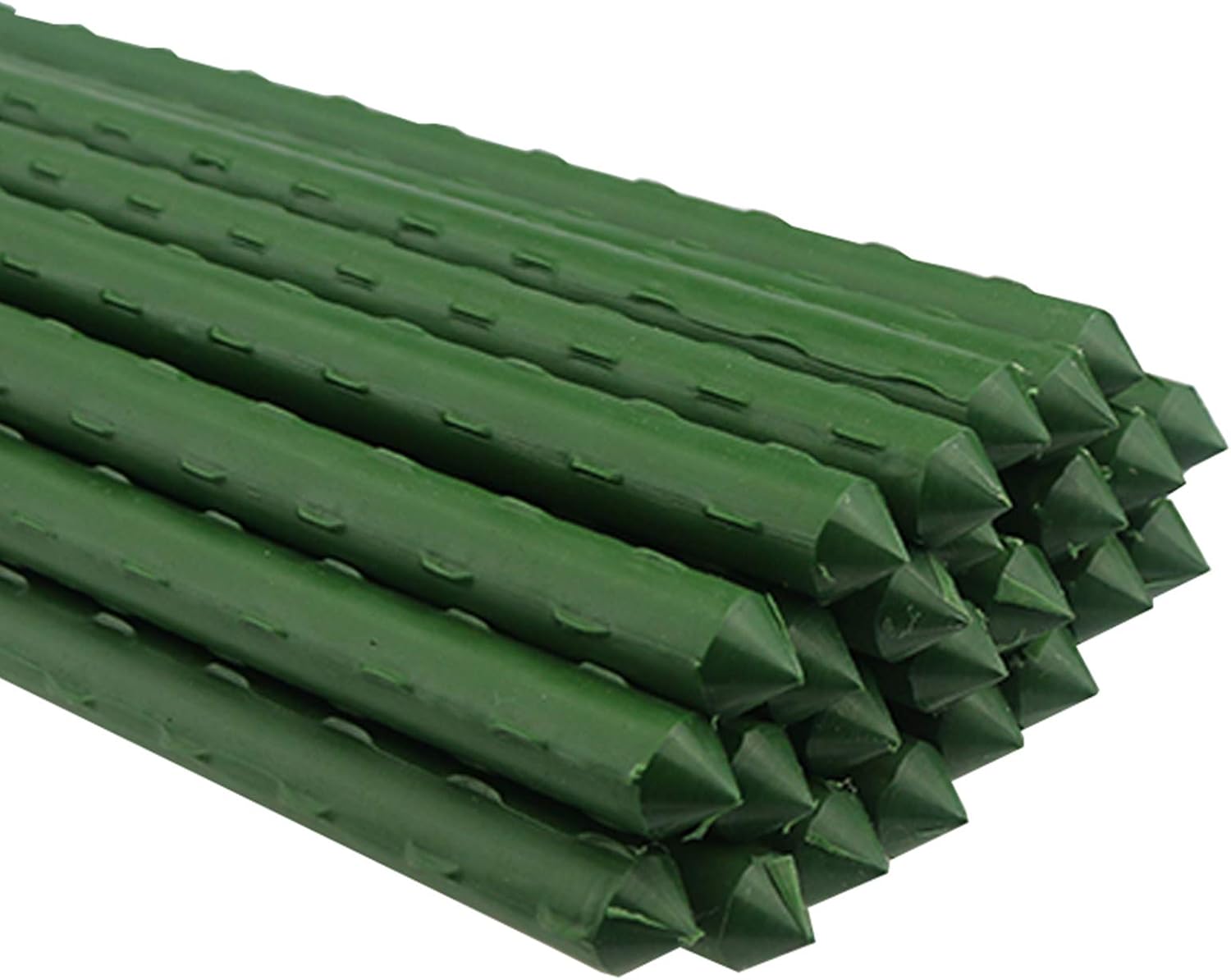
These Sunnyglade stakes are simple, heavy-duty supports for tomato plants and similar climbers. Each 48-inch stake is metal with a green plastic coating that resists weather and rust, and one edge is sharpened to make installation into soft soil easier. In practice the stakes are pushed near stems or set along rows to keep plants upright and to train vines; the textured surface helps stems grip without slipping. The 25-piece pack is useful for larger beds or multiple containers and lets you space supports where needed. Because they are single straight stakes, you will still need twine, clips, or cages for heavier indeterminate tomato varieties and for tying as plants grow. Stakes are not adjustable in height and may require a mallet for very compacted soil. Overall they are a durable, no-frills option when you need many consistent supports for season-long tomato staking and general garden use.
Best for: Gardeners who prioritize dependable, season-long plant support and need many uniform stakes for tomato beds, containers, or vegetable rows.
Less Ideal for: Growers who want adjustable or cage-style supports for very large indeterminate tomatoes or who prefer an all-in-one trellis system.
- Long 48-inch length suitable for most tomato varieties and vines
- Green plastic coating provides weather resistance and helps stems grip
- 25-count pack supplies supports for multiple plants or rows
- Sharpened end eases insertion into soft garden soil
- Not adjustable in height so taller indeterminate plants may need additional supports
- Single straight stakes require ties or clips to secure heavy fruit loads
Verdict: Buy this if you need a large pack of durable, weather-resistant 48-inch stakes to reliably support multiple tomato plants throughout the season.
Fabulas 16-Inch Plastic-Coated Steel Garden Stakes — 70-Pack with Connectors and Clips

| Unit Count | 70 Count |
|---|---|
| Material Type | Hollow Steel, Plastic |
| Special Features | Adjustable length design, connectors and clips |
| Recommended Uses For Product | Tomato stakes, seedling supports, trellis |
These Fabulas garden stakes are a practical kit for building tomato supports, trellises, and general plant staking around the garden or on balconies. Each 16-inch hollow steel stake is plastic coated to resist rust and blend into planting beds, and the pointed ends plus anti-slip ridges make insertion and tying simple. The set includes 40 cylindrical connectors so you can join stakes end-to-end to reach taller plants and 30 rotatable clips to create X-braces or custom shapes for lateral support. In use you would start with single stakes for seedlings and add connectors and clips as plants grow, or lay multiple stakes to form cages and panels. Benefits are durability compared with bamboo, flexibility to adapt support height, and a large quantity that works across many plants. Limitations are that the base pieces are short on their own so taller crops need assembly, and the thin-walled hollow steel is more flexible than heavy-duty rebar when used as long unsupported spans.
Best for: Gardeners who want a versatile, budget-friendly way to build and adapt supports for tomatoes and other climbing vegetables and prefer to customize support height over time.
Less Ideal for: Growers who need permanent, heavy-duty single-piece stakes for very tall or wind-exposed crops should consider sturdier solid steel or commercial cages instead.
- Large 70-piece kit supplies multiple plants or whole beds without buying extras
- Plastic coating adds corrosion resistance and a discreet garden-ready finish
- Connectors and rotatable clips let you extend length and build custom trellises
- Pointed ends and anti-slip ridges make insertion and tying plants easier
- Individual 16-inch stakes are short alone and require connectors for full-height tomato cages
- Hollow steel is less rigid than solid rebar for very heavy or tall supports
Verdict: A flexible, cost-effective kit for gardeners who want to build custom tomato supports and expand them as plants grow.
FORUP 48-inch Steel Garden Stakes, 25-Pack (Rust-Resistant, Plastic-Coated)

| Unit Count | 25 Count |
|---|---|
| Item Length | 48 inches |
| Diameter | 0.43" |
| Recommended Uses For Product | Supporting climbing plants, tomatoes, cucumbers, beans, and flowers |
These FORUP garden stakes are built for dependable, season-after-season plant support. Each 48-inch stake has a hollow steel core with a thick green plastic coating that resists rust and bending, making them suitable for determinate tomatoes, eggplants, dahlias and other medium-height crops. The laser-cut 60° tip slips into loose soil easily and the reinforced flat top accepts hammer strikes without mushrooming, so installation is fast even in compacted ground. Full-length anti-slip ridges keep ties, twine, and clips from sliding down the stake, which helps when training vines or securing heavy fruit. Sold in a 25-count bulk pack, the stakes provide uniform diameter and coating for consistent performance across a garden. The practical limits are height and diameter: these 48-inch stakes are intended for medium-height plants rather than very tall or extremely heavy vines, and the hollow profile is less massive than a solid rod while still offering good stiffness for typical vegetable beds.
Best for: Gardeners who prioritize long-lasting, reliable plant supports and want a uniform bulk supply to outfit beds of tomatoes, eggplants, and mid-height flowering perennials.
Less Ideal for: People growing very tall indeterminate vines or those needing extra-heavy solid steel rods for commercial-scale trellising should consider heavier or longer supports.
- Commercial-grade hollow steel core with thick rustproof coating for long-term durability
- 60° laser-cut tip and reinforced flat top speed installation in most soils
- Full-length anti-slip ridges hold ties and clips securely without sliding
- Bulk 25-pack provides uniform stakes for consistent garden-wide support
- Designed for medium-height plants so not ideal for very tall vines or extremely heavy loads
Verdict: Choose these FORUP 48-inch stakes when you need a dependable, rust-resistant bulk set that delivers consistent, long-lasting support for medium-height garden plants.
Tingyuan 55-inch Plastic-Coated Steel Plant Stakes, Pack of 25
| Unit Count | 25 Count |
|---|---|
| Item Length | 55 inches |
| Material Type | Alloy Steel, Plastic Coated |
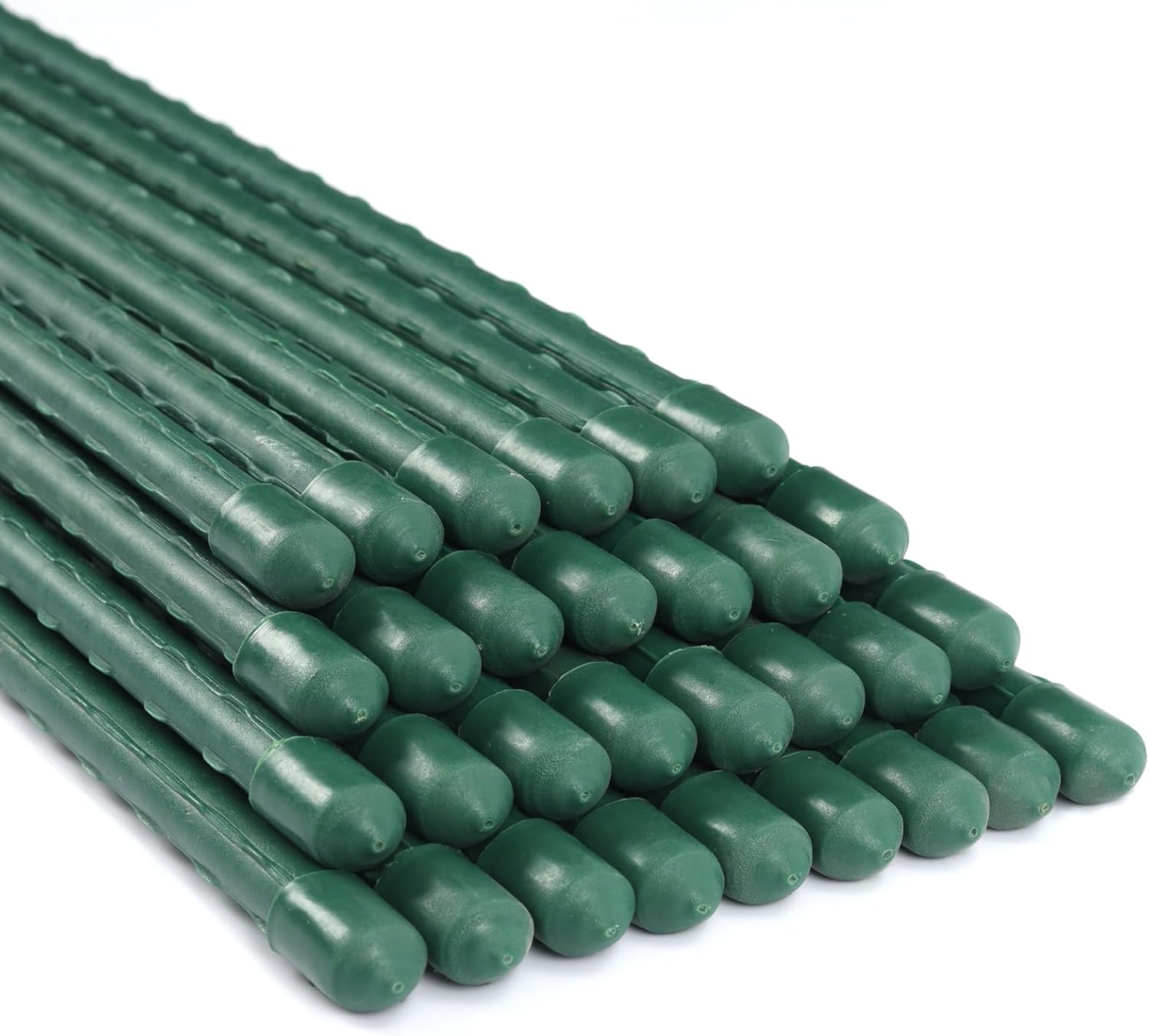
These 55-inch Tingyuan plant stakes are long, plastic-coated alloy steel rods sold in a pack of 25 for supporting tall tomato plants, grapevines and other climbers. You drive them alongside stems or rows and use ties or twine to train plants upward at multiple heights as they grow. The plastic coating helps the green stakes blend into foliage and protects the metal from the elements, while the steel core provides stiffness for multi-season use. Because they are long and meant for deep installation, they work well in raised beds and garden rows where plants need extended reach without frequent retying. Installation is easiest in loosened soil or with a pilot hole; the stakes can bend if forced into rocky or frozen ground. They are single straight stakes rather than cages or rings, so taller plants that need full perimeter support may require additional ties or paired stakes. Safety note: points are sharp, so handle carefully when placing and removing from soil.
Best for: Buyers who want reliable, inconspicuous vertical support for tomatoes and climbing plants and who prefer proven, well-reviewed gear for multi-season garden use.
Less Ideal for: Gardeners who need rigid cages or full-frame supports for heavy, sprawling plants or who frequently work in compacted, rocky soil where driven stakes could deform.
- Long 55-inch length offers extended vertical support for tall or fast-growing vines
- Plastic-coated steel construction resists rust and blends with foliage
- Pack of 25 covers multiple plants or an entire bed without buying extras
- Straight single-stake design makes it easy to reposition ties as plants grow
- May bend if forced into very hard, rocky, or frozen ground
- Not a full cage or ring so additional ties or multiple stakes are needed for wide or top-heavy plants
Verdict: Choose these long, plastic-coated steel stakes when you need straightforward, rust-resistant vertical support for multiple tall vines across a bed.
Xiny Tool 25-Pack Steel Plant Stakes with Plastic Coating (58 in)

| Unit Count | 25 Count |
|---|---|
| Material Type | Alloy Steel, Plastic |
| Recommended Uses For Product | Plant supporting for tomato, eggplant, bean, tree; building trellis or teepee sheds |
| Item Length | 58 inches |
These Xiny Tool plant stakes are a practical, budget-friendly option for supporting tomatoes, beans, eggplants and young shrubs. Each stake has a steel core wrapped in green plastic that resists rust and makes them easier to slide into soil without damaging stems. They arrive in a 25-count bundle and the pointed, tapered ends help with installation in garden beds and containers. Typical use is driving stakes beside plants and tying or weaving stems to them, or arranging multiples to form simple trellises or teepees for vining crops. The stakes are lightweight yet firm enough to hold up medium-weight plants, and the plastic coating extends outdoor life and gives a tidy, unobtrusive look. They are not adjustable in height and cannot be bent to form custom curves, so you will need enough length up front or plan to cut them to size with appropriate tools. Also take care when inserting or removing because the pointed ends are sharp.
Best for: Gardeners who want an economical, no-frills way to support multiple vegetable or climbing plants and prefer simple, reusable stakes they can install quickly.
Less Ideal for: People needing adjustable, telescoping, or decorative supports or those who plan to form complex shaped supports should consider alternate products.
- Metal core with plastic coating provides rust resistance and longer outdoor life
- Pointed tapered ends make stakes easy to insert into soil
- Comes in a 25-piece pack suitable for multiple plants or building simple trellises
- Lightweight but sturdy enough to support medium-weight climbing plants
- Fixed length requires cutting if shorter stakes are needed
- Not designed to bend into shapes for custom support structures
Verdict: A straightforward 25-stake set that gives rust-resistant, reliable support for multiple vegetable and climbing plants, making it a solid value pick for everyday garden use.
Choosing the Right Plant Stake for Tomatoes: Key Factors to Consider
Material and Corrosion Resistance
Material choice affects a stake's lifespan and how it behaves in the ground. Steel stakes are typically strong but can rust unless galvanized or powder-coated. Bamboo and wood are biodegradable and blend into the garden but may crack or rot over multiple seasons if left in damp soil. Plastic or fiberglass stakes resist corrosion and are lightweight, but cheaper plastics can become brittle in sun exposure.
Consider where you garden and how long you expect each stake to last. For heavy fruit loads and multiple-year use, prioritize corrosion-resistant metals or durable composites. For seasonal or disposable needs, natural wood or simple wooden stakes can be acceptable and cost-effective.
Diameter, Gauge, and Structural Strength
A stake's thickness and the metal gauge determine how much weight it will carry before bending. Thin wire or skinny wooden dowels can be adequate for small determinate tomato plants but will fail under large indeterminate vines with heavy clusters. Heavier-gauge steel, thicker timber, or reinforced fiberglass maintains vertical support as fruits mature.
Think about the varieties you grow. If you have indeterminate tomatoes that reach several feet and produce numerous heavy fruits, choose stakes sized to resist flexing. For compact varieties, a lighter stake will do and takes less effort to install.
Stake Length and Soil Anchoring
Length matters because a properly anchored stake needs enough buried depth to resist lever forces from the top-heavy plant. Short stakes that only penetrate a few inches will pull out or tilt when vines get windy or loaded. Longer stakes with pointed ends, fluted bodies, or threaded designs provide better grip in loose or sandy soils.
Match stake length to planting depth and soil type. In heavy clay or rocky ground, you may need longer or stronger stakes to reach a stable anchor. Conversely, shallow raised beds may require shorter stakes or alternative anchoring techniques to avoid hitting hard surfaces.
Compatibility with Tomato Growth Patterns
Tomato plants differ in habit. Determinate varieties tend to be bushier and finish fruiting earlier, while indeterminate varieties keep growing and need progressive tying and support. Some stakes are simple single poles suited to regular tying, while others include rings, clips, or adjustable collars to support heavier vines without frequent re-tying.
Choose stakes that match how much you prun and train vines. If you prefer tying as you go, a classic straight stake is fine. If you want lower-maintenance support, look for stakes with integrated clips or adjustable supports that accommodate changing vine weight.
Ease of Use and Seasonal Handling
Gardeners value stakes that are quick to install, straightforward to tie to, and easy to remove and store. Features that matter include pointed ends for driving into soil, lightweight construction for repeated handling, and designs that allow quick clipping or loop ties. Stakes that require tools for setup or complicated assembly increase seasonal labor.
Also consider how stakes store over winter. Collapsible or stackable designs save shed space, and finishes that resist flaking prevent mess while stored.
Environmental and Aesthetic Considerations
How a stake looks and what it is made from can matter in home gardens and community plots. Natural materials like bamboo integrate well into cottage-style beds, while painted or powder-coated metal can match a tidy vegetable plot. Environmental impact is another concern: untreated wood is biodegradable but may not last, while plastics can persist for years.
Balance appearance with durability and sustainability. If compostable materials appeal to you, plan for more frequent replacement. If low maintenance is a priority, choose durable, recyclable materials that stand up to the seasons.
How Stake Choice Affects Tomato Health
Supporting tomato plants properly reduces fruit rot and pest pressure by keeping fruit off the soil and improving air circulation around stems and leaves. When vines are held upright, leaves dry faster after rain, which lowers the risk of fungal disease and helps fruit ripen more evenly.
Proper staking also makes pruning and crop inspection easier. Upright vines are simpler to train and allow better access for harvesting, which reduces accidental bruising of fruit and minimizes the chance of broken branches.
- Better airflow reduces fungal disease
- Fruits kept off soil stay cleaner and are less likely to rot
- Upright growth simplifies pruning and harvesting
Installing Stakes Properly
Drive stakes before plants get heavy to avoid disturbing roots. A good rule is to set supports when seedlings are established but still small. Position the stake 2 to 4 inches from the main stem so there is space to tie without damaging the plant.
For harder soils, use a mallet with a scrap wood block to protect the stake top. Push stakes deep enough so they do not tilt when vines are tied, and avoid driving them through root balls during transplanting.
- Place stake 2-4 inches from stem to prevent stem damage
- Install supports early to avoid root disturbance
- Use a protector block when pounding stakes in hard ground
Tying and Training Tips for Long-season Varieties
Use soft, flexible ties that will not cut into stems as they thicken. Tie vines loosely and adjust ties every few weeks for indeterminate varieties. Consider creating a laddered tie system: multiple loops up the stake allow the plant to be supported higher as it grows without retying the entire stem.
For very vigorous vines, alternate tie points on either side of the stem to distribute weight and avoid pinching. Regular pruning of lower suckers improves airflow and concentrates strength into the main leader that the stake supports.
- Use soft ties and adjust them as stems thicken
- Create multiple tie points to raise support over time
- Prune lower suckers to reduce weight and improve airflow
Adapting Stakes to Different Garden Setups
Raised beds, containers, and open rows each present different anchoring challenges. In containers, long stakes can leverage against the pot edge and tip over; anchor stakes deeper into the potting mix and use wider pots for stability. In raised beds, shorter stakes may suffice if underlying soil depth is limited.
For windy sites, supplement single stakes with guy lines or use pairs of stakes braced together to increase stability. Where access for tilling or mulch application is needed, consider removable stakes that can be lifted out without damaging root systems.
- Anchor stakes deeper in containers and use wider pots
- Use bracing or guy lines in windy locations
- Choose removable stakes for beds that need seasonal access
Storing and Reusing Stakes Season to Season
Clean stakes at the end of the season to remove soil and plant residue. A quick scrub and drying prevent disease carryover and prolong life. For metal stakes, inspect for rust and sand and repaint or coat any bare spots to prevent further corrosion.
Label or bundle stakes by length and type to make spring setup faster. Lightweight or collapsible stakes can be nested to save storage space in a shed or garage.
- Wash and dry stakes to prevent disease transfer
- Perform minor repairs before storage to extend lifespan
- Bundle similar stakes for efficient spring planting
How We Chose the Best Plant Stake for Tomatoes
We prioritized criteria that reflect real garden performance when supporting tomato plants. Strength and durability came first because stakes must resist bending under the weight of leaves and fruit, and withstand repeated outdoor seasons. Ease of installation and adjustability were evaluated to reflect how quickly a gardener can set stakes, tie vines, and reposition supports through the season. Corrosion and weather resistance was a filter to prefer materials and coatings that last in wet soil and sun. Compatibility with tomato growth habits was assessed to ensure stakes work for both determinate bushes and tall indeterminate vines. Finally, user handling and maintenance – how easy the stake is to tie, clean, and store – was considered. Excluded items included freestanding cages, trellis systems that require extensive setup, and improvised support methods that do not function as a simple stake. We focused on single-stake products and stake-and-accessory systems that deliver straightforward vertical support. The final list reflects a balance of mechanical strength, garden-friendly handling, and long-term weather resilience.
FAQ
When should I install stakes for tomato plants?
Install stakes early, when seedlings are established but still small. That avoids root disturbance later and makes it easier to tie the main stem without stressing the plant. Early installation also prevents the weight of growing vines from pushing stakes in crooked.
How deep should a tomato stake be driven into the ground?
A stake should be driven deep enough to resist tipping under a heavy vine load, typically at least a third of its total length. Depth needs increase in loose or sandy soils and can be reduced in dense clay where the soil grips better.
Are bamboo stakes good for tomatoes?
Bamboo stakes are lightweight, inexpensive, and blend into the garden. They work well for smaller or determinate varieties but may split or degrade sooner than coated metal or fiberglass when supporting heavy, long-season indeterminate plants.
What type of ties are best for securing tomato vines to stakes?
Soft, flexible ties such as strips of garden twine, cloth strips, or soft plant ties are best because they hold stems without cutting into them. Avoid rigid wire ties that can damage stems as they thicken.
Can I reuse wooden or bamboo stakes next season?
You can reuse them if they are still structurally sound, but inspect for rot, insect damage, or splitting before reusing. Cleaning and allowing them to dry between seasons reduces the risk of disease transmission.
How do I stabilize stakes in windy gardens?
Use longer stakes driven deeper, brace stakes with cross pieces, or add guy lines anchored into the ground. For very exposed sites, consider paired stakes with a horizontal brace to resist lever forces from wind and heavy fruit loads.
Final Verdict
Prioritize stakes that match your tomato varieties and garden conditions. If you grow indeterminate tomatoes, choose longer, stronger stakes with corrosion-resistant finishes and options for adjustable tie points. For compact or determinate types, lighter stakes that are easy to install and remove are usually sufficient. Balance durability, ease of handling, and how much seasonal maintenance you are willing to do. A properly chosen stake reduces disease risk, simplifies care, and helps you get cleaner, healthier fruit throughout the season.
