

Note: This article contains affiliate links. If you click on these links and make a purchase, I may earn a small commission at no extra cost to you. This helps support my research and content. Read my full affiliate disclosure here.
If you manage a lawn and need reliable, professional-strength weed control, choosing the right product matters for turf health and long-term appearance. Professional weed killers behave differently from homeowner formulations: they can offer faster visible control and longer residual activity, but they also require more attention to timing, dilution, and application technique. This guide covers the five top professional options suitable for lawns and explains how we evaluated them for effectiveness, turf safety, and application practicality. Read on to understand the tradeoffs so you can pick a product that knocks back weeds while protecting desirable grasses.
Top Picks at a Glance
| Best Overall The best all-around choice for most situations | Syngenta Tenacity Turf Herbicide, 8 fl oz |  |
| Best Value The sweet spot between price and what you get | Spectracide Large Plot Weed Stop for Lawns Concentrate, 1 Gal |  |
| Best Budget The cheapest option that still gets the job done reliably | Spectracide Weed Stop for Lawns Concentrate, 32 oz Ready-to-Spray |  |
| Highest Rated A top-rated pick with lots of positive feedback | Trimec 992 Broadleaf Herbicide, 2.5 Gallons |  |
| Most Popular A crowd favorite that many people choose with confidence | Roundup Weed & Grass Killer4 with Pump 'N Go 2 Sprayer, 1.33 gal |  |
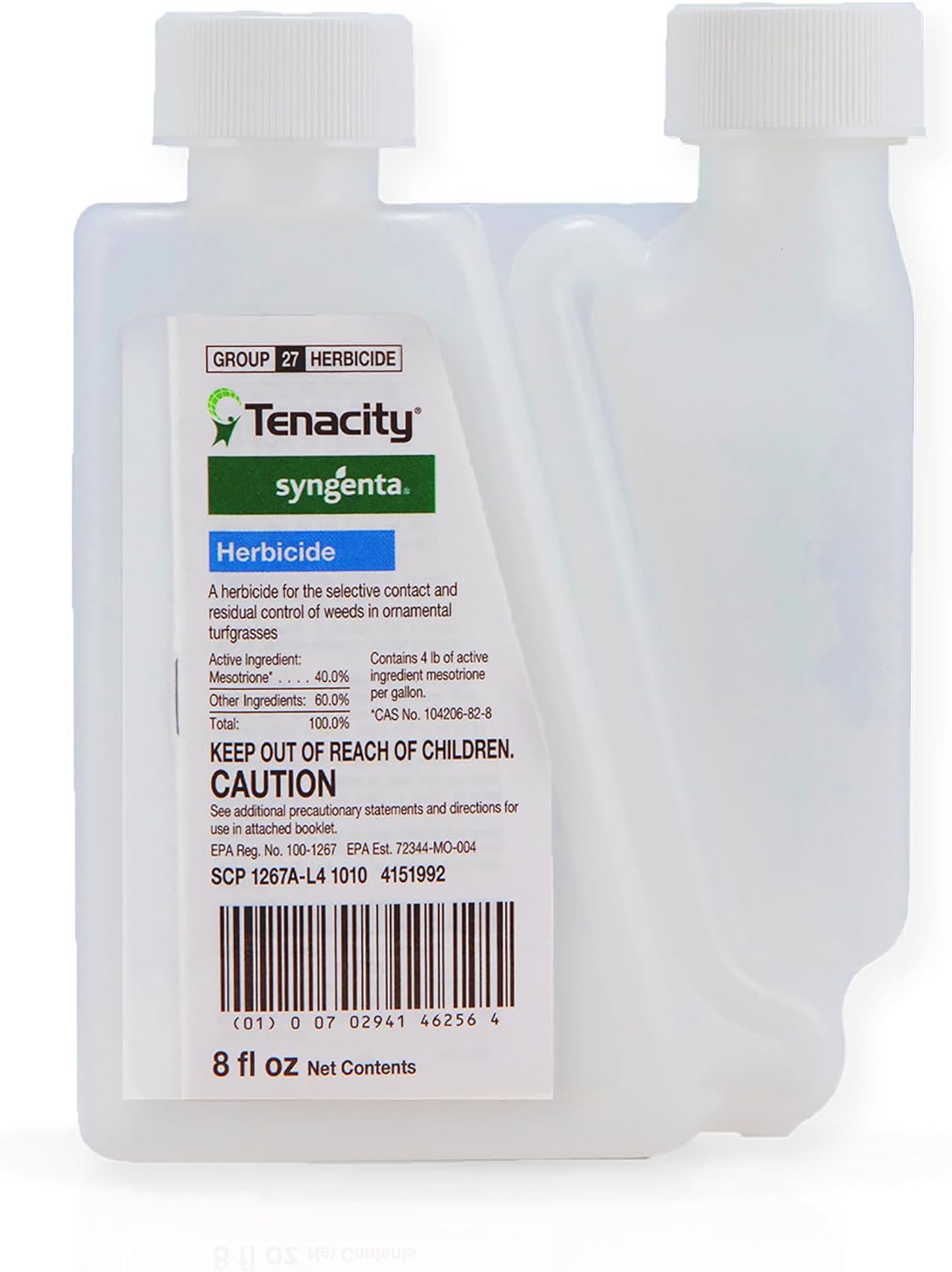
Syngenta Tenacity Turf Herbicide, 8 fl oz
| Unit Count | 8 Fluid Ounces |
|---|---|
| Item Form | Liquid |
| Coverage | 2000 ft^2 per 1sp of product |
| Active Ingredients | Mesotrione |
Tenacity Turf Herbicide is a concentrated liquid herbicide that works both as a pre-emergent and post-emergent to control a wide range of grassy and broadleaf weeds in turf. It is typically mixed for spray application and applied to established lawns or newly seeded areas to prevent or suppress weeds as they germinate and after emergence. The active ingredient mesotrione provides selective control of weeds such as crabgrass, dandelion, clover, chickweed and foxtail while leaving many turfgrasses unharmed when used according to label directions. A notable practical benefit is its residual activity, which helps reduce follow-up spot treatments over a season and can protect newly seeded areas when used as directed. Limitations include the need for precise mixing and application rates, careful timing to avoid injury to sensitive turf species, and following safety and storage instructions to preserve shelf life. This product is best used by someone comfortable with measured chemical applications and adherence to label precautions.
Best for: Gardeners and lawn care pros who want a professional-strength, versatile herbicide for season-long weed control and are comfortable measuring and applying concentrated chemistry precisely.
Less Ideal for: Casual homeowners who prefer ready-to-use sprays, non-chemical methods, or who are uncomfortable handling concentrated herbicides.
- Controls both pre-emergent and post-emergent weeds with a single active ingredient
- Selective action targets common lawn weeds while preserving many turfgrasses when applied correctly
- Residual activity reduces frequency of repeat treatments over a season
- Concentrated 8 fl oz liquid mixes to cover a large area (manufacturer coverage listed)
- Requires careful mixing and timing to avoid turf injury
- Not suitable for users who want a non-chemical or ready-to-use solution
- Label precautions and storage requirements must be followed to maintain shelf life
Verdict: Choose Tenacity when you need a professional, dual-action herbicide that provides both pre-emergent and post-emergent control for persistent lawn weeds.
Spectracide Large Plot Weed Stop for Lawns Concentrate, 1 Gal

| Unit Count | 128 Fluid Ounces |
|---|---|
| Item Form | Liquid |
| Coverage | 32000 square feet |
Spectracide Large Plot Weed Stop is a concentrated lawn herbicide formulated to control more than 200 listed broadleaf weeds, including dandelion, chickweed and clover. You mix the concentrate with water and apply with a pressure or hose-end sprayer to cover large areas; one gallon treats up to 32,000 sq ft of northern grasses. The formula is rainproof in hours and shows visible weed decline within hours to days because it targets roots as well as foliage. Practical features include a built-in hose connector and clear label directions for timing and temperature limits so you can avoid turf injury. Use it in spring when weeds are actively growing or in fall to reduce next season's weeds. Important limits are the temperature restriction and safety precautions: do not apply above 85°F, keep people and pets off treated areas until dry, and follow label instructions for mixing and application to avoid lawn damage. For stubborn weeds you may need a follow-up spot treatment.
Best for: Homeowners or groundskeepers who need an economical, large-area herbicide to quickly reduce broadleaf weeds and prioritize efficiency when maintaining lawns.
Less Ideal for: Those who need an immediate ready-to-spray consumer bottle for small spot jobs or users who prefer nonchemical weed control methods should consider other options.
- Concentrate formula treats very large areas from a single gallon, reducing per-area cost
- Kills over 200 listed broadleaf weeds down to the root for longer control
- Rainproof within hours so light rain shortly after application will not wash it away
- Works on both northern and southern turfgrass species when used as directed
- Must not be applied when air temperatures exceed 85°F which limits use on hot days
- Requires a sprayer and correct mixing so there is some setup and handling effort
Verdict: Choose this concentrate when you need a cost-effective, large-area professional-strength solution to kill broadleaf weeds down to the root across lawns.
Spectracide Weed Stop for Lawns Concentrate, 32 oz Ready-to-Spray

| Unit Count | 32 Ounce |
|---|---|
| Coverage | 8,000 square feet |
| Item Form | Liquid |
| Liquid Volume | 32 fluid ounces |
| Active Ingredients | 2,4-D, Mecoprop-P, Dicamba, Sulfentrazone |
Spectracide Weed Stop for Lawns is a hose-attach, ready-to-spray concentrate formulated to kill more than 460 listed broadleaf weeds, including dandelion, clover and chickweed. You connect the QuickFlip sprayer to a garden hose and spray until weeds are wet; the formula claims visible results in about three hours and is rainproof after one hour. It targets weeds by contact and down to the root, so it is useful for spot treatments or treating larger lawn areas without mixing chemicals. The product is labeled for common turf types such as bluegrass, fescue, Bermuda and perennial ryegrass, though users should avoid applying when daytime temperatures exceed 90°F or on zoysiagrass coming out of dormancy. Practical benefits include fast results, easy hose hookup for quicker coverage, and an active ingredient mix that controls many broadleaf species. Limitations are the temperature restrictions, the need to keep people and pets off treated turf until dry, and that it is intended only for listed weeds and lawns so it is not a general-purpose vegetation killer for non-turf areas.
Best for: Homeowners who want a straightforward, budget-minded way to knock back common broadleaf weeds across an average lawn without mixing concentrates and with minimal equipment.
Less Ideal for: People needing a systemic, long-term landscape herbicide for brush, woody plants, or non-lawn areas should look for a product labeled for those uses.
- Ready-to-spray hose attachment speeds application across yards
- Fast visible results in about three hours for timely control
- Controls a wide range of listed broadleaf weeds including dandelion and clover
- Rainproof in one hour so light rain soon after application is less likely to reduce effectiveness
- Not to be applied when daytime temperatures exceed 90°F which limits use on hot days
- Formulation is specific to listed lawn weeds and not intended for non-turf vegetation control
Verdict: A quick, low-effort hose‑attach solution for homeowners who want fast, affordable control of common broadleaf lawn weeds.
Trimec 992 Broadleaf Herbicide, 2.5 Gallons

| Unit Count | 320 Fluid Ounces |
|---|---|
| Item Form | Liquid |
| Coverage | About 975 square feet |
| Active Ingredients | Herbicide, Trimec |
Trimec 992 is a professional-strength liquid herbicide designed to kill common broadleaf lawn weeds such as dandelion, clover, chickweed and plantain. It is used by diluting and applying through a sprayer to the targeted weeds, with label directions calling for specific spray volumes and an eight-hour rain-free window after application. The product combines three active ingredients to provide broad-spectrum control and is labeled for residential lawns, sports turf, golf course fairways and other managed turf areas. Practical benefits include a large 2.5 gallon volume that reduces the need for frequent repurchases and label guidance for calibrated sprayer use, which helps achieve consistent coverage. Important limitations are that it is not suitable for some grass types such as Floratam St. Augustinegrass and requires careful handling to avoid skin or eye contact and drift; it should not be used where food or feed crops are grown. Follow all safety and application instructions to ensure reliable, effective results.
Best for: A buyer who needs a dependable, large-volume herbicide for professionally managed lawns or large residential properties and prioritizes consistent weed control and predictable label directions.
Less Ideal for: Casual gardeners with very small lawns or vegetable/edible gardens and anyone who cannot or will not follow strict safety and application procedures.
- Professional-strength formula with three active ingredients for broadleaf control
- Large 2.5 gallon volume reduces refill frequency for larger lawns or repeated treatments
- Label includes coverage estimate and sprayer calibration guidance for consistent application
- Appropriate for a wide range of managed turf sites including lawns, sports turf and golf fairways
- Not labeled for all turf types and specifically not safe on Floratam St. Augustinegrass
- Requires careful handling, protective measures and adherence to wind and rain restrictions during application
Verdict: Choose Trimec 992 when you need a large-volume, professional-strength broadleaf herbicide that delivers reliable, label-directed control across managed lawns.
Roundup Weed & Grass Killer4 with Pump 'N Go 2 Sprayer, 1.33 gal

| Unit Count | 170 Fluid Ounces |
|---|---|
| Item Form | Spray |
| Coverage | 300 Square_Feet |
| Active Ingredients | Triclopyr; Fluazifop-P-Butyl; Diquat Dibromide |
This Roundup kit combines a pre-mixed herbicide with a Pump 'N Go 2 sprayer for targeted weed and grass control around beds, patios, driveways, and foundations. The active ingredients address both broadleaf weeds and grassy species, and the extendable wand helps apply product precisely without bending. Expect visible dieback within hours and rainfast performance in about 30 minutes, which makes timing treatments easier. The sprayer supplies up to about 10 minutes of continuous spray so you can cover small to moderate areas without mixing or refilling. Safety directions are prominent and you must keep people and pets away until the spray dries and follow protective clothing guidance. This is effective for spot treatments and edging, but it is a chemical herbicide so it is not selective for desirable plants and must be used carefully where roots of ornamentals or turf are nearby. For larger turf-wide applications a different formulation or professional equipment may be more efficient.
Best for: Gardeners and homeowners who want a proven, ready-to-use herbicide with an integrated sprayer for precise spot treatments and edging around hardscapes and beds.
Less Ideal for: Those seeking a selective lawn treatment for whole-yard weed control or organic/nonchemical weed management should consider other options.
- Pre-mixed formula with built-in Pump 'N Go sprayer eliminates measuring and mixing
- Visible results in hours and becomes rainproof in about 30 minutes
- Extendable wand and up to 10 minutes continuous spray for accurate, ergonomic application
- Kills a broad range of weeds and grasses down to the root
- Nonselective chemical that can damage desirable plants if oversprayed
- Designed for spot and perimeter use rather than treating large lawns efficiently
Verdict: A convenient, ready-to-use herbicide kit with a built-in sprayer that is ideal for quick, targeted removal of tough weeds and edging around lawns and hardscapes.
Choosing the Right Professional Weed Killer for Lawns: Key Factors to Consider
Active Ingredients and Target Weeds
Different professional lawn herbicides rely on different active ingredients, and those chemistries determine which weeds are controlled. Broadleaf weeds such as clover, dandelion, chickweed, and plantain respond to one set of actives, while annual grasses and sedges may need different chemistry. Understanding the labeled weed list helps you match product to problem rather than guessing.
Active ingredients also affect reapplication timing and whether multiple applications are allowed within a season. Some actives provide quick knockdown but limited residual control, while others suppress regrowth for weeks. For persistent perennial weeds you may need an herbicide with systemic uptake that moves to roots rather than a contact-only spray.
Turf Safety and Labeled Grass Types
Professional formulations can be stronger and less forgiving to sensitive turf species, so confirming label approval for your grass is essential. Warm-season grasses, cool-season grasses, and fine fescues differ in tolerance to the same herbicide. Using a product not labeled for your turf can cause browning, thinning, or long recovery times.
Labels also specify restrictions around overseeding, aeration, and fertilization. Pay attention to recommended pre- and post-application care such as irrigation timing and mowing intervals to avoid compounding stress on the lawn.
Application Method and Equipment
How you apply a professional weed killer affects both efficacy and safety. Some professional products are concentrated liquids requiring accurate dilution and a calibrated pump sprayer. Others come in ready-to-use bottles for spot treatments. Application technique influences coverage, drift risk, and evenness of control across a lawn.
Consider nozzle type, spray pressure, and weather conditions. Wind, high temperatures, and humidity can increase off-target movement or leaf burn. Equipment that gives consistent droplet size and volume will make it easier to hit labeled rates and reduce the chance of over- or under-applying.
Timing and Lawn Condition
Weed susceptibility varies with season and plant growth stage. Many broadleaf weeds are easiest to control in their active growth periods when they are drawing energy into new shoots or roots. Applying herbicide during dormancy or extreme heat lowers uptake and reduces effectiveness.
Also assess lawn vigor before treating. Stressed turf from drought, compaction, or disease is more likely to show herbicide injury. Where possible, improve cultural practices-proper mowing height, irrigation, and aeration-before or after treatment to help desirable grass outcompete returning weeds.
Re-treatment, Residual Effects, and Renovation Timing
Some professional weed killers leave residual activity in the soil that prevents weed seed germination for weeks, while others break down quickly. Residuals can be useful for suppressing flushes of seedlings but may interfere with seeding or sodding plans.
If you plan to overseed or renovate, check the label for waiting periods between application and seeding. Also plan for follow-up treatments; perennial weeds often require multiple applications timed to regrowth, and persistent seedbanks may need integrated cultural control in addition to herbicide use.
Understanding Contact Versus Systemic Herbicides
Contact herbicides scorch the foliage where they touch and are best for small, annual weeds or spot treatments. They act quickly but often leave roots alive, so regrowth is common with perennial targets.
Systemic herbicides move through the plant to the roots after foliar uptake and are better for perennials and deep-rooted broadleaf weeds. Systemic action usually takes longer to show visible symptoms but reduces regrowth risk when used at the correct growth stage.
- Contact: fast visible results, limited root kill
- Systemic: slower symptoms, better for perennials
- Some products combine modes or include adjuvants to improve uptake
Safe Application Practices for Residential Lawns
Plan applications for calm, cool parts of the day to reduce drift and plant stress. Avoid applying before heavy rain or during drought stress. Use personal protective equipment recommended on the label and keep children and pets off treated areas until the product has dried or as specified.
Calibrate your sprayer and measure concentrates carefully. Spot-treat when possible to limit total chemical load on the lawn, and consider using a targeted wand for edges and narrow strips near beds.
- Check wind and temperature before spraying
- Follow label PPE and re-entry statements
- Calibrate sprayer volume and nozzle selection
Integrating Herbicides Into a Long-Term Lawn Plan
Herbicides are one tool within an overall lawn care strategy. Combine chemical control with cultural practices such as adjusting mowing height, fertilizing appropriately, dethatching, aeration, and overseeding thin areas. A dense, healthy turf is the best prevention against many weed species.
Record treatments, dates, and observed results to track what works in your lawn. Repeat small spot treatments rather than broad blanket applications when possible, and reserve stronger professional treatments for widespread or stubborn infestations.
- Use chemical control alongside cultural improvements
- Keep treatment records and observe seasonal patterns
- Focus on prevention to reduce long-term herbicide needs
Special Considerations for Sensitive Areas
Near flower beds, vegetable gardens, or water features, take extra care to avoid drift or runoff. Use physical barriers when treating borders and consider low-drift nozzles. Some herbicides have strict setback requirements from water bodies and irrigation inlets.
For lawns adjacent to newly planted beds or young trees, verify label guidance on root uptake and potential effects. Avoid broadcast applications close to desirable non-target plants unless the product specifically permits such use.
- Avoid treating on slopes that encourage runoff
- Use buffer zones near water and garden beds
- Prefer spot treatments in mixed-use yard areas
When to Consider Professional Application Help
If you manage a large property, have extensive persistent perennial weed problems, or need to coordinate treatment with renovation projects, hiring a licensed applicator can reduce risk and ensure label compliance. Professionals bring calibrated equipment and experience managing timing for optimum uptake.
Licensed applicators can also advise on integrated approaches that combine selective herbicides with cultural practices and can help minimize non-target impacts.
- Scale, complexity, or adjacent sensitive areas can justify professional help
- Licensed applicators ensure proper rates and timing
- Request documentation on products and safety measures
How We Chose the Best Professional Weed Killer for Lawns
We prioritized products and formulations that deliver consistent broadleaf and grassy weed control on maintained lawns while limiting stress to common turf species. Our evaluation focused on measurable, gardener-relevant criteria: active ingredient spectrum and labeled weed list, turf safety and recommended mowing/herbicide intervals, ease of proper dilution and application with typical garden sprayers, persistence and re-treatment window, and compatibility with overseeding or lawn renovation schedules. We also considered formulation types that reduce drift and volatilization risks in residential settings. Excluded items included non-lawn herbicides, generic weed-control adjuvants without herbicidal actives, and products intended only for spot treatment of non-turf areas. We did not include experimental or off-label mixes. The selected products passed thresholds for labeled turf species, clear application instructions, and practical use for homeowners and landscape professionals managing established lawns.
FAQ
Can I use a professional weed killer on any turfgrass?
It depends. Many professional formulations list specific turfgrass species on the label. Some grasses, particularly fine fescues or new seedlings, are more sensitive. Always check the label for approved turf types before applying and follow any application restrictions.
How long after treatment should I wait to mow the lawn?
Waiting times vary by product, but typically you should wait until spray deposits have dried and any label-specified re-entry or mowing intervals have passed. Mowing too soon can reduce herbicide uptake and increase turf stress.
Will a professional weed killer prevent weeds from coming back?
Many products reduce existing weeds effectively, but prevention depends on addressing seed sources and improving turf density. Some herbicides provide short-term residual control, but long-term suppression usually requires cultural practices in addition to spot or follow-up treatments.
Is it safe to overseed after applying a professional herbicide?
That depends on the active ingredient and its residual life. Labels often specify waiting periods between herbicide application and seeding. If overseeding is planned, choose products labeled safe for seeding intervals that match your renovation schedule.
Can I apply professional weed killers near flower beds or vegetable gardens?
Exercise caution. Use buffer zones and low-drift application methods to prevent off-target movement. Some herbicides have explicit setback requirements from edible gardens and ornamentals, so follow label restrictions and avoid spraying on windy days.
Final Verdict
Choosing a professional weed killer for lawns comes down to matching the product chemistry and label allowances to your turf type, the weeds you need to control, and your renovation timeline. Prioritize turf safety, labeled weed spectrum, and application practicality when deciding. Balance the speed of visible control against potential residual effects and recovery windows for seeding or renovation. When in doubt, spot-treat persistent patches and pair chemical control with cultural practices to reduce future infestations and protect lawn health.
