

Note: This article contains affiliate links. If you click on these links and make a purchase, I may earn a small commission at no extra cost to you. This helps support my research and content. Read my full affiliate disclosure here.
Picking the right lightweight planter changes how you garden on patios, balconies, and small yards. A good lightweight container makes moving plants for sun, protection, or rearranging effortless without sacrificing root health or winter care. This guide examines five top lightweight planters shortlisted for real-world garden use and evaluates them for drainage, material durability, and ease of handling. Read on to learn the practical tradeoffs between weight, breathability, and weather resistance so you can pick a solution that suits your space and plants.
Top Picks at a Glance
| Best Overall The best all-around choice for most situations | Meowell 3-Pack Large Plastic Plant Pots with Drainage and Saucers (12/10/9 inch) |  |
| Best Value The sweet spot between price and what you get | Amazon Basics 8-inch Plant Pot with Saucer and Drainage Hole |  |
| Best Budget The cheapest option that still gets the job done reliably | Lifemaster Plastic Planter Pots with Drainage Holes, Set of 5 |  |
| Most Popular A crowd favorite that many people choose with confidence | Utopia Home Indoor Plant Pots with Drainage, 5‑Pack |  |
| Best Seller A high-volume bestseller chosen again and again | Fielda 8 Inch Self-Watering Plastic Planter — 2‑Pack with Tray and Saucer |  |
Meowell 3-Pack Large Plastic Plant Pots with Drainage and Saucers (12/10/9 inch)

| Material Type | Plastic |
|---|---|
| Size | 12+10+9 Inch |
| Other Special Features of the Product | Drainage Hole, Lightweight, Water Ripples Texture |
| Included Components | Saucer |
| Indoor Outdoor Usage | Indoor, Outdoor |
These Meowell planters are a simple, practical set for everyday container gardening. The pack includes 12-, 10-, and 9-inch wide pots with a textured water-ripple surface and matte finish that give a modern look while hiding dirt and scuffs. Built-in drainage holes and matching saucers make routine watering easier and protect surfaces from runoff. Because the pots are made from lightweight plastic they are easy to move for repositioning or bringing plants indoors for winter, yet the listed construction thickness gives them enough stiffness to hold soil and medium-sized plants without collapsing. They work well for houseplants, patio containers, herbs, and small shrubs. Expect the usual limitations of plastic planters: they are less insulating than ceramic or terracotta and can fade or become brittle over many seasons if constantly exposed to strong sunlight, so sheltered outdoor use is preferable. Assembly is not required and maintenance is low, making this a convenient choice for a broad range of gardeners.
Best for: Gardeners who want an affordable, easy-to-handle set of decorative pots for indoor and sheltered outdoor use and who value moveability and low maintenance.
Less Ideal for: People seeking heavy, frost-resistant or high-end decorative planters for permanent outdoor installations should consider ceramic, metal, or thick composite alternatives.
- Includes three graduated sizes to cover multiple plants and staging needs
- Drainage holes plus saucers simplify watering and prevent overwatering
- Lightweight plastic construction makes pots easy to move and reposition
- Water-ripple texture and matte finish hide wear and add a modern decorative touch
- Plastic construction offers less thermal insulation than ceramic or terracotta and may degrade over many seasons in constant direct sun
Verdict: A lightweight, attractive three-size pot set that makes watering and rearranging plants fast and easy.
Amazon Basics 8-inch Plant Pot with Saucer and Drainage Hole

| Material | PP (polypropylene) |
|---|---|
| Features | Drainage Hole |
| Included | Saucer |
| Indoor/Outdoor Usage | Indoor |
| Size | 8 inch |
This 8-inch Amazon Basics plant pot is a simple, no-frills container intended for routine indoor plant care. Made from recyclable polypropylene it is light, durable, and keeps its shape as you move plants around or refresh soil. The pot includes a matching saucer and drainage hole so excess water drains away from roots while the saucer captures runoff, which helps prevent mess on floors or shelves. Ridges in the saucer aid root aeration when plants sit in the saucer briefly. Its matte white finish is easy to customize with paint or markers to match decor. Because it is made of PP it resists cracking and is easier to clean than porous clay. The main limitations are that the design and materials are basic rather than decorative and the product is specified for indoor use so prolonged exposure to intense full sun or outdoor weather may cause fading or faster wear. For growers who want a lightweight, functional pot they can paint or group on a sunny windowsill this performs well, but shoppers seeking premium materials or outdoor-rated planters should look elsewhere.
Best for: Buyers who want a practical, easy-to-handle pot for routine indoor plants or sunny windowsills and who value functionality and the ability to customize appearance.
Less Ideal for: People needing heavy ceramic or outdoor-rated planters for patios, exposed full-sun conditions, or those who prioritize high-end decorative finishes.
- Lightweight recyclable polypropylene is durable and easy to move
- Built-in drainage hole and matching saucer capture excess water
- Saucer ridges promote brief root aeration and reduce standing water
- Matte white finish is easy to customize with paint or markers
- Designed for indoor use so material may not hold up to prolonged outdoor full-sun exposure
- Basic appearance and construction may not satisfy buyers seeking decorative or premium pots
Verdict: A lightweight, functional 8-inch indoor pot with drainage and a saucer that is ideal for practical plant care and easy customization.
Lifemaster Plastic Planter Pots with Drainage Holes, Set of 5

| Material Type | Plastic |
|---|---|
| Unit Count | 5 Count |
| Included Components | Saucer |
| Indoor Outdoor Usage | Outdoor |
These Lifemaster planter pots are a practical, budget-friendly set for everyday container gardening. The pack includes five stackable plastic pots in graduated sizes, each with drainage holes and a matching saucer, which makes them useful for seedlings, herbs, succulents, and small houseplants. Because they are made of painted plastic they are very light to move and resist cracking from normal use, so repotting, rearranging, or taking plants outdoors is easy. The drainage design helps prevent waterlogging while the saucers catch excess runoff. Space-saving nesting means the set stores compactly when not in use. Expect the finish and material to be basic rather than premium and the pots to offer limited insulation against temperature extremes compared with thicker ceramic or terracotta. Overall they deliver good day-to-day performance for small plants at a low cost.
Best for: Buyers who want an inexpensive, easy-to-handle set of planters for small indoor or patio plants and who prioritize low cost and portability over premium materials.
Less Ideal for: Gardeners seeking large capacity pots, decorative high-end finishes, or heavy-duty insulation for plants exposed to extreme temperatures.
- Lightweight plastic construction makes pots easy to move and rearrange
- Included drainage holes and saucers help prevent waterlogging and protect surfaces
- Set of five nested sizes covers a range of small plants and saves storage space
- Durable enough for regular indoor and outdoor use without cracking
- Thin plastic offers less temperature insulation and a more basic appearance than ceramic options
Verdict: A low-cost, lightweight starter set of stackable planters that makes planting and moving small pots simple and affordable.
Utopia Home Indoor Plant Pots with Drainage, 5‑Pack

| Material Type | Plastic |
|---|---|
| Included Components | Saucers Tray |
| Unit Count | 5 Count |
| Other Special Features of the Product | Frost Resistant, Lightweight, Portable, Rot Resistant |
| Mounting Type | Tabletop |
These Utopia Home planters are a practical starter set for indoor potted trees and other houseplants. The pack includes five nested sizes and matching saucers so you can pot seedlings, small citrus or ficus cuttings and move them around a sunny windowsill or tabletop. Made from reinforced PP plastic, the pots are frost and rot resistant and feel light enough to reposition without strain. Each pot features drainage provisions and removable plugs that help prevent overwatering while the saucers protect furniture from runoff. The minimalist polished finish is unobtrusive with most décor, and the multiple sizes make it easy to repot a sapling as it grows. Limitations are that these are basic plastic planters so they offer less insulation and long-term durability than ceramic or thick fiberstone, and the listed specs emphasize indoor use rather than outdoor longevity in harsh weather. For buyers who prioritize fuss-free, lightweight containers with simple drainage, this set covers common needs for small potted trees and starter transplants.
Best for: Buyers who want a low-risk, practical set of indoor planters for starting or styling small potted trees and other houseplants and who value ease of use and social proof from a popular, well-reviewed product.
Less Ideal for: Gardners seeking heavyweight, display-grade planters for mature large trees or outdoor year-round exposure should consider ceramic, concrete, or fiberstone alternatives.
- Multiple pot sizes in one set for potting and repotting as a tree seedling grows
- Included saucers protect surfaces from drainage and allow indoor placement
- Drainage plugs and design to reduce risk of overwatering
- Lightweight, frost and rot resistant plastic that is easy to move
- Plastic construction provides less thermal insulation and premium appearance than heavier ceramic or stone pots
Verdict: A convenient, well-reviewed five-piece indoor planter set that makes starting and repotting small potted trees simple and low effort.
Fielda 8 Inch Self-Watering Plastic Planter — 2‑Pack with Tray and Saucer
| Capacity | 6.6 liters |
|---|---|
| Material Type | Plastic |
| Other Special Features of the Product | Breathable, Drainage Hole, Portable, Self Watering |
| Included Components | Tray, Saucer |
| Indoor Outdoor Usage | Indoor, Outdoor |
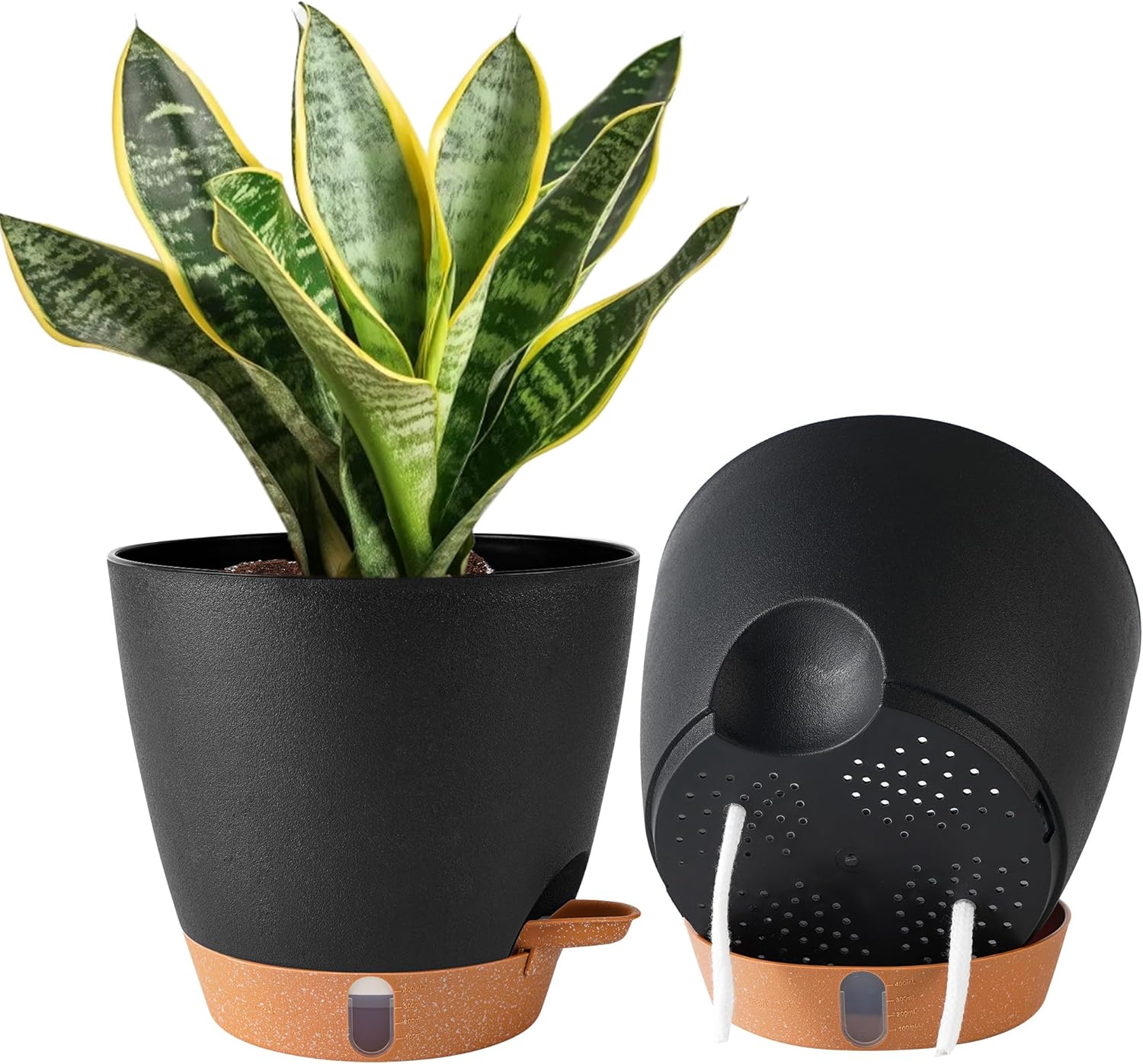
These Fielda 8-inch planters are designed to simplify everyday plant care with a built-in self-watering system and a clear water-level window that shows when the reservoir needs topping up. Typical use is potting houseplants, small patio specimens, or moving nursery pots into a slightly larger container; the included saucers make them easy to place on furniture or a balcony. Notable features are the cotton-wick feed that can sustain plants for several days, multiple drainage holes and a breathable mesh that help prevent waterlogging, and a thick, UV-resistant plastic body that withstands light outdoor exposure. In practice the clear indicator and removable tray save time and reduce guesswork about watering frequency, which is helpful for busy or cautious plant owners. Important limitations are that these are plastic planters so they retain heat in full sun and they suit small to medium plants rather than large specimens. Also the self-watering reservoir requires occasional cleaning to avoid algae buildup.
Best for: Buyers who want a low-effort, reliable planter that prevents over- and underwatering and suits everyday houseplants or small balcony containers with minimal fuss.
Less Ideal for: Gardeners seeking heavy-duty decorative pots for large outdoor plants or those who prefer porous materials like terra cotta for moisture-sensitive species should consider other options.
- Self-watering reservoir with cotton-wick feed reduces daily watering tasks
- Visible water level window makes hydration status easy to monitor
- Multiple drainage holes and breathable design help prevent root rot
- Durable thick plastic with UV resistance for indoor or light outdoor use
- Removable saucer tray simplifies mess-free placement and cleaning
- Plastic construction can heat up in strong direct sun and is less insulating than ceramic or clay
- Reservoir and wick need occasional cleaning to prevent algae or blockages
Verdict: If you want a fuss‑free, visible self‑watering system for everyday houseplants or small balcony containers, these 8‑inch Fielda planters make plant care much simpler.
Choosing the Right Lightweight Planter: Key Factors to Consider
Weight and Filled Portability
Weight matters differently empty versus filled. A lightweight planter must be manageable when it contains potting mix and a mature plant. Consider the planter's empty weight, the soil volume it holds, and typical plant size so you can judge whether you will need two people or a dolly to move it.
Also think about where you will move the planter. Balconies, stairs, and narrow patios impose handling limits. Some lightweight materials stay light but become awkward when large, so rim shape and handle placement affect actual portability.
Drainage and Water Management
Effective drainage prevents waterlogging and root rot, especially in shallow or compact containers. Look for well-placed drainage holes, raised feet or integrated saucers, and designs that allow excess water to escape without causing spills on decks or balconies.
Drainage also affects how often you water. Fast-draining, lightweight mixes in breathable planters require more frequent checks. If you plan to grow moisture-loving species, choose a planter design that balances drainage with the ability to retain some moisture.
Material Resistance to Sun and Weather
Lightweight planters are commonly made from plastics, composite resins, fiberglass, or thin metal. Each material reacts differently to sun, cold, and moisture. UV-stabilized plastics and fiberglass resist fading and cracking from sun exposure, while some metals may corrode unless treated.
Consider the climate where the planter will live. Hot, sunny locations demand UV resistance; freezing winter climates require materials that will not become brittle or warp. Material choice also impacts how the planter looks over time and whether it will require seasonal storage.
Thermal Performance and Root Health
Lightweight containers often have thinner walls, which can let soil temperature swing more with ambient conditions. That can stress roots during hot afternoons or cold snaps. Look for planters with insulating double walls, lighter-colored finishes that deflect heat, or the option to add insulating wraps for extreme conditions.
Thermal behavior also affects watering needs. Warmer soil dries faster, so containers that run hot will demand more frequent watering and attention to potting mix selection.
Stability and Wind Resistance
Tall or top-heavy plantings in lightweight planters can become unstable in wind. Choose wider bases, lower center-of-gravity designs, or models that can be anchored or filled partially with ballast to improve stability. For rooftop, balcony, or exposed locations, confirm that the planter's shape and footprint suit the expected wind loads.
Some lightweight planters include screw-in anchors or tie points. Those features matter for gardeners who place planters on raised decks or windy rooftops where tipping could damage plants and surfaces.
Maintenance and Longevity
Routine maintenance matters more with lightweight containers because thinner materials may show wear faster. Consider how easy the planter is to clean, whether it resists staining from potting mixes, and if parts like handles or inner liners are replaceable.
Longevity also ties back to UV and frost resistance, plus how the planter holds up to routine handling. A slightly heavier, well-built lightweight planter can outlast a cheaper, very flimsy model, so think beyond initial lightness to the usable lifespan.
Best Uses by Garden Situation
Different outdoor spaces call for different lightweight planter styles. On balconies and patios you will likely prioritize slim profiles and lock-in drainage to avoid water runoff. For rooftop or community garden beds, look for planters with larger footprints and wind-resistant designs. Lightweight planters meant for decks should include protective feet or pads to prevent surface staining.
- Small patios: choose shallow, wide planters for herbs and compact vegetables.
- Balconies: prefer slim, deep models that fit railings and allow vertical planting.
- Rooftops: select wide-based, low-center designs or anchorable containers.
Potting Mix and Fill Strategies
How you fill a lightweight planter affects both weight and plant health. Use a lightweight potting mix with good drainage-incorporate materials like coir, perlite, or fine bark to reduce overall weight while retaining moisture. For very large containers, consider using lightweight filler at the bottom such as plastic foam pieces or used plastic bottles to reduce soil volume without interfering with drainage.
Bullets are optional here to improve clarity if desired.
- Top with high-quality potting mix to support roots where it matters.
- Avoid heavy garden soil; it undermines portability and root aeration.
Seasonal Care and Storage Tips
Plan ahead for winter and strong sun. If your planter material is vulnerable to frost or UV damage, move containers to sheltered areas or indoors during extreme weather. For very portable planters, plan an off-season storage spot that protects them from prolonged sun exposure and repeated freeze-thaw cycles. If moving indoors is not practical, elevate planters off cold surfaces and wrap them with breathable insulation when frost is expected. Regularly inspect for hairline cracks or fading that signal material fatigue.
- Elevate planters in winter to avoid trapped moisture at the base.
- Use breathable insulation wraps for freeze protection.
Accessories That Improve Performance
A few accessories can extend the usefulness of a lightweight planter. Removable liners make repotting and cleaning easier. Saucer trays protect surfaces and keep excess water contained. Simple leg risers or plant coasters improve drainage and airflow under the pot, reducing bottom rot risks. Handles, built-in wheels, or bracket attachments simplify moving larger planters without adding permanent weight. Choose accessories rated for outdoor use so they do not break down faster than the planter itself.
- Use saucers to protect decking and catch overflow.
- Consider wheeled coasters for heavy-filled planters.
Styling and Planting Ideas
Lightweight planters are versatile for mixing ornamentals and edibles. Use taller slender pots for ornamental grasses or small shrubs, and wide shallow bowls for salad greens and seasonal annuals. Group several smaller lightweight planters to create a mobile container garden that can be rearranged for light or visual effect. Contrast textures and colors of planters to add depth to small spaces. Remember that darker finishes heat up more, so match plant choices to the thermal behavior of the container.
- Combine different heights for layered planting.
- Match plant heat tolerance to container color and exposure.
How We Chose the Best Lightweight Planter
We focused on attributes that matter in everyday gardening with portable containers. Our editorial filters prioritized planters that are truly light to move when filled, provide reliable drainage, resist outdoor weather, and protect roots from temperature swings. We also judged build durability for season-to-season use and ease of routine care like cleaning and repotting. Contributors reviewed product specifications, material data, and common gardener concerns to form an exclusion list: indoor-only vessels without drainage, decorative shells that require inner pots, and heavy stone or terracotta options were excluded because they do not meet the lightweight portability requirement. We favored containers with clear drainage solutions, UV- and frost-resistant materials, reinforced rims or handles for carrying, and designs that support common planting styles like vegetables, annuals, and container shrubs. The final picks were evaluated across several concrete dimensions: weight-to-volume ratio, drainage effectiveness, material durability outdoors, insulation for roots, and handling features that make moving or repositioning plants safer and easier.
FAQ
Will a lightweight planter hold up outside year-round?
It depends on the material and your climate. UV-stabilized plastics and fiberglass often stand up to sun exposure, but very thin materials can become brittle after repeated freeze-thaw cycles. For cold climates, plan for seasonal storage or choose a frost-resistant material.
Can I grow vegetables in a lightweight planter?
Yes. Use a deep enough container for the crop and a lightweight, fertile potting mix with good drainage. Larger vegetables may need wider, more stable containers or occasional ballast to prevent tipping.
How do I prevent a lightweight planter from tipping in wind?
Choose a model with a wide base, add ballast low in the pot, or use anchors or straps if available. Grouping planters together and placing them against a wall also reduces wind exposure.
Do lightweight planters dry out faster than heavy ones?
Often they do because thinner walls transfer heat and cold more quickly. That can increase evaporation and require more frequent watering, especially in hot, sunny spots.
Are removable liners worthwhile?
Removable liners make repotting and cleaning much easier and can extend the planter's life. They also let you avoid filling the main pot fully with soil, which reduces weight while keeping adequate root space.
Final Verdict
Focus on the tradeoffs most relevant to your situation: portability versus stability, thinness versus thermal buffering, and drainage versus water retention. Prioritize drainage effectiveness and material resistance if your planters will stay outdoors, and prioritize handles or wheel options if you will move filled containers often. Choosing a lightweight planter means balancing ease of movement with root health and weather resilience. With the right mix of material, drainage, and handling features you can enjoy a flexible container garden that is both portable and reliable.
