

Note: This article contains affiliate links. If you click on these links and make a purchase, I may earn a small commission at no extra cost to you. This helps support my research and content. Read my full affiliate disclosure here.
Choosing the right outdoor raised planter affects plant health, maintenance time, and how well your garden fits available space. A well-built raised planter improves drainage, protects roots from compacted soil, and keeps soil warmer earlier in spring. For small patios or larger beds, the right design makes planting, watering, and harvesting easier. This guide covers seven shortlisted options that perform well in real garden use. We evaluate each pick across construction, drainage, ease of filling and planting, and season-long durability to help you find the planter that suits your layout and crops. Read on to see what matters most when selecting an outdoor raised planter for beds, containers, or compact urban plots.
Top Picks at a Glance
| Best Overall The best all-around choice for most situations | SoliWood Cedar Raised Garden Bed with Legs, 48 x 24 x 30 in |  |
| Best Quality Built to a higher standard if you want something more solid | Vego Garden 17" Tall Modular Metal Raised Garden Bed Kit (8ft x 2ft) |  |
| Best Value The sweet spot between price and what you get | FOYUEE 31.5" Elevated Mobile Raised Garden Bed with Wheels and Shelf |  |
| Best Budget The cheapest option that still gets the job done reliably | GADI 67-Inch Galvanized Raised Garden Bed |  |
| Highest Rated A top-rated pick with lots of positive feedback | GYMHILL Elevated Resin Raised Garden Bed with Water Gauge and Drain Plug (14 gal) |  |
| Most Popular A crowd favorite that many people choose with confidence | Best Choice Products 48 x 24 x 30in Raised Fir Wood Garden Bed with Liner |  |
| Best Seller A high-volume bestseller chosen again and again | Rakukiri 5 ft Galvanized Raised Garden Bed Planter Box |  |
SoliWood Cedar Raised Garden Bed with Legs, 48 x 24 x 30 in

| Capacity | 6 cubic feet |
|---|---|
| Material Type | Cedar Wood |
| Finish Types | Grey Water Based Painting |
| Included Components | Liner |
This SoliWood raised garden bed is a straightforward elevated planter designed for reliable home vegetable growing. It provides a roomy planting area and a comfortable 30-inch working height so you can tend herbs and vegetables without constant bending. Constructed from cedar with a water-based finish, the box resists outdoor exposure better than untreated softwood and comes with a liner and drainage holes to reduce waterlogging and help roots stay healthy. Assembly uses pre-drilled holes and basic fasteners so one person can put it together in a short time. The 2.4-inch-thick legs and a specified weight capacity make it stable for soil and mature plants on patios, balconies, and backyards. Expect natural wood to require occasional maintenance if left exposed over years, and the planting volume is moderate so very large root crops or multiple seasons of heavy soil may need more frequent replenishing. For straightforward, low-fuss vegetable beds that prioritize durable materials and ergonomic access this unit delivers predictable performance.
Best for: Gardeners who want a dependable, ergonomic planter for growing vegetables and herbs on patios, balconies, or small backyards and who prioritize durable natural materials over lowest cost.
Less Ideal for: People who need very large planting volume for commercial-scale or heavy-rooted crops or who prefer maintenance-free synthetic planters.
- Cedar construction with water-based finish offers natural rot resistance for outdoor use
- Included liner and drainage holes improve soil moisture control and root health
- 30-inch height reduces bending and makes planting and harvest easier
- Pre-drilled holes and straightforward assembly speed setup for most users
- Moderate planting capacity may be small for very large vegetables or dense planting plans
- Natural wood will need periodic maintenance to preserve appearance and longevity
Verdict: A reliable, ergonomically raised cedar planter that makes growing vegetables easier while offering durable, well-draining construction.
Vego Garden 17" Tall Modular Metal Raised Garden Bed Kit (8ft x 2ft)

| Material Type | Metal |
|---|---|
| Finish Types | Powder Coated |
| Capacity | 23 cubic feet |
| Number of Pieces | 20 |
| Indoor Outdoor Usage | Outdoor |
This Vego Garden raised bed kit is a modular metal planter designed for growing vegetables and flowers without bending to ground level. The 9-in-1 system assembles into multiple layouts so you can build an 8ft x 2ft oval bed or reconfigure panels to fit different garden footprints. Constructed from a Zn-Mg-Al coated steel with a powder-coated finish, the kit is marketed for long durability and corrosion resistance and includes rubber edging to cover panel edges for safer handling. At 17 inches deep it gives room for healthy root development and better drainage compared with shallow containers, which makes it suitable for most common vegetables. Installation is straightforward and uses fasteners and preformed panels so no specialized carpentry is required, though assembly of 20 pieces still takes time and two people make alignment easier. The system accepts add-ons such as trellises, covers, and irrigation to expand functionality, but those accessories are sold separately. This is a solid, low-maintenance option if you want a long-lasting, reconfigurable metal raised bed for productive vegetable planting.
Best for: Gardeners who want a durable, reconfigurable raised bed that supports productive vegetable growing and reduces bending while working. It suits practical owners who value long-term weather resistance and modular flexibility over a quick, one-piece planter.
Less Ideal for: People who need a ready-to-plant, lightweight single-piece container or those who prefer untreated wood or plastic planters for aesthetic or budget reasons.
- Modular 9-in-1 design lets you reconfigure layout to fit different garden spaces
- 17" planting depth supports deeper root systems and improved drainage for vegetables
- Powder-coated, Zn-Mg-Al treated steel construction for weather resistance and long life
- Rubber-edged panels reduce sharp edges for safer handling during assembly
- Accessories like trellises, covers, and irrigation are not included and must be purchased separately
- Assembly involves multiple panels and fasteners so it requires time and at least one helper
Verdict: A durable, 17" deep modular metal raised bed that gives serious vegetable growers a reconfigurable, low-maintenance planting system.
FOYUEE 31.5" Elevated Mobile Raised Garden Bed with Wheels and Shelf

| Capacity | 2.5 cubic feet |
|---|---|
| Material Type | Metal |
| Finish Types | Powder Coated |
| Mounting Type | Floor Standing |
| Included Components | Wheels, Plant Stand |
This FOYUEE elevated raised bed is a mobile, waist-height planter designed for easy, ergonomic vegetable and herb growing on patios and balconies. The galvanized steel box with a powder-coated finish resists rust and supports heavy fill so you can add ample soil for productive vegetable crops. Built-in drainage channels and a central drain help prevent waterlogging while the raised profile improves air circulation around roots. A lower storage shelf keeps tools and pots handy and the integrated handle plus 6-inch all-terrain wheels make it straightforward to reposition the planter for sun or shelter. Typical uses are growing salad greens, herbs, compact vegetables, or creating a movable culinary garden outside a kitchen door. Assembly and moving when fully loaded will require some effort despite wheels, and the metal surface can warm in strong sun so seedling protection may be needed. The unit favors growers who want less bending and an organized, movable planting station rather than a large in-ground plot.
Best for: Gardeners who want an ergonomic, moveable vegetable planter for patios or balconies and value easy access, organization, and rust-resistant construction.
Less Ideal for: People who need very large planting volumes, deep-rooted crops, or a permanent in-ground bed for large-scale vegetable production.
- Powder-coated galvanized steel construction resists rust for outdoor use
- Raised waist-height design reduces bending and back strain
- Integrated drainage channels and central drain prevent water buildup
- Built-in wheels and handle allow the planter to be moved for light or weather
- Lower shelf provides convenient storage for tools and supplies
- May be heavy and awkward to assemble or move when filled with soil
- Metal walls can heat up in direct sun and may require shading for sensitive plants
Verdict: Buy this if you want a durable, waist-height mobile planter that makes growing herbs and compact vegetables easier without stooping.
GADI 67-Inch Galvanized Raised Garden Bed
| Capacity | 7 cubic feet |
|---|---|
| Material Type | Metal |
| Finish Types | Powder Coated |
| Other Special Features | Breathable, Drainage Hole, Rust Resistant, UV Resistant, Weather Resistant |
| Mounting Type | Floor Standing |
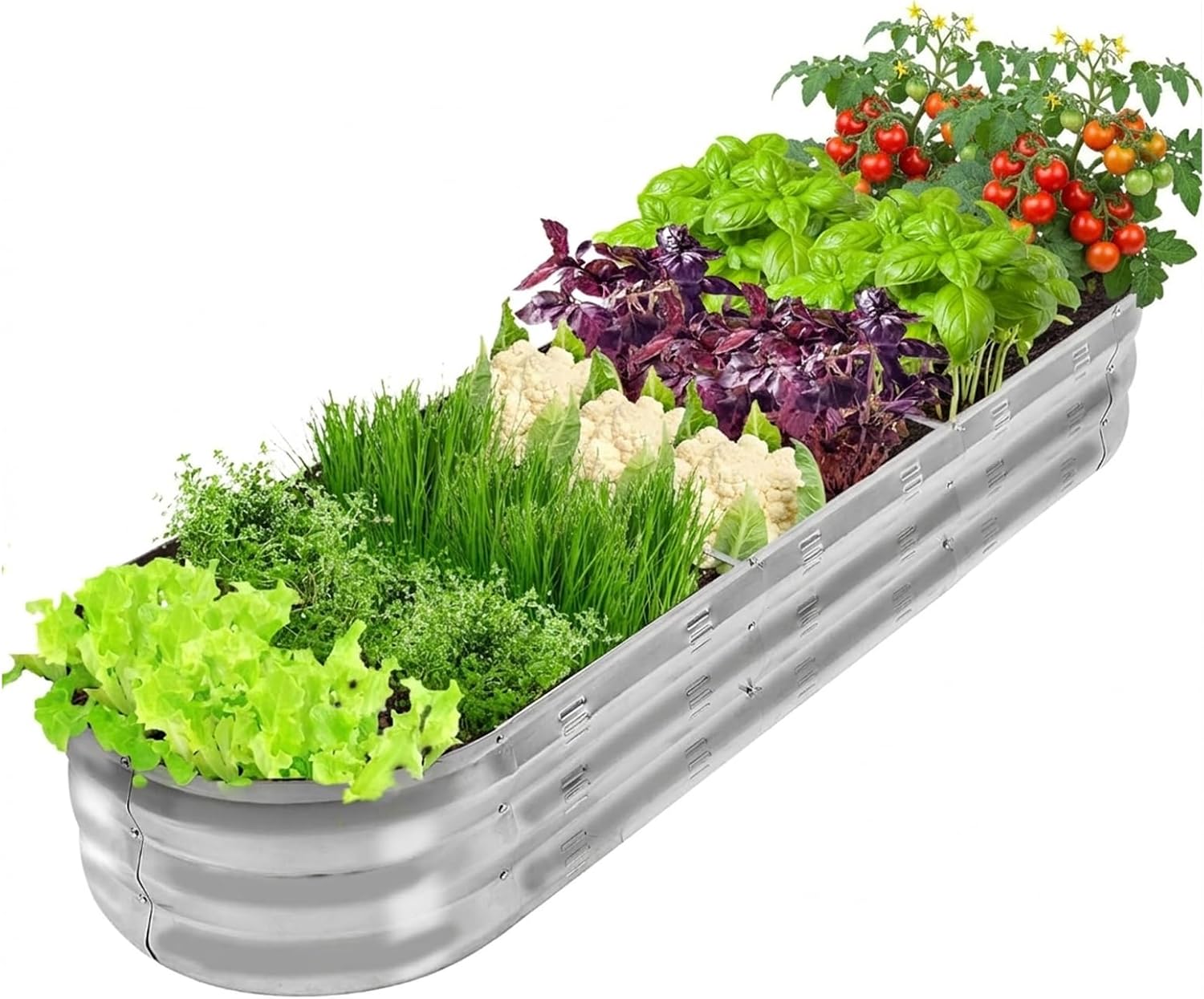
This GADI 67-inch galvanized raised garden bed is a straightforward metal planter built for outdoor vegetable and flower gardening. It assembles quickly with the included hardware and tools into a sturdy, floor-standing bed that uses a wave-shaped metal design for added rigidity. The galvanized steel with powder-coated finish and two layers of anti-corrosion paint give it rust resistance and UV/weather protection, while the open-bottom and drainage hole design prevent waterlogging and let roots access native soil. Side vents improve airflow to roots and help prevent excess moisture buildup. At roughly 7 cubic feet capacity it suits shallow-root vegetables, herbs, and annual flowers planted in patio or backyard settings. Expect limited depth for very deep-rooted crops and the metal construction will warm and cool with ambient temperatures, which affects watering needs. If you want a low-maintenance, durable raised bed that is quick to set up and resists corrosion, this is a practical choice for an efficient vegetable plot.
Best for: Gardeners who prioritize durable, low-maintenance solutions and want a quick-to-assemble raised bed for growing vegetables, herbs, and flowers in patios or small yards.
Less Ideal for: Growers planning to cultivate deep-rooted crops like large root vegetables or small fruit trees should consider deeper, soil-retaining alternatives or wooden beds.
- Galvanized steel with powder-coated finish resists rust and weathering
- Open-bottom design and drainage hole prevent water buildup and improve root access to soil
- Wave-shaped metal panels add structural strength for stability
- Includes necessary hardware and tools for quick assembly
- Shallow depth limits suitability for deep-rooted vegetables or large perennials
- Metal walls can heat up or cool quickly, affecting soil temperature and watering frequency
Verdict: A sturdy, weather-resistant galvanized raised bed that makes it easy to set up a productive vegetable patch with minimal upkeep.
GYMHILL Elevated Resin Raised Garden Bed with Water Gauge and Drain Plug (14 gal)

| Capacity | 14 gallons |
|---|---|
| Material Type | Resin |
| Other Special Features of the Product | Breathable, Drainage Hole, Rust Resistant, Self Watering, UV Resistant |
| Mounting Type | Floor Standing |
| Indoor Outdoor Usage | Outdoor |
This elevated resin raised garden bed is made for low-maintenance container gardening on patios, balconies, and small yards. It assembles without tools and sits on a stable floor-standing frame so you can garden at a comfortable height. Notable features include a built-in water gauge and internal storage tank that help you monitor and retain moisture, plus adjustable drainage holes and a removable plug to prevent overwatering. The resin construction is UV and rust resistant and wipes clean easily, so it holds up to sun and rain without frequent upkeep. The 14-gallon capacity provides a decent root zone for herbs, salad greens, and compact vegetables, while the rectangular shape fits against railings or walls. Limitations are the modest planting volume for larger crops and a fixed footprint that is best for confined outdoor spaces rather than large beds, and it lacks heavy-duty materials for extremely rough use. For gardeners who prioritize reliable, fuss-free performance, this planter delivers straightforward moisture control and weather durability.
Best for: Gardeners who want a dependable, low-maintenance patio planter that simplifies watering and stands up to weather without frequent intervention.
Less Ideal for: Growers who need large, deep raised beds for big vegetables or who plan heavy-duty, full-garden installations should look for bigger or more rugged options.
- Built from UV-resistant, rust-resistant resin for durable outdoor use
- Integrated water gauge and internal tank for easier moisture management
- Adjustable drainage holes and removable plug reduce risk of overwatering
- Tool-free assembly and smooth surface make cleaning and setup simple
- 14-gallon capacity is limited for larger or deep-rooted vegetables
- Not designed for heavy mechanical loads or very large plantings
Verdict: Choose this planter if you want a durable, weatherproof patio bed that reliably simplifies watering and requires minimal upkeep.
Best Choice Products 48 x 24 x 30in Raised Fir Wood Garden Bed with Liner

| Capacity | 5 cubic feet |
|---|---|
| Material Type | Fir Wood |
| Mounting Type | Floor Standing |
| Other Special Features of the Product | Drainage Hole |
| Indoor Outdoor Usage | Outdoor |
This raised garden bed is a straightforward option for small-space vegetable and herb gardening. Constructed from unfinished fir wood, it assembles into a 48 x 24 footprint with a 30 inch planting height that reduces bending while you tend plants. The included bed liner separates soil from the wood, slowing rot and keeping roots and soil contained, and a built-in drainage hole prevents waterlogging. With about 5 cubic feet of planting volume and a 200 lb weight capacity it accommodates several seasonal vegetables, potting mixes, or a mix of herbs and flowers. The all-wood construction looks natural outdoors but will need sealing or periodic maintenance to maximize longevity. Assembly requires following the included guide and handling multiple pieces, so expect some time and basic tools. For gardeners who value an elevated, ergonomic setup and a ready-to-use liner, this planter delivers a practical balance of planting space and convenience; heavy-duty or permanent raised beds will outlast unfinished fir without added treatment.
Best for: Gardeners who want an elevated, easy-to-use planter for vegetables or herbs and prefer a natural wood look while minimizing daily maintenance.
Less Ideal for: People seeking a permanent, maintenance-free raised bed or very large-scale vegetable production should consider heavier-duty or larger alternatives.
- Ergonomic 30 inch height reduces bending and makes planting and harvesting easier
- Included liner keeps soil off the wood to slow rot and discourage pests
- Built-in drainage hole prevents waterlogging and promotes healthier roots
- Natural fir wood construction offers an attractive, rustic look outdoors
- Unfinished fir requires sealing or periodic maintenance to resist weathering
- Assembly involves multiple parts and basic tools and can take time
Verdict: A practical, elevated wooden planter with a liner and drainage that makes small vegetable and herb gardening easier and more ergonomic.
Rakukiri 5 ft Galvanized Raised Garden Bed Planter Box

| Capacity | 68 gallons |
|---|---|
| Material Type | Metal |
| Finish Types | Powder Coated |
| Other Special Features of the Product | Rust Resistant, Weather Resistant |
| Indoor Outdoor Usage | Outdoor |
This Rakukiri 5 ft galvanized raised garden bed is a straightforward, durable planter for growing vegetables and herbs. It assembles with simple hardware and butterfly nuts, then sits as an open-bottom oval that lets excess water drain into the soil below while keeping roots from sitting in standing water. The 0.8 mm galvanized sheet and powder-coated finish provide corrosion resistance that suits year-round outdoor use and reduces the need for frequent replacement. With roughly 68 gallons of planting capacity the bed gives enough soil depth for most shallow- to medium-rooted vegetables and herbs. Because it is metal and not insulated, soil in very hot or cold climates will respond faster to ambient temperatures, so you may need to add mulch or insulation for extreme conditions. The open base also means you must place it on stable, reasonably level ground and expect some root growth into the subsoil. For gardeners who want a low-maintenance, long-lasting planting container that maximizes growing area per footprint, this is a practical choice.
Best for: Gardeners who want a sturdy, low-maintenance raised bed to maximize productive vegetable and herb growing area without complex installation.
Less Ideal for: People needing a portable or insulated raised bed for container-only production or those who must prevent any root penetration into underlying soil.
- Thicker 0.8 mm galvanized metal construction for better durability and rust resistance
- Open-bottom design provides natural drainage and improved root access to subsoil
- Powder-coated finish adds weather resistance for outdoor use
- Easy assembly with butterfly nuts and included hardware
- Metal walls offer little thermal insulation so soil temperature can fluctuate in extreme heat or cold
- Open bottom allows roots to grow into underlying soil which may complicate relocation
Verdict: A robust, easy-to-assemble galvanized raised bed that gives practical, long-lasting planting space for vegetable and herb gardeners.
Choosing the Right Outdoor Raised Planter: Key Factors to Consider
Material and Construction
The material affects how the planter performs over multiple seasons. Wood can look attractive and insulate roots, but certain species weather better than others and untreated timber will rot faster. Metal offers long life but can heat up and change soil temperatures unless insulated. Composite and recycled plastics resist rot and insect damage but vary in structural strength.
Joinery and fasteners are equally important. Look for stainless or coated screws and reinforced corners rather than simple staples or glued panels. A planter built with attention to structural detail will resist warping and keep soil where it belongs.
Drainage and Soil Volume
Good drainage prevents waterlogging and root rot. The planter design should include drainage holes or channels and a way to keep soil from washing out. Soil depth determines what you can grow: most vegetables need at least 12 inches, while many annuals and herbs can manage with less.
Consider whether the planter allows layering for drainage media and potting mix without compacting the root zone. Sufficient volume also impacts how often you must water during hot weather, so deeper planters reduce maintenance for thirsty plants.
Assembly and Placement
Easy assembly reduces setup time and the chance of mistakes that shorten a planter's life. Some raised planters arrive as preassembled boxes, while others require paneling and fasteners. If assembly is needed, clear instructions and simple hardware make the process manageable without specialized tools.
Placement matters for sunlight, drainage slope, and load-bearing surfaces. Verify the planter's footprint and filled weight for decks or balconies and plan for a level base to prevent twisting or uneven wear.
Maintenance and Longevity
Different finishes and liners change how much upkeep a planter needs. Untreated wood will require more frequent sealing or replacement. Metal may need rust-inhibiting treatments in humid climates. Plastics and composites tend to be low maintenance but can fade in strong sun.
Consider whether the planter design allows seasonal cleaning, replanting, and soil replacement without damage. Access for weeding and the ability to lift or move the planter if needed are practical aspects of long-term maintenance.
Weather and Climate Suitability
Your local climate influences what materials and designs will last. Freeze-thaw cycles can crack brittle materials and expand joints if drainage is poor. Intense sun exposure increases UV degradation in some plastics and can dry soil more rapidly, while salty coastal air accelerates metal corrosion.
Choose options suited to your conditions and consider protective measures such as covers, liners, or raised feet to keep moisture away from the base and extend the planter's service life.
Sizing for Plants and Space
Decide what you plan to grow and match the planter size accordingly. Deep-rooted vegetables and small shrubs need at least 12 to 18 inches of soil depth, while shallow-rooted herbs and bedding plants can thrive in narrower troughs. Width and length determine how many plants you can fit and whether you can reach the center for planting and harvesting without stepping into the bed.
For tight patios or balcony setups, narrower but taller planters save footprint while keeping soil volume. For larger plots, wide beds that allow root spread and companion planting reduce crowding and make crop rotation easier.
- Measure available sunlight and place planters where target crops get their required light
- Allow enough clearance to access each side for maintenance
- Consider modular sizes so you can expand or rearrange later
Protecting Soil and Roots
A good raised planter protects the soil from compaction and provides consistent conditions for roots. Use breathable liners when needed to protect timber from prolonged moisture contact without sealing in trapped water. If the planter sits directly on concrete or decking, add feet or spacers so drainage holes can flow freely and air can circulate under the box.
Liners and internal drainage layers should not block drainage. Coarse material like gravel can be used carefully as a base, but avoid relying solely on a thick gravel layer to improve drainage; proper soil mix and holes are more effective.
- Add spacers under the planter to protect decking
- Use a well-draining soil mix to reduce compaction
- Inspect drainage holes annually and clear any blockages
Seasonal Care and Winterizing
Plan how you will treat planters through the seasons. In winter, drain and reduce soil in containers subject to freeze-thaw damage or add insulation to slow temperature shifts. Removable feet or legs let you lift planters to sweep and dry the underside, which reduces rot risk for wooden boxes.
During hot months, heavier planters retain moisture better but may be harder to move. Consider adding shade cloth or relocating sensitive crops to avoid heat stress on exposed planters.
- Empty and store or cover lightweight planters before harsh winter storms
- Top up soil and compost in spring to replenish nutrients
- Inspect for splitting, rust, or loose fasteners after seasonal extremes
Integrating Irrigation and Watering
Think about how you will water the planter. Deep, infrequent watering encourages strong root systems. For larger or multiple planters, installing a simple drip system reduces daily labor and delivers water where roots need it. Ensure irrigation does not over-saturate by combining it with good drainage and appropriate soil mixes.
If you use a reservoir or self-watering feature, check that it balances capillary action and prevents anaerobic conditions. Manual watering often gives you better control for mixed plantings and small beds.
- Use saucers or drip trays only when they do not block drainage
- Set drip emitters for longer intervals rather than frequent shallow watering
- Monitor moisture for newly planted seedlings more closely than for established plants
Aesthetic and Landscape Fit
Choose a planter style that fits the garden design and the plants you want to show. Natural wood blends with traditional gardens while sleek composites or metals suit contemporary patios. Color and texture also influence heat absorption; darker finishes warm soil faster in spring but can stress roots in midsummer.
Think about how the planter will age. Some finishes look better with weathering, while others require maintenance to keep their appearance. Balance the look you want with realistic expectations for upkeep.
- Match planter height to surrounding hardscape for visual harmony
- Consider removable lids or trellis attachments for vertical gardening
- Buy or build modular pieces to create cohesive groupings
How We Chose the Best Outdoor Raised Planter
We selected options that combine real-world durability with practical garden performance. Primary filters included construction material and joinery, because boards, panels, and fasteners determine how long a planter resists rot, rust, and UV exposure. Drainage and soil depth were another critical filter since many plant problems start with poor drainage or containers that are too shallow for root systems. Ease of assembly and maintenance was applied to favor designs that gardeners can set up without specialized tools and keep looking good season after season. We also looked at weight and portability for placements on decks and balconies, and at interior lining or coatings that affect soil chemistry and longevity. We excluded lightweight novelty containers that lack proper drainage or provide insufficient soil depth for common vegetables and perennials. We also skipped planters with fragile finishes that will fail after one season outdoors. The final picks reflect real gardener priorities: durable materials, reliable drainage, adequate soil volume, practical assembly, and long-term low maintenance.
FAQ
How deep should an outdoor raised planter be for vegetables?
Depth depends on the crop. Most vegetables do well with at least 12 inches of loose soil, while root crops like carrots or parsnips need 12 to 18 inches. If you plan to grow a mix, choose a deeper bed to accommodate larger root systems and reduce competition.
Can I put a raised planter directly on a deck?
You can, but add protective measures. Use feet or pallets to lift the planter so drainage holes can clear water. Place a waterproof barrier between the planter base and decking to prevent staining and prolonged moisture contact that could lead to rot.
What soil mix works best in raised planters?
A well-draining mix of compost, topsoil, and an aeration component such as perlite or coarse sand gives good structure and nutrients. Avoid heavy garden soil alone, which compacts in containers. Refresh the top layer with compost each season to maintain fertility.
How do I prevent wood planters from rotting?
Choose rot-resistant species or apply a breathable sealant to slow water ingress. Elevate the planter off hard surfaces, allow airflow under the base, and avoid soil contact with untreated cut ends. Regular inspections and minor repairs extend service life.
Are self-watering raised planters a good option?
They can reduce daily watering needs and keep moisture more consistent, which benefits many vegetables. However, they require careful management to avoid waterlogging and may need occasional flushing to prevent salt buildup. They work best when matched to the plant selection and monitored during extreme weather.
Final Verdict
Prioritize construction and drainage when choosing an outdoor raised planter, because sturdy materials and proper soil depth determine how well plants grow and how much upkeep you will face. Match planter size to the crops and the space you have, and consider placement, irrigation, and seasonal protection as part of the decision. Balance tradeoffs between ease of maintenance and aesthetic preferences. A practical, well-drained planter chosen for your climate and planting goals will give reliable harvests and lower long-term effort.
