

Note: This article contains affiliate links. If you click on these links and make a purchase, I may earn a small commission at no extra cost to you. This helps support my research and content. Read my full affiliate disclosure here.
Growing green onions in containers is one of the easiest ways to add fresh scallions to your cooking, whether you have a small balcony, a sunny windowsill, or a kitchen herb corner. The right planter makes a big difference for green onions because they prefer shallow, well-draining soil and regular access for harvesting. This guide shortlists six top planters chosen for the specific needs of green onions and explains the practical tradeoffs you should weigh. Expect clear notes on drainage, root depth, ease of planting, and everyday care to help you pick the best container for your space and routine.
Top Picks at a Glance
| Best Quality Built to a higher standard if you want something more solid | Bylion 2-in-1 Seed Sprouting and Green Onion Regrower Kit |  |
| Best Value The sweet spot between price and what you get | MIXC 4-Inch Clear Nursery Pots with Silicone Base, 30-Pack |  |
| Best Budget The cheapest option that still gets the job done reliably | Mini Green Onion Regrower Kit with Honeycomb Lid — Soil-Free Indoor Scallion Planter |  |
| Highest Rated A top-rated pick with lots of positive feedback | CuraceQ 7-Hole Green Onion Regrower Kit (4 Lids + 4 Clear Vessels) |  |
| Most Popular A crowd favorite that many people choose with confidence | ZESTIGREENS Green Onion Regrower Lid for Wide-Mouth Jars |  |
| Best Seller A high-volume bestseller chosen again and again | PNHYTUGY Seed Sprouting Kit with 2×32 oz Mason Jars, Sprouter Lids, Stainless Steel Stand and Drain Tray |  |
Bylion 2-in-1 Seed Sprouting and Green Onion Regrower Kit
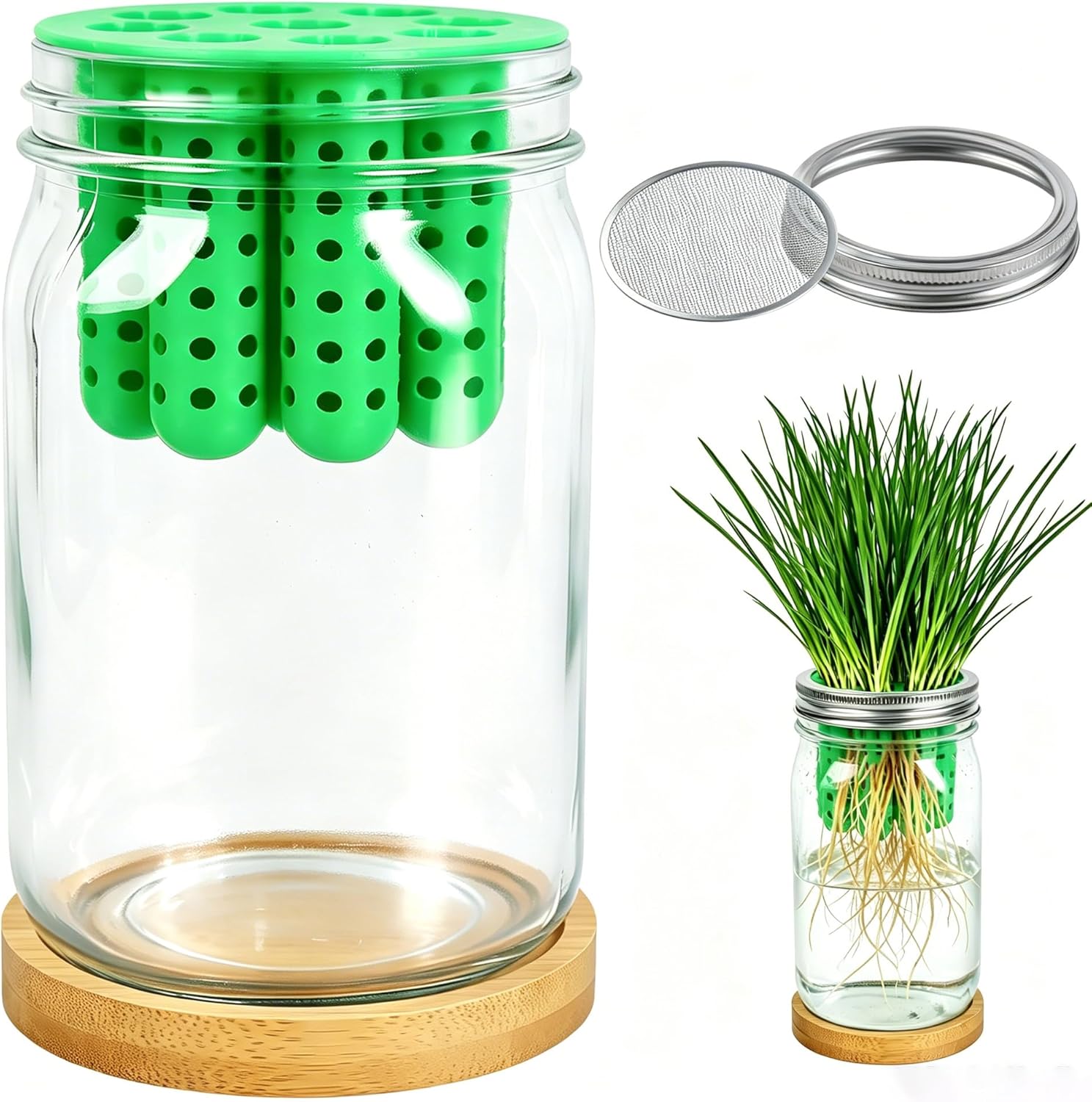
| Manufacturer | Bylion |
|---|---|
| ASIN | B0GWZPNN1Q |
| Item model number | BY00148 |
| Capacity | 32 oz/950 ml |
This Bylion 2-in-1 kit is built for countertop regrowing and small-batch sprouting. It pairs a wide-mouthed 32 oz jar with a stainless steel mesh sprouting lid, a dedicated onion culture vessel, and a bamboo base so you can root scallions hydroponically or flip the lid to sprout beans and microgreens. The taller onion vessel and bottom air holes help roots establish and keep water circulating, while the mesh screen makes rinsing sprouts fast and sanitary. In typical use you set cut scallion bases in the onion vessel with water for continuous regrowth or use the jar and mesh to soak and rinse seeds until sprouts form. The kit is compact and attractive for kitchen counters and saves space compared with multiple specialty containers. Limitations are its small capacity for larger households and that hand-rinsing sprouts is still required; it is not a fully automated sprouter. For buyers prioritizing reliable, space-efficient regrowth and occasional sprouting, it delivers straightforward performance without complexity.
Best for: Buyers who want a compact, efficient kitchen solution to continuously regrow scallions and occasionally sprout seeds, and who prefer a simple, hands-on hydroponic setup.
Less Ideal for: People who need high-volume sprouting or fully automatic sprouters for frequent large batches should consider larger or dedicated electric models instead.
- Multifunctional design supports both green onion regrowing and seed/bean sprouting
- Includes stainless steel mesh lid for hygienic, easy rinsing of sprouts
- Tall onion vessel with bottom air holes encourages healthier root growth
- Compact, attractive kit designed for countertop use with a bamboo base
- Small overall capacity limits how much produce you can grow at once
- Requires manual rinsing and attention rather than automated sprouting
Verdict: A space-saving, dual-purpose countertop kit that reliably regrows scallions and handles small-batch sprouting for cooks who prioritize predictable, hands-on performance.
MIXC 4-Inch Clear Nursery Pots with Silicone Base, 30-Pack

| Material Type | Polypropylene (PP), Silicone |
|---|---|
| Other Special Features of the Product | Drainage Hole, Easy to transplant, Lightweight, Reusable, Silicone Base |
| Indoor Outdoor Usage | Indoor, Outdoor |
| Number of Pieces | 30 |
These MIXC 4-inch clear nursery pots are built for seed starting and small transplants. The rigid polypropylene sides hold their shape while the flexible silicone base lets you push the root ball up for trouble-free removal, which reduces root damage when moving seedlings into larger containers or directly into soil. Transparent walls make it easy to monitor root development and soil moisture for plants like green onions that benefit from frequent checks. Each pot includes bottom drainage holes for healthier root aeration and less overwatering risk, and the lightweight, reusable design cleans easily between uses. Practical gardeners will appreciate getting 30 identical pots for batch sowing and staggered planting. The set is intended for indoor or sheltered outdoor use and works best with a tray or saucer to catch excess water. Limitations are the small 4-inch size, which requires prompt transplanting as roots fill the pot, and the plastic material can eventually discolor with long sun exposure if left outdoors without protection.
Best for: Buyers who want an efficient, no-fuss solution for starting many small crops or propagations and who prioritize easy monitoring and fast transplanting for steady harvests.
Less Ideal for: Gardeners who need larger long-term containers or who plan to grow large-rooted vegetables to maturity in the same pot should choose bigger planters instead.
- Flexible silicone base simplifies transplanting by pushing plants out with minimal root disturbance
- Clear polypropylene walls let you monitor root growth and soil moisture without disturbing seedlings
- Bottom drainage holes promote aeration and reduce overwatering risk
- Thirty identical pots are convenient for batch sowing, succession planting, or propagation
- Lightweight and reusable for multiple growing cycles
- 4-inch size limits how long larger plants can stay in the pot before needing transplanting
- Made of plastic which may degrade or discolor over extended outdoor sun exposure
Verdict: A practical 30-pack of clear 4-inch nursery pots that makes starting and monitoring batches of green onions fast and transplanting nearly effortless.
Mini Green Onion Regrower Kit with Honeycomb Lid — Soil-Free Indoor Scallion Planter

| Product type | Green onion regrower kit |
|---|---|
| Lid style | Hexagonal honeycomb |
| Use | Soil-free water propagation |
This mini regrower kit is a simple, budget-friendly way to regrow scallions and keep fresh green onion tops at hand. The unit uses a hexagonal honeycomb lid to hold onion bases upright above a small water reservoir so roots can develop without soil. It is sized for a countertop or windowsill and is typically used by trimming green onions and placing the bulbs in the lid with water changes every few days. The clear basin makes it easy to monitor root growth and water level. Practical benefits include a no-mess, low-maintenance setup that saves money compared with buying new bunches and adds fresh flavor to cooking. Limitations are its small capacity, which is intended for a few stalks at a time rather than large-scale regrowing, and the need for regular water maintenance to prevent odors or stagnation. For someone who wants fresh scallions without soil or a large planter, this kit covers the basics well.
Best for: A cost-conscious home cook who wants an easy, low-space way to regrow and harvest fresh green onions on a kitchen counter without dealing with soil.
Less Ideal for: Gardeners who need to regrow large quantities or want a multipurpose planter for varied herbs should consider larger or soil-based options.
- Soil-free hydroponic design keeps counters clean and simplifies regrowing
- Honeycomb lid holds multiple onion bases upright for even root development
- Clear reservoir lets you monitor roots and water level easily
- Compact footprint fits on kitchen counters or windowsills
- Small capacity only supports a few scallions at a time
- Requires frequent water changes to avoid stagnation and smells
Verdict: A very affordable, space-saving kit for kitchen countertop regrowing of green onions without soil.
CuraceQ 7-Hole Green Onion Regrower Kit (4 Lids + 4 Clear Vessels)

| Capacity | 200 ml |
|---|---|
| Unit Count | 8 Count |
| Closure Type | Snap |
| Food Storage Container Airtightness | Vented |
This CuraceQ regrower kit is a simple, no-frills solution for keeping scallions and green onions growing on a windowsill or kitchen counter. Each set includes four 7-hole green lids that snap onto the included clear vessels so you can suspend cut onion roots above water while still allowing good oxygen access to stems. The clear cups have measurement marks and a pointed spout for easy water changes, and the plastic feels sturdy and odor-free for repeated use. In practice the multi-hole lids let you grow several shoots in a single vessel and reduce the risk of stems sitting in too much water, which helps prevent rot. Limitations are its compact capacity and vented design, which mean it is strictly for small-scale regrowing rather than full hydroponic trays or larger herbs. Expect better results when used on a bright windowsill and rotated through fresh water regularly.
Best for: Buyers who want a dependable, low-maintenance way to regrow kitchen scallions on a windowsill and prefer simple, reusable components that minimize fuss.
Less Ideal for: People looking to grow large quantities, multiple herb varieties at once, or run a sealed hydroponic setup should choose larger multi-tray systems instead.
- Seven-hole lids allow multiple scallions to be regrown in one vessel
- Clear cups with measurement marks and spout make water changes easy
- Durable, odor-free plastic suitable for repeated indoor use
- Snap-on closure secures lid to wide-mouth jars for stable placement
- Small vessel capacity limits it to regrowing a few stems at a time
- Vented design is not suitable for fully sealed hydroponic systems
Verdict: A compact, reliable regrower that gives you fresh scallions on a bright windowsill with minimal effort and durable, reusable parts.
ZESTIGREENS Green Onion Regrower Lid for Wide-Mouth Jars

| Manufacturer | ZESTIGREENS |
|---|---|
| Item model number | onion_regrower_variation |
| Item Weight | 1.44 ounces |
| Product Dimensions | 3.5 x 3.5 x 1.63 inches |
This ZESTIGREENS regrower lid is a focused, no-fuss tool for keeping green onions on hand in the kitchen. You press the trimmed root ends into the slotted lid, set it on a wide-mouth mason jar or similar cup filled with water, and the roots stay submerged while the shoots regrow above the rim. The lid’s ergonomic slots hold bulbs upright for even regrowth and the kit requires only a single water fill for short-term regrowing, which makes it low-maintenance for busy cooks. It is compact enough for a windowsill and avoids soils or messy trays, so cleanup is easy. Practical limitations are that it only works with wide-mouth vessels and is designed for small-scale regrowing rather than producing large harvests. You also need adequate light at the windowsill for best results because the product provides no integrated lighting. For someone wanting a cheap, space-saving way to recover and regrow store-bought green onions, this lid is an efficient, simple solution.
Best for: Someone who wants a low-effort, space-saving way to regrow kitchen green onions and prefers simple, proven solutions supported by other home gardeners.
Less Ideal for: Users who want to grow larger quantities or full-season crops or who need an all-in-one unit with built-in lighting or soil-based growing.
- Ergonomic slotted lid holds onion roots upright for consistent regrowth
- Single-fill water setup reduces daily maintenance
- Compact design fits on a kitchen windowsill and is easy to clean
- Only compatible with wide-mouth jars or cups so may not fit all containers
- Meant for small, continuous regrowing rather than larger-scale production
Verdict: An inexpensive, compact lid that reliably regrows green onions on a windowsill for cooks who want fresh scallions with minimal fuss.
PNHYTUGY Seed Sprouting Kit with 2×32 oz Mason Jars, Sprouter Lids, Stainless Steel Stand and Drain Tray

| Brand | PNHYTUGY |
|---|---|
| Model Number | Spk-2×32 |
| Unit Count | 64 Ounce |
| Materials | Glass jars, PP lids, 304 stainless steel stand |
This kit provides everything a cautious beginner needs to start sprouting seeds and regrowing green onions on the kitchen counter. It includes two 32 oz wide-mouth glass jars with food‑grade PP sprouter lids, a 304 stainless steel stand that holds jars at an angled position for steady drainage and airflow, a drain tray, two blackout sleeves to limit light exposure, and a cleaning brush. For green onions the 3D printed planter piece suspends roots at the right water level and its perforated design encourages straight, vertical regrowth with minimal maintenance. The materials are described as dishwasher-safe and rust resistant, which reduces long-term fuss. Because the kit standardizes drainage, light control, and jar mounting it cuts down on common sprouting problems such as rot or poor ventilation. Limitations are that seeds are not included and the system is sized to small countertop batches, so it is not intended for large-scale microgreen production or continuous heavy use without repeated cycles.
Best for: A cautious home gardener who wants a low-fuss, safe way to grow sprouts or regrow green onions on the kitchen counter and values clear, repeatable results.
Less Ideal for: Urban farmers or cooks who need large continuous yields or commercial quantities should look for larger-capacity or dedicated microgreen systems.
- All-in-one kit includes jars, lids, stainless stand, drain tray, light shields and cleaning brush
- 304 stainless steel stand resists rust and holds jars at an optimal angle for drainage
- Food‑grade, dishwasher‑safe components simplify cleaning and reduce contamination risk
- Specialized green onion regrower piece holds roots at the correct water level to prevent rot
- Seeds are not included so you must buy seeds separately
- Two 32 oz jars limit output to small, countertop batches rather than larger harvests
Verdict: A compact, low-maintenance sprouting kit that makes regrowing green onions and small batches of sprouts easy and reliable for countertop use.
Choosing the Right Planter for Green Onions: Key Factors to Consider
Drainage and Water Control
Green onions need consistently moist but not waterlogged soil. A planter with reliable drainage holes and a design that prevents standing water reduces the risk of root rot. For indoor use, consider models with a removable tray that catches excess water while still allowing soil to drain freely.
Drainage design also affects how often you need to water. Shallow pots with good drainage dry faster, which can be an advantage in hot, sunny spots but may require more frequent monitoring. Conversely, planters with limited drainage or poor airflow around the soil surface can keep roots too wet and stunt growth.
Container Depth and Root Space
Green onions have relatively shallow roots, so a planter that is too deep wastes soil and can complicate moisture control. Aim for containers that provide a few inches of clear root zone while allowing you to plant multiple bulbs or sets in rows. Depth also affects how densely you can plant; a shallow, wide planter typically supports closer spacing and easier harvesting.
Consider depth in relation to how you plan to harvest. If you intend to cut scallions regularly, a slightly wider surface area helps you stagger plantings and maintain a steady supply without replanting constantly.
Material and Durability
Common planter materials include plastic, terracotta, ceramic, and lightweight composites. For green onions, material matters for heat retention, fragility, and weight. Plastic and composite planters are lightweight and often retain moisture better, which can be useful on sunny balconies. Terracotta breathes but dries faster and can crack in freeze-thaw cycles if used outdoors.
Durable construction also influences how often you will need to replace containers and how well they withstand regular handling during planting and harvesting. UV-resistant or reinforced materials last longer in direct sun and resist fading or becoming brittle.
Ease of Planting and Harvesting
Planters that offer easy access to the soil surface make transplanting sets or seedlings and harvesting scallions much simpler. Wide rims, low sides, or removable inserts let you tend rows without spilling soil or disturbing neighboring plants. For windowsill or kitchen setups, lightweight planters that slide easily are less work when you need to rotate plants for even light.
Also consider whether the planter allows for succession planting. Trays or long boxes that accommodate staggered sowing help maintain a continuous harvest with minimal replanting effort.
Maintenance and Cleaning
Regular cleaning prevents disease buildup between crops. Planters with smooth interiors and removable components are easier to sanitize and refill. Avoid containers with many small crevices that can trap old roots or soil, especially if you plan to reuse the same pot for multiple seasons.
Maintenance also includes the effort required to repot or refresh the soil. Lightweight, modular planters reduce strain during seasonal refreshing and make it easier to amend soil or rotate crops without heavy lifting.
Best Spots for Planters with Green Onions
Green onions thrive in bright light, so place planters where they receive at least four to six hours of direct sun or strong indirect light. For balconies and patios, eastern or southern exposures are ideal. On windowsills, rotate pots periodically to keep growth even.
Consider microclimates when positioning containers. Close to a warm wall can extend the growing season outdoors, while sheltered spots protect tender shoots from strong winds. For indoor kitchens, place planters away from direct heat sources like stovetops to avoid drying the soil too quickly.
- East- or south-facing windowsills for morning or midday sun
- Sheltered balcony corners that reduce wind stress
- Raised planters or racks to keep pests and runoff away
Soil Mix and Fertility for Container Scallions
A light, well-draining potting mix with good organic matter supports steady green onion growth. Avoid heavy garden soils in containers because they compact and hinder root development. Look for mixes labeled for vegetables or amend a general potting mix with added compost and perlite for drainage.
Fertilize lightly during the growing season. Frequent, shallow feeders respond well to regular applications of a balanced, water-soluble fertilizer or slow-release granules applied at the recommended rate. Over-fertilizing can produce lush tops with weak bulbs, so follow typical vegetable container guidelines.
- Use a loose potting mix amended with compost and perlite
- Apply balanced fertilizer in moderation on a steady schedule
- Top-dress with compost between plantings to refresh nutrients
Watering Routine for Shallow Containers
Shallow planters dry out faster than deep pots, so check moisture frequently. Water when the top inch of soil feels slightly dry, delivering water slowly so it soaks in rather than running out the drainage holes. For indoor planters with trays, empty the tray after a few minutes to avoid roots sitting in water.
Mulching the surface with a thin layer of compost or shredded leaves can slow evaporation and reduce watering frequency. If you travel often, consider using a self-watering insert or a wicking system to keep moisture consistent.
- Check soil moisture often and water shallowly but thoroughly
- Empty saucers after drainage to prevent standing water
- Thin surface mulch helps retain moisture without choking shoots
Maximizing Yield in Small Containers
You can grow a surprising amount of green onions in a compact area by using shallow wide planters and staggered sowing. Plant sets or seedlings in rows with spacing appropriate to the variety, and sow new rows every few weeks for continuous harvest. Thin seedlings to avoid overcrowding and to encourage straight, healthy stems.
Rotate crops and refresh soil between heavy plantings to reduce pest buildup and nutrient depletion. Harvest by cutting outer stalks to allow inner shoots to continue growing, which is an efficient way to extend the productive life of each plant.
- Use shallow, wide containers to increase surface planting area
- Practice succession sowing to maintain a steady supply
- Harvest outer stalks first to prolong plant productivity
Container Care Through Seasons
Bring lightweight planters indoors before hard frosts or move them to a protected area to extend the season. Clean and dry containers thoroughly before storing to avoid cracking or mold growth. For permanent outdoor installations, choose materials rated for freeze-thaw cycles.
In summer, watch for faster drying and move planters to spots with some afternoon shade if leaf scorch appears. During shoulder seasons, increase protection from wind and heavy rain to prevent soil erosion from shallow pots.
- Store and clean containers between seasons to prevent damage
- Provide shade during intense summer heat to reduce stress
- Protect outdoor pots from excessive water and freezing
How We Chose the Best Planter for Green Onions
We focused on criteria that directly affect success with green onions in containers. Top considerations included drainage performance, container depth and root space, material durability in outdoor and indoor conditions, ease of planting and harvesting, and maintenance needs such as cleaning and repotting. We prioritized options that allow dense planting without crowding, provide consistent moisture control, and resist splitting or UV damage when placed on sunny patios. Accessibility features like wide rims for slicing transplants and lightweight designs for moving small pots were also considered. Products excluded from the shortlist were planters that are excessively deep or designed for large root crops, containers with poor or no drainage, and items that lack basic durability for patio or windowsill use. Our selection emphasizes practical container traits that make growing multiple green onions simple and reliable, aligning with the scoring metrics used for each entry.
FAQ
How deep should a planter be for green onions?
A shallow planter of around 3 to 6 inches of usable soil is usually sufficient because green onions have shallow root systems. Slightly deeper pots can work but may hold too much moisture, so focus on drainage if depth increases.
Can I grow green onions year-round indoors?
Often you can grow green onions indoors year-round if you provide steady light and consistent moisture. Supplemental grow lights help in low-light months, and indoor temperatures that avoid extremes support continuous growth.
Is a self-watering planter a good choice for scallions?
A self-watering planter can be useful because it maintains steady moisture in shallow soils, reducing daily watering. Choose a model with good wicking action and avoid letting the reservoir keep soil waterlogged.
How many green onions fit in a small window box?
It depends on spacing, but you can often plant several rows in a narrow window box by spacing sets 1 to 2 inches apart. For seedlings, allow a bit more room so stems can thicken without crowding.
What soil mix works best for container green onions?
A light, well-draining potting mix amended with compost and perlite or vermiculite gives a balance of moisture retention and drainage. Avoid heavy garden soil that compacts in containers.
Final Verdict
Choose a planter that matches green onions' shallow root habit and the light conditions you can provide. Prioritize good drainage, easy access for harvesting, and a durable material suited to your location. Tradeoffs include moisture retention versus drying speed and the convenience of removable trays versus simpler open pots. Focus on container depth, drainage design, and ease of maintenance to ensure steady scallion harvests in small spaces.
