

Note: This article contains affiliate links. If you click on these links and make a purchase, I may earn a small commission at no extra cost to you. This helps support my research and content. Read my full affiliate disclosure here.
If you want healthy houseplants without a daily watering chore, a self watering indoor planter can make a big difference. These planters store and deliver water to roots over days or weeks, reducing stress on plants and on you when schedules are busy or travel is frequent. The right design prevents overwatering, supports root aeration, and fits the size and style of your indoor space. This guide covers seven shortlisted self watering indoor planters that suit different pot sizes, plant types, and maintenance habits. We evaluated each pick on water capacity, reservoir design, materials, and practical ease of use so you can pick the style that matches your light, space, and plant care routine.
Top Picks at a Glance
| Best Overall The best all-around choice for most situations | QRRICA Self-Watering Plastic Planter Set (5-Pack, 10/9/8/7.5/7 in) |  |
| Best Quality Built to a higher standard if you want something more solid | Oliz 4‑Pack Clear Self‑Watering Windowsill Planters |  |
| Best Value The sweet spot between price and what you get | Fielda 8/10/12 Inch Self-Watering Planter Set |  |
| Best Budget The cheapest option that still gets the job done reliably | WSMKSZ 4-inch Self-Watering Plant Pots, 6-Pack |  |
| Highest Rated A top-rated pick with lots of positive feedback | Yaghpy 12.5" Self-Watering Oval Planter with Bulb Reservoir (White) |  |
| Most Popular A crowd favorite that many people choose with confidence | YNNICO 6‑Piece Self‑Watering Planter Set (5–8 inch) |  |
| Best Seller A high-volume bestseller chosen again and again | Bluepro Clear Self-Watering Nursery Pots, 5-inch, 20-Pack |  |
QRRICA Self-Watering Plastic Planter Set (5-Pack, 10/9/8/7.5/7 in)

| Material | Plastic |
|---|---|
| Set count | 5 Count |
| Special features | Drainage Hole, Self Watering |
| Included components | Saucer |
| Indoor usage | Indoor |
These QRRICA planters are a straightforward self-watering solution for houseplants. Each pot has a separate reservoir and a removable wick that delivers moisture to the soil so plants draw water as needed, which can keep a full reservoir lasting about one to two weeks depending on conditions. The set includes five nested sizes useful for repotting a range of indoor plants from succulents and herbs to larger foliage like pothos or small monsteras. Built-in mesh drainage and included saucers help protect surfaces and reduce the chance of standing water at the roots. Made from matte plastic, the pots are lightweight and easy to move while the manufacturer says they are UV resistant for occasional outdoor use. Limitations to note are the plastic construction, which some buyers may find less premium than ceramic, and the lack of a visible water-level window on this specific set, so you will need to check the reservoir to avoid running dry. For predictable, low-effort indoor watering the design works well, but those wanting heavier-duty or decorative materials should consider alternatives.
Best for: Home plant owners who want a low-maintenance, reliable watering system that reduces daily watering chores and supports a variety of common houseplants.
Less Ideal for: Buyers seeking premium decorative planters or heavier materials for showpiece plants in formal interiors should look at ceramic or stone options instead.
- Effective wick-based reservoir system that can supply water for about one to two weeks
- Built-in mesh drainage holes plus saucers to prevent surface damage and reduce root saturation
- Five sizes included cover a wide range of common houseplants and repotting needs
- Lightweight, recyclable plastic construction makes pots easy to move and position
- Plastic finish is less decorative and feels cheaper than ceramic or terracotta
- No visible external water-level window on this set, so reservoir level must be checked manually
Verdict: Choose this set if you want a dependable, low-effort self-watering solution that simplifies indoor plant care across multiple pot sizes.
Oliz 4‑Pack Clear Self‑Watering Windowsill Planters

| Capacity | 2.67 liters |
|---|---|
| Unit Count | 4 Count |
| Material Type | Plastic |
| Other Special Features of the Product | Drainage Hole, Root Visible, Self Watering |
| Indoor Outdoor Usage | Indoor |
These Oliz planters are a simple, performance‑focused option for indoor gardening that combine a built‑in water reservoir with clear plastic walls so you can monitor root health and water level at a glance. Typical use is windowsill or tabletop planting of herbs, succulents, African violets and other compact houseplants; the reservoir holds moisture for several days, reducing watering frequency and helping prevent overwatering. Multiple drainage holes and a tabletop mounting style improve air circulation and lower risk of waterlogging while the rot‑resistant plastic keeps the pots odor resistant and easy to clean. The rectangular shape and included four‑pack make it easy to run a small herb row or group succulents together. Limitations are the modest capacity geared to small plants and the plastic construction, which is less rigid and long‑lasting than ceramic for heavy use or high‑sun exposures; larger plants will quickly outgrow the 2.67‑liter volume. Overall this set is best when you want low‑maintenance, visible root monitoring and consistent moisture for compact indoor plants.
Best for: Buyers who prioritize reliable, low‑maintenance indoor plant care and want to monitor root health visually for herbs, succulents, or small houseplants.
Less Ideal for: Gardeners who need large containers for established or fast‑growing plants or who prefer heavyweight materials like ceramic or terracotta for aesthetics or durability.
- Integrated water reservoir reduces watering frequency and helps prevent overwatering
- Clear walls let you see root development and water level without disturbing plants
- Multiple drainage holes improve air circulation and reduce waterlogging risk
- Rot‑resistant, odor‑resistant plastic is easy to clean and suitable for indoor use
- Capacity and form factor are limited to small plants and seedlings
- Plastic construction is less durable and less heat‑stable than heavier materials
Verdict: A practical four‑pack of clear self‑watering windowsill planters that deliver consistent moisture and visible root monitoring for small indoor plants.
Fielda 8/10/12 Inch Self-Watering Planter Set

| Included Components | Saucer, Water Level Indicator Window |
|---|---|
| Capacity | 2.5 gallons |
| Material Type | Plastic |
| Indoor Outdoor Usage | Indoor, Outdoor |
These Fielda planters are a practical self-watering set for anyone who wants lower-maintenance container gardening. Each pot has a deep reservoir and an absorbent cotton wick that draws water up to the root zone, while a transparent water-level window lets you check reservoir volume without disturbing the plant. Detachable saucers and multiple drainage holes simplify cleaning and prevent overwatering, and the thicker plastic walls make the pots durable for both indoor and outdoor placement. In real use they keep soil evenly moist for roughly a week for typical houseplants, which is convenient for busy schedules or short trips. Limitations to note are the reduced usable planting depth because of the reservoir and the lightweight plastic construction, which can tip with very top-heavy plants in windy outdoor spots. The design is straightforward to set up and maintain, and the visible indicator and removable tray make it easy to avoid waterlogging while reducing daily watering chores.
Best for: Buyers who want a low-maintenance, reliable self-watering solution that visibly shows reservoir status and simplifies weekly care for common houseplants and balcony pots.
Less Ideal for: Growers needing maximum root depth for large specimen plants or those who prefer heavy, terracotta-style pots for stability and aesthetic weight.
- Self-watering reservoir with cotton wick delivers consistent moisture to roots for up to 7–10 days
- Transparent water-level window provides easy visual monitoring without moving the pot
- Removable saucer tray and multiple drainage holes simplify cleaning and prevent waterlogging
- Durable, high-temperature-resistant plastic resists fading and cracking for indoor or outdoor use
- Reservoir reduces usable planting depth compared with a regular pot of the same outer size
- Lightweight plastic can be prone to tipping with large, top-heavy plants in windy conditions
Verdict: A convenient, visible self-watering planter set that cuts down weekly watering while working reliably for typical houseplants and balcony containers.
WSMKSZ 4-inch Self-Watering Plant Pots, 6-Pack

| Material Type | Plastic |
|---|---|
| Unit Count | 6 Count |
| Other Special Features of the Product | Drainage Hole, Lightweight, Self Watering |
| Mounting Type | Tabletop |
| Indoor Outdoor Usage | Indoor, Outdoor |
These WSMKSZ 4-inch self-watering pots are a practical set for small houseplants and seedlings. Each pot uses a wick rope to draw water from a bottom reservoir, so they supply steady moisture while reducing how often you need to water. The set includes detachable saucers and drainage holes so excess water collects below the soil instead of flooding roots. Made from matte-finish polypropylene, the pots are lightweight but have reasonably thick walls that resist fading and make them easy to move or rearrange around the home. They work well for succulents, small herbs, cacti, and desktop foliage and are straightforward to reuse or DIY-decorate. Limitations are the small 4-inch capacity and relatively shallow reservoir, which means larger plants or heavy feeders will outgrow them quickly and will still need more frequent attention. For small plants and busy gardeners wanting low maintenance containers on a budget, this set is a convenient choice.
Best for: Buyers who want an inexpensive, low-maintenance solution for small indoor plants or seedlings and prefer ready-to-use pots that save watering time.
Less Ideal for: Gardeners who need larger containers for established plants, heavy feeders, or long-term specimens that require deeper soil and bigger water capacity.
- Self-watering wick system reduces watering frequency for small plants
- Includes detachable saucers and drainage holes to protect roots from waterlogging
- Durable recyclable PP plastic with matte finish that resists fading
- Lightweight and easy to move for tabletop or windowsill displays
- 4-inch size and small reservoir are unsuitable for larger plants or long-term growth
Verdict: A budget-friendly six-pack of small self-watering pots that makes low-maintenance indoor plant care simple and affordable.
Yaghpy 12.5" Self-Watering Oval Planter with Bulb Reservoir (White)

| Capacity | 400 ml |
|---|---|
| Material Type | Plastic |
| Other Special Features of the Product | Breathable, Drainage Hole, Self Watering, UV Resistant, Weather Resistant |
| Mounting Type | Tabletop |
This Yaghpy self-watering planter is a compact, minimalist indoor pot designed to reduce how often you need to water common houseplants and herbs. It uses a detachable, bulb-shaped transparent reservoir (about 400 ml) that screws into the pot and feeds water to the soil by atmospheric pressure, while a dual-layer base with drainage holes promotes air circulation around roots. Typical use is filling the bulb and placing the planter on a windowsill, countertop, or narrow desk where it quietly manages moisture for roughly a week or two depending on temperature and plant type. Notable features include the clear reservoir that doubles as a visible level indicator, a slim rectangular profile for tight spaces, and plastic construction that is UV and weather resistant for indoor use. Practical benefits are consistent hydration for busy owners, less chance of surface pests thanks to the sealed reservoir, and easy cleaning since the bulb detaches. Limitations are that capacity is modest so very thirsty plants or hot, dry rooms will need more frequent refills, and the plastic material and small size limit use to small to medium houseplants rather than large specimens.
Best for: Buyers who want a dependable low-maintenance indoor planter that keeps small to medium houseplants consistently watered with minimal monitoring and fuss.
Less Ideal for: People who grow large or very thirsty plants, or who prefer heavy ceramic or terracotta planters for decorative or thermal reasons.
- Detachable transparent bulb reservoir holds 400 ml and provides a visible water-level indicator
- Dual-layer design with drainage holes encourages root aeration to reduce risk of root rot
- Slim rectangular shape fits narrow windowsills, desks, and countertops
- Made of UV and weather resistant plastic for easy cleaning and durable indoor use
- 400 ml capacity may require weekly refills for thirsty plants or warm, dry rooms
- Plastic construction is not suitable for large heavy plants or decorative terracotta aesthetic
Verdict: Choose this planter if you want a reliable, space-saving self-watering pot that visibly holds and dispenses water so you can forget frequent watering without risking root suffocation.
YNNICO 6‑Piece Self‑Watering Planter Set (5–8 inch)
| Included Components | Tray |
|---|---|
| Unit Count | 6 Count |
| Other Special Features of the Product | Drainage Hole, Self Watering |
| Material Type | Plastic |
| Finish Types | Matte |
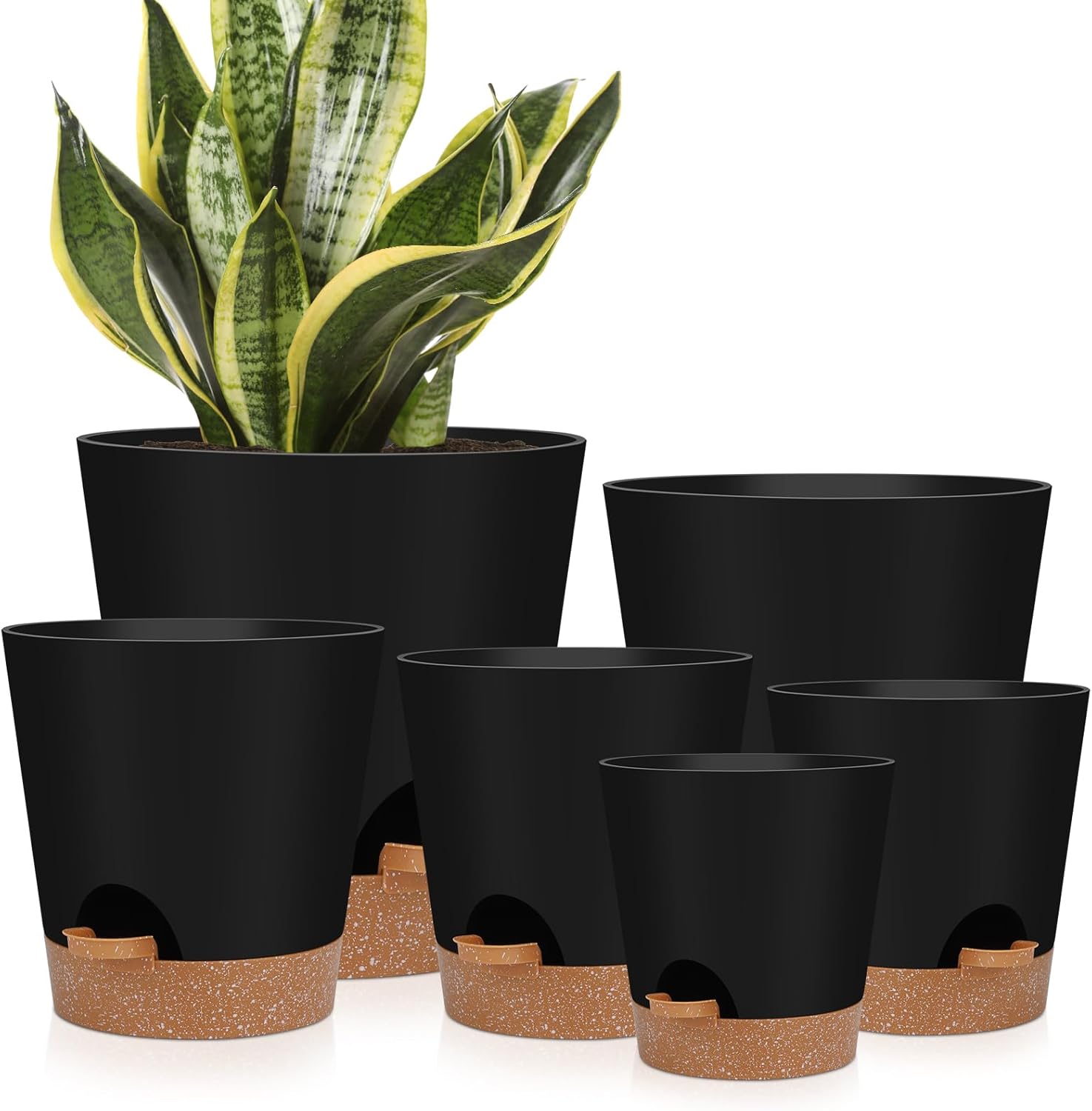
These YNNICO planters are a practical set for people who want low‑maintenance container gardening. The kit includes six nested sizes (8, 7, 6.5, 6, 5.5 and 5 inches) made from durable polypropylene with a matte finish. Each pot has multi drainage holes, a large bottom tray and a wick for bottom watering so you can use the separate reservoir for self watering or remove the tray for conventional drainage. The lightweight construction makes them easy to move between a windowsill, desk or small balcony, and the simple modern look fits most interiors. Because they are plastic they tolerate temperature swings and are less likely to crack than thin ceramic, but they are not decorative focal pieces and the finish can scratch if handled roughly. The set is best for small to medium houseplants, starting cuttings or creating a coordinated group of pots where consistent watering control matters.
Best for: Buyers who prioritize reliable, low‑maintenance watering and want a matched set of pots for multiple indoor plants or a coordinated display.
Less Ideal for: If you need heavy decorative planters or large outdoor containers for big plants, choose thicker ceramic or large garden pots instead.
- Includes six common planter sizes for a range of small to medium plants
- Built‑in drainage holes plus separate reservoir and wick for bottom self watering
- Durable, lightweight polypropylene construction suitable for indoor and sheltered outdoor use
- Plastic finish is utilitarian and can show scratches or scuffs over time
- Not intended as a decorative statement pot for high‑end styling
Verdict: A practical, matched six‑pot set that makes bottom self‑watering simple for small to medium indoor plants.
Bluepro Clear Self-Watering Nursery Pots, 5-inch, 20-Pack

| Material Type | Plastic |
|---|---|
| Features | Breathable, Drainage Hole, Self Watering |
| Indoor Outdoor Usage | Indoor |
| Included Components | Tray, Watering Rope |
| Unit Count | 20 Count |
These Bluepro clear self-watering nursery pots are a practical set for seed starting, propagation, herbs and small houseplants. Each 5-inch pot includes a matching bottom reservoir and a watering wick that draws moisture from the tray into the soil, which can reduce how often you need to water and help keep moisture more consistent for up to about a week under good conditions. The clear plastic body makes it easy to monitor root growth, soil moisture and remaining reservoir water without disturbing the plants. Multiple drainage openings and flexible walls simplify transplanting because you can press the pot to ease the root ball out. The set includes trays and wicks so you can set up a coordinated group of plants, and the reinforced rims mean the pots stand up to reuse and washing when they are not damaged. Limitations to note are that plastic is not insulating for temperature extremes and reservoir duration will vary with plant type, soil mix and home conditions, so you should still check moisture periodically for sensitive seedlings.
Best for: Buyers who want a low-maintenance, predictable seed-starting or indoor herb setup and prefer products that make monitoring roots and moisture simple and safe.
Less Ideal for: People who need heavy-duty outdoor pots, decorative finished planters for display, or buyers who prefer ceramic or biodegradable materials for long-term planting.
- Complete 20-piece set with matching trays and wicks for immediate setup
- Wick-based self-watering reservoir supports more consistent moisture and less frequent watering
- Clear pots allow easy observation of roots, soil moisture and water level
- Multiple drainage openings and flexible walls make transplanting easier
- Reinforced rims and washable plastic enable reuse across planting stages
- Plastic construction offers little insulation against temperature fluctuations and can scratch or discolor over time
- Reservoir runtime varies widely by plant, soil and environment so weekly watering is not guaranteed
Verdict: A ready-to-use 20-pack of clear self-watering nursery pots that simplify seed starting and short-term indoor propagation by letting you monitor roots and maintain steadier moisture with minimal effort.
Choosing the Right Self Watering Indoor Planter: Key Factors to Consider
Reservoir Size and How Long It Lasts
Reservoir volume determines how many days a planter can go between refills. Larger reservoirs are useful if you travel or have many plants, but they also add weight and footprint. For small to medium houseplants, a reservoir that stores several days to a couple of weeks of water is often ideal.
Consider the balance between autonomy and container size. A very large reservoir under a tiny pot can feel bulky and may not be necessary for slow-growing succulents. For thirstier foliage plants, a larger reservoir reduces frequency of intervention but requires a sturdier base and stable placement to avoid tipping.
Refill Access and Water-Level Indicators
Easy refill access makes maintenance simple and reduces the risk of spills. Top-fill ports, wide openings, or side-fill tubes let you add water without disassembling the whole unit. Visible water-level indicators are valuable because they let you know at a glance whether the reservoir is empty or full.
Some planters use clear sight tubes, float indicators, or color-coded markers. Choose a system that you will actually check; small or hidden indicators can lead to forgotten empty reservoirs and stressed plants.
Wicking Design and Soil Contact
The mechanism that moves water from the reservoir to the soil matters more than the reservoir itself. Wicking systems, capillary mats, or a separate inner pot with drainage holes provide steady moisture to the root zone. The goal is even, slow moisture delivery instead of wet-dry cycles that can stress roots.
Look for designs that foster good root contact with the wicking element and allow excess water to drain back to the reservoir. Systems that drown the root crown or trap water against stems increase rot risk, while those that promote air in the root zone support healthy root development.
Drainage, Overflow Protection, and Root Aeration
Proper drainage and overflow safeguards protect both plants and indoor surfaces. A functioning overflow channel or trap prevents spills when the reservoir is overfilled, and internal drainage pathways stop waterlogging. Similarly, ventilation around the root ball prevents anaerobic soil conditions.
Planters that isolate the reservoir from the growing medium but still promote airflow to roots are preferable. Consider whether the planter's base raises the inner pot enough to allow air exchange and whether there is a way to flush the soil if salts accumulate from tap water.
Materials, Finish, and Indoor Suitability
The materials used affect longevity and indoor compatibility. Food-safe, UV-stable plastics resist discoloration and odors, while ceramics and glazed finishes offer aesthetic benefits but may lack integrated reservoirs. If using plastic, choose thicker walls and tight-fitting lids to minimize warping over time.
Also account for surface protection. Some planters can sweat or leak; look for trays or sealed bottoms that protect furniture and floors. Nonporous materials are easier to clean and less likely to harbor algae in the reservoir.
Maintenance, Cleaning, and Long-Term Care
A reservoir system that is easy to disassemble and clean will last longer and keep plants healthier. Planters with removable inner pots, wide reservoir openings, or components that resist mineral buildup are easier to maintain. Consider how often you will need to flush or scrub the reservoir if you use tap water.
Regular maintenance prevents algae, mold, and salt crusts. If the planter has delicate parts or narrow tubes, factor the time you are willing to spend keeping it functioning. Removable parts also simplify repotting and root inspection.
Which Plants Benefit Most From Self Watering Indoor Planters
Many houseplants thrive with consistent moisture at the root zone rather than fluctuating wet-and-dry cycles. Tropical foliage plants, herbs grown for fresh cuts, and many indoor flowering plants often respond well to steady moisture because they prefer evenly damp soil.
Succulents and cacti can tolerate dry periods and usually need planters with minimal wicking or very small reservoirs. If you want to grow a mix of plant types, choose a planter that allows you to control the rate of moisture delivery or use different soil mixes to compensate.
- Tropical foliage: typically happy with steady moisture
- Herbs: benefit from regular supply of water for constant growth
- Succulents: usually need minimal reservoir action and fast-draining soil
Placement and Lighting Considerations
Placement affects how fast a planter uses its reservoir. Plants in bright, warm spots will consume water faster than those in lower light. Match reservoir size and refill frequency with the plant's light exposure and growth rate.
Also account for stability and accessibility. Heavy reservoirs need a secure surface and may be harder to move for repositioning under different light levels. Keep planters away from drafty vents that cause rapid drying or from radiators that can overheat the soil.
- Bright windows increase water use and growth
- Heavy bases require stable shelving or floor placement
- Avoid hot drafts that accelerate evaporation
Adapting Soil Mix and Pot Size for Reservoir Systems
Soil mix influences how well a self watering planter works. Use mixes with good structure and aeration so roots do not sit in overly compacted, wet soil. Adding perlite or pumice helps keep a balance between moisture retention and oxygen flow.
Choose a pot size that suits the root system. Oversized pots with large reservoirs can hold too much moisture for plants with small root balls. If repotting into a self watering system, trim back root-bound plants only enough to fit without creating excessive empty soil that traps moisture.
- Use airy potting mixes to prevent compaction
- Match pot diameter to root spread for consistent moisture
- Amend soils to control water retention for thirsty versus drought-tolerant plants
Simple Troubleshooting and Seasonal Care
If plants show yellowing leaves or soft stems, check that the soil is not overly wet and that the wicking system is not delivering too much water. Adjust by reducing fill frequency or using a soil mix with faster drainage.
In winter, most houseplants use less water because of lower light and humidity. Reduce reservoir refills and inspect for condensation or mold. Flush the reservoir and topsoil occasionally to remove mineral buildup from tap water.
- Yellow leaves can indicate overwatering rather than underwatering
- Reduce fills in lower light seasons
- Flush reservoirs periodically to prevent mineral buildup
Aesthetic and Practical Styling Tips
Self watering planters come in styles that suit modern, rustic, or minimalist interiors. Consider how visible the reservoir is and whether you prefer a concealed system for a cleaner look. Color and finish choices should complement your plantings and interior palette.
Practical touches like a tray to protect surfaces, a wide base for stability, and removable liners make daily care easier while keeping the planter attractive.
- Concealed reservoirs create a cleaner silhouette
- Choose finishes that resist scratches and stains
- Removable liners simplify repotting and cleaning
How We Chose the Best Self Watering Indoor Planter
We focused on features that actually affect plant health and everyday convenience for indoor gardeners. Key evaluation criteria included reservoir capacity and autonomy, reservoir refill and visual indicators, internal wicking or soil access design, material durability and drainage control, and pot sizes that match common houseplant root systems. Each product had to show a reliable way to keep roots moist without constantly saturating the soil and to allow oxygen to reach roots when the reservoir is active. We prioritized designs that make filling simple and clear, such as top or side fill ports and visible water level indicators. Durability of construction mattered for long-term indoor use, so we filtered out plans with flimsy plastics or poor seal designs that risk leaks. We also looked for practical maintenance features like removable inner pots or easy-to-clean reservoirs. Excluded items included purely decorative planters with no reservoir function, devices meant only for outdoor use, and experimental or makeshift systems that require complex assembly. The final list balances low-maintenance performance with everyday usability and build quality.
FAQ
How often should I refill a self watering indoor planter?
Refill frequency depends on reservoir size, plant type, and light level. Many planters last one to two weeks for average houseplants, while larger reservoirs can go longer. Check the water-level indicator periodically and adjust based on plant growth and season.
Can I use tap water in the reservoir?
Usually you can use tap water, but mineral buildup from hard water can accumulate over time. If you notice crusting or slowed wicking, flush the reservoir occasionally or use filtered water to reduce deposits.
Will a self watering planter cause root rot?
Root rot is possible if the system keeps the soil constantly saturated and lacks aeration. Choose planters with a proper wicking design, internal drainage, and airy soil mixes. Monitor plants for soft stems or yellowing leaves and adjust watering frequency if needed.
Are self watering planters suitable for succulents and cacti?
Most succulents and cacti prefer dry conditions and do not need large reservoirs. If you use a self watering planter, select one with minimal wicking action or use a very fast-draining mix and infrequent refills to avoid overmoisture.
How do I clean the reservoir?
Empty the reservoir and remove any removable liners or inner pots. Rinse with water and scrub accessible surfaces with a brush to remove algae or mineral deposits. For stubborn buildup, a mild vinegar solution can help, followed by a thorough rinse.
Final Verdict
A self watering indoor planter reduces routine watering and keeps root moisture more stable, which helps many houseplants grow more reliably. Prioritize reservoir capacity and refill clarity if you need long intervals between checks, and choose a wicking and drainage setup that matches the moisture needs of your plants. Balance ease of maintenance with the planter's size and finish to suit your indoor space. With the right combination of reservoir design, soil mix, and placement, you can confidently reduce watering chores while keeping plants healthy.
