

Note: This article contains affiliate links. If you click on these links and make a purchase, I may earn a small commission at no extra cost to you. This helps support my research and content. Read my full affiliate disclosure here.
A raised vegetable planter can transform tight yards, patios, and community plots into productive vegetable patches. The right planter improves soil depth, drainage, and root warmth while reducing back strain during planting, weeding, and harvest. This guide shortlists seven top-rated raised vegetable planters suited to a range of small-space vegetable gardening situations and explains the practical features to watch for. We evaluated each option against real gardener concerns like material durability, drainage performance, and ease of use. Read on to see how these choices match common garden layouts and maintenance routines.
Top Picks at a Glance
| Best Overall The best all-around choice for most situations | FOYUEE 31.5" Elevated Mobile Raised Garden Bed with Wheels and Shelf |  |
| Best Quality Built to a higher standard if you want something more solid | Vego Garden 9-in-1 Modular Metal Raised Garden Bed Kit, 17" Tall 8ft x 2ft |  |
| Best Value The sweet spot between price and what you get | GADI 67-Inch Galvanized Raised Garden Bed |  |
| Best Budget The cheapest option that still gets the job done reliably | Utopia Home Galvanized Raised Garden Bed Kit, 4 x 2 x 1 ft |  |
| Highest Rated A top-rated pick with lots of positive feedback | Souwuokoo Elevated Rectangular Raised Planter (Polypropylene) |  |
| Most Popular A crowd favorite that many people choose with confidence | Land Guard Galvanized Oval Raised Garden Bed Kit (4×2×1 ft) |  |
| Best Seller A high-volume bestseller chosen again and again | Land Guard 2-Pack Galvanized Raised Garden Beds (4×2×1 ft) |  |
FOYUEE 31.5" Elevated Mobile Raised Garden Bed with Wheels and Shelf

| Capacity | 2.5 cubic feet |
|---|---|
| Material Type | Metal |
| Finish Types | Powder Coated |
| Mounting Type | Floor Standing |
| Included Components | Wheels, Plant Stand |
This FOYUEE elevated raised bed is a mobile, waist-height planter designed for easy, ergonomic vegetable and herb growing on patios and balconies. The galvanized steel box with a powder-coated finish resists rust and supports heavy fill so you can add ample soil for productive vegetable crops. Built-in drainage channels and a central drain help prevent waterlogging while the raised profile improves air circulation around roots. A lower storage shelf keeps tools and pots handy and the integrated handle plus 6-inch all-terrain wheels make it straightforward to reposition the planter for sun or shelter. Typical uses are growing salad greens, herbs, compact vegetables, or creating a movable culinary garden outside a kitchen door. Assembly and moving when fully loaded will require some effort despite wheels, and the metal surface can warm in strong sun so seedling protection may be needed. The unit favors growers who want less bending and an organized, movable planting station rather than a large in-ground plot.
Best for: Gardeners who want an ergonomic, moveable vegetable planter for patios or balconies and value easy access, organization, and rust-resistant construction.
Less Ideal for: People who need very large planting volumes, deep-rooted crops, or a permanent in-ground bed for large-scale vegetable production.
- Powder-coated galvanized steel construction resists rust for outdoor use
- Raised waist-height design reduces bending and back strain
- Integrated drainage channels and central drain prevent water buildup
- Built-in wheels and handle allow the planter to be moved for light or weather
- Lower shelf provides convenient storage for tools and supplies
- May be heavy and awkward to assemble or move when filled with soil
- Metal walls can heat up in direct sun and may require shading for sensitive plants
Verdict: Buy this if you want a durable, waist-height mobile planter that makes growing herbs and compact vegetables easier without stooping.
Vego Garden 9-in-1 Modular Metal Raised Garden Bed Kit, 17" Tall 8ft x 2ft

| Material Type | Metal |
|---|---|
| Capacity | 23 cubic feet |
| Number of Pieces | 20 |
| Other Special Features of the Product | Modular Design, Higher Depth for Root Development, Better Water Drainage |
| Indoor Outdoor Usage | Outdoor |
The Vego Garden 9-in-1 modular raised bed is a heavy-duty metal planter built for gardeners who want a durable, reconfigurable bed with enough depth for robust vegetable roots. It assembles from interlocking panels and hardware into one of nine layouts so you can adapt the 8 ft by 2 ft footprint to your plot or combine sections for larger runs. The 17-inch depth and 23 cubic feet capacity promote better drainage and stronger root systems compared with shallow containers, and the zinc-magnesium-aluminum coated steel with a polished finish is engineered for long life and corrosion resistance. Notable extras include rounded corners and rubber edging for safer handling and compatibility with add-ons such as trellises, covers, and in-bed composters for a more complete growing system. Expect straightforward, manual assembly that requires tightening fasteners but no advanced skills. Limitations are typical of metal beds: they can get hot in full sun and will need attention to soil temperature and moisture, and modular kits require planning if you want nonstandard shapes or raised legs.
Best for: Gardeners who prioritize reliable, long-lasting performance and want a configurable raised bed that promotes deeper root growth for vegetables and intensive planting.
Less Ideal for: People seeking lightweight, portable containers for small balconies or those who prefer a fully assembled, drop-in planter with no hardware work.
- Modular 9-in-1 design lets you reconfigure layout to fit varied garden spaces
- 17-inch depth supports stronger root development and improved drainage
- Durable VZ 2.0 coated metal construction tested for corrosion resistance
- Rounded oval shape and rubber edging reduce risk of cuts during assembly
- Compatible with add-ons like trellises, covers, and in-bed composters
- Metal can heat up in direct sun, which may require shading or insulating the soil
- Assembly requires multiple panels and fasteners which takes time for larger layouts
Verdict: Choose this kit if you want a performance-focused, long-lasting modular raised bed that encourages healthier vegetable roots and adapts to changing garden layouts.
GADI 67-Inch Galvanized Raised Garden Bed

| Capacity | 7 cubic feet |
|---|---|
| Material Type | Metal |
| Finish Types | Powder Coated |
| Other Special Features | Breathable, Drainage Hole, Rust Resistant, UV Resistant, Weather Resistant |
| Mounting Type | Floor Standing |
This GADI 67-inch galvanized raised garden bed is a straightforward metal planter built for outdoor vegetable and flower gardening. It assembles quickly with the included hardware and tools into a sturdy, floor-standing bed that uses a wave-shaped metal design for added rigidity. The galvanized steel with powder-coated finish and two layers of anti-corrosion paint give it rust resistance and UV/weather protection, while the open-bottom and drainage hole design prevent waterlogging and let roots access native soil. Side vents improve airflow to roots and help prevent excess moisture buildup. At roughly 7 cubic feet capacity it suits shallow-root vegetables, herbs, and annual flowers planted in patio or backyard settings. Expect limited depth for very deep-rooted crops and the metal construction will warm and cool with ambient temperatures, which affects watering needs. If you want a low-maintenance, durable raised bed that is quick to set up and resists corrosion, this is a practical choice for an efficient vegetable plot.
Best for: Gardeners who prioritize durable, low-maintenance solutions and want a quick-to-assemble raised bed for growing vegetables, herbs, and flowers in patios or small yards.
Less Ideal for: Growers planning to cultivate deep-rooted crops like large root vegetables or small fruit trees should consider deeper, soil-retaining alternatives or wooden beds.
- Galvanized steel with powder-coated finish resists rust and weathering
- Open-bottom design and drainage hole prevent water buildup and improve root access to soil
- Wave-shaped metal panels add structural strength for stability
- Includes necessary hardware and tools for quick assembly
- Shallow depth limits suitability for deep-rooted vegetables or large perennials
- Metal walls can heat up or cool quickly, affecting soil temperature and watering frequency
Verdict: A sturdy, weather-resistant galvanized raised bed that makes it easy to set up a productive vegetable patch with minimal upkeep.
Utopia Home Galvanized Raised Garden Bed Kit, 4 x 2 x 1 ft
| Capacity | 216 liters |
|---|---|
| Material Type | Alloy Steel |
| Finish Types | Powder Coated |
| Mounting Type | Floor Standing |
| Indoor Outdoor Usage | Outdoor |
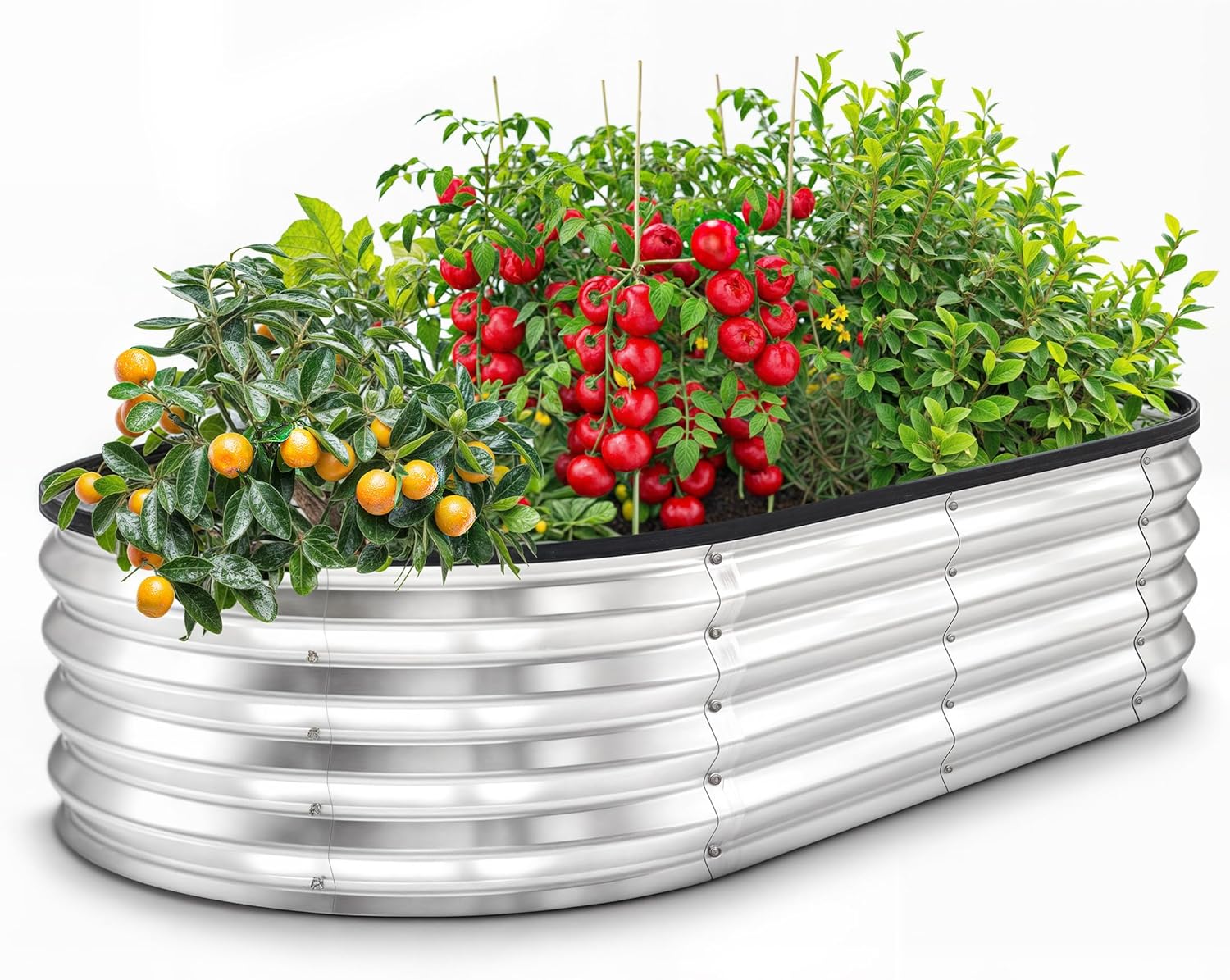
This Utopia Home galvanized raised garden bed is a simple, no-frills metal planter that turns a patch of yard or patio into a contained growing area. The kit arrives as flat panels that lock together around an open base so roots can grow into the ground while the box keeps soil and beds organized. Made from powder-coated alloy steel and described as lightweight, it is corrosion-resistant compared with untreated metal and includes a center support strip for added rigidity. Typical uses are starting vegetables, herbs, or flowers where you want clearer edges, better drainage, and less bending to tend plants. Assembly is straightforward and tool-light, so it is practical for quick seasonal setups or moving around the yard. Limitations are its modest 4 x 2 ft footprint and single-level depth, which limits the number of plants and makes it better for shallow-rooted crops; heavier-duty raised beds with thicker panels or built-in liners will suit long-term heavy use better than this lighter kit.
Best for: Buyers looking for an inexpensive, easy-to-assemble raised bed to start vegetables or herbs in small outdoor spaces and who prioritize low upfront cost and portability.
Less Ideal for: People who need large or permanent heavy-duty beds for long-term, high-yield vegetable production or who prefer deep, multi-level planters.
- Galvanized alloy steel with powder coat offers rust resistance for outdoor use.
- Open-base design allows roots to grow into native soil and improves drainage.
- Lightweight panels make assembly and relocation easy for seasonal use.
- Center support strip increases rigidity compared with basic panel-only kits.
- Small 4 x 2 ft footprint limits planting area for larger vegetable gardens.
- Lightweight construction is less robust than thicker steel or heavy-duty wooden beds.
Verdict: A budget-friendly, rust-resistant galvanized steel raised bed that is quick to assemble and easy to move, ideal for small-scale vegetable and herb gardening.
Souwuokoo Elevated Rectangular Raised Planter (Polypropylene)

| Material Type | Polypropylene (PP) |
|---|---|
| Mounting Type | Floor Standing |
| Planter Form | Raised Bed |
| Indoor Outdoor Usage | Outdoor |
This Souwuokoo elevated planter is a compact raised bed made from reinforced polypropylene that aims to make container gardening easier and lower-maintenance. It assembles from modular panels and stands on legs so you can garden at waist height on a patio, balcony, or small yard. Notable features include a built-in water storage tray plus side drainage holes so excess water can be retained for roots or released to avoid waterlogging, and a rattan-texture exterior that improves curb appeal. The plastic construction keeps the planter lightweight and weather resistant, which simplifies moving and winter storage but means it will not have the thermal mass or longevity of thicker wood or metal. The modular design lets you add units or reconfigure layouts for more growing area, though the compact footprint limits how many larger vegetables fit in a single box. For gardeners who want a reliable, easy-to-assemble elevated bed for herbs, flowers, and a few vegetables, this offers a sensible balance of durability and convenience.
Best for: Buyers who prioritize a dependable, low-maintenance elevated planter for patios, balconies, or small yards and want easier access to herbs and small vegetables without heavy materials or complex upkeep.
Less Ideal for: Gardeners seeking a long-term, heavy-duty raised bed for large vegetable production or those who prefer natural materials and thicker construction should consider other options.
- Durable, weather-resistant polypropylene construction for outdoor use
- Built-in water storage tray plus side drainage holes for better moisture control
- Elevated design reduces bending and makes planting and harvesting easier
- Modular assembly allows combining multiple units or reconfiguring layout
- Lightweight plastic has less thermal mass and may age faster than thicker wood or metal
- Compact internal area limits planting space for larger crops
Verdict: A reliable, easy-to-assemble elevated planter that simplifies outdoor container gardening with built-in water management and weather-resistant plastic construction.
Land Guard Galvanized Oval Raised Garden Bed Kit (4×2×1 ft)

| Material Type | Metal |
|---|---|
| Finish Types | Double-layer galvanized |
| Capacity | 7.14 cubic feet |
| Mounting Type | Floor Standing |
This Land Guard raised garden bed is a simple, durable option for planting vegetables, herbs, or mixed annuals in a compact outdoor space. The kit arrives as flat panels that assemble into an oval planter about 4 by 2 feet and 1 foot deep, and setup is straightforward so you can fill and plant in minutes. Its double-layer galvanized steel construction and wave-shaped panels are intended to resist corrosion and add rigidity, and the manufacturer states thicker panels at stress points to reduce deformation. An open base design lets excess water drain and helps avoid root rot if placed on soil or lawn. Practical benefits include low maintenance, a tidy planted border that keeps soil contained, and a metal finish that lasts longer than untreated steel. Limitations are the shallow depth for deep-rooted crops and the likelihood the metal will warm quickly in hot sun, which may require more frequent watering or shade management. It is best used as a portable, long-lasting planter for raised-bed style container gardening rather than a full replacement for deeper in-ground beds.
Best for: Gardeners who want a quick-to-assemble, durable raised planter to grow vegetables or herbs in small outdoor spaces and who prioritize evidence of longevity over decorative complexity.
Less Ideal for: Growers who need deep soil for large root crops, or those looking for insulated or fully enclosed beds to control soil temperature and moisture long-term.
- Galvanized double-layer steel resists corrosion for multi-season outdoor use
- Oval, interlocking panel design assembles quickly with included tools
- Open base allows natural drainage to reduce standing water and root rot
- Compact footprint fits small patios, balconies, and tight garden beds
- Only 12 inches deep which limits planting of larger, deep-rooted vegetables or shrubs
- Metal surface can heat up in full sun and increase watering needs
Verdict: A tough, easy-to-assemble galvanized oval raised bed that gives small-space gardeners a durable, low-maintenance container for vegetables and herbs.
Land Guard 2-Pack Galvanized Raised Garden Beds (4×2×1 ft)

| Material Type | Galvanized Metal |
|---|---|
| Capacity | 54 gallons |
| Included Components | 2x Planter, Instruction manual, Tools |
| Set Name | Land Guard 2-Pack Raised Garden Bed Set |
These Land Guard raised beds are a straightforward option for growing vegetables and herbs in a backyard or patio. Each set includes two 4×2×1 ft galvanized steel planters that assemble with the supplied nuts and bolts; the metal panels and hardware create a sturdy, low-maintenance frame that will hold soil and seedlings easily. The open-bottom design sits directly on the ground so soil can interface with the native soil for drainage and root expansion while helping reduce standing water and weed intrusion. The thickened zinc galvanizing is intended to resist rust and weathering, which makes the beds suitable for season-long outdoor use with typical vegetable crops. Expect simple installation and durable performance, but keep in mind these are shallow beds better suited to shallow-rooted vegetables, herbs, and annuals rather than deep-rooted perennials or large root crops. Also plan for soil settlement over time and use good-quality compost to maximize fertility in the smaller soil volume.
Best for: Buyers who want a low-maintenance, durable raised bed to reliably grow vegetables and herbs in a small yard or patio and prefer a product that is straightforward to assemble and weather-resistant.
Less Ideal for: Gardeners who need deep soil for large root vegetables, long-term perennial beds, or who want larger single raised beds for extensive vegetable production.
- Galvanized steel with thick zinc coating provides corrosion and weather resistance
- Open-bottom design improves drainage and allows root access to native soil
- Comes as a two-pack with hardware and instructions for easy assembly
- Shallow footprint fits small yards, patios, and raised-row vegetable planting
- 12-inch depth limits suitability for deep-rooted vegetables and large root crops
- Metal sides can heat more than wood or fabric beds in full sun
Verdict: A practical, rust-resistant two-pack of shallow galvanized raised beds that makes establishing dependable vegetable and herb beds quick and low-maintenance.
Choosing the Right Raised Vegetable Planter: Key Factors to Consider
Material and Weather Resistance
Material choice determines how a planter performs season after season. Wood options need rot-resistant species or proper lining to avoid premature decay, while metal can offer long life but may heat soil quickly in full sun unless coated. Plastic and composite planters resist rot and are lightweight, but lower-grade plastics can become brittle over time under UV exposure.
Think about freeze-thaw cycles, constant moisture, and sun exposure in your climate. A well-chosen material reduces long-term maintenance and the need to replace soil or the planter itself. Also consider whether finishes or liners are food-safe and whether they will leach into soil when used for edible crops.
Planter Depth and Root Volume
Vegetables vary widely in root depth and spread. Shallow-rooted crops like lettuce and herbs need far less soil than carrots, beets, or peppers. A planter that provides adequate soil depth for the crops you intend to grow reduces the need for constant replanting or root restriction.
Depth also affects water holding capacity and temperature buffering. Deeper beds stay moister longer and buffer temperature swings, which benefits many warm-season crops. When choosing a raised vegetable planter, match the internal depth and overall root volume to your crop list and plan for at least one size larger if you want to rotate crops between seasons.
Drainage and Water Management
Proper drainage prevents root rot and nutrient leaching. Look for design features that allow excess water to escape while retaining enough moisture for vegetables. Integrated drainage holes, elevated feet, or slatted bottoms improve flow, and planters that accommodate a drainage layer let you tune water retention with soil mixes or substrate.
Consider irrigation methods you will use. If you plan to run drip lines or use self-watering inserts, choose planters with accessible routing points or removable panels. In containerized soil, frequent watering is common, so predictable drainage behavior is essential to avoid overwatering or underwatering sensitive crops.
Assembly, Maintenance, and Longevity
How a planter goes together affects how quickly you can start gardening and how easy it will be to maintain season after season. Simple assembly with standard tools is preferable for most gardeners. Removable bottom panels or liners make soil changes and winterizing simpler, and accessible fasteners allow repair without replacing the whole planter.
Maintenance tasks include cleaning, re-lining, and occasional tightening of joins. Materials that trap moisture at joints will need more attention. Consider whether finishes are repaintable or resealable so you can extend the planter's life with routine upkeep rather than full replacement.
Size, Footprint, and Placement
A planter's footprint determines how much growing space you get and where it will fit. Narrow, long planters suit balconies and walkways, while square or larger rectangular boxes work well for beds that host multiple rows. Remember to leave space to walk around and access plants for harvesting and maintenance.
Also evaluate orientation to sun and wind. A large planter placed in full sun can heat quickly; one placed against a wall may get reflected heat. Size affects soil volume, water needs, and how many companion plants you can fit, so balance footprint with accessibility and microclimate considerations.
Mobility and Seasonal Use
Decide whether the planter will be stationary or moved between seasons. Some raised vegetable planters are light enough to slide on a patio, while others are built heavy for permanence. Mobility matters if you rent, rearrange seasonal crops, or need to shelter plants from winter weather.
If you expect to move the planter, check for integrated handles, lightweight materials, or compatibility with casters. Permanent options should offer anchoring points and robust materials to withstand long-term exposure without warping or sagging.
Planning Crops for a Raised Vegetable Planter
Think about the mix of vegetables you want to grow before choosing a planter size. Fast-turnover greens can be grown in shallower boxes while root crops and larger fruiting plants need deeper, heavier soil volumes. Staggering plantings in the same planter across the season makes efficient use of space and soil resources.
Account for spacing and companion planting. Some planters are deep enough to run a row of carrots alongside a short lettuce border. Others are better reserved for a smaller number of larger plants. Map out a planting plan to ensure light and root competition will not limit yields.
- Reserve deeper sections for root and fruiting crops
- Use dividers or companion planting to maximize space
- Rotate crops seasonally to maintain soil fertility
Soil Mixes and Layering Strategies
Soil mix matters more in a raised planter than in-ground beds because the small volume can shift moisture and nutrients quickly. A blend of compost, loam, and a moisture-retaining component such as coconut coir or well-aged leaf mold gives good structure and fertility without becoming waterlogged.
For very deep planters, a light filler layer at the bottom can reduce the amount of rich soil needed while retaining good drainage. Avoid raw wood chips or uncomposted green waste in direct contact with roots because they can draw nitrogen during decomposition.
- Use a balanced mix: compost, loam, and moisture-retainer
- Add a drainage layer in deeper boxes if needed
- Top-dress with compost seasonally to replenish nutrients
Positioning for Sun, Wind, and Access
Place the planter where it receives the right amount of sun for your crops. Most vegetables need full sun, but leafy greens tolerate some afternoon shade. Positioning also affects wind exposure, which can stress plants and dry soil faster than expected.
Ensure you can reach into the planter without stepping on surrounding soil or compacting adjacent beds. For taller planters, consider how you'll perform harvest and maintenance tasks comfortably; reach distance is a major factor for people who want low-bend gardening.
- Aim for at least six hours of sun for fruiting vegetables
- Protect planters from prevailing winds if seedlings are vulnerable
- Leave access on at least one long side for easy care
Seasonal Care and Winterizing
Raised planters can dry out faster in summer and freeze more quickly in winter. Seasonal care includes mulching to retain moisture and insulating or emptying planters before hard freeze if your structure or soil might be damaged by repeated freeze-thaw cycles.
If you plan to use the planter year-round, choose materials and construction that withstand moisture and freezing. Otherwise, plan an off-season routine of soil amendment, cover cropping, or temporary relocation to protect the bed and preserve soil life.
- Mulch in hot months to reduce watering frequency
- Empty or insulate planters if materials are freeze-sensitive
- Use cover crops or green manure to rebuild nutrients over winter
Integrating Irrigation and Pest Management
Drip irrigation is a practical match for raised vegetable planters. It delivers water directly to the root zone and reduces surface evaporation. Choose a planter that allows easy routing of tubing or has a removable panel for access to lines.
Pest management often begins with healthy soil and good spacing. Raised planters reduce some ground pests but can attract others. Use physical barriers, selection of resistant varieties, and regular inspection to keep pests from establishing in a confined planter environment.
- Plan for drip lines or soaker hoses during selection
- Inspect for pests regularly; confined soil can allow rapid spread
- Combine physical barriers with cultural controls for best results
How We Chose the Best Raised Vegetable Planter
We focused on the features that matter most for growing vegetables in raised planters and applied consistent editorial filters to produce a practical shortlist. Key evaluation criteria included build material and long-term durability to assess weather resistance and rot potential, planter depth and root volume to determine what crops will thrive, drainage design and soil retention to prevent waterlogging and nutrient loss, and assembly and maintenance effort so gardeners know how much seasonal work is required. We also considered portability and weight for gardeners who may move planters seasonally, and compatibility with common soil mixes and irrigation options. Products were excluded if they lacked sufficient depth for common vegetable roots, used materials known to degrade rapidly in sun or moisture, or offered poor drainage without straightforward modifications. We prioritized options with clear specifications so performance expectations are realistic. The scoring labels below align with these selection priorities and guided which raised vegetable planters made the list.
FAQ
How deep should a raised vegetable planter be for most vegetables?
Depth depends on the crops you plan to grow. Many leafy greens and herbs do well in 8 to 10 inches of soil, while root crops and larger vegetables usually need 12 to 18 inches or more. If you plan mixed plantings, err toward deeper planters to accommodate varied root systems.
Can I use regular garden soil in a raised planter?
You can, but regular garden soil may compact and drain poorly in containers. A lighter mix with compost and loam improves structure and fertility. For very shallow planters, a specially formulated container mix helps prevent waterlogging and compaction.
Do raised vegetable planters dry out faster than in-ground beds?
Yes, they often dry out more quickly because they have less surrounding soil to buffer moisture. Mulch, regular irrigation, and soil mixes with good moisture retention reduce the need for frequent watering. Larger soil volumes in deeper planters also hold moisture longer.
Are raised planters better for pest control?
Raised planters can reduce some ground-level pests and make monitoring easier, but they are not pest-proof. Slugs, aphids, and other pests still appear. Good sanitation, barriers, and living soil practices are part of effective pest control in raised beds.
How do I prevent waterlogging in a raised planter?
Ensure the planter has adequate drainage holes or a slatted bottom and use a well-draining soil mix. Adding a coarse drainage layer or using raised feet to lift the planter off hard surfaces improves flow. Adjust irrigation frequency based on weather and crop needs.
Can I move a filled raised planter if I change my garden layout?
Moving a filled planter is often difficult due to weight. Lightweight or modular planters are designed for easier relocation, and some designs accept casters. For heavy, permanent boxes, consider placement carefully before filling with soil.
Final Verdict
When choosing a raised vegetable planter, prioritize the aspects that match how you garden: material and weather resistance for longevity, internal depth for the crops you plan to grow, and drainage behavior to protect roots. Balance footprint and accessibility with irrigation needs and seasonal handling to avoid surprises during the growing season. By focusing on these tradeoffs, you can pick a planter that fits your space and gardening style and that will support productive, lower-maintenance vegetable beds for years.
