

Note: This article contains affiliate links. If you click on these links and make a purchase, I may earn a small commission at no extra cost to you. This helps support my research and content. Read my full affiliate disclosure here.
Growing vegetables in containers changes how you manage water and soil. The right self watering planter for vegetables keeps roots consistently moist through heat spikes, reduces watering frequency when you are away, and helps minimize crop stress from dry spells. This guide walks you through a shortlist of top-performing self watering planters chosen for their reservoir design, drainage reliability, ease of use, and suitability for common vegetable crops. Below you will find our top six picks for vegetable gardeners, plus clear criteria we used to evaluate them so you can match a planter to your space and crops.
Top Picks at a Glance
| Best Overall The best all-around choice for most situations | Keter Splendor 31.7‑Gallon Elevated Self‑Watering Raised Garden Bed |  |
| Best Quality Built to a higher standard if you want something more solid | Permasteel Self-Watering Raised Garden Bed with Locking Wheels |  |
| Best Value The sweet spot between price and what you get | The Lakeside Collection 58" Self-Watering Vegetable Planter with Trellis and Wheels |  |
| Best Budget The cheapest option that still gets the job done reliably | Qaobo Raised Self-Watering Vertical Garden Planter with Trellis |  |
| Highest Rated A top-rated pick with lots of positive feedback | Megawodar Self-Watering Elevated Raised Garden Bed (4-piece set) |  |
| Best Seller A high-volume bestseller chosen again and again | Keter Urban Bloomer 12.7 Gallon Elevated Raised Garden Bed |  |
Keter Splendor 31.7‑Gallon Elevated Self‑Watering Raised Garden Bed

| Capacity | 31.7 gallons |
|---|---|
| Material Type | Plastic (polypropylene resin) |
| Other Special Features of the Product | Drainage Hole |
| Mounting Type | Inside Mount,Outside Mount |
| Plant or Animal Product Type | Herb,Vegetable |
The Keter Splendor is an elevated, self‑watering raised bed built for container vegetable and herb growing in small outdoor spaces. It uses a built‑in reservoir and an easy‑to‑read water gauge so you can top up less often and avoid root rot, while a drainage tap lets you remove excess water when needed. The elevated ergonomic design reduces bending and makes planting and harvesting easier for gardeners with limited mobility or anyone who prefers waist‑height beds. Made from polypropylene resin with a rattan pattern, it is weather resistant and intended for seasonal outdoor use or indoor placement on protected balconies. Assembly is straightforward with illustrated instructions, and the roughly 31.7 gallon capacity gives room for several plants or a small mixed bed. Limitations are that it is a single‑level plastic planter so it cannot replace deep in‑ground beds for large root crops, and its size is best suited to compact vegetable varieties rather than full rows of produce.
Best for: Gardeners who want a low‑maintenance, waist‑height planter for growing vegetables and herbs on patios, decks, or balconies and who value easier access and built‑in watering control.
Less Ideal for: Growers who need deep soil for large root crops or those planning large contiguous vegetable rows should choose full-size raised beds or in‑ground plots instead.
- Integrated water reservoir and gauge reduce watering frequency and help prevent overwatering
- Drainage tap allows controlled removal of excess water for indoor or outdoor use
- Elevated ergonomic height reduces bending and eases planting and harvesting
- Durable polypropylene resin construction with rattan finish suited to outdoor patios and balconies
- Single shallow bed limits planting depth for large root vegetables
- Plastic construction may be less long‑lasting than heavy timber or metal in harsh climates
Verdict: Choose this elevated self‑watering planter if you want an easy‑access, low‑maintenance container that keeps vegetables and herbs properly watered on small patios or balconies.
Permasteel Self-Watering Raised Garden Bed with Locking Wheels

| Capacity | 2 cubic feet |
|---|---|
| Material Type | Powder Coated Steel |
| Other Special Features of the Product | Self Watering, UV Resistant, Fade Resistant, Portable |
| Included Components | Wheels |
This Permasteel raised garden bed is a powder-coated steel planter built around a self-watering reservoir that keeps soil elevated above standing water to reduce root rot. Typical use is filling the soil platform, planting vegetables or herbs, and topping up the reservoir via the fill tube while the water-level gauge and drain valve make maintenance straightforward. Notable features include a UV- and fade-resistant finish, swivel casters with two locking wheels and large side handles so you can move it for sunlight or season storage, plus powder coating to resist rust. For performance-focused vegetable growers the raised reservoir and wicking soil platform deliver more consistent moisture than surface watering, which helps steady growth and reduces daily watering chores. Assemblies are straightforward but the bed is compact with about 2 cubic feet of capacity, so it works best for intensive small-bed production or staggered plantings rather than feeding a large family. Expect sturdy, portable construction and simplified irrigation at the expense of limited soil volume per planting.
Best for: Gardeners who prioritize steady, low-maintenance irrigation and durable construction for high-performance small-bed vegetable or herb production in patios or balconies.
Less Ideal for: Growers needing large-volume beds for heavy feeders, bulk vegetable production, or deep-rooted crops should choose a larger raised bed or in-ground planting instead.
- Self-watering reservoir and wicking soil platform for consistent moisture and reduced risk of overwatering
- Powder-coated steel resists rust and UV fading for outdoor durability
- Locking swivel casters and large handles make it easy to move and secure in place
- Built-in water level gauge and drain valve simplify filling and maintenance
- Small soil capacity (2 cubic feet) limits large or deep-rooted vegetable crops
Verdict: Choose this compact, durable self-watering raised bed if you want consistent, low-effort irrigation and easy mobility for high-performance small-plot vegetable growing.
The Lakeside Collection 58" Self-Watering Vegetable Planter with Trellis and Wheels

| Capacity | 10 gallons |
|---|---|
| Material Type | Polypropylene (PP) |
| Plant or Animal Product Type | herbs,vegetable |
| Indoor Outdoor Usage | Indoor |
This 58-inch Lakeside Collection planter is built as a mobile, self-watering container for herbs and small vegetable plants. It combines a 3-gallon reservoir and a self-watering pot arrangement to reduce watering frequency and help prevent over- or under-watering. Two wheels and a handle let you move the unit to catch sun or protect plants from weather, and the sectional trellis panels support vining crops up to about 3 feet. Made of polypropylene, the box is lightweight and tabletop-mountable for patios or balconies and holds about 10 gallons of potting mix for multiple small plants or a few larger herbs. Practical buyers will appreciate the portability and integrated reservoir, but the plastic construction and indoor-oriented usage mean it is less suited to heavy outdoor exposure or very large vegetable varieties that need deeper root space. Assembly and the trellis sections are straightforward, but you should plan soil depth and plant selection for the container's capacity and height limits.
Best for: Buyers who want a space-efficient, low-maintenance container to grow herbs and small vegetables on patios, balconies, or tabletop areas and who prioritize easy watering and mobility.
Less Ideal for: Gardeners needing deep beds for large vegetables or those who want a heavy-duty outdoor planter that will sit permanently exposed to weather.
- Self-watering reservoir reduces frequent hand-watering
- Wheels and handle make it easy to reposition for sun or shelter
- Sectional trellis supports vining herbs and small vegetables up to 3 feet
- Lightweight polypropylene construction is easy to move and clean
- Designed for indoor or protected use so may degrade faster if left in harsh outdoor conditions
- Root depth and overall soil volume limit use to herbs and smaller vegetable varieties
Verdict: Pick this planter if you want a mobile, self-watering container that makes growing herbs and small vegetables easier in tight or elevated spaces.
Qaobo Raised Self-Watering Vertical Garden Planter with Trellis

| Material Type | Metal, Plastic |
|---|---|
| Number of Levels | 4 |
| Included Components | Tools, Base, Water Reservoir Tray, Connect Rods, Trellis Frame, Clips, Twist Ties |
| Indoor Outdoor Usage | Indoor, Outdoor |
The Qaobo raised garden bed is a compact vertical planter that combines a built-in water reservoir with a detachable trellis so vine crops like tomatoes, cucumbers and peas can be grown in small outdoor or indoor spaces. It assembles without tools from interlocking panels and connect rods to create four adjustable heights, and the included clips and twist ties help secure vines to the frame. The reservoir and drainage hole supply consistent moisture while preventing waterlogging, which reduces day-to-day watering attention. Constructed from polypropylene and metal frame pieces, the unit is lightweight yet rigid enough to support climbing plants when properly assembled. Expect straightforward setup and modest capacity suitable for container gardening on balconies, patios, or conservatories. The main limitations are the planter's relatively small soil volume and single tall column footprint, which means it suits a few plants rather than a full kitchen-garden bed and will need more frequent fertilizing and monitoring of root space for heavy producers.
Best for: Budget-minded gardeners who need a space-saving, low-maintenance planter for a few vine vegetables or flowers on a balcony or patio.
Less Ideal for: Gardeners who want to grow large numbers of vegetables, deep-rooted crops, or a full-season kitchen garden should choose wider, higher-capacity raised beds instead.
- Integrated water reservoir with drainage hole reduces watering frequency and prevents overwatering
- Built-in trellis and multiple connect rods provide sturdy vertical support for vine vegetables
- Tool-free assembly with included clips and twist ties for quick setup
- Durable polypropylene and metal construction resists fading and everyday wear
- Small soil capacity limits the number and size of plants it can support
- Tall, narrow form may restrict root development for heavy-feeding crops
Verdict: A cost-conscious, self-watering vertical planter that gives vine vegetables sturdy trellis support and lower-maintenance watering in small outdoor spaces.
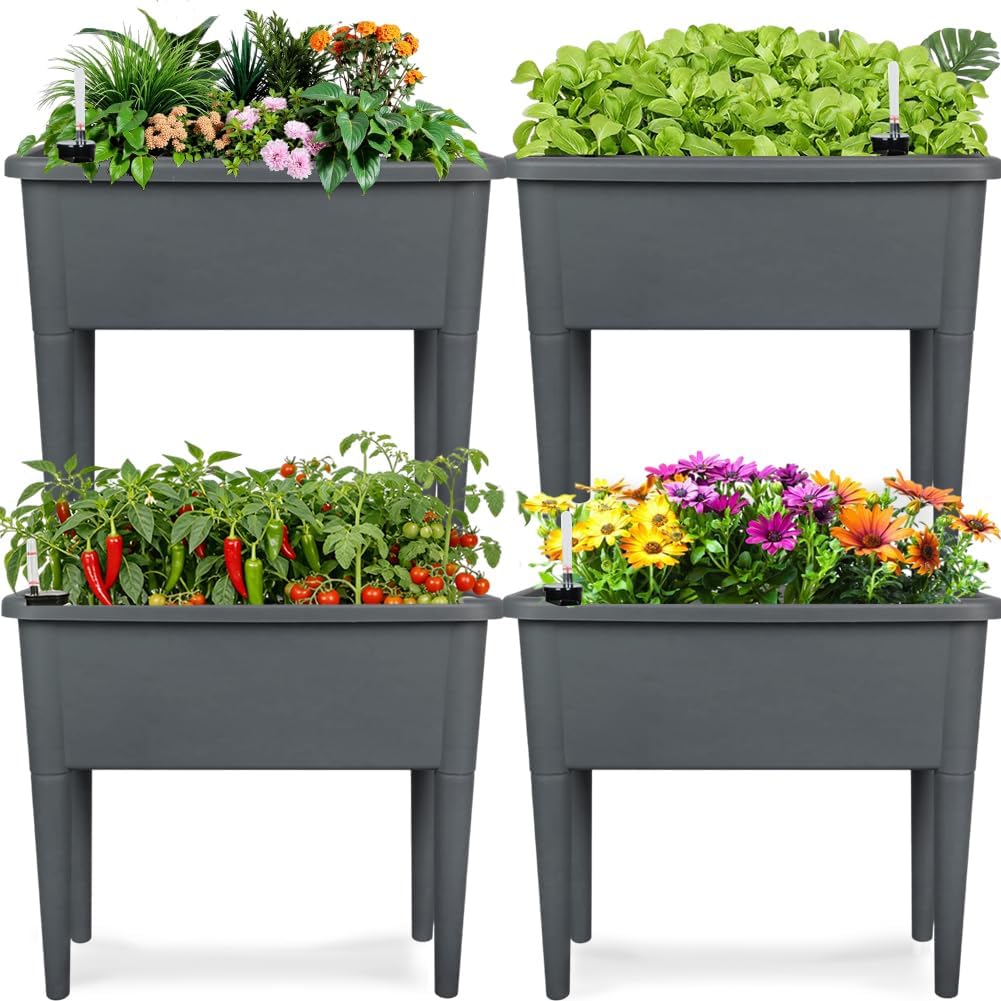
Megawodar Self-Watering Elevated Raised Garden Bed (4-piece set)
| Other Special Features of the Product | Self Watering |
|---|---|
| Mounting Type | Floor Standing |
| Material Type | Plastic |
| Indoor Outdoor Usage | Indoor, Outdoor |
This Megawodar raised garden bed is a self-watering, floor-standing plastic planter intended for growing vegetables, herbs, or flowers in small outdoor spaces. It uses an internal reservoir with a visible water gauge and float tube so you can top up water and let the system supply moisture for roughly two to three weeks depending on plants and conditions. The integrated drainage system can be opened or closed to manage excess water and help prevent root rot, and the polypropylene construction keeps the unit lightweight and weather resistant. Assembly is straightforward and the elevated design reduces bending and improves access for planting and harvesting. Important limitations are that the beds are plastic rather than heavy-duty materials, so they can be less rigid in very hot sun and may not match the longevity of metal or cedar options, and the reservoir capacity will vary by plant type so very thirsty crops may need more frequent fills. For growers who prioritize easy, low-maintenance watering, this set simplifies routine irrigation for compact vegetable plantings.
Best for: Gardeners who want a low-maintenance solution for growing vegetables or herbs in limited outdoor spaces and value reliable, hands-off watering that reduces daily attention.
Less Ideal for: People seeking heavy-duty, long-lasting materials or large-scale vegetable production should consider sturdier or larger raised beds instead.
- Self-watering reservoir with float gauge for multiweek watering between fills
- Openable drainage system to prevent water accumulation and root rot
- Elevated, floor-standing design improves ergonomics and access
- Made from polypropylene for lightweight, weather-resistant outdoor use
- Plastic construction may be less durable than metal or thick cedar over many seasons
- Reservoir size and plant water needs mean very thirsty crops may require more frequent topping up
Verdict: A dependable self-watering elevated raised bed that keeps small vegetable and herb plantings reliably watered with minimal daily effort.
Keter Urban Bloomer 12.7 Gallon Elevated Raised Garden Bed

| Capacity | 22.4 gallons |
|---|---|
| Material Type | Resin |
| Other Special Features | Fade Resistant |
| Mounting Type | Floor Standing |
| Indoor Outdoor Usage | Outdoor |
The Keter Urban Bloomer is an elevated raised garden bed built for simple, low-maintenance herb and small-vegetable gardening on patios, balconies, or decks. It uses a built-in reservoir and water gauge to reduce watering frequency and help prevent overwatering and root rot, while a manual drainage tap allows you to empty the reservoir for indoor moves or heavy rain. The included seed sprouting tray makes starting seedlings neater, and the resin, wood-look finish is UV protected so it resists fading and rot better than real wood. Assembly is straightforward and the rectangular, floor-standing form fits alongside outdoor furniture. Because it is a single-piece plastic/resin planter, it is lightweight and weatherproof but will not provide the insulating or aesthetic qualities of natural wood or heavier materials. Capacity is limited compared with large raised beds, so it is best for herbs, salad greens, and a few compact vegetables rather than large crops.
Best for: Gardeners who want a practical, low-effort elevated planter for growing herbs and small salad greens on a balcony or patio and who prioritize easy watering management and low maintenance.
Less Ideal for: People planning to grow large vegetables, heavy production beds, or who want the look and thermal benefits of natural wood or metal raised beds.
- Self-watering reservoir with visible water gauge helps maintain consistent moisture and prevents overwatering
- Manual drainage tap makes it easy to drain excess water and move the planter indoors without leaks
- UV-protected resin construction resists fading, rot, and rust for low outdoor maintenance
- Included seed sprouting tray simplifies starting seedlings and transplanting into the bed
- Relatively small soil capacity limits the number and size of plants compared with full-size raised beds
- Resin construction lacks the natural insulation and aesthetic of wood or heavier materials
Verdict: If you want a compact, low-maintenance elevated planter that simplifies watering and seed starting for herbs and small veggies, this is a practical choice.
Choosing the Right Self Watering Planter for Vegetables: Key Factors to Consider
Reservoir Size Relative to Crop
Vegetable crops vary widely in water use. Leafy greens and herbs need less reservoir volume than indeterminate tomatoes, peppers, or cucurbits. Choosing a planter with a reservoir sized to the mature root zone and expected heat exposure reduces the need for daily top-ups.
Think about how long you want the planter to go between refills. If you travel or have infrequent watering, choose a larger reservoir. Also consider how the reservoir size interacts with potting mix volume; too large a reservoir can reduce soil depth available for roots.
Drainage and Overflow Protection
Good drainage prevents waterlogging when the reservoir is full or after heavy rain. Planters with overflow outlets or built-in drainage channels route excess water away from the root zone so oxygen levels in the soil remain healthy.
Check whether the overflow exits at a height that still leaves adequate moisture in the root zone. A poorly placed overflow can either leave the roots too dry or fail to protect against saturation during storms.
Wicking Mechanism and Soil Contact
The efficiency of a wicking system determines how evenly and quickly moisture moves from the reservoir into the potting mix. Effective wicking requires good contact between the wicking material and the soil and a path that reaches the root zone rather than just the bottom layer.
Materials that stay in contact with moisture without decomposing will perform better season after season. Also consider whether the system allows you to top-dress or amend soil without disrupting the wick.
Root Depth and Potting Mix Compatibility
Different vegetables need different effective soil depths. Deep-rooted crops like tomatoes, peppers, and beans require planters that provide sufficient soil column above the reservoir. Shallow planters limit what you can grow successfully.
Match the planter profile to the crops you plan to grow and ensure the planter works with standard vegetable potting mixes or allows for added compost and amendments without hindering drainage.
Material Durability and UV Resistance
Planters sit in sun, hold moisture, and support heavy loads. UV-stabilized plastics, rot-resistant composites, or coated metals resist cracking, fading, and brittle failure over multiple seasons. Consider freeze-thaw performance if you overwinter containers outdoors.
Durable materials also make cleaning and sterilizing easier between crops, which helps prevent disease carryover.
Access for Planting and Maintenance
A planter that is easy to fill, plant, harvest from, and clean will save time and reduce strain. Wide openings, removable lids, or split designs make it simpler to introduce seedlings, replace soil, or check the wick and reservoir.
Also think about how easy it is to refill the reservoir. A visible water level indicator or a fill tube that accepts a hose or watering can reduces guesswork and overfilling.
Best Planter Styles for Different Vegetable Crops
Different planter forms suit different crops. Deep, narrow planters work well for tomatoes grown with a central cane or cage, while wider, shallower boxes are fine for lettuces and baby greens. Taller, modular planters give more soil depth without taking up extra ground space, which helps with larger root systems.
Consider whether you will trellis vining crops. Some self watering planters integrate mounting points or have enough soil volume to anchor tall supports. For patio growers with limited footprint, stacked or tiered self watering systems can maximize yield from a small area.
- Shallow wide planters: best for greens, herbs, radishes
- Deep single pots: better for tomatoes, peppers, eggplants
- Modular/stacked systems: ideal for small spaces and multiple crops
Filling, Refilling, and Monitoring Water Levels
A practical refill workflow matters in everyday gardening. Look for planters with a clear fill tube or visible indicator so you can top up the reservoir without disturbing plants. Some systems include float indicators or simple sight windows to show water level at a glance.
When refilling, pour gently to avoid displacing soil or washing seedling roots. If the planter has a refill port that funnels directly into the reservoir, you can refill from the edge of a balcony without moving heavy containers.
- Use a slow pour when filling to avoid soil disruption
- Check the indicator after heavy rain to avoid overflow issues
- Mark typical refill intervals to build a watering routine
Soil Mix and Fertility Management with Self Watering Planters
Self watering planters typically keep the lower soil profile more moist than traditional pots. That affects nutrient dynamics because water-soluble fertilizers can accumulate in the reservoir if overapplied. Use a well-draining vegetable potting mix with organic matter to support healthy roots and moderate nutrient release.
Topdress with compost or slow-release granular fertilizers rather than heavy liquid feeds that may saturate the reservoir. Periodically flush the soil column by irrigating from the top to remove built-up salts if you use frequent liquid feeding.
- Prefer mixes with good structure and organic content
- Use slow-release fertilizers to avoid reservoir buildup
- Occasionally flush with top watering to prevent salt accumulation
Winter Care and Off-Season Storage
If you overwinter planters outdoors, drain reservoirs to prevent freeze damage. Emptying and drying the unit reduces the risk of cracking from ice expansion and makes it easier to clean before spring use.
For compact planters, consider moving them to sheltered storage or a frost-free shed. For larger fixed planters, cover and insulate the reservoir area with breathable fabric to reduce freeze-thaw stress while preserving container integrity.
- Drain reservoirs before first freeze
- Clean and dry before storing to prevent pests and disease
- Store removable planters upside down or indoors if possible
Troubleshooting Uneven Moisture and Root Issues
If you notice dry tops of the soil while the reservoir remains full, the wick may not be in good contact with the potting mix or the soil may be hydrophobic. Lightly working the topsoil and ensuring the wick is embedded deeper can improve moisture distribution.
Root rot symptoms often arise from poor drainage or blocked overflow paths. Inspect overflow outlets and reservoir screens regularly and clear debris to maintain aerobic soil conditions. Repotting into fresh mix is sometimes necessary for heavily affected plants.
- Check wick contact if topsoil dries out quickly
- Inspect overflow and drain paths after storms
- Replace exhausted potting mix between crops to refresh soil structure
How We Chose the Best Self Watering Planter for Vegetables
We evaluated self watering planters for vegetables using criteria that reflect real vegetable-garden use. Reservoir capacity and refill access were weighed heavily because deeper or faster-growing vegetables need enough stored water to bridge hot days. Drainage design and overflow protection were assessed to prevent root rot and to cope with heavy rain or overwatered soil. Wicking system efficiency and soil contact were tested conceptually, focusing on how reliably moisture moves from reservoir to the root zone. Durability of container material and UV resistance were checked to ensure the planters will stand up to sun, repeated watering, and the weight of potting mix and plants. Ease of planting and maintenance covered access to the planting area, the ability to change soil, and simplicity of cleaning the reservoir. We excluded planters intended only for decorative houseplants or systems that require complex pumps or mains hookups. We favored solutions that work with standard potting mixes and vegetable root depths and that fit patio, balcony, or raised-bed container situations. The scoring labels below match these practical dimensions so gardeners can compare the shortlist on concrete performance factors.
FAQ
Will a self watering planter reduce how often I need to water vegetables?
Often yes. Properly sized reservoirs and good wicking can cut daily top watering, especially in warm weather. Frequency still depends on crop water use, container size, and local weather.
Can I use any potting mix in a self watering planter?
Usually you should use a well-draining vegetable potting mix with good organic matter. Heavy mixes that compact may impair wicking and reduce oxygen to roots.
Do self watering planters cause root rot more often?
It depends. Systems with poor drainage or blocked overflow can increase root rot risk. Choosing a planter with reliable overflow protection and maintaining the reservoir reduces that risk.
How deep should the soil be above the reservoir for tomatoes?
Tomatoes usually need a deeper soil column than greens. Aim for a planter that provides several inches of soil above the reservoir to allow for a healthy root system and support for stakes or cages.
How do I fertilize vegetables in a self watering planter?
Slow-release granular fertilizers or compost are often safer because they release nutrients gradually. If you use liquid feed, flush the soil occasionally and monitor for salt buildup in the reservoir.
Can I overwinter my self watering planter outside?
You can if you drain the reservoir and protect the planter from repeated freeze-thaw cycles. Removing residual moisture and storing in a sheltered spot lowers the chance of damage.
Final Verdict
Prioritize reservoir capacity that matches the water needs of your vegetables, reliable drainage to prevent saturation, and a wicking system that keeps moisture moving into the root zone. Consider how easy the planter is to fill, plant, and maintain, and choose materials that withstand sun and seasonal conditions. Balancing soil depth, reservoir size, and maintenance access will help you pick a self watering planter that reduces daily chores while supporting healthy, productive vegetable crops.
