

Note: This article contains affiliate links. If you click on these links and make a purchase, I may earn a small commission at no extra cost to you. This helps support my research and content. Read my full affiliate disclosure here.
If you want fuller, healthier containers with fewer daily checks, a self watering raised planter can make a big difference in a small space. These planters store reserve water below the root zone and deliver it up through wicking or capillary action, reducing drought stress and cutting back on frequent watering chores. This guide covers five shortlisted self watering raised planters chosen for backyard beds, patios, and balcony vegetable growing. We evaluate how much water they hold, how they drain and aerate, and how they stand up to sun and weather so you can pick the right design for your garden. Read on to see the practical tradeoffs between capacity, planting depth, and maintenance.
Top Picks at a Glance
| Best Quality Built to a higher standard if you want something more solid | Permasteel Self-Watering Raised Garden Bed with Locking Wheels |  |
| Best Value The sweet spot between price and what you get | EFU Raised Garden Bed with Wheels and Lower Storage Shelf |  |
| Best Budget The cheapest option that still gets the job done reliably | Suteck Raised Garden Bed Planter Box with Adjustable Trellis (2-Pack) |  |
| Highest Rated A top-rated pick with lots of positive feedback | Megawodar 4-Piece Self-Watering Elevated Raised Garden Bed |  |
| Most Popular A crowd favorite that many people choose with confidence | Keter Urban Bloomer 12.7 Gallon Elevated Raised Garden Bed |  |
Permasteel Self-Watering Raised Garden Bed with Locking Wheels

| Material Type | Powder Coated Steel |
|---|---|
| Capacity | 2 cubic feet |
| Other Special Features of the Product | Self Watering, UV Resistant, Fade Resistant, Portable |
| Included Components | Wheels |
| Indoor Outdoor Usage | Indoor, Outdoor |
This Permasteel raised garden bed is designed for growers who want low-maintenance, consistent moisture without moving heavy pots. The powder-coated steel panels form an oval, floor-standing planter with an internal reservoir and wicking platform so soil stays above standing water while roots can access moisture. A visible water-level gauge and fill tube make top-ups straightforward and the drain valve lets you flush excess salts or winterize the unit. Large side handles and swivel casters, two with locks, make it easy to move the bed to sun or shade and then secure it. The powder-coating and UV-resistant finish reduce corrosion and fading compared with untreated metal, but it is still metal so occasional inspection for chips or scratches is wise. With a 2 cu ft capacity this bed is best for concentrated vegetable, herb, or flower plantings rather than large multi-plant projects. Assembly and periodic reservoir cleaning are required to keep the wicking system working optimally.
Best for: Buyers who prioritize reliable, low-maintenance watering and mobility for intensive small-bed production of vegetables, herbs, or flowers and who want predictable watering performance with minimal daily attention.
Less Ideal for: Gardeners planning large-scale or deep-rooted plantings, or those who prefer very large soil volumes or purely decorative planters, should consider larger beds or different container types.
- Built-in self-watering reservoir with wicking platform for steady moisture delivery
- Powder-coated steel construction with UV resistance for improved durability outdoors
- Visible water-level indicator and fill tube simplify refilling and monitoring
- Locking swivel casters and large handles enable easy repositioning and secure placement
- Relatively small soil capacity (2 cu ft) limits how many larger vegetables or deep-rooted plants it can support
- Metal finish can chip over time and may require touch-up to prevent rusting
Verdict: Choose this raised bed when you want dependable self-watering and easy mobility for focused vegetable or herb production in a compact, durable steel planter.
EFU Raised Garden Bed with Wheels and Lower Storage Shelf
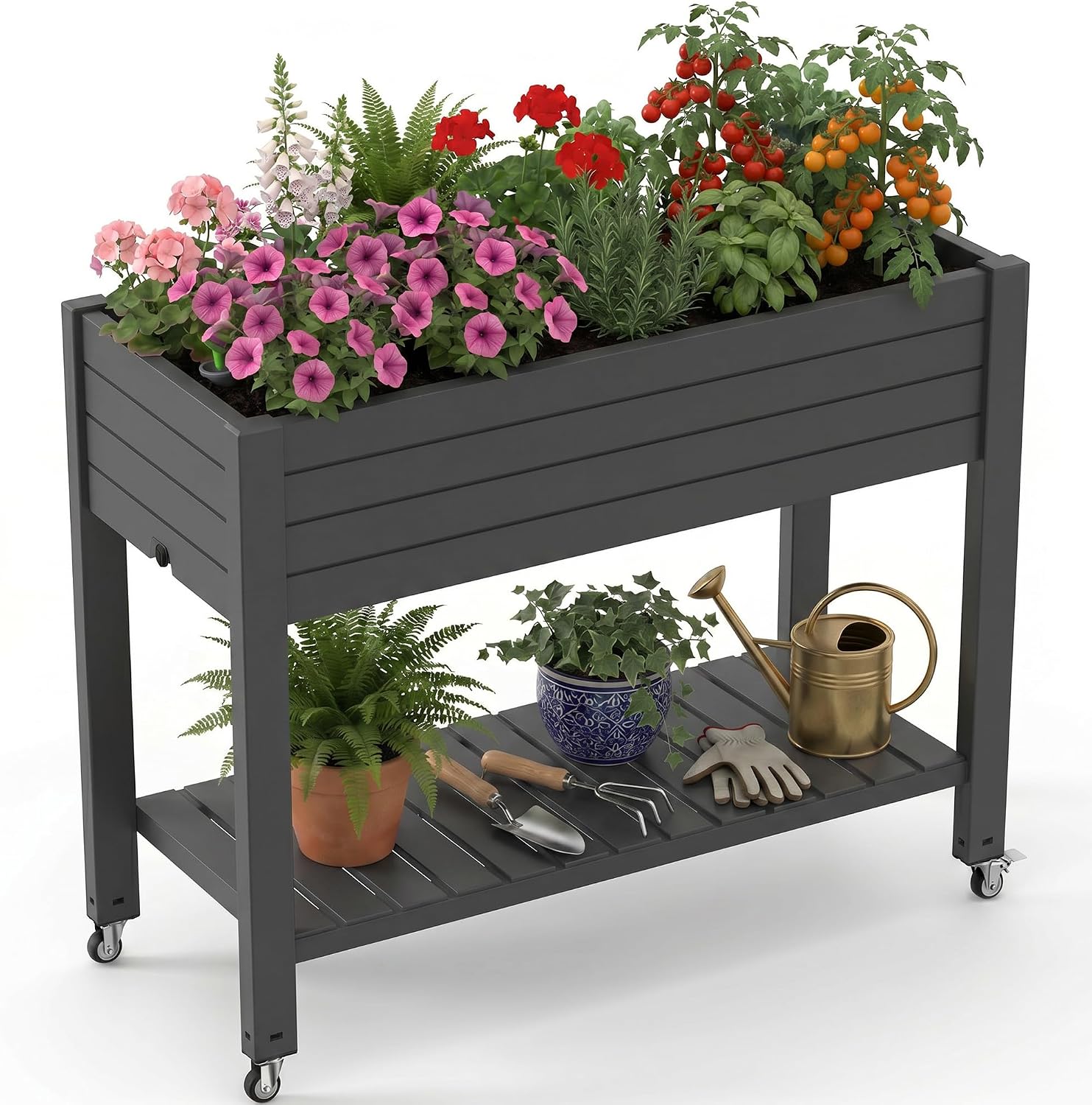
| Capacity | 21 gallons |
|---|---|
| Number of Levels | 4 |
| Other Special Features of the Product | Drainage Hole |
| Mounting Type | Floor Standing |
This EFU elevated raised bed is a practical option for home gardeners who want a compact, waist-high planting station that moves. It provides four separate planting zones and about 21 gallons of soil capacity, so you can keep herbs, lettuces, or small tomato varieties organized without spreading into the ground. The high-density resin construction and four reinforced support rods resist cracking and fading outdoors, while the built-in drainage holes and water-level monitor help prevent overwatering and root problems. Lockable casters make it easy to reposition the planter to follow sun or protect plants from bad weather, and the lower shelf stores small tools and pots to keep work tidy. Assembly is straightforward and should take about 20 to 25 minutes with the included manual. Limitations to note are the modest soil volume compared with full-size raised beds and the plastic construction, which may feel less substantial than metal or wood options to some buyers.
Best for: Buyers who want a low-effort, elevated planter for balconies, patios, or small yards and prefer a movable, easy-to-manage setup that reduces bending and soil mess.
Less Ideal for: Gardeners needing large soil volumes for deep-rooted vegetables or those who prefer traditional wood or metal raised beds for a heavier, permanent installation.
- Four separate planting zones for organized small-space gardening
- Lockable casters for easy mobility and placement adjustment
- Built-in drainage holes and water-level monitor to reduce overwatering risk
- Durable high-density resin construction with reinforced support rods
- Lower storage shelf keeps tools and pots close at hand
- 21-gallon capacity limits how large root crops or large tomato plants can grow
- Resin construction may not feel as heavy-duty as metal or thick cedar for long-term aesthetics
Verdict: This elevated, wheeled resin planter is the best pick for risk-averse gardeners who want a sturdy, low-maintenance, movable raised bed for compact vegetable and herb growing.
Suteck Raised Garden Bed Planter Box with Adjustable Trellis (2-Pack)
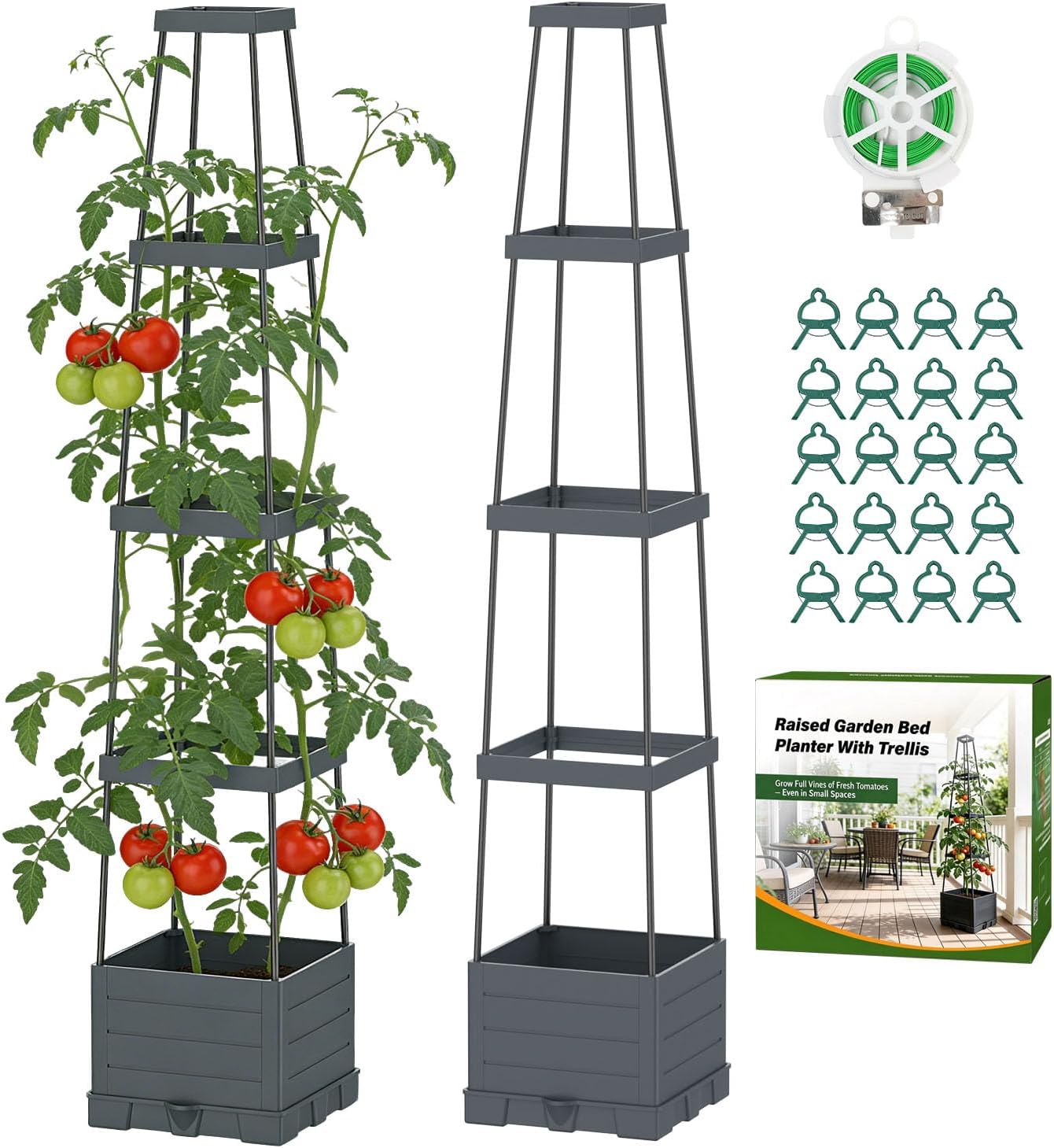
| Material Type | Plastic, Steel |
|---|---|
| Finish Type | Powder Coated |
| Item Highlight | Adjustable Height Steel Support Frame for Climbing Plants |
| Number of Items | 2 |
This 2-pack Suteck raised garden bed combines a shallow planter with a detachable, adjustable-height trellis to support tomatoes, cucumbers, peas and other vining crops in small outdoor spaces. The plastic planter includes a bottom water reservoir and drainage holes to reduce how often you need to water, while the powder-coated steel support rods assemble without tools and can be extended as plants grow. In use it lets you grow vertically on patios, decks or balconies to free up floor area and protect stems from bending under fruit weight. The modular, lightweight parts are easy to move and store but the shallow plastic tray means it will not replace a deep raised bed for heavy feeders or large root crops. Expect to top up water and fertilizer more often than with a full-size bed, and anchor the trellis securely in windy spots. For the price conscious gardener who needs a compact, low-effort solution for climbing plants, this gives a durable, space-saving option that is simple to assemble and maintain.
Best for: Budget-minded patio or balcony gardeners who want an easy, space-saving way to grow vining vegetables or flowers without a deep raised bed.
Less Ideal for: Gardeners looking to grow large root crops or heavy-feeding plants that require deep soil and long-term large-volume containers.
- Built-in water reservoir with drainage holes reduces watering frequency
- Adjustable trellis height adapts as plants grow
- Powder-coated steel supports offer better durability and rust resistance than plain plastic
- Tool-free, modular assembly for quick setup and compact storage
- Shallow plastic planter limits soil volume so heavy-feeding or deep-rooted plants may underperform
- Lightweight tray may need anchoring in windy locations
Verdict: A budget-friendly, space-saving planter with a self-watering tray and adjustable steel trellis that lets apartment and patio gardeners grow climbing vegetables with minimal fuss.
Megawodar 4-Piece Self-Watering Elevated Raised Garden Bed

| Material Type | Plastic |
|---|---|
| Other Special Features of the Product | Self Watering |
| Mounting Type | Floor Standing |
| Indoor Outdoor Usage | Indoor, Outdoor |
This Megawodar raised garden bed is a floor‑standing, self‑watering planter made from polypropylene plastic that aims to reduce routine watering and prevent root rot. It includes a built‑in water reservoir and float gauge so you can monitor moisture and top up without disturbing plants; the manufacturer claims the reservoir can supply water for roughly two to three weeks depending on species. The unit uses a controllable drainage opening so you can manage excess water and keep the soil aerated. Assembly is straightforward and the elevated design makes planting and harvesting easier for small patios, balconies, or indoor spaces. Because it is plastic, it is lightweight and weather resistant but will not have the thermal mass or longevity of metal or treated wood alternatives. The product is best where dependable low‑maintenance watering and ease of use matter more than decorative finishes or heavy‑duty construction.
Best for: Buyers who prioritize a dependable, low‑maintenance container for herbs or compact vegetables and want a planter that reliably supplies water with minimal intervention.
Less Ideal for: Gardeners seeking a decorative centerpiece, heavy‑duty commercial planter, or the thermal benefits of wood or metal should consider other options.
- Self‑watering reservoir with float gauge reduces frequent hand watering
- Built‑in drainage control to prevent waterlogging and limit root rot
- Elevated floor‑standing design eases planting and reduces back strain
- Durable polypropylene construction resists outdoor weathering
- Suitable for indoor and outdoor use including balconies and patios
- Plastic construction may not be as long‑lasting or premium looking as wood or metal
- Reservoir capacity and 2–3 week estimate will vary by plant type and climate
Verdict: A reliable, low‑maintenance self‑watering raised bed that keeps herbs and small vegetables consistently watered with minimal effort.
Keter Urban Bloomer 12.7 Gallon Elevated Raised Garden Bed

| Capacity | 22.4 gallons |
|---|---|
| Material Type | Resin |
| Other Special Features | Fade Resistant |
| Mounting Type | Floor Standing |
| Indoor Outdoor Usage | Outdoor |
The Keter Urban Bloomer is an elevated raised garden bed built for simple, low-maintenance herb and small-vegetable gardening on patios, balconies, or decks. It uses a built-in reservoir and water gauge to reduce watering frequency and help prevent overwatering and root rot, while a manual drainage tap allows you to empty the reservoir for indoor moves or heavy rain. The included seed sprouting tray makes starting seedlings neater, and the resin, wood-look finish is UV protected so it resists fading and rot better than real wood. Assembly is straightforward and the rectangular, floor-standing form fits alongside outdoor furniture. Because it is a single-piece plastic/resin planter, it is lightweight and weatherproof but will not provide the insulating or aesthetic qualities of natural wood or heavier materials. Capacity is limited compared with large raised beds, so it is best for herbs, salad greens, and a few compact vegetables rather than large crops.
Best for: Gardeners who want a practical, low-effort elevated planter for growing herbs and small salad greens on a balcony or patio and who prioritize easy watering management and low maintenance.
Less Ideal for: People planning to grow large vegetables, heavy production beds, or who want the look and thermal benefits of natural wood or metal raised beds.
- Self-watering reservoir with visible water gauge helps maintain consistent moisture and prevents overwatering
- Manual drainage tap makes it easy to drain excess water and move the planter indoors without leaks
- UV-protected resin construction resists fading, rot, and rust for low outdoor maintenance
- Included seed sprouting tray simplifies starting seedlings and transplanting into the bed
- Relatively small soil capacity limits the number and size of plants compared with full-size raised beds
- Resin construction lacks the natural insulation and aesthetic of wood or heavier materials
Verdict: If you want a compact, low-maintenance elevated planter that simplifies watering and seed starting for herbs and small veggies, this is a practical choice.
Choosing the Right Self Watering Raised Planter: Key Factors to Consider
Reserve Water Capacity
Reserve water capacity determines how long a planter can feed roots without refilling. A larger reservoir is useful for gardeners who travel, for hot summer stretches, or for deep-rooted vegetables that need steady moisture. However, very large reservoirs increase overall weight and can reduce available soil volume, so balance capacity against the planter size you can move and where you will place it.
Consider daily evaporation in your climate and the kinds of crops you plan to grow. Shallow-rooted salad greens demand less reserve than tomatoes or peppers. Also think about seasonal needs; containers in full sun usually require more stored water than those in partial shade.
Reservoir Delivery Reliability
How the planter moves reservoir water into the soil matters for consistent moisture at the root zone. Wick-based systems, capillary mats, and bottom-up soil columns all behave differently. Reliable delivery avoids dry pockets that stress plants and prevents excess wetting that can suffocate roots.
Look for designs with clear fill indicators or visible wicking components so you can confirm the system is functioning. Systems that allow occasional dry-down cycles without cutting off capillary action are generally better for root health.
Planting Depth and Usable Soil Volume
Planting depth limits the range of crops that will thrive in a raised planter. Shallow troughs work well for herbs and lettuces but will not support larger root systems. Taller raised planters provide more soil for nutrient retention and better buffering against temperature swings.
Also factor in how much of the container volume is occupied by the reservoir. Some designs sacrifice soil volume for a bigger water tank. Measure the actual usable soil depth when deciding if the planter suits your intended plants.
Material Durability and Weather Resistance
Materials determine how long a planter will survive constant moisture, sun exposure, and seasonal temperature changes. Rot-resistant wood, UV-stabilized plastics, and corrosion-resistant metals each have tradeoffs in longevity and appearance. Consider how the material performs in your climate, whether freeze-thaw cycles occur, and whether the planter will need periodic sealing or maintenance.
Fasteners and internal components like overflow pipes should also resist corrosion. Lighter materials can be convenient for moving but may degrade faster in direct sun unless UV-stabilized.
Maintenance and Accessibility
Maintenance covers how easy it is to refill, clean, and make seasonal repairs. Accessible fill ports, removable wicking platforms, and panels that allow you to reach root zones simplify planting and winterizing. A planter that is difficult to clean can trap salts and organic debris, reducing reservoir efficiency over time.
Think about how often you will empty the reservoir for soil refreshes and how accessible internal parts are for replacing wicking material. Simpler designs usually require less routine attention.
Best Uses by Garden Situation
Different garden situations make different planter features more or less valuable. On balconies or patios where space is limited, choose a compact raised planter with a tall profile to maximize soil volume without using too much floor area. In-ground edge beds or larger backyard spots can take wider trough-style planters that offer broader planting area for multiple crops.
- Balconies and small patios: prioritize footprint efficiency and lighter materials.
- Vegetable beds: prioritize deeper soil and larger usable volume for heavy feeders.
- Shaded terraces: smaller reservoirs may suffice because evaporation is lower.
Planting and Soil Mix Tips
A well-balanced soil mix helps a self watering planter perform as intended. Use a lighter, well-draining mix with good organic content so capillary action can move moisture upward without compacting. Avoid dense garden soil that can block wicking channels and reduce reservoir effectiveness.
- Incorporate coarse materials like perlite or pine bark to maintain porosity.
- Topdress with compost for nutrients rather than packing heavy soils into the reservoir space.
- Avoid high clay content mixes in bottom-wicking planters.
Seasonal Care and Winterizing
Plan how you will protect or empty the reservoir for winter if you live where freezing occurs. Water left in enclosed reservoirs can expand and damage components. Many gardeners choose to drain and store smaller planters or to protect them with covers and a layer of insulation.
- Drain and fully dry reservoir compartments before storing for winter.
- If leaving in place, ensure overflow paths are clear so melting snow can escape.
- Inspect seals and fasteners in spring before refilling.
Placement and Sun Exposure Considerations
Placement affects how often you must refill and which plants will thrive. Full-sun placements accelerate evaporation and may require larger reserves or more frequent fills. Partial shade locations reduce water stress and can expand the range of plants that do well in a smaller planter.
- Avoid placing large reservoirs on weak decking without checking load limits.
- Group planters with similar water needs together for efficient watering routines.
- Use shade cloth or trellises to moderate exposure for sensitive crops.
How We Chose the Best Self Watering Raised Planter
Our editorial process focused on real-world garden use rather than marketing claims. We evaluated candidate planters for water reserve capacity and delivery reliability, assessing how long they sustain rooting zones between fills. Build materials and weather resistance were judged for common outdoor exposures, including UV, moisture cycling, and contact with soil. Planting depth and usable soil volume were measured because they determine what crops will thrive in a raised system. Ease of routine maintenance and access for transplanting or harvesting mattered for gardeners who prefer low-fuss setups. We also considered drainage control and overflow protection to avoid waterlogging in heavy rain. We excluded designs intended only for indoor use or for disposable-seasonal planting, and we did not include purely decorative containers that lack a true reservoir or wicking system. The products that made the list combine a usable reserve, durable construction, straightforward refilling, and practical planting depth suitable for vegetables, herbs, and compact perennials.
FAQ
How often do I need to refill a self watering raised planter?
Refill frequency depends on reservoir size, plant water use, and local weather. Many setups last several days to two weeks under normal conditions. Expect more frequent fills in hot, windy weather or with heavy-feeding vegetables.
Will a reservoir cause root rot in my plants?
Root rot is usually caused by poor drainage or constant saturation in the root zone. Proper self watering designs separate the reservoir from the soil and allow an air gap or wick so roots get oxygen. Choose a planter with good overflow management and do not let the medium become waterlogged continuously.
Can I grow tomatoes and peppers in a self watering raised planter?
Yes, provided the planter offers sufficient planting depth and soil volume. Deep-rooted, heavy-feeding crops do best in taller planters with substantial usable soil. Ensure the reservoir does not unduly reduce the root zone and that you supplement nutrients appropriately.
How do I prevent salt buildup in the reservoir or soil?
Use lower-salt fertilizers and flush the soil periodically by briefly overwatering to leach salts through the overflow. Every few months, consider emptying and rinsing the reservoir and replacing or refreshing some of the potting mix if salts accumulate.
Are self watering raised planters heavy to move when full?
Yes, filled planters can be very heavy because of the combined weight of soil and water. If you need mobility, choose modular designs, smaller units, or place planters on casters rated for the load. Otherwise plan a permanent location before filling.
Final Verdict
Self watering raised planters are a practical way to reduce daily watering chores while keeping moisture more consistent for vegetables, herbs, and perennials. Prioritize reservoir capacity and delivery reliability for low-maintenance needs, and balance those against usable soil depth so you can grow the crops you want. Consider material durability and how much routine access you will need for planting and seasonal maintenance. Focus on the tradeoffs that matter most in your garden: larger reserves for travel and hot sites, deeper soil for heavy feeders, and accessible designs for easy cleaning. With those priorities in mind you can pick a planter that reliably supports healthy growth with less day-to-day work.
