

Note: This article contains affiliate links. If you click on these links and make a purchase, I may earn a small commission at no extra cost to you. This helps support my research and content. Read my full affiliate disclosure here.
If you want thriving herbs, succulents, or small houseplants on a narrow ledge, the right windowsill planter makes the difference. Size, drainage, and material affect how much light the plant gets, how often you need to water, and whether the sill stays damage-free. This guide highlights five top windowsill planters shortlisted for small spaces and easy care. We evaluated options based on how they handle moisture, fit common sill depths, and stand up to daily use. Read on to see which design traits matter most and how to match a planter to your light, watering habits, and sill type.
Top Picks at a Glance
| Best Overall The best all-around choice for most situations | OurWarm Self-Watering Window Planter Set, 6-Pack |  |
| Best Value The sweet spot between price and what you get | OurWarm Windowsill Self-Watering Herb Planter Box, Set of 3 |  |
| Best Budget The cheapest option that still gets the job done reliably | Torfican 5‑Piece Window Herb Planter Set with Saucers |  |
| Highest Rated A top-rated pick with lots of positive feedback | D'vine Dev Indoor Herb Garden Planter Set (3-Compartment) |  |
| Most Popular A crowd favorite that many people choose with confidence | Utopia Home Indoor Plant Pots with Drainage, 5‑Pack |  |
OurWarm Self-Watering Window Planter Set, 6-Pack

| Capacity | 3.67 liters |
|---|---|
| Number of Pieces | 6 |
| Mounting Type | Window Mount |
| Indoor Outdoor Usage | Indoor |
These OurWarm self-watering window planters make maintaining a windowsill herb or small plant display much easier. Each rectangular planter uses a double-layer design with a bottom reservoir and two cotton wicks that draw water up to the soil, and a clear observation window lets you check the water level without disturbing plants. They top-fill through a port so you can refill while plants remain in place. The plastic construction keeps each unit lightweight and easy to move for cleaning or rotating plants, and the kit includes six matching boxes for a continuous row on a sill or grouping on a narrow shelf. Practical benefits include reduced watering frequency, lower risk of drought stress for busy households, and more consistent moisture for seedlings or herbs. Limitations are the modest reservoir capacity and the lightweight plastic feel, which means they are best for small plants and indoor use rather than heavy, large specimens or prolonged outdoor exposure.
Best for: People who want a low-maintenance, unified windowsill herb garden or small-plant display and prefer convenient care features that save time and attention.
Less Ideal for: Growers who need planters for large, heavy plants or who prefer heavy-duty decorative materials for outdoor exposure.
- Self-watering reservoir with cotton wicks reduces watering frequency
- Clear water-level window makes it easy to monitor when to refill
- Top-fill opening lets you add water without removing plants
- Lightweight plastic construction is easy to move and clean
- Comes as a coordinated six-pack for a unified windowsill display
- Reservoir size and lightweight build limit suitability to small plants and herbs
- Plastic material may feel less premium than ceramic or metal options
Verdict: A practical six-pack of self-watering windowsill planters that keeps herbs and small plants evenly watered with minimal fuss.
OurWarm Windowsill Self-Watering Herb Planter Box, Set of 3

| Capacity | 4.1 liters |
|---|---|
| Material Type | Plastic |
| Mounting Type | Tabletop |
| Unit Count | 3 Count |
| Indoor Outdoor Usage | Indoor |
These OurWarm planter boxes are designed to keep small herbs and succulents healthy with minimal daily attention. Each rectangular pot uses two absorbent cotton ropes that wick water from a lower reservoir up into the soil, and a top-fill injection port and visible water-level window make refilling and monitoring simple. Typical use is on a windowsill, kitchen counter, or small balcony where you want a tidy row of herbs without daily watering. The plastic construction is lightweight and durable, and the set of three gives space for a few varieties or successive plantings. Installation is tool-free and straightforward, and the tabletop mounting style keeps soil and water contained. Limitations: the planters are relatively shallow and meant for small-rooted herbs and succulents rather than larger vegetables or long-term specimens, and plastic can look less premium than ceramic or wood. You also need to keep the reservoir below the marked line to avoid overwatering delicate plants.
Best for: Buyers who want a low-maintenance windowsill herb setup that saves time on daily watering and fits a small indoor-space gardening routine.
Less Ideal for: Gardeners who need deep-rooted or long-term container vegetables, or anyone seeking a high-end decorative planter for formal living spaces.
- Self-watering reservoir with cotton wicking reduces frequency of manual watering
- Top-fill injection port lets you add water without disturbing plants
- Visible water-level window makes it easy to know when to refill
- Lightweight durable plastic is easy to move and clean
- Three-pack gives room to grow multiple herbs or stagger plantings
- Shallow planting depth limits use to small herbs, succulents, or seedlings
- Plastic finish is utilitarian rather than decorative
Verdict: If you want an easy, low-maintenance way to grow multiple kitchen herbs on a windowsill, this self-watering three-pack is a practical pick.
Torfican 5‑Piece Window Herb Planter Set with Saucers
| Unit Count | 5 Count |
|---|---|
| Capacity | 1.71 liters |
| Material Type | Acrylonitrile Butadiene Styrene (ABS) |
| Mounting Type | Window Mount |
| Included Components | Saucer |
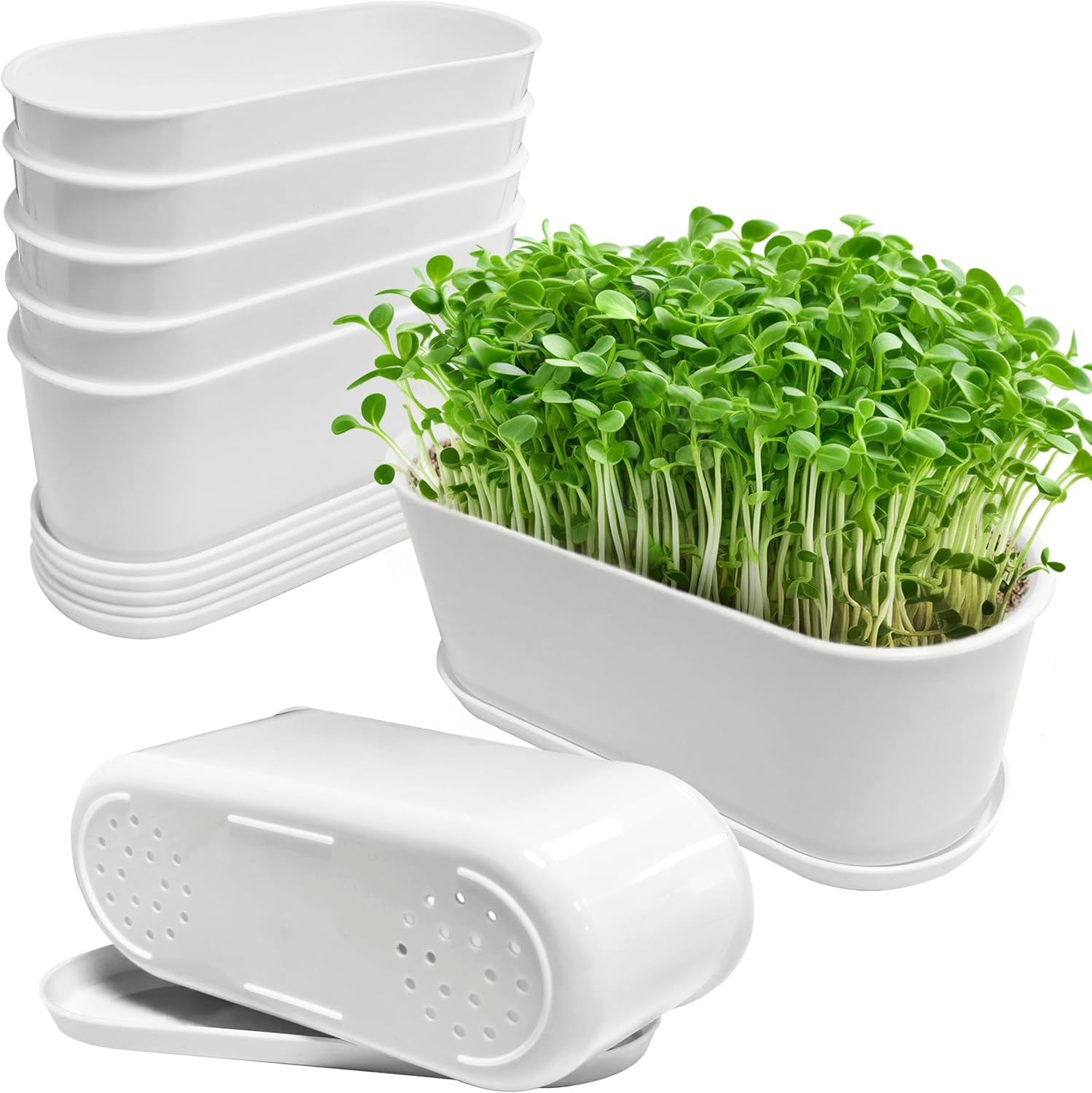
These planters are a straightforward, budget-friendly way to grow herbs and small houseplants on a windowsill. Each rectangular pot is shallow and wide enough for single herb plants or a small succulent grouping, and the built-in drainage holes plus matching saucers make watering low‑risk and tidy. The thickened ABS plastic is odorless and resists fading or warping, so the set holds up to everyday indoor use and occasional outdoor balcony exposure. The minimalist white finish is a blank canvas if you want to paint or label them, and the included plant tags and mini transplanting tools are practical touches for beginners. Expect basic, no-frills performance: these are lightweight plastic planters, so they are not decorative statement pieces and will not provide insulation for temperature-sensitive plants. For growers aiming to maximize space, the narrow footprint fits most windowsills but limits how many herbs fit per pot. Overall they deliver reliable drainage and easy cleanup at a low cost, making them a sensible pick for starting an herb window box.
Best for: Good for cost‑minded gardeners who want a ready set to start growing herbs on a windowsill and prefer fuss‑free watering and cleanup.
Less Ideal for: Not ideal for gardeners seeking premium ceramic or insulating planters or for those who need larger pots for multi‑plant root systems.
- Built‑in drainage holes with matching saucers reduce overwatering and mess
- Durable, thick ABS plastic resists fading and deformation
- Five‑pack gives enough planters to start a small herb collection or windowsill display
- Simple white finish is easy to customize or label
- Lightweight plastic offers little thermal insulation for temperature‑sensitive herbs
- Not a decorative focal piece for styling beyond DIY customization
Verdict: A practical, low‑cost five‑pack of durable window planters that makes it easy to start an herb garden on a windowsill.
D'vine Dev Indoor Herb Garden Planter Set (3-Compartment)

| Capacity | 1.38 liters |
|---|---|
| Number of Pieces | 9 |
| Material Type | Plastic |
| Mounting Type | Tabletop |
| Indoor Outdoor Usage | Indoor |
This D'vine Dev herb planter set is a compact, practical solution for growing multiple herbs on a windowsill or countertop. The kit includes three separate square pots fitted into a 12 inch tray so you can keep different herbs separated while sharing the same location. Each pot has a drainage hole plus detachable saucer and a raised wave-pattern bottom to improve airflow and prevent waterlogging. Made from thick matte plastic, the pots are lightweight, unbreakable compared with ceramic, and easy to move for watering or repositioning. Typical uses are growing culinary herbs like basil, parsley, and chives, starting seedlings, or keeping succulents and small vegetables in a sunny kitchen. The main limitations are that the pots are small with limited soil volume and the product is intended for indoor tabletop use rather than larger outdoor plantings, so you will need to water and fertilize more frequently for thirsty herbs and replace soil as roots fill the compartments.
Best for: Someone who wants a dependable, low-maintenance way to keep several culinary herbs on a windowsill or countertop and values durability and tidy drainage.
Less Ideal for: Gardeners who need large containers for mature or heavy-feeding plants or those looking for outdoor-grade planters for patios or balconies.
- Three individual pots in one tray let you grow and rotate different herbs without root interference
- Built-in drainage holes with removable saucers reduce overwatering risk and keep surfaces clean
- Durable thick matte plastic is lightweight and resistant to breakage for long indoor use
- Raised wave-design bottom and drainage mesh improve airflow and help prevent soggy soil
- Small individual compartments limit root space so larger or fast-growing herbs will need repotting
- Designed for tabletop indoor use only and not suitable for heavy outdoor exposure
Verdict: A durable, low-fuss tabletop planter set built for reliably growing multiple windowsill herbs in a neat, drip-free setup.
Utopia Home Indoor Plant Pots with Drainage, 5‑Pack

| Material Type | Plastic |
|---|---|
| Included Components | Saucers Tray |
| Unit Count | 5 Count |
| Other Special Features of the Product | Frost Resistant, Lightweight, Portable, Rot Resistant |
| Mounting Type | Tabletop |
These Utopia Home planters are a practical starter set for indoor potted trees and other houseplants. The pack includes five nested sizes and matching saucers so you can pot seedlings, small citrus or ficus cuttings and move them around a sunny windowsill or tabletop. Made from reinforced PP plastic, the pots are frost and rot resistant and feel light enough to reposition without strain. Each pot features drainage provisions and removable plugs that help prevent overwatering while the saucers protect furniture from runoff. The minimalist polished finish is unobtrusive with most décor, and the multiple sizes make it easy to repot a sapling as it grows. Limitations are that these are basic plastic planters so they offer less insulation and long-term durability than ceramic or thick fiberstone, and the listed specs emphasize indoor use rather than outdoor longevity in harsh weather. For buyers who prioritize fuss-free, lightweight containers with simple drainage, this set covers common needs for small potted trees and starter transplants.
Best for: Buyers who want a low-risk, practical set of indoor planters for starting or styling small potted trees and other houseplants and who value ease of use and social proof from a popular, well-reviewed product.
Less Ideal for: Gardners seeking heavyweight, display-grade planters for mature large trees or outdoor year-round exposure should consider ceramic, concrete, or fiberstone alternatives.
- Multiple pot sizes in one set for potting and repotting as a tree seedling grows
- Included saucers protect surfaces from drainage and allow indoor placement
- Drainage plugs and design to reduce risk of overwatering
- Lightweight, frost and rot resistant plastic that is easy to move
- Plastic construction provides less thermal insulation and premium appearance than heavier ceramic or stone pots
Verdict: A convenient, well-reviewed five-piece indoor planter set that makes starting and repotting small potted trees simple and low effort.
Choosing the Right Windowsill Planter: Key Factors to Consider
Size and Footprint
Windowsill depth and width vary widely, and a planter that is too deep will overhang or block a window. Measure the sill from front to back and leave a little clearance so the planter does not press against the sash or obstruct opening. Consider both length and individual pot diameter when choosing multi-cell planters.
Smaller pots dry faster and suit drought-tolerant plants like succulents, while deeper containers are better for herbs with longer roots. Also think about weight when filled with soil and plants, especially for wide or slim sills that might be fragile.
Drainage and Water Management
Good drainage prevents root rot and avoids water pooling that can damage an indoor sill. Look for planters with built-in drainage holes plus a removable saucer or a self-watering reservoir that isolates excess water. Reservoir systems extend time between waterings, which is helpful for sunny windows that dry out quickly.
If a planter lacks drainage, pair it with waterproof liners or use decorative outer pots with an inner insert. Consider how easy it is to lift the insert to empty or rinse the saucer without spilling soil or water onto the sill.
Material and Finish
Materials behave differently when exposed to constant moisture and sunlight. Glazed ceramics are attractive and stable but can be heavy. Plastics and fiberglass are lightweight and resist moisture but vary in UV stability. Metal planters need a corrosion-resistant finish to avoid rust stains on the sill.
Also factor in surface texture. Smooth finishes wipe clean easily, while porous or unsealed materials may stain or absorb water. Choose materials that balance aesthetics with practical resistance to indoor moisture and frequent handling.
Plant Compatibility and Root Space
Different plants need different root volumes. Shallow-rooted herbs and small ornamentals do fine in compact trays, while basil or parsley will appreciate deeper soil and more root room. If you want to switch plant types seasonally, pick a planter that offers enough versatility to accommodate both shallow and deeper-rooting species.
Also consider whether you want individual cells for multiple plants or a single long trough for a small mixed herb garden. Individual cells make replacing one plant simpler; a trough creates a shared soil environment that can suit plants with similar needs.
Ease of Maintenance
Maintenance includes watering, pruning, and occasional repotting. Choose a planter design that makes these tasks straightforward. Removable inserts, accessible saucers, and light but sturdy construction minimize spills and awkward lifting.
Think about how you will clean salt buildup from fertilizer, wipe water marks, and refresh soil. Planters that allow easy access to the root zone reduce the chance of damage when you trim roots or replace plants.
Aesthetics and Light Optimization
Windowsill planters are both decorative and functional. Color, shape, and height affect how much light reaches the plant and how the window looks from inside and outside. Lower-profile planters let more light through and reduce glare on the glass, while taller pots can create a layered look but may cast shade.
Choose finishes that complement your interior while reflecting or diffusing light as needed. Consider reflective or light-colored interiors to bounce light back to the plant, especially for east- or north-facing windows.
Best Planter Styles for Different Light Conditions
Windows with strong southern exposure dry soil faster and can scorch sensitive foliage. Shallow trays with good drainage and heat-tolerant soil mixes work well here. For north-facing or shaded windows, deeper planters that hold more moisture help reduce watering frequency and prevent plants from drying out.
A mid-height trough is a versatile choice for variable light because it lets you plant a mix of sun-tolerant and shade-tolerant species and place them where they get the best light. Consider adjustable placement so you can rotate plants seasonally.
- South or west windows: shallow, well-draining trays and heat-tolerant plants
- North windows: deeper containers that retain moisture
- East windows: medium depth for morning sun and afternoon shade
Placement and Sill Protection Tips
Protect the sill with a waterproof barrier or use a planter with an integrated saucer. Felt pads under a heavy planter prevent scratches. If you have a wooden sill, avoid constant wetting in one spot; rotate planters occasionally or use a raised tray to improve airflow under the pot.
Ensure planters do not block window operation. For narrow metal sills, place a thin protective mat between the planter and the metal to prevent staining and corrosion from trapped moisture.
- Use removable saucers for easy emptying
- Add felt pads to prevent scratching
- Rotate planters to avoid prolonged moisture contact
Soil Mix and Fertilizer for Windowsill Plantings
Lightweight, well-draining potting mixes are best for most windowsill plants. Add perlite or coarse sand for plants that need faster drainage. For herbs and edibles, choose a mix with good organic matter to support steady growth without becoming waterlogged.
Because containers dry faster than garden beds, apply a balanced, water-soluble fertilizer on a regular but moderate schedule. Reduce fertilizer for succulents and winter-dormant plants to avoid leggy growth or salt buildup.
- Use potting mix with added perlite for drainage
- Fertilize lightly and regularly for active growth
- Avoid heavy garden soil that compacts in a container
Winter Care and Moving Plants Indoors
If you keep tender plants outdoors in warmer months and bring them inside for winter, choose planters that are easy to move. Lightweight materials and secure handles help when moving multiple pots on and off the sill. Check that indoor light levels meet the plants needs and supplement with a grow light if necessary.
Reduce watering after bringing plants inside because indoor environments are typically cooler and drier. Watch for pests and acclimate plants gradually to lower light to avoid shock.
- Bring plants in before the first hard frost
- Acclimate slowly to lower indoor light
- Reduce watering frequency in winter
DIY Modifications and Upgrades
You can adapt simple containers into better windowsill planters by adding drainage holes and a fitted saucer. Use a waterproof sealant on porous materials and line the interior with a breathable fabric to reduce soil loss while allowing water passage.
For custom sill fits, consider building a narrow wood tray or using foam inserts to wedge a planter snugly. Add a reflective backing to boost light for plants placed against deep or recessed windows.
- Drill or punch drainage holes and add saucers
- Line porous pots with breathable fabric
- Build a narrow tray for custom sill dimensions
How We Chose the Best Windowsill Planter
We selected products that match the specific constraints of windowsill gardening: compact footprint, reliable drainage options, and materials safe for indoor surfaces. Our editorial filters favored planters that fit common sill depths, offer simple drainage or reservoir systems to reduce cleanup, and use materials that resist staining or warping over time. Evaluation criteria focused on measurable, gardener-facing dimensions: actual footprint and depth compatibility, drainage design and ease of maintenance, material durability and resistance to moisture, and adaptability for different plant types and light levels. We also considered ease of planting and routine care, including how simple it is to repot or move a planter without spilling soil. Products were excluded if they lacked clear sizing information, had no drainage or reservoir option for indoor use, or were clearly intended only for outdoor mounting. We also excluded planters with fragile construction that would not tolerate repeated watering cycles. The final selection reflects practical choices for real windowsill setups and everyday garden use.
FAQ
Do windowsill planters need drainage holes?
Usually yes. Drainage holes prevent root rot by letting excess water escape. If a planter lacks holes, use an inner liner with drainage or water carefully and empty any standing water regularly.
What plants do best in windowsill planters?
Herbs, small succulents, and compact houseplants typically do well. Choose species that match your light level and the root depth the planter provides. Fast-drying small pots suit succulents, while deeper pots work for many herbs.
How often should I water plants on a sunny windowsill?
It depends on plant type and pot size. Sunny sills dry out faster, so small pots may need water every few days, while larger containers can go longer. Check soil moisture before watering rather than following a strict schedule.
Can I use a windowsill planter for edible herbs?
Yes. Pick a food-safe material or use an inner liner, provide adequate drainage, and use a potting mix suitable for edibles. Place herbs where they get the right light and harvest regularly to encourage fresh growth.
How do I prevent my wooden sill from water damage?
Use waterproof trays or saucers under planters and avoid letting water sit on the wood. Place felt or rubber pads under pots to prevent scratching, and rotate pots occasionally to prevent prolonged moisture exposure in one spot.
Final Verdict
Choose a windowsill planter that matches your sill dimensions, light conditions, and the root needs of the plants you want to grow. Prioritize reliable drainage or a reservoir system to protect plants and your window surface, and select materials that resist moisture and are easy to clean. Balance aesthetics with practical traits like footprint, ease of maintenance, and plant compatibility. When you match those tradeoffs to how often you water and how much sunlight the sill receives, you will find a windowsill planter that keeps plants healthy and your space tidy.
