

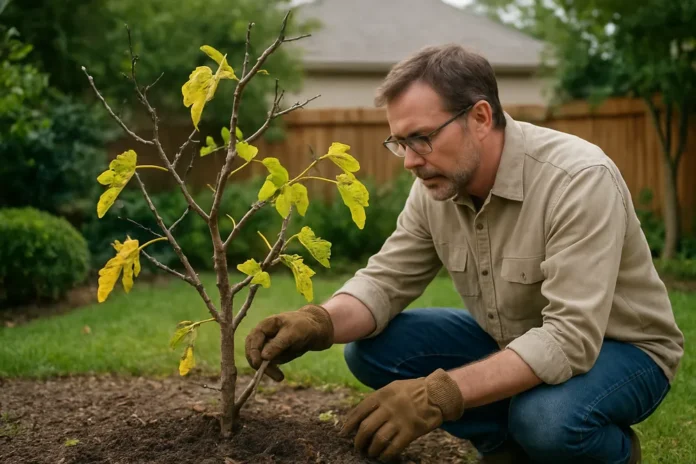
A fig tree usually looks like it is dying because its roots, wood, or leaves are under stress from water problems, cold damage, pests, disease, or poor growing conditions. In many cases the tree is still alive but struggling after one major setback or several smaller ones at once.
When a fig starts dropping leaves, developing dead branches, or failing to leaf out, it can feel like the whole tree is slipping away fast. The tricky part is that a fig tree dying rarely has just one obvious cause. Figs are tough plants, but they react strongly when their roots stay too wet, when winter cold hits tender wood, or when stress piles up from poor drainage, nutrient issues, pests, and pruning mistakes.
I have found that figs often look worse than they really are. A tree can lose much of its top growth and still recover from healthy roots or living wood lower on the trunk. On the other hand, a fig that slowly declines over a season may be dealing with a root problem that needs attention sooner rather than later. The goal is to separate temporary shock from real structural decline.
Below are the most common reasons a fig weakens or appears to die, what each problem tends to look like, and how to tell whether your fig tree can bounce back.
What a Dying Fig Tree Usually Looks Like
A fig in trouble may show yellowing leaves, wilting in warm weather, leaf drop, branch dieback, shriveled fruit, split bark, sparse new growth, or a complete failure to leaf out in spring. Sometimes the symptoms come on suddenly after a freeze or a watering issue. Other times they build slowly, starting with smaller leaves and weaker growth before whole limbs decline.
The pattern matters. If the entire tree collapses at once, I think first about roots, winter injury, or severe drought. If only branch tips die back, cold damage, pruning injury, or canker is more likely. If leaves yellow but the stems stay green, the roots may be stressed long before the top dies.
- Leaves yellowing and dropping early
- Branches brittle at the tips or dead back to older wood
- Soft, blackened, or mushy tissue after wet weather or cold
- No new buds opening in spring
- Fruit falling before ripening
- Suckers emerging from the base while top growth declines
When I assess a failing fig, I do not start with the leaves. I scratch a few twigs and small branches from top to bottom. Green tissue under the bark tells me the tree is still alive there, while brown, dry tissue shows where dieback really begins.
Overwatering and Root Rot Are Among the Most Common Causes
If I had to pick the most common reason a home garden fig declines, it would be roots staying too wet for too long. Figs like regular moisture, but they do not like waterlogged soil. In heavy clay, low spots, or containers without good drainage, the roots can suffocate and rot. Once that happens, the tree may wilt even though the soil is wet, because damaged roots can no longer move water properly.
Signs That Excess Water Is the Problem
- Leaves turning yellow across much of the tree
- Wilting that does not improve after evening cool-down
- Soil that stays soggy for days after watering or rain
- A sour or swampy smell around the root zone
- Slow growth and fruit drop despite regular irrigation
Root rot often starts quietly. Gardeners see drooping leaves and assume the tree needs more water, which makes the problem worse. In containers, this can happen fast, especially if a saucer keeps the root ball sitting in water. In the ground, the issue is often poor drainage rather than too much irrigation alone.
What to Do
Stop watering on a schedule and water only when the top few inches of soil have begun to dry. Improve drainage if possible by redirecting runoff, reducing irrigation frequency, or replanting to a raised area if the site is chronically wet. Container figs should be moved into a fast-draining potting mix and a pot with clear drainage holes.
If a fig is wilting and the soil is wet, treat it like an overwatering problem until proven otherwise. Adding more water to a suffocating root system is one of the fastest ways to push a stressed fig past recovery.
Underwatering and Drought Stress Can Kill Branches Fast
Figs are fairly drought tolerant once established, but they are not invincible. Young trees, newly transplanted figs, and container-grown plants can dry out quickly in hot weather. Repeated drought stress may cause leaf curl, crispy leaf edges, fruit drop, and branch dieback. Severe dehydration can kill cambium tissue under the bark, especially on younger wood.
In hot, windy conditions, a fig in a container may need water much more often than one planted in the ground. A tree near a foundation, driveway, or south-facing wall can also dry faster than expected because the soil heats up and sheds moisture quickly.
- Leaves droop and feel dry rather than soft
- Leaf edges brown and crisp
- Fruit shrivels or drops before maturing
- Soil pulls away from the sides of a container
- Small branches die back after a heat wave
The fix is deep, thorough watering rather than frequent shallow sprinkles. A good soaking encourages deeper roots and steadier recovery. Mulch also helps by keeping the root zone cooler and reducing evaporation, but keep mulch a few inches away from the trunk.
Cold Damage Is a Major Reason Figs Seem Dead in Spring
Many homeowners assume their fig has died when it simply suffered winter injury. This is especially common in colder parts of the U.S. or after a late spring freeze hits tender new growth. Figs can lose top growth when temperatures drop too low for the variety, yet still regrow from lower wood or even from the base.
How Cold Injury Usually Shows Up
- Branches that stay bare while other plants leaf out
- Bark splitting or peeling after winter
- Mushy, blackened tips on new spring growth
- Dead upper branches with green shoots emerging lower down
- Fruit buds failing after a late frost
Give the tree time before removing everything. Figs often break dormancy later than expected after a rough winter. Scratch-test branches from the tips downward and prune only back to live wood. If the trunk is dead but the roots are alive, new shoots may still emerge from the crown.
I have seen figs declared dead far too early in spring. If the base and lower trunk are still alive, patience often beats aggressive pruning. Waiting a couple of extra weeks can show you exactly where live growth resumes.
Transplant Shock and Root Disturbance Can Set a Fig Back Hard
A fig that looked fine at planting but declines within days or weeks may be struggling with transplant shock. Root disturbance, planting too deeply, compacted backfill, or a root ball that never gets evenly moist can all slow establishment. The tree may drop leaves to reduce stress, then sit nearly still for a while.
This is common with large container specimens moved into the ground during hot weather. It also happens when circling roots were not loosened, or when the original nursery root ball dries out while the surrounding soil stays damp. In that situation, the water bypasses the root mass instead of soaking into it.
- Leaf drop soon after planting
- Wilting even with apparently moist soil
- Little or no new growth for weeks
- A tree that rocks in the planting hole because roots never anchored
Keep the moisture level even, not soggy. Shade cloth can help with temporary heat stress on a newly planted fig, especially in hotter regions. Avoid heavy fertilizer during early establishment, since stressed roots can be damaged further by excess salts.
Poor Drainage, Planting Depth, and Site Problems Weaken the Whole Tree
Sometimes the problem is not a disease or a pest at all. It is simply a bad location. Figs need good drainage, warm sun, and enough room for roots to spread. Trees planted too deep often decline because the root flare stays buried and the lower trunk remains too wet. Trees in dense shade may survive, but they grow weakly and are slower to recover from other stress.
Site stress usually creates a long, uneven decline rather than a dramatic collapse. The tree may leaf out sparsely, produce little fruit, or become more vulnerable to borers, cankers, and winter injury because it never grows with much vigor.
Site Issues That Commonly Affect Figs
- Heavy clay or compacted soil
- Low areas where water collects
- Planting too deep over the root flare
- Too much shade
- Competition from lawn or nearby shrubs
- Salt exposure from deicing products or coastal spray
If the site is the root cause, recovery will be limited until that is addressed. Even better watering or fertilizer will not fully correct a fig planted in cold, soggy ground.
Pests and Disease Can Cause Decline, Especially on Stressed Trees
Healthy figs are fairly resilient, but stressed trees attract more trouble. Common issues include scale insects, spider mites, borers, cankers, leaf spot diseases, and root diseases favored by wet soils. The pest itself is not always the original cause. Quite often it takes advantage of a tree already weakened by drought, overwatering, cold, or poor drainage.
Signs to Watch For
- Sticky residue or black sooty mold from sap-feeding insects
- Fine webbing and stippled leaves from spider mites
- Small entry holes or sawdust-like material from borers
- Sunken, cracked, or oozing areas on branches
- Spotted leaves that drop early in humid weather
Treatments vary by issue, so the best approach is accurate identification rather than spraying broadly. Scale can often be managed with horticultural oil at the proper time. Mites may respond to strong water sprays and improved plant vigor. Dead, diseased wood should be pruned out during dry weather, with clean cuts into healthy tissue.
If you suspect a serious trunk disease or extensive borer damage, the prognosis is less favorable, especially if more than half the canopy is already affected. A tree can regrow from the base, but recovery may take time and fruiting will be delayed.
Nutrient Problems and pH Issues Usually Cause Decline More Slowly
Figs do not need heavy feeding, but poor nutrition can still weaken them over time. Nitrogen deficiency often shows up as pale leaves and weak growth. Potassium shortages may contribute to poor fruit quality and marginal leaf scorch. Iron deficiency can cause yellow leaves with greener veins, especially in alkaline soils where nutrients are present but less available.
This kind of decline is usually gradual, not sudden. It often overlaps with other site issues, such as poor drainage or compacted soil, which interfere with nutrient uptake. In containers, old potting mix can become exhausted or develop salt buildup from overfertilizing.
- General pale foliage and small leaves
- Weak annual growth
- Poor fruit production
- Yellow leaves with green veins
- Brown leaf margins without obvious drought
Use a soil test if you suspect a nutrient or pH issue. That is more reliable than guessing. Light, balanced fertilization is often enough for a fig, while repeated high-nitrogen feeding can push soft growth that is more vulnerable to cold and pests.
Pruning Mistakes and Trunk Injury Can Make a Fig Look Worse than It Is
Hard pruning at the wrong time, mower damage at the base, string trimmer wounds, and bark injury from sunscald can all set a fig back. Figs generally tolerate pruning, but removing too much live wood at once can reduce leaf area, stress the plant, and delay fruiting. Physical wounds near the trunk are more serious because they interrupt water and nutrient flow.
If bark has been scraped or gnawed around much of the trunk, the tree may decline from girdling. When only one side is damaged, the tree may survive but show stunting or dieback above the wound. Protecting the trunk from equipment and animals prevents a surprising number of problems.
How to Tell Whether Your Fig Is Still Alive
Before giving up on the tree, check for living tissue. A fig that looks lifeless may still have viable wood lower down or healthy roots below the soil. Start at the branch tips and move inward and downward.
- Scratch a thin twig lightly with your fingernail. Green tissue underneath means that section is alive.
- Bend small twigs. Living twigs are more flexible, while dead ones snap dry and brittle.
- Inspect the trunk base for cracks, mushiness, or healthy-looking bark.
- Look for swelling buds, tiny shoots, or suckers at the base.
- Check the roots only if necessary. Healthy roots are firm and lighter inside, while rotting roots are dark and soft.
If the top is dead but the base is alive, you may still save the plant by pruning back to healthy growth and letting it regrow. If both trunk and roots are compromised, replacement is often more practical than trying to revive it for another season.
What to Do Next to Help a Struggling Fig Recover
Recovery starts with removing the main source of stress. That means correcting watering, improving drainage, pruning out clearly dead wood, and reducing competition around the root zone. Do not throw every treatment at the tree at once. Figs recover best when the environment becomes steady.
- Prune only dead wood back to live tissue.
- Water deeply but only when needed based on soil moisture.
- Add mulch over the root zone, keeping it away from the trunk.
- Hold back on heavy fertilizer until you see healthy new growth.
- Monitor for pests on stressed new growth and treat only confirmed problems.
- Protect the tree from future cold if winter injury is common in your area.
Judge recovery by new growth, not by old damaged leaves. A fig with healthy new shoots is moving in the right direction, even if it still looks rough for a while. If there is no sign of living tissue after a reasonable wait in spring, or if trunk rot is extensive, replacement may be the best option.
FAQ
Will a Fig Tree Come Back After Looking Dead in Winter?
Often, yes. Many figs lose top growth after cold weather but regrow from lower branches, the crown, or the base if roots and lower wood are still alive.
How Do I Know if I Overwatered My Fig Tree?
Look for yellowing leaves, wilting in wet soil, slow growth, and soil that stays soggy for days. In severe cases, roots may smell sour and feel soft or dark.
Why Is My Fig Tree Dropping All Its Leaves?
Leaf drop can happen from transplant shock, drought, overwatering, cold snaps, root rot, or sudden environmental stress. Figs may also shed leaves seasonally as they go dormant.
Should I Fertilize a Dying Fig Tree?
Usually not right away. A severely stressed fig often benefits more from corrected watering and root-zone care than from fertilizer, especially if root damage is part of the problem.
Can a Fig Tree Survive Root Rot?
It can if the damage is caught early and drainage improves quickly. Advanced root rot is much harder to reverse because the tree loses too much functional root tissue.
Why Is My Fig Tree Dying in a Pot?
Container figs often decline from inconsistent watering, poor drainage, exhausted potting mix, heat stress, or roots becoming crowded. Pots dry out and waterlog faster than garden soil.
When Should I Remove Dead Branches From a Fig Tree?
Remove clearly dead wood once you can identify live tissue, often after spring growth begins. After winter damage, waiting briefly helps avoid cutting off wood that may still recover.
Need help choosing the right fix for a struggling fig? Read our fig tree care and treatment guides to find the best watering tools, soil mixes, and pest controls before the damage gets worse.
