

Note: This article contains affiliate links. If you click on these links and make a purchase, I may earn a small commission at no extra cost to you. This helps support my research and content. Read my full affiliate disclosure here.
Planting beneath established trees presents special challenges: limited light, competing roots, and thin soils. The right under tree ground cover reduces erosion, suppresses weeds, and gives you an attractive, low-maintenance layer that survives in shade and root competition. This guide walks through shortlisted options chosen for shade tolerance, root friendliness, and ease of care. Read on to understand the traits that matter in real garden situations, and how each type performs so you can pick the best fit for your yard.
Top Picks at a Glance
| Best Overall The best all-around choice for most situations | Legigo Coconut Fiber Tree Mulch Ring, 24 inch (6 pack) |  |
| Best Quality Built to a higher standard if you want something more solid | Sunocity 4 ft x 300 ft Heavy-Duty Woven Weed Barrier Fabric |  |
| Best Value The sweet spot between price and what you get | GORILLA GRIP Heavy Duty Weed Barrier Landscape Fabric, 3 x 50 ft |  |
| Best Budget The cheapest option that still gets the job done reliably | SYWHXY 16-Pack 16.5" Non-Woven Tree Mulch Rings with Stakes |  |
| Highest Rated A top-rated pick with lots of positive feedback | SNAIL Heavy-Duty 5 oz Woven Weed Barrier Landscape Fabric (3 ft x 250 ft) |  |
| Most Popular A crowd favorite that many people choose with confidence | LAVEVE Heavy Duty Weed Barrier Landscape Fabric, 4 ft x 100 ft (two 4×50 ft rolls) |  |
| Best Seller A high-volume bestseller chosen again and again | EXTRAEASY 3 ft x 300 ft Heavy-Duty Woven Weed Barrier Fabric (3.2 oz) |  |
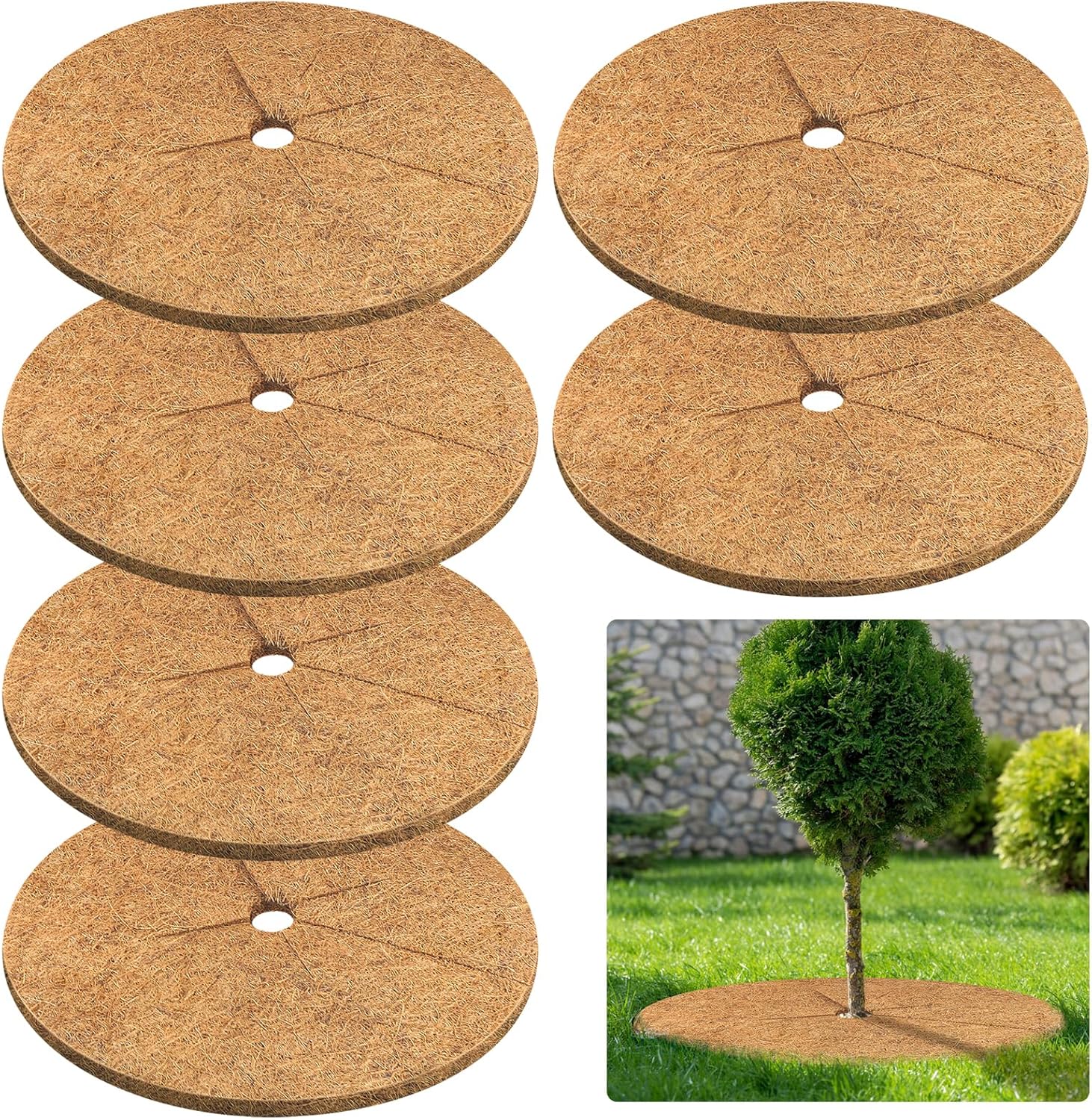
Legigo Coconut Fiber Tree Mulch Ring, 24 inch (6 pack)
| Material | Coconut Fiber |
|---|---|
| Diameter | 24 inch |
| Thickness | 0.28 inches |
| Quantity | 6 pack |
These Legigo coconut fiber mulch rings are simple, no-frills tree protectors intended to sit around trunks or pot rims to conserve soil moisture and block weeds. Each 24-inch round mat is made from dense coconut fiber about 1/4 inch thick, so you lay a ring around the base of a tree or shrub and trim the center to fit the trunk. In practice they help reduce evaporative loss, keep soil looking tidy, and create a barrier that limits grass and weed encroachment and casual digging. The mats are lightweight and easy to position, making them practical for larger landscapes, nurseries, or container groupings. Because they are natural fiber they will slowly break down over time, which is helpful for adding organic matter but means you may need to replace them after a season or two in very wet climates. They do not anchor themselves, so on steep slopes or very windy sites you may need pins or extra finish mulch to hold them in place.
Best for: Gardeners who want a low-maintenance, natural-looking way to conserve soil moisture and keep the base of trees and large pots tidy, without using synthetic materials.
Less Ideal for: People looking for a permanent, heavy-duty mulch barrier or a product that stays fixed on steep or exposed slopes should consider alternatives with anchors or heavier construction.
- Natural coconut fiber retains moisture and slowly adds organic matter as it decomposes.
- 24-inch diameter covers a broad area around trunks or pots to suppress weeds and reduce grass encroachment.
- Lightweight and easy to trim so you can fit the ring neatly around different trunk sizes or container rims.
- Thin profile lies flat and keeps the planting area looking tidy without bulky buildup.
- Natural fiber will break down over time and may need periodic replacement in very wet conditions.
- No built-in anchoring; rings can shift on slopes or in high winds without additional pinning.
Verdict: A natural, easy-to-use coconut fiber ring that conserves moisture and tidies the area under trees, ideal for gardeners who want an eco-friendly seasonal ground cover.
Sunocity 4 ft x 300 ft Heavy-Duty Woven Weed Barrier Fabric

| Manufacturer | Sunocity |
|---|---|
| Material | Woven polypropylene |
| Roll size | 4 ft x 300 ft |
| Item model number | SN-WB-04300H90-B-DF |
This Sunocity woven weed barrier is built for large-area projects like under-tree ground cover where durability and permeability matter. The 4 ft by 300 ft roll gives long continuous coverage so you can lay wide strips beneath tree canopies to limit weeds and reduce maintenance. Its cross-weave polypropylene construction resists UV exposure and permits water and air to reach the soil, which helps preserve root moisture while cutting weed growth under mulch, gravel, or wood chips. The roll ships folded and springs to full width when unrolled, and the product pairs with landscape staples for secure anchoring along slopes or high-traffic edges. Expect straightforward installation: cut to shape with a utility knife and secure, then cover with your preferred ground material. Limitations to note are that heavy woven fabric can be visible at edges until fully covered and over many years it may degrade under constant sunlight in exposed locations, so overlapping and proper anchoring are important for longevity. For performance-focused landscaping tasks this roll balances strength and permeability for under-tree use.
Best for: Gardeners and landscapers who prioritize durable, low-maintenance solutions for wide under-tree ground cover and want a breathable fabric that supports soil moisture control.
Less Ideal for: People looking for an invisible or decorative ground cover solution without added mulch or for very small potted or container plantings.
- Large 4 ft x 300 ft roll provides extensive continuous coverage for under-tree areas
- Woven polypropylene construction offers durability and UV resistance for outdoor use
- Permeable cross-weave allows water and air to reach soil, helping root health and reducing erosion
- Works with landscape staples and is easy to cut to shape for irregular tree roots and beds
- Folded packaging can require unrolling and flattening before it reaches full width
- Long-term UV exposure may eventually degrade the fabric in fully sun-exposed sites
Verdict: Choose this heavy-duty, highly permeable 4 ft x 300 ft woven fabric when you need long runs of durable under-tree weed control that preserves soil moisture and reduces maintenance.
GORILLA GRIP Heavy Duty Weed Barrier Landscape Fabric, 3 x 50 ft

| Material | Woven polypropylene |
|---|---|
| Weight | 3.2 oz (fabric weight listed) |
| Tensile strength | Up to 80 lbs |
| Length | 3 x 50 ft (roll size) |
This GORILLA GRIP landscape fabric is a heavyweight woven polypropylene sheet intended to suppress weeds under mulch, gravel, and high-traffic areas. In practice you cut it to fit beds, lay it under mulch or rock, and secure it with staples; the material is permeable so water and air still reach the soil while the tight weave limits light that lets weeds sprout. Notable features include a tested tensile strength up to 80 pounds, UV resistance to slow degradation, and a 3.2 oz weight that resists tearing when stepped on or when light equipment runs over it. For under-tree ground cover it performs well because it reduces weed competition while allowing irrigation and natural rainfall to penetrate. Expect some handling stiffness at first and the folded packaging may show creases that flatten after installation. It is focused on durability rather than decorative finish, so plan to cover the fabric with mulch or rock for appearance and to extend life.
Best for: Gardeners who want a long-lasting, low-maintenance groundcover solution under trees and around beds and prioritize durability and effective weed suppression over aesthetics.
Less Ideal for: People seeking a thin, unobtrusive fabric for delicate planting areas or those who prefer a fabric designed primarily for temporary seasonal use.
- Heavy woven polypropylene construction resists tearing and holds up under foot traffic or light equipment
- Water-permeable weave allows irrigation and rainfall to reach soil while blocking weed growth
- UV-resistant treatment reduces breakdown from sun exposure for longer field life
- High tensile strength (up to 80 lbs) for use in demanding landscaping tasks
- Comes folded which can leave creases that take time to lay flat after installation
- Heavier, stiffer fabric may be harder to handle and cut compared with lightweight options
Verdict: Choose this fabric when you need a tough, UV-resistant weed barrier that lets water through and stands up to long-term use under trees.
SYWHXY 16-Pack 16.5" Non-Woven Tree Mulch Rings with Stakes

| Package quantity | 16 pieces |
|---|---|
| Diameter | 16.5 inches |
| Material | Degradable non-woven |
| Includes | Staple stakes |
These non-woven tree mulch rings are a simple, low-cost solution for under-tree ground cover and small planting beds. Each 16.5-inch round mat lays around the trunk or pot, blocking light to reduce weed growth and creating a clear zone that helps protect bark from lawnmower or trimmer strikes. The mats are made from a degradable non-woven fabric that is breathable and lightweight, and the package includes staples to pin them to turf so they stay in place. They are easy to trim and enlarge at the center to fit different trunk sizes and can be reused for multiple seasons until they break down. Limitations are the modest diameter, which means larger trees or wide root zones will need overlapping pieces or a different product, and the thin material will eventually degrade so long-term permanent coverage requires replacement. Installation is straightforward and the set of 16 makes it practical to cover several trees or garden spots on a budget.
Best for: Homeowners looking for an inexpensive, temporary under-tree ground cover to reduce weeds and protect trunks around small trees, saplings, or potted specimens.
Less Ideal for: Property owners with large established trees or who want a permanent, heavy-duty ground cover should consider wider, more durable options instead.
- Pack of 16 provides enough mats to cover multiple trees or planting areas
- Degradable non-woven fabric is breathable and lightweight
- Includes stakes to secure mats and resist being blown away
- Easy to trim/enlarge center hole to fit different trunk and pot sizes
- 16.5-inch diameter is small for larger trees or wide root zones
- Material is thin and intended to degrade so it will need periodic replacement
Verdict: A budget-friendly, easy-to-install set of degradable mulch rings ideal for quick weed suppression and mower protection around small trees and pots.
SNAIL Heavy-Duty 5 oz Woven Weed Barrier Landscape Fabric (3 ft x 250 ft)

| Material | Woven Polypropylene |
|---|---|
| Fabric weight | 5 oz/sq yd (142 gsm) |
| UV treatment | UV stabilized |
| Suggested uses | Underlay for turf, mulches, gravel, pathways |
This SNAIL woven weed barrier is a commercial-grade polypropylene fabric intended as an underlayer for high-traffic ground cover projects such as pathways, playground borders, driveways, and artificial turf. Its 5 oz per square yard construction gives it noticeably heavier weight and greater tear resistance than lightweight landscape cloth, and the weave is permeable so water and air still reach the soil below. Installation is straightforward: cut with scissors, align using the printed guide stripes, and secure with staples or pins to prevent lifting in wind. The fabric performs well where you need long-term weed suppression beneath gravel, mulch, or turf and is UV stabilized for extended outdoor life. Expect easier maintenance and fewer weeds, but plan to overlap seams and secure edges carefully since even heavy woven fabric can allow persistent deep-rooted weeds through if not installed tightly. It is not a substitute for proper edging or compaction on truly heavy vehicle traffic surfaces.
Best for: Gardeners who want a durable, long-lasting underlayer for high-traffic paths and beds and who prioritize reliable weed suppression with low maintenance.
Less Ideal for: Landowners needing a load-bearing surface for frequent vehicle traffic or those who want a permanent hardscape without additional edging or base preparation.
- Commercial-grade 5 oz/sq yd woven polypropylene for improved durability
- Permeable weave allows water and air to reach soil to support plant health
- UV stabilized construction for longer outdoor life
- Printed alignment stripes make planting and cutting easier
- Requires careful seam overlaps and anchoring to prevent weeds at joins or fabric lift
- Not engineered as a structural base for heavy vehicle traffic or load-bearing surfaces
Verdict: Choose this fabric when you need a durable, UV-stable weed barrier that stands up to high-traffic garden paths and long-term underlay use.
LAVEVE Heavy Duty Weed Barrier Landscape Fabric, 4 ft x 100 ft (two 4×50 ft rolls)

| Material | Polypropylene |
|---|---|
| Permeability | Breathable, allows water and air flow |
| UV resistance | Resistant to sun exposure |
| Package | Two rolls totaling 4 ft x 100 ft |
This LAVEVE landscape fabric is a heavy-duty woven polypropylene ground cover intended to suppress weeds while letting moisture and air reach the soil. It ships as two 4 ft x 50 ft rolls (total 4 ft x 100 ft) with printed guide lines that make cutting and alignment straightforward. In practice it is laid over prepared beds, cut for plantings, and secured with U-shaped pegs; the fabric’s permeability helps reduce erosion and allows irrigation to penetrate. The material is UV-resistant and built for typical garden uses such as flower beds, vegetable plots, gravel paths, and sidewalks. Because it is a woven polypropylene, it is sturdier than thin nonwoven mats and stands up to foot traffic when covered with mulch or gravel. Limitations to expect are that surface-seeded weeds or seeds blown onto mulch can still germinate on top, and long-term burial or heavy soil compaction can reduce effectiveness; occasional maintenance and proper installation around plants are required to keep beds weed-free.
Best for: Gardeners who want a durable, breathable ground cover to reduce routine weeding and tidy beds across medium-length runs of pathway or planting area, and who value a product with solid usage feedback.
Less Ideal for: People seeking a permanent, maintenance-free solution or those who prefer chemical weed control methods; also not the best choice for beds where frequent deep digging or planting changes are required.
- Woven polypropylene construction provides durable, tear-resistant coverage
- Permeable design allows water and air to reach soil, reducing erosion
- Printed guide lines make measuring and cutting easier during installation
- Suitable for multiple applications including beds, paths, and under gravel
- Comes as two rolls totaling 4 ft x 100 ft for extended coverage
- Does not prevent weeds that germinate in mulch or on top of the fabric
- Requires proper securing and occasional maintenance to stay effective
Verdict: A sturdy, breathable woven fabric that gives reliable, easy-to-install weed suppression for medium garden beds and paths backed by strong user approval.
EXTRAEASY 3 ft x 300 ft Heavy-Duty Woven Weed Barrier Fabric (3.2 oz)

| Material | Woven PP |
|---|---|
| Weight | 3.2oz |
| Coverage | 3 ft x 300 ft (900 sq. ft.) |
This EXTRAEASY woven weed barrier is a no-nonsense option for covering large flower beds and landscape areas. The 3.2 oz woven polypropylene construction resists tearing and stands up to mulch, foot traffic, and typical outdoor exposure, so it can serve as a multi-year underlayer when covered. It blocks most sunlight to inhibit weed germination while still permitting water, air, and nutrients to reach the soil, which helps planted beds stay healthy. Installation is straightforward: roll it out, cut to shape, overlap seams, and secure with staples; it works well around trees, raised beds, and irrigation lines. Because it is heavy duty, it requires basic tools to position and may be overkill for very small or decorative beds where a thinner fabric would be easier to handle. Also note that woven fabrics can eventually allow fine weed seeds to settle on top of the material if not covered with mulch or gravel. For gardeners who want a durable, low-maintenance base layer for flower beds, this fabric reduces ongoing weeding and extends the time between maintenance sessions.
Best for: Gardeners who prioritize efficient, long-lasting weed suppression across multiple or large flower beds and want to reduce routine maintenance with a durable underlayer.
Less Ideal for: Those planting many small, densely planted or ornamental beds where frequent soil access or delicate planting is required; also not the best choice for gardeners who prefer biodegradable options.
- Heavy-duty 3.2 oz woven polypropylene resists tearing and holds up under mulch and foot traffic
- Allows water, air, and nutrients to pass through while blocking most sunlight to suppress weeds
- Large 3 ft x 300 ft roll covers extensive area, reducing installation time for big beds
- Straightforward lay-and-pin installation that integrates around trees, raised beds, and irrigation
- Thicker material can be cumbersome to cut and position for small or intricate planting areas
- Woven fabric can allow fine seeds and debris to accumulate on top if not covered with mulch or gravel
Verdict: Choose this heavy-duty woven fabric when you need a durable, water-permeable weed barrier to cut maintenance across large flower beds.
Choosing the Right Under Tree Ground Cover: Key Factors to Consider
Shade Tolerance and Light Range
Under-tree sites vary from deep, constant shade to dappled light through the canopy. Choose plants rated for the darkest conditions you have rather than optimistic labels. Some ground covers will survive in deep shade but grow slowly and produce less foliage, while others need intermittent sun to form a dense carpet.
Light tolerance directly affects how quickly the cover will fill in weeds and how attractive it will look through the seasons. If you have variable light, pick species known for broad tolerance so small changes in canopy density do not leave bare spots.
Root Competition and Soil Access
Tree roots compete aggressively for water and nutrients in the topsoil. Select ground covers with shallower root systems or those that can spread horizontally without attempting to outcompete the host tree. Plants that develop deep taproots often fail near mature trees where root density is high.
Consider also root-soil interactions: some ground covers improve soil structure or hold organic mulch in place without disturbing tree roots. Avoid digging large holes or planting deeply, which can injure tree roots. Planting in small pockets of soil added carefully around the tree is usually safer than wholesale soil replacement.
Maintenance Requirements and Care Window
One reason to use under tree ground cover is to reduce maintenance, but needs vary by species. Compare mowing or trimming frequency, susceptibility to pests and diseases, and how much supplemental irrigation is required during summer. Low-maintenance options will need only an initial establishment water schedule and occasional thinning or deadheading.
Consider the seasonal care window: many ground covers are best planted in early spring or fall when soil is cool and moisture is available. Also factor in how easy it is to weed or refresh the bed without damaging tree roots.
Spread Habit and Invasiveness Risk
Ground covers spread by stolons, rhizomes, or clumping growth. Rapid spreaders close gaps quickly but can become invasive in beds and nearby lawn. Clump-forming plants are easier to control but may take longer to fill an area. Evaluate the trade-off between fast coverage to suppress weeds and the long-term control effort.
For planted beds adjacent to native or wild areas, avoid aggressive spreaders that can escape and alter nearby plant communities. You can manage spread with root barriers or regular edging, but those add maintenance.
Soil Stabilization and Erosion Control
When trees sit on slopes or thin soils, ground cover should help hold soil in place and intercept rainfall. Plants with dense surface roots or fibrous mats are better at reducing surface runoff and keeping mulch from washing away. Deep-rooted covers can improve overall soil structure, but may compete more with tree roots.
Choose species that form an interlaced root system near the surface where erosion is most likely. Consider combining covers with mulch and contour planting to further reduce erosion on steeper sites.
Aesthetic and Seasonal Interest
Under-tree areas are often focal points near walkways or lawn edges, so consider color, texture, and seasonal interest. Some ground covers provide evergreen foliage for winter coverage, while others offer spring flowers or fall color. Match the look to your garden style and to how much visibility the bed will have.
Seasonal behavior also affects maintenance: flowering species may require deadheading to prevent self-seeding, while evergreen mats need little seasonal cleanup. Balance the visual payoff against the care required to maintain that look.
Preparing the Planting Area
Successful planting under trees starts with minimal disturbance. Avoid large-scale soil excavation near the trunk where major roots are concentrated. Instead, clear surface weeds, rake in a thin layer of compost if soils are depleted, and work amendments only in small planting pockets to reduce root damage.
Lay down a 2 to 3 inch layer of organic mulch after planting to conserve moisture and reduce weeds, keeping mulch pulled back from direct contact with the trunk to prevent rot. Mulch helps new ground covers establish quickly by moderating soil temperature and retaining moisture.
- Do not remove all existing leaf litter; leave a light layer for natural nutrient cycling.
- Plant in spring or fall when temperatures are mild and moisture is more reliable.
- Use hand tools to avoid severing major roots during planting.
Watering and Establishment Tips
Newly planted ground covers often need regular watering through the first season to establish shallow root systems. Water deeply but infrequently to encourage roots to reach moisture pockets rather than staying at the soil surface.
Once established, many shade-tolerant covers survive on natural rainfall, especially if planted with a mulch layer that conserves moisture. Monitor during hot, dry spells and supplement only when leaves show stress or the soil feels dry several inches down.
- Use a soaker hose or hand-watering to wet the root zone without creating runoff.
- Avoid frequent light sprinkling that encourages shallow roots and fungal problems.
Managing Competing Suckers and Weeds
Trees and shrubs often send up suckers that can outcompete young ground covers. Remove aggressive shoots by cutting at the base rather than pulling, which can disturb roots. Keep an eye out for perennial weeds that re-sprout; deal with them early before ground cover fills in.
A dense ground cover is the best long-term defense against weeds. Prioritize quick-establishing species for problem beds, and maintain a small edge trim to stop runners from escaping into lawn or adjacent planting areas.
- Thin overcrowded areas in spring to improve air circulation and reduce disease.
- Hand-weed in small patches rather than using widespread disturbance that harms tree roots.
Combinations and Layering Under Trees
Combining low shrubs with ground cover can add vertical structure and improve habitat value while still protecting soil. Use shallow-rooted shrubs and keep their root disturbance minimal when planting. Alternating clumping covers with spreading mats creates texture and limits any one species from dominating.
Layering with seasonal bulbs or spring ephemerals adds early-season color without long-term competition, as many bulbs complete their cycle before tree canopy fully develops its leaf cover.
- Space elements to allow air movement and prevent fungal issues in humid sites.
- Select companions with similar light and moisture needs to reduce maintenance.
When to Replace or Replant
Expect some replacement over time: even durable ground covers thin out after several years, especially under heavy shade or on compacted soils. Plan for small renovation cycles where you interplant bare patches or divide overcrowded clumps to refresh the mat.
Replant during cooler, wetter seasons to give new starts the best chance. If a species repeatedly fails in your bed, reassess soil depth, drainage, and canopy density before trying another option.
- Monitor plant vigor each spring and mark thin areas for replanting.
- Avoid frequent full-bed rototilling which damages tree roots and soil structure.
How We Chose the Best Under Tree Ground Cover
We focused on traits that matter for planting under existing trees where light and soil resources are limited. Our shortlist emphasizes shade tolerance measured under dappled and deep shade, root-competition tolerance to survive near tree roots, and soil-stabilizing ability to reduce erosion on slopes. Durability and low maintenance were weighted heavily because these beds are typically left for long periods; we looked for plants that require minimal supplemental watering and infrequent pruning. Establishment speed and spreading habit were included to ensure ground cover closes gaps without aggressive invasiveness. We excluded plants that demand regular feeding, heavy pruning, or constant sun exposure. Also left out were species known to send excessive suckers or to become invasive in most temperate garden settings. The final selection reflects how well a plant performs in shade, its impact on tree health, maintenance needs, and suitability for common yard soils and slopes.
FAQ
Can I plant ground cover right up to the tree trunk?
It is better to leave a small mulch-free gap of a few inches around the trunk to prevent moisture buildup and bark rot. Planting too close can trap moisture and invite pests or disease, and digging right next to the trunk risks severing major roots.
Will ground cover harm my tree by stealing nutrients?
Most low-growing shade covers have shallow root systems and do not significantly harm established trees. Competition for water can be an issue in very dry sites, so choose drought-tolerant covers or plan occasional supplemental watering during dry spells.
How do I stop a ground cover from becoming invasive?
Select species with a clumping habit if you want to minimize spread. Install physical edging, regularly trim runners at the border, and monitor new shoots. Removing unwanted runners early is easier than dealing with widespread invasion later.
What soil preparation is safe under mature trees?
Keep soil disturbance to a minimum. Lightly top-dress with compost or incorporate amendments only in small planting holes. Avoid deep digging or rototilling near the trunk to protect structural roots and maintain tree health.
Can I use mulch over a living ground cover?
A light layer of mulch can suppress weeds and retain moisture, but do not bury the living foliage. Apply thin mulch between plants, and keep it pulled slightly away from the trunk to reduce disease risk.
Final Verdict
Choosing under tree ground cover means balancing shade performance, root tolerance, and maintenance. Prioritize species that establish without aggressive root digging, form a dense mat to suppress weeds, and match the light and moisture regime of your site. Expect to manage spread and replace thin patches over time rather than rely on a one-time planting. Focus on long-term stability and low maintenance for the best results. With the right blend of shade tolerance, establishment speed, and erosion control, you can create a tidy, resilient under-tree layer that protects soil and complements the rest of your garden.
