

Note: This article contains affiliate links. If you click on these links and make a purchase, I may earn a small commission at no extra cost to you. This helps support my research and content. Read my full affiliate disclosure here.
Cacti have different light needs than leafy houseplants. Too little light makes them etiolated and weak, while too much heat from a lamp can stress tissue and dry out soil. This guide focuses on the best grow light bulbs for cactus, covering compact bulbs and larger lamp-ready options suited to windowsills, shelves, and small greenhouses. We shortlisted top bulbs that gardeners commonly use for succulent and desert-type plants and evaluated them on spectrum balance, heat management, longevity, and ease of use. Read on to understand the tradeoffs so you can pick a bulb that keeps your cacti stocky, colorful, and healthy under indoor conditions.
Top Picks at a Glance
| Best Overall The best all-around choice for most situations | SANSI 36W Full-Spectrum LED Grow Light Bulb (E26) |  |
| Best Quality Built to a higher standard if you want something more solid | PHILIPS PAR38 LED Plant Grow Light Bulb, 15.5W (5000K), E26 |  |
| Best Value The sweet spot between price and what you get | Wiyifada A19 Full Spectrum Dimmable LED Grow Light Bulb, 9W (E26) |  |
| Highest Rated A top-rated pick with lots of positive feedback | GISMIOSY 20W Full Spectrum LED Grow Light Bulb with Built‑in Plant Fan (E26, 6000K) |  |
| Most Popular A crowd favorite that many people choose with confidence | Briignite A19 Full Spectrum LED Grow Light Bulb (2-Pack) |  |
SANSI 36W Full-Spectrum LED Grow Light Bulb (E26)

| Wattage | 36 watts |
|---|---|
| Light Color | 4000K Daylight |
| PPF | 65.6 μmol/s |
| Light Source Operating Life | 25000 hours |
| Bulb Base | E26 |
The SANSI 36W grow light bulb is an E26-socket LED that provides full-spectrum, 4000K daylight meant to replace high-wattage incandescent bulbs for indoor plants. It is typically used screwed into household fixtures or lamp sockets above seedlings, potted houseplants, or small grow racks to provide consistent supplemental light. Notable features include a high CRI (95+), a reported PPF of 65.6 μmol/s and PPFD around 265.6 μmol/s/m² at 1 ft, ceramic Chip-on-Ceramic (COC) construction for improved heat transfer, and an ETL safety listing. In practice the lamp produces bright, natural-looking light that reduces the red-blue color bias of many grow lamps and helps you judge plant health by eye. The ceramic design and hollow heat-sink approach should improve reliability and longevity, and the 25,000-hour rated life keeps replacement frequency low. Limitations are that the bulb is not dimmable and its coverage area is relatively small, so multiple bulbs or close placement are required for larger setups or flowering-stage light demands.
Best for: Buyers who prioritize measurable light performance and reliable construction for small to medium indoor plant setups and want a neutral daylight spectrum for accurate plant assessment.
Less Ideal for: Growers who need wide-area coverage or variable intensity control for large flowering setups should consider multi-chip fixtures or dimmable lights instead.
- Full-spectrum 4000K output with CRI 95+ makes light easy to work under and close to natural sunlight
- High reported PPFD (≈265.6 μmol/s/m² @1 ft) and PPF 65.6 μmol/s support efficient photosynthesis for seedlings and foliage
- Ceramic Chip-on-Ceramic construction and hollow heat dissipation improve thermal management and long-term reliability
- ETL listed and rated for 25,000 hours, indicating safety and a long service life
- Not dimmable which limits fine control over light intensity for different growth stages
- Small effective coverage area, so multiple bulbs are needed for larger plant groups
Verdict: A performance-focused, full-spectrum E26 grow bulb that delivers high usable light and durable ceramic construction for reliable results with seedlings and small houseplant collections.
PHILIPS PAR38 LED Plant Grow Light Bulb, 15.5W (5000K), E26

| Wattage | 15.5 watts |
|---|---|
| Color Temperature | 5000 Kelvin |
| White Brightness | 1325 lumens |
| Color Rendering Index | 92 |
| Light Source Operating Life | 25000 hours |
The Philips PAR38 LED plant bulb is a straightforward, performance‑focused option for indoor growers who want natural white light rather than the red/blue styling of some grow lamps. It produces about 1,325 lumens at 5000 K with a 50° beam angle, so it lights a single cactus or small cluster evenly without harsh hotspots. The high CRI of 92 means plants and their colors look natural under the lamp, which helps when assessing growth and health. With a rated life of 25,000 hours and energy consumption of 15.5 watts, it runs cooler and more efficiently than comparable incandescent alternatives and is safe for seedlings and sensitive plants thanks to low heat and no UV output. It fits standard E26 sockets for easy installation and is marketed for indoor use. Limitations are that it is not a specialized spectrum tuned solely for flowering or maximum photosynthetic efficiency and it is not dimmable, so growers seeking the absolute highest PAR per watt or the ability to adjust intensity will want a horticultural LED panel or dimmable fixture instead.
Best for: Buyers who prioritize reliable, natural‑looking light and energy efficiency for a single cactus or small indoor succulent setup and want an easy drop‑in bulb that fits standard fixtures.
Less Ideal for: Growers who need adjustable intensity, high PAR output for larger canopy areas, or a spectrum tuned specifically for flowering and maximum yield should consider purpose‑built horticultural fixtures instead.
- Full‑spectrum 5000 K light with high 92 CRI for natural color rendering
- Produces 1,325 lumens while consuming 15.5 watts for energy‑efficient operation
- 50° beam angle gives even coverage for single plants or small groupings
- Long rated life of 25,000 hours reduces replacement and maintenance
- Not optimized specifically for peak photosynthetic spectrum so may be less efficient than horticultural‑tuned LEDs
- Not dimmable which limits intensity control for different growth stages
Verdict: A simple, energy‑efficient full‑spectrum PAR38 bulb that delivers natural daylight color and long life for keeping cacti healthy in limited indoor setups.
Wiyifada A19 Full Spectrum Dimmable LED Grow Light Bulb, 9W (E26)

| Wattage | 9 watts |
|---|---|
| Bulb Base | E26 |
| Light Color | Full Spectrum |
| White Brightness | 1000 lumens |
| Light Source Operating Life | 20000 hours |
This Wiyifada A19 grow bulb is a simple drop-in LED solution for houseplants that need supplemental light. It screws into any standard E26 socket and delivers a full spectrum (400–740 nm) output at 9 watts while claiming an equivalent to a 100W incandescent, so it provides usable plant light without a heavy electricity burden. The bulb is dimmable and rated at about 1,000 lumens with a CRI of 90, which helps render plant colors naturally and supports multiple growth stages. It is intended for continuous indoor use with an estimated 20,000-hour life and a plastic plus aluminum body for basic heat management. Practical benefits include easy installation, broad-spectrum light suitable for seedlings through vegetative growth, and low running cost. Limitations are the modest claimed lifespan compared with higher-end grow LEDs and the single-bulb form factor, which may require multiple bulbs or closer placement for larger or light-hungry plants. There is also no integrated mounting or reflector, so performance depends on your fixture and placement.
Best for: Houseplant owners who want a low-cost, easy-to-install supplemental light for seedlings, herbs, and small to medium foliage plants and who prioritize straightforward setup and energy efficiency.
Less Ideal for: Growers needing high-intensity lighting for fruiting or large canopy crops or those wanting advanced features like built-in reflectors, wireless control, or longer rated lifespans.
- Full spectrum output (400–740 nm) suitable for all plant growth stages
- Low power consumption at 9 watts while replacing up to 100W incandescent
- Dimmable control for adjusting light intensity to match plant needs
- Standard E26 base for plug-and-play installation in common fixtures
- High CRI (90) for natural color rendering of plants
- Rated life of 20,000 hours is shorter than many premium grow LEDs
- No integrated reflector or mounting, so placement affects effectiveness
- Single A19 bulb may not provide enough light for large or high-light plants
Verdict: A simple, energy-efficient full-spectrum A19 bulb that lets practical houseplant owners add effective supplemental light with no special fixture needed.
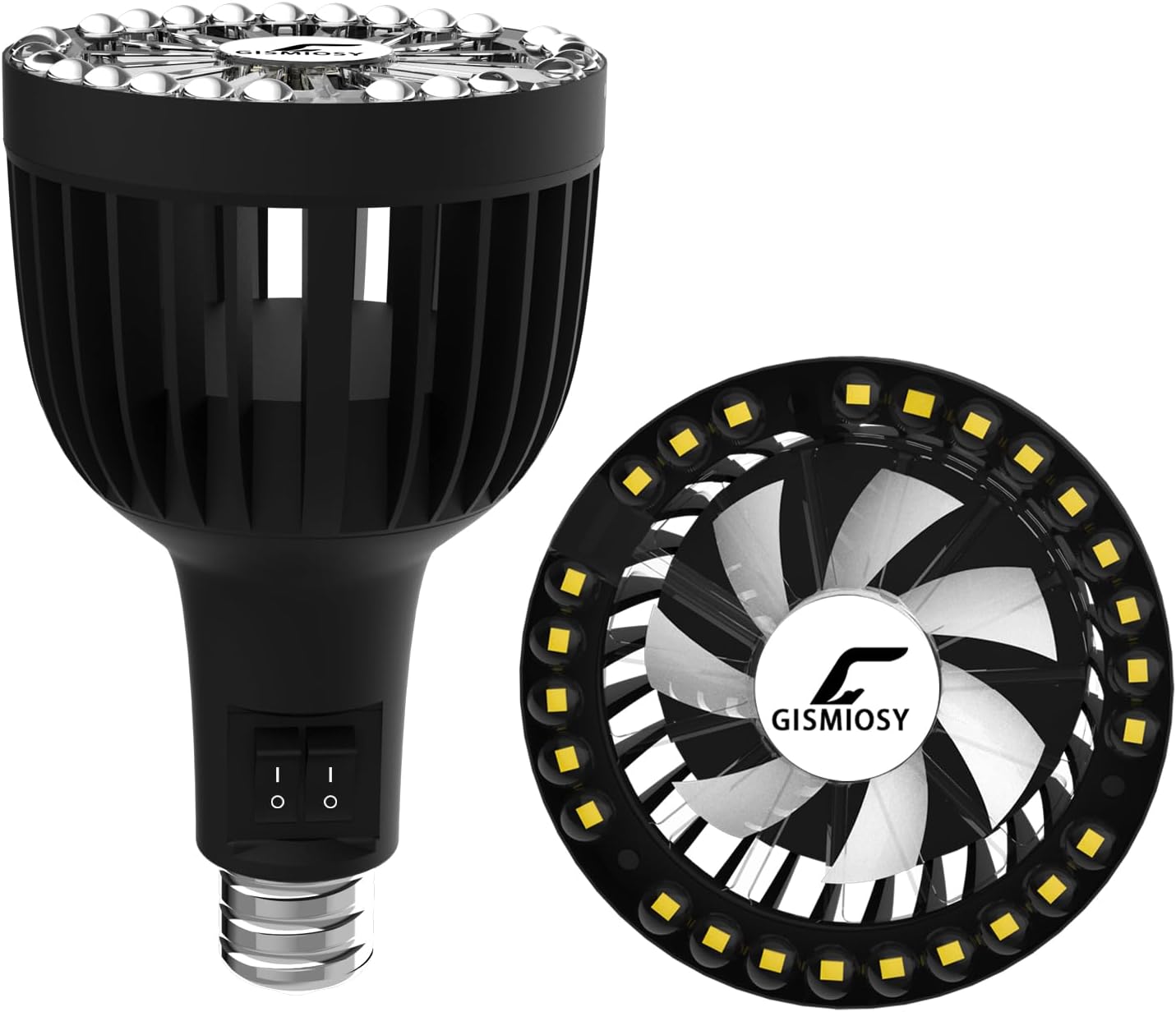
GISMIOSY 20W Full Spectrum LED Grow Light Bulb with Built‑in Plant Fan (E26, 6000K)
| Wattage | 20 watts |
|---|---|
| Bulb Base | E26 |
| Color Temperature | 6000 Kelvin |
| Power Source | Electric |
| Material Type | Aluminum |
This GISMIOSY grow light bulb combines a 20W full spectrum LED array with a built‑in plant fan to provide both concentrated light and gentle airflow for indoor plants. It installs like a regular E26 bulb, so you can use it in lamps, shelves, or small grow tents without extra hardware. The 6000K daylight spectrum with high CRI makes it easy to monitor plant health under natural‑looking white light rather than purple LEDs. The manufacturer reports high PPFD at short distance, which is useful for seedlings, propagation, herbs and compact vegetable setups when mounted close to the canopy. Independent controls let you run the fan separately to improve air movement and reduce heat buildup around the plant tips. Practical limitations are the recommended close mounting distance for peak PPFD and that a single bulb is best for small setups or spot lighting rather than whole-room coverage. The aluminum construction and active cooling support sustained output, making it a straightforward, no‑fuss option for reliable everyday indoor growing.
Best for: Buyers who want a simple, dependable grow solution that installs like a normal bulb and prioritizes steady performance and plant health for small indoor setups such as propagation stations, shelves, or desktop displays.
Less Ideal for: Growers planning to light large cabinets, multiple full‑shelf layers, or whole-room canopies should look for multi‑unit fixtures or higher‑output panels instead.
- Full spectrum 6000K LED with high CRI for natural white light and easy plant inspection
- Integrated fan with independent control improves airflow and reduces local heat
- Standard E26 base for tool‑free installation in common household fixtures
- Reported high PPFD at short distance suitable for seedlings and propagation
- Aluminum construction and active cooling designed to support stable long‑term performance
- High PPFD performance requires close placement to the canopy, limiting coverage area
- Single 20W bulb is best for spot treatments rather than lighting larger gardens
Verdict: A reliable, easy‑to‑install full‑spectrum grow bulb with built‑in fan ideal for steady, small‑scale indoor plant lighting.
Briignite A19 Full Spectrum LED Grow Light Bulb (2-Pack)

| Light Type | LED |
|---|---|
| Additional Features | Full Spectrum |
| Bulb Base | E26 |
| Light Output Maximum | 1000 lumens |
| Light Source Operating Life | 30000 hours |
These Briignite A19 grow bulbs are full-spectrum LED replacements that screw into any standard E26 fixture to give indoor plants consistent, natural-looking light. Each bulb outputs about 1000 lumens at roughly 11 to 12 watts, so they act like a 60 to 100 watt incandescent while using far less energy, which is handy for running multiple bulbs on a budget. The 3500–4000K warm daylight color and high CRI make foliage colors appear normal rather than the purple hue of some grow lights, so they work well in living spaces and plant shelves. Built-in features include app control and push-button options and an advertised 25,000 to 30,000 hour operating life. Limitations to note are modest reported PPF compared with purpose-built high‑output grow fixtures and the 180 degree beam, which is better for general room lighting than targeted canopy penetration for dense or tall plants. For small collections, seed starting, or supplementing light in low-light rooms these bulbs are an economical, easy-to-install choice.
Best for: Houseplant owners who need an affordable, plug-and-play light to supplement natural light for a few pots, seedlings, or a small indoor garden while keeping energy costs low.
Less Ideal for: Growers aiming to flower large or dense canopy crops or outfitting multi-tiered grow racks will want higher‑PPF, purpose-built fixtures instead.
- Full spectrum output that looks like natural white light and preserves true foliage color
- Low power draw (around 11–12W) with 1000 lumens brightness for energy-efficient continuous use
- Standard E26 base fits common fixtures for tool-free installation
- High CRI of 90 helps accurate color rendering in living spaces
- Beam angle and lumen-focused design give less concentrated PAR/PPF than dedicated high‑output grow fixtures
- App and push-button controls are basic compared with advanced programmable controllers
Verdict: A low-cost, easy-to-install full-spectrum LED bulb that gives natural-looking light and energy savings for small indoor plant collections.
Choosing the Right Grow Light Bulb for Cactus: Key Factors to Consider
Spectrum and Color Temperature
Cacti respond to a different mix of wavelengths than many leafy houseplants. A bulb that leans too heavily into long red wavelengths can encourage stretching or softer tissue, while blue-rich output supports compact, dense growth and stronger stems. For many desert succulents a balanced full-spectrum bulb with a visible bias toward the blue range during active growth, and slightly warmer light during bloom, provides the best results.
Understanding color temperature and the presence of specific photosynthetic wavelengths matters because it determines how a cactus allocates energy between vertical growth, root development, and flowering. Labels that list both color temperature and spectral distribution are more useful than generic "white light" claims.
Heat Output and Safe Distance
Cacti tolerate strong light but can be damaged by excessive radiant heat from a lamp positioned too close. Bulb surface temperature and IR output dictate how close you can safely place a light without scorching stems or drying media too rapidly. Lower-heat LED bulbs and fluorescent options allow closer placement and reduce the risk of tissue damage.
Consider how much clearance you have above pots and whether the bulb will sit in an open fixture or an enclosed lamp. If you keep plants on a windowsill or shelf, pick bulbs with low heat output or use diffusers to prevent localized overheating.
Light Intensity and Coverage
Intensity affects how compact and well-colored a cactus will grow. A single bulb must provide high enough photosynthetic photon flux density (PPFD) where the plant sits, or the cactus will stretch toward the light. Coverage pattern is important when lighting multiple small pots: some bulbs cast a narrow, intense beam suited to single pots, while others produce wider spread for several plants.
Think about pot spacing and desired placement. For single specimen plants, prioritize intensity and throw. For groupings, favor bulbs that offer broader, more even illumination so all plants receive adequate light.
Bulb Efficiency and Operational Cost
Energy-efficient bulbs deliver more usable light per watt, which matters if you run lights for several hours daily. LEDs typically use less electricity and produce less heat than classic incandescent or halogen alternatives. Efficiency affects running cost and how hot the fixture becomes over long photoperiods.
Also factor in expected lifespan. A more efficient bulb with a long rated life reduces replacements and maintenance. If you plan seasonal use only, a midlife bulb might be acceptable; for year-round setups, longevity becomes a larger consideration.
Mounting, Size, and Compatibility
Physical fit determines how easily you can integrate a bulb into your existing lamps or fixtures. Common bases, such as E26/E27, screw into many household lamps, but some growers prefer smaller specialty bases or spotlight styles for directed light. Bulb shape and length affect how close the light source can get to the plant and whether it will fit inside adjustable clip lamps or small dome fixtures.
Also check whether bulbs are compatible with dimmers or timers you already use. A bulb that cannot be dimmed limits distance and intensity control options, which can be important for seasonal adjustments or seedlings.
Durability and Moisture Resistance
Indoor cactus setups sometimes sit in humid rooms like bathrooms or on misted terrariums. Bulb durability and any listed moisture resistance matter if the fixture will be exposed to splashes or humidity. Look for robust construction, secure bases, and proper insulation in the bulb housing.
Durability also includes resistance to frequent on-off cycles. Some bulbs lose life expectancy if switched often, which is a consideration for timers and short photoperiod schedules commonly used with succulents.
How Much Daily Light Do Cacti Need Indoors
Most cacti evolved in open, bright habitats and do best with several hours of strong light each day. Indoors, simulate that with a combination of natural sun and supplemental grow light. Aim for a long daily photoperiod during spring and summer, reduced hours in fall, and a short rest period in winter if you want to encourage dormancy and seasonal flowering.
Use timers to maintain consistent daily schedules. If natural light is minimal, increase light intensity rather than just lengthening hours, because low-intensity long durations can still encourage stretching rather than compact growth.
- Spring and summer: 10 to 14 hours high-intensity light
- Autumn: reduce gradually to 8 to 10 hours
- Winter: 6 to 8 hours to promote rest
Positioning Bulbs for Healthy Growth
Place bulbs so the strongest light reaches the top of the cactus without overheating the stem. For LEDs with low heat output, you can position the light closer to the plants to increase PPFD. For bulbs that run hot, increase distance and use reflectors or diffusers to spread light more evenly.
Rotate pots periodically so one side does not receive all the light. This prevents uneven growth and helps maintain a symmetrical shape for columnar and globular species.
- Use adjustable clip lamps for small collections
- Allow ventilation around bulbs to dissipate heat
- Check pot temperature after one hour of operation when testing a new bulb
Using Timers and Light Schedules
Automated timers simplify maintaining consistent photoperiods crucial for cactus health. Sudden shifts in day length can confuse flowering cycles or trigger stress responses. A programmable timer allows you to mimic seasonal changes gradually without daily intervention.
Consider separate winter schedules if you want plants to enter a cooler, darker dormancy period. Even indoor heating can prevent true dormancy, so reducing both light and temperature helps many species rest and then bloom reliably.
- Set gradual changes over a week when altering schedules
- Use battery-backed timers or smart plugs to avoid interruptions
- Match light duration to species origin when possible
Combining Natural Light with Bulbs
Supplemental bulbs work best when they complement, not replace, available sunlight. Use grow bulbs during low-sun months or to boost light on north-facing windows. Position bulbs to fill shadows and increase overall irradiance rather than creating a single hotspot.
If you rely mostly on artificial light, choose bulbs with good spectral representation to avoid color distortion and to support physiological needs similar to natural sun.
- Place bulbs on the shadowed side of a plant when mixing light sources
- Monitor plant color and growth habit to dial in the right balance
- Adjust bulb height seasonally to follow changes in ambient daylight
Maintenance and Safety Tips
Clean bulbs and fixtures regularly to prevent dust from reducing light output. Replace bulbs according to rated life even if they still emit visible light because spectral output and efficiency decline over time.
Always follow fixture instructions and keep combustible materials away from hot bulbs. For peace of mind, choose bulbs with built-in thermal protection or low surface temperatures when possible.
- Wipe bulbs when cool with a dry cloth
- Inspect wiring and sockets before each season
- Use protective shades if bulbs are within reach of curious pets or children
How We Chose the Best Grow Light Bulb for Cactus
We chose bulbs that match how gardeners actually use grow lights with cacti. Our filters prioritized spectral output suited to cactus physiology, measured heat management and distance flexibility, and real-world usability for indoor gardeners. We excluded general-purpose household bulbs and full-scale horticultural fixtures intended only for large grow rooms. Key evaluation criteria included spectral balance between blue and red wavelengths to support compact growth and flowering, the bulb's heat output and safe mounting distance for sensitive stems, luminous efficacy and watt-to-light output for energy-conscious gardeners, build quality and expected lifespan, and plug-and-play convenience including common bases and dimming compatibility. We also checked light coverage patterns to ensure a bulb could reasonably serve pots on a shelf or single windowsill. Products were removed from consideration if they lacked any spectral information, had unsafe mounting instructions for small plants, or were strictly labeled for non-plant uses. The result is a set of practical options that balance plant health, safety, and everyday convenience.
FAQ
Can I use a regular LED household bulb for my cactus?
Sometimes. A regular LED may provide visible light but often lacks the spectral balance cacti need for compact growth and flowering. If using a household LED, look for full-spectrum or higher color temperature bulbs and monitor plant habit for stretching.
How close should a grow light bulb be to a small cactus?
It depends on the bulb's heat output and beam spread. Low-heat LEDs can be placed closer, often a few inches above the canopy, while hotter bulbs need several inches of clearance. Test by feeling the pot temperature and watching the plant for signs of stress.
Does color temperature matter for cactus flowering?
Yes. Warmer light with more red wavelengths can encourage flowering phases if combined with appropriate seasonal day length and temperature changes. A cyclic approach with slightly different spectrums for growth and bloom often yields the best results.
How long do grow light bulbs typically last when used for indoor succulents?
Lifespan varies by technology. LEDs usually last far longer than fluorescent or incandescent options, and their output declines slowly. Actual service life depends on runtime, fixture ventilation, and switching frequency.
Will a grow light bulb raise soil temperature enough to harm roots?
Most low-heat bulbs will not significantly raise soil temperature, but high-heat lamps positioned close to pots can warm the medium. Monitor soil moisture and temperature when testing a new bulb, and increase distance if the pot feels unusually warm.
Final Verdict
Choose a bulb that provides the right spectral balance and keeps heat low enough for close placement. Prioritize spectral information, light output per watt, and the physical compatibility of the bulb with your fixtures and layout. For small collections, favor bulbs that allow close, directed light and easy adjustment; for groupings, prefer wider coverage. Balancing spectrum, intensity, and heat control will give you compact, healthy cacti and reduce stress-related issues. Use timers and seasonal adjustments to mimic natural cycles and you will be well positioned to maintain strong growth and encourage flowering.
