

Note: This article contains affiliate links. If you click on these links and make a purchase, I may earn a small commission at no extra cost to you. This helps support my research and content. Read my full affiliate disclosure here.
Dealing with poison ivy means balancing urgency with care. You want a solution that kills vines and roots reliably without damaging desirable plants or leaving a persistent residue in garden soil. This guide presents seven vetted options that suit different situations, from small patches near flower beds to large infestations along fences and woodland edges. We shortlisted products based on how fast they act, how well they prevent regrowth, and how safe they are for the planting areas you care about. Below you will find practical guidance on selecting the right approach and clear evaluation criteria used to compare each choice.
Top Picks at a Glance
| Best Overall The best all-around choice for most situations | Ortho GroundClear Poison Ivy & Tough Brush Killer, Ready-to-Use with Comfort Wand, 1.33 gal |  |
| Best Quality Built to a higher standard if you want something more solid | Roundup Poison Ivy Plus Tough Brush Killer with Comfort Wand, 1 gal |  |
| Best Value The sweet spot between price and what you get | Bonide Stump-Out Stump & Vine Killer, 8 oz with Applicator | 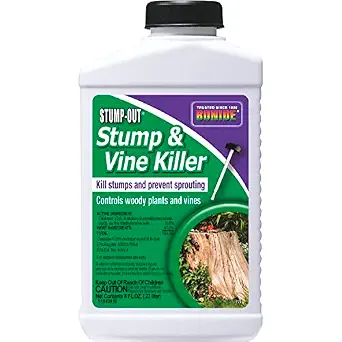 |
| Best Budget The cheapest option that still gets the job done reliably | Bonide Poison Oak & Ivy Killer Ready-to-Use Spray, 32 oz |  |
| Highest Rated A top-rated pick with lots of positive feedback | Ortho GroundClear Poison Ivy & Tough Brush Killer, 1 gal. |  |
| Most Popular A crowd favorite that many people choose with confidence | BioAdvanced Brush Killer Plus Ready-to-Use 1 Gal |  |
| Best Seller A high-volume bestseller chosen again and again | Spectracide Weed & Grass Killer with AccuShot Sprayer, 1.33 gal |  |
Ortho GroundClear Poison Ivy & Tough Brush Killer, Ready-to-Use with Comfort Wand, 1.33 gal

| Item Form | Spray |
|---|---|
| Liquid Volume | 1.33 gallons |
| Coverage | Over 60 listed tough weeds and brush |
This ready-to-use Ortho GroundClear spray is made to control poison ivy, poison oak, wild blackberry, kudzu and a long list of other tough weeds in non-garden areas. It includes an attachable Comfort Wand that delivers a continuous stream so you can target leaves, stems and trunks without bending or pumping. The formula moves through the plant and typically causes yellowing and wilting within 24 hours and becomes rainproof in about two hours, which is useful when weather timing matters. It is best used on actively growing, leafed-out weeds around fences, buildings, trails and other perimeter areas; very stubborn plants may need a second treatment. Practical limits are that this is for non-garden use only and it should not enter surface water or storm drains, and like most broad herbicides it will damage desirable plants if contacted. For homeowners who want a fast, no-mixing spot or area treatment, the built-in wand and ready-to-spray convenience make application straightforward.
Best for: Homeowners and property stewards who need a straightforward, no-mix solution to remove poison ivy and other woody weeds around buildings, fences and paths and who prioritize ease of use and quick results.
Less Ideal for: Gardeners who need selective control near ornamentals or vegetable beds or people who prefer organic or non-chemical methods should consider alternative targeted or manual removal approaches.
- Ready-to-use bottle with Comfort Wand for easy, no-mixing, single-handed application
- Effective on a wide range of woody vines and brush and labeled for over 60 weed types
- Fast visible action with wilting in about 24 hours and rainproof in two hours
- Intended for non-garden areas only so not suitable for spot-treating around desirable plants
- May require repeat treatment for especially persistent or large infestations
Verdict: A fast, ready-to-use spray with an attached comfort wand that makes killing poison ivy and tough brush around structures and paths simple and effective.
Roundup Poison Ivy Plus Tough Brush Killer with Comfort Wand, 1 gal

| Unit Count | 128 Fluid Ounces |
|---|---|
| Item Form | Spray |
| Coverage | 300 square feet |
| Active Ingredients (summary) | Triclopyr, Fluazifop-P-Butyl, Diquat Dibromide |
This 1 gallon Ready-to-Use Roundup blends three active ingredients to tackle poison ivy, poison oak, poison sumac, wild blackberry, kudzu, and other persistent brush. It is designed for spot treatment around homes, fence lines, trails, and tree rings where deep-rooted vines and woody weeds are a problem. The included Comfort Wand provides one-touch precision application so you can spray standing up and reduce bending while treating stems and foliage directly. The formula becomes rainproof in about 30 minutes and promises visible dieback within hours, and the product notes planting windows of 1 to 30 days after use depending on species. Practical benefits are clear: broad efficacy on tough woody species, easy targeting with the wand, and quick rainfastness. Important limitations are that it is an outright herbicide so treated areas must be kept clear of people and pets until dry, re-treatment may be needed for very large infestations, and the concentrate of active ingredients means nonselective damage if spray drifts onto desirable plants.
Best for: Buyers who prioritize fast, reliable control of poison ivy and other tough brush and who want a user-friendly applicator to treat problem spots without constant bending.
Less Ideal for: Homeowners who need selective weed control in mixed plantings or who prefer nonchemical methods should consider alternatives.
- Targets woody and vining weeds including poison ivy and kudzu
- Comfort Wand allows precise, upright application to stems and foliage
- Becomes rainproof in about 30 minutes for faster scheduling
- Visible results within hours for quick confirmation of effectiveness
- Nonselective herbicide that will damage desirable plants if drift occurs
- May require repeat applications for heavy or established root systems
Verdict: Choose this product when you need fast, dependable elimination of poison ivy and other tough brush with the convenience of a precision wand.
Bonide Stump-Out Stump & Vine Killer, 8 oz with Applicator

| Unit Count | 8 Ounce |
|---|---|
| Item Form | Spray |
| Coverage | Stumps, woody plants, vines, broadleaf weeds |
| Active Ingredients | 3,5,6-Tricloro-2-Pyridinyloxyacetic Acid |
Bonide Stump-Out is a small, concentrated liquid herbicide designed for targeted control of woody plants, vines and broadleaf weeds, including poison ivy. It is typically applied undiluted for stump treatment using the included brush applicator or can be mixed for foliar application with a hose-end or tank sprayer for larger infestations. The product’s active ingredient is a pyridinyloxyacetic acid compound formulated to move into roots and prevent resprouting, which makes it effective for killing stumps and persistent vines. Practical benefits include precise application with minimal drift when using the brush, quick visible decline in treated plants within weeks, and suitability for use around lawns and walkways when used as directed. Limitations are that it is a nonselective woody-plant remover so accidental contact with desirable broadleafs will damage them, and users must follow safety and label directions closely; larger jobs require proper sprayer equipment and more product. For someone who wants a focused, fast-acting solution for poison ivy and woody regrowth, this handles the job reliably when applied carefully.
Best for: Gardeners who want a practical, targeted solution to eliminate poison ivy, woody vines and stumps without broad-area spraying and who prefer an applicator for controlled treatments.
Less Ideal for: People looking for an all-purpose lawn-safe weed control for mixed turf and ornamentals or those needing large-scale blanket spraying without frequent product replacement.
- Includes brush applicator for precise, low-drift spot treatment
- Effective on stumps and roots to prevent resprouting when applied undiluted
- Can be applied as a foliar spray with hose-end or tank sprayer for larger areas
- Visible plant decline within 1 to 6 weeks after treatment
- Nonselective action can harm desirable broadleaf plants if contacted
- Small 8 oz volume may require multiple bottles for large infestations
Verdict: A compact, targeted herbicide that reliably kills poison ivy, woody vines and stumps when you need precise, no-resprout control.
Bonide Poison Oak & Ivy Killer Ready-to-Use Spray, 32 oz

| Unit Count | 32 Ounce |
|---|---|
| Item Form | Spray |
| Coverage | approximately 1000 square feet |
| Active Ingredients | Herbicide |
Bonide Poison Oak & Ivy Killer is a 32-ounce ready-to-use spray designed to quickly control poison ivy, poison oak and many broadleaf weeds without mixing or measuring. The trigger bottle sprays directly onto actively growing leaves and the manufacturer says it begins working overnight and becomes rainproof once dry. Because it is formulated as a systemic herbicide, treated plants are killed to the root rather than just burning foliage, which reduces regrowth. Practical benefits include straightforward application with no mess, coverage of roughly 1,000 square feet per bottle, and instructions that emphasize avoiding drift and contact with desirable plants. Important limitations are typical for non-selective herbicides: you must avoid overspray and windy conditions to protect nearby plants and skin and eye protection is required during use. The product is convenient for yard spot treatments and for homeowners looking for a fast, no-mix solution, but repeated applications may be needed for heavy infestations and careful handling is essential for safety.
Best for: Homeowners who want an affordable, no‑fuss solution for spot‑treating poison ivy or poison oak on lawns and around landscape beds and who prefer a product that works quickly without mixing.
Less Ideal for: Gardeners who need selective control among mixed plantings or who prefer organic or non-chemical methods should consider alternative products or mechanical removal.
- Ready-to-use trigger bottle requires no mixing or measuring
- Systemic formula kills roots to reduce regrowth
- Rainproof after drying, so rain shortly after application is less likely to wash it away
- Covers approximately 1,000 square feet per 32 oz bottle for spot and small-area treatment
- Non-selective herbicide risk of damaging nearby desirable plants if sprayed or drifted
- Safety precautions required to avoid skin and eye contact and keep away from children
Verdict: A budget-friendly, ready-to-use spray that kills poison ivy and oak to the root for fast, convenient spot control.
Ortho GroundClear Poison Ivy & Tough Brush Killer, 1 gal.

| Unit Count | 128 Fluid Ounces |
|---|---|
| Item Form | Spray |
| Coverage | Over 60 types of listed tough weeds and brush |
| Active Ingredients | Triclopyr, Triethylamine Salt, Pelargonic Acid |
Ortho GroundClear Poison Ivy & Tough Brush Killer is a one-gallon ready-to-use herbicide with a Comfort Wand sprayer designed for targeted control of stubborn brush and broadleaf weeds. It contains triclopyr and pelargonic acid to move through foliage and kill over 60 listed species including poison ivy, poison oak, kudzu and wild blackberry. The battery-powered wand gives controllable spray patterns for precise application along fences, trails and around structures so you can avoid desirable plants. Results begin to show within an hour and the product becomes rainproof after about two hours, which helps reliability in variable weather. Use when weeds are actively growing and thoroughly wet foliage for best uptake; retreatment may be necessary for very persistent regrowth. Because it is nonselective, care is required to avoid contact with desirable plants and it is not recommended for lawns or garden beds with valued plants. The Comfort Wand reduces bending and hand fatigue compared with pump sprayers, but proper protective equipment and attention to runoff guidance are still important.
Best for: Homeowners who prioritize dependable, fast-acting control of poison ivy and tough brush around buildings, fences and trails and who prefer a ready-to-use sprayer that reduces bending and hand fatigue.
Less Ideal for: Gardeners who need selective weed control in planted beds or people wanting an herbicide safe for turf should look at lawn-safe or selective products instead.
- Targets and kills over 60 listed tough weeds and brush including poison ivy and kudzu
- Ready-to-use with battery-powered Comfort Wand for accurate, low-effort spraying
- Visible results in about 1 hour and rainproof after 2 hours for dependable performance
- Moves through foliage for systemic control rather than just contact wilting
- Nonselective formula can damage desirable plants if oversprayed
- Not suitable for use on lawns or in garden beds with plants you want to keep
Verdict: Choose this ready-to-use, wand-equipped herbicide when you need fast, reliable control of poison ivy and other persistent brush around structures and non-garden areas.
BioAdvanced Brush Killer Plus Ready-to-Use 1 Gal

| Unit Count | 128 Fluid Ounces |
|---|---|
| Item Form | Spray |
| Active Ingredients | triclopyr |
| Coverage | treats a large area with various types of weeds and brush |
This one-gallon ready-to-use BioAdvanced Brush Killer Plus is a straight‑forward option for tackling poison ivy, poison oak, blackberry, kudzu and other woody vines without mixing concentrates. The built-in sprayer makes it easy to spot-spray individual plants or to treat larger patches along fences, trails, and wooded edges. Its active ingredient, triclopyr, moves through leaves and stems into the root system so treated plants gradually wilt and die over the following 1 to 6 weeks, which helps prevent quick regrowth. It becomes rainproof in about four hours, so you do not need perfect weather windows to use it. Expect visible results to appear slowly rather than immediately, and understand that it is designed for selective brush and vine control rather than broad-spectrum turf treatment. For anyone who prefers an off-the-shelf, no-mix solution, this bottle balances convenience with the systemic control needed to remove persistent vines.
Best for: Buyers who want a convenient, no-mix solution to remove poison ivy and other woody vines around yards and edges and who prioritize proven, widely used chemistry over experimental products.
Less Ideal for: Gardeners seeking fast cosmetic dieback within days or a product for general-purpose lawn weed control should consider other specialized herbicides.
- Ready-to-use with built-in sprayer for easy spot treatments and larger areas
- Systemic action with triclopyr that moves to the roots for lasting control
- Marked as rainproof in about four hours, offering flexibility with timing
- Effective against a long list of tough brush and vines including poison ivy and kudzu
- Acts slowly with visible decline taking 1 to 6 weeks rather than immediate knockdown
- Not formulated for broad turf or non-woody weed control
Verdict: A convenient ready-to-use systemic brush killer that reliably kills poison ivy and tough vines without mixing.
Spectracide Weed & Grass Killer with AccuShot Sprayer, 1.33 gal

| Unit Count | 170 Fluid Ounces |
|---|---|
| Item Form | Spray |
| Coverage | 1 gallon |
| Active Ingredients | Diquat Dibromide 0.12%, Fluazifop-p-butyl 0.06%, Dicamba (DMA salt) 0.04% |
Spectracide Weed & Grass Killer pairs a ready-to-use 1.33 gallon concentrate with an AccuShot continuous-power sprayer so you can treat patches of poison ivy, weeds, and grass without pumping. The formula is non-selective and absorbed through leaves to move to the root, producing visible wilting in as little as three hours and allowing replanting after a day. The battery-powered sprayer has an extendable wand for better reach and accuracy on fence lines, walkways, and around shrubs, and the instructions call for use above 60°F and a 15 minute rainproof window. Practical benefits include quick visible results, reduced hand fatigue from the powered trigger, and the ability to treat hard-to-reach spots. Important limitations are that the herbicide will kill any foliage it contacts so careful aiming and protective clothing are essential, the sprayer requires four AA batteries and occasional priming, and the product is toxic to aquatic life so it must not be used near water. Follow the label for safety and reentry timing when treating areas with desirable plants nearby.
Best for: A cautious homeowner who wants a fast, reliable way to remove poison ivy and other unwanted vegetation while minimizing physical effort and getting quick confirmation that treatments worked.
Less Ideal for: Gardeners who need a selective lawn-safe product for spot-treating grass or those who routinely work near bodies of water should choose a different solution.
- Non-selective formula that kills weeds and grasses down to the root for lasting control
- AccuShot battery-powered sprayer with extendable wand improves accuracy and reduces hand fatigue
- Rainproof in about 15 minutes so treatments are less likely to wash away
- Visible results in as little as three hours and replanting possible after one day
- Non-selective action risks damaging desirable plants if not applied carefully
- Requires four AA batteries and occasional priming to maintain spray
- Contains ingredients toxic to aquatic life so unsuitable near ponds or drainage areas
Verdict: Use this when you want a fast-acting, root-killing herbicide with a powered wand for accurate spot treatment of poison ivy and other tough weeds.
Choosing the Right Poison Ivy Killer: Key Factors to Consider
Kill Mechanism and Contact Versus Systemic Action
How a product kills poison ivy changes how and when you use it. Contact treatments scorch green leaves on direct contact and give fast visual control, but they often do not reach deep root crowns and so require repeat applications to prevent resprouts. Systemic options are absorbed and translocated to underground parts, improving root kill but taking longer to show visible symptoms.
Knowing whether a product acts mainly on foliage or also moves to roots helps you plan follow-up treatments and cleanup. For isolated vines on hard surfaces, a fast-acting contact option can be sufficient. For patchy infestations with established root systems, a systemic approach or a combination strategy is usually more reliable.
Application Method and Precision
How you apply a poison ivy control matters for safety and effectiveness. Ready-to-use sprays are convenient for small areas but can increase drift risk in windy conditions. Concentrates let you treat larger sites economically but require careful mixing and handling. Foam applicators and wipe-on gels reduce overspray and are useful near desirable plants or along fence lines.
Application precision affects non-target damage and overall efficacy. Methods that let you target individual stems or the plant crown reduce risk to nearby shrubs and groundcovers. Consider access and coverage needs: knapsack sprayers or hose-end applicators work for large patches, while handheld sprayers or gels suit spot work.
Timing and Weather Considerations
Weather determines how well a poison ivy treatment performs. Most herbicides need foliage to be actively growing and dry during application for good uptake. Rain within 6 to 24 hours after treatment can wash products off leaves and reduce effectiveness. High heat or drought stress can also limit plant uptake, making systemic treatments less effective.
Plan treatments for calm, dry days when foliage is not wet from dew. Late spring through early autumn is often the best window when plants are actively transporting sugars to roots. For multiple-pass strategies, allow labelled intervals between applications so treated tissue can translocate the herbicide to roots before retreating.
Non-Target Plant Safety and Soil Impact
Protecting desirable plants and soil life is a major concern in landscapes and gardens. Some herbicides have little soil activity and pose minimal residual risk, making them suitable for use near ornamentals and vegetable beds once label directions are followed. Others persist in soil or are non-selective and can damage nearby vegetation if they contact roots or green stems.
Consider buffer distances, use of shields or targeted applicators, and post-treatment restrictions on replanting. For sensitive areas, mechanical removal combined with a targeted follow-up treatment at the cut stem or root collar can reduce chemical exposure to surrounding plants.
Safety and Personal Protective Equipment
Poison ivy control often requires close work around irritating sap, so personal protection is essential. The right gloves, long sleeves, eye protection, and sometimes respirators reduce the risk of skin contact and inhalation when mixing or applying stronger formulations. Even with low-toxicity products, wear protective clothing and wash treated gloves and clothes separately from other laundry.
Read and follow label directions for PPE. Consider products with lower dermal or inhalation risk for work in confined spaces or when you must apply near children or pets. Safe handling and disposal of leftover solution and containers prevents accidental exposure and environmental contamination.
Long-Term Management and Follow-Up Needs
Eradicating poison ivy is rarely a one-time event. Many treatments will require monitoring and repeat applications to address resprouting from buried roots or nearby seed germination. Consider how easy it is to revisit treated areas and whether the product allows multiple treatments in a season.
Integrate cultural controls such as mulching, repeated cutting, or shading to reduce vigor and seedling emergence. If replanting is planned, choose species tolerant of the chosen control method or wait until soil restrictions expire according to label instructions. A clear follow-up schedule increases the chance of long-term success.
When to Use Chemical Control Versus Mechanical Removal
Mechanical removal, including careful pulling, cutting, or smothering, can work well for small patches where roots are shallow and the soil is accessible. Hand removal demands complete root extraction and strict personal protection to avoid skin contact with urushiol, the plant oil that causes dermatitis. Larger or well-established patches usually respond better to an integrated approach that combines mechanical reduction with a targeted chemical treatment to suppress regrowth.
- Use gloves, long sleeves, and eye protection during mechanical work.
- Dispose of pulled vines and leaves in sealed bags; do not compost plants with active sap.
- Stump treatments or spot applications to cut stems increase root kill success after mechanical removal.
Application Safety Tips for Sensitive Landscapes
In flowerbeds, around shrubs, or near vegetable plots, precision is the top priority. Choose delivery methods that reduce drift, such as foam or gel applicators, and consider physical barriers to protect adjacent plants. Always follow buffer distance guidance on product labels and avoid applying when wind or temperature inversion conditions increase drift risk.
- Shield desirable plants with cardboard or plastic during spot treatment.
- Avoid broadcast spraying near root zones of established trees and shrubs.
- Consider treating early and letting treated material die back before replanting to reduce soil contact.
Dealing with Large Infestations and Edges
For poison ivy along property edges, fence lines, or wooded borders, plan for staged treatment. Break large infestations into manageable sections and treat during active growth periods. Where access is limited, backpack sprayers or hose-end options provide coverage, but ensure you can retreat areas as needed to eliminate resprouts.
- Map the infestation and prioritize high-traffic zones first.
- Treat margins to prevent spread into lawns or beds.
- Expect to revisit treated sections several times over the season for complete control.
Safe Disposal and Cleanup After Treatment
Once plants are dead or removed, bag and seal all plant material rather than leaving it on-site where urushiol can persist. Clean tools, gloves, and clothing separately to prevent transfer of the irritant. Rinse sprayers and applicators according to label directions to avoid contaminating water sources and to keep equipment safe for future use.
- Use dish detergent and hot water to remove urushiol from tools and skin.
- Do not burn poison ivy material; airborne particles and smoke can cause severe reactions.
- Follow local disposal regulations for treated plant material and empty containers.
Replanting and Restoration After Eradication
After a successful kill and sufficient waiting period recommended on product instructions, plan restoration with competitive groundcovers or mulch to deter seedlings. Choose low-maintenance species that shade the soil and reduce the chance of poison ivy reestablishment. If soil activity of the chosen treatment is a concern, select tolerant species or delay planting until restrictions have expired.
- Apply heavy mulch to suppress seedlings for the first season.
- Monitor the area monthly for volunteer shoots and treat promptly.
- Consider native, dense groundcovers to occupy the niche left by removed vines.
How We Chose the Best Poison Ivy Killer
We focused on practical, garden-ready performance that matters when controlling poison ivy. Selection prioritized products and approaches that provide rapid foliar contact kill, documented root-system suppression, and application flexibility for spot treatment versus larger infestations. We also weighed formulations for minimal non-target damage, such as low drift, low soil residual activity, and options safe to use near ornamentals or established turf when applied as directed. Other filters included ease of use for home gardeners, availability of multiple application methods (spray, foam, or wipe), and clear label instructions for repeat treatments and disposal. We excluded general-purpose herbicides without specific mention of poison ivy control or products that require professional-only licensing. Practical long-term outcomes, such as how many follow-up treatments are typically needed and whether treated areas can be replanted safely, were included as selection dimensions. Evaluation focused on measurable, gardener-relevant attributes: kill speed on foliage, root suppression effectiveness, non-target safety, application precision, and convenience of use. These same dimensions inform the scorecard labels used across the review set.
FAQ
How long after treatment will poison ivy die?
It depends on the product. Fast-contact options can cause leaf browning within a few days, while systemic treatments may take one to three weeks to show full dieback as the herbicide moves to roots.
Can I pull poison ivy after applying a chemical treatment?
You can remove vines after visible dieback, but wait long enough for the herbicide to translocate to roots if root kill is the goal. Waiting a week or more after treatment reduces the chance of resprouts and limits transfer of active ingredients.
Is it safe to use poison ivy control in vegetable gardens?
Often this depends on the formulation. Some products have low soil activity and can be used carefully near ornamentals, but many labels restrict use in vegetable production. Check label directions and use non-chemical options where restrictions apply.
Will cutting poison ivy down without herbicide make it worse?
Cutting alone can reduce aboveground growth temporarily but often stimulates resprouting from roots or crown tissues. Combining cutting with a targeted herbicide application to the cut stem improves long-term control.
How many follow-up treatments are usually needed?
Many gardeners need two to four follow-ups spaced over the growing season, especially for dense or long-established patches. Frequency depends on initial infestation size, product type, and how aggressively roots respond.
Can I compost poison ivy after treating it?
It is not recommended to compost untreated or treated poison ivy because urushiol can persist and survive some compost conditions. Bag and dispose of material according to local recommendations to avoid spreading the irritant.
Final Verdict
Choose a poison ivy control strategy that matches the infestation size, proximity to desirable plants, and your tolerance for repeat visits. Fast contact treatments get immediate-looking results but may require follow-up for root systems. Systemic approaches usually offer better root suppression but need careful timing and adherence to safety guidance. Prioritize application precision and personal protection when treating near gardens or high-use areas. With a planned schedule for retreatment and site restoration, you can remove poison ivy while protecting surrounding plants and reducing the chance of return.
