

Note: This article contains affiliate links. If you click on these links and make a purchase, I may earn a small commission at no extra cost to you. This helps support my research and content. Read my full affiliate disclosure here.
If you garden in containers, patios, balconies, or small yards, the right vegetable grow bag changes how your plants develop. A well-chosen grow bag improves aeration, limits root circling, and lets you grow larger vegetables in less space. This guide shortlists seven top vegetable grow bags chosen for common vegetable gardening needs and explains the practical tradeoffs you should expect in real garden use. We evaluate each option for fabric breathability, drainage, durability, and size suitability so you can pick the best bag for your growing style and space. Read on for quick guidance on which features matter most and why those factors influence harvest size, watering frequency, and seasonal reuse.
Top Picks at a Glance
| Best Overall The best all-around choice for most situations | JERIA 12-Pack 10-Gallon Fabric Grow Bags with Handles |  |
| Best Quality Built to a higher standard if you want something more solid | AC Infinity Heavy-Duty 500G Fabric Grow Bags, 5 Gallon — 5-Pack |  |
| Best Value The sweet spot between price and what you get | Gardzen 10-Pack 10 Gallon Fabric Grow Bags with Heavy-Duty Handles |  |
| Best Budget The cheapest option that still gets the job done reliably | Land Guard 4-Pack 5-Gallon Nonwoven Fabric Grow Bags with Handles |  |
| Highest Rated A top-rated pick with lots of positive feedback | GlenLan 10 Gallon Nonwoven Fabric Grow Bags, 5-Pack |  |
| Most Popular A crowd favorite that many people choose with confidence | VIVOSUN 5-Pack 5-Gallon Fabric Grow Bags with Handles |  |
| Best Seller A high-volume bestseller chosen again and again | VIVOSUN 5-Pack 15-Gallon Fabric Grow Bags with Handles |  |
JERIA 12-Pack 10-Gallon Fabric Grow Bags with Handles

| Capacity | 10 gallons |
|---|---|
| Unit Count | 12 Count |
| Material Type | Fabric |
| Other Special Features of the Product | Drainage Hole |
| Indoor Outdoor Usage | Indoor, Outdoor |
These JERIA 10-gallon fabric grow bags are a straightforward option for container gardening, supplied as a 12-pack with plant labels. Made from thickened nonwoven fabric, the bags are breathable which helps prevent root circling and supports air pruning for healthier root systems. Built-in reinforced handles make moving planted bags easier while the fabric and integrated drainage let excess water escape quickly so you are less likely to overwater. Typical uses include vegetables, annuals and small fruiting plants and the 10-gallon size is well suited to growing potato varieties in a single bag when filled and hilled. They fold flat for compact storage when not in use and are reusable across seasons if handled gently. Limitations are that fabric grow bags can dry out faster than solid containers so you will need a consistent watering schedule or mulching, and the fabric will eventually show wear if dragged across rough surfaces. Overall these are a practical, space-saving solution for gardeners who want many uniform containers for productive potato growing on patios or balconies.
Best for: Gardeners who want a reliable, space-efficient way to grow multiple potato plants or other vegetables on patios, balconies, or small yards and prefer reusable, breathable containers.
Less Ideal for: People who need low-maintenance, infrequent-watering containers or who plan to move heavily loaded bags across rough ground frequently should consider rigid planters or wheeled solutions instead.
- Breathable fabric promotes air pruning and healthier root growth
- Reinforced handles allow easy repositioning of planted bags
- Built-in drainage reduces risk of overwatering
- Comes as a 12-pack with plant labels for starting multiple plants at once
- Fabric can dry out faster than rigid pots requiring more frequent watering
- Durability depends on gentle handling and may decline with heavy abrasion
Verdict: A cost-effective 12-pack of breathable 10-gallon fabric grow bags that make growing potatoes in containers easy and space-efficient.
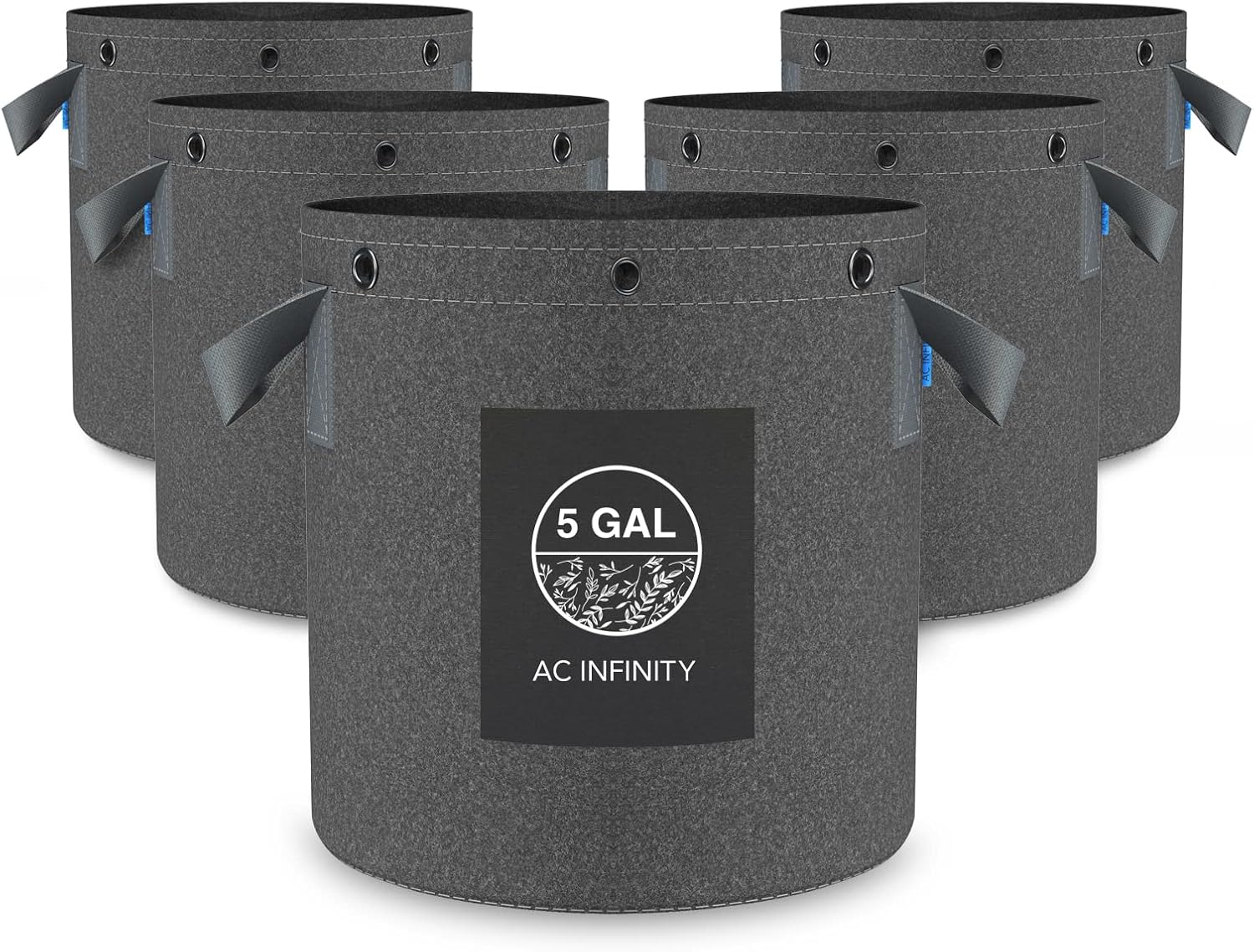
AC Infinity Heavy-Duty 500G Fabric Grow Bags, 5 Gallon — 5-Pack
| Capacity | 5.39 gallons |
|---|---|
| Number of Pieces | 5 |
| Material Type | Nonwoven Fabric |
| Other Special Features of the Product | Aeration, Durable, Permeable |
These AC Infinity fabric grow bags are built for performance-minded gardeners who want better root structure and reliable drainage. The 500G thick nonwoven fabric promotes air pruning so roots stop circling and develop a dense feeder root system, and the permeable material helps excess water escape to reduce overwatering issues. Each bag includes reinforced nylon handles and strong stitching that make moving full containers easier, plus built-in metal rings for neat low-stress plant training. In practice they work well for vegetables, flowers, and small fruiting plants where improved aeration accelerates growth and reduces transplant shock. The five-pack gives enough units to run a small production or rotate crops. Limitations are that these are intended for outdoor use and lack rigid sides, so they need a flat surface or tray for stability and frequent watering checks in hot, dry conditions because fabric pots can dry faster than solid containers.
Best for: Gardeners focused on maximizing plant performance and root health who grow vegetables, fruits, or flowering plants outdoors and want durable, production-ready containers.
Less Ideal for: People who need rigid, decorative planters for patios or those who prefer low-maintenance containers that retain moisture longer.
- Thick 500G nonwoven fabric improves aeration and supports air pruning
- Reinforced nylon handles and stitching make lifting and moving easier
- Built-in metal rings allow low-stress plant training without modifications
- Sold as a five-pack so you can outfit multiple plants or start a small batch at once
- Designed for outdoor use only and not suitable as a decorative rigid planter
- Fabric construction means faster drying so you may need more frequent watering
Verdict: Choose these heavy-duty 500G fabric grow bags when you want outdoor containers that actively improve root development and hold up to season-long use.
Gardzen 10-Pack 10 Gallon Fabric Grow Bags with Heavy-Duty Handles

| Capacity | 10 gallons |
|---|---|
| Unit Count | 10 Count |
| Material Type | Fabric |
| Other Special Features of the Product | Aeration, Breathable, Foldable, Lightweight |
| Indoor Outdoor Usage | Indoor, Outdoor |
These Gardzen 10-gallon fabric grow bags are built for performance-focused container gardeners who want reliable root health and easy handling. Made from thickened nonwoven fabric, the bags provide breathability that improves drainage and promotes air pruning to reduce root circling, which helps produce a denser, healthier root ball for vegetables and larger container plants. Reinforced X-shaped stitching on the heavy-duty handles makes moving filled bags far easier without tearing, and the foldable, washable construction simplifies offseason storage. You typically use them filled with a high-quality container mix for tomatoes, peppers, eggplants, or multi-plant arrangements on patios or balconies. Important limitations are their permeable fabric will dry faster than rigid pots so they need more frequent watering and they do not include internal dividers or rigid structure for stacking. For growers who prioritize root development and portability, these bags deliver consistent, season-after-season performance.
Best for: Gardeners focused on maximizing plant health and root development in containers who move or rotate plants regularly and grow larger vegetables or fruiting plants in limited space.
Less Ideal for: People who want low-maintenance containers that hold moisture for long periods or rigid pots that provide structural support for very tall or top-heavy specimens.
- Breathable nonwoven fabric encourages air pruning and better root structure
- Reinforced X-shaped stitched handles support lifting and repositioning filled bags
- Good drainage reduces risk of waterlogging compared with solid containers
- Foldable and washable for compact storage between seasons
- Permeable fabric increases watering frequency compared with rigid pots
- No internal structure or dividers to keep tall plants upright
Verdict: Choose these grow bags when you want breathable, durable containers that improve root health and make moving mature vegetables and container plants easy.
Land Guard 4-Pack 5-Gallon Nonwoven Fabric Grow Bags with Handles

| Capacity | 18.93 liters |
|---|---|
| Number of Pieces | 4 |
| Material Type | Nonwoven Fabric |
| Other Special Features of the Product | Breathable |
| Indoor Outdoor Usage | Outdoor |
These Land Guard grow bags are simple, inexpensive containers for growing herbs and small vegetables in limited space. The nonwoven fabric lets air and water pass through the soil, which reduces root circling and improves drainage so herbs like basil, parsley, and thyme establish healthier root systems. Each set includes four 5‑gallon bags with reinforced handles that make moving filled bags easier for repositioning or harvesting. The material is lightweight and folds flat for storage when not in use, and the breathable fabric provides modest insulation for roots during warm weather. Expect them to last multiple seasons with gentle use but know they are not indestructible; rough edges, constant sun exposure, or heavy abrasion can shorten their life. These are best for small-scale container herb gardens on patios, balconies, or raised beds where cost and portability matter more than decorative appearance or long-term commercial durability.
Best for: Budget-minded home gardeners who want an easy, portable way to grow several culinary herbs in containers on a patio, balcony, or small garden area.
Less Ideal for: Those seeking decorative or long-lasting hard planters for permanent displays or commercial growers who need very heavy-duty containers.
- Breathable nonwoven fabric improves drainage and reduces root circling.
- Includes reinforced handles for easier lifting and repositioning filled bags.
- Pack of four gives multiple planting spots for a small herb collection.
- Lightweight and foldable for compact storage when not in use.
- Material is not as durable as rigid planters and can wear faster with heavy use.
- Not decorative—plain utilitarian look that may not suit all outdoor aesthetics.
Verdict: An affordable, practical set of breathable 5‑gallon grow bags that gives budget gardeners a quick way to start a small container herb garden.
GlenLan 10 Gallon Nonwoven Fabric Grow Bags, 5-Pack

| Capacity | 10 gallons |
|---|---|
| Material | Nonwoven fabric (300G) |
| Usage | Outdoor |
| Set | 5-Pack |
These GlenLan 10 gallon grow bags are heavy-duty nonwoven fabric pots meant for outdoor vegetable and fruit growing, and they suit tomatoes well when space or soil beds are limited. Built from 300G breathable fabric, the bags use air pruning to reduce root circling and promote a dense fibrous root system, which can improve nutrient uptake for tomato plants. Reinforced, cross-stitched handles make it practical to move filled bags to follow sun or shelter plants during storms, and the fabric drains freely so you are less likely to see waterlogged roots. They are washable and reusable between seasons, and they collapse flat for compact storage. Limitations are the faster drying rate of fabric containers, which requires more frequent watering in hot weather, and the 10 gallon size is best for determinate or smaller indeterminate tomatoes rather than very large varieties. For gardeners who value durable, breathable containers and straightforward handling, these bags offer reliable, repeatable performance.
Best for: Gardeners who prioritize consistent, durable container performance and want breathable, reusable pots for growing tomatoes on patios, balconies, or small plots.
Less Ideal for: Growers who prefer minimal watering maintenance or who plan to grow very large tomato varieties that need deeper root volume should look at larger rigid containers or in-ground beds.
- Breathable 300G nonwoven fabric promotes air pruning to reduce root circling
- Reinforced cross-stitched handles let you lift and reposition filled bags safely
- Porous material provides strong drainage to reduce risk of root rot
- Washable and reusable design for multiple growing seasons
- Fabric containers dry out faster and need more frequent watering in hot conditions
- 10 gallon capacity may be small for very large indeterminate tomato varieties
Verdict: A dependable, breathable 10 gallon fabric grow bag pack that makes growing tomatoes in containers easier and repeatable season after season.
VIVOSUN 5-Pack 5-Gallon Fabric Grow Bags with Handles

| Capacity | 5 Gallons |
|---|---|
| Material Type | Nonwoven fabric |
| Included Components | 5 Bags |
| Indoor Outdoor Usage | Indoor, Outdoor |
| Other Special Features of the Product | Drainage Hole |
These VIVOSUN grow bags are basic, reliable fabric planters for small- to medium-sized container crops. Made from 300g nonwoven fabric they breathe and drain well, which helps keep roots cooler and reduces waterlogging compared with plastic pots. The set includes five 5-gallon bags that work for vegetables, herbs, and annual flowers in raised beds, patios, or a grow tent. Notable features are reinforced serged handles that make filled bags easier to move and a built-in drainage hole to prevent standing water. Because the fabric encourages air pruning, you can develop a healthier, fibrous root system and reuse the bags for multiple seasons with reasonable care. Limitations are the modest 5-gallon capacity, which is not suitable for large shrubs or trees, and the fabric will eventually show wear if left constantly exposed to UV and abrasion. Occasional hand-washing and storing them out of direct sun when not in use will extend their life.
Best for: Buyers who prioritize proven, well-reviewed basics and want a reliable set of breathable containers for vegetables, herbs, or patio flowers that are easy to move and reuse.
Less Ideal for: Not a good choice for gardeners who need large containers for trees or permanent decorative pots that must withstand long-term outdoor exposure.
- Breathable nonwoven fabric improves drainage and root aeration
- Reinforced serged handles make moving filled bags practical
- Reusable construction for multiple seasons with proper care
- Built-in drainage hole reduces risk of waterlogging
- 5-gallon size limits use to small- and medium-rooted plants
- Fabric will degrade faster than rigid pots if left in constant sun or abrasive conditions
Verdict: A dependable, well-made 5-pack of breathable grow bags that gives risk-conscious gardeners a proven, easy-to-handle solution for small to medium container plants.
VIVOSUN 5-Pack 15-Gallon Fabric Grow Bags with Handles

| Capacity | 15 gallons |
|---|---|
| Unit Count | 5 Count |
| Material Type | Nonwoven Fabric |
| Indoor Outdoor Usage | Indoor, Outdoor |
| Other Special Features of the Product | Drainage Hole |
These VIVOSUN fabric grow bags are a durable, reusable option for container plants that need good aeration and drainage. Made from 300g nonwoven fabric, the bags breathe to keep roots cooler and oxygenated, which helps develop a fibrous root system and reduces root circling compared with rigid pots. Each pack includes five 15-gallon bags with reinforced serger-stitched handles that make moving filled pots easier. The built-in drainage and porous sides mean you will water more frequently than in impermeable containers, but the payoff is healthier root structure and less risk of overwatering. The material is thick enough for multiple seasons if you handle and store them properly, though repeated heavy use on abrasive surfaces will eventually wear fabric pots. These are well suited for patio or balcony plantings and for growers who prioritize root health and portability; expect to pair them with saucers or trays to protect surfaces from seepage during watering.
Best for: Gardeners who value proven, low-risk container solutions for healthy roots and want durable, easy-to-move pots for patios, balconies, or grow tents.
Less Ideal for: People who need fully waterproof, decorative planters or who prefer low-maintenance containers that require less frequent watering.
- Breathable nonwoven fabric promotes air pruning and healthier root systems
- Reinforced serger-stitched handles make full bags easier to lift and move
- Built-in drainage reduces waterlogging and root rot risk
- Thicker 300g material designed for multi-season reuse
- Porous fabric means more frequent watering and potential surface seepage
- Fabric will eventually abrade or weaken with heavy outdoor use on rough surfaces
Verdict: Choose these VIVOSUN 15‑gallon fabric grow bags when you want durable, breathable containers that improve root health and are easy to move.
Choosing the Right Vegetable Grow Bag: Key Factors to Consider
Material Breathability
How porous the bag fabric is determines air flow to the root zone and how quickly excess water drains away. Breathable fabrics reduce root circling and help cool roots in hot weather, which benefits fruiting vegetables like tomatoes and peppers.
Very porous fabrics dry faster and may require more frequent watering, while heavier weaves hold moisture longer but still allow beneficial oxygen exchange. Think about your local climate: in hot, dry regions a fabric that retains some moisture is helpful, while in humid areas maximum breathability reduces disease risk.
Drainage and Moisture Retention
Grow bags rely on the combination of fabric porosity and bag depth to manage moisture. Good drainage prevents waterlogged soil and root rot, but containers that drain too quickly leave plants stressed between waterings.
Look for bags with consistent fabric pores all around and consider pairing with a soil mix designed for containers that holds moisture yet drains well. For heavier feeders or for vegetable varieties that prefer even moisture, choose a deeper bag that holds more soil and water without becoming saturated.
Durability and Seams
Durable fabrics and reinforced seams extend the life of a grow bag across seasons. UV exposure, repeated filling and emptying, and the weight of wet soil strain seam stitches and handles more than the fabric itself.
Inspect construction details like double-stitched seams, bar-tacked handle connections, and fabric weight if you expect to reuse bags multiple seasons or move them frequently. Thinner fabrics are fine for a single season or disposable use, but heavy-duty options save effort and waste over the long term.
Handle Strength and Portability
Most gardeners move grow bags to follow light or to bring plants under cover. Strong, well-attached handles make relocation easier, especially when bags are full and wet. Handles should be stitched or riveted into seams rather than glued on.
If you plan to lift bags regularly, test how handles distribute weight. Multiple handles or wider straps reduce pressure points. Consider whether you will move full bags or only lightweight seedlings; handle design that suits one use may be overkill or insufficient for another.
Size and Shape Versatility
Different vegetables have different root volumes and growth habits. Deep-rooted crops like carrots, beets, and potatoes need taller bags, while bush beans and compact lettuces do well in shallower, wider containers.
Choose bag sizes that let you plant the intended crop without crowding roots. Modular sizing or sets with multiple diameters give flexibility across seasons. Also consider whether you need round bags for single plants or rectangular/long bags to fit narrow balconies and make efficient use of space.
Best Soil Mixes for Grow Bags
Container soil behaves differently than garden soil. For grow bags, use a mix that balances drainage and water-holding capacity: a base of peat-free compost or coco coir, combined with coarse perlite or grit, works well. Add a slow-release organic fertilizer to feed vegetables over several weeks, and topdress during the season for heavy feeders.
Avoid using straight garden soil, which compacts inside fabric bags and reduces aeration. Refreshing the mix each season prevents salt buildup and supports consistent yields.
- Aim for a loose, crumbly texture that holds shape when squeezed but breaks apart easily
- Include organic matter to retain moisture without compaction
- Add perlite or grit for fast drainage, especially in smaller bags
Watering Strategies in Fabric Containers
Because fabric grow bags aerate more and often drain faster than plastic pots, watering frequency will typically increase. Water deeply until moisture runs from the bottom, then allow the top inch or two to dry depending on plant needs. Use a moisture meter or finger test to avoid overwatering.
Mulching the surface with straw or chopped leaves reduces evaporation and evens out moisture cycles. During heat waves, move bags to partial shade to protect root temperature and reduce water stress.
- Water early in the morning to reduce evaporation
- Check moisture around roots for heavy feeders like tomatoes
- Use drip irrigation or soaker hoses shaped around the bag for consistent moisture
Supporting Vining and Tall Vegetables
Many vegetables grown in bags need support. Install cages, stakes, or trellises that anchor in the soil rather than the fabric alone to avoid tearing. For trailing crops, edge-mounted supports or adjacent posts that carry the load work better than relying on bag handles.
Choose supports that fit the bag size and the mature plant height. Removable supports that can be adjusted seasonally offer flexibility for rotating crops.
- Drive stakes into the center of the soil before transplanting to minimize root disturbance
- Use lightweight cages for smaller varieties and sturdier frameworks for heavier fruiting crops
- Clip and prune to keep vining plants from tipping over in windy conditions
Seasonal Care and Reuse
With proper storage and gentle cleaning, many grow bags can be reused multiple seasons. At the end of the season, remove spent soil, allow the fabric to dry, and store bags in a cool, dry place away from direct sunlight to prevent UV degradation.
If bags show fraying or seam failure, repair with heavy-duty thread or replace them. Rotating soil with fresh compost each season reduces disease risk and restores nutrients.
- Empty and clean bags before storage to prevent pests
- Patch small holes with outdoor fabric glue or stitching
- Label bags with crop type and planting year to plan rotations
Maximizing Yield in Small Spaces
Use vertical techniques and multi-plant bags to increase productivity in tight areas. Plant compatible crops together to make efficient use of soil volume, such as pairing a tall tomato with shallow herbs around the edge.
Place bags where they receive the most daily sun and rotate crops seasonally to avoid depleting the same patch of soil repeatedly.
- Stack different sizes to use sunny railings and balconies
- Plant succession crops to keep harvests steady
- Choose varieties bred for containers to make the most of limited soil
How We Chose the Best Vegetable Grow Bag
We focused on criteria that matter to gardeners using grow bags for vegetables rather than decorative pots. Primary filters included material breathability because aeration affects root temperature and oxygen; seam strength and fabric durability to withstand repeated filling, watering, and seasonal storage; drainage performance to prevent root rot while holding enough moisture for vegetable crops; and size and shape options to suit common vegetable types from cherry tomatoes to root vegetables. We also evaluated handles and construction details that make moving heavy bags practical, plus whether bags support staking or cage attachment for vining crops. Excluded items were standard rigid planters, fabric pots designed only for ornamentals, and any product category not intended for direct soil-to-plant use. Our selection prioritized features that garden users can verify by sight or spec sheet and that consistently affect plant performance and gardener workflow.
FAQ
How deep should a grow bag be for root vegetables?
Root vegetables usually need at least 12 to 18 inches of loose soil to form full roots. Deeper bags around 18 inches are best for carrots, beets, and potatoes, while shallower bags can work for salad turnips and radishes.
Can I reuse the same grow bag year after year?
Often yes, if the fabric and seams remain intact. Empty and dry the bag, refresh or replace the soil, and store it away from sunlight when not in use. Inspect for wear and repair small tears before replanting.
Do grow bags dry out faster than pots?
Usually they do because breathable fabric increases evaporation and air flow. The rate depends on fabric porosity, bag size, and local climate. Mulch and regular watering help manage moisture in warm weather.
Will a grow bag keep plants cooler than a plastic pot?
Yes, breathable fabric generally allows better air circulation around roots and can help lower root-zone temperatures in hot conditions. That benefit is most noticeable during heat spikes and with lighter-colored or well-ventilated fabrics.
How do I attach a tomato cage or trellis to a fabric bag?
Anchor supports in the soil inside the bag rather than fastening to the fabric. Drive stakes into the center of the soil before plants establish, or use external posts beside the bag to carry heavier loads without stressing seams.
Final Verdict
Pick a vegetable grow bag that matches the crops you want to grow and the level of effort you will invest in watering and handling. Prioritize fabric breathability for healthy roots, drainage that prevents waterlogging, and construction that tolerates lifting and reuse. Balance bag depth and diameter with the root habits of your vegetables to avoid crowding and to maximize yields. When in doubt, choose a slightly larger bag than you think you need and plan for regular soil refreshes. The right bag will simplify watering and maintenance while giving you flexibility to garden in compact spaces.
