

Note: This article contains affiliate links. If you click on these links and make a purchase, I may earn a small commission at no extra cost to you. This helps support my research and content. Read my full affiliate disclosure here.
Picking the right soil for Zamioculcas matters because these popular houseplants thrive on a balance of quick drainage and enough moisture to support slow, steady growth. If the mix holds too much water the rhizomes sit wet and rot can follow. If it dries out too fast the plant will stress and drop leaves. This guide covers six shortlisted soils suited for Zamioculcas, each chosen for real-room conditions like low-light apartments, bright windowsills, and busy care routines. We evaluate mixes for drainage, moisture buffering, nutrient stability, and repotting ease so you can pick a soil that fits how you water and where the plant lives.
Top Picks at a Glance
| Best Overall The best all-around choice for most situations | Gardenera ZZ Plant Potting Mix, 1 Quart |  |
| Best Quality Built to a higher standard if you want something more solid | HydraGarden Forbidden Cereal Aroid Potting Mix, 6.5 QT |  |
| Best Value The sweet spot between price and what you get | Miracle-Gro Organic Indoor Potting Mix, 16 qt. |  |
| Best Budget The cheapest option that still gets the job done reliably | TOYPOPOR Potting Soil for Indoor Plants, 1 qt |  |
| Most Popular A crowd favorite that many people choose with confidence | Miracle-Gro Indoor Potting Mix for All Plants, 6 qt., 2-Pack |  |
| Best Seller A high-volume bestseller chosen again and again | Back to the Roots Organic Indoor Potting Mix, 6 Quart |  |
Gardenera ZZ Plant Potting Mix, 1 Quart

| Brand Name | Gardenera |
|---|---|
| Unit Count | 1 Count |
| Item Type Name | ZZ Plant Potting Mix |
| Volume | 1 quarts |
Gardenera's ZZ Plant Potting Mix is a small, purpose-built mix designed to meet the needs of Zamioculcas zamiifolia. It combines Canadian peat moss for moisture retention with sand and perlite for improved drainage and aeration, plus worm castings to supply gentle organic nutrients and charcoal to help reduce impurities. In practice this mix works well for repotting or top-dressing indoor ZZ plants where you want steady moisture without waterlogging and good oxygen around the roots. The composition supports slower, steady growth and healthier leaves while reducing problems from poor drainage. Because the product is sold in a 1 quart volume it is convenient for single pots or small plants but will not be economical for multiple large specimens. Also, the peat-based formula may compress over time so occasional loosening or mixing with fresh perlite is helpful for long-term container health.
Best for: Plant owners who want a ready-made, ZZ-focused potting medium for single pots or a few small specimens and prefer a balanced mix that supports steady growth without overwatering.
Less Ideal for: People repotting many or very large ZZ plants who need bulk soil or growers who prefer peat-free or purely inorganic cactus mixes.
- Formulated specifically for ZZ plants with peat, sand, perlite, worm castings, and charcoal
- Balances moisture retention and drainage to reduce risk of root rot
- Contains organic nutrients (worm castings) to support steady growth
- Charcoal helps absorb impurities and keep the root zone cleaner
- Small 1 quart size means multiple purchases needed for larger collections
- Peat-based mixes can compact over time and may require occasional aeration
Verdict: A small, thoughtfully blended potting mix that gives ZZ plants the moisture balance and aeration they need to stay healthy and attractive.
HydraGarden Forbidden Cereal Aroid Potting Mix, 6.5 QT

| Unit Count | 6.5 Ounce |
|---|---|
| Brand Name | HydraGarden |
| Style Name | Houseplants & Aroids |
| Ingredients | Orchid Bark, Charcoal, Perlite, Coco Chunks, Coco Coir, LECA Clay Pebbles, Worm Castings, Sphagnum Moss |
HydraGarden Forbidden Cereal is a high-drainage, soilless potting mix built from chunky components like orchid bark, coco coir, coco chips, perlite, biochar, worm castings and LECA clay pebbles with a small bag of New Zealand sphagnum moss layered on top. It is used as a repotting and growing medium for aroids and many common houseplants where preventing waterlogging and improving root oxygenation are priorities. The mix’s large particle profile lets water move quickly through containers, reduces the chance of root rot, and keeps roots from becoming compacted while still offering organic matter and nutrients from castings and charcoal. The separated sphagnum allows you to add a moisture-retaining topper when needed without compromising overall drainage. Practical limits are that its chunky texture holds less water than peat-rich mixes so watering frequency will increase for moisture-loving species, and the soilless formula may require more frequent feeding compared with a loam-based soil. For growers who prioritize fast drainage, root health, and a lightweight, peat-free blend, this mix delivers predictable, performance-focused results.
Best for: Serious growers who prioritize root health and fast drainage for aroids and tropical houseplants and who monitor watering and feeding closely to maximize plant performance.
Less Ideal for: Casual owners who want a low-maintenance, moisture-retentive potting medium or growers of very moisture-loving species that require consistently damp substrate.
- Very high drainage and aeration from chunky ingredients reduces risk of root rot
- Peat-free, soilless organic components including worm castings and biochar for nutrient support
- Layered sphagnum moss gives flexible moisture retention as a topper or propagation aid
- Includes LECA clay pebbles for improved structure and long-term stability
- Holds less moisture than peat-based mixes so plants may need more frequent watering
- Soilless formula typically requires more regular fertilizing for sustained nutrient supply
Verdict: Choose this mix if you need a chunky, peat-free medium that maximizes drainage and root aeration for high-performance aroid growing.
Miracle-Gro Organic Indoor Potting Mix, 16 qt.

| Volume | 1 cubic feet |
|---|---|
| Style Name | Indoor |
| Item Highlight | Protects Against Over & Under Watering |
| OMRI Listed | Yes |
Miracle-Gro Organic Indoor Potting Mix is a ready-to-use organic blend designed for houseplants, seedlings, and container herbs. It combines coir for air space and moisture retention, sphagnum peat moss to hold and release water, and a quick-start natural fertilizer so young plants get an initial nutrient boost. Typical use is filling pots or seed trays with a drain hole, transplanting by loosening the root ball and topping up with fresh mix, or starting seeds in shallow trays and keeping them moist until germination. Practical benefits for herb growers include improved moisture regulation that helps prevent both waterlogging and rapid drying, and organic certification for those avoiding synthetic inputs. The bag claims one 16 qt. package fills a 12-inch container, which fits small- to medium-sized herb pots. Limitations are the modest volume per bag for users with multiple pots and the inclusion of peat, which some growers try to avoid for sustainability reasons. Also, plants that need very fast-draining media, such as certain succulents, may need a different blend or added grit.
Best for: Buyers who want an easy, organic potting mix for growing kitchen herbs and houseplants and who prioritize proven formulations and user guidance over sourcing bulk soil.
Less Ideal for: People looking to pot large numbers of containers at once or gardeners who prefer a peat-free, fast-draining custom mix should consider larger bags or alternative blends.
- OMRI listed and made with organic ingredients suited to organic indoor gardening
- Blend of coir and sphagnum peat moss balances aeration and moisture retention
- Includes quick-start natural fertilizer to feed plants during establishment
- Formulated specifically for indoor containers and seed starting
- 16 qt. bag provides limited coverage if you have several herb pots
- Contains peat which some gardeners avoid for environmental reasons
Verdict: A convenient OMRI-listed indoor potting mix that helps regulate moisture and gives seedlings and container herbs a reliable, organic start.
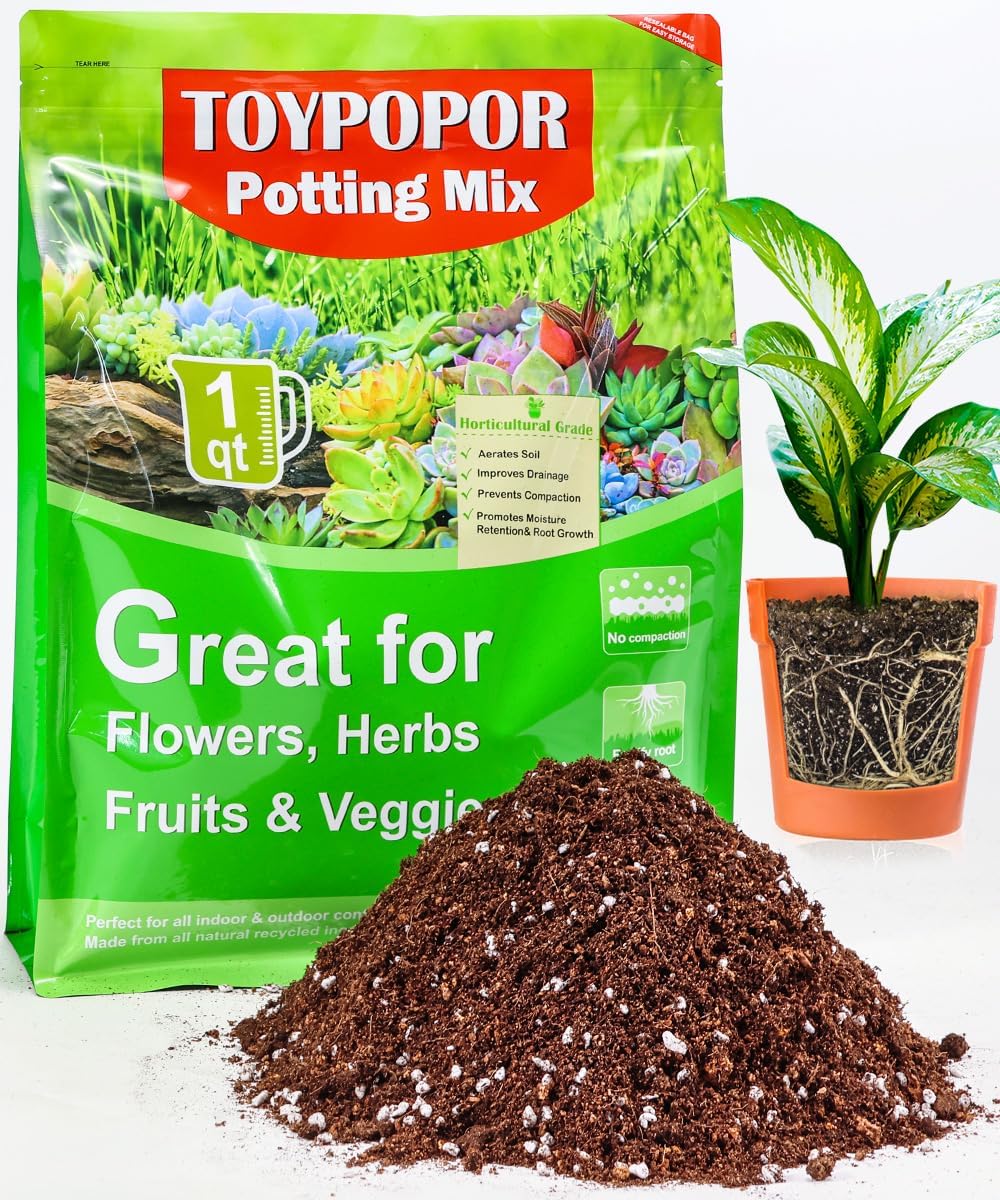
TOYPOPOR Potting Soil for Indoor Plants, 1 qt
| Brand Name | TOYPOPOR |
|---|---|
| Volume | 1 quarts |
| Style Name | nutrient-rich, moisture-retaining |
This 1 quart TOYPOPOR potting soil is a lightweight, soilless blend meant to give houseplants quick root access to air and moisture. The mix pairs sphagnum peat and coco coir for moisture retention with perlite for drainage and rice charcoal for aeration. Typical use is repotting small houseplants or refreshing the top layer of container soil for species that prefer a loose medium. For growers of Aglaonema it helps keep roots from sitting in water while holding enough moisture between waterings, which suits the plant's moderate watering needs. The pre-mixed composition saves time compared with creating your own blend and the small 1 qt size is convenient for trialing without committing to a large bag. Limitations are the small volume for multiple or larger pots and that no nutrient analysis or long-term feeding plan is provided, so you will still need to fertilize for sustained growth.
Best for: Buyers who want an affordable, ready-to-use small batch potting mix for repotting or topping up individual houseplants and who prioritize convenience over bulk quantity.
Less Ideal for: People managing many plants, large specimens, or those who prefer a fertilized mix or custom-blended media for specific soil chemistry needs.
- Balanced mix of peat, coco coir, perlite, and rice charcoal for both moisture retention and drainage
- Lightweight, airy texture that encourages fast root growth and prevents compaction
- Small 1 quart size is easy to handle and good for repotting individual houseplants
- Ready-made blend removes the need to measure and mix components yourself
- Only 1 quart volume is too small for multiple pots or full repots of larger Aglaonema plants
- No listed nutrient content so additional fertilization will be needed for ongoing feeding
Verdict: A convenient, small-batch potting mix that provides airy drainage and moisture retention ideal for testing or repotting single Aglaonema plants.
Miracle-Gro Indoor Potting Mix for All Plants, 6 qt., 2-Pack

| Number of Packs | 2 |
|---|---|
| Unit Count | 400.58 Ounce |
| Item Highlight | Feeds for up to 6 Months |
| Ingredients | Sphagnum Peat Moss, Coir, Perlite, Fertilizer, Wetting Agent |
This Miracle-Gro indoor potting mix is formulated as an all-purpose soil for indoor container plants and is sold in a two-pack of 6‑quart bags. It combines sphagnum peat moss, coconut coir, and perlite to create a lightweight, well-draining mix that holds moisture yet releases it to roots, which helps tropical houseplants like a Dragon Tree avoid waterlogged roots. The bagged mix includes a slow-release fertilizer meant to feed plants for up to six months so you do not need to amend immediately after potting. Notably the formula excludes bark and compost, which can reduce habitats for fungus gnats — useful when repotting indoor specimens. Use is straightforward: fill a pot with drainage, set the plant, backfill with mix, and water. Limitations are that the fertilizer schedule is fixed to the included feed and heavy feeders may need additional fertilizing after several months, and serious growers who want a custom cactus or orchid-style mix will find the texture too fine. For routine repotting of Dragon Trees and similar tropical houseplants this mix is convenient and consistent.
Best for: Buyers who want a reliable, low-effort potting mix for repotting tropical houseplants like Dragon Trees and prefer a product with built-in feeding and pest-reduction features.
Less Ideal for: Specialist growers who need custom texture blends for succulents, orchids, or aggressive feeders should choose purpose-formulated mixes or amend this product accordingly.
- Balanced blend of peat moss, coir, and perlite for good moisture retention and drainage
- Includes slow-release fertilizer that feeds up to six months for low-maintenance care
- Bark- and compost-free formula reduces places for fungus gnats to breed
- Ready-to-use bag makes repotting quick with no mixing required
- Fertilizer is fixed for about six months so additional feeding may be necessary for heavy feeders
- Texture may be too fine for plants that prefer very fast-draining or chunky mixes
Verdict: A convenient, low-maintenance indoor potting mix that keeps Dragon Trees healthy with good drainage and up to six months of built-in feeding.
Back to the Roots Organic Indoor Potting Mix, 6 Quart

| Unit Count | 192 Fluid Ounces |
|---|---|
| Item Type Name | Indoor Potting Mix 6qt |
| Item Highlight | Peat-free, 100% organic, made in the USA |
| Ingredients | Coconut Coir, Yucca, Mycorrhizae, Perlite, Horticultural Sand |
This Back to the Roots indoor potting mix is a ready-to-use, 6-quart blend designed for common houseplants such as pothos, monstera and ferns. It combines coconut coir, yucca extract, mycorrhizae, perlite and horticultural sand to improve moisture retention, drainage and root development without peat. In practice it feels light and friable, so it is easy to pot seedlings or repot mature plants and it reduces compaction that can suffocate roots. The added mycorrhizae helps young roots establish and take up nutrients more efficiently while yucca extract helps the mix hold water between waterings, which is convenient for forgetful or busy plant owners. Because it is peat-free and made in the USA, it is a more sustainable choice versus traditional peat-based mixes. Limitations are the small 6-quart size, which means frequent repurchasing for larger collections, and the bag does not include fertilizer so you will need to feed plants separately as they grow.
Best for: Buyers who prioritize low-risk, easy-care houseplant solutions and want an organic, ready-to-use potting mix that reduces watering hassles and supports healthy root growth.
Less Ideal for: Not ideal for gardeners who need large-volume soil for many pots or for those expecting a mix that includes built-in fertilizer for long-term feeding.
- Peat-free organic formula that reduces environmental impact
- Yucca extract improves moisture retention between waterings
- Contains mycorrhizae to support root development and nutrient uptake
- Light, well-draining texture suitable for repotting seedlings and houseplants
- Small 6-quart volume may require frequent repurchasing for larger plant collections
- Does not include fertilizer so additional feeding is necessary
Verdict: A compact, peat-free potting mix that simplifies indoor plant care by holding moisture and boosting root establishment.
Choosing the Right Soil for Zamioculcas: Key Factors to Consider
Drainage and Percolation
Zamioculcas relies on a soil that sheds excess water quickly to keep rhizomes from sitting in saturated conditions. Fast percolation prevents oxygen depletion around roots and reduces fungal rot risk.
Look for mixes with coarse components like pumice, coarse sand, or perlite that create channels for water to move through. Test drainage by watering thoroughly and timing how long it takes to run through; a well-draining mix will pass excess water in a few minutes under a pot with drainage holes.
Moisture Retention Balance
While drainage is critical, ZZ plants still need a modest, accessible water reserve. A soil that dries out instantly after watering can stress the plant between infrequent waterings.
Good mixes combine quick-draining particles with water-holding components such as coconut coir or a small proportion of fine peat to buffer moisture. That balance lets the top layer dry while the lower zone retains enough for the rhizomes without staying waterlogged.
Aeration and Particle Size
Air in the root zone supports healthy roots and beneficial microbes. Particle size determines how much pore space exists for oxygen movement and for roots to expand.
Avoid mixes made almost entirely of fine materials that compact over time. Instead choose blends with a range of particle sizes and visible chunky elements so the substrate stays friable and roots can penetrate easily when the plant grows or is repotted.
Nutrient Content and Stability
ZZ plants are slow growers and prefer steady, low-level nutrient availability rather than rapid-release fertilizers that can cause salt buildup. A base nutrient level is useful, but it should be stable over months.
Opt for soils that provide light baseline fertility or that pair well with a diluted, low-frequency feeding routine. Avoid mixes with heavy, quick-release fertilizer blends that require frequent flushing to prevent tip burn.
pH and Salt Levels
Soil pH influences nutrient availability. Zamioculcas does best in near-neutral to slightly acidic mixes. High soluble-salt content can cause brown leaf edges and poor root function.
Choose mixes with clear pH ranges and low reported EC or low salt content. When using amendments or water with high mineral content, flush periodically and consider a leach step after initial potting to reduce residual salts.
Workability and Repotting Ease
You will occasionally repot or inspect roots, so the soil should be easy to work with and not cling like heavy clay. A well-structured mix allows you to tease roots and remove old media without excessive effort.
Components that break apart cleanly and do not cake around rhizomes make division and inspection straightforward. Consider how the mix behaves when dry and when moist, and whether it compacts in typical indoor humidity.
How Zamioculcas Uses Soil
Zamioculcas stores water in thickened rhizomes, so its ideal substrate supports that strategy: it should let water pass quickly while keeping pockets of moisture the rhizome can access. Because the foliage growth rate is slow, roots do not demand constant nutrient turnover. Soil is more of a staging ground for stable conditions than an active feeding medium.
In practice this means mixes that mimic a porous, loamy environment work best. They give roots space, limit prolonged wetness, and reduce the frequency of problems related to overwatering.
- Rhizome health is the single biggest reason to choose a free-draining mix
- Moderate buffering avoids excessive watering frequency for busy plant owners
- Soil should remain structurally stable over months
Indoor Light, Watering Style, and Soil Choice
Light levels and how you water should guide the soil you choose. In lower light, plants use less water so a mix with slightly greater moisture retention helps. In bright, warm spots a faster-draining blend reduces risk of soggy roots between waterings.
Match the mix to your routine: if you prefer infrequent deep watering, choose a soil that holds a bit more moisture. If you water frequently and lightly, a very porous mix is safer.
- Low light: small increase in water-holding components
- Bright, warm sites: prioritize drainage and aeration
- Erratic watering: use a mix with reliable moisture buffering
Pot Types and How They Affect Soil Performance
Container material and drainage influence how a soil behaves. Terracotta wicks moisture from the mix faster than plastic, so the same soil will dry quicker in a terracotta pot. Self-watering containers or cachepots change the effective moisture profile and may necessitate a faster-draining mix.
Always pair your chosen soil with a pot that has drainage holes. If you use a decorative outer pot, allow the planted container to drain freely between waterings to prevent trapped water at the bottom.
- Terracotta promotes quicker drying
- Plastic retains moisture longer
- Self-watering systems require attention to substrate composition
Amendments and Simple Recipes
For a custom mix, combine a quality potting base with coarse amendments. A common approach is to use a soilless potting base for structure, then add pumice or perlite for porosity and a small amount of coir or fine bark for moisture buffering.
Avoid overusing peat or fine sand; peat can hold too much water unless balanced with coarse material, and sand can compact. Test small batches to see how they perform in your home before committing to large quantities.
- Base: soilless potting mix or well-aged composted bark
- Add 20 to 40 percent coarse amendment for drainage
- Include 5 to 15 percent moisture buffer like coir or fine bark
Long-Term Care: Refreshing Soil and Repotting
Over time organic components break down and the soil structure can collapse, reducing aeration and drainage performance. Refreshing the top layer or repotting every 18 to 36 months helps maintain a healthy root environment.
When repotting, gently remove old media from around the rhizomes and replace it with fresh, airy mix. This is also a good time to inspect rhizomes for softness or rot and to divide overcrowded plants if desired.
- Plan to refresh or repot every 1.5 to 3 years
- Inspect rhizomes during repotting for firmness
- Top-dress with fresh mix for minor refreshes
How We Chose the Best Soil for Zamioculcas
We narrowed options using practical criteria that matter for growing Zamioculcas in typical indoor settings. Priority went to mixes that promote rapid excess-water evacuation while still holding a modest reservoir of moisture around rhizomes. Particle size and component ratios were assessed because they determine drainage speed and air space around roots. Nutrient stability was important for slow-growing plants that do not need heavy feeding; mixes that provide baseline fertility without quick nutrient burn were favored. pH neutrality and low salt content were considered to prevent leaf tip browning. Ease of repotting and root inspection influenced selection too, since ZZ plants are often moved and divided. We excluded any mixes formulated exclusively for high-water plants, heavy peat-only mixes that retain excessive moisture, and products with unclear ingredient lists. Final choices reflect a balance of drainage, moisture buffering, aeration, root health, and handling convenience.
FAQ
Can I use regular potting soil for Zamioculcas?
Regular potting soil can be used if amended to improve drainage. Mix in coarse perlite, pumice, or bark to increase aeration and reduce water retention. Without amendments, many standard potting soils retain too much moisture for long-term ZZ health.
How often should I water ZZ plants in a well-draining mix?
Frequency depends on light and pot type but often ranges from every 2 to 6 weeks. Let the top few centimeters dry before watering and adjust based on how quickly the soil loses moisture in your environment.
Is peat or coir better for Zamioculcas potting mixes?
Coconut coir is often preferred because it retains moisture without compacting as much as peat and is more sustainable. Use coir sparingly and always combine it with coarse amendments to maintain porosity.
Should I add fertilizer to the soil when repotting a ZZ?
Add only light, slow-release or low-dose fertilizer if the mix lacks baseline nutrients. ZZ plants are slow growers and too much fertilizer can cause salt buildup. A diluted liquid feed during the growing season is usually sufficient.
What signs indicate my soil is keeping too much moisture?
Yellowing or dropping leaves, soft or mushy rhizomes, and a consistently damp smell are signs of excess moisture. Check drainage and consider repotting into a mix with more coarse components.
Can I reuse soil from other houseplants for a ZZ?
You can reuse soil if it is refreshed and amended for drainage. Remove any compacted or degraded material, mix in fresh coarse amendments, and ensure salt levels are low before repotting.
Final Verdict
Choose a soil that favors drainage while keeping a modest moisture buffer for the rhizomes. Prioritize mixes with coarse particles for aeration, a small proportion of moisture-retaining material, and stable, low-level nutrients. Match the mix to your light conditions, pot material, and watering rhythm. With the right substrate, you will reduce rot risk and support steady, low-maintenance growth for Zamioculcas.
