

Note: This article contains affiliate links. If you click on these links and make a purchase, I may earn a small commission at no extra cost to you. This helps support my research and content. Read my full affiliate disclosure here.
Picking the right soil for planting crops changes how well your seeds germinate, how plants handle moisture stress, and how much harvestable yield you get. Whether you are preparing a small vegetable patch, expanding a market garden, or reconditioning a tired bed, soil choice affects water management, fertility scheduling, and root development. This guide covers seven shortlisted soils suited for planting crops, explaining how each type behaves in the garden and which situations they suit best. We evaluated texture, nutrient retention, organic matter content, and drainage so you can match soil choices to your site and crop plan.
Top Picks at a Glance
| Best Overall The best all-around choice for most situations | FoxFarm Raised Bed Planting Mix, 1.5 cu ft |  |
| Best Quality Built to a higher standard if you want something more solid | Coast of Maine Bumper Crop Organic Soil Builder, 1 cu ft |  |
| Best Value The sweet spot between price and what you get | Espoma Organic Vegetable & Flower Garden Soil Mix, 1 cu ft |  |
| Best Budget The cheapest option that still gets the job done reliably | Back to the Roots 3-in-1 Seed Starting Mix, 6 Quart, Organic Peat-Free |  |
| Highest Rated A top-rated pick with lots of positive feedback | Bumper Crop Gardner's Gold Garden Soil, 8 Quart |  |
| Most Popular A crowd favorite that many people choose with confidence | FoxFarm Ocean Forest Potting Soil, 12 Quart |  |
| Best Seller A high-volume bestseller chosen again and again | Back to the Roots Organic Expanding Coco Coir Potting Soil Brick (10 lb) |  |
FoxFarm Raised Bed Planting Mix, 1.5 cu ft

| Brand Name | FoxFarm |
|---|---|
| Volume | 1.5 cubic feet |
| Style Name | Raised Bed |
| Ingredients | Aged forest products, sphagnum peat moss, earthworm castings, oyster shell, dolomite lime |
This FoxFarm Raised Bed Planting Mix is a premixed soil blend intended for filling raised beds and containers without additional amendments. It mixes aged forest products and sphagnum peat moss for moisture retention and aeration, with earthworm castings, oyster shell, and dolomite lime supplying slow-release nutrients and pH buffering. Typical use is simple: fill your raised bed or pot, plant seedlings or transplants, and water; the mix is designed to hold moisture while still draining to avoid waterlogging. The clear benefits are convenience and a balanced starting environment for vegetables and herbs, which can reduce the need for immediate fertilizing and heavy soil amendments. Limitations include the small 1.5 cubic foot bag size for larger beds and the presence of peat which may concern gardeners favoring peat-free or fully organic-certified media. Also, heavier-feeding crops may still require supplemental fertilization later in the season.
Best for: Gardeners who want a convenient, plant-ready soil that gives vegetable beds and containers a balanced, nutrient-holding foundation without extra mixing or complex preparation.
Less Ideal for: Large-scale growers or those filling full-size raised beds who need bulk soil or prefer peat-free mixes should look for bigger-volume or alternative formulations.
- Ready-to-use blend eliminates mixing and speeds planting
- Formulated for raised beds and containers to balance moisture retention and drainage
- Includes earthworm castings and oyster shell for slow-release nutrients and mineral support
- Contains dolomite lime to help stabilize pH for many vegetable crops
- Small 1.5 cu ft bag requires multiple bags for typical raised beds
- Contains sphagnum peat moss, which some gardeners avoid for environmental reasons
Verdict: Buy this if you want a convenient, nutrient-rich, ready-to-use soil that jumpstarts raised bed vegetable and container gardens.
Coast of Maine Bumper Crop Organic Soil Builder, 1 cu ft

| Volume | 1 cubic feet |
|---|---|
| Main ingredients | Lobster & crab shell meal, compost, sphagnum peat moss, aged bark |
| Purpose | Contains mycorrhizal fungi to improve root function |
Coast of Maine Bumper Crop is an organic soil builder formulated to boost vegetable and flower production by improving root health and soil structure. It is typically incorporated into garden beds or mixed with existing soil before planting to add organic matter, beneficial microbes and slow-release nutrients from lobster and crab shell meal. The product contains endo and ecto mycorrhizal fungi to support root uptake, plus peat moss and aged bark to help balance moisture retention and aeration. For heavy or compacted soils it can help loosen texture and increase drainage while supplying micronutrients that benefit long-term crop performance. Because it is an amendment rather than a complete potting mix, expect gradual improvements over a season rather than instant fertility; additional targeted fertilizers may still be needed for high-demand crops. Users should follow standard soil safety precautions such as wearing a mask when handling dry material.
Best for: Gardeners aiming to maximize crop performance by rebuilding soil biology and texture will appreciate this product as a season-long organic amendment for in-ground beds and raised beds.
Less Ideal for: People looking for an all-in-one, ready-to-plant potting mix or a fast-acting synthetic fertilizer should consider other products better suited to immediate nutrient needs.
- Contains lobster and crab shell meal for slow-release nutrients and trace minerals
- Includes endo and ecto mycorrhizal fungi to improve root function and nutrient uptake
- Adds organic matter that improves moisture retention and aeration in garden soil
- Formulated to break up clay soils and improve soil texture over time
- Is an amendment rather than a complete fertilizer so extra feeding may be needed for demanding crops
- Sold in 1 cubic foot units which may require multiple bags for larger vegetable plots
Verdict: Use this amendment when you want an organic, biology-forward soil builder that improves root health and soil structure for better crop yields.
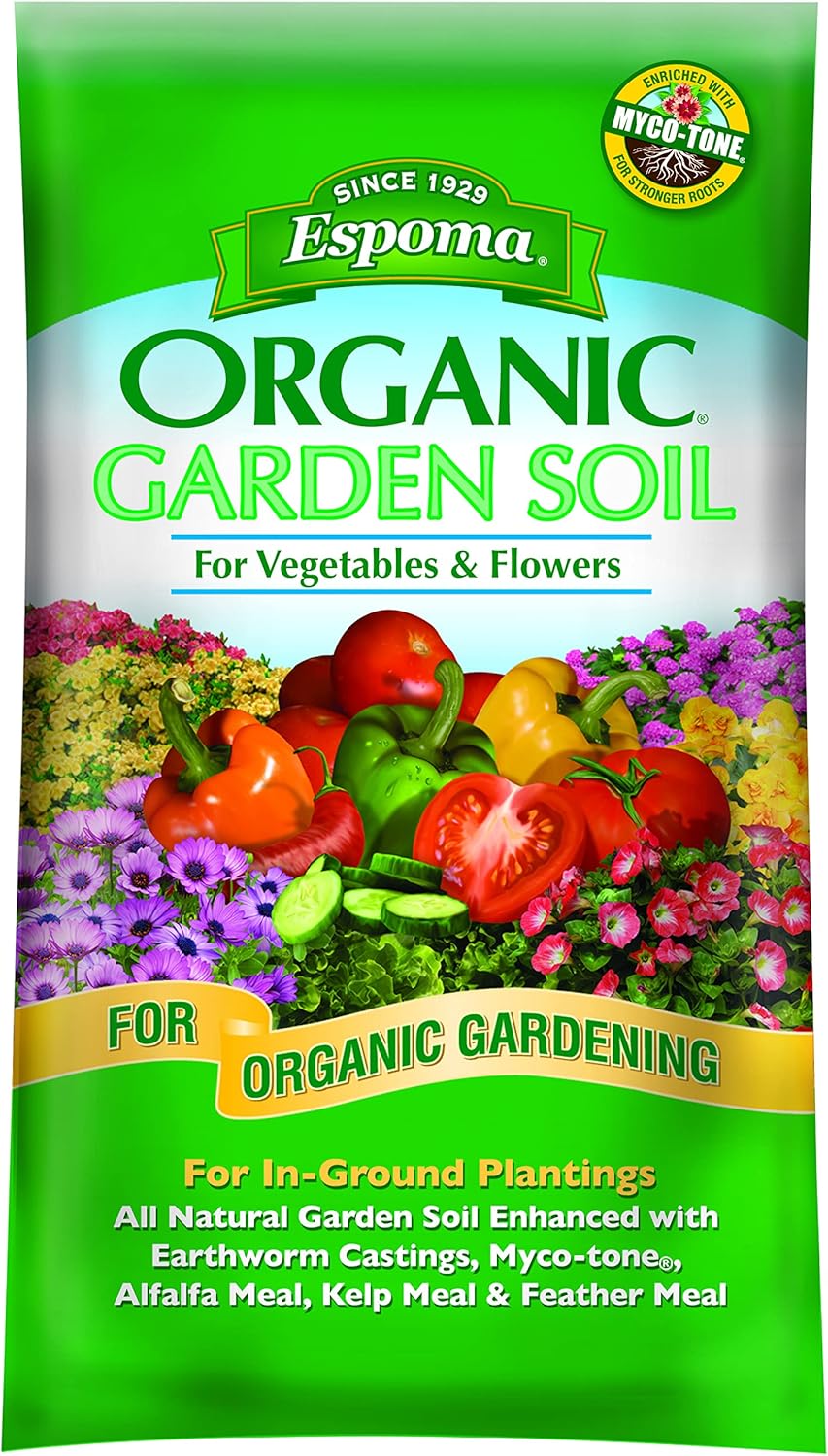
Espoma Organic Vegetable & Flower Garden Soil Mix, 1 cu ft
| Volume | 1 cubic feet |
|---|---|
| Style Name | Peat Moss |
| Unit Count | 1536 Ounce |
Espoma Organic Vegetable & Flower Garden Soil is a 1 cubic foot, peat-based planting mix designed to be blended into native garden soil at planting or transplanting. It contains Canadian sphagnum peat moss, earthworm castings, alfalfa meal, kelp meal, feather meal, limestone for pH adjustment, and a mycorrhizal blend to help root establishment. In practice you work a few inches of this mix into planting holes or rows to loosen dense soil, add organic matter, and give young squash transplants a nutrient-rich root zone. The organic amendments supply slow-release nutrients and biological activity that support early growth, while the mycorrhizae improve water and nutrient uptake. Limitations to note are the peat-heavy base, which dries faster than compost-rich mixes and may require more frequent watering, and the small 1 cu ft bag size that means multiple bags are needed for larger beds. For gardeners who prefer organic inputs and want an easy-to-use planting mix to boost transplant success, this product is straightforward and effective.
Best for: Gardeners who prioritize organic inputs and want a convenient planting mix to boost transplant success for vegetables like squash in established beds.
Less Ideal for: Large-scale landscapers or gardeners needing bulk soil amendments for entire raised beds who prefer compost-rich mixes or peat-free alternatives.
- Formulated with organic amendments like earthworm castings, alfalfa meal, kelp meal, and feather meal for slow-release nutrients
- Contains a mycorrhizal blend to support root establishment and improved nutrient uptake
- pH adjusted with limestone to better suit common garden plants
- Ready-to-use planting mix that blends easily with native soil when transplanting
- Peat-heavy base can dry out faster than compost-rich mixes, increasing watering frequency
- Small 1 cubic foot bag requires many bags for larger squash beds
Verdict: A compact, organic planting mix that makes transplanting squash easier by giving young roots nutrient-rich, biologically active soil.
Back to the Roots 3-in-1 Seed Starting Mix, 6 Quart, Organic Peat-Free

| Unit Count | 192 Fluid Ounces |
|---|---|
| Style Name | 3-in-1 Seed Starting Mix |
| Brand Name | Back to the Roots |
| UPC | 810667035822 |
This 6-quart Back to the Roots 3-in-1 Seed Starting Mix is a peat-free, organic blend aimed at making seed starting and early potting simple. You use it straight from the bag to fill trays, small pots, or starter cells; the mix includes coconut coir for water retention, dolomitic limestone to balance pH, mycorrhizae to support root uptake, and yucca extract for moisture control. Practically, that means fewer extra amendments for a new gardener and a more forgiving environment for delicate seedlings. The formula is designed to drain well while retaining enough moisture for even watering, and the included nutrients and worm castings can reduce early feeding. Limits to note are the small 6-quart volume, which is best for hobby-scale starting rather than large beds, and a lighter texture that may dry faster in very hot, exposed conditions. For budget growers who want an all-in-one starter mix without experimenting with multiple additives, this is a convenient choice.
Best for: Great for budget-minded home gardeners who want a single, ready-to-use seed starting mix that reduces extra amendments and simplifies starting herbs, vegetables, and flowers.
Less Ideal for: Not the best fit for landscapers or gardeners starting large numbers of plants or filling large containers where bulk bagged mixes would be more economical.
- Peat-free organic formula with coconut coir for moisture retention and aeration
- Includes mycorrhizae and worm castings to support early root development and nutrient uptake
- pH balancing with dolomitic limestone reduces the need for corrective amendments
- Ready-to-use blend suitable for seed trays, small pots, and indoor container starts
- Only 6 quarts per bag, so multiple bags are needed for larger projects
- Light, fast-draining texture can require more frequent watering in hot or windy conditions
Verdict: A convenient, peat-free all-in-one starter mix that saves time and extra purchases for home gardeners starting small batches of seeds.
Bumper Crop Gardner's Gold Garden Soil, 8 Quart

| Brand Name | Bumper Crop |
|---|---|
| Volume | 8 quarts |
| Style Name | Modern |
Bumper Crop Gardner's Gold is an 8-quart, ready-to-use garden soil blend designed to reduce watering and fertilizer needs while supporting plant health. The mix combines sphagnum peat moss, well-aged compost, perlite, kelp meal, dehydrated hen manure, lobster and seaweed to add organic matter and microbiology that benefit seedbeds, transplants and container-grown crops. It is OMRI listed so it fits into certified organic systems and can be pH adjusted with lime if your soil needs correction. The easy-pour bag and modest volume make it convenient for spot treatments, small raised beds, and container mixes, though a larger area will require multiple bags. Practical benefits include improved moisture retention and an immediate boost in soil biology without needing separate amendments. Limitations are the small 8-quart quantity for larger plantings and the peat component, which some growers avoid for sustainability reasons. For reliability-focused gardeners this performs as a dependable, organic-friendly soil conditioner for starting and maintaining small to medium plantings.
Best for: Gardeners who prioritize consistent, organic-friendly growing results and need a reliable, ready-to-use soil mix for containers, starters, or small raised beds.
Less Ideal for: Growers preparing large-scale crop beds or those seeking peat-free mixes for sustainable practices should consider bulk or peat-free alternatives instead.
- OMRI listed so it is suitable for organic gardening
- Blend includes compost, perlite, and kelp to improve structure, drainage, and biology
- Formulation helps retain moisture, reducing watering frequency
- Easy-pour 8-quart bag is convenient for spot applications and containers
- Small 8-quart volume makes it impractical as the sole soil source for large vegetable beds
- Contains peat moss, which some gardeners avoid for environmental reasons
Verdict: A dependable OMRI-listed soil blend that boosts moisture retention and soil biology for reliable small-scale planting and container crops.
FoxFarm Ocean Forest Potting Soil, 12 Quart

| Item Form | Granules |
|---|---|
| Specific Uses For Product | Dry Fertilizer |
| Coverage | 4.8 sq ft |
| Mixing Ratio | 1:1 |
FoxFarm Ocean Forest is a pre-mixed potting soil that combines aged forest products, sandy loam and sphagnum peat moss with organic amendments like fish meal, crab meal and earthworm castings. It is sold ready to use straight from the bag for planting in containers, seed starting or top dressing; the manufacturer recommends no additional nitrogen fertilizer for the first 30 days. The mix has a light, aerated texture that promotes drainage while still retaining moisture, and the built-in micronutrients make it practical for growers who want strong early growth without immediate feeding. Practical benefits include easy pot filling, good root zone aeration for roses in containers, and built-in organic fertility to support blooms. Limitations to consider are that the bag is best for containers or small beds only and heavier feeders may need supplemental feeding after the initial month; users should also follow handling precautions to avoid skin or eye irritation.
Best for: Gardeners who want a high-quality, nutrient-rich potting medium to get container roses or plant starts off to a strong, flowering start and prefer a ready-made organic blend.
Less Ideal for: Large in-ground rose beds or landscapers needing bulk soil amendments should look for bulk garden soil or custom rose mixes instead.
- Ready-to-use out of the bag so you can pot immediately
- Organic amendments (fish meal, crab meal, earthworm castings) supply early nutrients
- Light, aerated texture that supports drainage and root development
- pH adjusted for optimal nutrient uptake per product description
- Pack size (12 qt) covers a small area and may require multiple bags for several roses
- No long-term feeding provided after the first 30 days so additional fertilizer is needed for sustained heavy bloom
Verdict: Choose this soil if you want a ready-made, organically amended potting mix that jump-starts container roses and seedlings with good drainage and early fertility.
Back to the Roots Organic Expanding Coco Coir Potting Soil Brick (10 lb)

| Item Highlight | 10 lb compressed coco coir brick; peat-free; OMRI Listed |
|---|---|
| Item Type Name | Coconut Coir |
| Volume | 2 cubic feet |
| Ingredients | Coconut Coir |
| Style Name | Expanding Potting Soil |
This compressed coco coir brick provides a lightweight, peat-free potting medium that expands when you add water to create loose, airy substrate for containers and seed flats. It is typically used by hydrating the 10 lb block to about 2 cubic feet of coir and then using it alone for potted plants, mixing it into garden soil to improve drainage and aeration, or blending with compost for starting seeds. Notable features include OMRI listing for organic use, a balanced pH suited to a wide range of plants, and compact storage before expansion which saves space. Practical benefits are improved root aeration and water retention compared with heavy garden loam, easier handling than bulky bags, and versatility across vegetables, herbs, and ornamentals. Important limitations are that coco coir is a soilless substrate and does not supply significant nutrients on its own so you will need to add fertilizer or compost for long-term potted herbs like rosemary, and the product requires time and a water source to expand before use.
Best for: Buyers who prioritize low-risk, easy-to-handle, organic potting media and want a versatile base for container herbs and seed starting without dealing with heavy bags.
Less Ideal for: Gardeners who want a ready-to-plant, nutrient-rich potting mix out of the box or those who prefer soil with built-in slow-release fertilizer.
- Peat-free OMRI listed organic coco coir suitable for organic growing
- Expands from a compact brick to about 2 cubic feet for easy storage and transport
- pH balanced and airy texture that improves drainage and root aeration
- Versatile use: can be used alone, for seed starting, or mixed into existing soil
- Provides little inherent fertility so supplemental feeding or compost is needed for nutrient-hungry plants
Verdict: A compact, peat-free coco coir brick that expands into an airy, pH-balanced base ideal for low-risk organic container gardening and seed starting when paired with fertilizer or compost.
Choosing the Right Soil for Planting Crops: Key Factors to Consider
Soil Texture and Drainage
Texture controls how quickly water moves through the root zone and how much oxygen roots get. Sandy soils drain fast but hold little nutrient and water, so crops that prefer drier conditions or raised beds with more frequent feeding do better. Clay soils retain water and nutrients but can become oxygen-starved when compacted or overwatered, which reduces root growth and increases disease pressure.
Aim for a loamy balance for most crops. Loam combines sand, silt, and clay in proportions that support steady moisture availability, good aeration, and easier root penetration. When selecting a soil for planting crops, inspect the texture and how a sample crumbles in your hand to predict in-ground behavior.
Nutrient Retention and Release
Nutrient retention determines how often you need to feed crops and whether nutrients are available during critical growth phases. Soils high in clay and organic matter usually hold nutrients better than clean sands, reducing leaching after heavy rain. However, some organic materials temporarily immobilize nitrogen while they decompose, so consider the maturity of organic inputs.
Look for soils with a stable supply of slow-release nutrients and avoid mixes that rely solely on fast-release fertilizers. This balance prevents nutrient swings that can stress seedlings or cause excessive vegetative growth at the expense of fruiting.
Organic Matter Content and Source
Organic matter feeds soil biology, improves structure, and helps with moisture buffering. The quality of that organic matter matters: well-composted sources provide nutrients and stable carbon without tying up nitrogen, while immature manures or high-carbon raw materials can create problems.
Choose soils that list compost or well-aged organic matter as a primary component. Recognize that organic matter content will change over a season; regular additions and cover cropping are part of sustaining long-term productivity.
pH and Crop Suitability
Soil pH affects nutrient availability and the kinds of crops that will thrive. Many common vegetables and grains prefer a slightly acidic to neutral pH range. If a soil is outside the ideal range for your target crops, you will need to plan lime or sulfur adjustments before planting.
Consider how easy it will be to adjust and buffer pH in the chosen soil. Some mixes include lime or pH conditioners already, while others require testing and amendment. Stable pH helps avoid micronutrient deficiencies during critical growth stages.
Workability and On-Site Handling
Workability affects planting speed and the effort needed for bed preparation. Soils that are too heavy become difficult to till and can compact under foot, while overly coarse soils make fine-rooted transplants struggle. The right consistency lets you shape beds, transplant without tearing roots, and maintain good seed-to-soil contact.
Also factor in how a soil behaves when dry and when wet. Some mixes cake when wet or dust when dry, creating extra labor. Select soils that remain friable and easy to incorporate into your existing beds and workflows.
Disease and Weed Seed Content
Soil hygiene matters for crop health. Soils made from properly composted inputs minimize viable weed seeds and suppress many soil pathogens through competitive microbial communities. Conversely, raw or poorly composted amendments can introduce weed pressure or persistent pests.
Prioritize soils that specify composting standards or pasteurization for high-risk ingredients. Good soil management after installation, such as crop rotation and sanitation, also helps reduce disease buildup.
Matching Soil Choice to Crop Type
Different crops place different demands on soil. Root crops need loose, deep soil with minimal stones and good drainage, while leafy greens tolerate richer, more moisture-retentive mixes. Fruiting crops often need higher nutrient-holding capacity and stable pH to support flowering and fruit set.
Think about the crop rotation you plan and choose a soil that meets the most demanding plant in the rotation. Where feasible, make minor bed-specific amendments rather than changing the entire garden soil type.
- Root crops: deep, loose, low-compaction loam
- Leafy greens: steady moisture, moderate fertility
- Fruiting crops: higher nutrient retention and stable pH
Amending Existing Garden Soil
You can often improve native soil by adding targeted amendments rather than replacing it. Incorporating well-aged compost, coarse sand or grit for drainage, and a modest amount of well-broken organic matter can shift texture and fertility without heavy excavation.
Perform a simple jar test to estimate current texture and a basic soil test for pH and key nutrients before making large changes. Address the biggest limiting factor first, whether that is drainage, compaction, or low organic matter.
- Jar test to gauge sand-silt-clay proportions
- Add coarse materials to improve drainage in heavy soils
- Topdress with compost annually to maintain organic matter
Preparing Seedbeds and Transplanting
Seedbeds require fine, evenly textured soil so seeds have consistent contact and moisture. Avoid soils with large clumps or excessive coarse material in the top inch where seeds sit. For transplants, ensure the root ball will sit at the correct depth and that the surrounding soil provides both moisture and oxygen.
For small-scale plantings, use a screened or sifted top layer to improve seed-to-soil contact. In larger plots, rotary tilling followed by a light harrow can create a suitable seedbed while minimizing compaction.
- Screen top layer for fine seedbeds
- Set transplants at correct depth to encourage root spread
- Light cultivation reduces compaction without destroying structure
Maintaining Soil Health Over the Season
Soil you plant with is not a set-and-forget material. Regular feeding, timely cover cropping, and adding organic matter after harvest maintain structure and nutrient cycles. Mulching conserves moisture and reduces surface compaction from rain.
Plan for seasonal inputs that replenish what crops remove. Quick-growing cover crops can rebuild organic matter and protect soil from erosion between plantings.
- Use cover crops to protect and rebuild soil
- Topdress with compost after heavy feeding crops
- Mulch to preserve moisture and reduce crusting
Testing and Adjusting pH and Nutrients
A simple soil test early in the planning stage reveals pH and baseline nutrient levels. Tests guide lime or sulfur applications and identify whether phosphorus, potassium, or other nutrients are deficient. Correcting pH takes time, so start adjustments a few months before planting where possible.
Follow test recommendations rather than guesswork. Overapplication of amendments can create new imbalances and reduce the soil's biological resilience.
- Test pH and key nutrients before major soil changes
- Start pH adjustments well ahead of planting
- Apply nutrients based on crop needs and test results
How We Chose the Best Soil for Planting Crops
We focused on practical, garden-tested attributes that matter for planting crops. Selection prioritized soil mixes and amendments that deliver consistent drainage, reliable nutrient-holding capacity, and a structure that supports healthy root systems across a range of crop types. We looked for mixes with stable organic matter sources that feed soil life without locking up nutrients or causing waterlogging. Evaluation criteria included texture and drainage behavior, nutrient retention and release, organic matter quality and content, and suitability for common crop types and planting methods. We also considered handling and on-site workability so soils are feasible to use in raised beds, in-ground rows, and larger field plots. Soils requiring excessive additives or intensive preconditioning were excluded, as were blends with vague or unverifiable ingredient lists. Excluded items included straight topsoil with no amendments and experimental proprietary blends lacking ingredient transparency. The end result is a group of soils and blends that gardeners can use with minimal adjustment and that perform predictably for most garden crops.
FAQ
What texture is best for general vegetable crops?
A loamy texture that balances sand, silt, and clay is best for many vegetables because it holds moisture and nutrients while providing good drainage and aeration for roots.
How often should I add compost to beds planted with crops?
Adding a thin layer of well-aged compost once or twice a year is common practice. Heavy feeders may benefit from additional topdressing at midseason, while lighter feeders need less frequent additions.
Can I use potting mix to plant crops in raised beds?
Potting mixes are usually formulated for containers and may not have enough structure or long-term nutrient retention for in-ground beds. For raised beds, choose mixes designed for bed planting or amend potting mix with compost and mineral grit for stability.
How do I fix soil that compacts easily?
Reduce foot traffic, add organic matter, and incorporate coarse particles like sand or grit if drainage is poor. Deep-rooted cover crops and minimal tillage help break up compaction over time.
Is screened topsoil necessary for tiny seeds?
Screened topsoil or a sifted fine layer improves seed-to-soil contact and moisture consistency for small seeds. In larger plots, light raking can achieve similar results if screening is impractical.
Final Verdict
Choosing soil for planting crops means balancing drainage, nutrient retention, and organic matter to suit the crop types and the site. Prioritize a texture that matches your crops, a stable source of organic matter, and a soil pH that supports nutrient availability. Expect to maintain and tweak the soil over seasons rather than relying on a single installation. Focus on the tradeoffs most important to your garden: ease of handling and drainage for root crops, higher nutrient-holding for fruiting vegetables, or lighter mixes for quick turnover beds. With clear priorities, you can select a soil that reduces extra inputs and helps crops establish quickly.
