

Note: This article contains affiliate links. If you click on these links and make a purchase, I may earn a small commission at no extra cost to you. This helps support my research and content. Read my full affiliate disclosure here.
Picking the right budget pond liner matters because the liner is the barrier that keeps water in and plants and fish healthy. In a small or cost-sensitive pond project, a liner that tears easily or is hard to shape will create headaches during installation and more maintenance later. This guide looks at seven shortlisted budget pond liners chosen for common garden and patio pond needs. We assess durability, ease of installation, material behavior in sunlight and cold, and how each liner performs where plants or fish are present. Read on for practical, gardener-focused evaluation to help you pick the most reliable budget solution for your pond project.
Top Picks at a Glance
| Best Overall The best all-around choice for most situations | DGSL 20 mil HDPE Pond Liner, 7 x 10 ft |  |
| Best Quality Built to a higher standard if you want something more solid | Coocure 15 x 20 ft Reinforced PE Pond Liner, 28 mil |  |
| Best Value The sweet spot between price and what you get | Adroiteet 10 x 10 ft HDPE Pond Liner, 20 mil |  |
| Best Budget The cheapest option that still gets the job done reliably | Adoture 7 x 10 ft HDPE Pond Liner, 0.1 mm Waterproof |  |
| Highest Rated A top-rated pick with lots of positive feedback | VANITURE HDPE Pond Liner 7.1 x 10.1 ft |  |
| Most Popular A crowd favorite that many people choose with confidence | UWIOFF 20 mil HDPE Pond Liner, 10 x 13 ft |  |
| Best Seller A high-volume bestseller chosen again and again | ToLanbbt HDPE Pond Liner, 7 x 10 ft, 20 mil UV-Resistant |  |
DGSL 20 mil HDPE Pond Liner, 7 x 10 ft

| Material | HDPE |
|---|---|
| Thickness | 20 mil |
| Intended use | Water gardens, fish ponds, retention ponds |
| Manufacturer | DGSL |
This DGSL pond liner is a 20 mil HDPE sheet intended for small to medium DIY ponds and water features. It is flexible and relatively puncture resistant, so it conforms to irregular shapes and can be used for retention ponds, garden ponds, and small waterfalls with gentle slopes. Typical use is to prepare a smooth, well-graded hole or form, lay an underlayment, position the liner with some slack, and trim or tuck excess before adding edging and water. The HDPE material resists stress cracking, tears, and microbial degradation better than thinner plastics, and the product description emphasizes long-term outdoor durability. Practical benefits include straightforward installation for hands-on homeowners, suitability for irregular contours, and compatibility with a pebble underlayer to protect the membrane. Important limitations are that the 20 mil thickness is lighter than commercial-grade EPDM or thicker HDPE options, so it may be less forgiving of sharp rocks or heavy foot traffic, and the listed size (7 x 10 ft) restricts use to smaller ponds where seams are not required.
Best for: Homeowners and DIY gardeners who want an affordable, easy-to-install liner for a small backyard pond or water feature and prefer a durable, low-maintenance material.
Less Ideal for: Larger ponds or projects that need heavy foot traffic tolerance or professional-grade, seam-required installations should consider thicker commercial liners or professional solutions.
- 20 mil HDPE resists stress cracking and microbial degradation for outdoor use
- Flexible sheet conforms to irregular pond shapes and smooth contours
- Sized for DIY installation and straightforward to position and trim
- Compatible with underlayment and pebble protection to extend service life
- 20 mil thickness is thinner than heavy-duty commercial liners and less tolerant of sharp substrate
- Single-piece size limits it to small ponds unless seams are planned
Verdict: A budget-friendly 20 mil HDPE liner that gives DIY gardeners a durable, easy-to-install option for small backyard ponds.
Coocure 15 x 20 ft Reinforced PE Pond Liner, 28 mil

| Material | Reinforced thermoplastic PE (three-layer with woven HDPE core) |
|---|---|
| Thickness | 28 mil |
| Size | 15 x 20 ft |
| Edges | Hemmed edges with corner buttonholes |
This Coocure 15 x 20 ft pond liner is a reinforced thermoplastic PE sheet intended for DIY garden ponds and small waterscapes. It is advertised as a three-layer construction with a woven HDPE core and reinforced PE faces, and the 28 mil thickness gives it noticeable tear and puncture resistance compared with thin plastic sheets. Typical use is to underlay the excavation, spread and shape the liner into the hole, anchor the hemmed edges with rocks, and fill the pond gradually so the liner settles to the slopes. Practical features include hemmed edges for neater anchoring and corner buttonholes for easy fixing. The material is softer and more flexible than stiff HDPE, which makes it easier to mold into irregular shapes and trim to size. Limitations to expect are that 28 mil is protective but not invulnerable against sharp rocks or long-term direct sun exposure, so a protective underlayment and some shading will extend life. The liner should be treated as a durable budget option rather than an indestructible permanent membrane.
Best for: Buyers who want a budget-friendly, performance-minded liner that is easier to shape for DIY koi or garden ponds and who prioritize tear resistance over premium membrane longevity.
Less Ideal for: Those building large commercial ponds or seeking the longest-lasting professional-grade membrane should consider thicker EPDM or welded PVC alternatives.
- Three-layer reinforced construction with woven HDPE core for improved tear resistance
- 28 mil thickness offers better puncture resistance than thin pond sheets
- Hemmed edges and corner buttonholes simplify anchoring and installation
- Material is softer and more flexible than stiff HDPE, easier to shape for DIY ponds
- Not a heavy-duty EPDM or PVC liner so may wear faster with prolonged sun exposure or contact with sharp objects
- Manufacturer lifespan claim conditional on limited sun exposure and proper underlayment
Verdict: A practical, budget-oriented reinforced PE liner that delivers improved tear resistance and easier handling for DIY garden and koi ponds.
Adroiteet 10 x 10 ft HDPE Pond Liner, 20 mil

| Material | HDPE |
|---|---|
| Thickness | 20 mil |
| Shape | Sheet |
| Intended use | Outdoor ponds, fountains, waterfalls |
This Adroiteet 10 x 10 ft HDPE pond liner is a straightforward, heavy-duty sheet intended to keep water contained for small backyard ponds, fountains, or waterfalls. Made from 20 mil HDPE, the liner resists punctures and UV damage better than thin LDPE options, so it is suited for installations that need longer service life. Typical use is to shape and seat the liner into an excavated pond or over a preformed basin, trimming excess and covering edges with soil or stone. The material is flexible enough for modest shaping but still robust, which helps reduce the need for frequent repairs. Because it is a single-sheet liner with no preformed features, installation requires basic prepping such as smoothing the hole, adding an underlayment, and securing the edges. Size limits it to smaller projects or as a patch for larger liners. Expect a durable, low-maintenance water barrier if you follow standard installation practices, but plan for the manual work of fitting and edge treatment yourself.
Best for: Buyers who want a durable, no-frills liner to build or repair a small backyard pond and who value longevity over preformed convenience.
Less Ideal for: People planning large ponds, prefabricated pond shells, or those who want a ready-to-install kit with underlayment and edge accessories.
- 20 mil HDPE construction for improved puncture and UV resistance compared with thinner liners
- Simple single-sheet design that is easy to cut and fit to irregular shapes
- Suitable for ponds, waterfalls, and fountains so it works across common backyard water features
- Limited to a 10 x 10 ft coverage so not suitable for larger ponds without seams or overlaps
- No integrated underlayment or edge finishing supplied so additional materials and labor are required
Verdict: A rugged 20 mil HDPE sheet that gives practical, long-lasting waterproofing for small budget pond projects.
Adoture 7 x 10 ft HDPE Pond Liner, 0.1 mm Waterproof

| Material | HDPE |
|---|---|
| Size | 7 x 10 ft |
| Thickness | 0.1 mm |
| Manufacturer | Adoture |
This Adoture 7 x 10 ft HDPE pond liner is a budget-focused, cut-to-size sheet meant to stop seepage for small backyard ponds, waterfalls, and water-storage uses. In practice it serves as a basic impermeable layer you trim to shape, lay over an excavated or prepared base, and cover with underlay and decorative stone. Notable features include a UV-resistant, corrosion-resistant HDPE film marketed as fish-safe and a reinforced structure that tolerates some ground irregularity. The liner is very lightweight and highly flexible, which makes handling and DIY installation straightforward for one or two people, but it also means it is thinner than heavy-duty EPDM or thick PVC alternatives. That lower thickness reduces puncture resistance on rocky or root-filled sites, so careful site prep and a protective underlayment are essential. For small projects where cost and ease of cutting matter more than maximum durability, this liner provides a practical, affordable solution.
Best for: Buyers looking for the lowest-cost liner for a small DIY pond, waterfall, or water-storage project who plan to do careful site prep and want an easy-to-cut, lightweight material.
Less Ideal for: People building larger ponds, long-term koi systems, or installations on uneven, rocky ground where a thicker, more puncture-resistant liner would be required.
- Affordable lightweight HDPE material suitable for budget installations
- Flexible and easy to cut to custom pond shapes for DIY projects
- UV and corrosion resistant for outdoor use and claimed fish-safe
- Foldable and easy to handle during installation
- Very thin material offers less puncture and tear resistance than thicker liners
- Not ideal for rocky or root-heavy sites without substantial underlayment
Verdict: A very affordable, easy-to-cut HDPE liner best suited to small DIY ponds where careful site prep compensates for its thin construction.
VANITURE HDPE Pond Liner 7.1 x 10.1 ft

| Material | HDPE |
|---|---|
| Size | 7.1 x 10.1 ft |
| Capacity (approx) | Holds up to 210 gallons |
This VANITURE HDPE pond liner is a budget-minded option for small water features and koi ponds. Made from HDPE, it is softer and more flexible than heavier rubber liners, so it conforms to irregular shapes and is easy to trim to fit; the listing notes it holds about 210 gallons at the stated size. Typical use is straightforward: lay the liner into a prepared hole, smooth it to the contours, and add underlayment or rounded stones as recommended to protect against punctures. The material is described as puncture resistant and more leak-resistant than basic LDPE, which makes it suitable for longer-term outdoor use when installed on a clean, smooth base. Limitations are its lightweight construction and thin profile, so it relies on careful ground preparation and protective underlayment to avoid damage and will not provide the same puncture toughness or longevity as thicker EPDM or PVC liners used in larger ponds.
Best for: Buyers who prioritize reliable, low-cost pond protection for a small backyard water feature and who will prepare the site carefully before installation.
Less Ideal for: Not a good fit for owners building large or high-traffic ponds or those who want a heavy-duty, long-life rubber liner for koi ponds with burrowing wildlife or rough substrates.
- HDPE material offers better puncture and leak resistance than basic LDPE
- Flexible and easy to cut for custom-shaped or irregular ponds
- Lightweight and simple to handle during installation
- Suitable for multiple water features including ponds, fountains and small waterfalls
- Thin, lightweight profile requires underlayment or stone protection to prevent damage
- Small size limits use to very small ponds or as a liner for features up to about 210 gallons
Verdict: A cost-conscious HDPE liner that gives reliable puncture-resistant coverage for small backyard ponds when paired with proper underlayment.
UWIOFF 20 mil HDPE Pond Liner, 10 x 13 ft
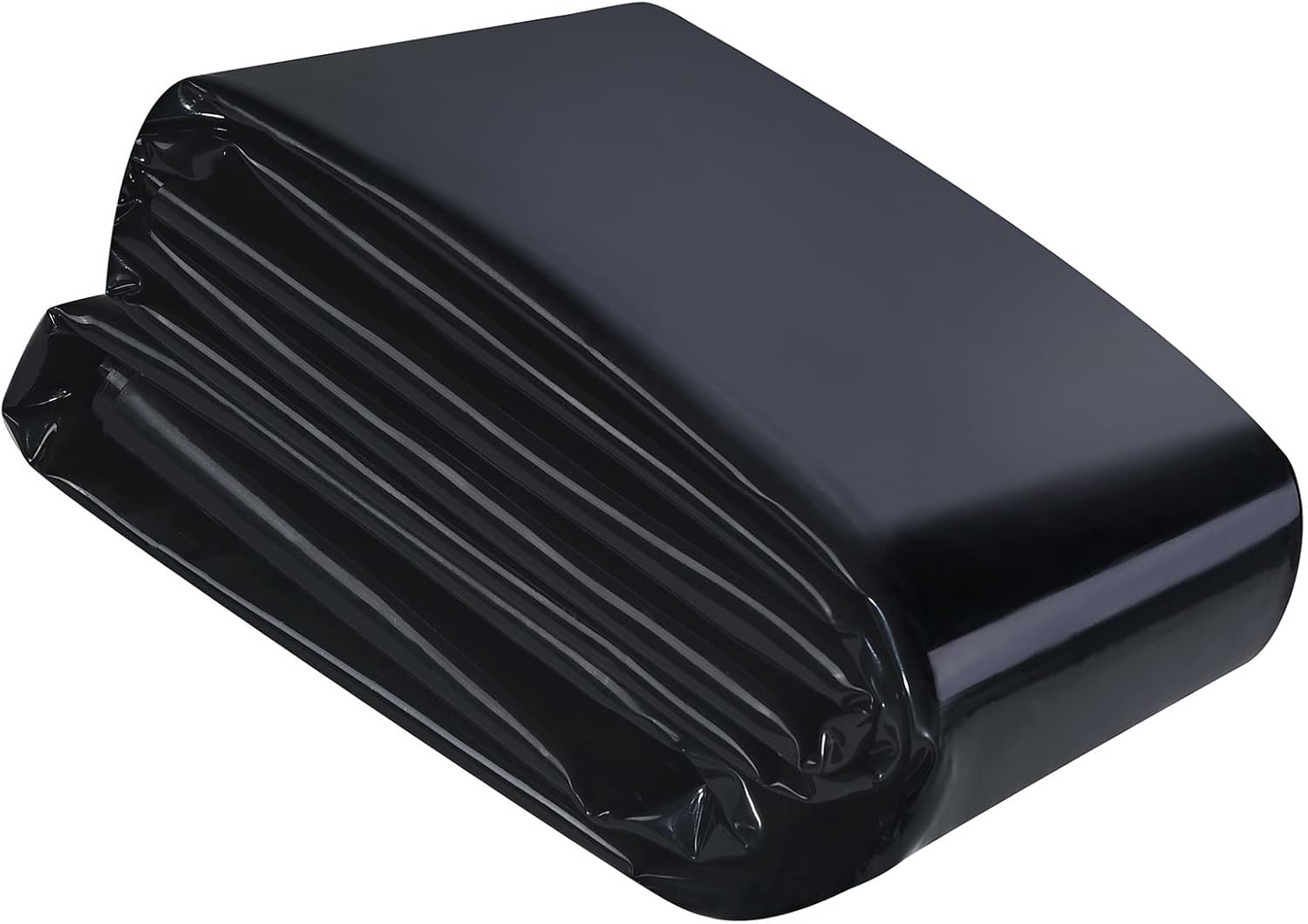
| Thickness | 20 Mil |
|---|---|
| Material | HDPE |
| Intended use | Outdoor ponds, waterfalls, water features |
| Safe for | Fish and plants |
This UWIOFF 20 mil HDPE pond liner is a heavy-duty, flexible sheet intended to form the watertight base of backyard ponds, waterfalls, or raised water features. Typical use is to cut the oversize sheet to shape, lay it over a prepared bed with underlayment, and secure the edges with stones or edging. The 20 mil thickness and HDPE material mean it resists UV exposure, punctures, and aging better than thinner LDPE sheets, so it suits installations with fish and aquatic plants. It provides a smooth, low-soil-accumulation surface that is easy to clean and helps keep groundwater and soil from contaminating the pond. The liner is available in multiple sizes so you can pick a panel close to your pond footprint or seam pieces together for larger ponds. Important limitations are that large installations require careful underlayment and seam work to avoid tears and leaks and that HDPE is less forgiving around sharp rocks or roots, so site prep matters for longevity.
Best for: Buyers who want a robust, longer-lasting pond liner and who will prepare the site properly or hire installation help for a reliable water feature.
Less Ideal for: If you need a ready-made rigid pond shell or plan quick installs over rough ground without prep, choose a molded pond or thicker professional installation instead.
- 20 mil HDPE construction offers stronger UV and puncture resistance than typical thin liners
- Smooth surface reduces soil accumulation and simplifies cleaning
- Available in multiple pre-cut sizes so you can choose a close fit or seam for larger ponds
- Suitable for fish and aquatic plants when installed with proper underlayment
- Requires careful ground preparation and underlayment to prevent punctures from rocks or roots
- Seaming multiple sheets for very large ponds adds complexity and needs proper technique
Verdict: Choose this 20 mil HDPE liner when you want a durable, UV- and puncture-resistant base for a backyard pond that will last with proper site preparation.
ToLanbbt HDPE Pond Liner, 7 x 10 ft, 20 mil UV-Resistant

| Size | 7 x 10 Feet |
|---|---|
| Material | HDPE |
| Thickness | 20 Mil |
| Manufacturer | ToLanbbt |
This ToLanbbt pond liner is a straightforward HDPE sheet sized for small ponds and water features. It is 20 mil thick, flexible enough to shape around corners and shelves, and the material is described as UV resistant and puncture tolerant so it can be used outdoors without added plasticizers. Typical use is to clean and flatten the excavation, lay the liner, trim to fit, and cover exposed edges with pebble or edging material; the manufacturer also recommends removing sharp stones or debris before installation. The liner’s thin, lightweight construction makes it easy to handle and cut to irregular shapes, and its waterproof, impermeable surface helps keep soil and contaminants out of the pond. Limitations are that 20 mil HDPE is not as durable as heavier EPDM or reinforced PVC liners for areas with heavy foot traffic or large koi and it offers less protection against sharp objects unless an underlayment is used. For a budget build or a small decorative pond, this liner provides a simple, usable solution but expect to add protections if you need longer-term durability.
Best for: Buyers who need an economical, easy-to-handle liner for a small decorative pond, fountain, or water garden and prioritize low cost and simple installation.
Less Ideal for: Gardeners planning large koi ponds, heavy foot traffic around the pond, or long-term, high-durability installations should consider thicker or reinforced liners instead.
- 20 mil HDPE material offers good flexibility for shaping around corners and shelves
- UV resistant and advertised as puncture tolerant for outdoor use
- Lightweight and easy to cut to fit irregular pond shapes
- Waterproof surface prevents soil and contaminants from seeping into the pond
- 20 mil thickness is thinner than heavy-duty EPDM liners and may wear faster in high-abrasion situations
- Requires careful site preparation or an underlayment to avoid punctures from sharp stones
Verdict: A budget-friendly, easy-to-cut 20 mil HDPE liner that works well for small decorative ponds and simple DIY water features.
Choosing the Right Budget Pond Liner: Key Factors to Consider
Material and Thickness
The liner material and nominal thickness determine how well it resists punctures from rocks, roots, and garden tools. Thicker materials generally offer better longevity, but the listed thickness can be measured in different ways, so look for specified gauge or mil ratings and clear material type. A flexible, puncture-resistant material will reduce the chance of tears during edging and planting.
Material choice also affects chemical stability and compatibility with pond life. Some liners are formulated to be fish- and plant-safe, while others use additives that may be questionable for long-term aquatic health. Consider the tradeoff between cost and a slightly thicker, safer material for a long-lasting pond.
Flexibility and Ease of Shaping
A liner that is easy to drape and shape will make a DIY installation far faster and cleaner. Flexible liners conform to contours and can accommodate shelves for planting or varied depths for fish. Stiffer or very heavy liners are harder to handle and may require more hands or tools during installation.
Flexibility matters most for irregular or multi-tiered ponds. For shallow, uniformly shaped stock ponds, stiffness is less of an issue. If you plan to install faux rock edging or fit the liner around plants, prioritize a liner that stretches and folds without kinking.
UV Resistance and Temperature Performance
Sunlight and freeze-thaw cycles degrade some liners over time. UV-resistant formulations and pigments slow surface breakdown when the liner is exposed to direct sun at the waterline or on exposed shelves. Cold-hardy liners remain flexible in winter and resist cracking when the ground shifts.
If the pond will be partially exposed to sun or located in a climate with cold winters, choose a liner with demonstrated UV and low-temperature performance. For fully shaded ponds or indoor installations, these factors are less critical but still worth noting for longevity.
Installation Practicalities
Installation concerns include liner size options, how seams are handled, edge protection needs, and whether basic adhesives or tapes are compatible. Pre-cut, large sheets reduce seams but can be heavy to position. Overlap and seam type affect leak risk in larger or custom-shaped ponds.
Also evaluate whether the liner can be secured under edging without wrinkling and whether it tolerates common ground-prep layers like underlay fabrics or sand. Ease-of-installation translates to less time and fewer errors for gardeners working without professional help.
Repairability and Long-Term Maintenance
Even durable liners can be punctured, so repairability matters. Some materials accept patch kits and adhesives more readily than others. Look for liners with compatible patch systems or adhesives and clear manufacturer instructions for on-site repairs.
Maintenance habits also affect lifespan. Liners that can be patched quickly and invisibly reduce long-term costs and lower the risk of total failure. Consider how easy it will be to access problem areas and whether the liner tolerates routine cleaning or pond treatments.
Preparing the Pond Site
Site preparation sets up every other decision. Remove sharp rocks, roots, and debris before placing an underlay to prevent punctures. For small garden ponds, a layer of sand or a geotextile underlay evens the surface and cushions the liner.
Plan for edging and access. Leave enough overhang to secure the liner under stones or coping, but avoid excessive slack that will crease and trap sediment. If the pond has shelves for plants, outline their positions on the subgrade so the liner will conform without excessive folding.
- Clear and level the excavation of sharp objects
- Use geotextile underlay or a sand bed for cushioning
- Mark plant shelves and depth transitions before placing the liner
Seams, Overlaps, and Larger Installations
For ponds larger than a single sheet, seams are unavoidable. Proper overlap and seam technique reduces leakage risk. Overlap seams by the recommended distance and use compatible adhesives or welding techniques where specified for the material.
When possible, minimize seams in high-stress areas such as corners or shelves. A single large sheet is ideal, but when seams are necessary, place them on sloped faces rather than at the basin bottom to reduce wear from settled debris.
- Follow manufacturer overlap recommendations
- Place seams away from the pond bottom when feasible
- Use compatible seam adhesives or welding for the liner material
Edge Finishing and Landscaping Integration
How you finish the liner edge affects appearance and longevity. Conceal edges under flat stones, coping, or soil to protect against UV exposure and mechanical damage. Avoid using sharp-edged rocks directly against the liner without a protective layer.
Think about plant placement and access for maintenance. Allow gaps or removable sections of edging for pump access and routine cleaning. Integrating edging with the liner early in the build prevents having to lift the liner later.
- Cover exposed liner edges to reduce UV exposure
- Create removable access zones for equipment and maintenance
- Use a protective layer between sharp decorative stones and the liner
Repair and Winter Care
Keep a basic repair kit on hand with patches and compatible adhesive. Small punctures are usually easy to fix when found early. Clean the area and follow patch instructions closely to ensure a watertight repair.
For cold climates, avoid leaving heavy ice pressure directly against the liner edge. Provide areas for ice to expand or use floating cold-weather covers to reduce stress. Inspect the liner in spring to catch seam failures or abrasion from winter movement.
- Inspect the liner seasonally and after major storms
- Patch small holes promptly using compatible repair materials
- Manage ice pressure to avoid stress on edges and seams
Compatibility With Plants and Fish
Select a liner material that is known to be safe for plants and fish if you plan to stock your pond. Some liners are formulated to avoid leaching harmful chemicals. If you are uncertain, add a conditioner or allow the pond to cycle before introducing sensitive species.
Consider how shelves and planting pockets affect liner wear. Planted shelves increase handling during installation and may require thicker material or more careful edge protection to prevent punctures from rooted plants.
- Confirm material safety for aquatic life when relevant
- Allow new liners to weather or be conditioned before adding fish
- Protect planting shelves with additional underlay where roots will press against the liner
How We Chose the Best Budget Pond Liner
We prioritized liners that balance low cost with real-world durability and installation practicality. Our selection filters focused on material construction, thickness and puncture resistance, flexibility for shaping in small and irregular ponds, UV and cold-weather stability, and compatibility with pond plants and fish. We also considered how easy a liner is to repair and how straightforward it is to fit without specialized tools. Exclusions included very thin decorative sheets unsuited for outdoor ponds, products intended only for temporary containment, and liners that lack clear material specifications or homeowner-focused installation guidance. The criteria we used emphasize measurable gardener concerns: tear and puncture resistance, stretch and flexibility during shaping, UV and temperature performance, installation friendliness, and repairability. Those same dimensions guided which liners made the final shortlist.
FAQ
What thickness should I choose for a budget pond liner?
Often thicker liners resist punctures better, but the ideal thickness depends on site conditions. For garden ponds with rocks and plant shelves, choose a heavier gauge or mil rating; for very small, protected ponds, a lighter gauge may be acceptable.
Can I install a budget liner by myself?
Usually yes for small to medium ponds. Flexibility and manageable sheet sizes make solo installation feasible, though large sheets may need an extra pair of hands to position without wrinkles.
How do I repair a tear in a pond liner?
Clean and dry the area, then apply a patch compatible with the liner material following the patch kit instructions. For larger or seam-related damage, use a larger patch and overlap the repair well to redistribute stress.
Will a budget liner last through freezes and summer sun?
It depends on the liner's UV and cold resistance. Some budget materials include UV stabilizers and remain flexible in cold weather, while others degrade faster. Choose a liner rated for outdoor exposure if your pond sees direct sun or freezing temperatures.
Do I need an underlay beneath the liner?
Usually yes. An underlay cushions the liner against rocks and roots and improves puncture resistance. Geotextile or a layer of sand are common and inexpensive options to protect the liner and simplify installation.
Are all liners safe for fish and aquatic plants?
Not all are created equal. Some liners are formulated to be fish- and plant-safe while others may contain additives. If you plan to add fish or sensitive plants, choose a liner that specifies aquatic compatibility or condition the pond before stocking.
Final Verdict
For budget-focused pond projects, prioritize a liner that balances puncture resistance with ease of installation. Thicker, UV-stable materials are worth considering when the pond will see sun exposure or will have planted shelves. If DIY installation is important, favor flexible sheets that are easy to shape and repair. Weigh the tradeoffs between upfront cost and long-term maintenance: a slightly more robust liner can reduce repair headaches. Focus on material specs, installation practicality, and repairability to choose the best budget pond liner for your situation.
