

Note: This article contains affiliate links. If you click on these links and make a purchase, I may earn a small commission at no extra cost to you. This helps support my research and content. Read my full affiliate disclosure here.
A wheelbarrow planter is a charming, mobile container that brings instant character to patios, porches, and small garden corners. Choosing the right plants matters because the shallow soil depth, limited root volume, and the container's mobility change watering, feeding, and winter care compared with in-ground beds. You want plants that tolerate the container environment, display proportionate growth, and either spill, fill, or provide structure without quickly overwhelming the wheelbarrow. This guide shortlists seven garden-ready options that suit wheelbarrow planters across sun exposures and seasons. We evaluated each pick for sun tolerance, drought response, growth habit, and maintenance needs so you can match plants to your specific wheelbarrow site and schedule.
Top Picks at a Glance
| Best Overall The best all-around choice for most situations | SD Succulent Growers Live Trailing Succulent 4-Pack (2" Pots) |  |
| Best Quality Built to a higher standard if you want something more solid | Altman Plants 2" Live Succulent Pack, Assorted (6-Count) |  |
| Best Value The sweet spot between price and what you get | Sprout N Green Live Assorted Succulents 5-Pack in 2" Starter Pots |  |
| Best Budget The cheapest option that still gets the job done reliably | Sow Right Seeds Rainbow Coleus Seeds (800 Count) |  |
| Highest Rated A top-rated pick with lots of positive feedback | CitronellaKing Santa Barbara Mexican Sage (Salvia leucantha) — 2 Live Starter Plants |  |
| Most Popular A crowd favorite that many people choose with confidence | HOME GROWN Rainbow Mix Coleus Seeds (approx. 400) |  |
| Best Seller A high-volume bestseller chosen again and again | KVITER Rainbow Coleus Seeds — 1,600 Heirloom Coleus (Plectranthus scutellarioides) |  |
SD Succulent Growers Live Trailing Succulent 4-Pack (2" Pots)

| Indoor Outdoor Usage | Indoor |
|---|---|
| Other Special Features of the Product | Low Maintenance |
| Sunlight Exposure | Partial Sun |
| Soil Type | Sandy Soil |
| Moisture Needs | Moderate Watering |
These trailing succulents arrive as small, well-rooted starter plants in 2-inch pots intended for hanging baskets, shelves, or container displays outdoors. The pack is a mystery assortment that commonly includes varieties such as String of Pearls, Ruby Necklace, Burro's Tail, and other cascading species, so you get mixed textures and colors for a layered look. They are grown for bright, indirect light and need sandy, fast-draining soil with watering only after the mix dries, which makes them low maintenance once established in a pot. Practical benefits include quick visual impact in hanging pots, easy propagation from cuttings as the trails lengthen, and suitability for north or east-facing locations that avoid harsh afternoon sun. Limitations are that plants arrive small and may need repotting to show their trailing habit, and because this is a mystery pack you may receive duplicates or species that prefer slightly different care. Expect an initial rest period after delivery and plan to acclimate them before placing in permanent outdoor pots.
Best for: Gardeners who want an easy, space-efficient way to add cascading texture to outdoor pots and hanging displays and who value low-maintenance plants they can quickly multiply.
Less Ideal for: Buyers seeking large, mature trailing specimens ready to fill a planter immediately or customers who need a specific named variety for a matched display.
- Hand-selected trailing varieties provide immediate cascading interest for hanging pots
- Arrives well rooted and ready to repot or display in hanging baskets
- Low maintenance when planted in sandy, fast-draining soil with infrequent watering
- Good material for propagation to expand displays from cuttings
- Plants are starter size in 2-inch pots and often need repotting to develop full trailing habit
- Mystery assortment can include duplicates or species you might not prefer
Verdict: Choose this 4-pack if you want an inexpensive, low-maintenance way to add cascading succulents to outdoor pots and hanging displays and easily propagate more plants.
Altman Plants 2" Live Succulent Pack, Assorted (6-Count)

| Indoor Outdoor Usage | Indoor, Outdoor |
|---|---|
| Other Special Features of the Product | Compact, Drought Tolerant, Low Maintenance |
| Sunlight Exposure | Full Sun |
| USDA Hardiness Zone | 10, 9 |
| Moisture Needs | Little To No Watering |
This 6-pack from Altman Plants provides six individually potted, fully rooted 2-inch succulents chosen from a wide roster of hardy genera. The plants arrive dry in plastic nursery pots to avoid shipping rot and are ready to be watered and placed in bright, sunny locations indoors or outdoors in suitable climates. Typical uses include starting a small container garden, filling a terrarium, creating party favors, or adding desk decor; the mixed assortment ensures visual interest without duplicates. Notable features are the plant breeder's large variety pool, drought-tolerant varieties that need minimal watering, and handpicked selections that simplify initial care for beginners. Practical benefits include quick establishment in pots or arrangements and low maintenance for users who want attractive plants without frequent watering. Limitations are the small 2-inch pot size at purchase, which means many buyers will need to replant to larger pots as the succulents grow, and the exact varieties are randomized so you cannot choose specific cultivars.
Best for: Buyers who want a dependable, low-maintenance starter collection of attractive succulents for easy displays, gifts, or small container gardens without fussing over exact plant selection.
Less Ideal for: Gardeners seeking large, mature specimens or those who need specific named cultivars for a curated collection should look elsewhere.
- Six fully rooted, handpicked succulents delivered dry to reduce shipping damage
- Assorted varieties provide color and textural contrast for displays
- Drought-tolerant and low-maintenance, suitable for busy or beginner plant owners
- Versatile for indoor or outdoor placement in appropriate light conditions
- Plants arrive in small 2-inch nursery pots and will need repotting as they grow
- Specific varieties are randomized so you cannot select exact cultivars
Verdict: Choose this six-pack if you want a worry-free, handpicked assortment of small, drought-tolerant succulents that are ready to grow into decorative pots or arrangements.
Sprout N Green Live Assorted Succulents 5-Pack in 2" Starter Pots

| Indoor Outdoor Usage | Indoor, Outdoor |
|---|---|
| Other Special Features of the Product | Drought Tolerant, Low Maintenance |
| Sunlight Exposure | Partial Shade |
| Soil Type | Succulent & Cacti Soil Mix |
| USDA Hardiness Zone | 9a-11b |
These Sprout N Green succulents are a practical starter set for anyone wanting low-effort houseplants or small outdoor accents. The pack contains five assorted small succulents in 2-inch nursery pots with a soil mix suited for succulents and cacti. They are intended for partial shade and moderate watering, and the product guidance emphasizes watering only when the soil is dry and using fast-draining gritty mix for longer-term growth. Typical uses include windowsill displays, terrariums, tabletop arrangements, favors for events, and DIY potting projects. Strengths are their drought tolerance and minimal care needs, which make them easy to keep healthy with occasional watering and indirect light. Limitations are the small nursery-pot size on arrival, so you should plan to repot into larger containers or group them for lasting growth, and the assortment means you may not receive specific named varieties. For a buyer focused on efficient, functional plants these succulents offer quick decorative impact with straightforward care, but real long-term development requires repotting and brighter light or seasonal outdoor exposure.
Best for: Someone who wants easy-care, space-efficient plants for home decor, small container gardens, or event favors and prefers quick, low-maintenance greenery over named collector varieties.
Less Ideal for: Gardeners seeking mature specimen plants, large displays, or exact cultivar selection should look for larger, named plants or nursery stock instead.
- Comes with five assorted live succulents ready in nursery pots for immediate display or gifting
- Low maintenance and drought tolerant so they require only infrequent watering
- Supplied with a succulent and cacti soil mix recommendation for better drainage and root health
- Versatile for indoor or sheltered outdoor use and suitable for terrariums, windowsills, or small planters
- Plants arrive in small 2-inch nursery pots and will need repotting for long-term growth
- Assortment means buyers cannot choose specific varieties and may receive duplicates
Verdict: A convenient five-pack of hardy, low-maintenance succulents that gives immediate decorative greenery with minimal care required.
Sow Right Seeds Rainbow Coleus Seeds (800 Count)

| Unit Count | 800 Count |
|---|---|
| Plant or Animal Product Type | Plectranthus scutellarioides |
| Sunlight Exposure | Partial Sun |
| Expected Blooming Period | Spring to Summer |
| Material Features | GMO Free, Heirloom |
These Rainbow Coleus seeds come in a large packet (about 800 seeds) and are aimed at gardeners who want bright, foliage-focused plants for containers or shaded beds. Coleus is grown for its colorful leaves rather than flowers and this mix produces a wide range of yellow, pink, green, red and maroon patterns that show well in pots and hanging baskets. The packet lists a high germination rate and seedlings typically emerge in 10 to 14 days at soil temperatures around 70 to 75°F. Directions call for shallow planting and spacing appropriate for container culture; mature plants reach roughly 18 to 30 inches tall so they make a substantial potted specimen or companion plant. Because these are non-GMO heirloom seeds sold in a bulk packet, you get many plants for your investment which is useful when filling multiple containers. Limits to expect are typical for coleus: they prefer partial shade and warm conditions and are tender in cold weather, so they need protection or to be brought indoors in cool climates.
Best for: Gardeners who want an affordable way to mass-fill outside pots with colorful, shade-friendly foliage and who prefer growing many plants from seed rather than buying individual transplants.
Less Ideal for: Someone who needs uniform, predictable single-color plants from the start or who wants immediate mature plants without waiting for seed-grown development.
- Very large seed count (about 800) gives good value for filling multiple pots or containers
- Non-GMO heirloom seeds suitable for saving and replanting
- High germination rate and clear planting instructions for quick establishment
- Shade-tolerant foliage plant that performs well in partial sun pots and hanging baskets
- Tender to cold and not suitable for frost-prone outdoor locations without protection
- Packet contains a mix so you cannot predict exact colors or patterns for each plant
Verdict: A budget-friendly way to fill outside pots with vibrant, shade-tolerant coleus foliage by growing many plants from a single large packet of heirloom seeds.
CitronellaKing Santa Barbara Mexican Sage (Salvia leucantha) — 2 Live Starter Plants

| Indoor Outdoor Usage | Outdoor |
|---|---|
| Expected Blooming Period | Summer, Fall |
| Sunlight Exposure | Full Sun to Partial Shade |
| USDA Hardiness Zone | 8-11 |
| Moisture Needs | Moderate Watering |
These two Santa Barbara Mexican sage starters arrive ready to plant and provide an easy, reliable option for sunny planters and borders. The plants form compact, aromatic mounds with soft purple flower spikes that attract pollinators and add seasonal color; they are described as heat-loving and drought-tolerant once established. Typical use is in containers, mass plantings, low hedges, or as accents where 2–3 foot tall upright habit is desirable. Notable features include evergreen, fragrant foliage, pest resistance, and low to moderate water needs, which reduce routine care demands. Because they ship in small nursery cubes, you will want to acclimate and transplant promptly into well-draining potting mix or planter soil and keep the soil evenly moist until roots establish. Limitations are that they are suited to warmer climates (USDA zones 8–11) and need full sun for best flowering, so they are not ideal in cool, shaded sites or for gardeners expecting immediate large specimens from the starter size.
Best for: Gardeners who want a dependable, low-maintenance flowering shrub for sunny planters or pollinator borders and prefer plants that establish quickly and tolerate heat and dry spells.
Less Ideal for: Homeowners in cool or heavily shaded regions or those seeking instant large specimens without transplanting and growth time should consider alternatives.
- Attractive, pollinator-friendly purple blooms that add color to planters and borders
- Heat-loving and naturally drought-tolerant once established, lowering water needs
- Compact, mounding evergreen habit suitable for containers and small hedges
- Fragrant foliage and reported pest resistance for low-maintenance care
- Starter plants in small nursery cubes require prompt transplanting to reach mature size
- Restricted to warmer growing zones and performs best in full sun
Verdict: A reliable, low-maintenance flowering sage suited to sunny planters and pollinator gardens where heat tolerance and steady performance matter most.
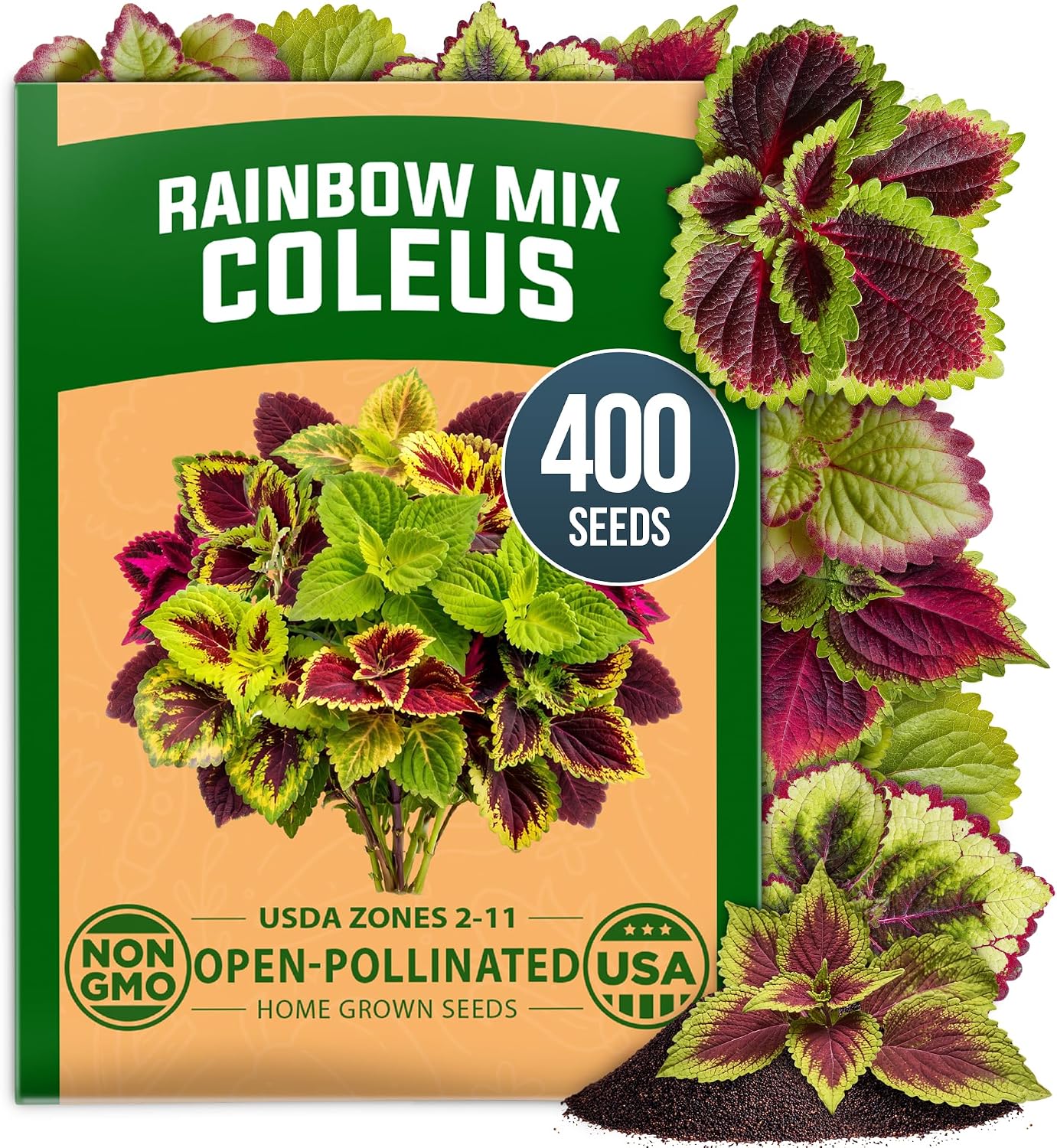
HOME GROWN Rainbow Mix Coleus Seeds (approx. 400)
| Sunlight Exposure | Part Shade to Shade |
|---|---|
| USDA Hardiness Zone | 2-11 |
| Expected Blooming Period | Spring through Frost |
| Material Features | GMO Free, Heirloom |
| Unit Count | 1 Count |
These Rainbow Mix coleus seeds produce compact, colorful foliage plants that are well suited to containers and shaded patio spots. Surface-sow the tiny seeds (do not cover), keep the medium warm and consistently moist, and seedlings typically appear in 10–14 days; pinch growing tips to encourage bushy, mounded plants. The mix is valued for season-long leaf color in shades of rose, green, bronze, cream, and scarlet, so you get visual impact without relying on flowers. Coleus grows indoors near bright north or east windows and outdoors in part shade to shade, making it a flexible choice for window boxes, mixed planters, and small pots. Important limitations are that coleus is a tender annual in most regions and needs protection from frost and prolonged drought, and it prefers warm temperatures for best germination and growth. For container gardeners who want low-maintenance, high-impact foliage, this seed mix is an easy way to produce many plants from one packet.
Best for: Gardeners who want easy-to-grow, high-impact foliage for containers and shaded patios and prefer predictable, low-fuss plants they can start from seed.
Less Ideal for: People seeking long-lived perennial landscaping or plants that tolerate full sun and drought without extra care.
- High seed count (about 400) gives many starts for containers or massing
- Open-pollinated non-GMO seeds from a mix that yields varied, colorful foliage
- Specifically suited to part shade and shade where many flowering plants struggle
- Compact, mounded habit that performs well in pots, window boxes, and mixed planters
- Tender annual in most zones and requires frost protection or indoor overwintering
- Requires consistent moisture and will suffer if soil dries out or remains waterlogged
Verdict: A high-count, non-GMO coleus seed mix that reliably produces compact, colorful foliage perfect for containers and shaded patios.
KVITER Rainbow Coleus Seeds — 1,600 Heirloom Coleus (Plectranthus scutellarioides)

| Unit Count | 1600 Count |
|---|---|
| USDA Hardiness Zone | 4-10 |
| Sunlight Exposure | Partial Shade |
| Material Features | GMO Free, Heirloom |
| Moisture Needs | Regular Watering |
These KVITER Rainbow Coleus seed packets deliver a high-count mix of heirloom, non-GMO coleus seeds designed for easy container and border planting. The seeds are billed for part-shade locations and come with a step-by-step growing guide on every packet, which helps take the guesswork out of starting indoors 6–8 weeks before the last frost or sowing directly into pots and trays. Coleus produces colorful foliage rather than showy flowers and reaches about a foot tall, making it well suited to outside pots, hanging baskets, and shaded patio corners. The seeds are labeled low-maintenance and shade resistant, so once established they respond well to regular watering and occasional pinching to encourage bushier growth. Because this is a bulk 1,600-count pack, it is best for gardeners who want to fill several containers or create repeated plantings through the season. Expect germination within 7–14 days under good light; results can vary with local soil and care. The package focuses on starter guidance rather than advanced cultivation details, so experienced growers may want more specific spacing or fertilization notes.
Best for: Gardeners who prefer low-risk, easy-to-follow planting and want colorful, shade-tolerant foliage for multiple outside pots or shaded patio containers.
Less Ideal for: Buyers who only need a few plants for a single small pot or who want edible or flowering plants rather than foliage-focused coleus.
- Very large 1600-seed count is suitable for filling many pots or repeating plantings
- Heirloom, non-GMO seeds with a step-by-step growing guide on each packet
- Shade-tolerant foliage plant that performs well in part-sun/part-shade container locations
- Low-maintenance habit and responds to pinching for bushier growth
- Bulk quantity may be more than needed for casual single-pot gardeners
- Limited cultivation details on fertilizing and advanced care provided
Verdict: A risk-averse choice for filling multiple shaded pots with colorful, low-maintenance coleus foliage thanks to a large heirloom seed pack and clear growing instructions.
Choosing the Right Plants for Wheelbarrow Planter: Key Factors to Consider
Sun Exposure
Sun exposure drives which species will thrive in a wheelbarrow planter. Containers on a patio or near a wall can experience hotter, reflected light than garden beds, so match plant light needs to the exact spot rather than general sun maps.
Full-sun plants tolerate six or more hours of direct light and usually need more frequent watering in a shallow container. Partial shade species survive with filtered light or morning sun and often fare better in hot afternoons. Assess daily sun patterns and choose plants whose light requirements match that microclimate to reduce stress and maintenance.
Soil Volume and Root Habit
Wheelbarrow planters have limited soil depth and total rootable space, which affects nutrient and water availability. Choose plants with compact root systems or naturally shallow rooting habits to avoid root restriction and rapid decline.
Avoid species that send deep taproots or aggressively branch roots that demand more soil. Consider using annuals or small perennials that complete their growth cycle within the available volume, or plan for seasonal replanting to keep the container vigorous.
Watering Frequency and Drainage
Small, shallow containers dry out faster than large pots or in-ground beds, so watering frequency is a critical consideration. Pick plants that tolerate intermittent drying if you cannot water daily, or install a moisture-retentive potting mix and monitor often to prevent stress.
Good drainage is equally important. Excessive standing water in a wheelbarrow can cause root rot. Use a well-draining container mix and ensure the wheelbarrow has adequate drainage holes or a liner approach that avoids waterlogging.
Seasonal Interest and Longevity
Decide whether you want continuous color, seasonal displays, or a mix of foliage and flowers. Some plants provide long bloom periods while others offer striking foliage color or texture that lasts even when not in flower.
Since wheelbarrows are mobile, you can rotate them for seasonal displays, but plan for overwintering or replacement if you live where frost occurs. Use a combination of short-lived annuals for instant impact and small perennials or biennials for recurring structure.
Size Control and Growth Rate
Controlling the final size of plants prevents overcrowding in a wheelbarrow planter. Fast growers may need regular thinning or pruning to maintain proportion, while slower growers reduce upkeep but may not fill the space quickly.
Look for cultivars or varieties labeled compact, dwarf, or patio-sized. Predictable growth rates help you design combinations-structure plants in the center or back, fillers around them, and spillers at the edges for balanced composition.
Maintenance and Winter Care
Consider how much time you will invest in deadheading, pruning, feeding, and moving the planter for winter protection. Some plants need weekly attention to look their best, while others are low-maintenance and simply tolerate the container environment.
In colder climates, plan how you will overwinter plants or the entire wheelbarrow to avoid freeze-thaw damage to roots and container material. Lightweight pots may be easier to move, but heavy, planted wheelbarrows can be difficult to shelter without assistance.
Designing Balance: Spillers, Fillers, and Thrillers
A classic container formula helps wheelbarrow plantings read as intentional. Place a structural center or back plant as the thriller, surround it with mid-height fillers for body, and use trailing spillers on the edges to soften the container line. This trio creates depth and movement without relying on large root volumes.
When selecting plants, consider mature size and growth habit so spillers do not overrun the edges and thrillers remain proportionate. Use repeated colors or foliage textures to tie the design together across the shallow planting area.
- Thriller: upright, architectural plant in the center or back
- Filler: medium-height, flowering or textured plants for bulk
- Spiller: low, trailing plants to cascade over the wheelbarrow rim
Soil and Fertility Tips for Small Mobile Containers
Use a lightweight, well-draining potting mix formulated for containers. Avoid garden soil, which compacts and reduces aeration in shallow planters. Add a moisture-retaining component like coconut coir or aged compost in moderation to help with drought intervals without sacrificing drainage.
Because soil volume is limited, slow-release fertilizer or a balanced liquid feed at reduced strength helps sustain blooms and foliage. Topdress with a thin layer of compost mid-season if you need to boost fertility. Monitor plants for nutrient deficiency signs because container-grown specimens show stress faster than in-ground plants.
- Choose mixes labeled for containers or patio pots
- Incorporate a small amount of organic matter for nutrients and water retention
- Use regular, light feeding rather than heavy initial loading
Seasonal Care and Moving the Wheelbarrow
One advantage of a wheelbarrow planter is mobility. Move it to shelter during extreme heat or cold, adjust exposure as seasons change, and rotate it to keep growth balanced. In peak summer, a midday-shaded location reduces water stress for sun-tolerant plants that still need relief in extreme heat.
For overwintering, consider whether to bring the wheelbarrow into an unheated but protected spot, lift plants for indoor overwintering, or treat the container as an annual display and replant in spring. Protecting roots from freeze-thaw cycles preserves soil structure and plant health.
- Rotate placement seasonally to match light and temperature needs
- Use frost cloth or sheltered spots for late-season protection
- Empty and refresh soil if plants decline after the first season
Combining Texture and Color Without Overcrowding
Texture can be as important as flower color in a small container. Combine coarse foliage with fine-textured plants to create contrast and visual interest. Limit the palette to two or three dominant colors or foliage tones to avoid a cluttered look in a small planting area.
Scale is crucial. Choose compact varieties and stagger heights so each plant has breathing room. If you want continuous color, plan succession planting or interplant short-lived annuals with longer-lived perennials to maintain fullness throughout the growing season.
- Mix foliage shapes and leaf sizes for depth
- Stick to a simple color scheme to keep the wheelbarrow cohesive
- Leave breathing space between plants to reduce competition
Pest and Disease Management in Shallow Containers
Containers can concentrate pests and diseases because plants are closer together and stressed more easily by drying and heat. Monitor regularly for aphids, slugs, and fungal issues and remove affected foliage promptly. Good airflow and proper spacing reduce fungal pressure.
Start with healthy, pest-free stock and avoid overwatering, which invites root and crown rot. If a plant becomes infected, remove it and sanitize tools before replanting to prevent spread in the limited container environment.
- Inspect plants weekly for pests and signs of stress
- Avoid overhead watering to reduce fungal problems
- Sanitize tools and replace soil if persistent disease appears
How We Chose the Best Plants for Wheelbarrow Planter
We focused on traits that matter in a shallow, mobile container where soil volume and drainage are the main constraints. Key evaluation criteria included sun and shade tolerance, root and growth habit suitability for shallow containers, water and drought tolerance reflecting small soil volume, seasonal interest to stretch color or texture through the season, and maintenance demands such as pruning or deadheading frequency. We prioritized plants that establish quickly without becoming rootbound in a single season and those with predictable mature sizes so gardeners avoid constant trimming. Plants that tolerate periodic drying and recover quickly scored higher than those needing constant moisture. We excluded species that require deep, permanent beds, aggressive spreaders that would overrun a wheelbarrow, and plants that are known to be highly sensitive to container wintering without indoor protection. The final shortlist balances low-maintenance options and more ornamental choices for gardeners prepared to provide routine care. Each criterion maps to measurable horticultural traits so readers can compare options based on their garden conditions and available time.
FAQ
How often should I water a wheelbarrow planter?
Often depends on weather and plant choice, but shallow containers typically need daily to every-other-day checks in hot weather. Use your finger or a moisture meter to check the top few inches and water when the mix begins to dry; morning watering reduces evaporation loss.
Can I overwinter plants in a wheelbarrow outdoors?
It usually depends on the plant hardiness and local winters. Cold-sensitive plants should be moved indoors or to a protected area. For hardy species, insulate the root zone and keep the planter out of repeated freeze-thaw cycles to prevent damage.
Will plants become rootbound quickly in a wheelbarrow?
Root restriction is likely if the wheelbarrow has limited depth and you keep the same plants for multiple seasons. Choose compact-rooted plants or refresh the soil and replant annually to avoid crowding and nutrient depletion.
What soil is best for wheelbarrow planters?
A lightweight, well-draining potting mix designed for containers is best. Avoid heavy garden soil. Adding some organic matter and a moisture-retentive component helps reduce daily watering without creating poor drainage.
How do I prevent the wheelbarrow from drying out too quickly?
Use a mix with some water-retaining materials, add mulch on top to slow evaporation, place the planter where it gets some afternoon shade if possible, and consider grouping containers to create a microclimate that reduces drying.
Are trailing plants necessary for a good wheelbarrow display?
Trailing plants are not required but they help soften the rim and create a lush look. If you prefer a tidier appearance, use only compact fillers and structural plants for a neater, upright display.
Final Verdict
For wheelbarrow planters, prioritize plants that match the container's limited soil volume and the specific light and watering conditions of the placement. Focus on predictable sizes, drought tolerance, and seasonal interest when deciding which combinations to plant. Balance spillers, fillers, and a central structural plant to create a pleasing composition without overloading the root space. Ultimately, choose plants that fit your maintenance rhythm and the planter's microclimate. Accepting tradeoffs between long bloom periods and lower maintenance will help you pick a setup you can keep healthy and attractive season after season.
