

Note: This article contains affiliate links. If you click on these links and make a purchase, I may earn a small commission at no extra cost to you. This helps support my research and content. Read my full affiliate disclosure here.
If you want a productive, attractive container garden, choosing the right plants matters more than the pot itself. Plants grown in containers face different stresses than those in the ground: restricted root volume, faster moisture swings, and closer proximity to heat or draft. Picking species with tolerant root habits, predictable water needs, and suitable light preferences makes the difference between a thriving patio display and a series of containers that need constant babysitting. This guide covers seven shortlisted plants that can live in pots and explains the practical traits that make them good container candidates. We evaluated options for ease of care, light and water tolerance, and how they behave in typical yard, balcony, or patio conditions. Read on for the key decision factors that will help you choose the best plants for your pots and setup.
Top Picks at a Glance
| Best Overall The best all-around choice for most situations | Plants for Pets Essential Houseplant Collection, 4‑Pack (4.25" Nursery Pots) | 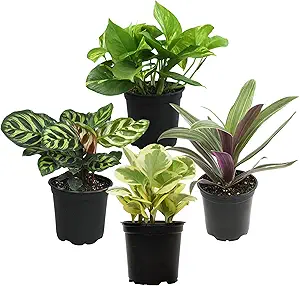 |
| Best Quality Built to a higher standard if you want something more solid | Plants for Pets Pothos 4-Pack (4" Assorted) |  |
| Best Value The sweet spot between price and what you get | Altman Plants Deluxe Live Succulents 12-Pack (2" Pots) |  |
| Best Budget The cheapest option that still gets the job done reliably | THE NEXT GARDENER.COM Succulent Plants 4-Pack, Fully Rooted in 2" Pots |  |
| Highest Rated A top-rated pick with lots of positive feedback | Plants for Pets Sansevieria Superba (Snake Plant) – Fully Rooted Houseplant |  |
| Most Popular A crowd favorite that many people choose with confidence | Costa Farms Money Tree (Pachira aquatica) Live Indoor Plant in Decorative Pot |  |
| Best Seller A high-volume bestseller chosen again and again | THE NEXT GARDENER Ruby Necklace (Othonna capensis) Live Succulent, 4-inch |  |
Plants for Pets Essential Houseplant Collection, 4‑Pack (4.25" Nursery Pots)

| Indoor Outdoor Usage | Indoor, Outdoor |
|---|---|
| Other Special Features of the Product | Air Purification, Compact, Low Maintenance |
| Sunlight Exposure | Partial Sun |
| Moisture Needs | Regular Watering |
This four-pack of assorted houseplants delivers a convenient starter set for low-light indoor spaces by shipping four healthy greenhouse-grown plants in 4.25" nursery pots. The assortment includes popular, easy-care genera such as Pothos, Philodendron, Peperomia, Calathea and similar foliage plants that tolerate indirect or lower light. Typical use is to place these on shelves, desks, or bathrooms with limited sunlight and follow simple care guidance: bright indirect to partial sun and water when the soil begins to dry. Notable features are the hand-selected stock from climate-controlled greenhouses, small nursery pots for easy placement, and emphasis on low maintenance and air purification. Practical benefits include variety in foliage types for quick visual impact, minimal initial upkeep for new plant owners, and plant choices that broadly tolerate lower light. Important limitations are the small pot size which means more frequent watering and earlier repotting for long-term growth, and the exact varieties are randomized so you cannot guarantee a specific species in each pack.
Best for: Buyers who want a practical, low-effort way to add greenery to dim rooms and prefer a ready-to-place assortment that requires minimal initial care.
Less Ideal for: Collectors who need specific species or mature specimens and gardeners who want plants already planted in decorative or larger containers.
- Includes four different, easy-care houseplants that tolerate indirect and lower light
- Shipped in small 4.25" nursery pots that are easy to place around the home
- Plants are greenhouse-grown and hand-selected for health and vibrant foliage
- Promoted as low-maintenance with general air purification benefits
- Small nursery pots limit long-term growth and require repotting sooner
- Assortment is randomized so you may not receive a specific desired variety
Verdict: A convenient, low-maintenance four-pack of small houseplants that makes it easy to add tolerant foliage to low-light indoor spaces.
Plants for Pets Pothos 4-Pack (4" Assorted)

| Indoor Outdoor Usage | Indoor |
|---|---|
| Other Special Features of the Product | Air Purification |
| Sunlight Exposure | Full Sun |
| Moisture Needs | Regular Watering |
| USDA Hardiness Zone | 3 |
This four-pack delivers beginner-friendly pothos varieties that suit low-light rooms and simple indoor care routines. Each plant comes rooted in a 4" nursery pot and the assortment rotates between familiar types such as Marble Queen, Golden, Neon, and Satin, so you get visual variety without extra effort. Pothos are typically grown in hanging planters, on shelves, or trained up a support; they prefer bright, indirect light but tolerate lower light levels that many apartments and offices have. The listing emphasizes air-purifying benefits and gives clear care guidance: allow the soil to dry between waterings and keep temperatures above about 60 F. Practical strengths are resilience, fast trailing growth for a lush look, and compatibility with common indoor spots like living rooms, kitchens, or bathrooms. Limitations are that you may receive different varieties than pictured and plants arrive in small 4" pots, so plan to repot sooner if you want bigger specimens or longer-term display without frequent watering.
Best for: Buyers who want low-maintenance greenery for indoor spaces and prefer reliable, easy-to-care-for plants that tolerate lower light and occasional neglect.
Less Ideal for: Growers seeking large, mature plants ready for instant statement displays or those who want guaranteed, specific rare varieties.
- Easy to grow and tolerant of low to bright indirect light
- Four different varieties provide visual variety in one purchase
- Ships in small nursery pots that establish quickly and are ready for hanging or shelving displays
- Listed care guidance is straightforward for first-time plant owners
- Arrives in 4" pots so plants may need repotting soon for faster growth or long-term display
- Specific varieties are not guaranteed and assortment can vary
Verdict: A simple, low-maintenance way to add trailing, low-light-friendly pothos to your home with minimal fuss.
Altman Plants Deluxe Live Succulents 12-Pack (2" Pots)

| Indoor Outdoor Usage | Indoor, Outdoor |
|---|---|
| Other Special Features of the Product | Compact, Drought Tolerant, Low Maintenance |
| Sunlight Exposure | Full Sun |
| USDA Hardiness Zone | 10, 9 |
| Moisture Needs | Little To No Watering |
This 12-pack from Altman Plants delivers a diverse assortment of small, ready-to-grow succulents in 2-inch pots that arrive dry and rooted for immediate planting or display. It is typically used to start a collection, fill small planters or terrariums, or make DIY favors and mixed displays; the mix includes genera like Kalanchoe, Crassula, Sedum, and Graptosedum so you get a variety of shapes and colors. Notable features are the curated variety—six unique types in pairs—drought-tolerant genetics, and shipping that minimizes rot by sending plants dry. Practically, these succulents need bright light and infrequent watering, making them low-effort for busy households and newcomers. Limitations are their small nursery pot size, which means many will need repotting as they grow, and that exact varieties are not guaranteed since assortments vary seasonally. For those wanting uniform, mature specimens or specific cultivars, this pack may be less suitable than buying larger, named plants.
Best for: Buyers who want an easy, low-maintenance way to start or expand a succulent collection and prefer proven, widely sold plants with consistent arrival quality.
Less Ideal for: Collectors seeking specific named cultivars, mature specimens, or large established plants should look for single-variety or larger-sized offerings instead.
- Ready-rooted plants arrive dry to reduce shipping rot risk
- Wide assortment of varieties provides visual diversity for displays
- Low water and general care needs suitable for beginners
- Small pots make them easy to use in terrariums, favors, or mixed planters
- Plants are in 2-inch nursery pots and will need repotting for long-term growth
- Assortment varies seasonally so exact varieties are not guaranteed
Verdict: A convenient, low-care 12-pack that makes starting a diverse succulent display simple and dependable.
THE NEXT GARDENER.COM Succulent Plants 4-Pack, Fully Rooted in 2" Pots

| Indoor Outdoor Usage | Indoor |
|---|---|
| Sunlight Exposure | Partial Sun |
| Soil Type | Sandy Soil |
| Moisture Needs | Moderate Watering |
| Unit Count | 4 Count |
This 4-pack of succulents arrives fully rooted in 2-inch grower pots and is aimed at buyers who want low-maintenance houseplants without a big investment. The plants are hand-packed from the seller's farm and shipped with well-draining potting mix, so you can pot them into decorative containers or keep them in the provided grower pots on a sunny windowsill. They need moderate watering only after the soil dries and prefer partial sun, making them suitable for kitchens, small apartments, and desktop displays. The pack includes common varieties that are resilient to occasional drought and are simple to propagate or re-pot when they outgrow the small pots. Limitations to expect are the small nursery pot size and limited selection control since varieties are grouped as common types, so buyers seeking specific cultivars or larger specimens should look elsewhere. For casual plant owners and gift buyers this pack provides an easy, low-cost way to start a succulent collection.
Best for: People looking to start a succulent collection on a tight budget or to add easy-care greenery to small indoor spaces without much maintenance fuss.
Less Ideal for: Collectors seeking rare or mature specimen plants or gardeners who want exact control over plant varieties and sizes.
- Four fully rooted plants included, ready to display or re-pot
- Low maintenance care with infrequent watering required
- Hand-packed and shipped with well-draining soil
- Small 2-inch pots make them easy to place in compact spaces
- Plants come in small nursery pots and will need re-potting as they grow
- Variety selection is generic so you may not receive specific cultivars
Verdict: An affordable, low-effort pack for beginners or shoppers who want small, easy succulents to brighten compact indoor spaces.
Plants for Pets Sansevieria Superba (Snake Plant) – Fully Rooted Houseplant

| Indoor Outdoor Usage | Indoor, Outdoor |
|---|---|
| Other Special Features of the Product | Air Purification, Compact, Drought Tolerant, Low Maintenance |
| Sunlight Exposure | Partial Sun |
| USDA Hardiness Zone | 10, 11, 9 |
| Moisture Needs | Little To No Watering |
The Plants for Pets Sansevieria Superba is a compact, fully rooted snake plant that delivers the classic, nearly indestructible qualities buyers expect from this species. It is typically kept in a small grower pot on a windowsill, shelf, or office desk and prefers bright indirect light but tolerates low light, making placement flexible. Notable features include drought tolerance, variegated upright leaves with chartreuse margins, and claims of air-purifying benefits. Practical benefits are straightforward: infrequent watering needs, low attention requirements, and a sculptural look that suits modern interiors. Because it ships fully rooted, it is ready to go into a decorative cachepot or remain in its grower pot with minimal setup. Limitations are minimal for most owners but include the plant's suitability mainly for indoor use in mild climates and the typical size cap of a compact variety, which may not satisfy someone wanting a large specimen quickly. Occasional overwatering or very cold conditions will be the main care pitfalls to avoid.
Best for: A buyer who values a dependable, low-maintenance houseplant that survives occasional neglect and fits small indoor spaces; ideal for busy households, offices, or first-time plant owners who want a reliable decorative plant.
Less Ideal for: Not ideal for gardeners seeking rapid growth into a large floor plant or those who need a cold-hardy outdoor specimen for harsh climates.
- Fully rooted and ready to display or repot upon arrival
- Tolerates low light and infrequent watering, ideal for low-effort care
- Compact, upright variegated foliage provides decorative interest indoors
- Described as drought tolerant and low maintenance, suitable for busy owners
- Best suited to indoor or mild outdoor conditions rather than harsh climates
- Compact size may not meet buyers seeking an immediate large specimen
Verdict: Buy this fully rooted Sansevieria Superba when you want a near-indestructible, low-effort houseplant that reliably looks good in small indoor spaces.
Costa Farms Money Tree (Pachira aquatica) Live Indoor Plant in Decorative Pot

| Indoor Outdoor Usage | Indoor |
|---|---|
| Other Special Features of the Product | Air Purification, Low Maintenance, Pet Friendly |
| Sunlight Exposure | Partial Shade |
| Moisture Needs | Moderate Watering |
| Product Care Instructions | Bright, Indirect Light, Water Weekly |
The Costa Farms Money Tree is a beginner-friendly indoor tree grown and shipped ready to display in a decorative pot. It is typically used as a tabletop or small floor accent where bright, indirect light is available. Notable features include the signature braided trunk, pet-safe foliage, and packaging designed to protect the plant during transit. Practically, it offers easy care: water when the top 2 inches of soil feel dry and keep it in bright, filtered light, which makes it forgiving if you miss an occasional watering. The pre-potted presentation removes the immediate need to repot and gives an instant finished look for desks, entryways, or living rooms. Limitations to expect are that it prefers consistent indirect light and moderate moisture, so darker rooms or chronic overwatering will hamper growth, and the medium size is a tabletop rather than a large floor specimen. For buyers focused on easy success and decorative impact, this Money Tree balances aesthetics and low effort, though long-term growers may eventually want to repot for fuller development.
Best for: Buyers who want an attractive, low-effort houseplant that looks finished out of the box and is safe around pets, especially those who value straightforward care and reliable arrival. Ideal for people adding easy greenery to desks, shelves, or small living spaces.
Less Ideal for: Experienced collectors seeking a large specimen tree or anyone needing a plant that thrives in dim light should consider other options.
- Arrives pre-potted in a decorative planter for immediate display
- Pet-safe, non-toxic foliage suitable for households with cats and dogs
- Forgiving care needs that tolerate occasional missed waterings
- Distinctive braided trunk adds architectural, designer appeal
- Not ideal for low-light rooms since it prefers bright, indirect light
- Medium/tabletop size may be too small for buyers seeking a large floor statement plant
Verdict: A stylish, pet-safe Money Tree that delivers easy, low-stress greenery already potted and ready to display.
THE NEXT GARDENER Ruby Necklace (Othonna capensis) Live Succulent, 4-inch

| Indoor Outdoor Usage | Indoor |
|---|---|
| Other Special Features of the Product | Drought Tolerant |
| Sunlight Exposure | Partial Sun |
| USDA Hardiness Zone | 3 |
| Soil Type | Sandy Soil |
The Ruby Necklace (Othonna capensis) is a trailing succulent sold in a 4-inch grower pot that brings cascading foliage to small balconies, shelves, or sunny windows. It arrives fully rooted in well-draining soil so it adapts quickly into a new pot or hanging planter. The plant is drought tolerant and follows a simple soak-and-dry watering routine, making it easy to care for if you prefer low-maintenance greenery. In bright light the leaves take on a reddish tint that adds seasonal color to a compact balcony display. Practical limits to expect are its modest size and preference for partial sun and sandy, well-draining media, so it will need protection from prolonged cold or heavy rain if your balcony is exposed. Also, because it is sold as a live plant, appearance and fullness can vary slightly by season. For someone looking for a reliable, easy trailing succulent to fill a small planter or hanger, this is a straightforward choice.
Best for: Buyers who want a low-effort, attractive trailing succulent for a small balcony planter or hanging display and prefer plants that establish quickly with minimal care.
Less Ideal for: Not the best pick for gardeners who need large statement plants for wide outdoor terraces or for locations that stay cold and wet for extended periods.
- Arrives fully rooted in a 4-inch grower pot ready for transplant or display
- Drought tolerant and low maintenance with simple soak-and-dry watering
- Trailing habit works well in hanging planters, shelves, or small balcony containers
- Leaves develop red tones in bright light for seasonal visual interest
- Modest mature size limits impact in large planters or expansive balcony arrangements
- Prefers partial sun and well-draining sandy soil so exposed, wet balconies may require extra protection
Verdict: A fuss-free, fully rooted trailing succulent that adds color and easy-care greenery to small balcony planters or hanging displays.
Choosing the Right Plants That Can Live in Pots: Key Factors to Consider
Root Volume Tolerance and Rooting Habit
Root space is the defining constraint for container-grown plants. Some species develop shallow, fibrous root systems that fill a pot without becoming root-bound, while others have deep taproots or aggressive roots that quickly choke a container. Understanding rooting habit tells you how long a plant will remain healthy between repottings and whether it needs a wide, shallow container or a deeper one.
Plants that tolerate limited root volume also recover better from the frequent drying and rewetting that pots experience. When a plant's roots can explore the available soil evenly, it avoids the watering extremes that cause stress and root rot. For practical selection, favor plants with compact or fibrous roots for small pots and reserve deeper or larger containers for species that naturally demand more depth.
Light Requirements and Site Compatibility
Container plants are often placed on balconies, window sills, or shaded patios where light can vary dramatically. A plant's labeled light preference is a practical roadmap: full sun types need several hours of direct light and will struggle in low-light patios, while shade-tolerant plants cope with dappled or indirect exposure. Matching a plant's natural light range to your available spots reduces stretch, weak growth, and leaf drop.
Also consider seasonal shifts. A south-facing balcony that is bright in summer can be much lower light in winter. Choose plants whose seasonal growth cycles align with the light available through the year to avoid prolonged dormant stretches or burst growth that outpaces the pot.
Watering Needs and Moisture Management
Pots dry out faster than garden beds and can also stay wet if drainage is poor. Some plants prefer evenly moist soil and will suffer in fast-draining mixes, while drought-tolerant species can handle occasional neglect. Knowing whether a plant needs daily attention, weekly checks, or monthly watering in cooler months is crucial for selecting plants that match your care routine.
Moisture management also influences pot selection and soil choice. For moisture-loving plants, choose heavier mixes that retain water and use pots with reliable drainage. For drought-tolerant options, lean toward terracotta or porous containers that encourage drying and reduce the risk of overwatering.
Growth Habit and Space Management
How a plant grows dictates the pot size and placement. Upright, compact growers suit small pots and crowded shelves, while trailing or sprawling plants work well in hanging baskets or wide containers where they can spill over edges. Vigorous plants may need regular pruning or pinching back to keep them proportional to their container.
Consider how the plant will look at maturity. Some species double or triple in diameter during a season and can quickly overwhelm a small pot. If you want low-maintenance containers, select plants with predictable, restrained growth habits or those that respond well to pruning.
Feeding and Fertility Requirements
Container soil has limited nutrients that deplete faster than ground soil, so feeding matters. Some plants are light feeders and do well with an occasional balanced fertilizer, while others need regular, controlled feeding to maintain continuous blooms or lush foliage. Knowing a plant's feeding pattern lets you plan fertilizer type and frequency and prevents deficiencies or excessive stretch from overfertilization.
Fertilizer strategy also affects watering and soil choice. Slow-release granules reduce the need for frequent liquid feeding, while weekly liquid feeds give faster results for heavy bloomers. Match the plant's nutrient rhythm to the maintenance level you are willing to provide.
Hardiness and Seasonal Behavior in Containers
Pots amplify temperature swings: they heat up in sun and cool quickly at night or during cold snaps. A plant that tolerates outdoor extremes in the ground may still be vulnerable in a container. Consider the local climate and whether containers will be moved indoors or insulated for winter. Some plants go dormant and need dry, cool conditions, while others continue growing until frost.
If you plan to keep containers outdoors year-round, prioritize species with proven container hardiness for your climate zone. For more flexibility, choose plants that handle brief indoor stays or can be overwintered with minimal intervention.
Choosing the Right Potting Mix for Containers
A good potting mix balances drainage, water retention, and aeration. Standard mixes combine peat or coir with perlite or pumice to keep pores open while holding moisture. For heavier water retention, add compost or well-aged bark; for fast-draining setups, increase grit or pumice content. Avoid using garden soil alone, which compacts and reduces oxygen at the roots.
- Use a mix labeled for containers or make your own with coarse components for aeration.
- Top up pots yearly with fresh mix or a light layer of compost to refresh nutrients.
- Match mix weight to pot type; lighter mixes reduce stress on balconies and hangers.
Pot Size, Material, and Drainage Considerations
Pot choice affects both plant health and maintenance. Larger pots buffer moisture swings and nutrient depletion but take more space and weight. Terracotta breathes and helps soil dry but also increases watering frequency. Plastic and glazed ceramic retain moisture longer, which can benefit moisture-loving plants but raise risks for root rot if drainage is poor. Always ensure at least one drainage hole and consider adding a coarse layer or mesh to keep compost from washing out.
- Choose wider pots for shallow-rooted plants and deeper pots for taprooted species.
- Consider a saucer or drip tray to catch overflow, especially on balconies.
- Elevate pots slightly to allow excess water to escape and to avoid waterlogged bases.
Managing Watering Schedules and Tools
Regular checks are the easiest way to keep container plants healthy. Feel the top inch of the mix; if it is dry, water thoroughly until water runs from the drainage hole. In hot weather, some small pots may need daily attention while larger containers go longer between waterings. Self-watering containers and moisture meters are useful when you cannot inspect pots daily, but they are not a substitute for observing plant cues like wilting or leaf yellowing.
- Water deeply and infrequently rather than light daily misting to encourage stronger root systems.
- Use mulch on the soil surface in larger pots to reduce evaporation.
- Group plants with similar water needs together to streamline care.
Seasonal Care: Repotting, Pruning, and Overwintering
Repotting refreshes depleted soil and gives roots more room; many container plants benefit from being topped up or moved to a slightly larger pot every 1 to 3 years. Pruning keeps plants proportional and encourages branching in many flowering and foliage types. For overwintering, move sensitive containers to a protected spot or cut back growth and reduce watering to mimic the plant's dormant state. Record-keeping helps: note pot size, last repot date, and fertilization schedule so you can spot trends and avoid reactive maintenance that stresses plants.
- Repot in spring when growth resumes for most species.
- Cut back long stems after bloom to encourage a compact habit.
- Insulate or move pots if prolonged freezing is expected for tender plants.
Design Ideas for Small Spaces and Balconies
Layer plants of different heights and textures in a group of pots to mimic a garden bed. Use vertical space with wall planters, rail baskets, and stacked pots, selecting plants whose habits complement this arrangement. For small balconies, prioritize compact, multi-season plants that provide visual interest with minimal fuss.
- Place taller specimens at the back and trailing ones at the front or edges.
- Use a consistent pot palette to create cohesion on small patios.
- Include at least one evergreen or long-lasting foliage plant for winter structure.
How We Chose the Best Plants That Can Live in Pots
We focused on traits that matter in real container gardens rather than isolated performance in lab conditions. Our selection process prioritized species and varieties known to tolerate limited root space, to establish quickly in mixed potting media, and to show predictable water and light requirements. We checked whether a plant maintains steady growth without frequent repotting, how it handles drying and wetting cycles, and how prone it is to common container pests and root issues. Concrete evaluation criteria included drought tolerance in small soil volumes, adaptability to common potting mixes, responsiveness to routine feeding, suitability across light ranges, and overall maintenance needs such as pruning and deadheading. We excluded plants that require extensive soil depth, constant greenhouse conditions, or specialized grafting and rooting techniques to survive in pots. Plants primarily suited only to ground planting or those that need frequent transplanting were not considered for this roundup.
FAQ
Can any houseplant be grown in a pot outdoors?
Often houseplants can be grown outdoors temporarily if light, temperature, and humidity are suitable. However, not every houseplant tolerates direct sun, outdoor pests, or the wider temperature swings of an outdoor setting. Transition plants slowly and monitor for stress.
How big should a pot be relative to the plant?
A pot should be only one or two sizes larger than the plant's current root ball for most container species. Oversizing can cause excess moisture retention and root rot, while undersizing will lead to frequent repotting and stress.
How often do container plants need fertilizer?
It depends on the plant and pot size. Light feeders may need feeding a few times during the growing season, while heavy bloomers often benefit from fortnightly or monthly liquid feeding. Slow-release granules applied in spring reduce maintenance for lower-effort setups.
Will plants in pots dry out faster than in the ground?
Yes, pots usually dry out quicker because they have less soil to hold moisture and are exposed on all sides. Material and pot size change the rate, with terracotta and smaller pots drying fastest.
When is the best time to repot container plants?
Spring is typically best because plants are entering active growth and recover faster from root disturbance. Watch growth and root crowding; if roots circle tightly or push through drainage holes, repot sooner.
Final Verdict
For most gardeners, the best plants for containers are those that match the light, watering rhythm, and space you can provide. Prioritize species with tolerant root habits, predictable moisture needs, and manageable maintenance requirements for a low-stress container garden. Balance tradeoffs: larger pots reduce watering frequency but take more space and weight; drought-tolerant plants require less daily care but may not deliver continuous blooms. Decide first where the pots will live and how much routine care you will give, then choose plants that fit that lifestyle. With the right match between plant traits and container conditions, you can build a long-lasting, attractive collection of plants that thrive in pots.
