

Note: This article contains affiliate links. If you click on these links and make a purchase, I may earn a small commission at no extra cost to you. This helps support my research and content. Read my full affiliate disclosure here.
When mice and rats move into living spaces, choosing the right indoor rodent poison matters for effectiveness and household safety. You need options that stop rodents yet allow you to control exposure risk around children, pets, and non-target wildlife. This guide covers six shortlisted rodent poisons for inside use, each chosen because it balances bait delivery, toxicity profile, and practical handling for indoor settings. Below we summarize how each option performs on containment, palatability, and cleanup. Read on to understand the factors that should guide your selection and where to place bait for the best results in homes, garages, and enclosed structures.
Top Picks at a Glance
| Best Overall The best all-around choice for most situations | Tomcat Bromethalin Bait Chunx Pail, 4.25 lb |  |
| Best Value The sweet spot between price and what you get | Tomcat Rat & Mouse Killer Disposable Bait Station, Child & Dog Resistant, 2-Pack |  |
| Best Budget The cheapest option that still gets the job done reliably | Tomcat Mouse Killer Disposable Child & Dog Resistant Bait Stations (2-Pack) |  |
| Highest Rated A top-rated pick with lots of positive feedback | Neogen Ramik Green Rodenticide Pellets, 20 lb Bucket |  |
| Most Popular A crowd favorite that many people choose with confidence | Tomcat Mouse Killer Refillable Bait Station with 16 Bait Blocks |  |
| Best Seller A high-volume bestseller chosen again and again | Victor M925 Rodent Killer, 4 lb Fish‑Flavored Bait Balls | 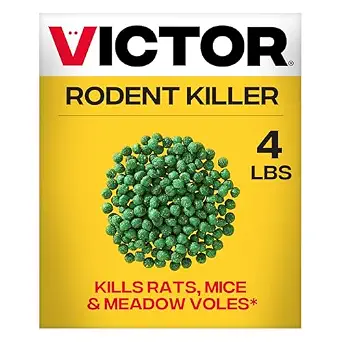 |
Tomcat Bromethalin Bait Chunx Pail, 4.25 lb

| Item Form | Bar |
|---|---|
| Target Species | Rodents |
| Net Weight | 4.25 lb |
This Tomcat pail contains preformed 1 oz. bromethalin bait blocks intended for tackling mice, Norway rats, roof rats, and meadow voles in and around buildings. It is packaged for professional or agricultural use and is typically deployed inside tamper-resistant bait stations placed in basements, garages, crawl spaces, and around foundations within 100 feet of structures. The bait is fast-acting so rodents often consume a lethal dose in a single night and mortality can occur within a few days. The large 4.25 lb. pail supplies many placements and makes regular monitoring and replenishment simple. Important practical points are that outdoor placements must be in weather- and tamper-resistant stations and the label restricts use against certain species in California. Because this contains an acute pesticide, care is needed to keep it inaccessible to children, pets, and non-target wildlife and to follow local regulations and label directions.
Best for: Buyers who want a professional-strength, ready-to-use rodent bait for systematic control around buildings and who plan to use tamper-resistant stations and follow label directions.
Less Ideal for: Casual homeowners who cannot commit to secure bait station use or who need a rodent solution safe for free outdoor placement around pets and wildlife.
- Preformed 1 oz. blocks are easy to place and monitor in bait stations
- Contains bromethalin which is effective against anticoagulant-resistant rodents
- Large 4.25 lb. pail supplies many bait placements for ongoing control
- Suitable for indoor and outdoor use when placed in tamper-resistant stations
- Requires tamper- and weather-resistant bait stations for safe outdoor use and to protect non-targets
- Not permitted for use on several listed species in California and must be used according to label restrictions
Verdict: Choose this product when you need a professional-grade, preformed bromethalin bait supply for effective, managed rodent control around structures.
Tomcat Rat & Mouse Killer Disposable Bait Station, Child & Dog Resistant, 2-Pack

| Unit Count | 2 Count |
|---|---|
| Target Species | Mouse |
| Power Source | manual |
| Material Type | Plastic |
This Tomcat disposable bait station is a ready-to-use option for controlling mice and rats around a home. Each plastic station comes pre-filled with a bait block and a clear lid so you can monitor consumption without opening the unit. The station is described as child- and dog-resistant and weather resistant, allowing placement in basements, garages, behind appliances, and on exterior foundations. Because it is preloaded and disposable, you do not need to handle loose bait or refill blocks during routine use. Practical benefits include easy placement vertically or horizontally and simple visual checks through the lid to know when to replace the station. Limitations are that the product is a single-use station that must be disposed of when spent and that rodents may eat and then die elsewhere, which can mean finding carcasses away from the station. Also the formulation and toxicity require following label directions and safe placement out of reach of non-target animals and children.
Best for: Buyers who want a low-effort, safety-focused solution for outdoor or periphery indoor rodent control and prefer products that minimize direct contact with bait.
Less Ideal for: People who need reusable or refillable bait stations or who want non-toxic catch-and-release trapping methods should consider alternatives.
- Pre-filled and ready to use so you avoid handling loose bait
- Child- and dog-resistant design reduces accidental access
- Clear lid allows quick visual monitoring of bait level
- Weather resistant for use indoors and outdoors
- Can be placed vertically or horizontally to suit tight spaces
- Disposable single-use design requires replacement rather than refilling
- Rodents may die away from the station making recovery of carcasses possible
Verdict: A safe, no-fuss disposable bait station for homeowners who want an easy, monitored way to reduce outdoor and perimeter mouse activity.
Tomcat Mouse Killer Disposable Child & Dog Resistant Bait Stations (2-Pack)

| Unit Count | 2 Count |
|---|---|
| Target Species | Mouse |
| Item Type Name | for Indoor/Outdoor Use |
| Included Components | Rodent Trap |
Tomcat Mouse Killer disposable stations come ready to use with a preloaded bait block inside a clear-lidded, tamper-resistant housing. You place the small stations where mice travel—along walls, in corners, behind appliances, or near burrows—and the bait attracts and kills mice that feed and leave the station. The clear lid makes it easy to check bait levels and the weather-resistant, child- and dog-resistant design lets you use them in garages, attics, and other semi-exposed spots without worrying about pets or kids accessing the poison. Because each unit is disposable and pre-baited there is no handling of loose bait, which simplifies setup and disposal. The package contains two stations, so this is best for spot treatment rather than an ongoing multi-station program. If you need broader or longer-term control you will want larger packs or a refillable system, but for quick targeted indoor use these stations are simple and effective.
Best for: Buyers who want a low-cost, low-effort spot treatment to quickly address a small indoor mouse problem and who prioritize safety and ease of use over long-term coverage.
Less Ideal for: Homes with heavy or widespread infestations or users who prefer reusable refillable systems for ongoing control should look at larger multi-station or refillable options.
- Ready-to-use pre-baited stations require no handling of loose poison
- Child- and dog-resistant housing reduces accidental access risk
- Clear lid lets you monitor bait without opening the station
- Weather-resistant design suitable for garage and attic placement
- Only two disposable stations in the box so coverage is limited for larger infestations
Verdict: A simple, safety-focused two-station kit that lets budget-minded buyers set and monitor pre-baited mouse poison with almost no setup.
Neogen Ramik Green Rodenticide Pellets, 20 lb Bucket

| Item Form | Pellets |
|---|---|
| Target Species | Rodents |
| Included Components | 20 lb Pail of Bait |
| Active Ingredient | Diphacinone (.005%) |
Ramik Green pellets use a first‑generation anticoagulant (diphacinone) in a food‑quality, fish‑flavored grain mix to attract rats, mice, and several other rodent species. The pellets are hot‑extruded, which makes them weather‑resistant without wax and suitable for placing in bait stations or protected locations indoors and in damp outdoor areas like barns and under eaves. Typical use is to distribute the bait in secure bait stations or tamper‑resistant containers as part of a broader control plan; the product is not for broadcast scattering in open areas. Practical benefits include high palatability for rodents, a large 20‑pound pail for extended coverage of heavy infestations, and formulation suited to wet conditions. Important limitations are that it contains a first‑generation anticoagulant so control can be slower than with some second‑generation products, and it is a toxic rodenticide that requires careful placement to avoid non‑target exposure. Follow local regulations and label directions for permitted targets and restricted uses in certain states.
Best for: Buyers who prioritize dependable, established rodent baits for long‑running control efforts around structures, barns, or poultry operations and who plan to use bait stations and follow label directions.
Less Ideal for: People seeking a very fast‑acting or single‑feed solution or those who cannot ensure secure placement away from pets and wildlife should consider different control options.
- Hot‑extruded pellets are weather‑resistant and perform in wet or damp areas without wax coating
- Fish‑flavored, food‑quality grain mix increases palatability to rodents
- Large 20‑pound pail supplies sustained treatment for large or recurring infestations
- Contains a first‑generation anticoagulant which can act more slowly than some alternatives
- Requires secure placement and careful handling to prevent non‑target exposure
Verdict: Choose Ramik Green when you need a weather‑resistant, highly palatable pellet bait in a large bucket for reliable, ongoing rodent control.
Tomcat Mouse Killer Refillable Bait Station with 16 Bait Blocks

| Unit Count | 16 Count |
|---|---|
| Target Species | Rodents |
| Power Source | manual |
| Material Type | Plastic |
This Tomcat kit combines a weather-resistant refillable bait station with 16 preformed bait blocks to control mice around buildings and yards. You place the station where activity is seen—against foundations, in garages, basements, or behind appliances—then monitor the clear lid and replace blocks as they are consumed. The station is designed to resist tampering by children and dogs and the bait blocks are intended to kill rodents after feeding so they leave the station before dying. Practical benefits include a reusable plastic station that makes ongoing monitoring simple and a supply of multiple premeasured bait blocks so you can maintain coverage without repackaging bait. Limitations to note are that poison requires caution during placement and handling and that results are not instantaneous, as rodents typically die days after feeding. This product targets mice primarily and does not replace exclusion work or sanitation as part of a complete outdoor rodent control plan.
Best for: Buyers who need an affordable, reusable station and a ready supply of bait for routine outdoor perimeter control and who prioritize ease of monitoring and tamper resistance.
Less Ideal for: People who want immediate knockdown or need a single heavy-duty solution for large rat infestations should consider other methods or products.
- Includes a reusable, weather-resistant bait station for outdoor placement
- Child- and dog-resistant design reduces accidental access
- Clear lid allows quick visual monitoring of bait level
- Comes with 16 premeasured bait blocks for extended use without extra refills
- Contains rodenticide so careful placement and handling are required
- Designed for mice primarily and may be less suitable for larger infestations of rats
Verdict: A cost-conscious option that pairs a tamper-resistant refillable station with 16 bait blocks for straightforward outdoor mouse control.
Victor M925 Rodent Killer, 4 lb Fish‑Flavored Bait Balls

| Item Form | Soft Bait |
|---|---|
| Target Species | Rodents |
| Specification Met | EPA |
| Active Ingredients | Diphacinone 0.005% |
Victor M925 is a ready-to-use rodenticide supplied as fish-flavored soft bait balls in a 4 lb bag for broad indoor and outdoor use. It is typically placed along walls, in concealed spots, or inside tamper-resistant bait stations to attract rodents and encourage repeated feeding until a lethal dose is consumed. Notable features include a palatable formulation that appeals to mice, rats, and meadow voles, an EPA specification, and weather-resistant properties that help the bait remain effective in damp exterior locations. The large bag gives enough material for multiple placements across a property or extended treatment periods. Important limitations are safety and non-target risk since the product is toxic to pets, children, and wildlife and must be secured in approved stations and handled with care. This product is a poison rather than a trapping solution, so it is best used where baiting is acceptable and strict placement and disposal rules can be followed.
Best for: Homeowners who prioritize a straightforward, low-maintenance baiting approach to reduce existing rodent activity and who will use tamper-resistant bait stations and follow label safety instructions.
Less Ideal for: People seeking a non-toxic or purely mechanical trapping method, or those unable to reliably prevent access by pets, children, or wildlife.
- Ready-to-use soft bait that requires no mixing or preparation
- Fish-flavored formula designed to attract rats, mice, and voles
- Weather-resistant so placements outdoors retain potency
- Large 4 lb bag provides enough bait for extensive or repeated treatments
- Contains an anticoagulant active ingredient and is hazardous to pets, children, and non-target wildlife
- Not a mechanical trapping solution so carcass removal and secondary poisoning concerns apply
Verdict: Choose this ready-to-use, weather-resistant bait when you want an easy-to-deploy, high-coverage rodenticide for indoor and outdoor infestations and can secure placements to protect people and pets.
Choosing the Right Rodent Poison for Inside: Key Factors to Consider
Toxicity Profile and Active Ingredient
Which active compound the bait contains affects how quickly rodents die, how many feedings are required, and the risk to non-target animals and people. Single-feed anticoagulants kill faster but can be more hazardous to pets and wildlife. Multi-feed anticoagulants generally require repeated consumption, which can reduce acute secondary-poisoning risk in some circumstances.
Understanding the toxicity class helps you plan placement and monitoring. For indoor use prioritize products with clear labeling on human and pet first-aid, and consider whether the formulation allows secure placement to limit accidental ingestion by children or companion animals.
Bait Formulation and Palatability
Rodents have food preferences that can affect how readily they eat a bait. Formulations include blocks, pellets, waxes, and pastes; some are flavored to increase palatability. In a home, palatable bait reduces the time needed to control an infestation because rodents consume lethal amounts faster.
However, very attractive baits can increase risk if left unsecured. Choose a formulation that fits the bait station or mounting method you plan to use. In food-preparation areas prefer sealed placements or non-dust formulations that reduce contamination risk.
Delivery Method and Tamper Resistance
How you deploy bait indoors is as important as the toxicant itself. Tamper-resistant bait stations are essential in homes with children and pets; they allow rodents access while preventing accidental handling. Some baits come preloaded in secured clips or blocks that fit specific stations.
Consider whether the product is suitable for wall-mounting, floor placement, or corner stations. Ease of reloading and the availability of compatible locked boxes affects long-term management and safety in multi-room households.
Secondary-Poisoning and Carcass Management
When a poisoned rodent dies, predators or scavengers can be exposed through ingestion, and pets may find and chew carcasses. Indoors, you will likely find dead rodents, so choose baits with lower secondary-poisoning potential when possible and plan for prompt removal of carcasses using gloves and sealed bags.
Assess how long carcasses remain hazardous and follow disposal instructions. If you have cats, birds of prey nearby, or outdoor-access pets, prefer formulations and deployment methods that minimize the chance a poisoned carcass will be eaten.
Labeling, Legal Limits, and Indoor Use Instructions
Clear instructions for indoor placement, first-aid directions, and any legal restrictions are critical. Some toxicants have restrictions on where they can be used or require special containers. Always read the label to confirm indoor use is permitted and to follow mandated placement distances from food or water sources.
Labels also indicate required personal protective equipment and cleanup steps for spills. Prioritize products with straightforward, homeowner-friendly directions that make safe indoor application more likely.
Monitoring, Longevity, and Reapplication Schedule
Effective indoor control depends on checking bait regularly, replacing chewed bait, and recording when bait is first placed. Some formulations remain attractive longer and resist drying or molding, which reduces the need for frequent replacement.
Consider how long a bait stays effective in your climate-controlled interior and whether it requires wrap or replacement after humidity swings. A product that remains stable and palatable for weeks reduces labor and improves the chance of eliminating an infestation without unnecessary reapplication.
Preparing Your Home Before Baiting
Conduct a walkthrough to identify entry points, droppings, and high-activity areas such as behind appliances, near pantry shelves, and along baseboards. Remove available food sources and secure pantry items in airtight containers to make baits more attractive.
Wear gloves when handling bait stations and follow label instructions for placement heights and distances from food prep surfaces. Place stations where rodents travel, often along walls and in corners, not out in open spaces.
- Seal gaps around pipes and utility lines where possible.
- Keep pet food off the floor and store birdseed outdoors or in sealed bins.
- Document bait locations and check them every few days until activity stops.
Using Tamper-Resistant Bait Stations Effectively
Tamper-resistant stations limit accidental contact and allow you to put more attractive formulations indoors safely. Choose stations that lock and that are heavy enough to stay in place when rodents enter.
Place stations where children and pets cannot access them easily, such as behind appliances or in closets. Ensure the entrance is aligned with known travel routes to increase uptake.
- Anchor stations if the area has frequent foot traffic or cleaning.
- Rotate station positions if uptake is low, moving them closer to activity signs.
Safe Handling and Disposal Practices
Treat all rodent poisons as hazardous materials. Use disposable gloves when placing or removing bait and when picking up carcasses. Store unused bait in a locked area away from living spaces.
If you find a dead rodent, seal it in a plastic bag and dispose of it according to local waste rules. Wash hands and any surfaces that contacted bait or carcasses with soap and water, and ventilate the area if dust or crumbs are present.
- Keep first-aid contact information readily available in case of accidental exposure.
- Note the product batch and label information before disposal if you need to report an incident.
Integrating Baiting with Nonchemical Controls
Combine poison baits with exclusion, sanitation, and trapping for the best results. Sealing entry points and removing attractants reduces the population pressure so baits work faster and require less material.
Use snap or electronic traps in locations where bait stations cannot be secured or where immediate removal of rodents is needed. Nonchemical methods also help confirm ongoing activity to guide bait placement.
- Inspect outdoors for harborage near the foundation and trim vegetation to reduce rodent shelter.
- Keep compost and garbage bins sealed to limit reinfestation risks.
Special Considerations for Households with Pets or Children
If you have curious children or freely roaming pets, prioritize bait formats that fit inside lockable stations and avoid loose powders or crumbs. Plan for constant supervision in areas where baiting is necessary and consider temporary closures of rooms during active baiting.
Consult your veterinarian if a pet is known to scavenge rodents or if you suspect secondary exposure. In multi-pet homes, monitor behavior around bait stations and remove access until treatment is complete.
- Elevate stations in closets or utility rooms where possible.
- Consider more frequent checks to remove chewed bait and any dead rodents promptly.
How We Chose the Best Rodent Poison for Inside
We evaluated candidate indoor rodent poisons against criteria that matter for use inside homes and enclosed structures. Toxicity profile was a primary filter, focusing on the active ingredient class, dose needed to be lethal, and documented risks to children, pets, and non-target animals. Bait delivery and formulation was assessed for palatability and how easily the product can be secured in tamper-resistant stations or mounted out of reach. Residual hazard and breakdown considered how long toxicants remain a risk in the environment and whether dead rodents pose a secondary poisoning hazard. We also ranked ease of placement and handling for typical homeowners: packaging, clear labeling, and whether the bait is amenable to secure stations or glue-free placements. Effectiveness against both mice and rats in confined indoor spaces was another practical filter. Exclusions: we did not include outdoor-only products, repellents, or physical traps that do not use an ingestible toxicant. We omitted products lacking clear labeling for indoor use or those that require professional license-only application. The final list favors formulations and delivery methods that balance indoor efficacy with ways to reduce accidental exposure.
FAQ
How long does it take for indoor rodent poison to work?
It depends on the active ingredient and formulation. Some compounds require a single feeding to be lethal while others need multiple feedings over several days. Expect several days to a couple of weeks to see a full decline in activity for many indoor baits.
Are rodent poisons safe to use with pets in the house?
Many products can be used safely if placed inside tamper-resistant stations and out of reach, but risk remains if pets can access bait or recently poisoned rodents. Choose formulations that fit secure stations and follow label instructions to reduce exposure risk.
What should I do if a child or pet eats bait?
Follow the product label first-aid instructions immediately and contact emergency services or a medical professional. Provide them with the product label details if possible. Quick action improves outcomes, so do not wait for symptoms to appear.
Can I use indoor rodent poison in garages or basements?
Yes. Garages and basements are typical indoor sites for baiting, but you should place stations where rodents travel and out of reach of pets and children. Avoid placing bait near stored food or surfaces used for food preparation.
How often should I check bait stations?
Check stations at least every few days during active infestations to replace eaten bait and remove carcasses. Once activity stops, monitor weekly for a period before removing stations to ensure no rebound occurs.
Final Verdict
Choosing a rodent poison for inside use means balancing knockdown speed with household safety. Prioritize products whose toxicity profiles and formulations match your home environment and ability to secure bait inside tamper-resistant stations. Combine baiting with exclusion and sanitation to reduce reinfestation risk. Focus on placement, monitoring, and prompt carcass removal to limit secondary exposures. When in doubt about risks to children, pets, or local wildlife, select deployment methods that minimize access and consult professionals for large or persistent infestations.
