

Note: This article contains affiliate links. If you click on these links and make a purchase, I may earn a small commission at no extra cost to you. This helps support my research and content. Read my full affiliate disclosure here.
Getting the right grow light for succulents and cacti matters because these plants need bright, steady light without high humidity or excessive heat. The wrong lamp can cause stretching, pale leaves, or burned tips. In this guide we narrowed the field to the top shortlisted options that work in small indoor setups, windowsill arrangements, and dedicated propagation racks. We evaluated each option for spectral balance, heat output, and usable coverage so you can match a light to your collection and growing space. Below are the best lights that fit common succulent needs and how to choose between them.
Top Picks at a Glance
| Best Overall The best all-around choice for most situations | GooingTop Standing LED Grow Light for Indoor Plants, 6000K Full Spectrum |  |
| Best Quality Built to a higher standard if you want something more solid | FECiDA Flat Panel LED Grow Lights, 4-Pack | 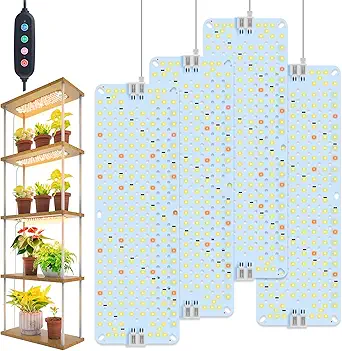 |
| Best Value The sweet spot between price and what you get | Juhefa 6000K Full Spectrum Gooseneck Plant Grow Light (40 White + 8 Red LEDs) |  |
| Best Budget The cheapest option that still gets the job done reliably | CFGROW SPL-01 Full-Spectrum LED Grow Light with Adjustable Height and Timer |  |
| Highest Rated A top-rated pick with lots of positive feedback | GLOWRIUM Full-Spectrum Smart LED Grow Light (Freestanding) |  |
| Most Popular A crowd favorite that many people choose with confidence | LEOTER 4-Head LED Grow Light with Full Spectrum, Timer and 10-Level Dimming |  |
| Best Seller A high-volume bestseller chosen again and again | Aokrean Halo 3.5in Full-Spectrum Indoor Grow Light with Base |  |
GooingTop Standing LED Grow Light for Indoor Plants, 6000K Full Spectrum

| Wattage | 100 watts |
|---|---|
| Number of Light Sources | 148 |
| Power Source | Corded Electric |
| Mounting Type | Floor Mount |
| Timing setting | 4H/8H/12H |
This freestanding GooingTop LED grow light is designed to mimic daylight for indoor plants using a mix of white, red, and blue LEDs (148 total) and a 6000K full-spectrum output. It typically sits on its adjustable tripod and uses two 8-inch light strips on flexible goosenecks so you can aim light at individual succulents or a small tray of seedlings. The inline remote and touch control let you set a 4/8/12 hour timer and switch between half and full brightness, which helps automate light cycles without constant oversight. Practical benefits include high LED count for even coverage across about 1 to 2 square meters, sturdy iron stand that adjusts from low to taller tabletop height, and low power draw compared with traditional bulbs. Limitations are that it is not waterproof so it must stay dry, the light temperature leans cool (6000K) which some growers prefer to supplement during flowering stages, and the tripod form factor takes more floor or table space than slim clip lights. For balanced indoor growers who want easy setup and programmable cycles, it performs well for daily lighting needs.
Best for: Growers who want an easy-to-use, programmable lamp for a few succulents or a small indoor collection and value flexible aiming and simple automation.
Less Ideal for: People needing a waterproof fixture for humid misting setups or large-scale, multi-shelf propagation where wider commercial fixtures are required.
- Full-spectrum LED array (148 LEDs) designed to support all growth stages
- Adjustable tripod and gooseneck heads let you aim light precisely at individual plants
- Remote control and 4/8/12 hour timer with two brightness levels for automated schedules
- Relatively low power draw while delivering high output suitable for small to medium setups
- Not water resistant so it must be kept away from watering or humid greenhouse conditions
- Cool 6000K-dominant spectrum may need supplemental warmer light for late flowering or color tuning
Verdict: A convenient, adjustable full-spectrum standing grow light that gives balanced daily lighting and simple timers for small succulent collections.
FECiDA Flat Panel LED Grow Lights, 4-Pack

| Light Source Type | LED |
|---|---|
| Power Source | Corded Electric |
| Light Source Special Features | Natural Sunlight Full Spectrum |
| Number of Light Sources | 4 |
| Wattage | 48 watts |
These FECiDA flat-panel lights are a compact, practical solution for seed starting and shelf-based indoor gardening. Each panel uses a full-spectrum LED array (listed as 3000K, 5000K and 660nm components) with roughly 12W actual draw per panel and simple series/parallel connections so you can daisy-chain multiple units cleanly on a shelf. Typical use is under shelving, in small greenhouses, or above seed trays and young seedlings where space is limited. Built-in timers offer preset run times (4/8/12/16/20 hours) so you can set daily schedules and avoid manual on/off. The aluminum body and included driver keep installation straightforward, and the set of four covers multiple small trays or tiers. Limitations to note are the modest per-panel wattage if you plan to scale to larger areas and the fixed mounting style which is best suited to flat under-shelf attachment rather than adjustable-height stands. For tomato seedlings on a dedicated seed-starting shelf these panels provide even, plant-friendly light and hands-off scheduling, but larger or more light-hungry setups will need higher-output fixtures.
Best for: Plant parents who want a compact, easy-to-install lighting solution for seed trays and multi-tier shelves and who prioritize tidy wiring and scheduled runtimes for reliable seedling growth.
Less Ideal for: Growers planning to cultivate many tomato plants to larger vegetative or flowering stages in a single area should choose higher-output fixtures or adjustable-height systems instead.
- Full spectrum LED blend including 660nm red to support vegetative and early flowering stages
- Modular series/parallel connections allow tidy daisy-chaining across multiple panels
- Built-in 5-mode timer simplifies daily scheduling for seed starting
- Slim aluminum panels mount cleanly under shelves to save space
- Per-panel actual power (about 12W) is modest and may be low for larger or late-stage plants
- Fixed under-shelf mounting limits use where adjustable distance to seedlings is needed
Verdict: A space-saving, daisy-chainable full-spectrum panel set that makes scheduled seed starting on shelves simple and tidy.
Juhefa 6000K Full Spectrum Gooseneck Plant Grow Light (40 White + 8 Red LEDs)

| Light Source Type | LED |
|---|---|
| Wattage | 5 watts |
| Light Source Special Features | dimmable |
| Mounting Type | Table Mount |
This Juhefa gooseneck grow light is designed for small-scale indoor growing and seed starting. It combines 40 white 6000K LEDs with 8 red 660nm LEDs to provide a broad spectrum useful across growth stages, and the flexible gooseneck lets you aim light precisely at seedlings or small pots. Setup is simple: plug in the USB power, position the lamp, and choose one of three auto timers (4, 8, or 12 hours) so plants get consistent daily cycles without manual switching. Five dimmable levels let you lower intensity for fragile seedlings or raise it for vegetative growth. The lamp is lightweight and clips or stands near plants on a desk, shelf, or plant stand. Practical benefits include low power draw, a high CRI for true color rendering, and built-in timing that helps when you are away. Limitations are its modest overall output for larger trays or deeper canopies and a single light bar that requires close placement for even coverage, so you may need multiple units for bigger seedling flats.
Best for: Buyers starting seeds or growing a few small indoor plants who want an inexpensive, easy-to-use lamp that provides timed, adjustable light without a complex setup.
Less Ideal for: Growers who need to light large trays, multiple shelves, or high-light greenhouse crops should choose higher-output fixtures or larger panels instead.
- Full-spectrum LED array with dedicated 660nm red diodes to support flowering and fruiting
- Built-in 4/8/12 hour auto timer keeps a consistent daily light cycle without manual intervention
- Five dimmable brightness levels allow tuning for seedlings through vegetative stages
- Flexible 360° gooseneck and long USB cable for precise positioning over small pots and trays
- Low wattage draw suitable for continuous use without high electricity cost
- Single light bar provides limited coverage so multiple units are needed for larger seedling flats
- Not powerful enough for deep canopies or high-light fruiting crops when used alone
Verdict: A budget-friendly, plug-and-play gooseneck grow light that gives seedlings reliable timed and dimmable full-spectrum illumination for small indoor setups.
CFGROW SPL-01 Full-Spectrum LED Grow Light with Adjustable Height and Timer

| Power Source | Corded Electric |
|---|---|
| Light Source | LED |
| Wattage | 15 watts |
| Brightness | 2000 lumen |
| Control Method | Remote |
The CFGROW SPL-01 is a tabletop freestanding LED grow light made for small indoor gardens and desktop plants. It supplies a full 380–800 nm spectrum across selectable red, blue, and white modes, and offers 10 brightness settings so you can tailor light intensity to seedlings, succulents, or mature houseplants. The unit includes a height-adjustable pole system and a removable stake so you can place the lamp above pots or insert it in soil for lower profiles. A circular memory timer with 3/9/12 hour options automates daily on/off cycles, which is useful when you cannot tend plants every day. At roughly 15 watts and about 2000 lumens, it is energy efficient for continuous use and claims long LED life. Practical limits are its small coverage area and nonwaterproof plastic construction, so it is best for individual pots or small clusters indoors rather than larger grow racks or humid greenhouse setups. The remote control and dimmer make fine tuning easy, but the timer must be reset after a power interruption.
Best for: Buyers looking for an affordable, energy-efficient grow light to keep a few desktop plants, succulents, or seedlings healthy with minimal fuss and automated lighting.
Less Ideal for: Growers who need wide area coverage, commercial-scale output, or a waterproof fixture for humid environments should look at larger, higher-powered alternatives.
- Full spectrum LEDs with three light modes for different growth stages
- Ten dimmable levels allow precise control of intensity
- Height-adjustable pole and removable stake for versatile placement
- Built-in memory timer with 3/9/12 hour auto on/off for hands-off scheduling
- Low wattage (15W) and high lumen output for energy-efficient operation
- Small coverage area limits use to single pots or small clusters indoors
- Plastic, nonwaterproof construction makes it unsuitable for humid or wet locations
Verdict: A budget-friendly, energy-efficient full-spectrum lamp that automates light schedules and is ideal for keeping a few small indoor plants healthy.
GLOWRIUM Full-Spectrum Smart LED Grow Light (Freestanding)

| Power Source | Corded Electric |
|---|---|
| Wattage | 12 watts |
| Control Method | App, Push Button |
| Connectivity Protocol | Bluetooth |
| Indoor Outdoor Usage | Indoor |
This GLOWRIUM freestanding grow light delivers full-spectrum LED output with stepless dimming and app control to support seedlings through flowering. It is typically used as a floor or desk lamp positioned beside succulents or cacti to provide consistent supplemental light when natural sun is limited. Notable features include Bluetooth app control with scheduling, a 360° flexible gooseneck for targeting light, an adjustable height range, and a low-voltage 24V power system for safety. Practical benefits for succulent growers are precise control over daily light duration and intensity, the ability to angle the enlarged lamp head over multiple pots, and built-in timers or sunrise/sunset sync to create stable light cycles that reduce stress on slow-growing species. Limitations are that it is designed for indoor use only and not water resistant, and the single light head and 12W rating mean it best suits a few small plants or a single shelf rather than a large collection or wide grow bench.
Best for: Buyers who prioritize dependable, easy-to-automate supplemental lighting for a small collection of succulents or cacti and want set-and-forget schedules with app monitoring.
Less Ideal for: Collectors with large arrays of wide-spread plants or those who need waterproof fixtures for humid propagation setups should look for higher-power or multi-head solutions.
- Full-spectrum LED with stepless dimming lets you match intensity to succulent growth stages
- App control and programmable timers simplify consistent daily light schedules
- Adjustable height and 360° gooseneck enable precise targeting of individual plants
- Low-voltage 24V design and aluminum construction offer durable, safe operation
- Single 12W light head limits coverage to a few small pots or a single shelf
- Not water resistant so it must be kept away from humid or wet environments
Verdict: A compact, reliable smart grow lamp that gives succulent owners precise, automated light control for a small indoor collection.
LEOTER 4-Head LED Grow Light with Full Spectrum, Timer and 10-Level Dimming

| Light Source Type | LED |
|---|---|
| Number of Light Sources | 80 |
| Wattage | 80 watts |
| Control Method | Remote |
| Mounting Type | Clip On |
The LEOTER 4-head grow light is a USB-powered, clip-on lamp built for indoor plant care that combines full-spectrum and targeted red/blue diodes to support seedlings, vegetative growth and flowering. It uses 80 LEDs arranged across four adjustable heads on flexible goosenecks so you can position light over individual large plants or groupings. Notable features are three spectral modes (red+blue, warm/full spectrum, and combined), a circular memory timer with 3/9/12-hour presets, and ten brightness levels for fine control over intensity. The strong metal clip and flexible necks make it simple to aim light at tall foliage without permanent installation. Practical benefits include reduced need for supplemental natural light, convenient daily scheduling for busy users, and a compact footprint that suits shelves or plant stands. Important limitations are that the unit is described as a clip/desk lamp rather than a wide-panel fixture, so coverage for very large single specimens may require placing heads close to foliage or using multiple units, and the timer resets if unplugged so it needs occasional reprogramming after power loss.
Best for: Buyers who want a controllable, space-efficient grow light to supplement indoor sun for larger houseplants and prefer a proven, feature-rich unit with preset timers and adjustable heads.
Less Ideal for: Growers who need single-fixture coverage for floor-to-ceiling specimens or large multi-plant setups should consider full-size panel fixtures or multiple units instead.
- Full spectrum plus red and blue LEDs (80 total) to support all growth stages
- Ten dimming levels for precise intensity control
- Three timer presets with memory function for hands-off daily scheduling
- Adjustable 4-head design and flexible goosenecks for targeted placement
- Strong metal clip allows mounting on shelves, desks, or plant stands
- Designed as a clip-on lamp so single-unit coverage is limited for very large plants
- Timer settings must be reset after the light is unplugged
Verdict: A versatile, adjustable clip-on grow light that gives busy indoor gardeners precise control over spectrum, intensity and scheduling to boost large plant growth in compact spaces.
Aokrean Halo 3.5in Full-Spectrum Indoor Grow Light with Base

| Wattage | 10 watts |
|---|---|
| Light Source Type | LED |
| Number of LEDs | 48 LEDs |
| Control Method | Touch |
| Timer | 3/9/12H |
The Aokrean Halo is a small, versatile full-spectrum LED grow light designed for indoor plants. It offers two installation modes: a stake to insert into soil and a weighted ABS base that lets you place a pot on top for a stable floor or desk setup. The lamp uses 48 LEDs and three spectrum modes including mixed red plus warm and cool white, and a 10-step dimmer accessible by a push button, so you can tailor light intensity for seedlings, growing succulents, or cacti. A built-in timer cycles 3/9/12 hours for hands-off daily schedules. The pole telescopes and rotates so you can adjust height and angle to keep light focused on compact rosettes or tall offsets. Practical strengths are its small footprint, multiple mounting options, and simple touch controls, while limitations are that it is a low-watt, single-light unit best suited to a few small pots rather than a larger succulent collection and relies on the pot to stabilize the base. The waterproof rating and USB power make it easy to place near trays and humid environments, but larger setups will need multiple units or a higher-output fixture.
Best for: Buyers who want a simple, low-risk grow light for one to a few small succulents or cacti and prefer easy setup, preset timers, and adjustable intensity over advanced controls.
Less Ideal for: Collectors with many pots or larger arrangements who need high-output, wide-coverage fixtures should consider more powerful multi-light systems.
- Dual installation: soil stake or weighted base for flexible placement
- Full-spectrum LEDs with three lighting modes to match growth stages
- 10-level dimming and 3/9/12-hour timer for fine control and convenience
- Telescoping pole and 90° rotation to aim light at compact succulents
- USB power and waterproof rating simplify placement near humidity-prone areas
- Low 10-watt output and single lamp make it unsuitable as the sole source for larger collections
Verdict: A compact, easy-to-use full-spectrum lamp that gives risk-averse buyers simple adjustable light and timers ideal for one to a few small succulents.
Choosing the Right Grow Light for Succulents and Cacti: Key Factors to Consider
Light Spectrum and Plant Response
Succulents and cacti respond best to a spectrum that leans toward daylight with a healthy portion of blue light to keep growth compact. Blue wavelengths help prevent etiolation, an elongation where stems stretch toward light, which is a common problem under weak lamps.
Red light supports general photosynthesis and helps with energy capture, but an excess of red without enough blue can encourage leggy growth. Look for fixtures that list a balanced full spectrum or specific blue/red ratios suitable for vegetative growth. For mixed collections, a neutral daylight color temperature in the 4000K to 6500K range often reproduces natural sun cues while keeping rosettes tight.
Light Intensity and Coverage
Intensity dictates how large an area a single fixture can effectively serve and whether plants need to sit directly under the lamp. Succulents typically prefer bright, direct light, so check recommended hanging heights and the footprint the manufacturer specifies for seedlings versus mature plants.
A small desk lamp may work for one pot but will not evenly light a tray of cuttings. Consider how many pots you need to cover and whether the fixture allows focused versus wide spread. In practice, moving pots closer or adding more fixtures gives more controlled results than relying on one underpowered lamp.
Heat Management and Placement
Excessive heat is a real risk for succulents because many species originate from arid, well-ventilated sites and will suffer if lamps raise surface temperatures too high. LEDs typically run cooler than older technologies, but some high-output LEDs still create hot spots directly beneath the diodes.
Check fixture cooling methods such as passive heat sinks or built-in fans. Also think about placement: avoid small enclosed plastic trays without airflow and keep a few inches between lamp and plant to prevent tip burn. Heat considerations affect whether a light is safe for close-proximity use with delicate seedlings.
Controls, Timers, and Light Cycles
Succulents need consistent daily light hours to maintain healthy morphology. Built-in timers or compatibility with external timers makes it easy to mimic natural daylength without manual switching. Dimming and spectrum controls allow you to tune intensity for seedlings versus mature rosettes.
Simple, repeatable schedules reduce stress from inconsistent lighting. Look for fixtures with reliable timers or an easy method to integrate with a plug-in timer. Adjustable brightness and multiple spectrum modes add flexibility as plants grow or seasons change.
Mounting Options and Flexibility
Where you place a grow light determines how useful it will be. Flexible mounting like goosenecks, adjustable hangers, or clip bases lets you position the lamp for a single pot, a shelf, or a full rack. Rigid fixtures that only mount overhead may limit placement in small apartments or narrow shelving.
Consider power cord length and whether the fixture can be raised or lowered without tools. More adaptable mounting makes it easier to use one fixture for propagation, grafting, and display while preserving correct distance for different plant sizes.
Durability and Indoor Suitability
Indoor growers need lights that withstand dust, occasional watering splashes, and regular on-off cycles. Materials, build quality, and IP ratings where provided indicate how well a fixture will hold up in a humid or messy propagation area.
Also consider warranty and expected lifespan expressed in operating hours. Durable fixtures reduce long-term replacement hassle, and a reliable driver or power supply prevents flicker and inconsistent output that can disrupt plant development.
Matching Light to Your Succulent Type
Different succulent species have different light tolerances. Compact rosette types like echeveria and haworthia prefer very bright light with ample blue content to keep leaves tight, while some columnar cacti can tolerate slightly lower intensity but still benefit from longer daily hours. Assess the sun exposure your plants would get outdoors and aim to reproduce that intensity and duration indoors.
For mixed collections, plan for the most light-demanding plants when choosing fixture placement. You can create gradients of intensity by raising or lowering plants or using diffusers for more sensitive species.
- Place high-light species closest to the lamp and lower-light species toward the periphery
- Use adjustable hangers to change intensity without moving pots
- Consider supplemental side lighting for dense rosettes to reduce shadowing
Setting Up a Succulent Propagation Station
Propagation requires steady light without high heat for young cuttings and seedlings. Use a fixture that offers gentle, uniform coverage at a close distance and supports a timer for regular daily cycles. Lower intensity and higher blue balance help roots develop without encouraging rapid, leggy shoot growth.
Keep the propagation area well ventilated and avoid placing lamps inside sealed plastic boxes without airflow, unless you specifically design ventilation into the enclosure.
- Aim for 12 to 16 hours of light daily for most cuttings
- Position the lamp 6 to 12 inches above seedlings depending on intensity
- Rotate trays occasionally to even out growth
Using Dimmers and Schedules Effectively
Dimmers let you tailor intensity as plants move through growth stages. Start seedlings at lower intensities and increase brightness as leaves develop. Timers reproduce consistent day length and reduce human error.
If your fixture lacks a built-in dimmer, use a plug-in timer and physically adjust distance or add diffusing material to change effective intensity.
- Gradually increase light after a week or two to avoid shock
- Match daylengths to seasonal expectations for your species
- Use dusk/dawn ramping features if available to mimic natural light transitions
Common Setup Mistakes and How to Avoid Them
A frequent error is placing plants too far from a weak lamp, leading to stretching. If leaves elongate or pale, move plants closer or increase intensity. Another mistake is ignoring heat; avoid fixtures that create hot spots directly over small pots.
Also avoid relying on a single overhead lamp for wide plant trays. Instead, use multiple smaller fixtures or reposition plants regularly to ensure even light distribution.
- Watch for pale or elongated growth as signs of insufficient light
- Check leaf tips for browning that signals heat stress
- Use multiple smaller lights for uniform coverage across trays
Energy Use and Indoor Practicality
Energy efficiency matters when lights run many hours per day. Modern LEDs offer good lumen output per watt and lower heat compared with older bulbs. Consider total daily run time when selecting a fixture so you can estimate energy needs in practical garden terms.
Also think about cord routing, switch placement, and whether the fixture is easy to move for cleaning or plant rearrangement. Practical convenience often determines whether a light actually gets used as intended.
- Choose fixtures with clear wattage and coverage specs
- Prefer models with easy-to-reach controls or compatibility with smart timers
- Factor in ventilation needs when estimating placement
How We Chose the Best Grow Light for Succulents and Cacti
We focused on criteria that actually affect growing succulents and cacti under artificial light. Spectral balance was a primary filter because succulent photosynthesis and compact growth depend on the right ratio of blue and red wavelengths. Heat management was another key criterion since many growers use lights in small enclosed spaces; elevated temperature can stress or scorch sensitive rosettes. Coverage and intensity were measured in practical terms such as recommended hanging height and effective area for common pot sizes. Energy efficiency and runtime behavior mattered because continuous daily light hours are typical for these plants. Ease of setup and adjustability were included to reflect real indoor use where light angle and distance are often changed. We excluded lights designed only for high-humidity greenhouse use, full-scale commercial LED fixtures with industrial mounting, and specialty spectrum lamps intended exclusively for flowering cannabis tests. The final shortlist includes options that balance spectrum, low heat, usable coverage, energy use, and simple mounting for hobby succulent growers.
FAQ
How many hours of artificial light do succulents and cacti need each day?
Most succulents do well with 10 to 14 hours of bright light daily, depending on species. Seedlings and cuttings often benefit from slightly longer days, while some desert species can handle shorter, more intense bursts. Use a timer to maintain consistent schedules.
Can I use a standard household LED bulb for succulents?
A standard LED can provide some benefit but often lacks the spectrum and intensity succulents prefer. Look for fixtures or bulbs labeled for plant growth or full spectrum with specified recommended hanging heights for best results.
How close should the light be to my succulents?
Distance depends on intensity. For high-output LED panels, 8 to 12 inches is common, while lower-output lamps may need to be closer. Watch plants for stretching or leaf burn and adjust distance gradually.
Will grow lights cause my succulents to overheat?
Some fixtures can raise surface temperatures, especially if placed very close or used in confined spaces without airflow. Choose lights with low heat output or adequate cooling and avoid sealed enclosures without ventilation.
Do succulents need different spectra during propagation versus mature growth?
Yes. Propagation and early vegetative stages benefit from higher blue content to encourage compact, rootable growth. Mature plants can tolerate a broader daylight spectrum. Adjustable-spectrum fixtures provide the most flexibility.
Is it better to use one large fixture or several smaller lamps?
Several smaller lamps often give more uniform coverage and flexibility, especially for mixed trays and shelving. Multiple lights let you create intensity gradients and reduce shadowing compared with a single centralized fixture.
Final Verdict
Prioritize spectral balance, manageable heat, and the right coverage for your collection when choosing a grow light for succulents and cacti. Decide whether you need close, focused intensity for single pots or wider spread for trays and propagation, and pick mounting and control features that fit your space. Tradeoffs are inevitable: higher intensity gives more growth potential but may require better cooling and more careful placement. Choose the fixture that matches your plants first, then consider convenience features like timers and dimmers to keep daily care simple.
