

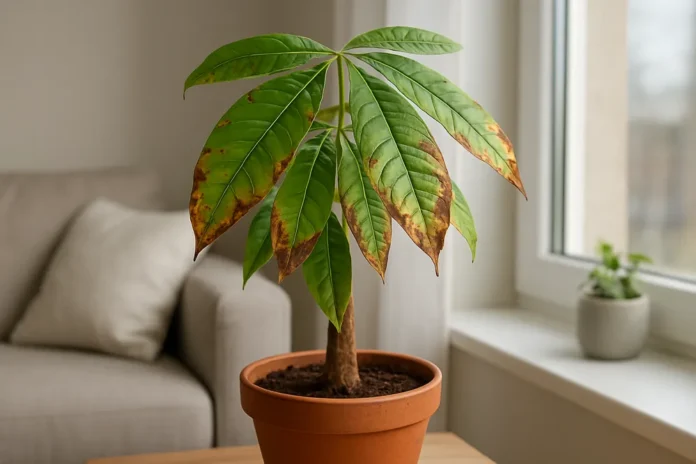
Money tree leaves develop brown spots most often from watering problems, dry air, direct sun, mineral buildup, pests, or leaf disease. The exact cause depends on the spot pattern, how quickly it spreads, and the plant's recent care conditions.
If your money tree leaves have brown spots, the plant is telling you something is off, but it is not always a crisis. I have seen this symptom show up from a surprisingly wide mix of causes, including inconsistent watering, too much sun, low humidity, fertilizer salts, and a few common pest or fungal issues.
The useful part is that brown spots tend to leave clues. Some spots stay dry and papery along the edges. Others look soft, dark, or haloed in yellow. Sometimes only older leaves are affected, while in other cases the newest growth starts spotting first. Once you match the pattern to the likely cause, it gets much easier to stop the damage and help your money tree put out clean new leaves.
What Brown Spots Usually Mean on a Money Tree
Brown spots are not a diagnosis by themselves. They are a symptom of damaged leaf tissue. On money trees, that damage often comes from one of six buckets: watering stress, sun scorch, humidity problems, mineral or fertilizer burn, pests, or leaf disease. The goal is to figure out which bucket fits your plant best.
Start by looking at the color, texture, and location of the spots. Dry tan or medium-brown patches often point to scorch, dryness, or salt buildup. Dark brown or nearly black spots can suggest overwatering or disease, especially if the leaf feels soft. Tiny speckling may come from sucking insects. Brown tips and margins usually suggest moisture stress before anything else.
- Spots on leaves facing a bright window often suggest direct sun or heat exposure.
- Spots that appear after missed waterings often point to drought stress or low humidity.
- Spots that spread while the soil stays wet often suggest root stress or infection.
- Spots with sticky residue, webbing, or tiny insects nearby often indicate pests.
- Spots that worsen soon after feeding can be linked to fertilizer or hard-water salts.
When I diagnose brown spotting, I pay more attention to new growth versus old growth than most gardeners expect. If only a few older leaves are marked and the new leaves look clean, the problem may already be behind the plant. If fresh leaves are spotting as they unfurl, I look harder at ongoing stress such as wet roots, dry air, or pests.
Watering Problems Are the Most Common Cause
Underwatering and Inconsistent Moisture
A money tree that gets too dry between waterings can develop crisp brown spots, tips, or edges. This happens because leaf cells lose moisture and die back, especially during warm indoor conditions or when the plant sits near heating or air-conditioning vents. If the soil pulls away from the pot edge or feels bone dry several inches down, underwatering is a strong suspect.
Inconsistent watering can cause similar damage even if you do water regularly. A cycle of very dry soil followed by a heavy soak stresses roots and leaf tissue. You may notice random brown patches, drooping, and some yellowing at the same time.
Overwatering and Root Stress
Too much water can also cause brown spots, but the texture often looks different. Leaves may develop dark, soft, or water-soaked patches. They can also yellow before turning brown. The deeper issue is usually stressed roots that are not getting enough oxygen. When roots sit in soggy soil, they struggle to move water and nutrients, so the leaves decline even though the pot feels wet.
If your money tree is in a decorative cachepot without drainage, or if water regularly stands in the saucer, overwatering becomes much more likely. Potting mix that stays damp for a week or more can also point to poor drainage or early root rot.
- Dry, crispy brown tips and edges are more common with underwatering.
- Soft dark spots plus yellowing are more common with overwatering.
- Drooping can happen with either problem, so do not use droop alone to decide.
- A heavy pot and sour-smelling soil lean toward excess moisture.
- A very light pot and hard, shrunken soil lean toward lack of water.
I get the clearest results with money trees by watering thoroughly, then waiting until the top 2 to 3 inches of mix dry before watering again. The exact number of days changes with season, light, and pot size, so I do not water on a fixed calendar.
Light, Heat, and Dry Air Can Leave Spotty Damage
Direct Sun Scorch
Money trees like bright light, but harsh direct sun, especially afternoon sun through glass, can scorch the leaves. Sunburn usually appears as pale tan, bleached, or brown patches on the side of the plant facing the window. The tissue often feels dry and papery rather than soft.
This kind of spotting often shows up after moving the plant from a dimmer room to a brighter spot without a gradual adjustment. A sunny south- or west-facing window can be more intense than many indoor gardeners expect, particularly in summer.
Low Humidity and Hot Drafts
Money trees tolerate normal indoor conditions fairly well, but very dry air can still cause brown spotting, browning along edges, and crispy tips. This is especially common in winter when indoor heating drops humidity fast. A plant near a heat register, fireplace, radiator, or strong air-conditioning stream may show damage even if the rest of the room feels comfortable.
Humidity-related damage often hits leaf margins first and can be worse on thinner, newer leaves. It usually does not create the tiny stippled look that pests cause, and it does not usually create wet-looking black lesions the way disease can.
- Window-facing dry patches suggest sun scorch.
- Brown edges and tips across several leaves suggest dry air or uneven watering.
- Damage near vents or heaters often matches airflow patterns.
- A recent move to brighter light is a major clue.
Mineral Buildup and Fertilizer Burn Are Easy to Overlook
Money trees can react to excess fertilizer salts and to minerals left behind by hard tap water. Over time, those salts build up in the potting mix and interfere with water uptake. The result can look like dehydration even when you water enough. Leaves may develop brown tips, marginal scorch, or scattered dry patches.
This problem becomes more likely if you fertilize frequently, use a strong dose, or rarely flush water through the pot. It is also more common in plants that have been in the same soil a long time. White crust on the soil surface or pot rim is a classic clue.
If you suspect mineral buildup, think about your routine over the past few months. A money tree that looked fine, then slowly developed browning after regular feeding or hard-water use, may be reacting to salt accumulation rather than insects or disease.
Salt damage often fools people because the plant can look both dry and overwatered at the same time. The soil may be moist, but the roots still struggle to pull in water efficiently. When I see brown tips with a white crust on the mix, I move salt buildup high on the list.
Pests Can Create Tiny Brown Marks and Larger Damaged Patches
Spider Mites
Spider mites are one of the most common money tree pests indoors. They feed by piercing leaf tissue, which creates fine stippling that can look pale, tan, or rusty-brown over time. Heavy infestations make leaves look dull, dusty, and tired before they drop. In dry rooms, mite populations can build quickly.
Check the undersides of leaves for faint webbing and tiny moving dots. If the spotting seems very fine and spread widely rather than forming a few large lesions, mites are worth investigating.
Scale, Mealybugs, and Thrips
Scale insects and mealybugs feed on sap and can weaken leaves enough to cause yellowing and brown patches. Scale may look like little brown bumps stuck to stems or leaf veins. Mealybugs look like bits of white cotton. Thrips are harder to see, but they can leave scarring, silvery streaking, and scattered brown spots.
Pest damage usually comes with other clues, such as sticky residue, distorted new growth, or visible insects on the undersides of leaves and around stem joints. Brown spots caused by pests are often irregular and accompanied by a general loss of leaf shine.
- Fine speckling and webbing point toward spider mites.
- Brown bumps on stems or veins point toward scale.
- White cottony clusters point toward mealybugs.
- Scarring and deformed new leaves can suggest thrips.
Fungal or Bacterial Leaf Spots Are Possible, Especially in Persistently Wet Conditions
Although everyday care issues cause most brown spotting on houseplant money trees, leaf spot diseases do happen. Fungal or bacterial spots often start as small dark lesions that may enlarge and develop yellow halos. Some stay fairly round, while others become angular depending on the leaf veins. In humid, stagnant conditions, the spotting can spread from leaf to leaf.
These problems are more likely when foliage stays wet for long periods, plants are crowded, air movement is poor, and the potting mix stays consistently soggy. If the spots look dark and defined rather than dry and crispy, disease should stay on your shortlist.
Severely affected leaves do not recover. The priority is preventing new infections by keeping leaves dry, improving air circulation, and correcting any overwatering issue. Sanitation matters too. Remove heavily damaged leaves with clean pruners and avoid handling healthy foliage right after touching infected tissue.
How to Tell Which Cause Fits Your Plant
When a money tree develops brown spots, I like to work through a short elimination process. It keeps me from making three changes at once and confusing the issue. Look at the spot pattern, then match it with the plant's environment and care history from the last few weeks.
- Check the soil moisture 2 to 3 inches down and note whether the pot feels unusually heavy or light.
- Look at the position of the damaged leaves. Are they closest to direct sun, a vent, or a heater?
- Inspect both sides of several leaves for webbing, bumps, cottony residue, or moving pests.
- Think about recent fertilizer use and whether you see white crust on the soil or pot.
- Notice whether the spots are dry and papery, soft and dark, or tiny and speckled.
- Compare older leaves with new leaves to see whether the problem is active or left over from earlier stress.
A plant with dark spots, yellowing, and wet soil is very different from one with crispy tan patches only on the sunny side. The details matter more than the fact that both are brown.
What to Do Next to Stop New Brown Spots
Adjust Care Based on the Cause
If the issue is underwatering, water more thoroughly and do not let the root ball become extremely dry. If the issue is overwatering, let the mix dry appropriately between waterings and make sure the pot drains freely. For sun scorch, move the plant slightly back from intense afternoon light or filter the window with a sheer curtain. For low humidity, keep the plant away from blasting heat or air and consider grouping it with other plants.
If salts are the problem, flush the pot with plain water until excess drains out, then reduce fertilizer strength and frequency. If pests are present, isolate the plant and treat it consistently rather than once. If disease is suspected, remove badly spotted leaves, keep foliage dry, and improve airflow while correcting any soggy-soil problem.
Decide Whether to Prune Damaged Leaves
Brown spots do not turn green again, so damaged tissue is permanent. You can leave mildly spotted leaves in place if most of the surface is still healthy and helping the plant photosynthesize. Remove leaves that are heavily damaged, diseased, or simply too unsightly. Always use clean scissors or pruners.
Watch New Growth, Not Old Scars
The real sign of improvement is clean new growth. Existing spots remain as a record of past stress, so do not judge success by whether old leaves look better. After correcting the cause, give the plant a few weeks and track whether fresh leaves emerge without spotting.
Pick the most likely cause and correct that first instead of changing light, water, fertilizer, and humidity all at once. New growth gives you the clearest feedback, and one-variable changes make that feedback much easier to trust.
When Brown Spots Mean Repotting or Root Checks Are Worth It
Sometimes leaf spotting is really a root-zone issue that the plant can no longer outgrow. If your money tree stays soggy for a long time after watering, smells musty, declines despite reasonable care, or has roots circling tightly in exhausted old mix, it may need a closer look below the soil line.
Healthy roots should look firm and pale. Brown, mushy, foul-smelling roots point toward rot. In that case, trimming dead roots and repotting into a chunky, well-draining indoor potting mix may be necessary. If the root ball is severely compacted and water runs around it instead of soaking in, repotting can also help solve chronic underwatering issues.
Do not repot just because a leaf has a few spots. But if the plant keeps declining after you correct the obvious issues, the roots may be where the real story is hiding.
FAQ
Should I Cut Off Money Tree Leaves with Brown Spots?
If a leaf is mostly healthy, you can leave it on the plant. Remove leaves that are badly damaged, diseased, or spoiling the plant's appearance, and use clean pruners.
Can Brown Spots on a Money Tree Go Away?
No, damaged leaf tissue does not heal back to green. What you want to see is healthy new growth after the underlying problem is corrected.
Do Brown Spots Mean My Money Tree Has Root Rot?
Not always. Root rot is one possibility, especially when the soil stays wet, leaves yellow, and spots look dark or soft, but sun scorch, dry air, salts, and pests can cause similar-looking damage.
Can Tap Water Cause Brown Spots on Money Tree Leaves?
Yes, especially if your tap water is hard or high in salts and minerals. Over time, buildup in the soil can lead to brown tips, edges, and dry spotting.
Are Brown Spots From Too Much Sun or Too Little Water?
Either can do it. Too much sun usually causes dry patches on the bright side of the plant, while too little water often causes crisp tips, edges, and overall wilting or drooping.
How Often Should I Water a Money Tree with Brown Spots?
Water based on soil dryness, not a strict schedule. In most homes, watering when the top 2 to 3 inches of mix feel dry works better than watering on the same day every week.
Can Pests Make Money Tree Leaves Look Spotty Before I See Bugs?
Yes. Spider mites and thrips often cause subtle stippling, scarring, or brown flecks before the insects are obvious, so inspect leaf undersides carefully.
Want the fastest fix for a struggling houseplant? Read our guide to the best indoor plant soils, moisture meters, and pest treatments so you can choose the right solution without guessing.
