

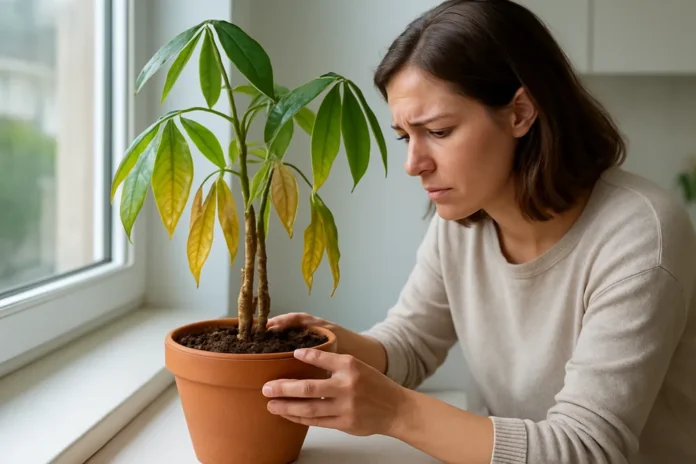
A money tree is usually dying because its roots are staying too wet, drying out too hard, or sitting in low light and stress. Sudden leaf drop, yellowing, browning, and soft stems often come from watering and root problems more than anything else.
A money tree can go from lush and easygoing to thin, yellow, and droopy faster than most people expect. When that happens, the problem is usually not random bad luck. In my experience, a struggling money tree is almost always reacting to a short list of stressors: too much water, too little light, temperature swings, compacted soil, or pests.
The good news is that a dying money tree often gives you clues before it is beyond saving. Yellow leaves, crispy brown edges, mushy stems, leaf drop, and a sour smell from the pot all point in different directions. If you match the symptom pattern to the cause, you have a much better chance of turning it around.
Below, I will walk through the most common reasons money trees decline, how to tell them apart, and what to do next. The goal is not just to keep the plant alive, but to help it put out healthy new growth again.
What a Healthy Money Tree Should Look Like
A healthy money tree has firm green leaves, upright stems, and a steady habit of producing fresh growth during spring and summer. The soil should dry somewhat between waterings, but the plant should not stay bone dry for long stretches. Leaves may occasionally age out, especially near the bottom, but widespread yellowing or sudden leaf drop is a sign that something is off.
Most indoor money trees prefer bright, indirect light, warm room temperatures, and a container with fast drainage. They tolerate average household humidity fairly well, but they do not love cold drafts, soggy roots, or deep shade. Once those conditions slip, the plant starts showing stress through its leaves first and its stems and roots later.
Overwatering Is the Most Common Reason Money Trees Die
If I had to bet on one issue first, I would bet on overwatering. Money trees like moisture, but they do not like sitting in wet soil for days on end. When roots stay saturated, they cannot get enough oxygen. That stress leads to yellow leaves, drooping, blackened roots, stem softening, and eventually rot.
Signs the Soil Is Staying Too Wet
- Leaves turn yellow across much of the plant, not just one or two older leaves
- The plant droops even though the soil feels wet
- The trunk or braided stems feel soft near the base
- The pot smells sour, swampy, or musty
- You see fungus gnats hovering around the soil surface
- Roots look brown, black, or mushy instead of pale and firm
When a money tree is both drooping and wet, I do not treat it like a thirsty plant. That combination usually points to damaged roots, because the plant cannot take up water properly even though the pot is full of it.
Why Overwatering Happens Even when You Do Not Water Often
A lot of people assume overwatering means watering too frequently. Sometimes it does, but just as often it means the potting mix drains poorly, the container has no drainage hole, or the plant sits in a dim area where it uses water very slowly. Watering every ten days can still be too much if the roots never dry enough in between.
If you suspect rot, remove the plant from the pot and inspect the root ball. Trim away mushy black roots with clean scissors, discard heavy waterlogged soil, and repot into a fresh, airy mix. After that, water thoroughly and wait until the top part of the soil dries before watering again.
Underwatering Can Also Cause Decline
Money trees do not want to stay soggy, but they also do not want to be ignored for weeks at a time. If the root ball gets too dry, leaves may curl, crisp at the edges, turn pale, or drop suddenly. Dry stress can also make the stems look thinner and the overall plant feel lighter in the pot.
How Dry Stress Usually Looks
- Brown, crispy leaf tips and margins
- Leaves folding, curling, or feeling papery
- Soil pulling away from the sides of the pot
- A very light container that dries out quickly
- Older leaves dropping after the plant has been dry for a while
The tricky part is that underwatering and overwatering can both cause leaf drop. The difference is in the soil and stem condition. A dry, lightweight pot with crisp foliage points one way. A wet pot with limp yellow leaves points the other way.
If the soil has become so dry that water runs straight through, soak the root ball thoroughly once rather than giving it a few small sips. Dry potting mix can turn hydrophobic, and light surface watering often misses the roots that need moisture most.
Low Light Weakens the Plant Over Time
Money trees are often sold as low-light houseplants, but that description gets overstated. They survive in lower light better than some tropicals, yet they stay much healthier in bright, indirect light. In rooms that are too dim, growth slows down, leaves get smaller, stems stretch, and the plant becomes more vulnerable to watering mistakes.
Low light does not always kill a money tree quickly. More often, it creates a long decline. The plant uses less water, so the soil stays wet longer. Then root stress sets in, and people blame watering alone when light was part of the problem all along.
Symptoms That Suggest Inadequate Light
- Leaned or stretched growth toward a window
- Sparse new growth and smaller leaves
- Frequent yellowing after watering
- A plant that never seems to dry out
- Leaf drop on the interior or lower portions of the plant
Move the plant to a spot near an east- or south-facing window with filtered light, or a few feet back from a bright west-facing window. Avoid blasting it with harsh midday sun all at once if it has been living in shade, because that can scorch the foliage.
Poor Drainage and Compacted Soil Suffocate the Roots
Even if your watering schedule is reasonable, a dense potting mix can keep a money tree too wet. Many plants come home from the store in peat-heavy soil that holds water longer than it should indoors. Over time, that mix compresses, roots get less air, and the plant starts fading.
This is especially common when a decorative outer pot traps excess water or when the nursery pot has tiny drainage holes. The surface may look dry while the center of the root ball stays saturated.
When to Repot
Repot if the soil stays wet for a week or more, smells stale, or seems packed and muddy. Use a container with a real drainage hole and a loose indoor plant mix amended with materials like perlite or bark. You do not need an oversized pot. In fact, too much extra soil can stay wet longer and make the problem worse.
Temperature Stress and Drafts Can Trigger Sudden Leaf Drop
Money trees prefer stable warmth. Cold windows in winter, blasts from air conditioning, heater vents, or frequent moves around the house can all shock the plant. One day it looks fine, and a few days later leaves start yellowing or falling off.
This kind of stress is easy to overlook because the roots may be healthy and the watering may be fine. I see it often when plants are placed near entry doors, drafty windows, or directly under vents where the temperature swings several times a day.
- Keep money trees away from cold drafts and direct blasts of forced air
- Aim for typical indoor temperatures, ideally around 65 to 80 degrees Fahrenheit
- Avoid letting foliage press against cold glass in winter
- Do not move the plant repeatedly between very different light and temperature conditions
Pests Can Slowly Drain the Plant's Energy
Spider mites, mealybugs, scale, and occasionally thrips can weaken a money tree enough to make it look like it is dying. These pests feed on plant sap, which causes stippling, yellowing, curling, sticky residue, or overall decline. The plant may stop growing and begin dropping leaves even if its water needs are being met.
What to Look For
- Fine webbing under leaves or between stems, often from spider mites
- White cottony clusters in leaf joints, usually mealybugs
- Brown bumps stuck to stems or leaves, usually scale
- Sticky honeydew on leaves or nearby surfaces
- Speckled or faded leaves that look dusty or stippled
I always inspect the undersides of leaves before assuming a nutrition problem. Spider mites especially can make a money tree look tired, dull, and yellow long before obvious webbing appears.
Treat pests early with repeated cleaning and an appropriate houseplant treatment such as insecticidal soap or horticultural oil, depending on the pest. One spray is rarely enough. Repeat applications matter because eggs and hidden insects often survive the first round.
Rootbound Plants and Braided Stems Can Create Hidden Stress
A money tree that has been in the same pot for too long may become rootbound. When roots circle tightly around the pot, water may either rush through too quickly or fail to soak the center of the root ball. That makes moisture management inconsistent, and the plant may alternate between stress from dryness and stress from poor aeration.
Braided money trees can also develop problems where stems rub, fuse awkwardly, or remain tied too tightly. In some cases, decorative ties or bands around the base restrict growth and reduce sap flow. If a plant is declining for no clear reason, check around the trunk base for ties, wire, or constriction.
Repot rootbound plants into the next pot size up and gently loosen circling roots. If ties are cutting into the stems, remove them carefully.
Nutrient Issues Are Possible, but They Are Not the First Thing to Blame
It is tempting to assume yellow leaves mean the plant needs fertilizer, but money trees are more often stressed by watering or roots than by hunger. Overfertilizing can actually burn roots and worsen decline. If the plant has not been repotted or fed in a very long time, a mild nutrient deficiency is possible, but it usually shows up as slow growth and general paleness rather than dramatic collapse.
Only fertilize when the plant is actively growing and otherwise healthy enough to use it. A half-strength balanced houseplant fertilizer during the growing season is usually plenty. If the plant is wilted, yellowing heavily, or recovering from root damage, fix those issues first.
How to Tell Which Problem You Have
Diagnosis gets easier when you stop looking at just one leaf and start looking at the whole pattern. Check the soil moisture, the pot, the roots if necessary, the location, and whether damage is crisp, soft, spotted, or uniform. Money trees usually tell a clearer story when you put all those clues together.
- Yellow leaves plus wet soil often mean overwatering or root rot
- Brown crispy edges plus dry soil usually mean underwatering or very dry indoor air
- Drooping plus wet soil points to root trouble more than thirst
- Leaf drop after a move often comes from environmental shock
- Stretched stems and slow growth suggest low light
- Sticky residue, speckles, or webbing suggest pests
How to Help a Dying Money Tree Recover
Recovery starts with correcting the main stress, not doing five things at once. If the plant is waterlogged, prioritize the roots and soil. If it is in a dim corner, improve light. If pests are present, treat them consistently. Once the major cause is addressed, the plant can begin replacing damaged leaves with healthy new growth.
A Practical Recovery Plan
- Move the plant into bright, indirect light.
- Check the soil moisture all the way into the root zone, not just at the surface.
- Inspect roots if the plant stays wet, smells bad, or has soft stems.
- Trim off dead, mushy, or badly damaged parts with clean tools.
- Repot into fresh, airy soil if drainage or rot is part of the issue.
- Water deeply, then let the top portion of the mix dry before watering again.
- Watch new growth for improvement instead of expecting damaged old leaves to repair themselves.
Do not panic if a recovering money tree drops a few more leaves after repotting or moving. Plants often take a few weeks to settle in. What matters most is whether new growth looks firmer, greener, and more stable over time.
When a Money Tree Cannot Be Saved
If most of the trunk is mushy, the roots are almost entirely black and rotted, or the stems have collapsed at the base, full recovery may not be realistic. At that point, you can still inspect for any firm green stem sections that might be propagated, depending on the condition of the plant.
Sometimes the most useful lesson is identifying what went wrong with drainage, placement, or watering habits so the next money tree does better. These plants are forgiving, but once severe rot reaches the main stems, there is often not enough healthy tissue left to rebound.
FAQ
Should I Cut Off Yellow Leaves From My Money Tree?
Yes, if the leaves are mostly yellow or fully spent, you can remove them with clean pruners or by gently pinching them off. Removing damaged leaves improves appearance and helps you focus on whether new growth is healthy.
How Often Should I Water a Money Tree Indoors?
There is no perfect calendar schedule. Most indoor money trees do best when watered thoroughly and then allowed to dry partially before the next watering, which may be every one to three weeks depending on light, pot size, and season.
Can a Money Tree Come Back After Root Rot?
Yes, if enough healthy roots and firm stem tissue remain. The best chance comes from removing rotted roots, repotting into fresh fast-draining soil, and adjusting watering so the roots can recover.
Why Is My Money Tree Dropping Leaves After I Moved It?
Money trees often react to sudden changes in light, temperature, and airflow. A move from one room to another, especially near a drafty window or vent, can cause temporary shock and leaf drop.
Do Money Trees Need Direct Sunlight?
They usually do best in bright, indirect light rather than long hours of direct hot sun. Gentle morning sun can be fine, but harsh afternoon sun can scorch leaves, especially if the plant was previously in lower light.
Why Are the Stems on My Money Tree Getting Soft?
Soft stems are a serious warning sign that usually points to excess moisture and rot. Check the roots and the base of the stems right away, because mushiness often means the plant has been staying too wet.
Is Misting Enough to Help a Struggling Money Tree?
No, misting does not solve the main causes of decline like overwatering, low light, or root damage. It may briefly raise surface moisture, but it will not correct a stressed root system or poor growing conditions.
Still troubleshooting houseplant decline? Read our guide to the best indoor plant soils and drainage setups so you can fix root problems fast and keep your money tree healthy.
