

Note: This article contains affiliate links. If you click on these links and make a purchase, I may earn a small commission at no extra cost to you. This helps support my research and content. Read my full affiliate disclosure here.
When you need to fell small to medium trees or take down deadwood, the right axe makes the job faster and less risky. An axe for cutting down trees behaves differently from a splitting maul or a small hatchet: you are trading swing speed, cutting bite, and control against the momentum needed to sever trunk wood. Choosing well reduces fatigue, improves cut accuracy, and lowers the chance of dangerous bounce or glancing blows. This guide summarizes six top picks that meet common gardener and landowner needs. Below you will find practical notes about head geometry, handle materials, and balance, plus the evaluation criteria used to shortlist each option. Read on to match the tool to your typical tree size and working style.
Top Picks at a Glance
| Best Overall The best all-around choice for most situations | Gränsfors Bruks Scandinavian Forest Axe, 25 Inch |  |
| Best Quality Built to a higher standard if you want something more solid | 1844 Helko Werk Forester Full-Size Felling Axe |  |
| Best Value The sweet spot between price and what you get | Fiskars A-Series 28" Chopping Axe |  |
| Best Budget The cheapest option that still gets the job done reliably | INTERTOOL 36-inch Felling Axe HT-0264 with Fiberglass Handle |  |
| Most Popular A crowd favorite that many people choose with confidence | Fiskars 28" Chopping Axe |  |
| Best Seller A high-volume bestseller chosen again and again | Estwing Camper's Axe 26" with Shock Reduction Grip, E45ASE |  |
Gränsfors Bruks Scandinavian Forest Axe, 25 Inch

| Head Weight | 2.6 pounds |
|---|---|
| Handle Material | Hickory Wood |
| Blade Material | Stainless Steel |
| Head Type | Forest |
| Blade Edge | curved |
The Gränsfors Bruks Scandinavian Forest Axe is built for heavy-duty woods work: its forged curved bit and 2.6 pound head cut cleanly into fresh, resinous timber for felling larger trees and limbing. Typically used standing or from a short stance when removing branches or shaping a felled trunk, the axe’s curved blade gives a slicing action that helps control cuts and reduces binding in spruce or pine. The hickory handle provides a traditional feel and shock absorption, and the included vegetable-tanned leather sheath protects the edge in transport. Practical benefits include a durable stainless-steel head that keeps a good edge with proper care and a balanced weight that suits steady, controlled swings. Important limitations are its specialization for forest work rather than light camp chores and the need for regular sharpening and maintenance to preserve performance; the fixed wooden handle also means replacing or repairing the handle requires workshop skills rather than a simple swap. Overall it is a dependable tool for serious backyard and woodland tasks when longevity and cutting performance matter.
Best for: Buyers who want a long-lived, professional-quality forest axe for regular felling and limbing tasks and who value cutting control and traditional construction.
Less Ideal for: Casual campers, ultralight hikers, or those seeking a multiuse hatchet for small campsite chores should look at smaller, lighter tools instead.
- Forged curved bit designed for clean cutting into fresh, resinous wood
- Well-balanced 2.6 lb head that aids controlled swings for felling and limbing
- Hickory handle offers traditional feel and natural shock absorption
- Stainless-steel blade with included vegetable-tanned leather sheath for edge protection
- Not optimized for light backpacking or small camp chores due to its size and weight
- Requires routine sharpening and maintenance to retain cutting performance
Verdict: Choose this axe if you want a durable, well-balanced Scandinavian forest axe built for professional felling and limbing performance.
1844 Helko Werk Forester Full-Size Felling Axe

| Head Material | C50 high carbon steel |
|---|---|
| Head Type | Felling |
| Handle Material | Grade A American hickory |
| Included Components | Sheath and Axe Guard oil |
The Helko Werk Forester is a premium, full-size felling axe built for heavy yard and forestry work. Its hand-forged C50 high-carbon steel head and polished finish give a durable, edge-holding blade that reduces cutting friction and resists rust when maintained. The 31-inch hickory handle is selected for grain orientation, sanded smooth, and finished in boiled linseed oil for a secure, comfortable grip during repetitive swings. Typical use cases are felling medium to large trees, limb removal, and general chopping around a farm, cabin, or property where a powerful yet controllable axe is needed. The included leather sheath and bottle of Axe Guard oil make basic maintenance and safe storage straightforward. Expect excellent edge retention and a satisfying swing from a well-balanced 3.5 pound head, though you will need to keep the edge sharpened and oil the head to prevent corrosion. This is a tool for someone who values craftsmanship and long-term performance rather than a low-cost, disposable option.
Best for: Buyers who prioritize long-term cutting performance and craftsmanship for regular felling and heavy-duty chopping around a farm, cabin, or large property.
Less Ideal for: People who need a compact, lightweight tool for backpacking, fine pruning, or occasional light yard tasks should choose a smaller axe or hatchet instead.
- Hand-forged C50 high-carbon steel head for strong edge retention and durability
- Carefully selected grade A American hickory handle finished with boiled linseed oil for a comfortable, secure grip
- Polished blade finish reduces cutting friction and improves rust resistance
- Includes full-grain leather sheath and Axe Guard oil for protection and maintenance
- Heavier and larger than hatchets, making it less suitable for tight or precision work
- Requires routine sharpening and oiling to maintain performance
Verdict: A durable, hand-forged felling axe built for serious users who want long-lasting cutting performance and traditional craftsmanship.
Fiskars A-Series 28" Chopping Axe

| Included Components | Chopping Axe (28") |
|---|---|
| Handle Material | Steel,Wood |
| Blade Material | Alloy Steel |
| Head Type | Felling |
| Blade Edge | hardened, non-stick |
The Fiskars 28" A-Series chopping axe is built to handle backyard and campsite wood tasks, from felling small trees to splitting firewood. Its precision-balanced head and long handle let you generate strong, controlled swings so each strike bites deeper into the wood, while the hardened alloy-steel blade with a low-friction coating reduces sticking and makes follow-through easier. The handle combines shock-absorbing FiberComp construction with a durable steel and wood core for a stable, comfortable grip during repeated use. Typical uses include clearing small-diameter trees, cutting rounds for splitting, and preparing kindling at the campfire. Notable features are the felling-style head for deep cuts, a non-stick blade edge for smoother chopping, and a design that prioritizes balance to multiply swing power. The axe is heavier than lightweight hatchets, so it is more efficient for larger chopping jobs but less convenient for backpacking or precision tasks. If you need a dependable, long-lasting tool for regular yard work and firewood preparation, this axe delivers practical power and durability.
Best for: Buyers who prioritize efficient, repeatable chopping for yard cleanup and firewood preparation and want a well-balanced, durable tool that reduces effort per swing.
Less Ideal for: People needing a lightweight, packable hatchet for backpacking or those who only need a small tool for light pruning should consider more compact alternatives.
- Balanced felling head that increases chopping power with each swing
- Hardened alloy-steel blade with low-friction coating to reduce sticking
- Shock-absorbing FiberComp handle for improved comfort during repeated use
- Durable construction intended for long-lasting performance
- Long 28-inch length and heavier weight make it less suitable for hiking or precision tasks
- Handle materials list both steel and wood which may require occasional maintenance to prevent wear
Verdict: A sturdy, well-balanced 28-inch axe that makes felling small trees and preparing firewood faster and more efficient for regular yard use.
INTERTOOL 36-inch Felling Axe HT-0264 with Fiberglass Handle
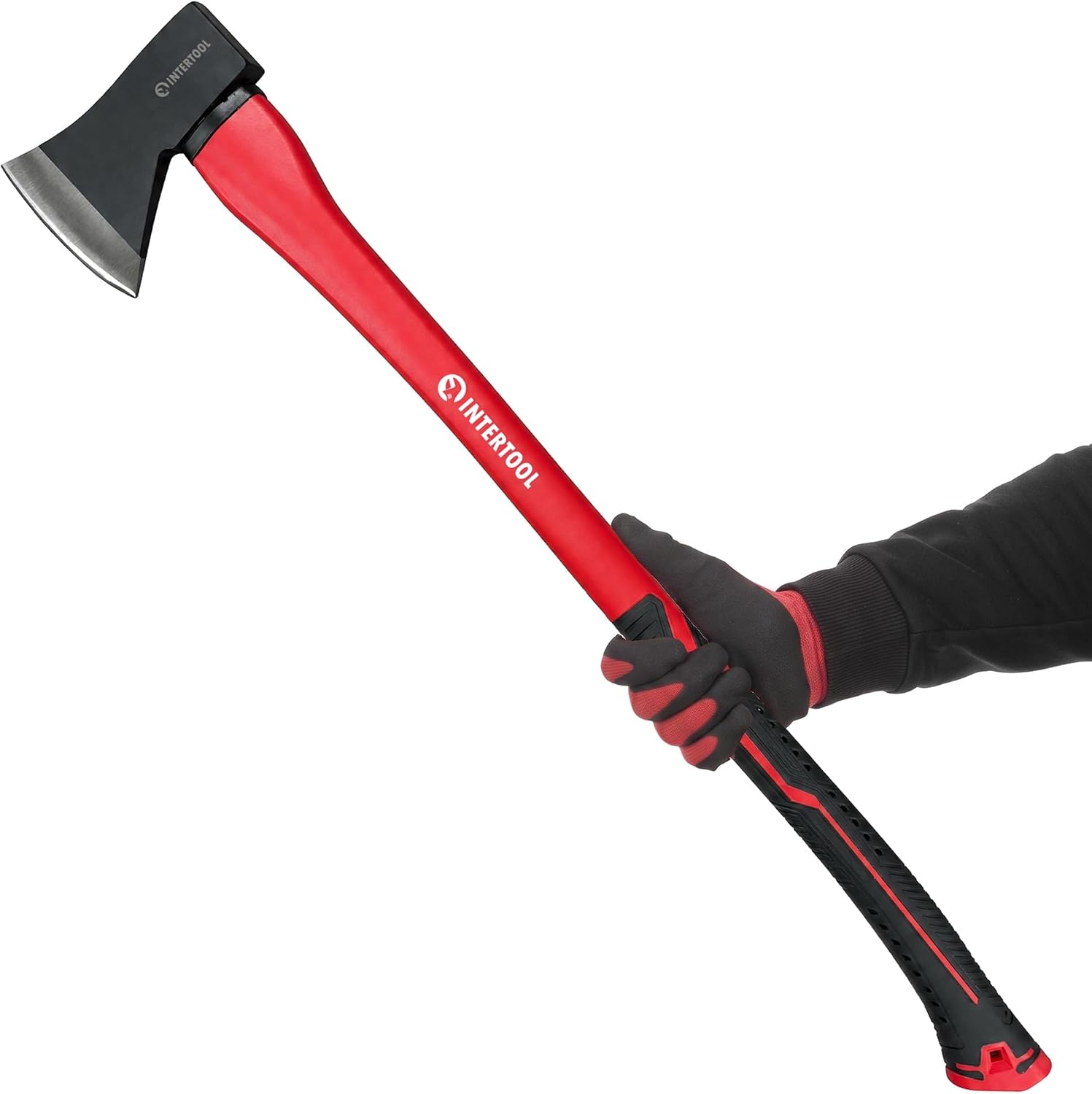
| Head Weight | 2.8 pounds |
|---|---|
| Blade Length | 5.1 inches |
| Handle Material | Fiberglass |
| Included Components | Sheath |
The INTERTOOL HT-0264 is a long-handled felling axe built for cutting firewood, felling smaller trees, and general yard clearing. Its 36-inch fiberglass handle gives extra leverage for deeper swings while the 2.8 pound forged carbon steel head arrives pre-sharpened and coated to resist rust. The textured rubber grip and shock-absorbing handle reduce vibration and improve control during repeated strikes, and a supplied sheath makes storage and transport safer. In practical use the long handle makes chopping and splitting larger rounds easier than a short hatchet, and the balanced head-to-handle ratio helps keep swings on target. Expect the blade to need occasional sharpening for sustained performance, and the fiberglass handle, while durable, will not have the same traditional feel as a wooden haft. This is a straightforward, value-focused tool that performs well for typical homeowner tasks but is not aimed at heavy commercial logging.
Best for: Buyers who want an affordable, no-frills felling axe for occasional firewood cutting, yard cleanup, and light tree work and who prioritize value over premium materials.
Less Ideal for: Professional loggers or users who need a heavy-duty splitting maul or a premium wooden-handled axe for extended daily use.
- Long 36-inch fiberglass handle provides strong leverage for chopping larger logs
- 2.8 lb forged carbon steel head is pre-sharpened and coated to resist corrosion
- Textured rubber grip and shock-absorbing handle reduce vibration and improve control
- Includes durable sheath for safer storage and transport
- Fiberglass handle lacks the traditional feel some users prefer over wood
- Blade will require periodic sharpening for heavy or prolonged use
Verdict: A budget-friendly long-handled felling axe that delivers good chopping power and low vibration for typical homeowner firewood and yard tasks.
Fiskars 28" Chopping Axe

| Handle Material | Fiberglass |
|---|---|
| Blade Material | Forged Steel |
| Head Type | Felling |
| Included Components | Chopping Axe (28\") |
The Fiskars 28" Chopping Axe is built for straightforward felling and chopping tasks around the yard or campsite. It pairs a forged-steel, ultra-sharp blade with Fiskars proprietary grind and low-friction coating so each swing bites deeper and requires less follow-up work. The handle uses a FiberComp/fiberglass construction and an optimized weight distribution to boost swing speed and reduce user fatigue while providing a durable, impact-resistant connection between head and shaft. Typical use is chopping small to medium trees, splitting kindling, and general outdoor wood prep where a longer reach and heavier swing are useful. Notable features are the blade geometry that stays sharp longer and the virtually unbreakable insert-molded head-to-handle design, which reduces the need for frequent maintenance. Limitations are that its 28-inch length and chopping orientation make it less maneuverable for tight brush work or precise carving, and the product is a specialized cutting tool so it may be overkill for occasional light-duty yard tasks.
Best for: Buyers who value proven performance and durability and who plan to do regular chopping or felling of small to medium trees for firewood or property maintenance, preferring a tool that minimizes maintenance and holds an edge.
Less Ideal for: Those who only need an occasional lightweight hatchet for trimming, carving, or tight-space work should consider a shorter hatchet or multi-tool instead.
- High-quality forged-steel blade with proprietary grind for deeper, cleaner cuts
- Low-friction coating and refined blade geometry reduce effort per swing
- Balanced weight distribution increases swing power while limiting fatigue
- FiberComp/fiberglass handle with insert-molded head offers high durability and resistance to breakage
- Long 28-inch length reduces maneuverability in tight spaces
Verdict: A durable, well-balanced 28-inch chopping axe designed to deliver deep, efficient cuts for regular felling and firewood work.
Estwing Camper's Axe 26" with Shock Reduction Grip, E45ASE

| Blade Material | Alloy Steel, Forged Steel |
|---|---|
| Handle Material | Alloy Steel, Shock Reduction Grip |
| Head Type | Hatchet |
| Blade Length | 4 inches |
The Estwing Camper's Axe is a single-piece forged steel tool built for chopping, splitting small logs, and general campsite work. Its one-piece construction and hand-polished head give the axe strong balance and durability, while the patented Shock Reduction Grip noticeably reduces vibration during repeated strikes, which makes longer jobs less fatiguing. The 4-inch tempered cutting edge is ready for kindling, limb trimming, and hatchet-style tasks, and the included ballistic nylon sheath with belt loop keeps the edge covered and the tool accessible on the trail. Because the head and handle are forged as one unit, you get a solid, low-maintenance tool that does not rely on glued wooden handles. The main compromises are weight and reach: it is a full 26-inch camper's axe, so it is larger and heavier than pocket hatchets and less convenient for ultralight backpacking; also the cutting edge is modestly sized compared with full-size felling axes, so it is best for campsite chores rather than heavy logging. For users who want a reliable, long-lasting outdoor axe, this is a practical choice.
Best for: Buyers who prioritize a reliable, low-maintenance outdoor axe for camping, firewood prep, and general campsite chores and who value comfort during repeated use.
Less Ideal for: Minimalist backpackers or users who need a full-size felling axe for sustained heavy timber work should consider lighter hatchets or larger felling axes instead.
- One-piece forged steel construction for long-term durability and low maintenance
- Patented Shock Reduction Grip cuts impact vibration for more comfortable repeated use
- Hand-tempered 4-inch cutting edge sharp out of the box for campsite chopping and kindling
- Ballistic nylon sheath with belt loop for safe storage and easy carry
- Larger and heavier than compact hatchets, making it less suitable for ultralight backpacking
- 4-inch cutting edge is smaller than full-size felling axes, limiting heavy-duty woodcutting
Verdict: A tough, one-piece forged axe that delivers dependable chopping performance and reduced vibration for comfortable campsite use.
Choosing the Right Axe for Cutting Down Trees: Key Factors to Consider
Head Weight and Geometry
Head weight determines how much momentum the tool carries into each swing. Heavier heads deliver deeper bites with fewer strikes, which is helpful on trunks and larger branches, but they also increase user fatigue and require more control to avoid over-swinging. Lighter heads let you swing faster and place cuts more accurately, which can be advantageous on smaller-diameter trees or when working from awkward positions.
Blade geometry matters too. A thinner, more acute edge slices into wood cleanly and is better for felling cuts and crosscuts, while a wider, blunter profile resists mushrooming and is often chosen for splitting. For cutting down trees, choose a blade shape that balances a sharp cutting bevel with enough durability to withstand striking wood and occasional glancing blows.
Handle Length and Material
Handle length affects leverage, reach, and control. Longer handles increase swing power and are useful for larger trunks, but they can make precise cuts harder and are more cumbersome in tight woods. Shorter handles are easier to control and safer for limbing or working near ground-level obstacles. Consider the typical diameter of trees you will fell when selecting handle length.
Handle material influences shock absorption, weight, and durability. Hickory or other hardwood handles offer classic feel and can absorb vibration, but they require proper maintenance and can break under misuse. Fiberglass or composite handles resist rot and are often more impact-tolerant, though they transmit more vibration. Inspect handle attachment systems and look for secure head wedges or modern bonding methods that prevent head loosening.
Head Steel Quality and Edge Retention
The alloy and heat treatment of the head determine how long the edge stays sharp and how easily it can be resharpened in the field. Harder steels often hold an edge longer but may chip if poorly tempered; softer steels are tougher but dull faster. For repeated felling work, you want a balance that allows straightforward resharpening with a file or stone while resisting brittle failure.
Also consider the ease of sharpening on the trail. A head profile with a straightforward bevel simplifies maintenance. Avoid heads with complex or thin profiles that are hard to reprofile after wear.
Balance and Swing Feel
Balance is how the mass of the axe is distributed between head and handle, and it directly affects swing rhythm and accuracy. A well-balanced axe feels like an extension of your arm and requires less muscular effort to control. Poorly balanced tools can feel head-heavy or awkward, making repeated controlled swings tiring and increasing the chance of mis-strikes.
Test or visualize the balance point when possible. For felling, many users prefer a slight head bias that helps the blade bite, but excessive head heaviness makes recovery and repositioning slower. Ergonomic handle shaping and consistent head seats also contribute to predictable swing feel.
Durability and Construction
Durability covers how well the axe holds together through repeated use, exposure to weather, and occasional contact with dirt or stone. Look for secure head attachment methods, corrosion-resistant finishes, and handles that resist splitting or crazing. For wooden handles, grain orientation and quality control matter; avoid handles with knots or irregular grain that create weak points.
Construction details like a through-wedged head, protective coating on the poll, and a well-fitted eye reduce the chance of failure in the field. Consider how easy the tool will be to service: replace a handle, re-wedge, or refinish the head if needed.
Safety Features and Handling
Safe tree felling requires tools that help you maintain control and reduce rebound hazards. Features that matter include a secure, non-slip grip, a poll shaped to minimize ricochet, and a head profile that reduces wedge pinning. A reliable axe will also have a clear centerline and predictable trajectory so you can place accurate cuts and step back safely between swings.
Think about how you will use the axe around other people, near standing structures, or on uneven ground. Protective additions like a sheath for transport and a visible handle color for locating tools in undergrowth are practical safety considerations.
Choosing the Right Size for Your Trees
Match axe head weight and handle length to the typical trunk diameters you plan to fell. For saplings and small ornamental trees, lighter axes with shorter handles give control and reduce overkill. If you regularly tackle trunks several inches across, a midweight axe with a longer handle provides the momentum needed to make efficient felling cuts.
- Smaller trees: prioritize control and swing speed
- Medium trunks: balance head bite and manageability
- Larger trunks: consider using saws or pairing axe work with wedges
Preparing and Maintaining an Axe for Field Use
A properly prepared axe is safer and lasts longer. Keep the cutting edge sharp with a file or stone, check the head-to-handle fit before each use, and treat wooden handles with oil to prevent drying and cracking. Clean sap and dirt from the head after work to slow corrosion.
Carry a stout sheath to protect the edge in transit and inspect the tool after each session. Replace or re-wedge loose heads promptly and address chips or burrs on the blade before they grow into larger failures.
- Sharpen regularly with a safe filing technique
- Inspect head fit and handle integrity before use
- Store dry and protected from direct sun to preserve handle life
Safe Felling Techniques with an Axe
Plan your cuts and escape route before the first swing. Use controlled, deliberate swings aimed at forming a notch on the fall side and then a back cut from the opposite side. Avoid overreaching or uncontrolled overhead swings that reduce accuracy and increase the risk of glancing blows.
If the tree leans or is dead, expect unpredictable behavior and take extra care. When working near the base, be mindful of roots and rocks that can deflect the axe blade; if the head binds, do not twist the handle unnecessarily-use wedges or a mallet to free the tool safely.
- Mark the fall path and clear the escape zone
- Use consistent, repeatable cutting motions
- Carry wedges and a mallet for stuck cuts
When to Use an Axe Versus a Saw or Splitting Tool
Axes are best for cutting through cambium and small-moderate trunks where a sharp blade can bite and slice. For very large trees or thick limbs, a saw will often be faster and safer, especially when precision is required near structures. Splitting tools are designed to separate wood along the grain and are not ideal for crosscut felling cuts.
Consider combining tools: a saw to make the initial back cut on large trees and an axe to refine the notch and finish smaller tasks. Match the tool to the cut orientation and wood condition for efficient work.
- Use saws for large-diameter crosscuts
- Use axes for bite and controlled felling on moderate trunks
- Reserve splitting mauls for splitting firewood, not felling
Transport, Storage, and Accessory Tips
Store axes with a protective sheath in a cool, dry place to slow corrosion and protect handles. When transporting, secure the tool so it cannot shift or contact passengers. Consider a tool belt or rack to keep the axe accessible while moving through a property.
Useful accessories include a leather sheath, a file or sharpening kit kept in your pack, wedge set, and gloves with good grip. These small additions keep you working safely and reduce downtime in the field.
- Use a sheath for storage and transport
- Keep basic sharpening tools on hand
- Add wedges and gloves for safer, more effective work
How We Chose the Best Axe for Cutting Down Trees
Our shortlist focused on blades and handles that deliver reliable cutting performance and safe felling behavior for small to medium trees. We evaluated candidate axes across several measurable dimensions that matter in real-world outdoor work: head weight and geometry for bite and swing momentum; handle material and length for durability and swing control; steel hardness and edge retention for how long the axe stays sharp; overall balance and ergonomics to reduce fatigue and improve accuracy; and handling attributes such as shock absorption and secure grip for safer repeated use. We excluded specialty splitting mauls, carpenter's hatchets, and decorative or novelty axes that are not intended for trunk cutting. Tools with unclear materials, poor fit-and-finish, or inconsistent assembly were removed from consideration. The remaining options were assessed for suitability across common garden and small-acreage tasks rather than industrial logging. Scoring emphasized measurable specs and gardener-focused handling characteristics rather than brand recognition.
FAQ
What head weight is best for felling small trees?
For small trees, a lighter head in the 2 to 3.5 pound range often provides the best balance of bite and control. It lets you place accurate cuts and reduces fatigue during repeated swings, though personal strength and tree diameter can shift that preference.
How long should the handle be for comfortable cutting?
Handle length depends on your typical work. Handles from 24 to 28 inches suit many gardeners for medium trees, while 30 inches and above give extra leverage for larger trunks. Shorter handles under 22 inches improve precision when limbing or working in tight spaces.
Can I use a splitting axe to cut down trees?
Splitting axes are optimized for driving wedges along the grain rather than slicing across it, so they can be less efficient for felling and may require more strikes. For cutting down trees, choose an axe with a thinner, sharper profile that is intended for crosscut work.
How often should I sharpen an axe used for felling?
Sharpening frequency depends on use and wood conditions. With regular felling work, check the edge each day and file or stone it when you notice reduced bite or obvious burrs. Light touch-ups between sessions and a more thorough reprofile after heavy use keep performance steady.
Is a fiberglass handle better than a wooden one for felling?
Fiberglass handles resist weather and impact and can be more durable in harsh conditions, though they may transmit more vibration. Wooden handles offer classic shock absorption and easier in-field repair or replacement. Choose based on your maintenance preferences and exposure to wet conditions.
Final Verdict
Prioritize head geometry, handle length, and durable construction when choosing an axe for cutting down trees. Think about the typical trunk sizes you will face and balance the need for bite and momentum against control and fatigue. Maintain the tool routinely and use safe felling techniques to get efficient, predictable results. Your ideal choice will trade off swing power and reach for manageability and repeatable accuracy. Focus on the measurable criteria discussed earlier to pick an axe that fits your size, strength, and work environment so you can fell trees safely and with fewer strikes.
