

Note: This article contains affiliate links. If you click on these links and make a purchase, I may earn a small commission at no extra cost to you. This helps support my research and content. Read my full affiliate disclosure here.
If you grow fuchsias in containers, hanging baskets, or garden beds, the right fertilizer makes a noticeable difference in bloom count, stem strength, and overall vigor. Fuchsia plants respond well to regular feeding but are sensitive to salts and excess nitrogen, so choosing a fertilizer formulated for flowering ornamentals or acid-loving plants matters. This guide covers seven top picks chosen for common fuchsia growing situations, from busy summer baskets to conservatory collections. We explain the practical reasons behind each selection and summarize the criteria used to evaluate nutrient balance, ease of use, longevity, and plant health effects so you can match a feeding plan to your fuchsia care routine.
Top Picks at a Glance
| Best Overall The best all-around choice for most situations | Miracle-Gro Water Soluble Bloom Booster Flower Food, 4 lb |  |
| Best Quality Built to a higher standard if you want something more solid | FoxFarm Big Bloom Liquid Plant Food, 1 Pint |  |
| Best Value The sweet spot between price and what you get | Osmocote Smart-Release Plant Food Plus, 1 lb |  |
| Best Budget The cheapest option that still gets the job done reliably | RAINFLOW Slow-Release Plant Fertilizer Sticks (90 Pack) |  |
| Highest Rated A top-rated pick with lots of positive feedback | Miracle-Gro Water Soluble All Purpose Plant Food, 1.5 lb |  |
| Most Popular A crowd favorite that many people choose with confidence | Miracle-Gro Water Soluble All Purpose Plant Food, 3 lb |  |
| Best Seller A high-volume bestseller chosen again and again | Miracle-Gro Watering Can Singles All Purpose Plant Food, 24 Packets |  |
Miracle-Gro Water Soluble Bloom Booster Flower Food, 4 lb

| Item Form | Powder |
|---|---|
| Application Method | Water Soluble |
| Target Species | flowers |
| Mixing Ratio | 1 tablespoon per gallon |
Miracle-Gro Water Soluble Bloom Booster is a powder flower fertilizer designed to be mixed with a watering can or used in the Miracle-Gro Garden Feeder for quick feeding. Its high-phosphorus 10-52-10 formulation targets flowering annuals and perennials, helping plants produce more blooms and richer color compared with unfed plants. Typical use is straightforward: dissolve the measured tablespoon-per-gallon dose for outdoor plants or a smaller indoor dose, then soak the root zone every one to two weeks during the growing season. The product starts to work quickly and is convenient for container gardens, window boxes and in-ground flower beds. Because it is water soluble it integrates easily into regular watering routines, but regular reapplication is required to maintain results. Also, the concentrated bloom focus means it is less appropriate as a sole long-term balanced feed for foliage growth or for nonflowering plants.
Best for: Gardeners who want an easy-to-use booster to increase blooms and color on annuals and perennials and who are willing to feed on a regular schedule.
Less Ideal for: People seeking a single all-purpose, long-term fertilizer for foliage, lawns or nonflowering plants should choose a balanced formulation instead.
- High phosphorus formula (10-52-10) specifically promotes blooms and stronger flower color
- Water-soluble powder mixes easily for use with a watering can or garden feeder
- Fast-acting feed that can show quick visual improvements in flowering
- Suitable for containers, window boxes and in-ground flowering plants
- Requires frequent reapplication every 7 to 14 days to sustain effects
- Not formulated as a complete balanced feed for foliage or nonflowering plants
Verdict: If you want a simple, fast-acting fertilizer to maximize flower production and color, this high-phosphorus bloom booster delivers reliable results when used regularly.
FoxFarm Big Bloom Liquid Plant Food, 1 Pint

| Item Form | Liquid |
|---|---|
| Specific Uses For Product | Organic |
| Application Method | watering can, sprayer, or drip system |
| Liquid Volume | 16 fluid ounces |
FoxFarm Big Bloom is a liquid concentrate designed to boost flowering and fruit production by supplying readily available organic nutrients. It is mixed at the recommended ratio and applied with a watering can, sprayer, hose-end, or through a drip system, so it works for container gardens, beds, and irrigation-fed plantings. Notable features include an organic ingredient blend with bat guano and earthworm castings, OMRI listing for organic use, and a formulation intended for use at every growth stage to promote blooms and stronger plants. In practice you can expect relatively fast uptake and visible perk-up in flowering plants and fruiting varieties compared with inert granular feeds. The 16 fl oz bottle is convenient for smaller plots but means more frequent purchases for larger gardens. Also be mindful of local restrictions on phosphorus-containing fertilizers and follow dilution guidance to avoid overfeeding. For gardeners who want an easy-to-use, organic liquid feed that integrates with common application methods, Big Bloom delivers targeted bloom support with minimal fuss.
Best for: Gardeners focused on maximizing flower and fruit performance who prefer an organic, easy-to-apply liquid feed and use regular watering or irrigation systems.
Less Ideal for: People managing large acreage or high-acreage vegetable plots who need bulk-volume, low-cost fertilizers should consider larger-format or granular options.
- OMRI-listed organic formula with natural inputs like bat guano and earthworm castings
- Concentrated liquid that provides quick nutrient uptake and can be used at all growth stages
- Compatible with watering cans, sprayers, hose-end mixers, and drip systems for flexible application
- Small 16 fl oz bottle may require frequent repurchasing for larger gardens
Verdict: Use Big Bloom when you want a concentrated, organic liquid feed that reliably boosts blooms and fruit with easy application.
Osmocote Smart-Release Plant Food Plus, 1 lb
| Item Form | Granules |
|---|---|
| Specific Uses For Product | Plant Food |
| Application Method | Sprinkle around the base and work into the soil |
| Unit Count | 16 Ounce |
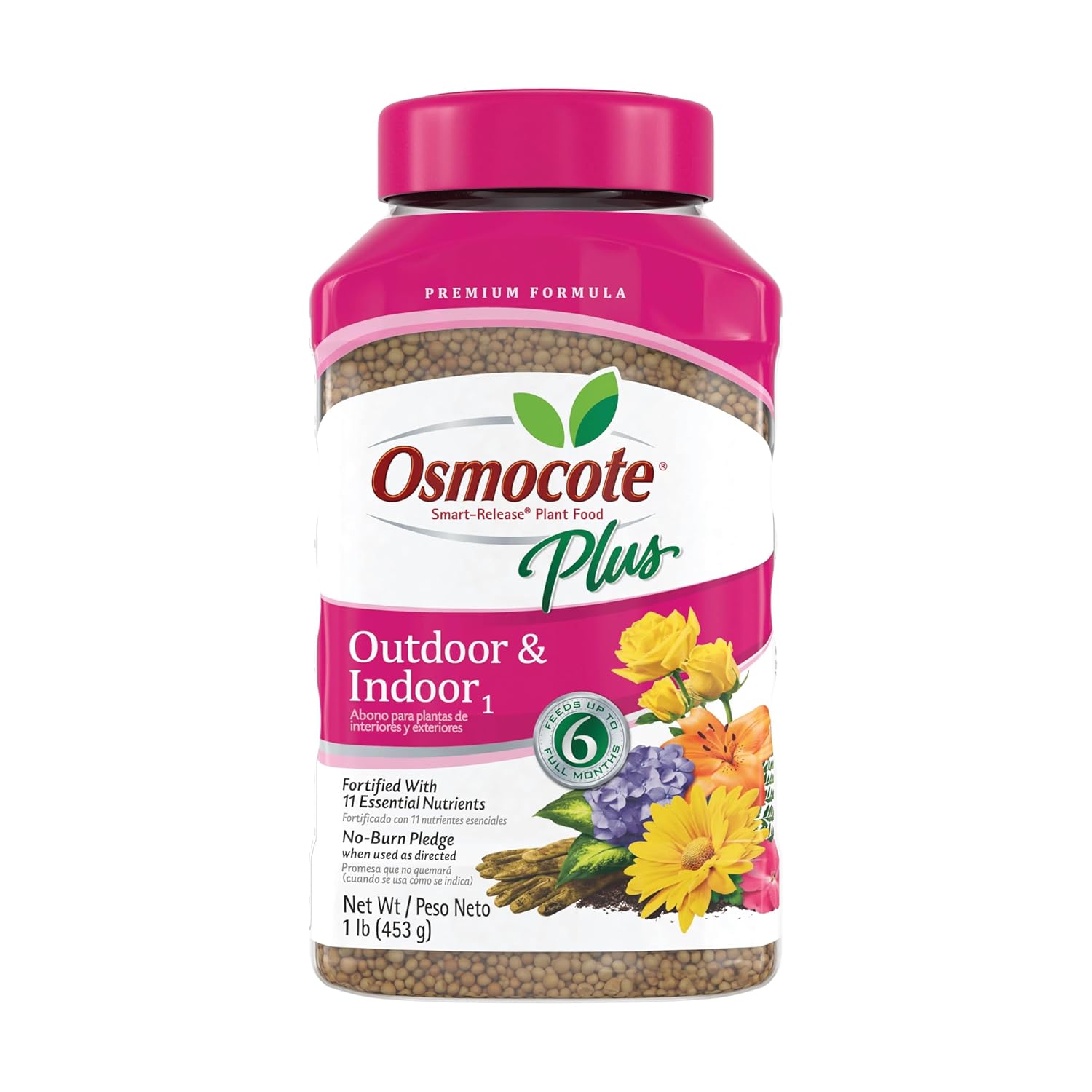
Osmocote Smart-Release Plant Food Plus is a ready-to-use granular fertilizer designed to feed a wide range of plants for up to six months with a single application. You sprinkle the granules around the base of potted plants or across garden soil, work them lightly into the top inch or two of media, then water to activate the resin coating that times nutrient release. The product contains 11 nutrients and includes a manufacturer no-burn pledge when used as directed, which makes it low-risk for routine maintenance. Practical benefits include long-lasting feeding that reduces how often you need to fertilize, straightforward application for busy gardeners, and suitability for containers, raised beds, and in-ground plantings. Limitations are predictable for slow-release granules: you cannot fine-tune nutrient timing day-to-day, and one small 1 lb container only covers roughly 37 square feet so frequent re-supply is necessary for larger gardens. For focused seasonal feeding or regular liquid fertilization programs this should be used as a complement rather than a complete replacement.
Best for: Gardeners who want a low-effort, maintenance-minimizing fertilizer to provide reliable, months-long feeding for mixed containers and small garden beds.
Less Ideal for: Growers who need precise, frequent nutrient adjustments or who manage large plantings that require bulk fertilizer purchases should look for alternatives.
- Up to six months of continuous nutrient release per application, reducing maintenance frequency
- Contains 11 essential nutrients suitable for a wide variety of indoor and outdoor plants
- Resin-coated granules control release so nutrients are delivered gradually and are less likely to burn plants
- Simple sprinkle-and-water application works for containers, raised beds, and in-ground plantings
- Small 1 lb container covers only about 37 sq ft, so it does not last long for larger gardens
- Granular slow-release format limits ability to quickly adjust feeding rates or address acute nutrient deficiencies
Verdict: Choose this product if you want an easy, low-maintenance slow-release fertilizer that feeds a wide range of indoor and outdoor plants for up to six months.
RAINFLOW Slow-Release Plant Fertilizer Sticks (90 Pack)

| Item Form | Sticks |
|---|---|
| Specific Uses For Product | Plant Growth |
| Application Method | Insert into soil |
| Coverage | Full |
| Target Species | orchids, succulents, cacti, foliage plants, hydrangea, vegetables, fruits, flowering species |
These plant fertilizer sticks offer a low-effort way to feed indoor plants for up to six months. You insert the sticks into moistened potting soil and they slowly release a balanced mix of nitrogen, phosphorus, potassium and micronutrients, which supports root strength, leaf color, and flowering without frequent liquid feeding. The pack of 90 is compact and suits many small to medium pots over multiple feeding cycles, making it easy to dose by following the recommended sticks-per-pot guidance. They are gentle by design so they are unlikely to burn delicate roots, and they keep feeding neat and mess-free compared with granular or liquid fertilizers. Limitations are that dosing is less precise than measuring a liquid feed and you will need replacement sticks for larger pots or long-term heavy feeders; the product is intended for routine maintenance rather than correcting severe nutrient deficiencies. For casual houseplant care or maintaining mixed collections, these spikes simplify regular feeding and reduce the time spent mixing and applying liquid fertilizer.
Best for: Budget-minded indoor plant owners who want a low-effort, low-mess solution to maintain mixed collections of potted plants without frequent feeding.
Less Ideal for: Serious growers who need precise, adjustable nutrient regimens or who primarily tend large pots or heavy-feeding plants that require custom fertilization.
- Long slow-release feeding up to six months per application reduces frequency of fertilizing
- Pack of 90 sticks provides multiple applications for many small and medium pots
- Easy, mess-free application by inserting into soil—no measuring or mixing required
- Formulated with primary nutrients and micronutrients to support overall plant growth
- Less precise nutrient dosing compared with liquid feeds for adjusting specific deficiencies
- Not ideal as a one-time fix for severely nutrient-deficient plants
Verdict: A low-cost, low-effort way to keep a variety of indoor potted plants fed for months with tidy, slow-release sticks.
Miracle-Gro Water Soluble All Purpose Plant Food, 1.5 lb

| Item Form | Powder |
|---|---|
| Application Method | Watering Can |
| Target Species | For all flowers, vegetables, trees, shrubs and houseplants |
| Mixing Ratio | 24-8-16 |
Miracle-Gro Water Soluble All Purpose Plant Food is a powdered concentrate designed to deliver quick nutrition to a wide range of plants. You mix the powder into water and apply with a watering can or a compatible garden feeder to feed flowers, vegetables, trees, shrubs and houseplants. The 24-8-16 formula supplies a higher proportion of nitrogen for leafy growth and dissolves quickly so plants start receiving nutrients almost immediately. Typical use is every 7 to 14 days outdoors and every 2 weeks for houseplants, following the included scoop measurements. Practical benefits include fast availability of nutrients for plants showing slow growth or yellowing leaves and flexible application for containers or in-ground beds. Important limitations are that it is a quick-release fertilizer rather than a slow-release solution, so it requires regular reapplication to maintain feeding, and repeated use without following directions can overfeed sensitive plants. The product is convenient for routine feeding and integrates well into a regular watering routine, but users should follow labeled mixing rates and schedules for consistent, reliable results.
Best for: Gardeners who want a dependable, easy-to-mix fertilizer they can use across indoor and outdoor plants and who plan to feed regularly as part of routine plant care.
Less Ideal for: People seeking a low-maintenance, infrequent-feeding slow-release fertilizer or those who need a specialized bloom-boosting or low-nitrogen formula.
- Fast-acting water-soluble formula that feeds plants immediately when applied
- Suitable for a wide range of plants including flowers, vegetables, trees, shrubs and houseplants
- Clear application guidance for watering can and garden feeder makes regular use straightforward
- Compact 1.5 lb container covers about 600 sq ft, useful for small to medium garden areas
- Quick-release formula requires frequent reapplication compared with granular slow-release fertilizers
- Higher nitrogen ratio may not be ideal for bloom-focused feeding without switching to a bloom-specific formula
Verdict: A reliable, fast-acting all-purpose water-soluble fertilizer for gardeners who want consistent, easy feeding for a wide variety of plants.
Miracle-Gro Water Soluble All Purpose Plant Food, 3 lb

| Item Form | Powder |
|---|---|
| Application Method | Mix with water in a watering can |
| Fertilizer Analysis | 24-8-16 |
| Coverage | Feeds approximately 1,200 sq. ft. per 3 lb container |
Miracle-Gro Water Soluble All Purpose Plant Food is a powdered fertilizer designed to be mixed with water and applied with a watering can or garden feeder to give plants a quick nutrient boost. It contains a 24-8-16 NPK ratio and is intended for use on flowers, vegetables, houseplants, trees, shrubs, and container plants. Typical use is straightforward: measure the included scoop per the directions, dissolve in water, and water at the base of plants every 7 to 14 days for outdoor use or every 2 weeks indoors. The water-soluble format means nutrients reach roots quickly for visible greening and growth, and the product is safe for most plants when used as directed. Practical benefits include broad compatibility, fast uptake compared with granular feeds, and a predictable feeding schedule. Limitations are that it is a quick-release feed rather than a slow-release solution, so it requires regular reapplication, and handling precautions are needed to avoid skin or eye contact. For larger beds you will also need a feeder or more frequent mixing, since this format requires dilution before use.
Best for: Gardeners who want a reliable, fast-acting feed to quickly improve plant vigor and appearance and who prefer products with a long track record and many user recommendations.
Less Ideal for: People seeking a low-maintenance, long-duration fertilizer or a granular slow-release option for large lawns and beds should consider other products.
- Water-soluble powder delivers nutrients quickly to roots when mixed and applied
- Formulated for use on a wide range of plants including vegetables, flowers, houseplants, trees, and shrubs
- Clear dosing instructions and included scoop make mixing simple for indoor and outdoor applications
- High-nitrogen 24-8-16 formula supports rapid green growth and overall vigor
- Provides quick-release nutrition only, so you must reapply regularly rather than rely on long-term feeding
- Requires measuring and mixing for each application which can be time-consuming for large gardens
Verdict: Choose this if you want a trusted, water-soluble all-purpose fertilizer that delivers fast, visible results for a wide range of indoor and outdoor plants.
Miracle-Gro Watering Can Singles All Purpose Plant Food, 24 Packets

| Number of Packs | 24 |
|---|---|
| Application Method | watering can |
| Item Form | SOLID |
| Target Species | Use on all flowers, all vegetables, houseplants, roses and all trees and shrubs |
| Mixing Ratio | 1 teaspoon per 1 gallon of water |
Miracle-Gro Watering Can Singles are single-use, pre-measured packets of water-soluble all-purpose fertilizer intended to make regular feeding simple and mess-free. To use, tear a packet into a watering can, add the recommended amount of water and apply the solution to the base of plants; directions call for feeding every 7 to 14 days. The packets cover flowers, vegetables, houseplants, roses, trees and shrubs and are formulated to dissolve instantly so you can feed while you water without measuring or spills. Practical benefits include convenience for routine feeding, consistent dosing that reduces risk of over-fertilizing, and versatility across container and in-ground plantings. Important limitations are that this is a general-purpose formula rather than a crop-specific feed, so growers seeking specialized NPK profiles for tomatoes, orchids, or succulents may prefer targeted products; frequent reapplication is required during the growing season. The single-use format is handy for small to medium gardens but may be less economical than bulk concentrated fertilizers for large beds or heavy feeders.
Best for: Gardeners who prioritize ease, consistency and low risk when feeding common houseplants, containers and small to medium garden beds and who want a no-mess routine they can follow reliably.
Less Ideal for: Large-scale vegetable growers or specialty plant enthusiasts who prefer tailored NPK formulas or more economical bulk fertilizer options.
- Pre-measured packets eliminate measuring and reduce mess
- Fast-dissolving water-soluble formula lets you feed while watering
- Labeled for use on a broad range of plants including vegetables, flowers and houseplants
- Clear, simple directions for outdoor and indoor dilution make use straightforward
- All-purpose formula may not match needs of plants that benefit from specialized nutrient ratios
- Single-use packets can be more costly per application than bulk concentrates
Verdict: If you want a safe, fuss-free way to feed a wide range of plants while you water, these pre-measured Miracle-Gro packets make routine feeding quick and reliable.
Choosing the Right Fertilizer for Fuchsia: Key Factors to Consider
Nutrient Ratio and Bloom Promotion
Fuchsias tend to flower best when fed with a fertilizer that balances phosphorus and potassium relative to nitrogen. Higher phosphorus encourages bud set while adequate potassium supports overall plant health and stress tolerance. Too much nitrogen can produce lush green growth at the expense of blooms, so gardeners should look for formulations described as bloom or flowering fertilizers or those with an N-P-K favoring middle and higher second and third numbers.
Consider slow-release versus water-soluble formats. Water-soluble fertilizers let you adjust feeding strength week to week during active bloom flushes, while timed-release granules reduce maintenance but may linger if you need to scale back feeding late in the season.
Salt Accumulation and Root Health
Containers and hanging baskets are prone to salt buildup because fertilizing without periodic leaching concentrates soluble salts in the root zone. High salt levels can burn root tips, reduce water uptake, and stunt fuchsia growth. Choose low-salt formulations or use diluted rates and flush pots with fresh water occasionally to prevent buildup.
Organic and slow-release options often pose a lower immediate salt risk but may supply fewer readily available nutrients during peak bloom. Balance the desire to avoid salts with the plant's need for steady nutrient availability, and adjust your watering and leaching routine accordingly.
Application Method and Frequency
How a fertilizer is applied affects both convenience and plant response. Granular slow-release products typically require one application every few months, which works well for gardeners who prefer low-maintenance care. Liquid feed or soluble fertilizers require more frequent applications, often weekly or biweekly during the growing season, but they allow rapid correction of deficiencies and precise control over feeding strength.
Consider whether you prefer mixing a solution and applying with each watering, using a spike or granule at potting, or a foliar feed in short-term corrective scenarios. Your chosen method should fit your routine and allow you to avoid overfeeding.
Container Versus In-Ground Use
Fuchsia performance differs between containers and garden beds. Containers dry faster and concentrate salts, which means lower-feeding rates and more frequent leaching are necessary. In-ground plants have greater soil buffering capacity and access to a larger root zone, allowing for less frequent feeding and higher-volume fertilizers.
When selecting a fertilizer, make sure the product's label indicates safe use in containers if that is your main growing situation. Also factor in potting mix composition because mixes with compost or slow-release pellets may already supply some nutrients that affect supplemental feeding schedules.
pH and Micronutrient Availability
Fuchsias prefer slightly acidic to neutral soil pH where micronutrients like iron and magnesium remain available. Some fertilizers include chelated micronutrients to prevent yellowing and support vigorous growth. If your water is alkaline or your potting mix is high in lime, a fertilizer with added chelates or acidifying components can help prevent chlorosis.
Test soil or potting mix pH periodically and watch leaf color for signs of micronutrient deficiency. A balanced approach that includes both macronutrients and key micronutrients will support sustained flowering and plant health.
Seasonal Feeding Strategy
Fuchsia growth and bloom cycles change through the year, so your feeding program should too. During active bloom and growth, regular feeding at recommended strengths will support continual flowering. As days shorten and growth slows, scale back or stop feeding to let the plant harden off for cooler weather.
Plan your fertilizer choice with seasonality in mind. Long-lasting granules can reduce work in summer but may be inappropriate when you want to curb feeding late in the season. Conversely, soluble feeds give you control to taper nutrient input as needed.
Feeding Schedules for Different Fuchsia Setups
Container-grown and hanging fuchsias need more frequent, lighter feedings than plants in the ground because they have limited root volume and faster drying soil. A common approach is a weak liquid feed every one to two weeks during the main bloom season, with monthly leaching to remove excess salts.
For garden bed fuchsias, a balanced granular or slow-release formula applied at potting and again in midseason often suffices. Adjust timing depending on observed bloom performance and foliage vigor.
- Containers: dilute liquid feed every 7-14 days; flush monthly
- Hanging baskets: lighter, more frequent feeds to avoid runoff burn
- In-ground plants: slow-release granules or two to three liquid feeds during peak growth
How to Apply Liquid Fertilizers Safely
Mix liquid or soluble fertilizers at or below the label's recommended strength for regular feedings to avoid fertilizer burn. When correcting a deficiency, use a slightly stronger solution for one application rather than repeated heavy applications.
Apply near the root zone and avoid wetting blooms excessively. Water the pot or bed first if dry, then apply the diluted fertilizer so nutrients move into the soil rather than running off the surface.
- Always dissolve soluble fertilizers completely before applying
- Rinse foliage if accidental splashes occur to prevent leaf spotting
- Measure carefully to maintain consistent strength across feedings
Managing Common Nutrient Problems
Yellowing leaves, poor bud set, and weak stems each point to different nutrient issues. Pale leaves with green veins often indicate iron or magnesium shortages, while poor bud formation can be a sign of low phosphorus or imbalanced feeding.
Start with a balanced feeding program and adjust based on symptoms. Small, regular doses of a bloom-focused fertilizer usually restore bud production quickly, while micronutrient deficiencies may require a chelated product or foliar application for faster correction.
- Iron deficiency: interveinal chlorosis on new leaves
- Phosphorus shortage: fewer buds and delayed flowering
- Excess nitrogen: lush foliage but reduced blooms
Choosing Between Organic and Synthetic Options
Organic fertilizers release nutrients more slowly and improve soil structure over time, which benefits long-term container mixes and beds. They tend to carry lower immediate salt risk but may not supply enough fast-acting phosphorus during peak bloom periods.
Synthetic soluble fertilizers provide predictable, immediate nutrient availability that is useful for sustaining large bloom displays in baskets and conservatory collections. Many gardeners use a combination: organic base feeding at potting plus occasional soluble feeds for bloom support.
- Organic: lower salt risk, improved soil biology, slower release
- Synthetic: immediate availability, precise N-P-K control, faster correction
Practical Tips for Winter Care and Feeding
As growth slows in autumn and temperatures drop, reduce or stop regular feeding so fuchsias can prepare for dormancy or reduced activity. In mild winter conditions where plants remain semi-active, a light monthly feed can prevent nutrient depletion without promoting excessive new growth.
Store any unused granular or liquid fertilizers in a dry, cool place and avoid applying long-release products late in the season when their continued nutrient release could stimulate tender growth vulnerable to cold.
- Taper feeding as daylight shortens
- Avoid late-season high-nitrogen applications
- Flush containers before long storage or overwintering
How We Chose the Best Fertilizer for Fuchsia
We shortlisted fertilizers that suit fuchsia growth habits and flowering requirements. Key evaluation criteria included nutrient balance and bloom promotion, concentration and application method, salt buildup risk and root safety, feeding frequency and longevity, and suitability for container versus in-ground culture. We prioritized products with clear N-P-K ratios appropriate for flowering ornamentals, soluble forms that allow gentle, even feeding, and formulations that minimize salt accumulation. We excluded products aimed solely at lawns, vegetable blends without bloom emphasis, or general-purpose fertilizers with very high nitrogen that encourage foliage over flowers. Also excluded were products whose instructions conflicted with safe container use or that require complex mixing equipment uncommon in home gardens. The final picks favor predictable, easy-to-apply fertilizers that perform in real-world fuchsia care routines and that support both frequent summer feeding and gentler seasonal maintenance.
FAQ
How often should I feed fuchsias in hanging baskets?
Usually a weak liquid feed every one to two weeks during active growth keeps hanging fuchsias blooming well. Because baskets dry quickly, use diluted solutions and flush them occasionally to prevent salt buildup.
Can I use houseplant fertilizer on fuchsias?
Houseplant fertilizers can work if their nutrient ratio suits flowering plants, but many are formulated for foliage. Check the N-P-K and avoid high-nitrogen formulas that could reduce blooms.
What signs show my fuchsia is overfertilized?
Symptoms include brown leaf edges, distorted new growth, stunted roots, and reduced flowering. If you suspect overfertilizing, flush the container thoroughly and reduce future feed strength and frequency.
Should I change fertilizer type between spring and summer?
You can adjust feeding to match growth stages. A steady bloom-focused feed through spring and summer is common, while switching to a milder or less frequent program in late summer helps plants prepare for cooler weather.
Are slow-release pellets safe for small pots?
Slow-release pellets are safe if used at recommended rates, but in very small pots they can supply too much nutrient over time. Use reduced pellet quantities or supplement with light liquid feeds for finer control.
Do fuchsias need micronutrients in their fertilizer?
Often yes. Micronutrients like iron and magnesium prevent chlorosis and support vibrant foliage. If your water or potting mix tends to be alkaline, choose a fertilizer with chelated micronutrients or correct deficiencies with targeted applications.
Final Verdict
Prioritize a fertilizer that promotes bud set while avoiding excess nitrogen and salt buildup. Match the feeding method to your growing situation: regular diluted liquid feeds for containers and baskets, and slower-release options for beds. Monitor leaf color, bud formation, and pot salt levels to adjust strength and frequency. Decide based on how much maintenance you want to do and the type of display you need. Gardeners who want continuous heavy flowering will favor predictable, soluble bloom formulas applied lightly and often, while low-maintenance growers may prefer a balanced slow-release product used carefully with seasonal adjustments.
