

Note: This article contains affiliate links. If you click on these links and make a purchase, I may earn a small commission at no extra cost to you. This helps support my research and content. Read my full affiliate disclosure here.
When you grow fruit trees, the right horticultural oil can control scale, mites, and overwintering eggs without harming buds or fruit. Choosing an oil that gives good coverage, low phytotoxic risk, and fits your spray timing matters for both short-term pest knockdown and long-term tree health. This guide shortlists the top options for fruit trees and explains how we evaluated coverage, residue, and safety across different varieties and seasons. Read on to understand the practical tradeoffs so you can pick an oil that suits your orchard size, spray equipment, and seasonal plan.
Top Picks at a Glance
| Best Overall The best all-around choice for most situations | Monterey Horticultural Oil, 1 Gallon (with Measuring Spoon) |  |
| Best Quality Built to a higher standard if you want something more solid | Bonide All Seasons Horticultural & Dormant Spray Oil Concentrate, 128 oz |  |
| Best Value The sweet spot between price and what you get | Bonide All Seasons Horticultural & Dormant Spray Oil, 32 oz |  |
| Best Budget The cheapest option that still gets the job done reliably | Bonide All Seasons Horticultural & Dormant Spray Oil, 32 oz |  |
| Highest Rated A top-rated pick with lots of positive feedback | ferti-lome Horticultural Oil Ready to Spray, Canola Oil 32 oz |  |
| Most Popular A crowd favorite that many people choose with confidence | Bonide All Seasons Horticultural & Dormant Spray Oil, 16 oz Concentrate |  |
| Best Seller A high-volume bestseller chosen again and again | Best Naturals 100% Pure Cold-Pressed Neem Oil, 16 oz |  |
Monterey Horticultural Oil, 1 Gallon (with Measuring Spoon)
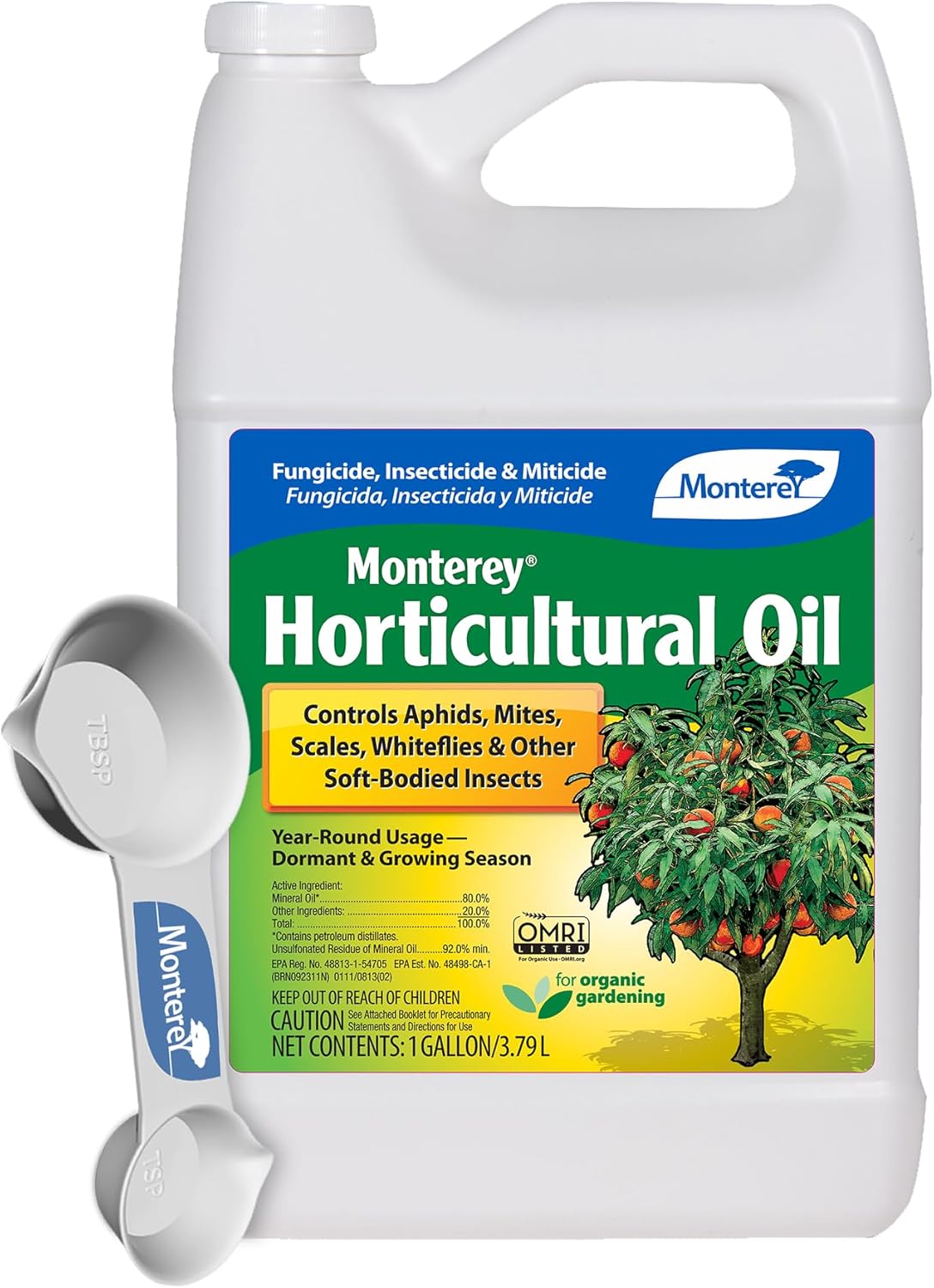
| Active Ingredient | Mineral Oil 80.0% |
|---|---|
| Package Volume | 1 Gallon |
| Use Season | Dormant and growing season |
| OMRI Listed | Yes |
Monterey Horticultural Oil is a mineral oil concentrate intended for both dormant and growing-season sprays on fruit trees and other ornamentals. It works by smothering soft-bodied pests such as aphids, mites, scales, whiteflies and mealybugs and also controls insect eggs, making it useful for prevention and suppression rather than for chewing caterpillars. The concentrate mixes with water and can be applied with a pump-up or trigger sprayer; the included measuring spoon helps get dilution right. Because it is rated for use during dormancy and while plants are growing, you can integrate it into seasonal spray programs for apples, citrus, stone fruits and similar trees. It is OMRI-listed for organic gardening which is helpful for growers avoiding synthetic insecticides. Limitations to note are modest efficacy against caterpillars and worms and the need for careful coverage of both leaf surfaces to be effective, plus the usual precautions about spraying at recommended temperatures to avoid phytotoxicity.
Best for: Home orchardists and small-scale fruit tree growers who want an organic-compatible, season-round option to manage sap-sucking pests and eggs while fitting into regular spray routines.
Less Ideal for: Growers who need a single product to handle chewing pests like caterpillars or those seeking a ready-to-use spray rather than a concentrate to mix.
- Effective against a broad set of soft-bodied pests and insect eggs common on fruit trees
- Label supports use in both dormant and growing seasons for flexible timing
- Concentrate form lets you mix only what you need and treat multiple trees
- OMRI-listed for organic gardening, suitable for organic fruit production
- Poor control of caterpillars and chewing insects
- Requires thorough spray coverage of both leaf surfaces to be effective
Verdict: A reliable OMRI-listed concentrate for season-long control of soft-bodied pests and eggs on fruit trees when used with good coverage.
Bonide All Seasons Horticultural & Dormant Spray Oil Concentrate, 128 oz

| Item Form | Spray |
|---|---|
| Target Species | Disease |
| Liquid Volume | 128 fluid ounces |
| Unit Count | 128 Fluid Ounces |
Bonide All Seasons is a 128 oz concentrate horticultural and dormant oil formulated to smother a wide range of orchard pests and common fungal problems. You dilute it with water and apply as a thorough spray to trunks, branches and leaf undersides either as a dormant treatment or during the growing season where labeled. The formula is self-emulsifying and approved for organic gardening, so it can be used on fruit trees, shade trees, shrubs, roses and many vegetables to target overwintering eggs, aphids, scale, mites and to help prevent powdery mildew and leaf spot. Practical benefits include the large concentrate size for treating multiple trees, and a simple mode of action that reduces resistance risk compared with systemic pesticides. Important limitations are that proper mixing and complete coverage are essential for effectiveness, sensitive plants can be injured if sprayed at the wrong stage or in high temperatures, and it only controls the pests and diseases listed on the label rather than providing broad-spectrum systemic control.
Best for: Best for homeowners and small orchard keepers focused on effective, low-resistance pest and disease control for fruit trees who are comfortable mixing concentrates and timing applications seasonally.
Less Ideal for: Not a good choice for someone who wants an instant systemic fix or who prefers ready-to-use sprays and avoids mixing concentrates or timing applications to avoid plant injury.
- Concentrated 128 oz size suitable for treating multiple fruit trees and large yards
- Refined mineral oil approved for organic gardening and labeled for use during growing and dormant seasons
- Self-emulsifying formula mixes with water for spray application
- Effective physical mode of action that targets eggs and soft-bodied insects and helps reduce resistance
- Requires careful dilution and thorough coverage to work well
- Can cause phytotoxicity if applied at incorrect temperatures or on sensitive growth stages
Verdict: Buy this if you need a large-volume, organic-approved horticultural oil concentrate for seasonal pest and disease control on fruit trees.
Bonide All Seasons Horticultural & Dormant Spray Oil, 32 oz

| Unit Count | 32 Fluid Ounces |
|---|---|
| Item Form | Spray |
| Target Species | Disease |
| Active Ingredients | Mineral Oil |
Bonide All Seasons is a mineral oil spray designed for both dormant and growing-season applications on fruit trees, shade trees, shrubs, roses, and some vegetables. It works by coating and smothering overwintering eggs and soft-bodied pests such as aphids, scale, mites, whitefly, and mealybugs, and it can also reduce incidence of powdery mildew and rust when used as directed. Typical use is a thorough spray of trunks and foliage at dormant, delayed-dormant, or growing stages depending on the target pest. The product is labeled for organic gardening and leaves no toxic residue because the active ingredient is refined mineral oil, which makes it a practical choice for backyard orchards where safety is a priority. Limitations are that timing and coverage matter a lot for effectiveness and that oils can cause damage if applied in hot weather or on oil-sensitive varieties, so follow label directions for temperature and dilution. The ready-to-spray formulation and broad seasonal window make it a convenient, conservative option for growers focused on prevention and simple pest control.
Best for: Gardeners who prioritize pragmatic, low-residue pest control for fruit trees and ornamentals and want a single product they can use across seasons for prevention and suppression.
Less Ideal for: Growers who need immediate contact-kill chemistry for severe infestations or who prefer systemic insecticides for long residual protection.
- Mineral oil active ingredient approved for organic gardening and leaves no toxic residue
- Suitable for dormant, delayed-dormant, and growing-season use for year-round protection
- Effective against a wide range of soft-bodied insects and overwintering eggs
- Recommended for fruit trees, ornamentals, roses, and many common garden crops
- Can cause phytotoxicity if applied in hot weather or to oil-sensitive plants
- Requires correct timing and thorough coverage to be effective
Verdict: A practical, low-residue horticultural oil that provides season‑round, organic-friendly pest and disease control for home fruit trees and ornamentals.
Bonide All Seasons Horticultural & Dormant Spray Oil, 32 oz

| Unit Count | 32 Ounce |
|---|---|
| Item Form | Spray |
| Target Species | Insects |
| Active Ingredient | Refined mineral oil |
Bonide All Seasons is a mineral oil spray concentrate designed for year-round use on fruit trees, ornamentals, roses and vegetables to control common insects and some fungal problems. You mix the concentrate with water and spray to wet the entire plant, including undersides of leaves, so the oil can smother aphids, scale, mites, eggs and other pests or help prevent powdery mildew and leaf spot. Its formulation is approved for organic gardening and can be applied as a growing-season or dormant treatment, which makes it a versatile option for seasonal fruit tree care. The product is straightforward to use and comes in a 32 ounce bottle that treats multiple applications for small to medium orchards or home yards. Important limitations are the temperature restrictions on application and the need to follow label rates and timing to avoid plant injury, and it will not provide systemic control or replace targeted insecticides for severe infestations.
Best for: Home orchard owners looking for an affordable, organic-approved spray to manage common pests and overwintering eggs on fruit trees who prefer simple, repeatable seasonal treatments.
Less Ideal for: Growers needing fast systemic control for severe infestations or commercial operations that require high-throughput, broad-spectrum chemical solutions.
- Refined mineral oil formulation approved for organic gardening
- Usable as both growing-season and dormant spray for seasonal flexibility
- Self-emulsifying concentrate mixes with water for treating large areas
- Controls a wide range of pests including aphids, scale, mites and overwintering eggs
- Must not be applied when temperatures are above 90°F or below 40°F
- Provides contact smothering control only and is not systemic
Verdict: A cost-conscious, organic-approved horticultural oil concentrate that offers flexible dormant and growing-season protection for home fruit trees.
ferti-lome Horticultural Oil Ready to Spray, Canola Oil 32 oz

| Unit Count | 32 Fluid Ounces |
|---|---|
| Item Form | Oil |
| Target Species | Fungus |
This ferti-lome horticultural oil is a canola-oil based concentrate formulated to smother soft-bodied insects and help control powdery mildew on fruit trees, roses, vegetables, and other garden plants. It is OMRI listed for organic gardening and can be used as both a dormant and growing-season spray, which makes it practical for seasonal pest management on apples, pears, and stone fruit. The product is diluted to label rates (2.66 oz per gallon) and applied as a foliar spray; as an oil it provides broad surface coverage to suffocate aphids, mites, scale, and eggs while also disrupting mildew. The ready-to-mix formulation is straightforward to use and versatile across many plant types, but it requires careful timing and thorough coverage for best effect and should not be applied in extreme heat or to stressed trees. Also follow label directions for rates and safety; the container does not replace professional equipment for very large orchards. For backyard and small-block fruit trees it offers an effective, organically acceptable tool when used as part of an integrated spray program.
Best for: Fruit tree owners and home orchardists who prioritize reliable, organic-compatible pest and mildew control implemented as part of a seasonal spray program.
Less Ideal for: Large-scale commercial growers looking for high-capacity equipment or a single product to eliminate severe infestations should consider other professional-grade solutions.
- OMRI listed so acceptable for certified organic gardens
- Controls a broad set of crawling insects and helps suppress powdery mildew
- Suitable for dormant and growing-season applications for seasonal flexibility
- Requires correct dilution and careful application timing to avoid plant damage
- Not intended as a standalone solution for severe infestations or large commercial orchards
Verdict: A reliable, OMRI-listed horticultural oil for home fruit trees that provides organic-compatible control of soft-bodied pests and powdery mildew when used correctly.
Bonide All Seasons Horticultural & Dormant Spray Oil, 16 oz Concentrate

| Unit Count | 16 Ounce |
|---|---|
| Item Form | Spray |
| Target Species | Insects & Disease |
| Liquid Volume | 16 fluid ounces |
Bonide All Seasons is a refined mineral oil concentrate formulated for year‑round use on fruit trees and other garden plants. Mixed with water per label directions, it is applied as a spray to coat branches and leaves, smothering overwintering eggs and active pests such as aphids, mealybugs and spider mites while helping prevent powdery mildew and leaf spot. The product is labeled for dormant, delayed dormant and growing‑season applications, which makes it useful for both spring budding checks and late winter sanitation. As a concentrated formula, one 16 oz bottle covers multiple treatments when diluted, reducing trips to the store. Important limitations are that it must be mixed correctly and applied to thoroughly wet surfaces including leaf undersides, and it should not be used on plants under heat stress or when temperatures exceed label recommendations to avoid phytotoxicity. Users should follow safety and crop‑specific restrictions on the label for organic production and timing around bloom.
Best for: Growers who prioritize proven, low‑toxicity pest control for fruit trees and want a product with an established track record for both dormant and growing‑season applications.
Less Ideal for: Gardeners who need a contact systemic insecticide, want an immediate knockdown chemical, or prefer ready‑to‑spray formulations rather than a concentrate to mix.
- Approved refined mineral oil suitable for organic gardening and production
- Labeled for dormant, delayed dormant and growing‑season use on fruit trees and ornamentals
- Works by smothering insects at multiple life stages including overwintering eggs
- Concentrated 16 oz bottle dilutes for multiple applications, improving economy
- Requires careful dilution and thorough spray coverage to be effective
- Not safe for use on heat‑stressed plants or outside label temperature windows
Verdict: Choose this product if you want a proven, organic‑approved horticultural oil concentrate for seasonal pest and disease control on fruit trees.
Best Naturals 100% Pure Cold-Pressed Neem Oil, 16 oz
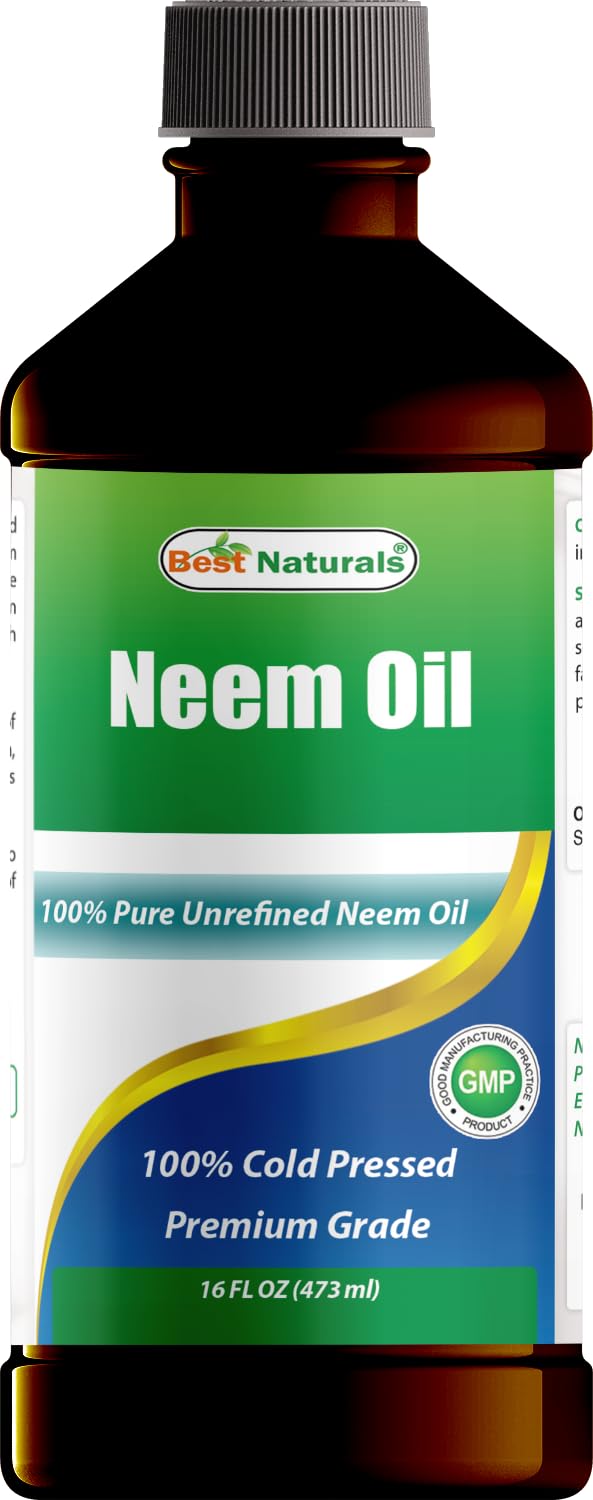
| Ingredients | 100% Pure Neem Oil |
|---|---|
| Extraction | Cold Pressed |
| Form | Unrefined oil |
| Application | Gardening |
Best Naturals 100% Pure Neem Oil is a cold-pressed, unrefined botanical oil sold in a 16-ounce bottle and commonly used as a garden treatment or topical ingredient. For plants it is typically diluted in water with an emulsifier and applied as a foliar spray or soil drench to help manage common pests and fungal issues. The product is single-ingredient neem oil, which keeps the formulation simple and predictable for mixing and routine applications. Practical benefits include a large 16 oz supply that reduces the need for frequent repurchase and an unrefined extraction that preserves the oil’s active components. Important limitations are that it must be mixed correctly before use, can leave an odor, and may irritate skin or sensitive plants if used undiluted; the label advises patch testing and keeping out of reach of children. Overall this is a straightforward, no-frills neem oil for gardeners who want a pure source to dilute and apply themselves rather than a pre-mixed concentrate or multi-ingredient spray.
Best for: Gardeners who prefer a simple, pure botanical product to mix and apply themselves and who prioritize predictable ingredient lists and safety instructions.
Less Ideal for: Users who want ready-to-use sprays, scent-sensitive gardeners, or people unwilling to follow dilution and safety precautions should consider pre-mixed alternatives.
- 100% pure, single-ingredient neem oil makes dilution and mixing predictable
- Cold-pressed and unrefined to retain natural active compounds
- Generous 16 oz volume suitable for multiple garden treatments
- Labeled for gardening application so intended use is clear
- Requires correct dilution and emulsifier before spraying
- Strong natural odor that some users may find unpleasant
- Can cause skin irritation if handled without gloves
Verdict: A pure, cold-pressed neem oil in a 16 oz bottle that gives cautious gardeners a dependable base to dilute and use for pest and fungal control.
Choosing the Right Horticultural Oil for Fruit Trees: Key Factors to Consider
Coverage and Spray Pattern
Complete wetting determines how effective an oil will be against scale, mites, and overwintering eggs. Oils need to form a uniform film on bark, limbs, and the underside of leaves to smother insects and disrupt respiration. Spray equipment and nozzle selection influence droplet size and penetration into crotches and canopy interior. For dense canopies you may need smaller droplets and higher volume to reach hidden pests, while open trees can be treated with coarser sprays. Application technique matters as much as the oil choice-overlapping passes and spraying until runoff in targeted zones improves control. Coverage also affects how much active ingredient is actually delivered per unit area, which in turn impacts residue and potential phytotoxicity.
Phytotoxicity and Temperature Limits
Different fruit species vary in their sensitivity to oils and spray timing. New leaves, tender tissue, and buds are more likely to show burn when oils are applied during hot weather or under intense sunlight. Labels set temperature and seasonal limits for safe application; following those windows reduces risk of damage to fruit and foliage. Some formulations are expressly rated for summer use at reduced concentrations, while others are intended only for dormant or delayed-dormant timing. Always consider cultivar sensitivity-stone fruits and tender-leaved varieties can react differently than hardy apples or pears. Testing on a small number of trees before wide application is a prudent step when switching products or spray timing.
Dormant Versus Summer Use
Horticultural oils are often labeled for distinct uses: dormant, delayed-dormant, and summer applications. Dormant applications tolerate higher concentrations and colder temperatures, targeting overwintering life stages. Summer use requires lower rates and stricter temperature checks to avoid leaf scorch. Your seasonal pest pressure and the tree growth stage should determine which application window you plan to rely on. If you need broad winter control of scale and mites, prioritize oils labeled for dormant use. If you need knockdown during the growing season, choose products with explicit summer-use directions and lower phytotoxic risk.
Mixing, Emulsifiability, and Spray Compatibility
How easily an oil emulsifies in water affects consistency of the spray mix and the likelihood of clogging nozzles. Oils that require vigorous agitation or specific adjuvants can complicate large-scale orchard work. Compatibility with common orchard tank-mix partners such as certain fungicides and insecticides reduces the number of passes needed and helps integrate oils into an IPM program. However, not all combinations are safe; some mixes increase phytotoxic risk or reduce efficacy. Labels provide compatibility guidance and recommended sequence of mixing. For growers using foliar nutrients or biologicals, check for documented compatibility to avoid degrading beneficial organisms or causing foliar injury.
Residue and Reentry Considerations
Residue persistence influences preharvest intervals, fruit wash-off, and potential impacts on beneficial insects. Oils that leave a visible film for extended periods may affect fruit appearance or interfere with sticky traps and pheromone monitoring. Shorter-residue oils can be preferable for late-season sprays when harvest is near. Reentry intervals and worker safety guidance are part of label directions; consider how long workers must wait before re-entering the orchard after application. For organic-minded growers, check whether the formulation meets organic standards or lists allowed inert ingredients.
When to Use Dormant Oil Sprays
Dormant oil applications are timed to target overwintering eggs, scale, and certain mite stages when trees have lost leaves and buds are still closed. These sprays are generally applied in late winter to early spring before bud break. The cooler temperatures and lack of active foliage reduce phytotoxic risk and allow for higher-use rates that smother pests in bark crevices.
Plan dormant sprays as part of a seasonal calendar that includes sanitation, pruning to open the canopy, and monitoring. Proper timing improves contact with pests hiding in bark and on scaffold limbs. Dormant oil is not a cure-all, but it reduces early-season pest pressure and can lower the need for later chemical interventions.
- Apply when temperatures are above label minimum but below the maximum for dormant use
- Avoid applications within a few days of freezing or thawing cycles
- Combine with thorough pruning to expose hidden infestation sites
Summer Oil Applications and Safety
Summer applications require more caution because active foliage and higher temperatures increase the risk of leaf burn and fruit injury. Use only oils labeled for summer use and follow lower concentration recommendations. Apply during cooler parts of the day, avoid direct midday sun, and do a small test spray on a few branches before treating the whole tree.
Summer sprays are most effective against soft-bodied pests like aphids and mites when coverage is complete. Keep spray volumes adequate to wet both upper and lower leaf surfaces while avoiding excess runoff that can increase residue issues.
- Apply at dawn or late afternoon when temperatures are cooler
- Adhere to label concentration limits for summer use
- Test on a small area first, especially on sensitive cultivars
Sprayer Types and Nozzle Selection
Choice of sprayer affects how well oil reaches trunk crevices, limb crotches, and leaf undersides. Backpack sprayers work for small orchards and backyard trees, while boom or airblast sprayers are better for larger plantings. Nozzle selection determines droplet size and coverage uniformity.
Select nozzles that produce the droplet size recommended for horticultural oils and your pest target. Finer droplets give better coverage but can drift more, while coarser droplets reduce drift but may miss hidden pests. Maintain consistent pressure and agitation to keep the oil evenly mixed during application.
- Use equipment rated for oil-based sprays and clean thoroughly after use
- Choose nozzles that balance coverage with drift control
- Calibrate spray volume to match tree size and canopy density
Integrating Oils Into an IPM Program
Horticultural oils are a tool within integrated pest management rather than a standalone solution. Use monitoring, thresholds, and biological controls alongside strategic oil applications to reduce overall pesticide load. Oils can disrupt beneficial insects if overused, so time sprays to minimize impacts on predators and pollinators.
Rotate timing and tank-mix partners thoughtfully to avoid resistance issues in pest populations. Incorporate cultural controls such as pruning, sanitation, and proper fertilization to keep trees vigorous and less susceptible to pest outbreaks.
- Use scouting and threshold-based decisions before spraying
- Avoid spraying during peak pollinator activity
- Combine oils with cultural practices to reduce repeat applications
Handling and Storage Best Practices
Store oils in a cool, dry place away from direct sunlight and extreme temperatures to maintain stability. Label instructions typically include shelf-life guidance; older stock can separate or oxidize and may not emulsify properly. Keep containers tightly closed and away from food or feed storage.
When handling, wear recommended personal protective equipment and avoid inhaling mists. Clean equipment immediately after use to prevent buildup and protect future mixes, especially if switching between oil-based and water-based sprays.
- Rotate stock to use older containers first and inspect for separation
- Rinse sprayers thoroughly to prevent nozzle clogging
- Follow label PPE and disposal instructions to protect handlers and the environment
How We Chose the Best Horticultural Oil for Fruit Trees
We focused on attributes that matter in real fruit-tree care: broad-spectrum pest suppression on dormant and growing-season sprays, plant safety across common fruit species, ease of mixing and application with standard sprayers, and predictable residue and reentry intervals. We prioritized oils that perform well at recommended rates for scale, aphids, mites, and overwintering eggs while keeping phytotoxic risks low in warm weather. Coverage and spray pattern were evaluated as separate criteria because thorough wetting of bark, crotches, and undersides is critical in orchards. We excluded products intended solely for ornamental or greenhouse use, formulations that require uncommon application equipment, and any oils with unclear label directions for fruit-bearing trees. Our selection favored clear labeling for application timing, concentration ranges for dormant and summer use, and documented tank-mix compatibility for common fungicides and insecticides used in integrated pest management.
FAQ
Can horticultural oil be used on fruit trees during the growing season?
Yes, some oils are labeled for summer use at reduced concentrations, but they must be applied under cooler conditions and according to temperature limits to avoid leaf burn. Always test on a small area and follow label timing.
How long should I wait to harvest after applying horticultural oil?
Preharvest intervals vary by product and formulation. Many oils have short residue persistence, but you should follow the label for specific harvest and reentry intervals. Shorter-residue options are preferable when harvest is near.
Will horticultural oil harm beneficial insects?
Oils can affect beneficials if sprayed directly, especially soft-bodied predators and parasitoids. Timing applications to avoid peak activity and using targeted sprays can reduce non-target impacts. Dormant applications generally pose less risk to pollinators.
Can I mix horticultural oil with other sprays?
Some oils are tank-mix compatible with select fungicides and insecticides, but compatibility depends on concentration and sequence of mixing. Check label guidance and perform a jar test when in doubt to avoid phytotoxicity or reduced efficacy.
What temperature is safe for applying horticultural oil?
Safe temperature ranges vary by product but generally avoid application when temperatures exceed label maximums or below the minimum specified for dormant use. Avoid spraying before or after freezing events and on very hot days to reduce leaf damage.
Final Verdict
Choose a horticultural oil for fruit trees based on the timing you need, the species and cultivar sensitivity, and how you will apply it. Prioritize oils with clear dormant and summer-use directions if you plan year-round treatments, and select mixes that emulsify easily and are compatible with your sprayer and tank partners. Balance coverage needs against phytotoxic risk and residue persistence to protect fruit quality and beneficial insects. With careful timing and proper technique you can use horticultural oil effectively as part of a practical orchard pest-management plan.
