

Note: This article contains affiliate links. If you click on these links and make a purchase, I may earn a small commission at no extra cost to you. This helps support my research and content. Read my full affiliate disclosure here.
If you are fighting scale on fruit trees, ornamentals, or container plants, the right horticultural oil can make the difference between a short, manageable outbreak and ongoing damage. Horticultural oils work by smothering insects and their eggs when applied correctly. Choosing the right oil and application approach matters because coverage, timing, and plant sensitivity determine both control and plant safety. This guide shortlists six top options suited for scale control and explains how we judged them for coverage, phytotoxicity risk, and ease of use. Read on to understand the practical tradeoffs and which features matter most in real garden settings before you pick a product.
Top Picks at a Glance
| Best Overall The best all-around choice for most situations | Bonide All Seasons Horticultural & Dormant Spray Oil Concentrate, 128 fl oz |  |
| Best Quality Built to a higher standard if you want something more solid | BASF Ultra-Pure Horticultural Oil (1 gal) |  |
| Best Value The sweet spot between price and what you get | Southern Ag Paraffinic Horticultural Oil, 32 oz (Quart) |  |
| Best Budget The cheapest option that still gets the job done reliably | Bonide All Seasons Horticultural & Dormant Spray Oil, 16 oz Concentrate |  |
| Highest Rated A top-rated pick with lots of positive feedback | ferti-lome Horticultural Canola Oil, OMRI Listed, 16 oz |  |
| Most Popular A crowd favorite that many people choose with confidence | Bonide All Seasons Horticultural & Dormant Spray Oil, 32 oz |  |
Bonide All Seasons Horticultural & Dormant Spray Oil Concentrate, 128 fl oz

| Item Form | Spray |
|---|---|
| Target Species | Disease |
| Liquid Volume | 128 fluid ounces |
| Brand | Bonide |
Bonide All Seasons is a concentrated refined mineral oil designed for both growing-season and dormant applications to smother insect pests and help prevent listed fungal diseases. You mix the concentrate with water per the label and spray surfaces thoroughly, including leaf undersides and branches, to target overwintering eggs, aphids, scale, mealybugs, spider mites and similar pests. It is approved for organic gardening and is commonly used on fruit trees, ornamentals, roses and vegetables. The product’s self-emulsifying formula makes it straightforward to blend into a sprayer, and the 1-gallon size is convenient for larger yards or frequent use. Important limitations are that effectiveness depends on coverage and timing so careful application during the correct life stage is necessary, and it must not be used on sensitive plants or under hot conditions that could cause phytotoxicity; follow label restrictions for plant types and spray windows. For scale control you will typically need repeat treatments and thorough coverage of trunks and branches to reach protected eggs and crawlers.
Best for: Gardeners who want a proven, organic-approved oil to manage scale and soft-bodied pests on fruit trees, shrubs, and ornamentals and are willing to follow label timing and coverage recommendations.
Less Ideal for: Small-plot gardeners who prefer ready-to-use sprays or people who need a fast-acting contact insecticide with systemic action rather than a smothering oil.
- Approved for organic gardening and safe for use on many edible and ornamental plants when label directions are followed
- Versatile for both dormant and growing-season applications to target overwintering eggs and active pests
- Self-emulsifying concentrate blends into water for use with hand or pump sprayers
- Large 128 fl oz volume reduces the need for frequent repurchase for medium and larger gardens
- Requires careful timing and complete coverage to be effective against scale and other pests
- Not suitable for use on all plant species or in hot weather due to risk of plant injury
Verdict: A concentrated, organic-approved horticultural oil that delivers reliable scale and soft-bodied pest control when applied thoroughly and at the right time.
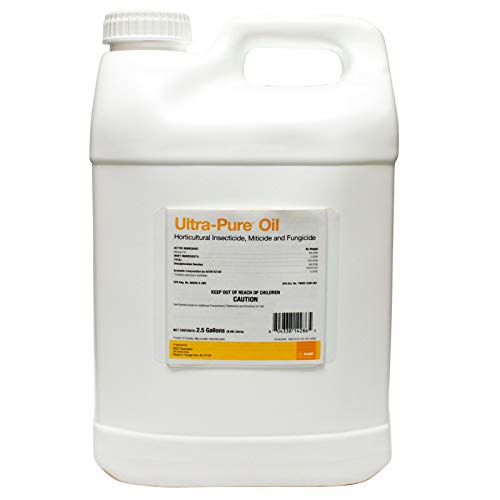
BASF Ultra-Pure Horticultural Oil (1 gal)
| Item Form | Oil |
|---|---|
| Target Species | Insects |
| Special Features | Fast-Acting, Long-Lasting, Odorless |
| Liquid Volume | 1 gallons |
| Specification Met | EPA, OMRI |
BASF Ultra-Pure Horticultural Oil is a concentrated, 98% mineral oil designed for broad pest control by smothering insects, mites, and certain fungal issues. It is typically mixed with water and applied as a spray to foliage and branches to target scale, aphids, spider mites, and similar pests at all life stages. Notable features include a very high purity (low unsulfonated residue), OMRI listing for organic production, and a low-odor formula that reduces nuisance during application. Practical benefits are strong physical control with no chemical resistance, suitability for use on ornamentals, fruit and vegetable crops when label directions are followed, and year-round use within the specified temperature window. Important limitations are the need to follow label rates and timing to avoid plant injury on sensitive species, the requirement to thoroughly mix and apply evenly for effective coverage, and reduced efficacy if applied in heavy rain or when plants are overly wet. This product is best used by growers who prioritize reliable, broad-spectrum, non-residual control and who are comfortable with spray applications and label precautions.
Best for: Active gardeners and small-scale growers who need a reliable, non-chemical option to suppress scale and other sap-feeding pests and who are willing to apply thorough foliar sprays according to label directions.
Less Ideal for: People seeking a one-time, systemic cure or long-lasting residual protection or those unwilling to perform careful, repeated spray applications.
- Very high purity mineral oil reduces risk of phytotoxicity when used per label
- OMRI listed so acceptable for many organic production systems
- Effective physical mode of action against insects, mites, and some fungal issues across life stages
- Low odor formulation makes spray applications more tolerable
- Requires complete, even coverage to be effective which can be labor intensive on large plants
- Must follow temperature and plant sensitivity guidelines to avoid injury on some species
- Not a systemic product so it provides no residual protection once degraded or washed off
Verdict: Choose this ultra-pure, OMRI-listed mineral oil when you want a high-purity, contact-based solution that reliably smothers scale and other sap-feeding pests without synthetic chemistry.
Southern Ag Paraffinic Horticultural Oil, 32 oz (Quart)

| Unit Count | 32 Fluid Ounces |
|---|---|
| Item Type Name | Parafine Horticultural Oil |
| Item Form | Oil |
| Target Species | Insects |
| Liquid Volume | 0.94 liters |
Southern Ag Paraffinic Horticultural Oil is a straightforward, concentrate-style oil insecticide used as a cover spray to suffocate scale, whitefly larvae, mealybugs and spider mites on ornamentals and fruit trees. You mix the oil with water and apply as a thorough spray; label rates cover dormant and non-dormant applications so you can use it seasonally on plants such as apples, citrus, avocados, roses and palms. The product is mostly paraffinic oil with a small emulsifier percentage, which makes it easy to blend into water and spray without special adjuvants. Practical benefits include broad pest control for routine scale management and flexible application timing for both dormant and growing-season use. Limitations are inherent to horticultural oils: it must be mixed correctly and applied as full coverage to work, and care is needed on sensitive plants or during hot weather to avoid phytotoxicity. The formulation is simple and reliable for gardeners who prioritize predictable, economical pest suppression rather than fast-acting systemic activity.
Best for: Gardeners and small-scale orchard owners who want a practical, economical contact oil to manage scale and other soft-bodied pests with seasonal flexibility and straightforward application.
Less Ideal for: People seeking systemic or fast knockdown insecticides for severe infestations or growers who need an insecticide safe to use at any temperature and on all plant types.
- Effective against scales, whitefly larvae, mealybugs and spider mites when applied as a complete cover spray
- Works for both dormant and non-dormant applications with clear label rates for each timing
- Simple paraffinic formulation mixes with water and does not require complex additives
- Suitable for use on a wide range of woody ornamentals and fruit trees
- Requires thorough spray coverage and correct mixing to be effective
- Can cause phytotoxicity on sensitive plants or if applied in high temperatures
Verdict: A reliable, no-frills horticultural oil for gardeners who want an economical, seasonally flexible solution to control scale and other soft-bodied pests.
Bonide All Seasons Horticultural & Dormant Spray Oil, 16 oz Concentrate

| Unit Count | 16 Ounce |
|---|---|
| Item Form | Spray |
| Target Species | Insects & Disease |
| Liquid Volume | 16 fluid ounces |
Bonide All Seasons is a concentrated refined mineral oil formulated for both growing-season and dormant applications to smother insect pests and help prevent common fungal diseases. You mix the 16 oz concentrate with water and spray to thoroughly coat leaves and branches, including undersides where scale and eggs hide. It is labeled for a wide range of uses — fruit and shade trees, shrubs, roses, ornamentals and vegetables — and is effective against scale, aphids, mealybugs and spider mites by suffocation rather than chemical toxicity. Because the active ingredient is a mineral oil approved for organic gardening, it is a sensible choice for edible plantings when used as directed. Expect straightforward, low-tech application with a pump sprayer and routine reapplication during infestations or recommended timing windows. Limitations are that coverage must be thorough for good control and oil sprays can cause plant injury if applied in hot weather or to sensitive species, so follow label timing and rates closely.
Best for: Buyers who need an affordable, organic-compatible oil to manage scale and soft-bodied pests on fruit trees and ornamentals and who are willing to mix and apply treatments themselves.
Less Ideal for: Gardeners who want a one-time systemic cure or who cannot time applications to avoid heat or sensitive growth stages should consider other options.
- Concentrated 16 oz formula mixes with water for multiple treatments
- Refined mineral oil approved for organic gardening and edible plants
- Effective physical mode of action against scale, aphids, mealybugs and spider mites
- Labeled for both dormant and growing-season applications on a wide range of plants
- Requires thorough coverage and correct timing to avoid plant injury
- Not a systemic insecticide so repeat applications are often necessary
Verdict: A budget-friendly, organic-approved spray oil that effectively smothers scale and other soft-bodied pests when applied thoroughly and at the correct timing.
ferti-lome Horticultural Canola Oil, OMRI Listed, 16 oz

| Unit Count | 16 Fluid Ounces |
|---|---|
| Item Form | Oil |
| Liquid Volume | 16 fluid ounces |
| OMRI Listed | Yes |
This ferti-lome canola horticultural oil is a concentrated, OMRI-listed spray intended for seasonal and dormant use against scale, aphids, mites and other crawling insects, with additional activity against powdery mildew. You dilute the concentrate (label suggests about 2.66 oz per gallon) and apply to roses, ornamentals, fruit trees, vegetables and houseplants. Its food-grade formulation and OMRI listing make it a sensible choice for organic gardens where reliability matters. The product is straightforward to mix and use and serves as both an insecticide and a fungicide, reducing the need for multiple treatments. Limitations are that it is a concentrate so users must measure and mix carefully, and application timing and thorough coverage are important to avoid phytotoxicity on sensitive plants. Also the 16 oz bottle is a modest size for large orchards or repeated heavy use, so it is best suited to home gardens or targeted professional use.
Best for: Gardeners who prioritize dependable, organic-approved products for managing scale and related pests on roses, fruit trees and ornamentals and who want a dual insecticide-fungicide they can mix to treat specific plants.
Less Ideal for: Large-scale growers who need ready-to-use bulk solutions or very frequent broad acreage treatments should consider larger-volume commercial formulations.
- OMRI listed formulation suitable for certified organic production
- Functions as both an insecticide for scale and other crawling pests and as a fungicide against powdery mildew
- Food-grade canola oil base reduces concerns about harsh synthetic solvents
- Concentrated format lets you mix only what you need for spot treatments
- 16 oz bottle may be small for large landscapes or frequent repeat applications
- Requires careful measuring and dilution before use
- Improper timing or coverage can cause plant phytotoxicity on sensitive species
Verdict: A reliable OMRI-listed canola oil concentrate that provides dependable, organic-friendly control of scale and powdery mildew for home and small-scale gardens.
Bonide All Seasons Horticultural & Dormant Spray Oil, 32 oz

| Item Form | Spray |
|---|---|
| Target Species | Insects |
| Liquid Volume | 32 fluid ounces |
Bonide All Seasons is a mineral oil spray designed for both growing-season and dormant applications to control scale, aphids, spider mites and other soft-bodied pests by smothering eggs and insects. It is mixed with water according to the label and sprayed to thoroughly wet leaves and branches, including undersides where scale and mites hide. The product is labeled for use on fruit trees, shade trees, shrubs, ornamentals, roses and many vegetables, and the refined mineral oil formulation is presented as acceptable for organic gardening. Practical benefits include broad target coverage, the ability to treat overwintering eggs when used as a dormant spray, and a ready-to-mix concentrate that lets you cover larger areas. Important limitations are the temperature restrictions on application and the need for careful mixing and thorough coverage for effectiveness; it will not provide systemic control and can harm plants if used outside label directions. Follow the label for timing and safety precautions when treating edible plants.
Best for: Gardeners who prioritize proven, broadly used contact control for scale and other soft-bodied pests and who prefer products with established user feedback and organic-acceptable ingredients.
Less Ideal for: Users who need fast systemic control, want an all-weather solution, or prefer contact-free biological or purely non-petroleum options for pest management.
- Effective contact control of scale, aphids, mites and overwintering eggs by smothering
- Labelled for both growing-season and dormant use on fruit trees, ornamentals and vegetables
- Refined mineral oil formulation described as suitable for organic gardening
- Comes as a ready-to-mix 32 oz concentrate for treating larger garden areas
- Requires thorough coverage and correct timing to work; not a systemic insecticide
- Must not be applied above 90°F or below 40°F which limits application windows
Verdict: Choose this oil if you want a widely used, ready-to-mix mineral oil spray that reliably smothers scale and other soft-bodied pests when applied correctly.
Choosing the Right Horticultural Oil for Scale: Key Factors to Consider
Coverage and Spray Pattern
Scale insects are often tucked under bark flanges, on undersides of leaves, or in tight crotches. Good coverage is essential because horticultural oil controls by physical contact. Choose an oil and spray nozzle combination that produces a fine, even mist without excessive drift so the film reaches crevices and insect surfaces.
Poor coverage means missed insects and wasted applications. Test spray on a small area to confirm the pattern and adjust nozzle type and pressure. Coverage also affects dilution: thicker oils may need higher volume or different spray tips to atomize properly.
Plant Safety and Timing
Different plants and growth stages tolerate oils differently. New growth, stressed plants, hot conditions, and certain species such as some evergreens and azaleas can show phytotoxic reactions. Always check label restrictions and observe recommended temperature and growth-stage windows before applying.
Timing matters: dormant oils are applied when plants are fully dormant to target overwintering stages, while summer or superior oils are designed for use on growing foliage when temperatures and plant sensitivity allow. Matching oil type and timing reduces risk of leaf burn or drop.
Concentration, Mixing, and Measurement
Horticultural oils are available as concentrates and ready-to-use mixes. Concentrates give flexibility and economy but require careful measurement and consistent mixing to avoid under- or over-dilution. Mis-measurement can reduce effectiveness or increase phytotoxicity risk.
Look for clear label instructions and simple dilution ratios. Consider whether you have suitable measuring tools and storage for mixed spray. For occasional use, a ready-to-use product may be more convenient and reduce dosing errors.
Residue and Reapplication Interval
Oils differ in how long they remain effective on plant surfaces and how quickly they break down. Longer persistence can reduce the frequency of reapplications, which is helpful for prolonged control of crawlers and eggs. However, excessive residue buildup from frequent use can stress plants and complicate follow-up treatments.
Understand the recommended reapplication interval and how rain, irrigation, or new leaf growth affect persistence. Plan follow-up sprays to coincide with vulnerable life stages of scale rather than on a fixed calendar alone.
Compatibility With Other Treatments and Equipment
Gardeners often combine treatments or alternate tactics. Some horticultural oils can be tank-mixed with insecticidal soaps or certain systemic products, while others should not be mixed. Compatibility affects both efficacy and plant safety, so check label guidance before combining products.
Equipment compatibility matters too. Oils vary in viscosity and may clog some nozzles or pump sprayers. Choose sprayer components rated for oils, and flush equipment thoroughly after use to prevent buildup and cross-contamination.
Environmental Conditions and Safety
Temperature, humidity, and sun exposure influence both oil performance and plant response. Applying oils during high heat or strong sunlight increases the risk of leaf scorch. Windy conditions can reduce coverage and increase drift to non-target plants.
Consider pet, pollinator, and beneficial insect exposure. While oils primarily act by smothering insects on contact, they can affect beneficial arthropods present during application. Apply when bees and other pollinators are least active and avoid spraying open blooms.
Dormant Versus Summer Applications
Dormant oil applications are timed for when plants have lost leaves or are fully inactive. These treatments target overwintering adults and eggs in bark crevices and often use heavier oils or higher rates because the plant is not actively transpiring.
Summer or superior oils are labeled for use on growing foliage and typically are lighter or specifically formulated to reduce phytotoxicity risk. They must be applied within temperature windows and often at lower concentrations than dormant treatments.
- Dormant oil is best for late winter to early spring before bud swell.
- Use summer formulations only when temperatures are within label limits and plants show no stress.
Best Spray Equipment and Nozzles for Oil Applications
Selecting the right sprayer and nozzle improves coverage and reduces clogging. A pump sprayer with an adjustable nozzle or a compression sprayer that produces a fine, even spray helps coat undersides and tight bark crevices. Backpack sprayers are useful for larger landscapes.
Use nozzles designed to handle higher-viscosity liquids; avoid ultra-fine misting tips that may not carry enough volume to form an effective film.
- Rinse sprayers thoroughly after oil use to prevent residue buildup.
- Test spray pattern on paper or a spare plant before treating valuable specimens.
Application Rates and Measuring Tips
Follow label dilution ratios closely and measure by volume using marked containers. For concentrates, mix only the amount needed for the current application to reduce storage issues and dosing errors. Keep a small notebook of rates and conditions that worked for each plant type in your garden.
If you need to scale up, prepare multiple batches rather than oversize mixing that sits and separates. Always add oil to water while stirring to ensure even emulsification.
- Record temperature and plant stage when applying to track outcomes.
- Label any leftover mixed spray and use according to the product instructions; do not store mixed spray long-term.
Protecting Beneficials and Timing Around Bloom
Because oils act on contact, they can also affect beneficial insects. Avoid spraying when plants are in full bloom or when pollinators are actively foraging. If control is necessary during bloom, focus on targeted branch treatments and avoid open flowers.
Apply early morning or late evening when pollinator activity is low, and use the lowest effective rate to reduce non-target impact.
- Spot-spray heavily infested branches instead of blanket-spraying the entire plant.
- Use physical removal for small infestations to protect beneficial insects.
Monitoring and Follow-up After Treatment
Inspect treated plants after application to assess coverage and symptom improvement. Scale control often requires follow-up sprays timed to crawler emergence, which varies by species and region. Use sticky traps or visual checks to detect crawler activity.
Document results and adjust timing, rates, or nozzle selection if control is incomplete. Remember that eggs and immatures in protected spots may require repeated, well-timed treatments rather than higher immediate doses.
- Reapply according to reapplication intervals on the label and crawler timing.
- Combine cultural practices such as pruning and plant stress reduction to improve long-term control.
How We Chose the Best Horticultural Oil for Scale
We evaluated horticultural oils for scale control using criteria that matter in everyday gardening. First, coverage and sprayability: oils that form an even film and atomize well deliver consistent contact on armored and soft scales. Second, plant safety and phytotoxicity risk: we prioritized oils and formulations with documented lower risk across common ornamental, fruit, and container plants when used at recommended rates. Third, residual effect and persistence: oils differ in how long they remain effective without harming new growth; we favored balanced persistence that reduces repeat applications but avoids buildup. Fourth, formulation and mixing ease: concentrated versus ready-to-use forms change how gardeners measure, dilute, and store products, so ease of preparation was considered. Fifth, application flexibility: suitability for foliar spray, dormant oil use, and compatibility with common spray equipment influenced selection. We excluded products intended only for non-garden uses or those whose labeling restricted use on common landscape plants. Products with ambiguous dilution instructions or lacking clear plant safety guidance were not shortlisted. The final group reflects options that balance effective scale control with practical use, safety guidance, and predictable application behavior.
FAQ
Can I use horticultural oil during hot weather?
Using oil in hot conditions increases the risk of leaf burn. Many labels advise against application when daytime temperatures exceed a specific threshold. If you must treat, do so in early morning or late evening and use a summer formulation at reduced concentration.
How soon will I see results after applying oil to scale?
You may see fewer active crawlers and reduced honeydew within days, but hardened scales and eggs can take longer to decline. Full population reduction often needs monitoring and repeat applications timed to crawler emergence.
Are horticultural oils safe for fruit trees and edible crops?
Many oils are labeled for fruit trees and edibles when used according to directions and preharvest intervals. Check label restrictions and avoid spraying close to harvest if a preharvest interval is specified.
Do I need special equipment to apply horticultural oil?
A quality pump or compression sprayer and appropriate nozzle tips make application easier and improve coverage. Smaller hand-pump sprayers work for potted plants and isolated specimens, while backpack or tank sprayers suit larger yards.
Can horticultural oil be mixed with other garden products?
Some oils are compatible with insecticidal soaps and certain foliar nutrients, but compatibility varies. Always perform a small jar test and follow label guidance before tank-mixing to avoid phytotoxicity or loss of efficacy.
How often should I reapply oil for scale control?
Reapplication depends on the species and timing relative to crawler emergence. Typical schedules range from every 7 to 21 days during crawler activity, but follow label intervals and base timing on monitoring rather than calendar alone.
Final Verdict
When choosing a horticultural oil for scale, prioritize coverage and plant safety. Match the oil type and timing to the plant species and growth stage, and use the proper spray equipment to ensure an even film reaches hidden insects. Expect to monitor and reapply based on crawler timing rather than simply increasing concentration. Focus on clear label instructions, suitable dilution and nozzle choice, and protecting beneficials and blooms. That approach will give you effective, low-risk control of scale while minimizing harm to plants and the garden ecosystem.
