

Note: This article contains affiliate links. If you click on these links and make a purchase, I may earn a small commission at no extra cost to you. This helps support my research and content. Read my full affiliate disclosure here.
If you care for apple trees, the right horticultural oil can control overwintering eggs, soft-bodied insects, and reduce scale populations without stressing buds or fruit. Choosing the best oil for apple trees matters because timing, concentration, and oil type influence both pest suppression and tree health. This guide covers seven top horticultural oils shortlisted for common apple-tree uses, from dormant-season smothering sprays to summer applications where heat and fruit safety are concerns. We evaluate coverage, phytotoxicity risk, ease of mixing, and application flexibility so you can pick the approach that fits your orchard or backyard trees.
Top Picks at a Glance
| Best Overall The best all-around choice for most situations | Bonide All Seasons Horticultural & Dormant Spray Oil Concentrate (128 fl oz) |  |
| Best Quality Built to a higher standard if you want something more solid | BASF Ultra-Pure Horticultural Oil (1 gal) – Insecticide, Miticide, Fungicide |  |
| Best Value The sweet spot between price and what you get | Bonide Captain Jack's NeemMax Concentrated Cold Pressed Neem Oil, 16 oz |  |
| Best Budget The cheapest option that still gets the job done reliably | Safer Brand Horticultural & Dormant Spray Oil Concentrate, 16 fl oz |  |
| Highest Rated A top-rated pick with lots of positive feedback | Monterey 70% Neem Oil Concentrate, 8 oz |  |
| Most Popular A crowd favorite that many people choose with confidence | Bonide All Seasons Horticultural & Dormant Spray Oil, 32 oz |  |
| Best Seller A high-volume bestseller chosen again and again | Bonide All Seasons Horticultural & Dormant Spray Oil, 32 oz |  |
Bonide All Seasons Horticultural & Dormant Spray Oil Concentrate (128 fl oz)

| Item Form | Spray |
|---|---|
| Target Species | Disease |
| Liquid Volume | 128 fluid ounces |
Bonide All Seasons is a concentrated refined mineral oil designed for year-round pest and disease management on fruit trees and other garden plants. Mixed with water per the label, it is applied as a spray to coat leaves and branches; it smothers soft-bodied insects, overwintering eggs and can help prevent fungal problems like powdery mildew and leaf spot. The product is sold as a 1-gallon concentrate, so a small volume treats a large area when diluted, which is economical for orchard or larger backyard use. It is labeled for both dormant and growing-season applications, making it useful for late-winter egg control as well as summer outbreaks of aphids, mealybugs and spider mites. Because it is a mineral oil approved for organic gardening, it is a good fit where synthetic insecticides are undesirable. Important limitations are that timing, correct dilution, and thorough coverage are critical to avoid plant injury and to get good control, and it will not provide systemic protection or fast knockdown like contact insecticides.
Best for: Home orchardists and gardeners who want an economical, organic-approved spray they can use year-round on apple trees and other fruiting or ornamental plants and who are willing to follow label timing and mixing instructions.
Less Ideal for: Gardeners seeking an instant knockdown systemic insecticide or users unwilling to mix concentrates and perform thorough spray coverage should look for alternative products.
- Concentrated 128 fl oz formula treats large areas when properly diluted
- Approved for organic gardening and usable during growing and dormant seasons
- Controls a broad list of soft-bodied insects and their overwintering eggs by smothering
- Helps prevent common fungal diseases such as powdery mildew and leaf spot when used as directed
- Requires careful dilution and thorough spray coverage to be effective and to minimize risk of phytotoxicity
- Not systemic so repeat applications or complementary products may be needed for heavy infestations
Verdict: A versatile, organic-approved concentrate that provides economical year-round control of overwintering eggs and common soft-bodied pests on apple trees when mixed and applied correctly.
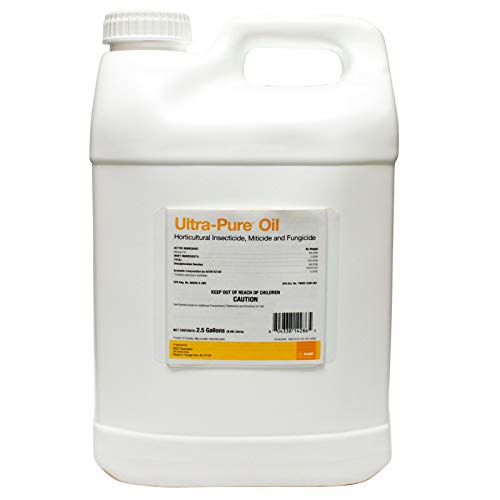
BASF Ultra-Pure Horticultural Oil (1 gal) – Insecticide, Miticide, Fungicide
| Item Form | Oil |
|---|---|
| Target Species | Insects |
| Special Features | Fast-Acting, Long-Lasting, Odorless |
| Liquid Volume | 1 gallons |
| Specification Met | EPA, OMRI |
BASF Ultra-Pure Horticultural Oil is a refined mineral oil designed to suffocate insect pests, mites, and reduce some fungal issues on trees and shrubs. It is typically mixed with water and applied as a spray during dormancy or the growing season within the labeled temperature range to coat insects and eggs and block breathing pores. Notable features include a very high purity (low unsulfonated residue) that reduces phytotoxicity risk, OMRI listing for organic-compatible use, and a physical mode of action that avoids resistance. Practical benefits for apple trees include effective control of aphids, adelgids, scale, spider mites, and management of overwintering eggs when timed correctly. Limitations are that it works by contact so coverage matters and repeat applications may be needed for new infestations; it will not control pests hidden deep in curled leaves or inside fruit. Users must follow label directions for temperature windows and spray timing to avoid plant injury and ensure safe, effective results.
Best for: Growers focused on effective, low-resistance pest control for apple trees who plan spray applications carefully and prioritize plant safety and organic compatibility.
Less Ideal for: People looking for a systemic pesticide or a single-application cure for entrenched infestations or pests inside fruit tissues should consider alternative controls.
- Very high purity formulation reduces risk of phytotoxicity when used as directed
- OMRI listed so compatible with many organic production practices
- Physical mode of action limits development of pest resistance
- Effective against multiple stages of insects and mites including eggs with proper timing
- Requires thorough spray coverage and repeat treatments for complete control
- Ineffective against pests protected inside curled foliage or fruit
- Must be used within specific temperature ranges and according to label to avoid plant injury
Verdict: A high-purity, OMRI-listed horticultural oil that delivers reliable, resistance-safe control of common apple tree pests when applied with good coverage and timing.
Bonide Captain Jack's NeemMax Concentrated Cold Pressed Neem Oil, 16 oz

| Item Form | Concentrate |
|---|---|
| Target Species | Multi-Purpose |
| Liquid Volume | 16 fluid ounces |
| Active Ingredients | Cold Pressed Neem |
Bonide Captain Jack's NeemMax is a concentrated neem oil designed for gardeners who want a single, plant-based product to tackle insects, fungal diseases, mites, and nematodes. Supplied as a concentrate, it is mixed into water and applied as a foliar spray for pests and diseases or as a soil drench to reduce nematode pressure. The formula includes a built-in surfactant so it disperses evenly and does not require adding dish soap. In practice NeemMax treats eggs through adults, helps prevent powdery mildew and botrytis, and can be used across ornamentals, vegetables, herbs and houseplants. Practical benefits include organic-compatible active ingredient, multi-target control, and flexibility of spray or drench applications. Limitations are that it must be mixed correctly and applied according to label directions, repeat treatments are typically needed for heavy infestations, and it is less selective than some insecticidal soaps so care around beneficial insects is advisable.
Best for: Gardeners who prioritize a practical, all-purpose organic treatment and want one concentrated product to manage multiple pest and disease problems across ornamentals and edibles.
Less Ideal for: Those seeking a single-application, fast-acting synthetic pesticide or growers who need products that spare beneficial insects in integrated pest management programs.
- Concentrated cold-pressed neem provides broad-spectrum botanical control of insects, fungi, mites, and nematodes.
- Built-in surfactant improves dispersal so it mixes and sprays evenly without adding soap.
- Can be applied as spray or soil drench for above- and below-ground pest control.
- Suitable for use on a wide range of plants including vegetables, ornamentals, and houseplants.
- Requires correct mixing and regular reapplication for effective control in heavy infestations.
- Non-selective action can impact beneficial insects if applied indiscriminately.
Verdict: Buy this if you want a single concentrated, cold-pressed neem product that handles insects, fungi, mites, and nematodes for organic gardening.
Safer Brand Horticultural & Dormant Spray Oil Concentrate, 16 fl oz

| Unit Count | 16 Fluid Ounces |
|---|---|
| Item Form | Oil, Spray |
| Target Species | Insects |
| Liquid Volume | 16 fluid ounces |
This Safer Brand concentrate is a mineral oil–based horticultural and dormant spray that mixes into a broad‑use insect and disease spray for trees and other plants. It is typically used by diluting the measured amount into water to make sprayable oil that smothers mites, scale, aphids and many other pests and can help manage fungal problems like powdery mildew when used as labeled. Notable features include OMRI listing for organic gardens and the ability to make up to 32 gallons of finished spray from one 16 fl oz bottle, which stretches the product for multiple treatments across a season. Practical benefits for apple trees are straightforward: it can be applied during dormant and growing seasons to reduce overwintering eggs and active soft-bodied pests without synthetic pesticides. Limitations are that timing and thorough coverage matter a lot for efficacy, it will not provide systemic control, and you must follow label restrictions for sensitive varieties and temperatures to avoid phytotoxicity.
Best for: Home orchardists looking to protect apple trees affordably with an organic‑compliant option who are willing to mix and apply spray treatments themselves.
Less Ideal for: Commercial growers needing fast systemic control or users who want a ready‑to‑use spray without measuring and mixing should consider other options.
- Concentrate makes up to 32 gallons of spray, stretching product cost over many trees
- OMRI listed so it is compliant for organic gardening use
- Targets a wide range of pests and life stages including eggs, mites and scale
- Suitable for dormant and growing season applications on many fruit trees
- Requires correct mixing and complete coverage for effectiveness
- Not systemic so it only controls pests on contact or by smothering
Verdict: A budget‑friendly, OMRI‑listed concentrate that stretches to treat multiple apple trees for common pests and dormant‑season control.
Monterey 70% Neem Oil Concentrate, 8 oz

| Active ingredient strength | 70% neem oil |
|---|---|
| Net volume | 8 oz |
| Approved use | OMRI listed for organic gardening |
Monterey 70% Neem Oil is a clarified, hydrophobic neem oil concentrate intended to be diluted and applied as a spray for disease and pest control on outdoor ornamentals, vegetables, trees and fruit crops. In practice you mix the measured amount with water and an appropriate emulsifier or wetting agent, then spray leaves and branches to help control powdery mildew, black spot, rusts, botrytis and common insects such as aphids, whiteflies and spider mites including eggs and larvae. It is OMRI listed for organic gardening, so it fits into organic programs for apple trees where growers prefer minimal synthetic residues. The high 70% concentration means you get a potent active ingredient in a small bottle, but it requires careful measuring and dilution and will not be ready-to-use out of the bottle. Also neem oil works best as part of an integrated program and is less effective for heavy, established infestations or systemic diseases; timing and thorough coverage are important for results. Expect to reapply on a schedule and avoid spraying during hot midday sun to reduce leaf burn risk.
Best for: Growers who prioritize reliable, organic-compatible protectants for apple trees and want a concentrated product they can dose into a spray program for disease and pest prevention.
Less Ideal for: Gardeners seeking a ready-to-use spray or a systemic curative product for severe established infections should consider alternative formats or professional treatments.
- High 70% clarified neem oil concentration for strong active ingredient per unit volume
- OMRI listed so it is acceptable for organic gardening programs
- Broad-spectrum activity against fungal diseases and common foliar insect pests including eggs and larvae
- Suitable for use on fruit trees, shrubs, vegetables and ornamentals when diluted properly
- Concentrate requires correct dilution and an emulsifier before use
- Not a systemic treatment so may require repeated applications and integration with other controls
Verdict: A concentrated, OMRI-listed neem oil that reliably protects apple trees from common fungal diseases and foliar pests when mixed and applied correctly.
Bonide All Seasons Horticultural & Dormant Spray Oil, 32 oz

| Unit Count | 32 Ounce |
|---|---|
| Item Form | Spray |
| Target Species | Insects |
| Liquid Volume | 32 fluid ounces |
Bonide All Seasons is a refined mineral oil spray designed for year-round use on apple trees and other garden plants to smother insects, their eggs, and some disease problems. It is supplied as a ready-to-mix concentrate that you dilute with water and spray to thoroughly wet leaves and branches, including undersides where pests hide. The formula is labeled for use as a growing-season spray, dormant spray and delayed dormant application, which makes it useful for targeting overwintering eggs of scale, aphids, mites and other common orchard pests. Being a mineral oil approved for organic gardening, it is a low-residue option that avoids contact poisons and is generally safe for beneficial insects when used as directed. Important limitations are the temperature restrictions and timing: do not apply above 90°F or below 40°F and follow label intervals to avoid plant injury, and it will not provide systemic protection or long residual control like some chemical controls. Read and follow label rates for mixing and coverage on fruit trees.
Best for: Buyers who prioritize low-residue, organic-compatible pest control for apple trees and want a single product usable as both a dormant and growing-season spray.
Less Ideal for: Gardeners seeking systemic insecticides, long residual control, or constant protection without repeated applications should consider other chemistries.
- Approved for organic gardening and usable during growing and dormant seasons
- Ready-to-mix concentrate for flexible application on fruit trees and ornamentals
- Effective by physical action to smother eggs, larvae and adults of common orchard pests
- Labeled for use on a wide range of plants including apples, roses and vegetables
- Cannot be used when temperatures are above 90°F or below 40°F which limits application windows
- Provides contact control only and does not offer systemic or long-lasting residual protection
Verdict: A versatile, organic-approved horticultural oil that smothers common apple-tree pests and can be used both during dormancy and the growing season.
Bonide All Seasons Horticultural & Dormant Spray Oil, 32 oz

| Unit Count | 32 Fluid Ounces |
|---|---|
| Item Form | Spray |
| Target Species | Disease |
| Active Ingredients | Mineral Oil |
Bonide All Seasons is a mineral oil spray formulated for both dormant and growing-season use on fruit trees, ornamentals, roses, vegetables, and shrubs. It works by enveloping and smothering overwintering eggs, scale, aphids, mites, whitefly, mealybugs and some moth species and is also labeled to help reduce diseases such as powdery mildew and rust. Typical use is a thorough spray of trunks and foliage at dormant, delayed-dormant, or active growth stages following label rates and timing. The product is favored for organic gardens because its single active ingredient is mineral oil, which leaves no toxic residue when used as directed. Practical benefits include multi-season flexibility, broad insect coverage, and suitability for sensitive plantings like apple trees. Limitations are that it requires careful timing and coverage to avoid phytotoxicity on tender new growth and it is a contact method so it must reach pests to be effective rather than providing systemic protection.
Best for: Home orchardists and cautious gardeners who prioritize low-residue, organic-friendly options for apple trees and want a versatile spray they can use in dormant and growing seasons.
Less Ideal for: Gardeners who need a fast-acting systemic insecticide or who prefer a product that requires minimal spray coverage and timing adjustments.
- Mineral oil active ingredient approved for organic gardening and leaves minimal residue
- Can be used as dormant, delayed dormant, or growing-season spray for year-round protection
- Effective contact action against eggs, scale, aphids, mites, whitefly, and mealybugs
- Also labeled to help prevent common fungal diseases such as powdery mildew and rust
- Must be applied with thorough coverage and correct timing to avoid leaf burn or reduced effectiveness
- Controls pests by contact and smothering only and does not provide systemic protection
Verdict: A conservative, organic-friendly horticultural oil that gives reliable dormant and seasonal protection for apple trees when applied correctly.
Choosing the Right Horticultural Oil for Apple Trees: Key Factors to Consider
Application Timing and Tree Stage
When you apply horticultural oil to apple trees determines both effectiveness and safety. Dormant-season applications are done when tissues are fully dormant and temperatures are low; oils can smother overwintering eggs and scale with minimal risk to buds. As you move into green-tip, pink, and bloom stages, susceptibility to phytotoxicity increases, so many growers avoid oil sprays near bud swell or flowering.
Summer applications require lower concentrations and careful attention to temperature and sun exposure. High daytime heat and lingering spray droplets raise the chance of leaf and fruit burn. Knowing the target tree stage lets you choose the right dilution and spray window to balance pest control and plant safety.
Concentration and Dilution Rates
Efficacy and safety depend on using the correct concentration for the season. Dormant sprays typically use higher oil percentages because the risk of phytotoxicity is lower, while growing-season sprays must be more dilute. Product labels provide precise dilution rates for different uses, and small deviations can change outcomes, so accurate measuring tools and mixing are crucial.
Always prepare fresh mixes and follow label guidance for water hardness or suggested adjuvants. Inconsistent dilution can reduce pest coverage or increase leaf injury, so pick an oil with clear, straightforward mixing instructions suited to backyard or orchard scale applications.
Phytotoxicity and Temperature Sensitivity
Different oil formulations and orchard conditions produce varying phytotoxicity risk. Some oils have narrower safe-temperature windows for application; others list explicit restrictions for certain growth stages. Heat, sunlight, spray droplet size, and tree stress from drought or frost can all amplify leaf burn potential.
Assess the typical temperatures during your planned spray windows and choose an oil with a documented safety margin that matches those conditions. For areas with hot summers, prefer formulations tested for lower phytotoxicity at higher temperatures or restrict applications to cooler parts of the day.
Coverage, Spreadability, and Spray Equipment
Horticultural oil works by contact, so complete coverage of trunks, branches, and undersides of leaves matters. Oil types vary in viscosity and spreadability; thinner oils and those formulated with spreader agents tend to coat surfaces more evenly. Spray nozzle choice, pressure, and droplet size affect how well the oil adheres and reaches crevices where eggs and scales hide.
Consider the scale of your trees and the pump sprayer or orchard sprayer you will use. For large trees, equipment that produces fine, uniform droplets helps with penetration, while small backyard sprayers may need repeated passes to achieve thorough coverage.
Compatibility With Other Treatments
Apple growers often combine horticultural oils with fungicides or other pest treatments. Not all oils are compatible with tank-mix partners; some combinations increase phytotoxicity or reduce efficacy. Labels should list compatible adjuvants and warn about harmful mixes.
If you plan to tank-mix, choose oils with clear compatibility guidance and avoid mixing during sensitive growth stages. When in doubt, perform a small test spray on noncritical foliage and wait several days to observe any adverse reactions before treating the whole tree.
Environmental and Residue Considerations
Horticultural oils generally have short environmental persistence, but application practices influence non-target effects. Oils can temporarily affect beneficial insects that are directly sprayed, so timing applications when beneficial populations are low or when pollinators are not active reduces impacts. Rinse and cleanup of sprayers should follow product directions to avoid runoff into drains or water bodies.
Consider food-safety intervals if you harvest fruit for consumption: some labels include guidance on pre-harvest intervals or advise against spraying during bloom. Choose an oil that aligns with your harvest timing and pollinator protection practices.
Dormant Versus Growing-Season Uses
Dormant-season oil sprays are a cornerstone of apple pest management because they target overwintering stages with reduced risk to developing tissues. These applications usually allow slightly higher concentrations and focus on trunks, scaffold branches, and the bud cluster area where eggs and scale accumulate.
Growing-season use is more constrained. Use lower concentrations, avoid spraying during heat waves or bright afternoons, and follow label restrictions around bud swell and bloom. Proper timing reduces fruit and leaf injury while still suppressing soft-bodied pests and newly hatched nymphs.
- Dormant sprays: higher concentration, lower phytotoxicity risk
- Green tissue present: use reduced rates and cooler hours
- Avoid bloom unless product explicitly allows it
Best Practice Spray Technique
Achieve thorough coverage by moving the nozzle to reach undersides of leaves and tight crotches where scale and eggs hide. Overlapping swaths and slower application speeds improve penetration in dense canopies.
Calibrate sprayers for droplet size and pressure recommended by the oil label. Keep spray equipment clean and measure oil precisely for each tank to maintain consistent concentrations.
- Use fine to medium droplets for even coverage
- Apply in the early morning or late evening when temperatures are cooler
- Rinse equipment after use and follow disposal instructions
Minimizing Impact on Beneficials and Pollinators
Oils are broad-contact materials that can affect beneficial insects present at the spray site. Time sprays for periods when pollinators and predatory insects are less active, such as before dawn or after dusk, and avoid spraying during bloom unless the product expressly permits it.
Spot treatments and targeted trunk applications can reduce unnecessary exposure. Maintaining flowering cover crops and providing untreated refuges helps beneficial populations recover quickly after applications.
- Avoid spraying during peak pollinator activity
- Use targeted applications where pests concentrate
- Allow untreated habitat near sprayed trees for beneficial refuges
Safety and Handling for Home Orchardists
Read the label for personal protective equipment requirements and measure concentrates outdoors or in a well-ventilated area. Keep children and pets away from freshly sprayed trees until residues have dried.
Store concentrates in original containers, away from heat and ignition sources, and dispose of rinsate according to local regulations. Accurate measuring tools and clear recordkeeping of application dates help you stay within safe seasonal windows and harvest intervals.
- Wear recommended protective gear and avoid inhaling spray mist
- Keep precise records of application timing and rates
- Follow storage and disposal instructions on the label
Adapting Use for Different Orchard Sizes
Small backyard trees can be managed effectively with backpack or pump sprayers and careful spot treatment. For larger plantings, consider equipment that delivers consistent coverage across taller canopies and readjust spray volumes accordingly.
Scaling up requires attention to mixing accuracy and worker safety. Larger operations benefit from oils that are easy to measure and stable in the tank, while backyard users may prefer small-pack formulations that reduce waste.
- Backpack sprayers are suitable for small trees and spot treatments
- Larger sprayers help maintain consistent application on taller trees
- Choose packaging and concentrations that match the size of your operation
How We Chose the Best Horticultural Oil for Apple Trees
We focused on the practical outcomes apple growers need: effective suppression of overwintering pests and eggs, low risk of leaf or bud burn, and flexible application timing for dormant and growing seasons. Evaluation emphasized coverage and penetration because oils only work when they coat pests and eggs; phytotoxicity risk under different temperatures and growth stages; formulation stability so mixed sprays remain consistent; and ease of measuring and applying at typical backyard or small-orchard scales. We also considered active-ingredient clarity, whether instructions specify safe dilution rates for dormant and summer use, and compatibility with common tank-mix partners like surfactants or some fungicides. Exclusions: materials labeled only for non-bearing ornamentals, unregistered chemical blends, or products lacking clear application instructions for apple trees were removed. The final list prioritizes options that balance pest control effectiveness with safety for buds, leaves, and developing fruit.
FAQ
When is the safest time to apply horticultural oil to apple trees?
Dormant-season applications are generally safest for smothering overwintering eggs and scales because tree tissues are less sensitive. For summer use, apply during cooler parts of the day and follow label limits to reduce leaf or fruit burn.
Can I mix horticultural oil with other sprays?
Compatibility depends on the specific oil and the other product. Many oils list compatible tank-mix partners, but some combinations increase phytotoxicity. Check the label and, if uncertain, do a small test on noncritical foliage first.
Will oil sprays harm pollinators or beneficial insects?
Contact exposure can affect beneficials that are directly sprayed. Timing applications for periods of low pollinator activity, avoiding bloom, and using targeted treatments minimizes impacts on beneficial populations.
How much water should I mix with horticultural oil?
Water volume depends on tree size and sprayer type; the label will give concentration percentages rather than absolute amounts. Ensure thorough coverage by adjusting spray volume so the oil-water mix coats branches and leaves without excessive runoff.
Do I need special equipment to apply horticultural oil?
No special equipment is required for small trees beyond a calibrated pump or backpack sprayer and proper nozzles. Larger orchards benefit from higher-capacity sprayers designed to produce uniform droplets and reach taller canopies.
Final Verdict
Choose a horticultural oil for apple trees by prioritizing safe application windows, clear dilution instructions, and documented temperature limits. Balance the need for thorough coverage with a conservative approach to concentration during green tissue and fruit development. Focus on oils whose labels provide explicit guidance for dormant and growing-season use, and match the product to your orchard size and spray equipment. That approach reduces risk to buds, leaves, and beneficial insects while delivering reliable pest suppression.
