

Note: This article contains affiliate links. If you click on these links and make a purchase, I may earn a small commission at no extra cost to you. This helps support my research and content. Read my full affiliate disclosure here.
If you want to extend your growing season without spending a lot, a budget greenhouse can give you sheltered microclimates for seedlings, tender perennials, and early transplants. Choosing the right economical structure matters because lighter materials and compact footprints behave differently under wind, sun, and moisture. This guide covers seven shortlisted budget greenhouses suited for small yards, patios, and urban balconies. We evaluate each pick for structural durability, ease of assembly, and how well it controls temperature and ventilation so you can pick the best fit for your setup. Read on for practical tradeoffs and what to expect when using a low-cost greenhouse in a real garden.
Top Picks at a Glance
| Best Overall The best all-around choice for most situations | EAGLE PEAK 8×6 Pop-Up Walk-In Greenhouse |  |
| Best Quality Built to a higher standard if you want something more solid | Sylviera 6×4 ft Outdoor Polycarbonate Greenhouse with Hygrometer | 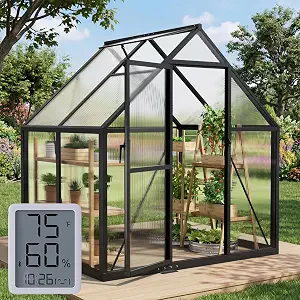 |
| Best Value The sweet spot between price and what you get | Greengro Small Walk-In Greenhouse with PE Cover and Zippered Door |  |
| Best Budget The cheapest option that still gets the job done reliably | porayhut Pop-Up Mini Greenhouse Cover (Portable Plant Shelter) |  |
| Highest Rated A top-rated pick with lots of positive feedback | RUIJOROO Walk-In Tunnel Greenhouse (9.8 x 6.5 x 6.5 ft) |  |
| Most Popular A crowd favorite that many people choose with confidence | Pure Garden 4-Tier Mini Greenhouse with PVC Cover and Locking Wheels |  |
| Best Seller A high-volume bestseller chosen again and again | EAGLE PEAK 6×4 Pop-Up Walk-In Greenhouse |  |
EAGLE PEAK 8×6 Pop-Up Walk-In Greenhouse

| Cover Material | Polyethylene (PE) |
|---|---|
| Frame Material | Polyester |
| Number Of Vents | 2 |
| Indoor Outdoor Usage | Outdoor |
The EAGLE PEAK 8×6 pop-up walk-in greenhouse is a backyard greenhouse that prioritizes quick setup and usable workspace. Its pre-assembled frame uses a patented PeakPush center lock so one person can erect the structure without tools, then secure it with included stakes and guy ropes. The reinforced polyethylene cover is water-resistant, UV resistant, and designed to retain humidity while the roll-up zippered door and mesh windows let you control ventilation. With about 48 square feet of floor space and 6 foot walls, the interior fits shelving or a small potting bench for seedlings, potted plants, and overwintering tender specimens. The steel frame is powder-coated for rust resistance, which helps for year-round outdoor use, though pop-up greenhouses are best placed in a sheltered spot and tied down well if you expect high winds. Assembly and daily access are straightforward, but this is a lightweight seasonal structure rather than a permanent polycarbonate greenhouse, so plan on occasional maintenance and careful siting if you need long-term heavy-duty protection.
Best for: Gardeners who want an easy-to-deploy, walk-in greenhouse for seed starting, overwintering, and general season extension without a multi-person build. It suits buyers who value convenience and usable workspace over permanent heavy construction.
Less Ideal for: People seeking a permanent, heavy-duty polycarbonate or wood greenhouse for extreme weather or long-term structural permanence should consider sturdier alternatives.
- One-person, tool-free pop-up setup with patented center lock for fast assembly
- Reinforced PE cover that is water-resistant and UV-resistant to extend growing season
- Generous interior space (48 sq ft) and 6 ft walls that accommodate shelving and work space
- Powder-coated steel frame with stakes and guy ropes for improved outdoor stability
- Mesh windows and a zippered roll-up door provide good ventilation control
- Not a permanent rigid greenhouse — less durable in sustained high winds or severe weather
- Frame material listed as polyester in details may indicate some non-steel components in fittings
Verdict: If you want a roomy, single-person pop-up greenhouse that sets up quickly and gives reliable season-extension protection, this 8×6 EAGLE PEAK model is a practical choice.
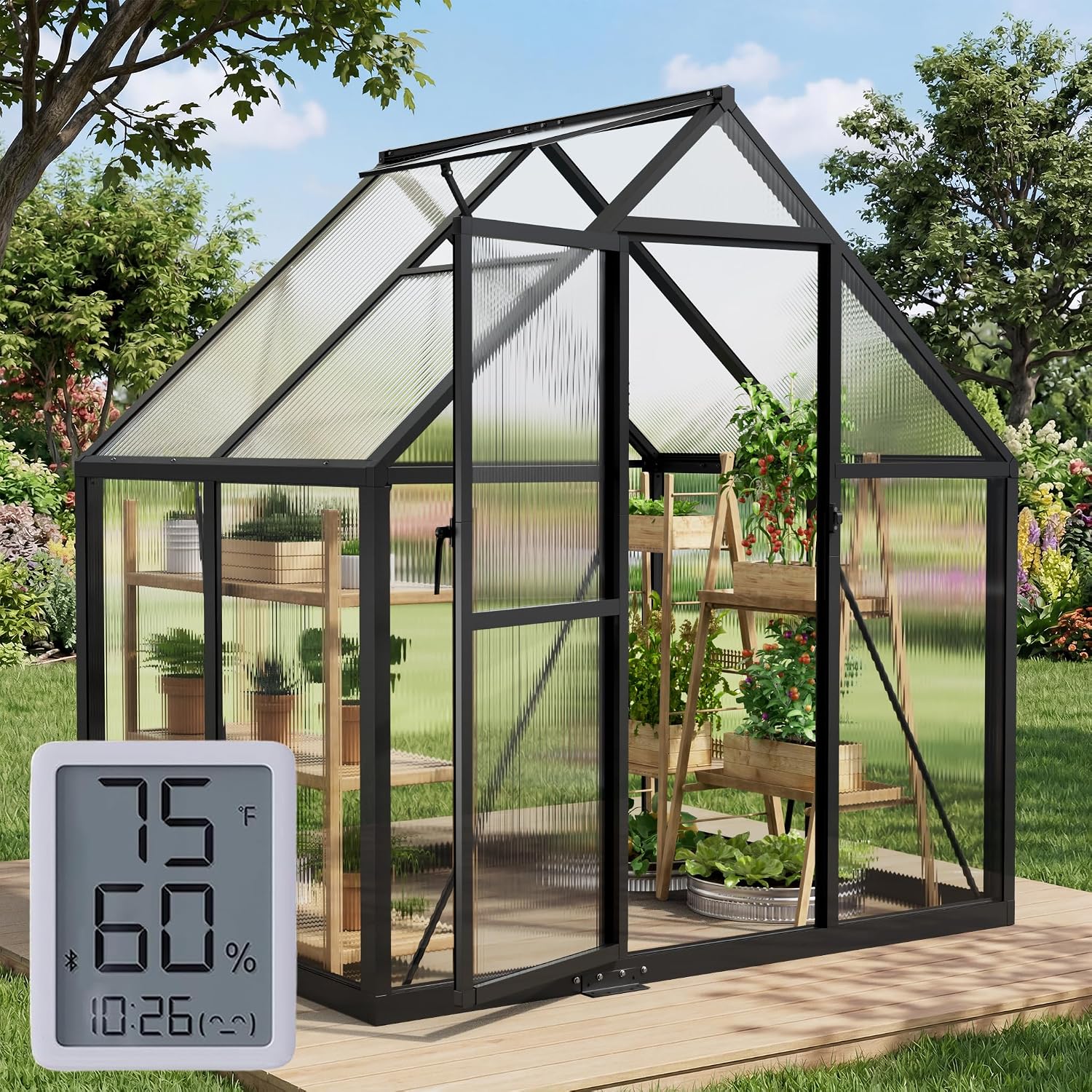
Sylviera 6×4 ft Outdoor Polycarbonate Greenhouse with Hygrometer
| Cover Material | Polycarbonate (PC) |
|---|---|
| Frame Material | Aluminum |
| Number Of Vents | 2 |
| Indoor Outdoor Usage | Outdoor |
The Sylviera 6×4 ft greenhouse is a compact walk-in shelter that creates a controlled environment for vegetables, herbs, and ornamentals. It uses an aluminum frame with 4mm double-wall polycarbonate panels to let light in while blocking UV, and the kit includes roof vents, a lockable door, and a hygrometer for basic climate monitoring. Typical use is to stage potted plants and seed trays on shelving inside, open vents to prevent overheating on warm days, and close up for wind or light snow. Notable features are the impact-resistant panels that improve insulation compared with single-sheet plastic, a reinforced frame for better wind resistance, and labeled parts with tools to simplify assembly. In practice this means extended growing seasons and safer overwintering for small crops, but expect a modest usable footprint that limits large beds and taller crops. Assembly takes two people and some time to align panels and secure seams, and heavy wind or deep snow may still require additional anchoring or sealant to keep joints tight.
Best for: Gardeners who prioritize year-round performance and want a durable small greenhouse to extend seasons and protect plants from wind and light snow.
Less Ideal for: Those needing a large production space, tall plant beds, or a no-assembly, instant shelter should consider larger or prebuilt alternatives.
- Double-wall polycarbonate panels provide UV protection and better insulation than thin plastic sheeting
- Aluminum frame offers corrosion resistance and increased structural strength
- Adjustable roof vents and a lockable door help regulate temperature and airflow
- Includes a hygrometer and labeled parts for clearer assembly and basic climate monitoring
- Small interior footprint limits planting layout and vertical growing space
- Assembly requires two people and careful alignment of panels for a weather-tight fit
Verdict: Choose this compact Sylviera greenhouse when you want a durable, ventilated small walk-in that reliably extends your growing season.
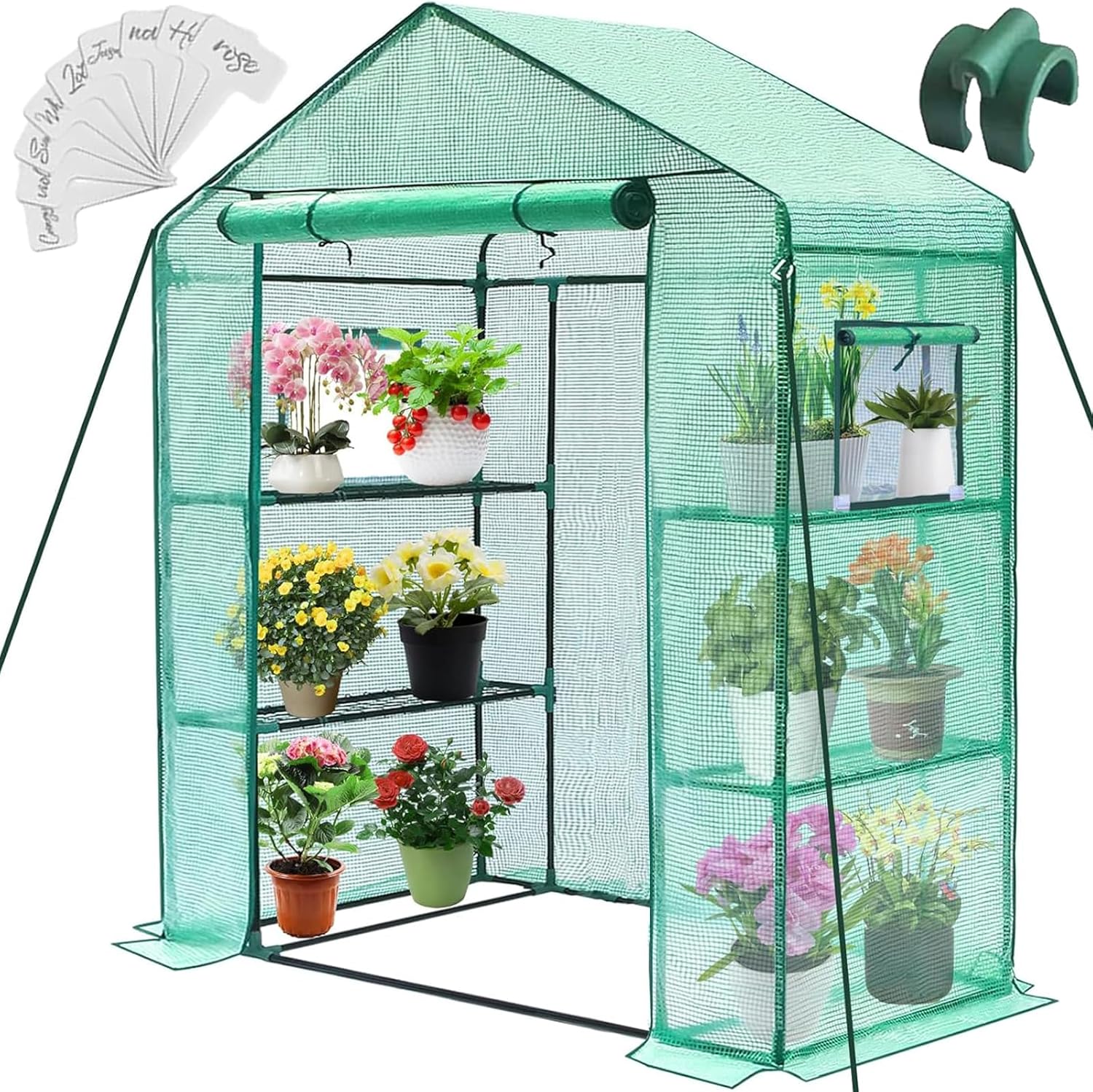
Greengro Small Walk-In Greenhouse with PE Cover and Zippered Door
| Cover Material | Polyethylene (PE) |
|---|---|
| Frame Material | Metal |
| Closure Type | Zipper |
| Nominal Wall Thickness | 16 millimeters |
This Greengro small walk-in greenhouse creates a sheltered microclimate for potted plants, seedlings and herbs by combining a metal framework with a thick PE cover and zippered access. It is typically used on a patio, balcony or in a backyard to extend the growing season, shield plants from wind and rain, and keep pests out. Notable features include screened ventilation windows, a roll-up zippered door, four internal shelves for staging pots, and guy ropes with ground stakes for added stability. Practical benefits are straightforward setup without tools, portability for repositioning, and weather-resistant protection that lets you start seeds earlier or overwinter tender plants. Important limitations are its small footprint and modest shelf weight capacity, so it is best for small to medium pots rather than heavy planters, and the lightweight frame and cover remain less durable than rigid greenhouse structures in long-term, high-wind exposure.
Best for: Buyers who want an efficient, moveable solution to protect and organize several small to medium potted plants and seedlings without investing in a permanent structure.
Less Ideal for: Gardeners who need a long-term, heavy-duty greenhouse for large pots, full-size vegetables, or locations regularly exposed to very strong winds should consider sturdier, permanent options.
- Thick polyethylene cover with reinforced edging offers waterproofing and UV reduction
- Zippered roll-up door and screened windows provide ventilation and easy access
- Tool-free assembly and detachable design for quick setup and relocation
- Integrated shelves create organized vertical growing space for multiple pots
- Small size limits capacity to small and medium pots and seed trays
- Lightweight frame and cover are not as long-lasting as permanent rigid greenhouses
Verdict: A compact, easy-to-assemble micro greenhouse that protects and organizes small to medium potted plants while staying portable and budget friendly.
porayhut Pop-Up Mini Greenhouse Cover (Portable Plant Shelter)

| Indoor Outdoor Usage | Indoor, Outdoor |
|---|---|
| Closure Type | Zipper |
| Cover Material | Polyvinyl Chloride (PVC) |
| Frame Material | Aluminum |
| Number of Doors | 1 |
This porayhut pop-up mini greenhouse is a lightweight, budget-friendly plant shelter that sets up in seconds to protect seedlings, small vegetables, and potted plants from wind, rain, and light frost. The dome-style frame pops open and is held by steel hoops with a UV50+ PVC cover that keeps heat and moisture in while letting light through. A zippered front with a roll-up option and a clear window make it easy to check plants and add ventilation on warmer days. It works well over raised beds, trays, or a grouping of pots and folds flat for compact storage or transport. Practical benefits include quick deployment, visible plant access without fully opening the cover, and basic UV and waterproof protection. Limitations are its small footprint and lightweight construction, so it is best for temporary protection rather than permanent, heavy-weather shelter; in strong winds or heavy snow it will need anchoring and occasional reinforcement.
Best for: Gardeners on a tight budget who need a simple, portable way to protect seedlings and small plants outdoors and extend the growing season without permanent installation.
Less Ideal for: People who need a heavy-duty, all-season greenhouse for large plants or long-term outdoor use should consider sturdier framed or rigid-panel options.
- Pop-up design that installs and folds down in seconds for easy seasonal use and storage
- Transparent UV50+ PVC cover lets light in while offering basic UV and waterproof protection
- Zippered door with roll-up option and clear window for easy access and ventilation
- Lightweight, portable construction that is convenient to move around the garden
- Small size and light frame are not suited for heavy snow loads or prolonged severe weather
- Thin PVC cover and simple hoop frame require anchoring to withstand strong winds
Verdict: A very affordable, easy-to-deploy mini greenhouse that gives budget gardeners a quick way to shelter seedlings and small plants from weather and light frost.
RUIJOROO Walk-In Tunnel Greenhouse (9.8 x 6.5 x 6.5 ft)

| Size | 9.8×6.5×6.5 |
|---|---|
| Cover Material | Polyethylene (PE) 140 g/m² |
| Frame Material | Powder-coated iron |
| Number of Vents | 6 |
| Number of Doors | 1 |
This RUIJOROO walk-in tunnel greenhouse provides a straightforward, budget-friendly shelter for starting seedlings, protecting vegetables and extending the growing season. It uses a powder-coated iron frame with triangular bottom supports that improve stability, and a 140 g/m² polyethylene cover that is described as sunproof and waterproof to help retain humidity. The unit has one zippered mesh door and six mesh windows for ventilation, so you can manage airflow and reduce overheating on warm days. Assembly is reported as simple with clear instructions, making it suitable for a homeowner who wants a quick setup. Expect the practical benefits of easier frost protection, organized planting space, and improved seed germination conditions. Limitations are those common to lightweight tunnel greenhouses: the PE cover and frame are not as durable as rigid glass or polycarbonate structures in high winds or heavy snow, and long-term exposure to sun will eventually degrade plastic covers. Use in well-protected locations and occasional maintenance will extend service life.
Best for: Buyers who prioritize a reliable, easy-to-assemble seasonal greenhouse to protect seedlings and extend the growing season in a sheltered outdoor spot.
Less Ideal for: Not a good choice for gardeners needing a permanent, high-wind or heavy-snow-rated structure or those who want glass or polycarbonate durability.
- Sturdy powder-coated iron frame with triangular base for added stability
- 140 g/m² PE cover that offers sun and water resistance and helps retain humidity
- Multiple mesh windows plus a zippered mesh door for adjustable ventilation
- Walk-in size provides easy access for planting and maintenance
- Simple assembly with clear instructions for faster setup
- PE cover and lightweight frame are less resilient to heavy snow loads and severe wind than rigid greenhouses
- Plastic cover will degrade with long-term UV exposure and may need periodic replacement
Verdict: A practical, reliability-minded seasonal walk-in greenhouse that gives quick setup, good ventilation, and basic weather protection for starting plants and extending the season.
Pure Garden 4-Tier Mini Greenhouse with PVC Cover and Locking Wheels

| Number of Doors | 2 |
|---|---|
| Closure Type | Zipper |
| Cover Material | Polyvinyl Chloride (PVC) |
| Frame Material | Alloy Steel |
| Weight Capacity | Maximum weight: 24 pounds |
This Pure Garden 4-tier mini greenhouse provides a simple, moveable shelter for seedlings, potted herbs, and small vegetables. It assembles without tools and sits on four sturdy shelves that the manufacturer rates for up to 24 pounds each, so it handles multiple trays or medium pots per tier. The clear PVC cover with zippered roll-up door helps trap warmth and keeps out light frost and pests while still allowing visibility; the alloy steel frame and included locking wheels make it easy to roll the unit into sun or indoors and then lock it in place. Practical benefits include season extension for starting seeds earlier, a compact footprint for porches or balconies, and the ability to remove wheels if you want a fixed setup. Limitations are the thin PVC cover and lightweight tubular frame: the unit needs to be well anchored outdoors in wind and will not replace a heavy-duty greenhouse for large plants or long-term outdoor exposure. Also expect assembly time and some care handling the cover to avoid tears.
Best for: Buyers who want an affordable, portable solution to start seeds earlier and protect small plants on a porch, balcony, or sunroom and who value easy repositioning and visible coverage.
Less Ideal for: Gardeners needing a permanent, heavy-duty outdoor greenhouse for large plants, year-round outdoor exposure, or commercial-scale propagation should choose a sturdier option.
- Four-tier shelving gives organized space for seedlings, trays, and pots
- Locking wheels allow easy repositioning and indoor-to-outdoor use
- Zippered roll-up PVC cover protects against light frost and pests while allowing visibility
- Rated weight capacity per shelf supports multiple medium pots or seed trays
- PVC cover and tubular frame are lightweight and require anchoring in windy conditions
- Not suitable for large plants or heavy prolonged outdoor exposure
Verdict: A compact, movable mini greenhouse that extends the growing season and stores multiple trays in a small footprint, ideal for casual home gardeners.
EAGLE PEAK 6×4 Pop-Up Walk-In Greenhouse

| Size | 6×4 |
|---|---|
| Cover Material | Reinforced Polyethylene Film |
| Frame Material | Alloy Steel |
| Number of Vents | 2 |
| Number of Doors | 1 |
The EAGLE PEAK 6×4 pop-up walk-in greenhouse is a compact, easy-to-use shelter for extending the growing season and protecting plants from frost. Its pre-assembled pop-up frame and patented center lock let one person set it up without tools, making it convenient for patios, small yards, or indoor uses. The alloy steel frame and reinforced polyethylene cover are UV-treated and water resistant, which helps retain warmth and humidity for seed starting, winter protection, and tender plants. Practical features include a roll-up zippered door, mesh windows for ventilation, a ground skirt that can be weighted, and included stakes and guy ropes for added stability. Because it is a lightweight pop-up structure, it performs well in light to moderate wind and snow when cleared or reinforced, but it is not meant as a permanent heavy-weather shelter. Expect occasional maintenance like tightening anchors, clearing snow, and replacing covers over time. For gardeners who want a low-effort way to protect seedlings and small plants through colder months, this greenhouse balances portability and season-extension capability with straightforward setup and reasonable durability.
Best for: Gardeners who want a simple, low-effort way to start seeds and protect small plants through cooler months and prefer a product that is easy to install and maintain.
Less Ideal for: People needing a permanent, heavy-duty greenhouse for large-scale production or who expect to leave an unreinforced structure in severe storms without additional anchoring.
- One-person pop-up design and patented center lock enable tool-free, fast setup
- Reinforced UV-treated PE cover retains warmth and humidity for season extension
- Alloy steel frame with powder-coated finish for improved strength and rust resistance
- Zippered roll-up door and mesh windows provide adjustable ventilation and access
- Pop-up construction requires extra anchoring or reinforcement in strong wind or heavy snow
- Not intended as a permanent structure for extreme weather or long-term heavy loads
Verdict: Choose this compact pop-up greenhouse if you want a fast, one-person setup that reliably extends the growing season for small-scale gardening.
Choosing the Right Budget Greenhouse: Key Factors to Consider
Frame Material and Strength
The frame is the backbone of a budget greenhouse. Thinner metal tubing or lightweight plastic keeps costs down but can bend or corrode in high winds or wet climates. Consider whether the frame has reinforcement points, stamped fittings, or cross-bracing that add rigidity without a big cost increase.
A stronger frame means less frequent repairs and better long-term alignment of doors and covers. If your site is exposed, prioritize thicker tubing and secure anchor options so the structure stays stable during storms.
Covering Type and UV Resistance
The covering determines light transmission, heat retention, and lifespan. Polyethylene covers are common on budget greenhouses because they are inexpensive and flexible, but not all film is equal. Look for covers rated for UV protection and seasonal use rather than single-season sheeting.
Thicker films and multi-layered plastics hold up better to sun and abrasion. Clearer materials pass more light but can heat more quickly; diffused coverings reduce hotspots and help even growth across seed trays.
Ventilation and Temperature Control
Good airflow prevents overheating on sunny days and reduces humidity that can cause fungal issues. Budget greenhouses often rely on zippered doors, roll-up side panels, or screened vents. Choose a design that lets you adjust ventilation easily throughout the day.
Also think about passive shading and how the cover responds to high midday sun. Without adequate venting, inexpensive greenhouses can quickly surpass ideal seedling temperatures, which stresses young plants.
Anchoring and Wind Resistance
Anchoring options are critical for a light greenhouse. Stakes, ground pegs, or built-in base rails keep the structure from lifting in gusts. In windy sites, a small greenhouse with inadequate anchors becomes a maintenance headache and a safety risk.
Check whether the unit includes anchoring hardware or whether you will need to add concrete blocks, sandbags, or additional stakes. Planning for secure anchoring at purchase saves effort and damage later.
Assembly Complexity and Required Tools
Budget greenhouses are often designed for DIY assembly, but the time and tools required vary widely. Some kits snap together with minimal tools, while others need wrenches, a rubber mallet, or extra hands. If you are installing on your own, look for simple fittings and clear instructions.
Ease of assembly affects how quickly you can start using the greenhouse and whether you can dismantle it for off-season storage. Consider how many parts there are and whether replacements are available if pieces are lost or damaged.
Internal Layout and Usable Space
Usable growing area is not just the footprint on paper. Shelving, raised beds, and vertical space for hanging plants determine how much you can actually grow. Budget greenhouses often trade durability for compactness; think about how you will arrange trays and pots to maximize productivity.
Also consider door placement and access paths so you can reach plants for watering, pruning, and harvesting without disturbing the environment. Good internal layout reduces time spent caring for plants and improves overall results.
Site Selection and Preparation
Choosing the right spot determines how well a budget greenhouse performs. Look for a level area with good sun exposure, ideally with morning sun and some afternoon protection in very hot climates. Avoid low spots where cold air pools or where runoff will wash out anchors.
Prepare the ground by clearing vegetation and leveling. A compacted gravel pad, paving slabs, or treated timber base can improve drainage and create a stable platform for anchoring. If you plan on moving the greenhouse seasonally, consider a simpler surface such as packed soil with added pegs.
- Aim for 6 to 8 hours of sunlight when possible
- Avoid heavy tree shade and dripping gutters
- Ensure good drainage to prevent standing water under the unit
Seasonal Use and Off-Season Storage
Budget greenhouses are best-suited for seasonal use or as a protected nursery space. In moderate climates you can run them through spring and fall; in regions with heavy snow loads they are usually a warm-season solution. Plan how you will winterize or dismantle the structure.
Take photos during assembly so reassembly is easier after storage. Store the cover in a dry location to avoid mold and UV damage, and keep hardware in labeled bags so small parts are not lost between seasons.
- Remove snow promptly to avoid collapse
- Ventilate during humid days to reduce mold
- Store covers indoors to extend life
Improving Microclimate Without Upgrades
You can improve a budget greenhouse's internal climate with inexpensive additions. Shade cloth can reduce overheating on hot afternoons. Thermal mass items, like water barrels painted dark, absorb heat during the day and release it at night, moderating temperature swings.
Simple temperature monitors and passive vents let you better manage the interior without electrical systems. Use shelving and plant spacing to promote air movement and avoid crowding seedlings into stagnant pockets.
- Use 30 to 50 percent shade cloth for hot, sunny sites
- Add dark water containers for passive heat storage
- Fit simple screened vents to improve airflow
Maintenance Tips to Extend Lifespan
Regular maintenance keeps a budget greenhouse useful for more seasons. Rinse and dry the cover before storage to prevent mildew and check seams and zippers for wear. Tighten fittings and replace bent tubing promptly to avoid stress on other components.
Inspect anchoring points after storms and re-tension covers that sag. Small repairs early on prevent the need to replace entire covers or frames unexpectedly.
- Clean covers with mild soap and water, avoid harsh chemicals
- Lubricate zippers and track mechanisms if present
- Keep a small repair kit with spare ties, clips, and sealant
Best Uses for Small and Urban Gardens
Compact budget greenhouses are ideal for seed-starting, overwintering herbs, and protecting potted plants on balconies or patios. Their small footprint fits tight spaces while still offering a controlled environment for young plants.
Think vertically: use shelving and hanging pots to maximize plant counts. Position the unit near a water source and in a sheltered micro-site to get the most utility from a low-cost structure.
- Use tiered shelving to increase planting capacity
- Place near an exterior wall to shelter from wind
- Combine with grow lights if natural light is limited
How We Chose the Best Budget Greenhouse
We evaluated candidates using criteria that matter in real-world garden use for budget greenhouses. First, structural durability: can the frame and covering withstand wind, rain, and seasonal UV exposure typical for small outdoor installations? Second, assembly and hardware: we considered how easy the unit is to put together, whether common tools are required, and how clear the instructions are. Third, ventilation and microclimate control: good budget greenhouses should allow adjustable airflow and provide predictable heat retention to protect seedlings without overheating. Fourth, footprint and portability: we looked at usable growing area, vertical space for shelving, and how easy it is to move or take down the structure. Fifth, weatherproofing details: zipper quality, anchoring options, and seams affect how well a cheap greenhouse performs over a season. We excluded purpose-built commercial polycarbonate greenhouses and heavy-duty hobby glass houses because they are outside the budget scope. Units with missing hardware, unclear assembly methods, or coverings with no UV specification were also removed. The final shortlist favors units that balance low cost with sensible materials and practical garden performance.
FAQ
How long do budget greenhouse covers typically last?
Typically they last one to three seasons depending on material, UV exposure, and care. Thicker or UV-treated films last longer, while thin polyethylene may degrade faster in strong sun. Storing covers during the off-season and cleaning them reduces premature failure.
Can a budget greenhouse survive snow?
Most budget greenhouses are not designed for heavy snow loads. Light, infrequent snowfall can be removed by brushing off the cover, but persistent or heavy snow risks collapse. If you expect snow, plan to dismantle the cover or add temporary supports before winter.
Do I need a permit to install a small greenhouse?
Permit requirements vary by jurisdiction and often depend on size and permanent foundations. Many small, temporary greenhouses under a certain footprint do not require permits, but checking local codes is a good early step before installation.
What is the best way to anchor a lightweight greenhouse?
Anchoring with ground stakes or spiral pegs is common for soft ground, while base rails bolted to paving or weighted with concrete blocks work on hard surfaces. Choose methods that match your site and expect to recheck anchors after storms.
Can I heat a budget greenhouse for winter crops?
You can add small heaters or passive heat sources, but budget structures may not hold heat efficiently. Insulating covers and using thermal mass helps, but for consistent winter production in cold climates a more substantial structure is usually required.
Final Verdict
A budget greenhouse is a practical way to extend the season, protect young plants, and increase yields in small outdoor spaces. Prioritize frame strength, a UV-rated covering, and ventilation when making a choice, and match anchoring and footprint to your site exposure. Accept the tradeoffs: lower cost usually means lighter materials and seasonal use. If you plan to run a greenhouse year-round or face heavy snow and wind, consider a sturdier alternative. For seasonal seed-starting and simple plant protection, a well-sited budget greenhouse delivers strong value and quick results.
