

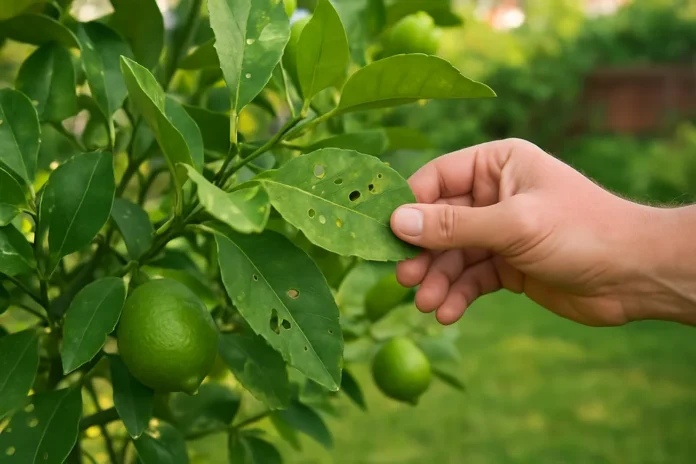
Lemon tree leaves usually get holes because something chewed them, most often caterpillars, beetles, slugs, or snails. Wind damage, hail, and leaves tearing while they are still tender can also leave holes.
If your lemon tree leaves have holes, the good news is that this symptom is usually easier to trace than yellowing or leaf drop. Holes almost always come from something physical, not a mystery nutrient issue. In most home gardens, that means chewing insects, slugs and snails, or weather damage that tore soft new leaves before they fully opened.
I usually start by looking at the shape and location of the damage. Clean bites along the edges suggest one problem, ragged holes through the middle suggest another, and holes that show up only on fresh growth can point to insects that prefer tender leaves. On citrus, the pattern matters as much as the damage itself.
A few holes will not ruin an otherwise healthy tree. But repeated chewing on new growth can slow young lemon trees, reduce vigor, and open the door to more stress. Once you know what is causing the damage, the fix is often pretty straightforward.
What Holes in Lemon Leaves Usually Mean
Leaves do not develop true holes from lack of fertilizer alone. When you see missing tissue, something removed it or the leaf tore after being damaged. That is why the first question is not "what should I feed it?" but "what physically happened to the leaf?"
On lemon trees, the most common causes are chewing pests, especially on tender new growth. Slugs, snails, caterpillars, grasshoppers, earwigs, and certain beetles can all leave holes. Less often, wind whipping, hail, thorn rubbing, pet damage, or leaves sticking together while they expand can create splits that later look like insect feeding.
- Holes on the edges of leaves often suggest chewing insects, slugs, or snails.
- Ragged holes in the middle of leaves can come from caterpillars, beetles, or tears that formed while the leaf was still soft.
- Only new leaves affected usually points to pests that prefer tender growth, or wind damage during leaf expansion.
- Older leaves with scattered chewing but healthy new growth may indicate a passing pest issue rather than an ongoing infestation.
When I inspect citrus, I compare the newest flush with older leaves right away. If the fresh leaves are hit hardest while older leaves look mostly fine, I put chewing pests high on the list because many of them target the softest tissue first.
Chewing Pests That Commonly Cause Holes
Caterpillars and Orange Dog Larvae
Caterpillars are one of the most common reasons lemon leaves develop obvious holes. On citrus, you may also see giant swallowtail larvae, often called orange dogs. They can chew sizable sections from leaves, especially on young trees. Damage may appear overnight, and droppings on nearby leaves are a strong clue.
Slugs and Snails
If the holes look irregular and the damage seems worse after damp nights, slugs or snails are likely. They often chew leaf edges, low foliage, and tender shoots. You may find silvery slime trails on pots, mulch, or lower branches.
Grasshoppers, Katydids, Earwigs, and Beetles
These pests tend to leave irregular holes or missing chunks. Grasshoppers and katydids are easier to spot during the day. Earwigs feed more at night and hide in cracks, mulch, or under containers. Beetle feeding patterns vary, but many create rough chewing damage rather than neat circles.
Leaf Miners Are Different
Citrus leaf miners usually do not create open holes at first. Instead, they leave silvery, winding trails and distorted young leaves. Later, badly twisted tissue can dry and tear, which some gardeners mistake for chewing. If you see serpentine tunnels, leaf miner damage is part of the picture even if holes show up later.
- Look for frass, which is insect droppings, on leaves or below the canopy.
- Inspect the undersides of leaves and the newest flush where pests often hide.
- Check the tree after dusk or early in the morning if daytime inspections show nothing.
- Pay attention to nearby mulch, weeds, and pots where night feeders shelter.
Weather and Physical Damage That Can Look Like Pest Feeding
Not every hole means a bug is actively eating your lemon tree. Citrus pushes out soft, flexible leaves that can tear surprisingly easily. If strong wind hits while those leaves are still unfolding, they may split. Once the leaf matures, the damage can look like random holes cut into the blade.
Hail is another common cause. Small hail can punch or bruise leaves, and the injured tissue later dries out and falls away. Thorn rubbing, branches scraping each other, or leaves repeatedly hitting a fence or wall can also leave punctures and ragged tears.
I also see occasional mechanical damage from pets, lawn tools, or moving potted citrus around patios. This tends to be localized on one side of the tree and often affects leaves at the same height.
If you are unsure whether the cause is weather or insects, inspect the very newest leaves for active chewing. Old torn leaves tell you what happened. Fresh damage tells you what is still happening.
How to Tell Which Cause Fits Your Tree
The best diagnosis comes from matching the damage pattern to the plant's conditions. Start with three questions: Are the holes on old leaves, new leaves, or both? Are the edges smooth or ragged? Do you actually see pests, slime, droppings, trails, or fresh chewing?
Signs That Point Toward Pests
- New holes keep appearing over several days.
- Damage increases on tender new growth.
- You find insects, larvae, slime trails, or frass.
- Chewed areas look fresh and green around the edges before drying.
Signs That Point Toward Wind or Physical Tearing
- Damage appeared right after a storm, hail, or very windy weather.
- Holes and splits are mostly on one exposed side of the tree.
- There is no ongoing increase in damage after the weather event.
- The tears look stretched or shredded rather than clearly eaten.
Signs That Point Toward Leaf Miner Damage
- Young leaves are curled or puckered.
- Silvery squiggle trails are visible in the leaf tissue.
- Holes appear after leaves distort and dry, not as the first symptom.
Sometimes more than one issue is happening at once. A leaf may be weakened by miner damage and then tear in the wind. Or slugs may feed on a tree that is already putting out stressed, tender growth after irregular watering. That is why watching new growth over the next couple of weeks is often more useful than obsessing over old damaged leaves.
What to Do for Each Common Cause
If Caterpillars Are Chewing the Leaves
Hand-picking works well on small lemon trees. Check the undersides of leaves and stems. If damage is widespread, a product containing Bt, short for Bacillus thuringiensis, can help with caterpillars while being gentler on many beneficial insects when used correctly. Spray only when caterpillars are actually present, and target the young larvae stage for best results.
If Slugs or Snails Are the Problem
Remove hiding spots near the trunk, reduce excessive mulch piled against the base, and water early in the day rather than late evening if possible. Iron phosphate baits are a common home-garden option. You can also hand-pick at night with a flashlight if the tree is small.
If Grasshoppers, Earwigs, or Beetles Are Responsible
Begin with physical control and cleanup. Remove weeds and dense shelter around the tree, inspect at the time of day the pest is most active, and reduce stress so the tree can outgrow moderate damage. Insecticidal sprays are often less effective on larger chewing insects unless you catch them directly, so accurate identification matters.
If Leaf Miners Are Involved
Leaf miner damage is usually worst on fresh flushes. Protecting natural beneficial insects helps a lot, and broad-spectrum insecticides can make miner problems worse by disrupting those helpers. On a healthy backyard lemon tree, the best approach is often to support strong growth and tolerate some cosmetic damage, especially once the tree is established.
If Wind or Hail Caused the Holes
There is no treatment for damaged leaves beyond giving the tree good basic care. If the tree is in a very exposed site, use a windbreak, move a potted lemon to a more protected location, or stake young trees properly so branches do not whip around. Focus on the health of the next flush rather than removing every marked leaf.
I try not to spray first and identify later on citrus. Many lemon trees recover from minor chewing faster than they recover from unnecessary pesticide use, especially when beneficial insects are already helping.
How to Help the Tree Recover
A mature lemon tree can tolerate a fair amount of leaf damage if its roots, watering, and nutrition are in good shape. Recovery is less about patching old leaves and more about producing healthy new growth. That means steady moisture, proper feeding, and avoiding extra stress while the tree rebounds.
- Water deeply and consistently rather than with frequent shallow sprinkles.
- Feed with a citrus-specific fertilizer according to label directions during the active growing season.
- Keep mulch a few inches away from the trunk while using it to moderate soil moisture.
- Prune only dead or badly damaged twigs, not every marked leaf.
- Monitor new growth for continuing damage so you know whether the cause is still active.
Do not overcorrect by pouring on extra fertilizer. Damaged leaves do not heal, and overfeeding can push weak, very tender growth that attracts even more pests. Healthy, moderate regrowth is the goal.
When Holes Are Serious and when They Are Mostly Cosmetic
A few holes on older leaves are usually cosmetic. A healthy established lemon tree can still flower, fruit, and grow normally with minor chewing. The problem becomes more serious when a young tree keeps losing most of its new leaves, when defoliation is heavy, or when damage is paired with yellowing, dieback, curling, or overall decline.
Be more concerned if you notice repeated attacks on each new flush, extensive chewing on a newly planted tree, or signs that the trunk, stems, or fruit are also being damaged. In those cases, the tree may not have enough leaf area to support strong growth.
If the pattern does not match insects or weather, or if the tree is declining in several ways at once, it may be worth contacting a local extension office or citrus expert. Regional pests vary, and local knowledge can save a lot of guesswork.
How to Prevent Future Holes in Lemon Leaves
Prevention is mostly about keeping the tree vigorous and catching chewing pests early. Lemon trees that are drought-stressed, crowded, or repeatedly pushing weak flushes tend to stay on the pest radar longer than sturdy trees with even growth.
- Inspect fresh growth regularly, especially in warm weather when pests are active.
- Keep weeds and dense debris cleared from the base of the tree.
- Use mulch wisely, but avoid creating damp slug habitat right against the trunk.
- Protect young or potted trees from strong wind exposure.
- Encourage beneficial insects by avoiding routine broad-spectrum spraying.
- Address small outbreaks early before each new flush gets chewed again.
In my experience, early observation prevents most citrus leaf problems from becoming big ones. A quick look at new growth once or twice a week is often enough to catch caterpillars, snails, or miner distortion before the tree starts looking rough.
FAQ
Will Holes in Lemon Leaves Heal?
No. The damaged tissue will not fill back in. What matters is whether the tree produces healthy new leaves afterward.
Should I Cut Off Leaves with Holes?
Usually no, unless the leaves are mostly destroyed or diseased. Even damaged leaves can still photosynthesize, and removing too many can stress the tree further.
Can a Nutrient Deficiency Cause Holes in Lemon Leaves?
Not directly. Nutrient problems may weaken growth or distort leaves, but true holes usually come from chewing pests, tearing, or physical injury.
Are Lemon Tree Leaf Holes Dangerous to Fruit Production?
A small amount of damage usually is not. Heavy repeated defoliation on a young or stressed tree can reduce vigor and eventually affect flowering and fruit set.
Why Do Only the New Lemon Leaves Have Holes?
Tender new leaves are softer and easier for pests to chew. They also tear more easily in wind while unfolding, so new growth often shows the first and worst damage.
Do Citrus Leaf Miners Make Holes?
Not usually as the first symptom. They more often cause silvery trails and curled leaves, though the damaged tissue can later dry and split.
What Is Eating My Potted Lemon Tree Leaves at Night?
Common nighttime culprits include slugs, snails, earwigs, and caterpillars. Check the plant after dark and inspect under the pot rim, mulch, and lower foliage.
Want the right fix faster? Read our citrus pest control guide and compare the best treatments for caterpillars, slugs, leaf miners, and other lemon tree leaf chewers.
