

Note: This article contains affiliate links. If you click on these links and make a purchase, I may earn a small commission at no extra cost to you. This helps support my research and content. Read my full affiliate disclosure here.
If you want dense, fragrant coverage from Confederate jasmine, the right trellis makes the difference between a sparse climber and a full, fragrant screen. Confederate jasmine attaches with twining stems and benefits from continuous, evenly spaced support as it grows. A well-chosen trellis helps direct growth, protects house trim and fences, and simplifies pruning and maintenance. This guide covers five shortlisted trellises suited specifically for Confederate jasmine. We evaluated structural strength, material longevity, ease of installation, and how each design encourages even coverage. Read on to learn which trellis types perform best for trained screens, freestanding arches, or espaliered wall plantings, and what to consider before you install one.
Top Picks at a Glance
| Best Overall The best all-around choice for most situations | FULUPET 87 x 20 Inch Metal Garden Trellis (2-Pack) |  |
| Best Quality Built to a higher standard if you want something more solid | Macteyia 2-Pack 70.8" H Metal Garden Trellis, Powder-Coated Black |  |
| Best Value The sweet spot between price and what you get | LeJoy Garden 6.3 ft Metal Obelisk Trellis |  |
| Highest Rated A top-rated pick with lots of positive feedback | LycorTrade 6 ft Extra-Tall Wooden Ladder Trellis for Climbing Plants |  |
| Most Popular A crowd favorite that many people choose with confidence | Adorox Metal Garden Arch Trellis, Powder-Coated Black |  |
FULUPET 87 x 20 Inch Metal Garden Trellis (2-Pack)

| Material Type | Metal |
|---|---|
| Finish Type | Powder Coated |
| Number of Packs | 2 |
| Item Weight | 11.6 pounds |
This two-pack of 87 x 20 inch metal trellis panels is built for gardeners who want reliable vertical support plus a decorative accent. The panels use 2.0 mm thickened steel tubing and a welded lattice that resists bending, so heavy vines such as roses, clematis, cucumbers, and other climbers can be trained without the frame sagging. Each panel has 10.6 inch ground stakes for deeper anchoring, which improves stability in softer soils and during windy weather. The black double-layer electrostatic powder coating offers weather and rust resistance for multi-season outdoor use. Assembly is straightforward: panels interlock and secure with wing nuts so you can set them up without power tools, and the laser-cut bird motif adds a classic look when used as a stand-alone plant cage or linked into a privacy screen. The main compromises are the fixed panel size and metal construction, which makes the set heavier to move and not ideal if you need a very lightweight, temporary support or a different height. For most home gardens this set balances durability, ease of use, and visual appeal.
Best for: Gardeners who want durable, decorative vertical support for medium to heavy climbing plants and prefer a stable, low-maintenance solution that can be used in beds or as a connected privacy screen.
Less Ideal for: People seeking a very lightweight, portable trellis or a custom-height support for small balcony planters should look at adjustable or fabric-based alternatives.
- Thick 2.0 mm steel tubing provides strong, bend-resistant support for heavy vines
- 10.6 inch deep stakes improve anchoring and stability in soft soil and wind
- Double-layer powder coating resists rust and weathering for long-term outdoor use
- Tool-free interlocking assembly with wing nuts makes setup quick and simple
- Metal construction and two-panel pack make the set relatively heavy to move
- Fixed 87 inch height may not suit beds or containers that require shorter supports
Verdict: A sturdy, weather-resistant two-pack trellis that delivers reliable vertical support and an attractive decorative screen for climbing plants.
Macteyia 2-Pack 70.8" H Metal Garden Trellis, Powder-Coated Black

| Material | Iron |
|---|---|
| Finish Type | Powder Coated |
| Number of Items | 2 |
| Unit Count | 1 Count |
These Macteyia trellises are built as simple, no-nonsense supports for climbing plants and vine vegetables. Each set includes two 70.8 inch high powder-coated iron panels that assemble quickly by inserting the ground spikes and fastening the two-piece frame with the supplied screws. The wire lattice provides plenty of attachment points for training roses, clematis, morning glories, peas, or cucumbers, and the semicircular shape with a decorative bird motif doubles as a garden screen or focal element. The powder coating helps resist outdoor corrosion and the 8.46 inch ground spikes give decent anchoring in garden beds and around planters. They are lightweight enough to move when empty but solid once planted into the soil. Expect to touch up any scratches in the finish over time and to add ties or clips for heavy or fruiting vines. For gardeners who want straightforward, attractive plant support that installs fast and performs reliably, these trellises do the job.
Best for: Gardeners who prioritize reliable, functional plant support and quick installation for climbing ornamentals or vine vegetables and who value an attractive, low-effort garden accent.
Less Ideal for: Those needing heavy-duty supports for very large, fruit-heavy vines or who require freestanding metal structures for wind-exposed sites should consider sturdier industrial-grade options.
- Powder-coated iron construction provides durable outdoor resistance
- Wire lattice offers many tie points for training vines and vegetables
- Quick two-piece assembly with included spikes and screws
- Two-pack gives immediate coverage or paired installations
- Powder coating can scratch and will need touch-ups over time
- Stability depends on soil conditions and may require additional anchoring for heavy plants
Verdict: A practical two-pack of powder-coated iron trellises that installs quickly and gives dependable, attractive support for climbing plants and vine vegetables.
LeJoy Garden 6.3 ft Metal Obelisk Trellis

| Material | Metal |
|---|---|
| Finish Type | Epoxy Coated |
| Item Weight | 4.9 pounds |
| Size | Large |
This LeJoy Garden obelisk is a simple, utilitarian tower-style trellis for encouraging upward growth of vines, roses, clematis and small vegetable plants. It arrives as metal tubing pieces with pre-drilled holes and assembles into a round, 6.3-foot-high frame that stakes into the ground for stability. The 16mm thick steel tubes and epoxy coating give it better rigidity and weather resistance than lightweight wire trellises, so it holds heavier stems and fruiting vines without flexing excessively. Its round profile and open rings make it easy to weave plants as they climb and the design works well in large pots or directly in garden beds. Important practical limits are that it is a fixed-height single piece rather than adjustable, and the metal has sharp edges during assembly so careful handling and gloves are recommended. For small city balconies the footprint may be larger than needed, but for beds and patio containers it adds reliable vertical structure with a decorative bronze finish.
Best for: Gardeners who prioritize reliable, low-fuss plant support and want a durable vertical structure for in-ground beds or large containers to maximize growing space.
Less Ideal for: People needing adjustable-height supports, very small balcony planters, or a lightweight temporary trellis for seasonal annuals.
- Sturdy 16mm steel tubing offers stronger support than thin-wire trellises
- Epoxy coating improves resistance to weather and corrosion
- Six-foot-plus height provides significant vertical growing space
- Pre-drilled pieces speed assembly and alignment
- Round obelisk shape works well with pots or in-ground planting
- Fixed height and shape limit flexibility for different plant sizes
- Sharp edges during assembly require caution and protective gloves
Verdict: Choose this trellis if you want a sturdy, weather-resistant 6.3-foot metal frame that reliably supports heavier climbing plants and creates instant vertical growing space.
LycorTrade 6 ft Extra-Tall Wooden Ladder Trellis for Climbing Plants

| Brand Name | LycorTrade |
|---|---|
| Number of Items | 15 |
| Finish Type | Natural Wood |
| Size | 6FT |
This LycorTrade wooden ladder trellis is a straightforward support for vining houseplants and small outdoor climbers, built from 15 smooth natural wood slats that provide rust-free strength and an attractive grain. It is typically hung vertically against a wall, balcony corner, or placed behind potted plants to encourage upward growth of pothos, ivy, philodendron, clematis, and similar vines. The trellis arrives as a lightweight panel and installs very quickly using the included adhesive hooks for damage-free mounting or nails for a more permanent fix; two plant clips are provided to guide young vines. Because it is wood, the trellis avoids the corrosion issues of metal supports and blends well with both indoor decor and garden settings. Expect a durable, low-maintenance structure that will hold vines as they mature, though it is not a heavy-duty support for very large, fruit-bearing vines or extremely windy outdoor locations. The design is simple and practical, making it a reliable choice for creating vertical greenery with minimal fuss.
Best for: Gardeners or renters who want a dependable, attractive vertical support for indoor vines or modest outdoor climbers and value easy installation and low-maintenance materials.
Less Ideal for: Growers who need structural support for heavy, fruiting plants or who require windproof, commercial-grade trellising should look for sturdier, reinforced systems.
- Natural wood construction resists rust and offers an attractive finish
- Extra-tall 6 ft height provides ample vertical space for climbing plants
- Includes adhesive hooks and nails for quick no-tool or permanent mounting
- Compact ladder design with multiple slats encourages healthy vine attachment
- Not intended as a heavy-duty support for large, fruit-bearing vines or very heavy loads
- Wood may weather over time outdoors without additional sealing or treatment
Verdict: A simple, rust-free wooden trellis that reliably supports vines and creates vertical greenery with fast, no-fuss installation.
Adorox Metal Garden Arch Trellis, Powder-Coated Black
| Material Type | Metal |
|---|---|
| Finish Type | Powder Coated |
| Shape | Single Arch |
| Size | Standard |
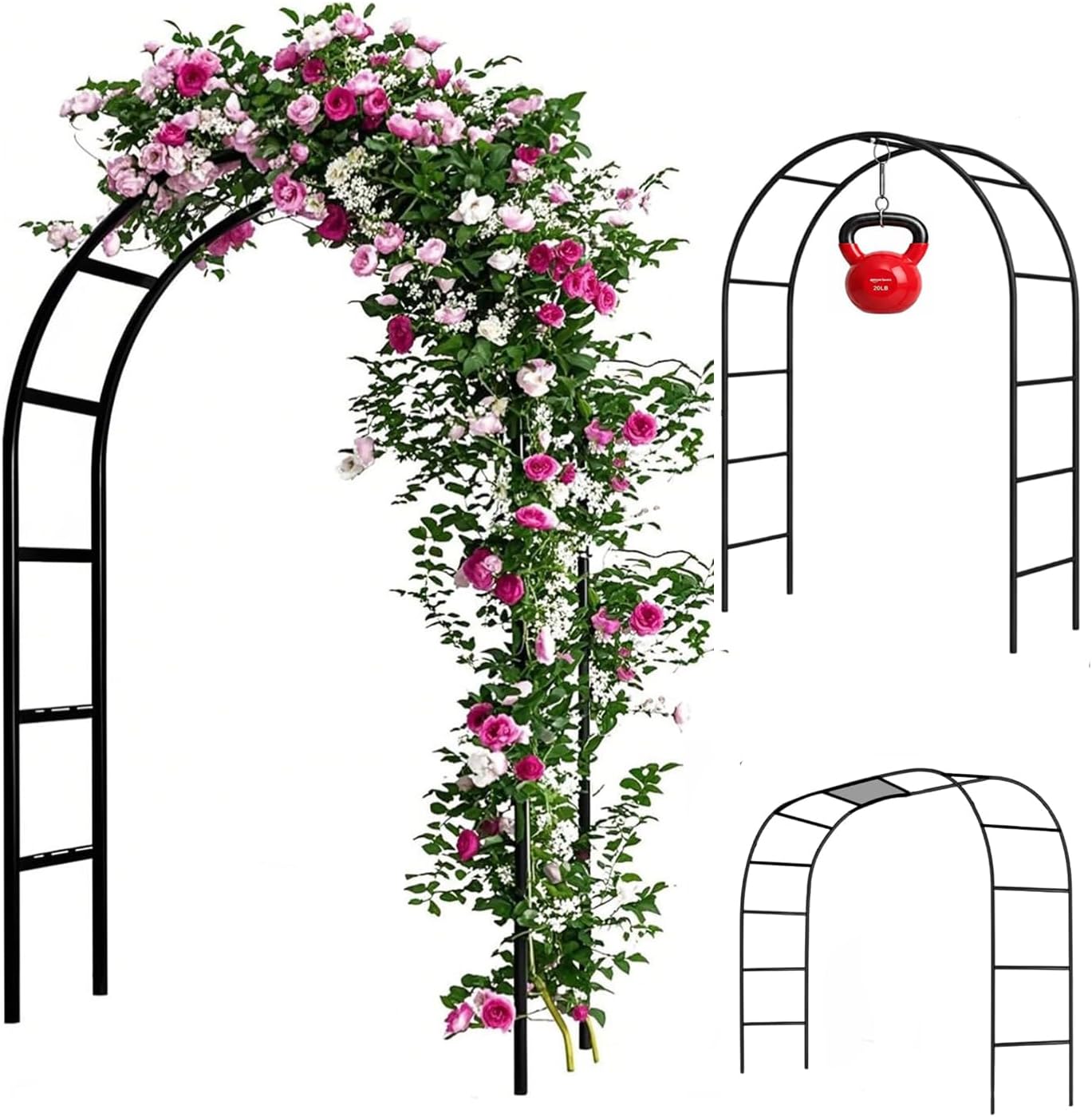
This Adorox garden arch is a straightforward metal trellis that gives climbing roses, clematis, and other vining plants a stable, attractive framework to grow over walkways, garden beds, or event entrances. The sectional powder-coated frame arrives in pieces for homeowner assembly and is intended to be anchored into the ground before loading with plants or decorations. Its open single-arch silhouette provides plenty of attachment points for natural growth and for adding string lights or floral arrangements for weddings and seasonal displays. Because the arch is light and made from tubular metal, it is easy to move during installation but needs secure anchoring to resist wind and the weight of mature plants. The powder coat helps resist rust in typical outdoor conditions, though heavy, wet climates or prolonged contact with soil may accelerate wear. For gardeners wanting a simple, decorative support that balances appearance and ease of setup, this arch delivers a classic look with functional plant support; those needing heavy-duty, permanent structures should consider more robust steel or anchored options.
Best for: Gardeners who want an attractive, easy-to-assemble support for roses, clematis, and lightweight vines and who prioritize visual impact and straightforward installation over heavy structural capacity.
Less Ideal for: People seeking a permanent, heavy-duty arbor to bear very large plants or frequent climbing-plant traffic should choose a sturdier, professionally anchored steel structure instead.
- Powder-coated metal finish provides basic corrosion resistance for outdoor use
- Open arch design offers many attachment points for climbing plants and decorations
- Sectional construction makes the arch easy to transport and assemble
- Lightweight frame is simple to position during installation
- Light tubular metal requires firm anchoring and may not support very heavy mature vines
- Powder coat and thin metal are less durable than thicker galvanized or structural steel in harsh climates
Verdict: A lightweight, powder-coated metal arch that gives home gardeners an attractive and easy-to-assemble trellis for supporting flowering vines and creating a decorative garden entrance.
Choosing the Right Trellis for Confederate Jasmine: Key Factors to Consider
Material and Finish
Confederate jasmine spends decades clinging to support, so material choice matters. Durable materials like rot-resistant wood, powder-coated steel, or fiberglass withstand moisture cycles and sunlight without rapid degradation. Finishes that resist rust or peeling reduce the need for frequent repainting or replacement.
Think about the local climate. In humid or coastal zones, corrosion-resistant metals or composite materials hold up better. In dry climates, pressure-treated or naturally rot-resistant hardwoods can work well but still need inspection for splitting and pest damage. The finish also affects how the trellis looks against siding and whether it needs seasonal touch-ups.
Support Pattern and Spacing
Confederate jasmine climbs by twining stems rather than adhesive pads, so it needs continuous, evenly spaced elements to wrap around. A trellis with closely spaced horizontal or diagonal members gives young shoots purchase and encourages uniform coverage as the vine thickens.
Large open grids may let vines slip through or produce gaps that are slow to fill. Conversely, very dense lattices can reduce airflow and trap moisture near stems. Aim for a pattern that balances small secure contact points with enough openness for light and ventilation.
Load Capacity and Structural Strength
Mature Confederate jasmine can become heavy as stems lignify and leaf mass increases, particularly when flowering. Choose a trellis designed to carry that load without bowing or detaching. Consider how the trellis will be mounted: freestanding arches need internal stiffness and anchoring, while wall-mounted panels rely on secure fastenings to studs or masonry.
Also consider wind exposure. A flimsy panel may act like a sail and strain attachment hardware. A stronger structure reduces long-term maintenance and lowers the chance of damage to siding, fences, or the plant itself.
Installation and Mounting Options
Where you plan to install the trellis determines the mounting method you need. Wall-mounted trellises should offer clear fastening points and work with common backing materials. Freestanding options need ground anchors or heavy bases to resist tipping.
Think about access during installation. Lightweight modular panels that bolt together are easier for one person to handle. Some trellises include adjustable brackets or standoffs that let you set the panel slightly away from the wall, giving stems room to grow and easing pruning access.
Maintenance and Training Access
Pruning and training Confederate jasmine is a regular task to maintain shape and prevent overgrowth. A trellis that allows you to reach stems without disassembling panels makes seasonal work quicker. Designs with removable sections or wider gaps for hand access are useful.
Also consider how the trellis ages. Materials that require little repainting or have replaceable battens simplify long-term upkeep. If you plan to replace sections over time, choose systems that allow partial repair without disturbing established growth.
Aesthetic and Landscape Fit
A trellis is both functional and visual. The right style complements your architecture and sets the background for fragrant blooms. Simple lattices and slim-profile metal grids keep the focus on foliage and flowers, while ornate designs can become a focal point in their own right.
Consider scale and sightlines. A trellis that is too small will be overwhelmed by growth, while an overly dominant structure can compete with other garden elements. Color and finish affect how well the trellis hides older woody stems as the plant matures.
Best Trellis Shapes for Different Uses
Different trellis shapes suit distinct landscape goals. Flat wall panels are ideal for training Confederate jasmine as a screen or espalier against a fence or house. Their close, vertical plane keeps growth controlled and makes watering and pruning straightforward. Freestanding arches and arbors are attractive for walkways and entryways, creating fragrant tunnels when maintained at head height.
If you want a dense privacy screen along a property line, continuous panels or a run of attached lattices produce the most uniform coverage. For a smaller patio or container planting, slim-profile panels or obelisk-style supports give vertical interest without dominating the space.
- Wall panels for espalier and screens
- Arches and arbors for walk-through fragrance
- Obelisks and pyramids for container or patio use
- Modular panels for long runs and variability
Mounting Tips to Protect Structures
When mounting a trellis against siding or masonry, fasten into studs or use appropriate anchors for masonry to prevent pullout. Leave a small gap between the trellis and wall to promote airflow and avoid trapping moisture against the building surface. Standoffs or spacer blocks also give shoots room to twine and make pruning easier.
If attaching to a fence, check the fence posts and rails for soundness before adding weight. For freestanding installations, secure the base with buried posts, concrete footings, or ground anchors designed for garden structures. Inspect fastenings seasonally and tighten or replace corroded hardware to avoid sudden failures.
- Fasten into structural studs or use proper masonry anchors
- Leave an air gap to prevent trapped moisture
- Secure freestanding bases with anchors or footings
- Inspect and maintain mounting hardware annually
Training Confederate Jasmine for Even Coverage
Start training young shoots early by gently tying them to the trellis in the direction you want them to grow. Use soft ties that will not cut into stems and check ties annually to avoid girdling. Encourage a grid or fan pattern to avoid congested knots of growth that are slow to flower uniformly.
Prune lightly after the main flowering flush to remove straggly shoots and to shape the plant. Over time, selectively remove older, woody stems to rejuvenate growth and maintain airflow. Regular, light training is more effective than heavy annual pruning at keeping coverage even and healthy.
- Tie young shoots to guide direction and prevent tangles
- Use breathable ties that expand with growth
- Prune lightly after flowering to shape and remove stragglers
- Remove a few old stems each year to encourage new shoots
Planting and Soil Considerations Near a Trellis
Confederate jasmine prefers well-drained, organically amended soil and performs best when roots are slightly cool and shaded while the vine itself receives sun. When installing a trellis, prepare the planting area by improving soil structure with compost and ensuring consistent moisture without waterlogging.
Avoid placing the trellis where heavy irrigation splashes will constantly wet the trellis base. Mulch around the root zone but keep mulch a few inches from the base of the vine to reduce collar rot. If the trellis sits over a paved area, verify that root space is adequate or use a large, deep container to give roots room.
- Amend soil with compost for steady growth
- Maintain consistent moisture but avoid waterlogged roots
- Keep mulch away from stem bases to prevent rot
- Provide adequate root volume for large, long-lived vines
Seasonal Care and Longevity Strategies
Inspect trellis attachments and material condition each spring before the growth surge. Tighten hardware and replace any corroded components. Clean accumulated debris from lattice intersections to maintain airflow and reduce pest and disease pressure.
Consider a maintenance plan that includes repainting or resealing wooden trellises every few years, and replacing thin ties before they fail. For freestanding features, check footings after winter freeze-thaw cycles and reinforce anchors if movement is detected.
- Annual spring inspection of fastenings and structure
- Clean debris to preserve airflow and reduce pests
- Reseal or repaint wood as part of multi-year maintenance
- Check and reinforce freestanding footings after winter
How We Chose the Best Trellis for Confederate Jasmine
We selected trellises that are well matched to Confederate jasmine's growth habit and typical landscape uses. Our editorial filters prioritized structural strength that holds up to heavy, woody vines, materials suited to outdoor exposure, and support patterns that encourage even, dense coverage rather than sparse tangles. We also considered installation flexibility for walls, fences, and freestanding placements, plus how easily a trellis integrates with routine pruning and training. Concrete evaluation criteria included material durability and weather resistance, support pattern and spacing, installation and mounting options, and maintenance friendliness for seasonal pruning and training. We excluded delicate decorative screens that lack the load capacity for mature jasmine or designs that obstruct necessary airflow. Products that required major permanent structural modifications were deprioritized unless they offered clear long-term benefits for vine management.
FAQ
What trellis spacing works best for young Confederate jasmine shoots?
Closely spaced horizontal or diagonal members, leaving small gaps for stems to wrap, are best for young shoots. This gives new growth plenty of contact points to twine and helps the plant establish evenly across the panel.
Can Confederate jasmine be trained on an arch or arbor?
Yes. Arches and arbors make attractive fragrant walkways but require sturdy construction and secure anchoring. Keep the main framework strong enough to carry mature woody stems and prune to prevent overly heavy canopies.
How far from a wall should I mount a trellis?
Leave a small gap of one to three inches for airflow and to prevent moisture buildup against siding. Using standoffs or spacer blocks also provides room for stems and makes pruning easier.
Is wood or metal better for trellises in humid climates?
In very humid or coastal climates, corrosion-resistant metals or composite materials generally perform better than untreated wood. If you prefer wood for aesthetics, choose rot-resistant species and maintain a protective finish regularly.
How do I prevent a trellis from pulling away from a fence?
Ensure the fence is structurally sound before adding weight. Use multiple, well-distributed fastenings into solid rails or posts and consider independent supports if the trellis will carry heavy growth. Periodically check and tighten hardware.
When should I prune Confederate jasmine on a trellis?
Prune lightly after the main spring flowering to shape growth and remove straggly shoots. Annual light pruning encourages a denser canopy and reduces the need for heavy corrective cuts later.
Final Verdict
Prioritize a trellis that balances strong, weather-resistant materials with a support pattern suited to twining stems. Think about how you will mount and maintain the structure over the long lifespan of Confederate jasmine, and choose a design that gives you access for training and pruning. Tradeoffs include visual style versus raw strength and permanence versus modular flexibility. Focus on durable attachment methods, adequate load capacity, and a spacing pattern that promotes even coverage for the most reliable long-term results.
