

Note: This article contains affiliate links. If you click on these links and make a purchase, I may earn a small commission at no extra cost to you. This helps support my research and content. Read my full affiliate disclosure here.
Growing roses in pots puts different demands on soil than roses in the ground. In containers you need a mix that drains well, holds moisture between waterings, and supplies steady nutrients for repeat blooming. The wrong mix compacts, over-retains water, or exhausts nutrients quickly, which shows up as fewer flowers and stress-related disease. This guide covers seven top shortlisted soils for container roses suited to patios, balconies, and small garden spaces. We evaluated mixes for drainage, nutrient retention, organic matter content, and ease of use so you can pick a soil that matches your watering routine and container type.
Top Picks at a Glance
| Best Overall The best all-around choice for most situations | FoxFarm Ocean Forest Potting Soil, 12 qt |  |
| Best Quality Built to a higher standard if you want something more solid | Coast of Maine Planting Soil for Roses & Flowers, 20 qt (2-Pack) |  |
| Best Value The sweet spot between price and what you get | Miracle-Gro Organic Outdoor Potting Mix, 16 qt. |  |
| Best Budget The cheapest option that still gets the job done reliably | Doter Organic Rose Soil Mix (1 qt) |  |
| Highest Rated A top-rated pick with lots of positive feedback | FoxFarm Happy Frog Potting Soil, 2 cu ft (Container Garden) with 2 Plant Tags |  |
| Most Popular A crowd favorite that many people choose with confidence | Miracle-Gro Potting Mix, 16 qt. (2-Pack) |  |
| Best Seller A high-volume bestseller chosen again and again | Back to the Roots Organic Expanding Coco Coir Potting Soil Brick |  |
FoxFarm Ocean Forest Potting Soil, 12 qt

| Item Form | Granules |
|---|---|
| Specific Uses For Product | Dry Fertilizer |
| Coverage | 4.8 sq ft |
| Mixing Ratio | 1:1 |
FoxFarm Ocean Forest is a pre-mixed potting soil aimed at container gardening and houseplants; it combines aged forest products, sandy loam and sphagnum peat moss to create a light, aerated medium you can use straight from the bag. It contains organic amendments such as fish meal, crab meal and earthworm castings that supply nutrients for seedlings and established plants, so you typically do not need to add fertilizer for the first 30 days. The mix drains well while retaining moisture, which helps prevent root rot in pots while still supporting steady growth. Practical uses include filling pots for rose transplants, top-dressing containers, or blending with coarser media for larger specimens. Important limitations are that the product is a standard 12-quart bag so multiple bags are required for larger pots or multiple roses, and the built-in nutrients will wane after the initial month so planned feeding with a balanced fertilizer is needed for long-term bloom production. Handle with gloves to avoid irritation as advised on the packaging.
Best for: Gardeners who want a reliable, ready-made potting mix for container roses and prefer an organic-rich medium that promotes healthy root development and good drainage.
Less Ideal for: Growers needing bulk soil for large beds or those who require a custom soil recipe with precise nutrient ratios tailored to specialty rose varieties.
- Ready-to-use blend that does not require immediate amendment
- Light, aerated texture that promotes drainage and root oxygenation
- Contains organic nutrients (fish meal, crab meal, earthworm castings) to support early growth
- Suitable for container use and seedling starts
- Small bag volume for larger containers or multiple plants requiring several bags
- Nutrient charge diminishes after about 30 days so follow-up feeding is necessary
Verdict: A convenient, nutrient-packed potting mix that gives container roses good drainage and an easy head start straight from the bag.
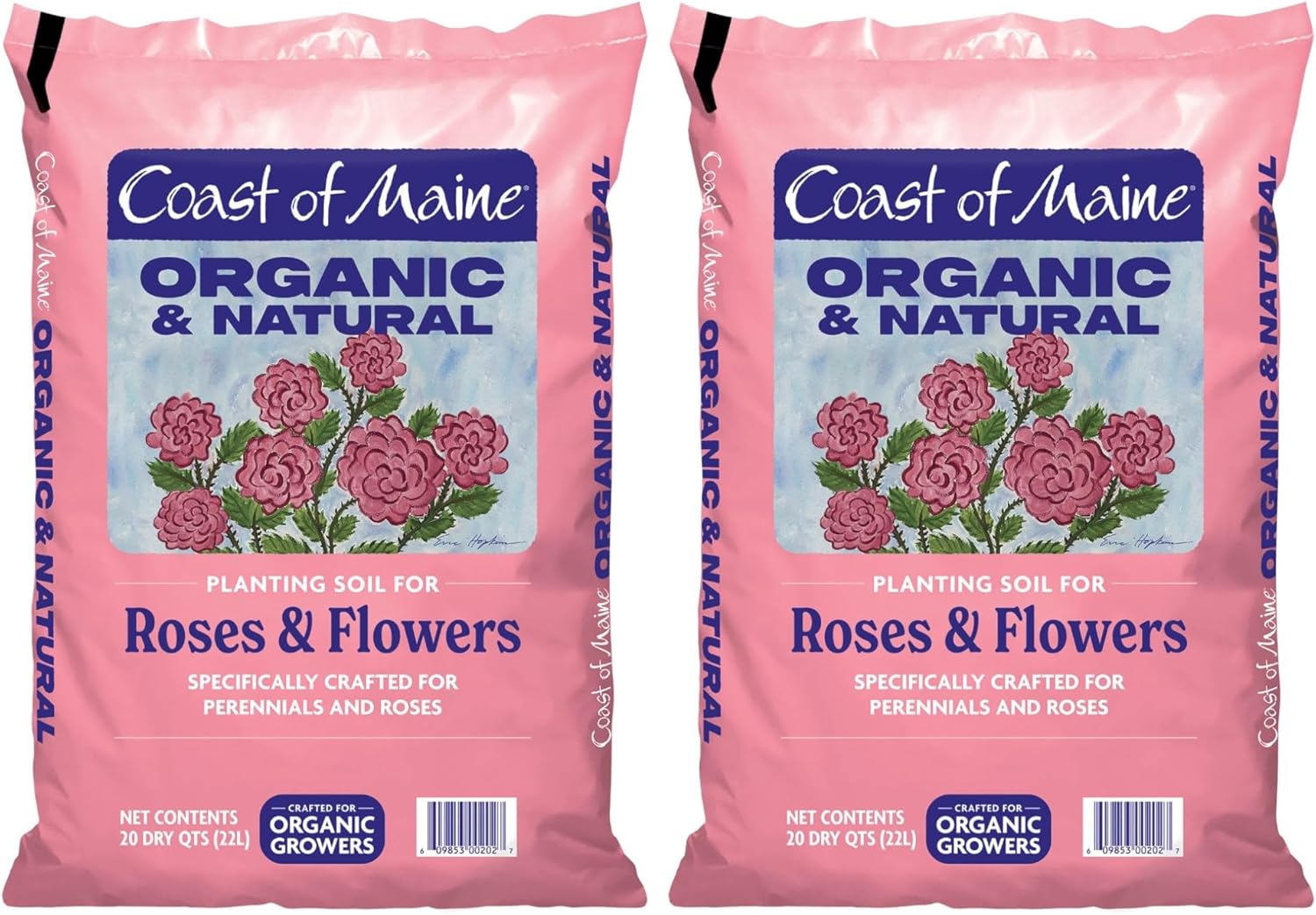
Coast of Maine Planting Soil for Roses & Flowers, 20 qt (2-Pack)
| Brand | Coast of Maine |
|---|---|
| Unit Count | 2 Count |
| Volume | 20 quarts |
| OMRI Listed | Yes |
This Coast of Maine planting soil is a compost-rich, organic mix designed specifically for roses and flowering perennials and works well in containers and garden beds. It is made from marine and land byproducts such as lobster meal and kelp, which provide slow-release nutrients and help support soil biology. In practice you would mix it into potting mixes or use it as a top dressing to improve moisture retention and microbial activity that promotes stronger roots and healthier blooms. Notable features include OMRI listing, focus on biodiversity, and ingredients intended to feed beneficial microbes and insects. Practical benefits are improved soil structure, ongoing nutrient supply without synthetic fertilizers, and suitability for organic growing systems. The main limitations are that it is sold in modest bag volumes so larger containers or multiple pots require multiple bags and it is not a complete potting formula for seed starting so you may need to amend with extra drainage material or a potting base for young transplants.
Best for: Gardeners who prioritize bloom performance and soil health for container roses and want an organic, microbe-friendly amendment to boost root strength and flowering.
Less Ideal for: People needing a lightweight, all-in-one seed-starting or succulent mix, or those who need bulk soil for large-scale bed filling without buying many small bags.
- OMRI-listed organic formula that is safe for edible-adjacent gardens, pets, and children
- Contains marine-based amendments like lobster meal and kelp to supply slow-release nutrients
- Promotes soil biology and biodiversity to support stronger roots and more vigorous blooms
- Versatile for use in containers and in-ground flower beds to improve structure and moisture retention
- Small bag volume means multiple bags are needed for larger pots or many containers
- Not formulated as a stand-alone seed-starting mix and may need added drainage or lighter potting media
Verdict: Choose this organic, microbe-rich planting soil when you want a proven, biodiversity-friendly boost to container roses for bigger roots and better blooms.
Miracle-Gro Organic Outdoor Potting Mix, 16 qt.

| Volume | 1 cubic feet |
|---|---|
| Item Highlight | Plant Soil For Outdoor Container Plants, Contains Quick-Release Natural Fertilizer, OMRI Listed |
| Manufacturer | Scotts Miracle Gro |
| Unit Count | 1 Count |
Miracle-Gro Organic Outdoor Potting Mix is a ready-to-use soil blend made for outdoor containers such as patio pots and planters. It is formulated with responsibly sourced peat and upcycled green waste and includes a quick-release natural fertilizer that the brand says feeds plants for up to two months. For container roses this mix offers a light, moisture-retaining medium that supports root establishment and supplies short-term nutrients out of the bag. Typical use is straightforward: partially fill the pot, loosen and set the rose root ball, top up with mix and water in. Notable features are the organic certification (OMRI listed), locally crafted sourcing, and guidance to repot bi-annually to avoid compaction. Limitations to consider are that fertilizer release is short term so you will need a regular feeding schedule for roses in bloom, and peat-based mixes can compact over time compared with mixes that include larger proportions of coarse bark or perlite. The bag size fills roughly one 12-inch pot, so larger rose containers require multiple bags or amendment with other media.
Best for: Gardeners who want an off-the-shelf organic potting mix for container-grown roses that simplifies planting and delivers short-term nutrition without custom blending.
Less Ideal for: Growers who prefer long-term low-maintenance containers without regular feeding or those who want a non-peat, fast-draining specialist mix for large rose planters.
- OMRI listed for organic use which suits organic rose care
- Includes quick-release natural fertilizer that feeds up to two months for early growth
- Made with responsibly sourced peat and upcycled green waste
- Bag volume sufficient to fill a standard 12-inch container, convenient for small to medium pots
- Fertilizer effect is relatively short lived so roses will need supplemental feeding for extended bloom cycles
- Peat-based mix can compact over time and may need regular repotting or amendment
Verdict: A convenient OMRI-listed potting mix that gets container roses off to a strong organic start with built-in short-term nutrition.
Doter Organic Rose Soil Mix (1 qt)

| Brand Name | Doter |
|---|---|
| Item Type Name | Garden soil |
| Volume | 1 quarts |
| Item Weight | 224 g |
This 1-quart Doter rose soil mix is built for growing roses in pots and small containers. It combines compost and other organic matter with drainage components such as coarse sand and perlite, so it promotes steady nutrient release while helping prevent waterlogged roots. The product description highlights a rose-friendly pH around 6.0 to 6.5 and added macro and micronutrients, which makes it suitable for establishing young roses or refreshing the top layer of established container plants. Because the bag is only one quart it is most useful for repotting small roses, mixing into larger batches, or topping up soil around root balls rather than filling large containers on its own. The mix also claims improved disease resistance through a healthier soil ecosystem, which can reduce early problems in pots when combined with good sanitation and watering practices. Expect a convenient small package for trialing the formula but plan to combine multiple bags or amend with bulk potting mix for larger container projects.
Best for: Buyers who want a ready-made, rose-focused potting mix to trial or use for small container roses and for topping up or amending existing potting soil.
Less Ideal for: Gardeners who need to fill medium to large containers or want complete bulk soil solutions should look for larger bags or blends with full guaranteed analysis.
- Formulated pH suitable for roses (around 6.0–6.5) to aid nutrient uptake
- Contains organic matter and nutrients for steady feeding and root development
- Includes drainage components like coarse sand and perlite to reduce waterlogging
- Small 1 qt size is convenient for trialing or topdressing container roses
- Very small volume so not practical as a sole fill for medium or large pots
- No detailed ingredient percentages or guaranteed analysis provided
Verdict: A handy, rose-focused 1 qt mix for trialing or topdressing container roses when you need a small, plug-and-play soil with balanced pH and added drainage.
FoxFarm Happy Frog Potting Soil, 2 cu ft (Container Garden) with 2 Plant Tags

| Brand Name | FoxFarm |
|---|---|
| Item Highlight | Ready-to-Use Amended Container Blend with Soil Microbes, Earthworm Castings, Bat Guano, and Aged Forest Products |
| Volume | 2 cubic feet |
| Style Name | Container Garden |
FoxFarm Happy Frog Potting Soil is a premixed container blend designed to give potted roses and other container ornamentals a nutrient-dense, biologically active growing medium. It is used straight from the bag to fill pots or to top up existing containers; the mix is pH adjusted and contains beneficial microbes and mycorrhizal fungi to support root development and nutrient uptake. Notable features include organic amendments such as earthworm castings and bat guano plus composted forest humus, which provide slow-release nutrition and improved soil structure compared with plain commercial mixes. For container roses this translates to stronger root systems, fuller vegetative growth, and potentially better flower and fruit set when paired with routine feeding. The practical trade-offs are that it is a premium bagged soil so you will need to replenish or repot periodically as plants grow and nutrients deplete, and heavy bags are less convenient to move by hand. It also does not replace targeted fertilizer schedules if you want maximum bloom production over a full season.
Best for: Gardeners who want a dependable, biologically active potting mix for container roses and prefer a ready-made solution that supports steady root growth without immediately needing extra amendments.
Less Ideal for: People who need a lightweight, travel-friendly mix for frequent container moves or growers who prefer to custom-blend their own soil and fertilizer program for aggressive bloom cycles.
- Ready-to-use blend with beneficial microbes and mycorrhizal fungi to improve root health
- Amended with earthworm castings, bat guano, and aged forest products for slow-release nutrients
- pH adjusted to help plants access nutrients more efficiently
- Formulated specifically for container gardening so roots have a light, well-draining medium
- Premium amended mix will require periodic replenishing or repotting as nutrients are consumed
- Bag is bulky and heavy to move when full
Verdict: Choose this mix if you want a reliable, biologically active potting soil that supports healthy roots and steady growth for container roses with minimal preparation.
Miracle-Gro Potting Mix, 16 qt. (2-Pack)

| Volume | 16 quarts per bag |
|---|---|
| Number of Packs | 2 |
| Feeds Plants | Up to 6 months |
| Intended Use | Outdoor containers |
| Ingredients | Sphagnum Peat Moss, Peat, Perlite, Compost, Fertilizer |
Miracle-Gro Potting Mix is a general-purpose container soil designed to support outdoor potted plants, including roses grown in containers. It combines peat-based organic components with perlite and compost to provide a loose, fast-draining medium that helps roots breathe and prevents waterlogging when used in pots with drainage. Typical use is straightforward: fill the pot about one-third, position the rose, add mix around the root ball, and water through until drainage. The mix contains fertilizer so it can feed plants for up to six months, reducing the need for immediate feeding after potting. Practical benefits for container roses include improved drainage compared with native garden soil and an initial nutrient boost that helps establishment and bloom production. Limitations to note are that the bagged mix will eventually deplete its nutrients and may compact over time, so roses will still need supplemental feeding after the feeding period and periodic repotting or soil refresh to maintain structure and fertility.
Best for: Gardeners potting roses in containers who want an easy, ready-to-use soil that improves drainage and gives young or transplanted roses an initial nutrient boost with minimal setup.
Less Ideal for: Those looking for a long-term in-ground soil amendment or an organic peat-free mix should consider other soils formulated for beds or certified organic products.
- Formulated for containers so it drains well and reduces risk of root rot in pots
- Includes fertilizer that feeds plants for up to six months, easing early care
- Light, loose texture (peat and perlite) helps roots establish and breathe
- Clear usage guidance for potting and watering makes it beginner-friendly
- Fertilizer charge is temporary so additional feeding is required after six months
- Contains peat which can compact over time and may need annual refresh
Verdict: A convenient, fast-draining potting mix that jump-starts container roses with six months of built-in feeding and easy potting guidance.
Back to the Roots Organic Expanding Coco Coir Potting Soil Brick

| Item Highlight | 10 lb compressed coco coir brick; peat-free; OMRI Listed |
|---|---|
| Item Type Name | Coconut Coir |
| Volume | 2 cubic feet (expanded) |
This compressed coco coir block is designed to expand into a light, airy potting medium when you add water, making it an easy way to prepare about 2 cubic feet of soil for containers. Typical use is simple: soak the brick, let it break apart, fluff the coir and use it alone or mix it with existing potting mix to improve aeration and moisture retention. Notable features include a balanced pH, OMRI listing for organic use, and a peat-free coconut coir ingredient that reduces heavy, compacted soils in pots. For container roses the improved drainage and root aeration help prevent waterlogged roots while holding enough moisture between waterings. Limitations are that coco coir is low in nutrients on its own, so you will need to add fertilizer or an enriched potting mix for heavy-feeding roses, and the initial soaking step means it is not an instant ready-to-use bagged soil. For a cautious gardener who wants an easy-to-store, peat-free base to tune for roses, this is a reliable building block.
Best for: A gardener who prefers low-risk, proven growing media and wants a clean, peat-free base to improve drainage and moisture retention in container roses while controlling what amendments are added.
Less Ideal for: If you want an all-in-one, nutrient-rich potting mix ready for heavy-feeding roses without additional fertilizing, choose a pre-amended rose potting soil instead.
- Expands to about 2 cubic feet from a compact 10 lb brick for convenient storage and transport
- Peat-free, OMRI listed coconut coir with balanced pH suitable for organic gardening
- Light, airy texture improves drainage and root aeration in container plantings
- Versatile — can be used alone, as a seed starter, or mixed into existing potting soil
- Low nutritional content by itself so additional fertilizer or amended potting mix is required for heavy-feeding roses
- Requires soaking and fluffing before use, which adds a preparation step compared with ready-to-use bagged soils
Verdict: A tidy, peat-free coco coir brick that gives cautious growers a lightweight, pH-balanced base they can mix and fertilize to create ideal container rose soil.
Choosing the Right Soil for Container Roses: Key Factors to Consider
Drainage and Air Space
Container roses need a mix that sheds excess water quickly so roots do not sit in saturated media. Good drainage prevents root rot and helps oxygen reach root tips. Look for mixes that include coarse components such as pine bark, perlite, or horticultural grit to create stable air pockets that resist compaction over repeated wet-dry cycles.
A soil that feels heavy and dense when wet is likely to become anaerobic in a pot. The right balance of fines and coarse particles matters more in pots than in garden beds because there is no lateral soil to wick moisture away. Proper drainage also speeds surface drying which helps keep foliage drier and reduces fungal pressure.
Moisture Retention Between Waterings
Roses in containers dry out faster than those in the ground, especially on hot patios or small balcony pots. A container mix should retain enough plant-available moisture so you are not watering multiple times per day but should still release water to roots when needed. Materials such as coconut coir, well-aged compost, or moisture-retentive fibers can extend the between-watering interval without causing waterlogging.
Consider how often you can reasonably water. If you travel or prefer fewer waterings, choose a mix with higher moisture-holding capacity and pair it with larger pots to increase total moisture volume. For gardeners who water daily or have automated irrigation, a faster-draining mix reduces the risk of overwatering.
Nutrient Content and Longevity
Container roses rely on the potting mix for most of their nutrients. A good rose soil will include a stable source of organic matter and either an incorporated slow-release fertilizer or a neutral base that accepts routine feeding. Organic components break down over time and release nutrients, but excessive organic fines can also cause compaction as they decompose.
Evaluate whether a mix is meant to be used with regular liquid feedings or contains longer-lasting nutrient sources. Longevity matters because repotting or top-dressing is extra work; mixes that sustain blooms for several months before refeeding reduce maintenance and keep plants vigorous.
pH and Mineral Balance
Roses prefer a slightly acidic to neutral root zone. A container mix that starts near this range will keep micronutrients available and help prevent nutrient lock-up. Some ingredients shift pH over time; for example, certain composts or manures can raise pH, while sphagnum-derived products trend acidic.
Check whether a mix tends to stabilize in the pH range roses like and whether it buffers against swings from routine fertilization. Stable mineral balance also reduces the risk of iron or magnesium deficiencies that can mimic other problems.
Particle Size and Structure Stability
Particle size distribution determines how a mix behaves as it ages. Larger, more stable particles maintain pore space and promote root penetration. Fine-textured mixes may compact, decreasing aeration and causing intermittent wet patches where roots suffocate.
For container roses, aim for a mix with a range of particle sizes so small roots can explore fines while larger particles keep channels open. Structure that resists compaction means fewer repottings and more consistent bloom performance over the season.
Weight and Practical Handling
Potting mixes for roses vary widely in weight. Heavy mixes can tip or be difficult to move when pots are full, while ultra-light mixes may float out of drainage holes or dry out rapidly. Consider how often you move containers, winter storage needs, and whether the pots sit on delicate surfaces.
Also factor in mess and dust at planting. Some mixes are dusty or need pre-moistening to work easily. Ease of handling affects setup time and how pleasant seasonal repotting will be.
Container Size and Soil Volume
Pot diameter directly affects how often you must water and how much buffer the soil provides during heat spells. Larger pots hold more moisture and allow a richer root ball, which generally supports bigger blooms and reduces watering frequency. When space is limited, compensate with a higher moisture-retention mix and more frequent feeding.
Also consider root depth. Hybrid and shrub roses planted in shallow pots can suffer from limited root space even if the surface volume seems adequate. Choose a soil that promotes deep root growth by maintaining loose structure throughout the pot depth.
- Use bigger pots for repeat bloomers to reduce watering frequency
- Shallow pots need mixes that hold moisture without compaction
- Match soil depth to the rose variety's root habit
Watering Practices and Irrigation
Your watering routine should influence soil choice. If you hand-water daily, a fast-draining, quick-drying mix works well. If water is less frequent, choose a mix with better water-holding components and consider top-layer mulches to slow surface evaporation.
Irrigation systems change how potting mixes behave. Drip or wick systems keep the root zone consistently moist, which is fine with mixes that have good aeration. Avoid mixes that hold both high moisture and poor drainage when using automated systems because they increase disease risk.
- Match soil to your available watering time
- Automated irrigation benefits from airy mixes
- Topdress with organic mulch to reduce surface evaporation
Feeding and Maintenance Rhythm
Container roses exhaust available nutrients faster than in-ground plants. Plan a feeding schedule that aligns with your soil choice. A mix with embedded slow-release fertilizer reduces early-season feedings but still requires maintenance later. If you prefer liquid feeding, use a neutral base mix and feed more often.
Routine tasks include refreshing the top few inches of soil, checking pH, and replacing degraded organic matter. These small maintenance steps prolong the life of soil in a container and keep flowers productive.
- Decide between slow-release fertilizers or regular liquid feeds
- Top-dress annually to replenish organic matter
- Monitor leaf color as a quick nutrient-status check
Seasonal Care and Wintering Containers
Soil choice affects winter survival. Heavier mixes hold heat differently and may keep roots warmer in mild winters, while fast-draining mixes freeze and thaw with less structural change. If containers are left outside, consider mixes that do not heave or slump dramatically with freeze-thaw cycles.
In colder climates, reduce active feeding and let the root zone settle. For containers moved indoors, re-evaluate moisture needs because lower light and indoor heat reduce water use and change how a mix dries.
- Choose mixes that resist collapse through freeze-thaw
- Adjust watering and feeding in late season
- Consider insulating pots rather than changing soil for winter
Mix Modifications and DIY Blends
Many gardeners modify bagged soils to better match their roses' needs. Adding coarse bark improves drainage and aeration, while a portion of coir or compost increases moisture retention and nutrient content. Amendments let you dial in the balance between drainage and retention based on local climate and watering habits.
If creating a DIY blend, test small batches in a spare pot before repotting prized roses. Observe how the mix dries, how roots develop, and whether structural changes occur over a season. Small experiments prevent large-scale repotting headaches.
- Add coarse components to improve aeration
- Introduce organic matter gradually to avoid compaction
- Test DIY mixes in a single pot for one season before wider use
How We Chose the Best Soil for Container Roses
We shortlisted soils based on attributes that directly affect how roses perform in containers. First, we looked at drainage profile: mixes that avoid waterlogging while still retaining enough moisture between waterings scored higher. Aeration and structure were next, with attention to components that resist compaction over the season. Nutrient balance and longevity were evaluated by examining typical organic content and slow-release nutrient sources in a mix. We also considered pH stability and whether the mix tends to drift acid or alkaline with routine fertilizing. Practical handling factors mattered too, including weight for large pots, dust and mess at planting, and compatibility with re-potting. We excluded potting blends designed solely for succulents, seed starting, or hydroculture because those formulas do not support repeated bloom cycles and feeding schedules required by roses. Our process favored mixes formulated or commonly used for flowering shrubs in containers and those that gardeners report maintain structure and fertility through a growing season.
FAQ
How often should I repot container roses?
It usually depends on pot size and mix stability, but many container roses benefit from repotting or top-dressing every one to three years. Repot when the soil has compacted, drainage declines, or roots start circling the pot.
Can I use garden soil for container roses?
Garden soil is generally too dense for containers and can compact, reducing aeration and drainage. It often lacks the structure and consistent particle size needed for healthy root growth in pots.
Should I add fertilizer to potting mix at planting?
Some mixes include a starter slow-release fertilizer, which is helpful for early growth. Whether you add more depends on the mix and your feeding plan. If the mix is a neutral base, plan regular liquid feeds or scheduled slow-release applications.
What is the ideal pH for container roses?
Roses prefer a slightly acidic to neutral pH, commonly around 6.0 to 7.0. Many potting mixes start in that range, but pH can shift with amendments and fertilizers, so periodic checks are useful.
How do I improve drainage in an existing potting mix?
Incorporate coarse materials such as horticultural grit, perlite, or coarse pine bark to increase pore space. If repotting is not practical, top-dressing with a porous layer and reducing watering frequency can help temporarily.
Final Verdict
Choose a container rose soil that balances drainage with moisture retention and supports steady feeding. Prioritize mixes that maintain structure, include stable organic matter, and sit near the preferred pH range for roses. Tradeoffs are inevitable: mixes that hold more water reduce watering frequency but require careful aeration management, while fast-draining mixes demand more frequent feeding and watering. Base your final pick on pot size, your watering routine, and how much seasonal maintenance you want to do. With the right soil and a consistent feeding plan, container roses will bloom more reliably and remain healthier through the season.
