

Note: This article contains affiliate links. If you click on these links and make a purchase, I may earn a small commission at no extra cost to you. This helps support my research and content. Read my full affiliate disclosure here.
If you keep containers in a shady corner of your patio, balcony, or under a tree, the wrong choice of plants will sulk instead of flourishing. Choosing plants suited to low light and confined root space matters because containers change moisture, temperature, and nutrient dynamics compared with garden beds. This guide covers seven top plants for pots in shade that consistently perform in real-world container conditions. We shortlisted options that show dependable shade tolerance, compact or adaptable root habits, and straightforward container care. Below you will find what to expect from each type, plus the growing traits we used to evaluate them and practical tips for potting, feeding, and seasonal care.
Top Picks at a Glance
| Best Overall The best all-around choice for most situations | Daylily Nursery Hellebore (3-pack) in 2.5-inch Pots |  |
| Best Quality Built to a higher standard if you want something more solid | American Plant Exchange Calathea Makoyana (6-Inch) with Pot Cover |  |
| Best Value The sweet spot between price and what you get | Touch Of ECO Hosta Bare Roots 6-Pack (Mixed Heart-Shaped Hostas) |  |
| Best Budget The cheapest option that still gets the job done reliably | Groundio Coleus Rainbow Mix Seeds (Heirloom, Non-GMO) |  |
| Highest Rated A top-rated pick with lots of positive feedback | Magnolia Gardens Nursery Hosta sieboldiana 'Elegans' – 3 Live Starter Plugs (2-inch) |  |
| Most Popular A crowd favorite that many people choose with confidence | KVITER Rainbow Coleus Heirloom Seeds (1600 Count) |  |
| Best Seller A high-volume bestseller chosen again and again | HOME GROWN Rainbow Mix Coleus Seeds (400) |  |
Daylily Nursery Hellebore (3-pack) in 2.5-inch Pots

| Expected Blooming Period | Winter |
|---|---|
| Sunlight Exposure | Full Shade, Partial Shade |
| Expected Planting Period | Fall |
| USDA Hardiness Zone | 4 |
| Moisture Needs | Moderate Watering |
These Helleborus plants arrive as three small potted specimens intended for fall or spring planting and are valued for their very early winter blooms and year-round glossy foliage. In practice you would use them as container specimens or placed in shaded borders where they provide nodding, long-lasting flowers and attractive evergreen leaves through cold months. The listing notes they tolerate shade, moderate moisture, loam soils, and a wide range of conditions including drought and cold, which makes them low-maintenance once established. Practical benefits include long flowering season useful for winter interest, vase-worthy blooms, and pest and disease resistance that reduces care time. Limitations are the small pot size on arrival, so plan to repot or plant out soon after an acclimation period, and shipping sensitivity in extreme temperatures which can affect viability on arrival. Planting timing and zone guidance are provided to improve success when moving them into larger pots or permanent beds.
Best for: Gardeners who want low-maintenance, shade-tolerant container plants that provide winter and early-season flowers and year-round foliage interest without intensive care.
Less Ideal for: People seeking instant, large container specimens or immediate heavy bloom display should consider larger established plants instead.
- Early winter bloomers that add color to shade when few other plants flower
- Evergreen, glossy foliage provides year-round interest in pots
- Tolerant of a range of stresses including cold, heat, drought and poor soil
- Sold as a three-pack for easy grouping in a single container or trio of small pots
- Ships in small 2.5-inch pots so repotting is usually required for long-term health
- Plants may be vulnerable if shipped in extreme hot or cold conditions
Verdict: A compact, low-care trio of shade-loving hellebores that deliver winter blooms and evergreen interest for pots and small shady corners.
American Plant Exchange Calathea Makoyana (6-Inch) with Pot Cover

| Indoor Outdoor Usage | Indoor, Outdoor |
|---|---|
| Sunlight Exposure | Partial Shade |
| Moisture Needs | Moderate Watering |
| Container Material | Ceramic or Porcelain |
The Calathea Makoyana is a compact, pattern-leaved tropical houseplant that brings bold foliage interest to shaded patios, rooms, or offices. It is typically kept as an indoor potted specimen and prefers indirect light and consistent moisture, so most users place it in bright shade away from direct sun and water when the topsoil begins to dry. Notable features include its striking feather-like leaf patterns with burgundy undersides, pet-safe classification, and reported air-purifying qualities. In practice the plant performs well in small pots and ceramic covers, making it an easy focal point on tabletops or plant stands. Expect daily leaf movements and a slow to moderate growth habit rather than a fast-growing specimen. Important limitations are its preference for steady humidity and moderate watering discipline; environments that are very dry or erratically watered can cause leaf curling or brown edges. For someone who prioritizes high-impact foliage in shaded spots and is willing to monitor moisture and humidity, this Calathea is an attractive, low-footprint choice.
Best for: Buyers who want a high-impact, shade-tolerant potted plant for indoor or sheltered outdoor spots and who pay attention to regular watering and humidity.
Less Ideal for: People seeking a carefree, drought-tolerant plant or those who prefer fast-growing plants that quickly fill large containers.
- Attractive, patterned leaves with burgundy undersides that create visual impact in shade
- Suitable for partial shade and designed for indoor potted display
- Pet-friendly and described as having air-purifying qualities
- Comes in a 6-inch pot with a ceramic or porcelain cover for ready display
- Requires consistent moisture and higher humidity than many common houseplants
- Not a fast grower so it will remain a small, decorative specimen rather than filling large pots
Verdict: Choose this Calathea if you want a striking, shade-tolerant potted plant that adds dramatic patterned foliage to indoor or sheltered outdoor spots while remaining pet-safe.
Touch Of ECO Hosta Bare Roots 6-Pack (Mixed Heart-Shaped Hostas)

| Unit Count | 6 Count |
|---|---|
| Sunlight Exposure | Full or Partial Shade |
| USDA Hardiness Zone | 3 to 9 |
| Moisture Needs | Regular Watering |
These hosta bare roots arrive dormant and are intended for planting in fall or early spring to establish clumps of heart-shaped foliage in shady spots. Each pack contains six hand-selected bare-root crowns that produce fragrant white or purple flowers on tall stems and attract pollinators while resisting deer. In practice they are planted at soil level, watered in, and then require only regular moisture and low maintenance as they spread over seasons. They are hardy across a wide range of climates and work well in containers or shaded border beds where low light is an issue. Limitations to expect are that they ship without leaves so you need patience until shoots emerge, and individual crown size can vary which affects how quickly a pot will fill in. For container use plan for enough root space and annual top-dressing to keep them healthy.
Best for: Gardeners who want reliable, low-effort shade plants to establish in pots or shady beds and prefer value from a multi-pack they can space or group for faster coverage.
Less Ideal for: Growers who need instant, full container impact right away or those looking for flowering-only specimens with showy blooms rather than foliage-focused plants.
- Hardy across USDA zones 3–9 so suitable in many climates
- Low maintenance perennial habit that returns and expands each year
- Shade-tolerant foliage and modest flowering make them ideal for low-light spots
- Pack of six bare roots gives enough plants to start a container or small border
- Arrive dormant with few or no leaves so visible progress can take several weeks
- Individual crowns may vary in size, producing uneven establishment rates
Verdict: A practical, low-maintenance six-pack of hardy hostas that reliably fills shady pots and beds over time.
Groundio Coleus Rainbow Mix Seeds (Heirloom, Non-GMO)

| Indoor Outdoor Usage | Indoor, Outdoor |
|---|---|
| Expected Blooming Period | Spring to Summer |
| Sunlight Exposure | Full Sun |
| USDA Hardiness Zone | 4-10 |
| Moisture Needs | Moderate Watering |
These Groundio Coleus Rainbow Mix seeds supply a high number of non-GMO heirloom seeds for gardeners who want bold foliage in small or shaded containers. The mix is focused on leaf color rather than flowers, producing yellow, green, pink, red and maroon tones that deepen as plants mature. Seeds are described as easy to grow with a high germination rate and come with basic growing guidance, so they work well for first-time planters sowing indoors for transplanting or direct sowing in shaded pots and borders. Coleus performs best in part sun to part shade, making this packet a practical choice for balconies, patios and indoor spots with scattered light. Limitations include that coleus is grown for foliage not blooms and the packet warns the seeds and plants are not edible and may be harmful to pets, so placement matters in homes with animals. Also the listing emphasizes quantity over cultivar detail, so exact leaf patterns and sizes will vary across seedlings.
Best for: Budget-conscious gardeners who need an affordable way to add dramatic foliage to shaded pots, small balconies and container borders and who prefer easy-to-grow plants that establish from seed.
Less Ideal for: People seeking specific named coleus cultivars, detailed leaf patterns, or edible/child-and-pet-safe plantings should look at alternatives or nursery-grown plants.
- Large seed count suitable for filling multiple pots or repeating plantings
- Heirloom non-GMO seeds with a stated high germination rate
- Designed for shade or part-sun locations common for container gardening
- Vivid mixed foliage colors that add instant interest without relying on flowers
- Packet lists mixed varieties with limited detail on specific cultivars or mature plant size
- Not edible and may be harmful to pets, requiring cautious placement indoors or around animals
Verdict: An economical choice to fill shaded pots and small containers with vibrant, easy-to-grow coleus foliage from seed.
Magnolia Gardens Nursery Hosta sieboldiana 'Elegans' – 3 Live Starter Plugs (2-inch)

| Unit Count | 3 Count |
|---|---|
| Sunlight Exposure | Partial to Full Shade |
| USDA Hardiness Zone | 9–11 (can be grown indoors in colder zones) |
| Moisture Needs | Moderate; keep consistently moist but not waterlogged |
| Material Features | Live plant, Nursery-Grown, Tissue-Cultured |
These are three live 2-inch starter plugs of Hosta sieboldiana 'Elegans' sold as young nursery-grown plants for potting up or transplanting into shaded containers and beds. They are tissue-cultured starter plugs that develop into large, blue-green mounded hostas with corrugated foliage and early to midsummer blooms. Use them by potting each into a 4-inch container with rich, well-draining potting mix, keeping the soil evenly moist while roots establish, then move to partial or full shade and protect from hot afternoon sun. Practical benefits include fast establishment from nursery stock, cold hardiness in many climates, and the ability to build layered shade displays in pots or mixed perennial plantings. Limitations are that these arrive very small and need time and attention to reach mature size, and they are sold without pots or guarantees of instant garden impact. Expect to invest a season or two of care before the plants achieve the substantial mounding presence described for mature specimens.
Best for: Gardeners who want a dependable, long-term shade perennial to start in containers and are willing to nurture young plants through establishment for reliable future performance.
Less Ideal for: Buyers who need immediate full-size plants or instant container impact should choose mature potted specimens instead.
- Nursery-grown, tissue-cultured starter plugs give a reliable, disease-managed beginning
- Blue-green, textured foliage provides strong visual impact in shaded pots once established
- Cold hardy across a wide range of zones for dependable perennial returns
- Requires only moderate moisture and low maintenance once established
- Plants are very small on arrival and require time and proper care to reach mature size
- No pots included so buyers must provide appropriate containers and potting mix
Verdict: A reliable way to start dependable, shade-loving hostas in pots if you are prepared to pot up and care for small starter plugs until they mature.
KVITER Rainbow Coleus Heirloom Seeds (1600 Count)

| Indoor Outdoor Usage | Indoor, Outdoor |
|---|---|
| Sunlight Exposure | Partial Shade |
| USDA Hardiness Zone | 4-10 |
| Unit Count | 1600 Count |
| Material Features | GMO Free, Heirloom |
These KVITER Rainbow Coleus seeds come as a 1600-count bulk pack of non-GMO heirloom seed packets with a step-by-step growing guide included. Coleus is used as a shade-loving container and border plant, and this mix is aimed at filling pots, hanging baskets, or shaded patio beds with colorful foliage rather than showy flowers. The seeds germinate quickly under full light indoors in about 7 to 14 days and transplant easily to part-sun or shaded spots after frost risk passes. Practical benefits include a very large seed quantity for multiple pots, a planting guide to help beginners, and shade tolerance that makes coleus a dependable choice for patios and balconies. Limitations are that coleus is primarily grown for foliage, not flowers, and success still depends on starting seeds correctly and providing regular watering and loose fertile soil. For gardeners who want many plants for containers or massed color in shade, this pack is economical, but it requires typical seed-starting attention and space to raise seedlings before moving them outdoors.
Best for: Gardeners who need many shade-tolerant plants for containers or massed pots and prefer a low-cost bulk seed option with guidance for getting started.
Less Ideal for: Someone who wants dramatic flowering plants or a no-maintenance instant solution for a single pot should consider a mature plant or a flowering perennial instead.
- Very large 1600-count seed quantity suitable for filling many pots or creating mass plantings
- Heirloom, non-GMO seeds with a step-by-step growing guide included for beginners
- Shade-tolerant variety that performs well in partial shade and on patios
- Quick germination indoors in 7–14 days when given full light
- Primarily grown for foliage color rather than showy blooms
- Requires seed starting and transplanting effort to produce healthy container plants
Verdict: If you need a cost-effective bulk source of colorful, shade-tolerant plants for pots and patios, this large pack of heirloom coleus seeds delivers volume and guidance to populate many containers.
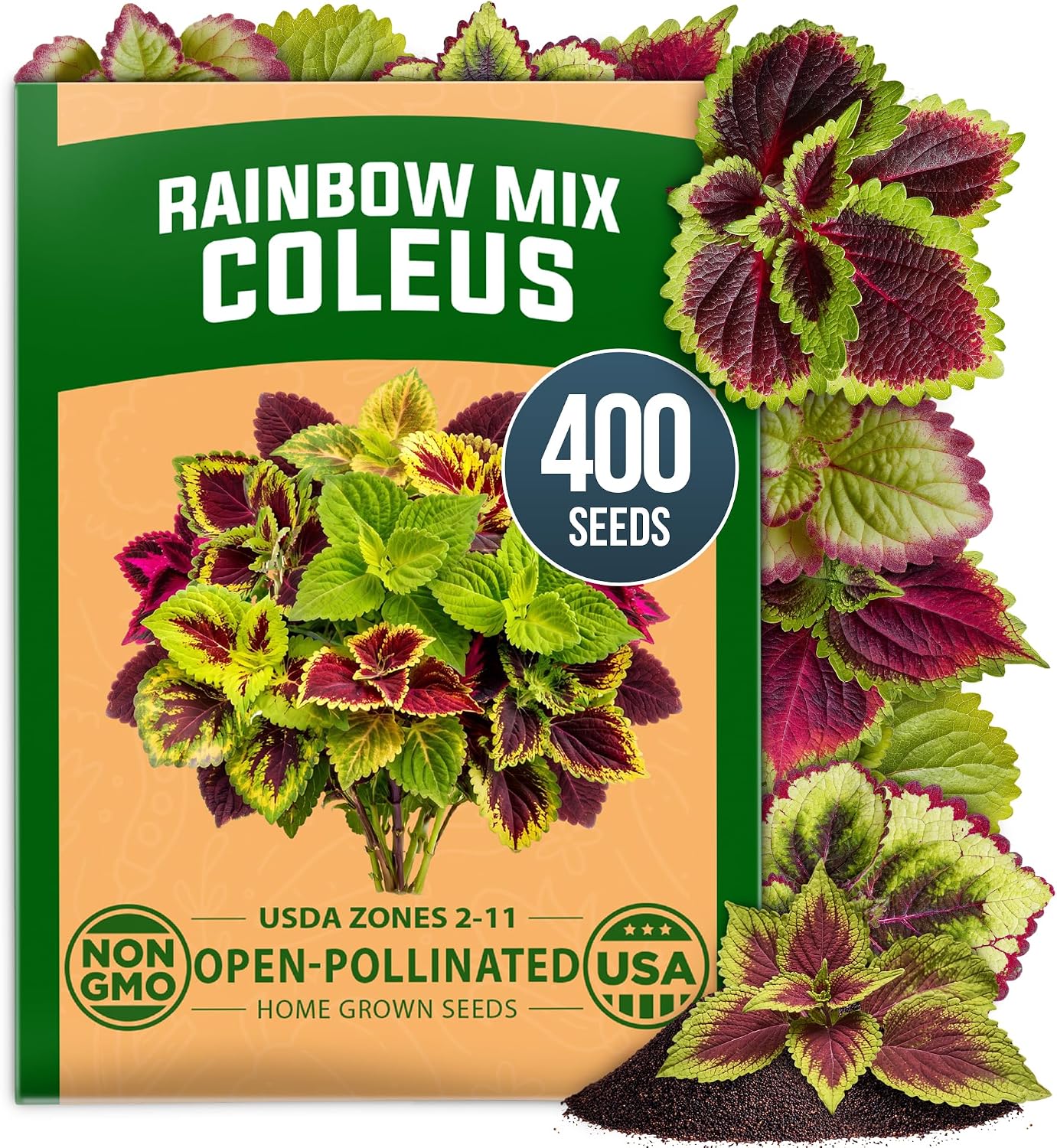
HOME GROWN Rainbow Mix Coleus Seeds (400)
| Sunlight Exposure | Part Shade to Shade |
|---|---|
| Expected Blooming Period | Spring through Frost |
| USDA Hardiness Zone | 2-11 |
| Moisture Needs | Moderate Watering; Keep evenly moist |
| Material Features | GMO Free, Heirloom |
HOME GROWN Rainbow Mix coleus seeds are meant for gardeners who want season-long color from foliage rather than flowers. The packet contains about 400 open-pollinated, non-GMO seeds that surface-sow easily; germination needs warm, consistently moist conditions (70–75°F) and seedlings typically appear in 10–14 days. Mature plants form compact, mounded clumps with 2–4 inch patterned leaves in rose, green, bronze, cream, and scarlet, and reach roughly a foot tall, making them well suited to patio pots, window boxes, and shady borders. Pinching back tips encourages bushier growth, and removing flower spikes preserves leaf color. These coleus perform best in rich, well-drained soil kept evenly moist and are tender annuals in most climates, so they need frost protection or to be grown as season-long container plants. Expect reliable shade tolerance but plan for regular watering and occasional pinch-pruning to maintain density and color intensity.
Best for: A gardener who wants low-risk, reliable shade color for pots or small beds and prefers foliage interest over blooms; ideal for someone who plans container plantings or shaded patios and will follow simple germination and watering routines.
Less Ideal for: Not the best choice for gardeners seeking drought-tolerant, low-water plants or those who want dramatic flowering displays instead of foliage interest.
- Large seed count (about 400) gives many starts or fills multiple pots and beds
- Variegated foliage provides season-long color in part shade to shade where flowering plants may struggle
- Compact, mounded habit fits well in containers, window boxes, and small beds
- Non-GMO heirloom seeds with straightforward surface-sow germination instructions
- Suitable across a wide USDA zone range for outdoor use and viable as indoor container plants in cooler areas
- Seeds require warm, consistently moist conditions for reliable germination and are not cold-hardy without protection
Verdict: Choose these coleus seeds when you want dependable, container-friendly shade color driven by showy foliage rather than flowers.
Choosing the Right Plants for Pots in Shade: Key Factors to Consider
Light and Shade Level
Not all shade is the same. Deep shade under dense tree canopy delivers far less light than a north-facing balcony with bright indirect light. Assess whether the spot gets dappled morning sun, late afternoon glow, or continuous low light. Plants rated for partial shade may struggle in deep shade, while true-shade species will tolerate minimal direct sun.
Understanding the specific light level influences everything from plant selection to pot color and placement. Lighter-colored walls and reflective surfaces can boost available light, allowing slightly more sun-loving shade plants to perform. Match species to the measured or observed light pattern to avoid stunting, leggy growth, or lack of flowering.
Pot Size and Root Volume
Containers limit root development, so choose plants whose mature root systems fit the chosen pot. Small pots dry faster and restrict growth, which can be useful for naturally compact species but stressful for plants that prefer more soil. Larger pots buffer moisture fluctuations but add weight and require more potting mix.
Plan for the plant's mature dimensions and select a pot that provides stable support and adequate soil for nutrient uptake. Consider whether you want a long-term specimen or a seasonal rotation; temporary displays can use smaller pots, while permanent containers should give roots room to establish.
Soil Mix and Drainage
Good potting mix and reliable drainage are essential in shaded containers because low light slows evaporation and can keep soil wet for longer. Use a mix formulated for containers that balances moisture retention with aeration. Include grit or perlite if the mix compacts easily.
Ensure pots have sufficient drainage holes and elevate them slightly to prevent waterlogging. Overly wet conditions in shade invite root rot and fungal issues, so drainage strategy and a well-draining mix are as important as light when choosing shade container plants.
Watering Rhythm and Moisture Management
Shade alters evaporation and transpiration rates so watering routines must be adjusted. Containers in shade usually need less frequent watering than sunny pots, but they can remain moist for longer, increasing the risk of root diseases. Learn the typical drying pattern of each container and check soil moisture below the surface instead of relying on surface dryness alone.
Mulch the top of the pot with decorative bark or leaf litter to stabilize moisture and reduce surface evaporation. For plants that dislike soggy roots, choose mixes and pots that allow faster drying between waterings to keep roots healthy.
Size, Habit, and Growth Rate
A plant's size and growth habit affect how it looks and behaves in a pot. Upright, mounded, trailing, and clumping habits all create different container aesthetics and space requirements. Faster-growing species will need more frequent maintenance and repotting, while slow growers may be better for long-term displays.
Think about seasonal growth surges and whether you want a specimen that fills the pot quickly or one you can leave undisturbed for several seasons. Habit also influences companion planting choices if you plan mixed containers.
Pest and Disease Susceptibility in Shaded Sites
Shaded, humid spots can favor pests like slugs and certain fungal diseases that thrive in cool, damp conditions. Choose plants with reasonable resistance or plan cultural controls such as good air circulation and morning sunlight exposure where possible.
Regular inspection and early intervention reduce the chance that a pest or pathogen will spread in a group of containers. Select species that tolerate occasional issues without rapid decline, and avoid high-maintenance choices if you prefer low-effort container care.
Best Potting Media and Amendments for Shade Containers
Shade containers benefit from potting mixes that retain moisture but do not stay waterlogged. Start with a quality all-purpose container mix and blend in components that increase aeration and nutrient-holding capacity depending on the plant. A common approach is to add a small amount of compost for slow-release nutrients and a handful of perlite or coarse sand to prevent compaction.
- Use a well-draining, loam-based potting mix rather than garden soil.
- Add 10 to 20 percent organic compost for feed and structure.
- Include perlite or horticultural grit if the mix compresses after watering.
Pot Material Choices and Microclimate Effects
Clay, ceramic, and plastic pots each interact differently with shade microclimates. Unglazed terracotta breathes and allows faster drying, which can be helpful for species that dislike constant wetness. Plastic and glazed ceramic hold moisture and stay warmer, which can benefit cool-season shade plants.
- Terracotta helps prevent overwatering but may need more frequent watering.
- Plastic pots retain moisture and are lighter to move.
- Dark pots absorb heat from indirect light; choose lighter colors if you want to moderate soil temperature.
Companion Planting and Design Ideas for Shade Pots
Create interest in a shady container using a combination of foliage textures, leaf color, and contrasting heights. Pair a taller, structural plant with a mid-height filler and a trailing edge plant to soften the rim. Variegated leaves or plants with bright undersides add visual brightness in low light.
- Mix bold-leaf species with fine-textured fillers for contrast.
- Use variegated or silver-foliage plants to brighten deep shade.
- Combine evergreen foliage with seasonal bloomers for year-round interest.
Seasonal Care and Overwintering Containers
In shaded sites, temperature swings and reduced sunlight change plant needs across the seasons. Reduce fertilizer in the dormant season and ease back on watering as growth slows. For winter protection, move sensitive pots to sheltered locations or insulate containers with bubble wrap if severe cold is expected.
- Cut back on feeding and watering in late fall as growth tapers.
- Cluster pots together to create a microclimate for overwintering.
- Lift and protect frost-sensitive containers when extreme cold is forecast.
How We Chose the Best Plants for Pots in Shade
To assemble this list we focused on traits that matter for gardeners using containers in low-light situations. Selection favored plants with documented shade tolerance and a track record of reliable growth in restricted root volumes. We prioritized species with manageable mature sizes so they fit typical pot diameters and require reasonable maintenance. Drought resilience and responsiveness to container watering schedules were considered to reduce frequent irrigation needs. We evaluated how each plant performs across common container materials and sizes, its susceptibility to common shade-area pests and diseases, and how it responds to typical urban or suburban microclimates, such as reflected heat from walls. Plants excluded from consideration were those that need full sun, very deep soil, or aggressive root systems that outgrow pots quickly. The criteria that determined inclusion and ranking align with the scoring metrics used in the guide: shade tolerance, container adaptability, maintenance needs, and seasonal interest.
FAQ
Can shade-loving pot plants still flower reliably?
Often they can, but flowering depends on light level. Many shade-tolerant species produce best with at least some bright, indirect light. Choose varieties known for bloom in low light and expect longer bloom intervals or fewer flowers in deep shade.
How often should I repot shade plants in containers?
It depends on growth rate and pot size. Slow growers may need repotting every 2 to 4 years, while vigorous plants may benefit from annual refresh. Repot when roots crowd the pot or when the soil has broken down and no longer drains well.
Do I need a different fertilizer schedule for shaded containers?
Yes. Plants in shade grow more slowly and usually need less fertilizer than sun-loving containers. Use a balanced, slow-release fertilizer at reduced strength during the growing season and avoid heavy feeding in low-light months.
What are quick fixes if shaded pots look leggy or sparse?
First check light levels and move the pot to a brighter shaded spot if possible. Prune back leggy stems to encourage bushier growth and consider adding a compact, shade-adapted filler to improve visual fullness.
Are there special watering tips for pots kept in shade?
Shade pots dry more slowly, so water only when the top inch of soil is starting to dry and check moisture deeper in the root zone. Improve drainage if soil stays wet for long periods and use mulch to moderate moisture swings.
Final Verdict
Focus on matching a plant's shade tolerance, container adaptability, and maintenance needs to your specific potting spot. Tradeoffs are common: plants that tolerate deep shade may offer less flowering but deliver dependable foliage interest, while bloomers usually need brighter indirect light and slightly more care. Prioritize pot size and drainage to suit the plant's root habits and plan watering around slower drying times in shade. With attention to those tradeoffs, you can select shade-friendly plants for pots that provide lasting structure, texture, and seasonal interest with manageable maintenance demands.
