

Note: This article contains affiliate links. If you click on these links and make a purchase, I may earn a small commission at no extra cost to you. This helps support my research and content. Read my full affiliate disclosure here.
Growing a lemon tree in a pot changes the way soil behaves under your care. In containers roots are confined, water moves differently, and nutrient levels can swing quickly. The right soil for lemon tree in pot gives you a balance of fast drainage, moisture retention, and stable nutrients so the tree sets fruit without root rot. This guide covers our seven shortlisted soils suited to potted lemon trees. We evaluated mixes for drainage, nutrient holding, root aeration, and long-term structure so you can pick the right base for your container, whether it sits on a balcony, patio, or greenhouse. Read on to see the features we prioritized and what matters most for potted citrus success.
Top Picks at a Glance
| Best Overall The best all-around choice for most situations | E.B. Stone Organics Citrus & Palm Mix Potting Soil, 1.5 cu ft |  |
| Best Quality Built to a higher standard if you want something more solid | GARDENWISE Organic Lemon Tree Soil Potting Mix (3 Quarts) |  |
| Best Value The sweet spot between price and what you get | Duspro Citrus Tree Potting Soil Mix, Pre-Mixed 4-in-1 (6 Quart) |  |
| Best Budget The cheapest option that still gets the job done reliably | Doter Citrus Tree Potting Soil Mix (1 qt) |  |
| Highest Rated A top-rated pick with lots of positive feedback | Lechuza Citruspón Citrus Potting Soil, 2.7 US dry gal |  |
| Most Popular A crowd favorite that many people choose with confidence | Soil Sunrise Citrus Tree Potting Soil Mix (12 Quarts) |  |
| Best Seller A high-volume bestseller chosen again and again | Miracle-Gro Cactus, Palm & Citrus Potting Mix, 8 qt. |  |
E.B. Stone Organics Citrus & Palm Mix Potting Soil, 1.5 cu ft

| Brand | E.B. Stone Organics |
|---|---|
| Volume | 1.5 cubic feet |
| Intended plants | Citrus, palms, avocado, tropical plants |
This Citrus & Palm Mix is a ready-to-use organic potting soil designed for container-grown citrus like lemon trees as well as palms and other tropicals. It combines aged fir bark and pumice to improve drainage and aeration, which helps prevent soggy roots and root rot in potted lemons, while added mycorrhizae promote nutrient and water uptake for healthier root development. Use it straight from the bag to repot established lemon trees or to fill new containers for young trees; it can also be mixed into garden soil when planting in the ground. The 1.5 cubic foot bag gives a substantial amount for a few medium pots or one large specimen. Because it is formulated specifically for deep-feeding roots, you can expect good moisture retention without compaction, but you will still need a regular fertilizing schedule appropriate for fruiting citrus since the mix does not replace nutrient feeds. The texture and drainage make it especially helpful in warm, wet-prone conditions where airier media keeps roots healthy.
Best for: Ideal for home gardeners who want a low-effort, citrus-specific potting mix to repot lemon trees and other tropical container plants and who prioritize healthy root environment over DIY mixes.
Less Ideal for: Not the best choice for gardeners who need bulk quantities for large-scale planting projects or who prefer to custom-blend media for specific soil chemistry needs.
- Formulated for citrus and tropical plants with components that improve drainage and aeration
- Includes beneficial mycorrhizae to aid root nutrient and water uptake
- Ready to use from the bag for potting or blending into beds
- Organic base ingredients suitable for indoor and outdoor container use
- 1.5 cu ft bag may be small for multiple large pots or large specimen trees
Verdict: A convenient, citrus-focused organic potting mix that gives potted lemon trees better drainage and root health with no pre-mixing required.
GARDENWISE Organic Lemon Tree Soil Potting Mix (3 Quarts)

| Unit Count | 96 Fluid Ounces |
|---|---|
| Included Components | Perlite, coarse sand, coconut coir, vermiculite, compost, peat moss, dolomite, organic fertilizer |
| Item Type Name | Lemon Tree Soil |
| Volume | 3 quarts |
This GARDENWISE lemon tree soil is a pre-mixed potting medium designed specifically for potted citrus, combining perlite, coarse sand, coconut coir, vermiculite, compost and organic fertilizer into a light, airy blend. It is typically used when repotting or refreshing container-grown lemons and Meyer varieties; the mix promotes fast drainage and aeration to reduce the risk of root rot while retaining enough moisture for steady growth. Notable features include a formulated pH of 5.5 to 6.5 suited to citrus, added micronutrients such as iron, magnesium and manganese, and an organic fertilizer intended to feed plants for up to six months. Practical benefits are healthier root development from improved drainage and a nutrient boost that lessens immediate feeding needs. Limitations are the small 3 quart volume, which means multiple bags are needed for larger pots, and the product description advises protective handling and care around water sources, so users should avoid overuse near sensitive environments.
Best for: Buyers who prioritize performance and want a purpose-built, ready-to-use potting mix that promotes strong root development and consistent nutrient delivery for potted lemon or Meyer lemon trees.
Less Ideal for: Gardeners who need large volumes for landscaping or those who prefer peat-free, bulk-amendment approaches should consider alternative bulk mixes or custom blends.
- Formulated pH of 5.5–6.5 tailored for citrus health
- Contains organic fertilizer that feeds up to six months
- Light, chunky texture with perlite and coarse sand for strong drainage and root aeration
- Includes micronutrients (iron, magnesium, manganese) beneficial to citrus growth
- Small 3 quart bag requires purchasing multiple units for standard-sized container trees
- Ingredients list includes peat moss and dolomite which some growers avoid for sustainability or soil preference
Verdict: If you want a performance-focused, ready-made potting mix that delivers drainage, citrus-friendly pH, and a six-month nutrient boost for potted lemon trees, this product is a strong choice.
Duspro Citrus Tree Potting Soil Mix, Pre-Mixed 4-in-1 (6 Quart)

| Blend components | Coco coir, coco fiber, perlite, vermiculite |
|---|---|
| Intended use | Potted citrus trees and container plants |
| Sizes available | 6, 10, 20 quarts |
| Packaging note | Double-screened ingredients |
| Safety | Avoid inhaling dust; wash hands after handling |
This Duspro pre-mixed citrus potting soil is designed to simplify repotting and ongoing care for potted lemon trees and other container citrus. The blend combines coco coir and fiber with perlite and vermiculite so the mix holds moisture without becoming waterlogged while still offering good aeration around roots. Typical use is straightforward: fill a drainage pot, set the tree, backfill around the rootball and water. The double-screened ingredients produce a consistent, pourable texture that reduces dust and makes measured mixing unnecessary. Practical benefits include faster potting jobs, predictable drainage for indoor lemon trees, and compatibility with adding amendments if you want to tailor nutrients. Note that the bag can be dry and dusty on opening so handle outdoors or wear a mask and avoid relying on this mix alone for long-term fertilization since it does not list added nutrients. Also the 6 quart size suits one to two small repots but larger trees will need the bigger sizes offered.
Best for: Buyers who want a hassle-free, ready-to-use potting mix to repot or refresh small to medium potted lemon trees and who prioritize consistent drainage and straightforward application.
Less Ideal for: Growers seeking an all-in-one fertilized potting mix or those repotting large, mature citrus trees that need substantially more volume should choose a different product or larger size.
- Specifically formulated for potted citrus to balance moisture and drainage
- Pre-mixed 4-in-1 blend removes the need to buy and measure separate components
- Double-screened ingredients give a consistent, easy-to-pour texture for repotting
- Available in multiple bag sizes to match number of pots or tree size
- No listed fertilizer or nutrient content so additional feeding will be required for long-term growth
- Smaller 6 quart bag covers only one to two small repots, requiring larger bags for mature trees
Verdict: A convenient pre-mixed potting medium that delivers consistent drainage and moisture balance for repotting small to medium potted lemon trees.
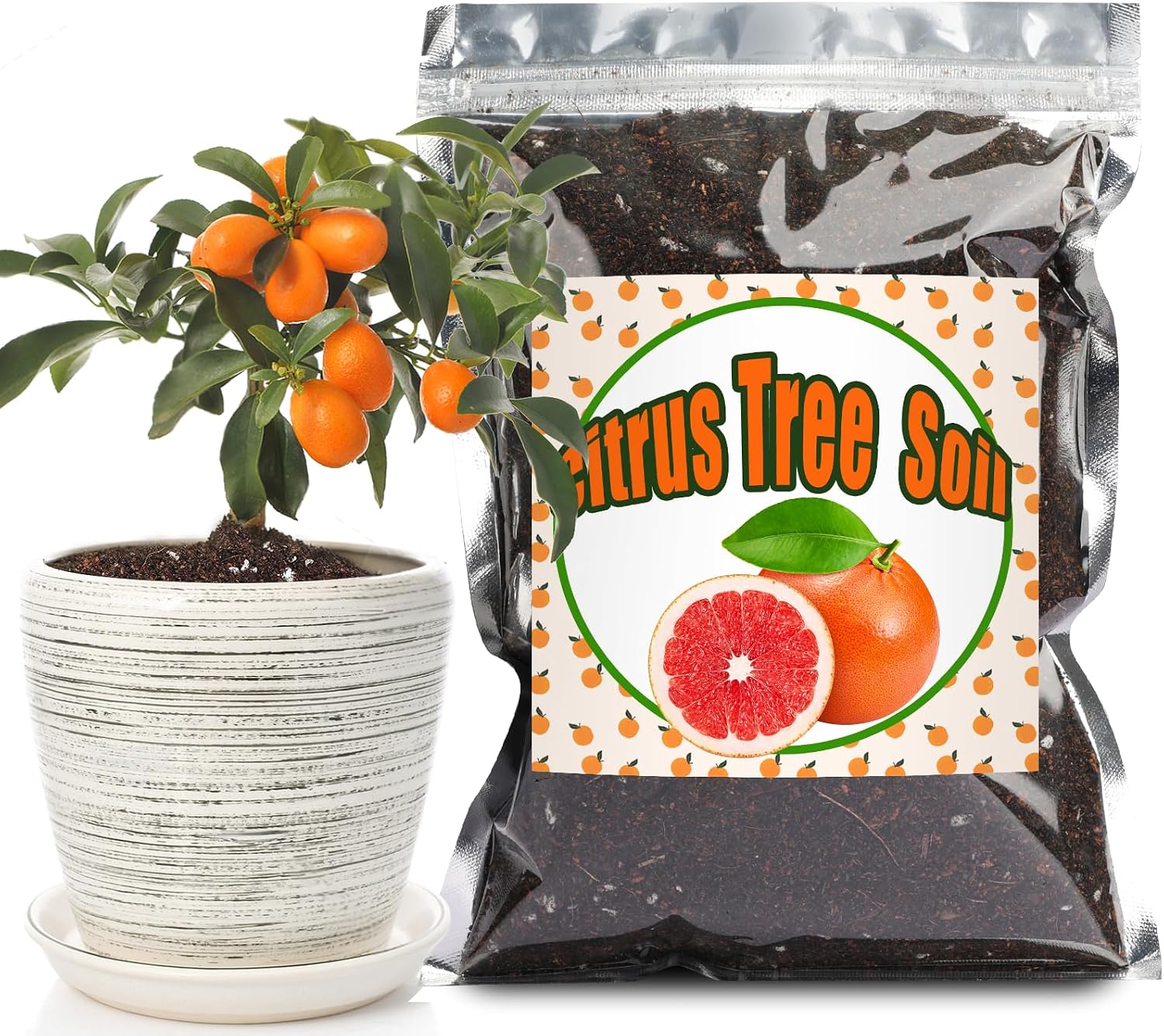
Doter Citrus Tree Potting Soil Mix (1 qt)
| Brand Name | Doter |
|---|---|
| Item Type Name | Garden soil |
| Volume | 1 quarts |
This 1-quart Doter citrus potting mix is designed specifically for container-grown lemon, lime, orange and other citrus trees. It mixes organic and mineral components to give a loamy, well-draining medium with a stated pH around 6.0–7.1 and added nutrients to support leaf growth and fruiting. Typical use is topping up or repotting young citrus in small to medium containers where drainage and aeration matter; the formula aims to avoid waterlogging that causes root problems while still retaining enough moisture for steady growth. The practical benefits are convenience and specificity for citrus: the bag is ready to use and tailored to the acidity and nutrient needs of these plants. Limitations are obvious for larger jobs since this listing is a small 1-quart volume so multiple bags will be required for full repots or larger pots, and the product description does not list exact ingredient proportions or long-term fertilizer schedule so you may need to supplement feedings for established trees.
Best for: Buyers who want an inexpensive, citrus-specific ready mix for container lemons and other small potted citrus and who prefer a grab-and-use product for repotting or topping up.
Less Ideal for: Gardeners repotting mature trees into large containers or preparing large volumes for outdoor beds should choose bulk soil or a custom mix instead.
- Formulated pH aimed at citrus-friendly range for nutrient uptake
- Enhanced drainage to reduce risk of root rot in containers
- Nutrient-enriched blend to support growth and fruiting
- Ready-to-use mix convenient for quick repotting or topdressing
- Small 1-quart size means you will need many bags for larger pots or full repotting
- Does not disclose exact ingredient ratios or long-term nutrient content
Verdict: A convenient, citrus-tailored ready mix that lets budget-minded container growers quickly top up or repot small lemon trees.
Lechuza Citruspón Citrus Potting Soil, 2.7 US dry gal

| Brand | Lechuza |
|---|---|
| Item Highlight | peat-free mineral substrate; improves drainage and aeration; for lemon, orange and citrus |
| Volume | 12 liters |
| Pre-fertilized | Feeds for 6 to 8 months |
Lechuza Citruspón is a ready-to-use, mineral potting mix made specifically for potted citrus like lemons and oranges. It combines fast-draining mineral components with good aeration so excess water moves away from roots and oxygen reaches the root zone, which helps prevent the soggy conditions that stunt citrus in containers. The mix arrives pre-fertilized and is designed to release nutrients over about six to eight months, reducing the need for immediate feedings after repotting. Being peat-free and mineral-based also makes it a cleaner option that holds structure longer than typical peat mixes. Practical benefits for a potted lemon tree include steadier root health, fewer root-rot issues, and simpler seasonal care thanks to the time-release nutrition. Important limitations are the single 2.7 dry gallon bag size, which may require multiple bags for larger specimens, and the need to top up nutrients after the initial feeding window ends for long-term container culture.
Best for: Gardeners who want a dependable, low-maintenance substrate for indoor or patio lemon trees and prioritize healthy roots and predictable watering behavior.
Less Ideal for: People repotting large citrus specimens who need bulk quantities in one purchase or growers who prefer an all-in-one long-term fertilizer solution for multiple seasons.
- Formulated specifically for citrus to reduce waterlogging and improve root aeration
- Pre-fertilized to feed plants for about six to eight months after repotting
- Peat-free mineral formula that maintains structure and drains reliably
- Promotes healthy flowering and fruiting by combining drainage with nutrient retention
- Sold as a single 2.7 dry gallon bag which may be small for repotting larger trees or multiple pots
- No ongoing fertilizer included after the initial feed period
Verdict: Buy this if you want a reliable, peat-free potting mix that keeps potted lemon trees well drained and fed through the first growing season.
Soil Sunrise Citrus Tree Potting Soil Mix (12 Quarts)

| Volume | 12 quarts |
|---|---|
| Ingredients | Peat moss, perlite, sand, worm castings, lime |
| Style Name | Peat Moss,Potting Soil Mix |
This Soil Sunrise Citrus Tree Potting Soil Mix is a purpose-built potting medium for lemons, limes, dwarf mandarins and other container citrus. It combines peat moss for moisture retention with perlite and sand for quick drainage and aeration, while worm castings provide gentle nutrients and lime helps stabilize pH for citrus preference. Typical use is repotting or top-dressing potted lemon trees to reduce soggy roots and improve root oxygenation, especially in indoor or small-patio containers. The resealable 12-quart units are convenient for intermittent repotting and smaller trees. Practical benefits include reduced risk of root rot, easier watering control, and a nutrient boost that supports steady growth without immediate fertilizer dependence. Limitations are that the bag is sized for small to medium containers only and does not replace a long-term fertilization schedule or address specific pest or disease issues. Also gardeners who need an exact ingredient analysis or fully peat-free mix should look elsewhere.
Best for: Home growers who want a ready-made, low-fuss potting mix tuned to potted lemon trees and who prefer a natural blend with documented ingredient benefits and positive user feedback.
Less Ideal for: Growers needing peat-free or fully commercial-scale volumes for many large containers should consider alternative mixes or bulk options.
- Formulated specifically for citrus with lime to help maintain citrus-friendly pH
- Balanced texture from peat, perlite and sand that promotes fast drainage and aeration
- Includes worm castings to supply natural, slow-release nutrients
- Hand-blended, 100% natural ingredients without fillers
- Small 12-quart bag may not be enough for multiple or larger potted trees
Verdict: A convenient, citrus-focused potting mix that reduces waterlogging and supports healthier potted lemon trees with natural ingredients.
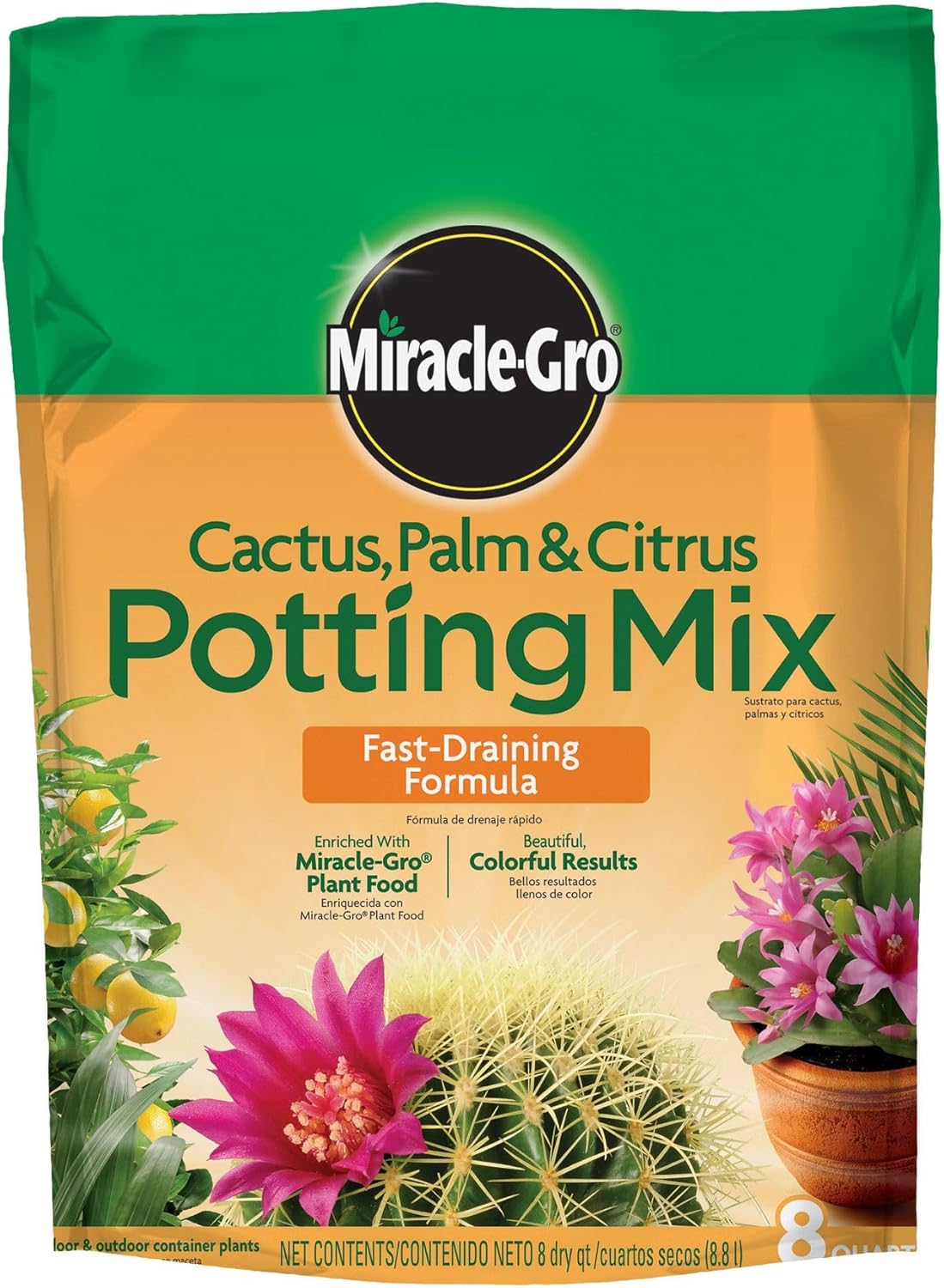
Miracle-Gro Cactus, Palm & Citrus Potting Mix, 8 qt.
| Volume | 8 quarts |
|---|---|
| Unit Count | 1 Count |
| Item Weight | 16 ounces |
| Item Highlight | For Indoor or Outdoor Container Plants, Great for Succulents |
This 8-quart Miracle-Gro potting mix is formulated for container-grown succulents, palms and citrus, making it an obvious pick when repotting a potted lemon tree. The blend combines sphagnum peat moss, sand, perlite and forest products to improve drainage and reduce compaction, while added Miracle-Gro plant food supplies basic NPK nutrients to get plants established. Typical use is straightforward: choose a pot with drainage, fill around the root ball, water and allow excess to drain; the mix is designed to dry to the touch between waterings which helps prevent root rot in citrus. Practical benefits include better aeration for feeder roots, easier watering control, and a ready-to-use mix that removes the need to measure amendments. Limitations are its small bag size for larger trees and the inclusion of peat, which some gardeners avoid for sustainability reasons; heavier-duty or custom mixes may be preferable when planting very large lemons or when you want fully peat-free growing media.
Best for: Buyers who want a reliable, ready-made container mix for young to medium potted lemon trees and prefer a low-effort solution that reduces the risk of overwatering.
Less Ideal for: Growers potting very large lemon trees, those needing peat-free media, or gardeners who prefer to custom-blend exact soil components and proportions.
- Fast-draining formula reduces risk of waterlogged roots in container citrus
- Enriched with balanced plant food to support early growth after repotting
- Contains perlite and sand to improve aeration and prevent soil compaction
- 8-quart bag is small for mature lemon trees and may require multiple bags
- Contains peat moss, which some gardeners avoid for environmental reasons
Verdict: A convenient, fast-draining potting mix that makes repotting and early care of potted lemon trees simple and low-risk.
Choosing the Right Soil for Lemon Tree in Pot: Key Factors to Consider
Drainage Versus Water Holding Balance
Container-grown lemon trees need soil that drains quickly enough to prevent standing water but still retains moisture between waterings. If the mix is too dense or heavy on fine particles, water will collect and roots can rot. Conversely, an overly coarse mix will dry out fast, stressing the tree and limiting nutrient uptake.
Look for combinations of coarse mineral components and organic matter that create continuous pore space. That balance helps you water confidently and reduces the frequency of emergency waterings while maintaining healthy root oxygenation.
Particle Size and Root Aeration
Particle size governs how air and water move through the potting medium. Larger particles like pumice, perlite, or coarse sand create macropores that allow oxygen to reach roots and speed drainage. Finer particles and decomposed organic matter create micropores that hold water and nutrients.
A good potted citrus soil blends both to give roots access to oxygen without drying out completely. The right particle distribution also prevents compaction after repeated wet/dry cycles, which keeps feeder roots active and reduces stress on the tree.
Organic Matter and Nutrient Retention
Organic components such as composted bark, coco coir, or well-aged compost help retain nutrients and release them slowly as microbes break the material down. For lemon trees in pots, these materials supply a steady nutrient baseline and improve the soil's ability to rewet after drying.
However, too much fresh, high-nitrogen organic matter can burn roots or require frequent fertilizing. Choose mixes with stabilized organic content or be prepared to manage nutrient inputs with scheduled citrus fertilizers.
pH Buffering and Mineral Content
Lemon trees prefer slightly acidic to neutral conditions. A potting mix with some mineral content such as crushed lava rock, sand, or horticultural grit helps keep pH stable and provides trace minerals. Ingredients that buffer pH reduce dramatic swings when you water with different sources or apply fertilizer.
Avoid mixes with heavy lime content unless you know your water is very acidic. Stable mineral components also support healthy root hair development and nutrient uptake over time.
Salt Buildup and Rewetting Behavior
Salt accumulation is a common problem in containers because soluble salts from fertilizers and water concentrate as the soil dries. A mix that rehydrates evenly allows salts to be flushed through the container during thorough waterings, reducing root stress and leaf burn.
Choose media that rewet readily after drying rather than forming hydrophobic layers. Good rewetting behavior also improves the uniformity of fertilizer distribution and reduces patchy drying in large pots.
Longevity and Ease of Repotting
Soils that break down quickly force more frequent repotting or replenishing, which can be disruptive to fruiting lemon trees. Durable mixes that keep structure for multiple seasons cut down on root disturbance and make container care easier.
Consider whether you want a permanent mix you top-dress annually or a softer blend that you plan to replace more often. Longevity also ties to how much amendment the mix needs over time to maintain fertility and structure.
Best Container Sizes and Soil Depth for Potted Lemons
Container size affects root temperature, moisture stability, and overall vigor. For young lemon trees choose pots that give at least 12 to 18 inches of soil depth so roots can establish. For mature trees, wider and deeper containers reduce the frequency of watering and buffer temperature swings.
Soil depth matters because too-shallow media dries out quickly and limits root expansion. Deeper soil also allows you to create layered drainage approaches, such as a coarse base topped with the potting mix, which helps maintain oxygen near the root zone while preventing standing water.
- Young trees: smaller pots with good drainage and a loose mix to encourage root branching
- Established trees: larger containers with deeper soil to stabilize moisture and nutrients
- Use a consistent soil depth when repotting to avoid shocking the root collar
How to Amend Store-Bought Mixes for Citrus
Many commercial potting mixes are a reasonable base but benefit from simple amendments for lemon trees. Add coarse inorganic amendments like pumice, perlite, or horticultural grit to improve drainage and aeration. Blend in a modest portion of well-aged compost or composted bark for nutrient retention without overloading the mix.
If the package does not specify particle sizes, aim to replace 20 to 30 percent of fine material with coarse amendments. This preserves moisture while making rewetting easier and reducing compaction over time.
- Add 20 to 30 percent pumice or perlite to standard potting mixes
- Include a small percent of aged compost for steady nutrients
- Avoid raw manure or fresh compost that can burn roots
Watering Practices for Different Soil Types
Soils that drain fast will require more frequent but shorter waterings, while soils that retain moisture allow fewer, deeper waterings. Check moisture with a finger probe or a moisture meter placed near the root ball to avoid over- or under-watering. Water until you see excess flow from drainage holes to ensure even wetting.
Adjust frequency seasonally. In warm, active growth months water more often; during cooler or dormant periods reduce watering and let the top inch of soil dry slightly between sessions.
- Fast-draining mix: water lightly every few days in hot weather
- Moisture-retaining mix: water thoroughly, then let top inch dry
- Always flush containers occasionally to reduce salt buildup
Fertilization and Nutrient Scheduling in Potting Media
Potted lemon trees rely on frequent feeding because containers hold less native nutrient than garden soil. Use a balanced citrus fertilizer on a schedule appropriate to your chosen mix. Slow-release fertilizers work well in mixes with good stability, while liquid feeds can fill gaps in leaner, fast-draining media.
Match fertilizer timing to growth cycles. Increase feeding during spring and summer when the tree sets fruit and reduces or stops in late fall and winter. Monitor leaf color to detect nitrogen or micronutrient deficiencies and adjust feeding accordingly.
- Consider slow-release granules in stable mixes
- Use liquid foliar sprays or root feeds to correct micronutrient issues
- Reduce or pause feeding during dormancy
Repotting and Top-Dressing Techniques
Repot little and often for young trees to encourage a healthy, fibrous root system. For mature trees, top-dress with fresh mix or compost annually to refresh nutrients without fully disturbing roots. When repotting, ease the root ball and replace no more than one-third of the existing soil volume if you want to avoid shock.
Inspect roots during repotting for girdling or circling roots and prune those carefully. Replacing the entire root ball is only necessary when the mix is heavily compacted or the tree is pot-bound.
- Top-dress with 1 to 2 inches of fresh mix in spring
- Repot to the next size up when roots circle the pot
- Avoid removing more soil than necessary to keep fruiting cycles stable
How We Chose the Best Soil for Lemon Tree in Pot
We focused on characteristics that directly affect lemon trees grown in containers. Primary evaluation criteria included drainage rate, water-holding capacity, nutrient retention and release, root aeration and structure, and mix stability over time. Each soil had to demonstrate a blend or texture that reduces the risk of waterlogging while still holding enough moisture between waterings. We prioritized mixes that support steady nutrient availability and that resist compaction after repeated wetting and drying cycles. Exclusions: mixes designed solely for in-ground planting, pure topsoil, or materials that require heavy amendment before use were not considered. We also excluded media with unclear ingredient lists or that rely exclusively on fine, dense materials that impede oxygen flow. Practical filters applied include particle size balance for improved aeration, presence of organic and mineral components for nutrient and pH buffering, and ingredient stability so the potting medium keeps structure across seasons. We also considered suitability for common container sizes, ease of rewetting, and compatibility with standard citrus fertilization routines.
FAQ
Can I use regular garden soil in a pot for a lemon tree?
Regular garden soil is usually too dense for containers and can compact, limiting oxygen to roots. It can be used if heavily amended with coarse material and organic matter, but a potting mix formulated for containers is generally safer and easier to manage.
How often should I refresh potting soil for a lemon tree in a container?
Small refreshes like top-dressing can be done annually, while a partial mix replacement is often helpful every two to three years. Full replacement is usually needed only when the soil has broken down, shows poor drainage, or roots have taken over the pot.
What amendments help prevent root rot in potted citrus?
Adding coarse materials such as pumice, perlite, or horticultural grit increases aeration and drainage, which reduces the risk of root rot. Avoid overwatering and ensure the pot has adequate drainage holes to let excess water escape.
Should I worry about pH when potting a lemon tree?
Yes, lemon trees prefer slightly acidic to neutral soil. Most container mixes are close to suitable pH, but you should test if you notice nutrient deficiencies. Adjust pH with appropriate amendments only after confirming a problem through testing.
Does the type of pot affect soil choice for lemon trees?
Yes. Porous pots like terracotta dry faster and may encourage blends with higher moisture retention. Non-porous pots retain moisture better and pair well with faster-draining mixes. Adjust mix composition based on how quickly your specific container loses moisture.
Final Verdict
For lemon trees in pots, prioritize a mix that balances drainage with moisture retention and maintains structure over multiple seasons. Focus on particle size, organic content, and rewetting behavior to reduce root stress and keep nutrient levels stable. Consider container size and your watering habits when choosing or amending a soil. Choose a durable, well-aerated mix if you want lower maintenance, or opt for a slightly richer, moisture-retentive blend if you prefer less frequent watering and are comfortable with a firmer feeding schedule. Either way, match your soil choice to the pot and climate to support steady growth and reliable fruiting.
