

Note: This article contains affiliate links. If you click on these links and make a purchase, I may earn a small commission at no extra cost to you. This helps support my research and content. Read my full affiliate disclosure here.
Growing a productive vegetable plot starts with the right fertilizer strategy. Natural veggie fertilizers supply nutrients while supporting soil biology, which matters for steady growth, disease resilience, and flavor. Choosing the right option affects how often you feed, how quickly plants respond, and whether soil structure improves over time. This guide covers seven top natural veggie fertilizers shortlisted for typical home vegetable gardens. We evaluate each by how well it feeds vegetables, how easy it is to apply, and how it influences soil health so you can pick the best fit for your beds and containers.
Top Picks at a Glance
| Best Overall The best all-around choice for most situations | Down To Earth All Natural Vegetable Garden Fertilizer, 25 lb (4-4-4) |  |
| Best Quality Built to a higher standard if you want something more solid | Dr. Earth Organic Tomato, Vegetable & Herb Fertilizer (4 lb) |  |
| Best Value The sweet spot between price and what you get | Down To Earth Vegetable Garden Organic Fertilizer, 4-4-4, 15 lb |  |
| Best Budget The cheapest option that still gets the job done reliably | Down To Earth Organic Vegetable Garden Fertilizer, 4-4-4, 1 lb |  |
| Highest Rated A top-rated pick with lots of positive feedback | HyR BRIX All Natural Organic Vegetable Fertilizer, 45 lb | 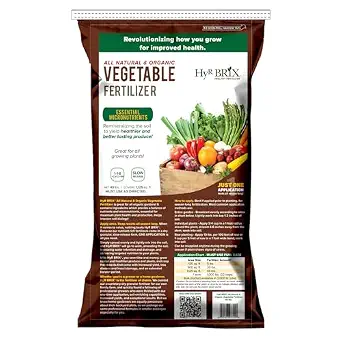 |
| Best Seller A high-volume bestseller chosen again and again | Down To Earth Organic Vegetable Garden Fertilizer 4-4-4, 5 lb |  |
Down To Earth All Natural Vegetable Garden Fertilizer, 25 lb (4-4-4)

| Item Form | Granules |
|---|---|
| Target Species | vegetables |
| Unit Count | 400 Ounce |
| Mixing Ratio | 4-4-4 |
This 25 lb Down To Earth Vegetable Garden fertilizer is a granular, OMRI-listed organic blend designed to feed vegetables, herbs and container-grown edibles throughout the spring and summer. Gardeners typically broadcast or side-dress it into beds and containers to support leafy growth early in the season and to boost fruit size and yield for crops like tomatoes. The formula combines fish bone meal, alfalfa, feather meal, langbeinite, basalt, potassium sulfate, dolomite and seaweed meal to provide nitrogen, phosphorus and potassium along with mineral trace elements. Being granular makes it easy to handle and apply without measuring liquid mixes, and the organic inputs help build soil biology over time. Important limitations are that results are slower than synthetic fertilizers and you will need to follow application timing for best effect; heavy-feeding vegetables may require repeat applications. For gardeners prioritizing natural ingredients and steady long-term soil health, this is a dependable baseline fertilizer.
Best for: Gardeners who want a straightforward, naturally derived all-purpose fertilizer to support vegetables, herbs and container crops while building soil health over time.
Less Ideal for: Growers who need rapid, immediate nutrient correction or who prefer small single-season quantities for tiny balcony gardens.
- OMRI-listed organic formulation safe for certified organic gardens
- Balanced 4-4-4 N-P-K suitable for general vegetable and herb feeding
- Granular form is easy to apply as broadcast or side-dress for beds and containers
- Contains a mix of natural nutrient sources and mineral amendments to feed plants and soil biology
- Slower nutrient release compared with synthetic fertilizers, so effects appear over weeks rather than days
- Large 25 lb bag may be more than casual or balcony gardeners need at once
Verdict: A reliable, OMRI-listed organic 4-4-4 granular fertilizer that provides balanced, long-term nutrition for vegetable and herb gardens.
Dr. Earth Organic Tomato, Vegetable & Herb Fertilizer (4 lb)

| Item Form | Granules |
|---|---|
| Specific Uses For Product | Organic |
| Coverage | Medium |
| Target Species | Herb |
| Unit Count | 64 Ounce |
This Dr. Earth organic granular fertilizer is designed to boost fruiting vegetables, herbs, and container crops by supplying balanced, organic nutrients and soil biology. It is used at planting, during transplanting, or mid-season and can be worked into garden beds, raised beds, or mixed into potting media for containers; the label also recommends every-six-week feedings for containers. Notable features include a 100 percent natural formula, seven probiotic strains plus eight ecto- and endo-mycorrhizae, and a medium coverage that releases nutrients quickly then continues feeding for months. For growers focused on crop performance this product helps improve nutrient availability, drought tolerance, and consistent fruit quality without synthetic chemicals. Limitations are that it is a granular, not a liquid feed, so it requires spreading and incorporation, and it contains phosphorus so local rules about phosphorus use should be checked before application. Its strengths are most apparent for gardeners who want reliable organic yields and healthier soil biology over time.
Best for: Gardeners aiming for higher yields and better-tasting vegetables who prefer an organic, biology-focused fertilizer and are willing to apply granular amendments on a regular schedule.
Less Ideal for: People who need immediate soluble feeds through drip systems or foliar sprays, or who must avoid phosphorus entirely due to local regulations.
- 100 percent natural organic formula with probiotic strains to support soil biology
- Includes ecto- and endo-mycorrhizae to improve nutrient uptake and drought tolerance
- Feeds for several months after application, reducing feeding frequency
- Versatile for beds, raised planters and containers when used as directed
- Granular form requires spreading and incorporation rather than quick foliar or drip application
- Contains phosphorus which may be restricted in some localities
Verdict: Choose this if you want an organic granular fertilizer that reliably boosts vegetable and herb performance by feeding plants and improving soil biology over months.
Down To Earth Vegetable Garden Organic Fertilizer, 4-4-4, 15 lb

| Item Form | Granules |
|---|---|
| Specific Uses For Product | Organic Gardening, Vegetable Gardens |
| Target Species | vegetables |
| Mixing Ratio | 4:4:4 |
| Unit Count | 240 Ounce |
This box of Down To Earth Vegetable Garden fertilizer is a granular, all-natural 4-4-4 formula designed to feed vegetables, herbs and leafy greens through the growing season. You apply it by sprinkling around plant bases and lightly mixing into the topsoil, then watering in; the blend of feather meal, fish bone meal, alfalfa, rock phosphate, kelp and other amendments supplies immediate and slow-release nutrients. It works well as a seasonal baseline feeding across raised beds and backyard plots and supports steady growth rather than aggressive, quick flushes. Practical benefits include OMRI-friendly ingredients for organic systems, a balanced NPK that suits mixed plantings, and a 15 lb size that covers multiple beds. Limitations are that it is a general-purpose mix so gardeners seeking crop-specific blends or fast soluble feeds will need to supplement for bloom or heavy fruit set, and as a granular organic product it requires proper incorporation and watering to activate nutrient release.
Best for: Gardeners who want a dependable, organic baseline fertilizer for mixed vegetable beds and herbs and who prioritize steady, sustainable growth over quick-release chemical boosts.
Less Ideal for: Growers focused on single-crop high-yield production or those who need fast soluble feeds for rapid bloom or ripening should consider specialized or supplemental products.
- Balanced 4-4-4 NPK suitable for a wide range of vegetables and herbs
- OMRI-friendly all-natural ingredients that support organic gardening
- Granular form is easy to apply and incorporates into topsoil
- Contains both quick and slow-release nutrient sources for steady feeding
- Not crop-specific so may need additional fertilizer timed for flowering or heavy fruiting
- Requires mixing into soil and regular watering to mobilize nutrients
Verdict: A reliable, OMRI-friendly 4-4-4 granular fertilizer that provides steady, all-season nutrition for mixed vegetable beds.
Down To Earth Organic Vegetable Garden Fertilizer, 4-4-4, 1 lb

| Item Form | Granules |
|---|---|
| Specific Uses For Product | Organic Gardening, Vegetable Gardens |
| Coverage | Full |
| Mixing Ratio | 4-4-4 |
This 1 lb box of Down To Earth Vegetable Garden fertilizer is a granular, OMRI-friendly mix designed to feed vegetables, herbs, and small raised beds with an even 4-4-4 nutrient balance. You spread or side-dress it into garden soil or mix it into potting mixes to encourage steady growth, stronger root development, and more consistent yields without synthetic salts. The formula uses natural inputs such as fish bone meal, alfalfa, feather meal, langbeinite, basalt, potassium sulfate, dolomite, and seaweed, which provide slow-release nitrogen, phosphorus, and potassium along with trace minerals. For gardeners working on a budget this size is convenient for small plots, container gardens, or to trial on a few beds before committing to larger volumes. Limitations are the small unit size for larger gardens and the slower nutrient delivery compared with quick-release synthetic fertilizers, so expect gradual improvement rather than immediate greenup. Application is straightforward following the mixing ratio guidance for vegetables.
Best for: Practical home gardeners who want an organic, easy-to-apply fertilizer for small raised beds, containers, or a few vegetable rows and prefer steady results over fast-acting products.
Less Ideal for: Large-scale gardeners or those needing rapid, noticeable greening after deficiency will find the small size and slow release limiting and should consider bulk or faster-release options.
- Certified organic formulation made from natural meal and mineral sources
- Balanced 4-4-4 NPK suited to vegetables and herbs
- Slow-release granules reduce risk of burn and promote steady growth
- Compact 1 lb package is easy to store and good for small gardens or trialing
- 1 lb size may be insufficient for medium to large vegetable plots
- Slower-acting than synthetic fertilizers when immediate greening is needed
Verdict: Choose this if you want a small, truly organic, slow-release 4-4-4 fertilizer to reliably feed vegetables and herbs in small gardens or containers.
HyR BRIX All Natural Organic Vegetable Fertilizer, 45 lb

| Item Form | Granules |
|---|---|
| Specific Uses For Product | Organic Nutrition for Gardens |
| Coverage | 1,125 Square Feet |
| Item Weight | 45 pounds |
HyR BRIX All Natural & Organic Vegetable Fertilizer is a 45 lb slow‑release granular formula designed to nourish a full vegetable garden with a single seasonal application when used as directed. It carries a mild 1-1-8 N‑P‑K analysis and includes calcium, sulfur, earthworm castings, rock phosphate and humic acids to support soil biology and nutrient availability. Typical use is spreading the granules across beds or incorporating into planting rows in spring; the manufacturer states one application covers the season and a 45 lb bag treats roughly 1,125 sq ft. The slow‑release granules provide steadier growth and reduce the risk of burning young plants compared with soluble synthetics, and the mineral and organic inputs aim to improve texture and flavor of produce over time. Limitations are that the low nitrogen ratio means heavy-feeding crops or multiple cuttings may need supplemental feeding, and results depend on existing soil conditions so benefits are gradual rather than immediate. This product is best for gardeners wanting a low‑risk, soil‑focused organic feed that requires minimal reapplication during the season.
Best for: Gardeners who prioritize consistent, low‑maintenance feeding and improving long‑term soil health for home vegetable plots.
Less Ideal for: Growers who need rapid, high nitrogen boosts for frequent harvests or those seeking instant, dramatic growth responses.
- Slow‑release granular form provides season‑long feeding with a single application
- Contains remineralizing ingredients like rock phosphate, calcium, sulfur, earthworm castings and humic acids to support soil biology
- Large 45 lb bag covers a substantial area (listed coverage 1,125 sq ft) so fewer purchases are needed
- Gentler nutrient profile reduces risk of burning seedlings compared with soluble synthetic fertilizers
- Low nitrogen content may be insufficient for repeatedly harvested leafy crops without supplemental feeding
- Benefits to soil health and produce quality accrue over time rather than delivering immediate, visible boost
Verdict: Choose this product if you want a dependable, single‑application organic fertilizer that supports soil health and steady seasonal feeding.
Down To Earth Organic Vegetable Garden Fertilizer 4-4-4, 5 lb

| Item Form | Granules |
|---|---|
| Specific Uses For Product | Vegetables, greens, tomatoes, and herbs |
| Application Method | Apply directly to the soil or mix into garden beds |
| Mixing Ratio | 4-4-4 |
This granular vegetable fertilizer is designed for home gardeners who want an organic, slow‑release source of nutrients for vegetables, herbs and leafy greens. With a 4-4-4 NPK it is applied directly to soil or mixed into beds at planting and used again during the season for steady feeding. Notable features include all‑natural ingredients, OMRI listing for organic use, and a slow‑release formula that reduces the need for frequent applications and lowers the risk of nutrient burn. In practice it is easy to spread evenly in garden rows or incorporate into raised bed mixes and it is safe around pollinators and pets when used as directed. Limitations are that it is a general balanced mix rather than a crop-specific formula so heavy feeders may need targeted supplements, and because it is granular you must follow application rates and placement to avoid uneven feeding. For gardeners who prioritize natural inputs and predictability, it is a dependable, low-risk choice for maintaining steady growth in vegetable plots.
Best for: Gardeners who prefer low-risk, organic solutions and want a simple, reliable all‑purpose fertilizer for vegetable beds and raised planters.
Less Ideal for: Growers seeking a crop‑specific or high‑strength feed for heavy producers or who prefer liquid fertilizers for quick corrective feeding.
- OMRI listed and made from natural organic ingredients suitable for organic gardens
- Slow-release granular formula provides steady nutrient supply and reduces frequent feeding
- Easy to apply directly to soil or mix into raised beds for broad vegetable and herb use
- Marketed as safe for beneficial insects, pollinators and pets when used as directed
- Balanced 4-4-4 formulation may be insufficient for heavy-feeding crops that need higher nitrogen or phosphorus
- Granular form requires correct placement and mixing to avoid uneven nutrient distribution
Verdict: A dependable, OMRI-listed all‑purpose organic fertilizer that delivers slow, steady feeding for risk‑averse vegetable gardeners.
Choosing the Right Natural Veggie Fertilizer: Key Factors to Consider
Nutrient Balance and Release Timing
Vegetable crops need a predictable supply of nitrogen, phosphorus, and potassium plus minor nutrients. A natural veggie fertilizer should state its NPK and indicate whether nutrients are immediately available, slow-release, or mostly microbial-mineralized. Rapid-release sources give a quick green-up but can require more frequent feeding and risk foliage burn if overapplied.
Slow-release and biologically mediated fertilizers feed gradually, which often matches vegetable demand and reduces the chance of nutrient leaching. Consider the crop stage when choosing a formula: leafy greens benefit from stronger nitrogen early, while fruiting crops need steady phosphorus and potassium once flowers set.
Support for Soil Biology
Fertilizers that feed soil microbes as well as plants help build structure and long-term fertility. Look for ingredients that include composted organics, rock meals, or microbial inoculants that provide food for bacteria and fungi. These inputs help convert organic nutrients into plant-accessible forms over weeks and months.
Soil biology matters most if you plan repeated cropping on the same beds or want to reduce future fertilizer dependence. If your soil is poor or compacted, a fertilizer that includes or pairs well with compost and cover-crop plans will deliver greater benefits than a sterile, inert product.
Application Method and Garden Fit
Different fertilizers suit different garden setups. Granular mixes can be worked into soil at planting or side-dressed; water-soluble or liquid organics are useful for quick feeding or foliar feeding; pellets and spikes are convenient in containers. Consider how much time you want to spend feeding and whether you need broadcast application for large beds or precise placement for individual plants.
Also think about tool needs and safety: some organic powders can be dusty, while wet materials may require gloves or washing tools. Choose a product with an application rhythm that matches your maintenance habits so feeding doesn't get skipped.
Crop Safety and Residue Concerns
Because you are growing food, crop safety is a crucial factor. Natural fertilizers vary in salt content and in the risk of leaving residues on edible parts. Low-salt, well-composted materials reduce the risk of root burn and salt buildup. Avoid manures or guanos that are not adequately composted if they will contact harvestable produce.
Follow recommended pre-harvest intervals when using any concentrated organic inputs. For leafy crops that are eaten shortly after feeding, prefer mild, fast-acting liquids or diluted teas rather than heavy granular feeds applied directly to foliage.
Cost Per Growing Season and Reapplication Frequency
Natural fertilizers often require more frequent reapplication than synthetic granules because nutrient release depends on microbial activity. Evaluate the amount needed per bed or per container and how many applications a season will require. Higher upfront cost for a concentrated, slow-release organic can be economical if it reduces labor and frequency.
Also account for how a product integrates with other fertility sources such as compost, cover crops, or worm castings. A balanced plan that uses a concentrated input sparingly with regular compost topdressings can be both economical and soil-building.
How Different Forms Behave in Vegetable Beds
Granular natural fertilizers are easy to measure and apply before planting or as side dressings. They release nutrients as soil microbes break down organic matter, so performance depends on soil temperature and moisture. Water-soluble or liquid organics feed quickly and are useful for correcting deficiencies midseason but may need repeated applications.
Liquids can also be used for foliar feeding where immediate uptake is helpful during a bloom set. Pellets and spikes are low-labor options for containers and small patches, providing steady release without frequent handling. Match form to garden scale and how often you want to work in your beds.
- Granular: good for bed prep and side-dressing
- Liquid: fast response, useful for rescue feeds
- Pellets/Spikes: low-maintenance for containers
Integrating Fertilizer With Compost and Mulch
Fertilizer works best as part of a broader soil management plan. Use compost as the foundation to supply humus, improve structure, and retain moisture. Apply natural veggie fertilizer to complement compost by targeting missing nutrients rather than replacing humus-building inputs.
Topdress with compost in spring and then apply a fertilizer tuned to crop needs during peak growth. Mulches help conserve moisture so microbes can process organic fertilizers more efficiently.
- Start with a compost base for long-term fertility
- Use fertilizer to correct nutrient gaps and boost feeding during active growth
Timing Feeds for Common Vegetable Stages
Match fertilizer timing to plant phenology. For seedlings and transplants a light starter feed or a compost-rich transplant mix reduces transplant shock. During leaf development apply supplies higher in nitrogen. Switch to bloom and fruiting feeds that emphasize phosphorus and potassium as plants set flowers and fruit.
Avoid heavy nitrogen boosts late in the season for crops where sweetness or storage life matters, such as carrots or winter squash. Follow label guidance and err on the side of lighter, more frequent feeding rather than heavy single applications.
- Seedlings: light starter or composted mix
- Vegetative growth: more nitrogen
- Flowering/fruiting: higher P and K
Common Application Mistakes and How To Avoid Them
Over-application and uneven distribution are frequent causes of poor results. Too much concentrated organic fertilizer can scorch roots or produce excessive foliage at the expense of fruit. Always calibrate application rates to bed size and container volume.
Failure to water in granular fertilizers or to maintain moisture after liquid feeds reduces nutrient availability. Maintain consistent soil moisture and follow staged feeding rather than front-loading the season. When in doubt, reduce the recommended rate for small containers and test on a few plants before treating the whole garden.
- Measure and follow rates for bed area or container volume
- Water after application unless product instructions say otherwise
How We Chose the Best Natural Veggie Fertilizer
Our selection process focused on practical garden performance and verifiable formulation details. We prioritized fertilizers labeled and formulated for vegetable use that list nutrient content or biological inputs. Key evaluation criteria included nutrient balance and release profile, how the product supports soil biology, ease and flexibility of application in beds and containers, and safety for edible crops including clear usage instructions. We excluded products that lacked transparent ingredient information, relied on synthetic-only solutions, or were primarily marketed for lawns or ornamentals rather than edible gardens. We also filtered out items with application methods impractical for small-scale vegetable plots, such as exclusively commercial spreader-only formats. In addition to published specs, we considered practical handling factors like odor, storage needs, and potential for burn if misapplied. The scoring criteria align to these editorial filters so gardeners can judge how each fertilizer will perform in real-world vegetable beds and containers.
FAQ
Can I use natural veggie fertilizer on seedlings and transplants?
Yes, but use a light application or a product formulated for young plants. Seedlings are sensitive to salts and concentrated nutrients, so dilute liquids or use softer, compost-based starters to avoid burn.
How often should I reapply natural fertilizers to vegetable beds?
It depends on the product and form. Many organic liquids are applied every 2 to 4 weeks, while slow-release granulars may last 6 to 8 weeks. Also consider soil temperature because microbial release slows in cool soil.
Will natural fertilizers attract pests or rodents?
Some raw manures or high-odor organics can attract pests if left exposed. Well-composted materials and enclosed granular products are less likely to lure animals. Incorporating organics into the soil reduces attraction.
Is testing my soil necessary before choosing a natural veggie fertilizer?
Soil testing is highly useful because it identifies nutrient deficits and pH issues. Tests help you choose a fertilizer that fills gaps rather than duplicating already sufficient nutrients.
Can I mix different natural fertilizers together?
Mixing is possible but do so cautiously. Combine products with compatible application methods and avoid stacking high-nitrogen inputs. When in doubt, apply sequentially and monitor plant response.
Are there any safety steps for applying natural fertilizers to edible plants?
Follow label directions on composting, application rates, and pre-harvest intervals. Wash hands and tools after handling concentrated organics, avoid applying fresh manures to crops near harvest, and rinse produce before eating.
Final Verdict
Pick a natural veggie fertilizer that matches your garden scale, crop types, and available labor. Prioritize clear nutrient information and a release profile that aligns with growth stages, and favor products that support soil biology if you want longer-term fertility gains. Balance quick-response liquids for midseason corrections with slower organic sources for steady feeding. With attention to timing, application method, and crop safety, you can reliably boost yields while building healthier soil over time.
