

Note: This article contains affiliate links. If you click on these links and make a purchase, I may earn a small commission at no extra cost to you. This helps support my research and content. Read my full affiliate disclosure here.
Picking the right mulch for strawberries makes a big difference in yield, fruit quality, and plant health. The wrong cover can trap too much moisture, harbor pests, or leave berries dirty, while the right mulch conserves soil moisture, suppresses weeds, and keeps fruit off the soil. This guide covers seven carefully shortlisted mulches suited for strawberry beds, patios, and containers and explains how each performs in garden conditions. We evaluated options for moisture control, pest and disease management, durability, and ease of use to help you choose the best mulch for your planting situation. Below are practical notes on what to expect from different materials and how to use them effectively before the product list.
Top Picks at a Glance
| Best Overall The best all-around choice for most situations | EZ-Straw Organic Seeding Mulch with Tack, 2.5 cu ft |  |
| Best Quality Built to a higher standard if you want something more solid | USA PINESTRAW Long Needle Pine Straw Mulch, 100 sq ft Coverage |  |
| Best Value The sweet spot between price and what you get | EZ-Straw Seeding Mulch with Tackifier, 2.5 cu ft Bale | |
| Most Popular A crowd favorite that many people choose with confidence | HealthiStraw GardenStraw Premium Garden Mulch, 3 cu ft |  |
| Best Seller A high-volume bestseller chosen again and again | Out-Grow 100% Natural Wheat Straw, 1 Cubic Foot (4 lb) |  |
EZ-Straw Organic Seeding Mulch with Tack, 2.5 cu ft

| Item Weight | 23 pounds |
|---|---|
| Manufacturer | Rhino Seed & Landscape, LLC |
| Department | Unisex-Adult |
EZ-Straw is a lightweight processed straw mulch bonded with a natural tackifier to keep the straw in place during wind and heavy water flow. It is used as a seeding mulch or top layer over newly planted areas to protect seed or young plants from erosion, bird predation, and surface drying. The tackifier helps the straw adhere to the soil surface so it does not wash away and gradually feeds the soil as it breaks down. Practical benefits include faster germination when used with seed, reduced watering needs, and minimal cleanup because the material biodegrades. For strawberry beds it can protect crowns and fruit from soil splash and help retain moisture during establishment, though it is primarily a seeding mulch rather than a finished decorative straw layer. Limitations are that it is offered in a bale form designed for spreading rather than preformed mats, and heavier storms or persistent wet conditions may still displace some material until it fully settles and decomposes.
Best for: Gardeners who want an organic, erosion-resistant straw mulch to protect seeds and newly established strawberry plants while improving soil as it decomposes.
Less Ideal for: People seeking a long-term decorative mulch or preformed weed barrier for mature beds should consider finished straw mats or plastic mulch instead.
- Tackifier bonds straw to soil to resist wind and washout
- Biodegradable organic straw that breaks down and feeds soil
- Helps retain moisture and speeds germination when used with seed
- 99% weed free, reducing weed introduction into beds
- Packaged as a loose bale which requires spreading and may need anchoring in exposed sites
- Not a decorative finished mulch so appearance may be rougher than processed straw mats
Verdict: Choose EZ-Straw when you need an organic, tack-coated straw mulch that protects seed and young strawberry plants from erosion while feeding the soil as it decomposes.
USA PINESTRAW Long Needle Pine Straw Mulch, 100 sq ft Coverage
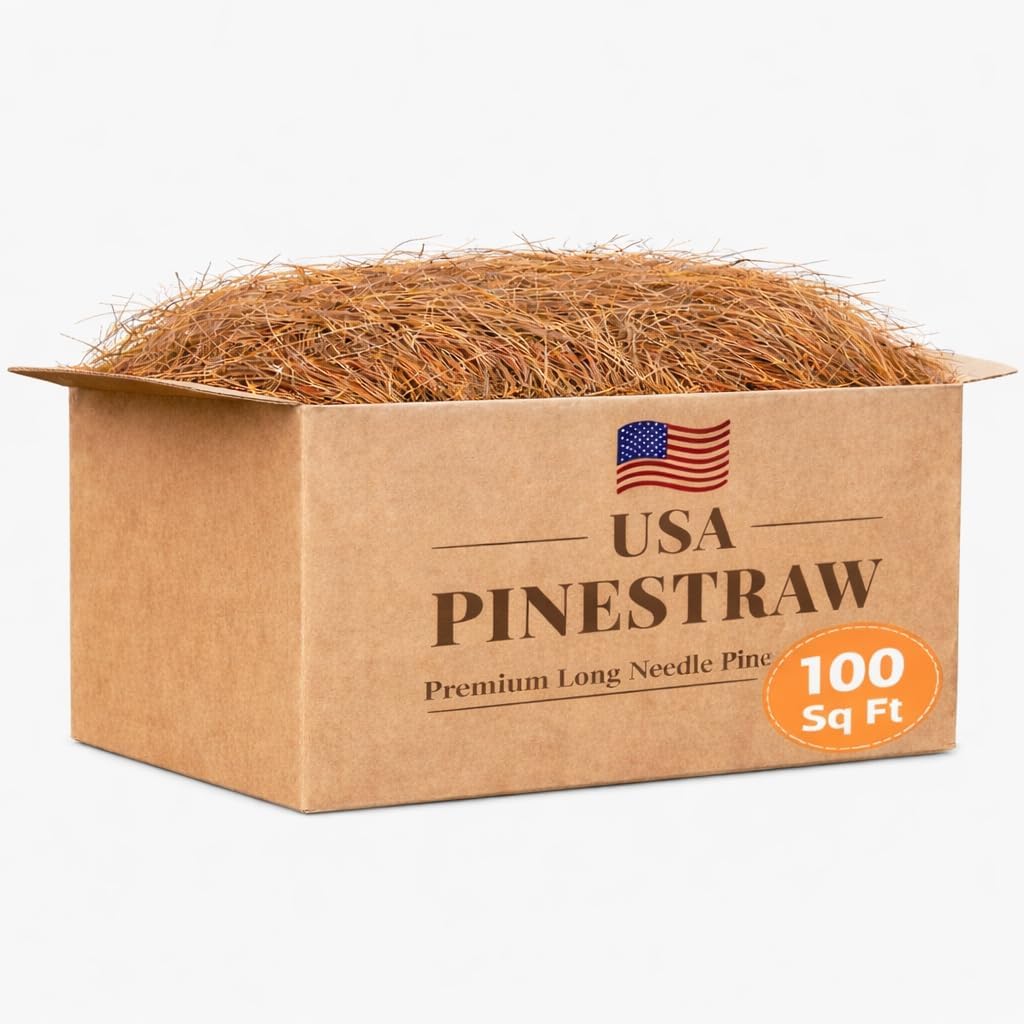
| Coverage | 100 Sqft |
|---|---|
| Material | Pine straw (pine needles) |
| Origin | USA harvested |
This pine straw bale is a straightforward, performance-focused mulch for beds and small orchards. It is used by spreading a 2 to 3 inch layer around plants, pathways, or under shrubs to reduce evaporation and block light from weed seeds. The long needles interlock well, giving a stable, attractive cover that resists blowing away better than finer mulches. Because it is 100% organic pine needles sourced in the USA it also gradually improves soil structure and provides good drainage around roots, which is helpful for shallow-rooted crops. For strawberry patches it keeps fruit cleaner and helps maintain consistent soil moisture without introducing chemicals. A limitation is that pine straw is lightweight and sold in bales, so covering very large areas requires multiple bales and more handling than bagged, denser mulches. It also breaks down more slowly than compost-based mulches, so occasional replenishment is needed to maintain coverage and benefits.
Best for: Gardeners who prioritize functional performance and clean results for small to medium beds and want a low-maintenance organic mulch for crops like strawberries.
Less Ideal for: People who need a heavy, compacted mulch for instant weed barrier over very large areas or who prefer a mulch that decomposes rapidly into soil amendment.
- Long needles interlock to form a stable, wind-resistant cover
- Helps retain soil moisture and reduces watering frequency
- Natural weed suppression without chemicals
- Lightweight organic material that improves soil structure over time
- Sold in bales so covering large areas requires multiple bales and extra handling
- Breaks down slowly and needs periodic replenishment to maintain depth
Verdict: Choose this pine straw bale if you want an effective, natural mulch that keeps strawberry beds cleaner and conserves soil moisture with minimal fuss.
EZ-Straw Seeding Mulch with Tackifier, 2.5 cu ft Bale
| Volume | 2.5 cu ft |
|---|---|
| Coverage | Covers up to 500 sq. ft. |
| Material | Processed straw with tackifier |
| Weed content | 99% weed free |
EZ-Straw Seeding Mulch is a processed straw bale treated with a natural tackifier that makes the fibers cling together when activated with water. You lay the straw over newly seeded or bare soil, spray it to activate the tackifier, and the bonded mat resists wind and washout so seed and young plants stay covered. The straw is marketed as 99% weed free, UV‑protected in its packaging for easier outdoor storage, and biodegradable so you can leave it in place as plants establish. For strawberry beds it provides good protection from soil splash, conserves moisture to reduce watering frequency, and helps deter birds and erosion on sloped rows. Expect easy handling compared with loose straw because the tackifier keeps the material from blowing around, but note the bale size and packaging mean you will need space to store at least one bale and some effort to spread it evenly between plants. The natural tackifier is described as food‑safe, and the product is intended to break down without a cleanup step once plants are established.
Best for: Gardeners who want a low‑maintenance, natural mulch that protects seed and young strawberry plants while reducing watering and erosion risk.
Less Ideal for: Those with very small balconies or container strawberry setups where large bales are impractical or for gardeners who need a sterile, rock‑free inorganic mulch option.
- Tackifier bonds straw so it resists wind and washout after watering
- Biodegradable so it can be left in place as plants establish
- Processed and 99% weed free to reduce unwanted weed introduction
- UV‑protected packaging for outdoor storage and easier handling
- Large bale requires storage space and manual spreading to cover beds evenly
Verdict: Choose this straw mulch if you want a biodegradable, tackified cover that stays put to protect strawberry plants and speed establishment.
HealthiStraw GardenStraw Premium Garden Mulch, 3 cu ft

| Item Weight | 22.8 pounds |
|---|---|
| Manufacturer | HealthiStraw |
| Item model number | HSTGARDENSTRAW |
| Sustainably Sourced | Yes |
| All-Natural, non-GMO | Yes |
HealthiStraw GardenStraw is a compressed 3 cubic foot bale of cleaned, non-GMO wheat straw formulated for garden use. It is typically spread as a 2–3 inch mulch around vegetables, berries, and raised beds or used very thinly for lawn overseeding. The straw is mechanically filtered to reduce dust and seeds, so it stays cleaner than raw straw and is less likely to introduce weeds into a strawberry patch. When watered the fibers interlock, which helps the mulch resist wind and light rain without chemical binders. It retains soil moisture and moderates temperature, which can reduce watering needs and protect shallow-rooted strawberry plants. As it decomposes it adds carbon to the soil and supports microbial activity. Important limitations are that a compressed bale is heavy to carry and you may need to fluff or work it apart for even coverage, and very thick layers can slow warming in spring so apply according to plant needs.
Best for: Gardeners who want a clean, sustainable straw mulch for strawberries and vegetable beds and who prioritize reducing weeds and conserving water with a product vetted by other users.
Less Ideal for: People who need a lightweight, pre-fluffed bag or who require an instant decorative mulch finish for formal beds; not intended for users who cannot handle a heavy bale.
- Made from 100% non-GMO wheat straw with mechanical filtering to reduce dust and stray seeds
- Designed fibers interlock when watered so the mulch resists wind and stays in place without binders
- Conserves soil moisture and cools the root zone, helping reduce watering for shallow-rooted plants
- Composts quickly and adds carbon to improve soil structure and microbial health
- Compressed 3 cu ft bale expands to cover a large area, useful for beds and lawn seeding
- Compressed bale is relatively heavy and needs to be broken up for even spreading
- Very thick applications can delay soil warming in spring if not applied carefully
Verdict: A clean, sustainably sourced straw mulch that holds in place, conserves moisture, and minimizes weed seeds—well suited for strawberry beds and vegetable gardens.
Out-Grow 100% Natural Wheat Straw, 1 Cubic Foot (4 lb)
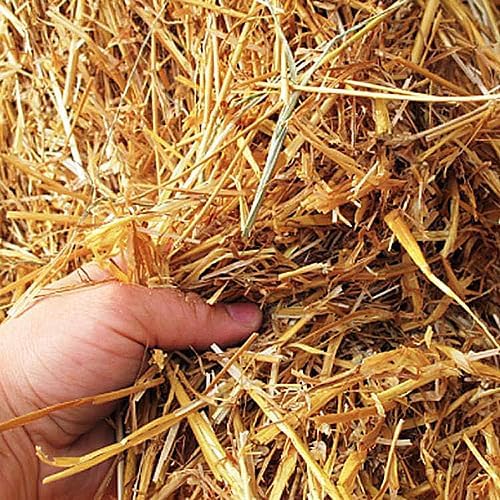
| Unit Count | 64 Ounce |
|---|---|
| Package Size Name | One Cubic Foot |
| Other Special Features of the Product | organic |
Out-Grow's wheat straw is sold as one cubic foot of cleaned, low-dust straw harvested and packed with minimal weed seeds and no additives. In the garden it is most commonly used as mulch around strawberries and other low-growing fruits to keep fruit off the soil, suppress light weed growth, and provide light insulation through cooler nights. It ships compact in a 12 x 12 x 12 box and is easy to spread by hand or with a rake; because it is straw rather than hay it remains relatively free of seed and breaks down slowly, adding organic matter over the season. Practical benefits include low dust for cleaner handling and suitability for animal bedding or mushroom substrate where cleaner straw is required. Limitations are the small 1 cubic foot quantity and modest weight, which means multiple bags are needed for larger beds and more frequent replenishment as it decomposes over months rather than years.
Best for: Home gardeners who prioritize low-risk, clean materials and want an easy-to-apply mulch for small strawberry patches or seasonal beds.
Less Ideal for: Large-scale growers or gardeners looking to cover extensive beds in a single purchase should choose bulk straw or other higher-volume mulches instead.
- 100% natural with no additives, suitable for organic gardening
- Low dust and low weed-seed content for cleaner handling and reduced volunteer plants
- Versatile for garden mulch, animal bedding, and mushroom cultivation
- Slow decomposition adds organic matter and provides season-long coverage
- Small one-cubic-foot package means you will need several bags to cover even a modest strawberry bed
- Not a long-term soil amendment compared with heavier mulches or compost
Verdict: A clean, low-dust, all-natural straw mulch that is ideal for small strawberry beds and cautious gardeners who want a reliable, easy-to-use protective layer.
Choosing the Right Mulch for Strawberries: Key Factors to Consider
Moisture Control
Strawberries need evenly moist soil but are susceptible to crown rot if crowns stay waterlogged. Mulch that holds moisture can reduce watering frequency and buffer soil against sudden dry spells. However, overly absorbent or thick mulches can trap water around crowns and promote fungal disease.
When evaluating mulches, consider how quickly they shed rainfall, how well they prevent surface evaporation, and whether they wick moisture toward crowns. In container plantings a lighter, well-draining cover may be preferable, while in-ground rows often benefit from mulches that moderate surface temperatures and retain deeper soil moisture.
Pest and Disease Management
Mulch alters the microhabitat at the soil surface and can either deter or encourage pests. Coarse, airy materials tend to be less hospitable to slugs and rodents than dense, damp layers. Some mulches can hide slugs or provide nesting material for voles, increasing fruit damage risk.
Consider disease pressure in your area. Materials that dry quickly between rains reduce fungal spores and crown infections, while organic mulches that break down may temporarily increase moisture at the soil surface. Also think about pathogen carryover; avoid using mulch from unknown composts that might contain plant disease inoculum.
Clean Fruit and Harvest Practicality
One of the most immediate benefits of mulch for strawberry beds is keeping fruit off bare soil to reduce staining and rot. Low-profile mulches that create a clean separation between berry and ground make harvest faster and reduce sorting and washing time.
Also assess how easily the mulch can be moved aside during picking, whether it traps debris between plants, and whether it compacts into a mud-like layer in wet weather. For pick-your-own beds or frequent harvesting, choose a surface that stays tidy and does not snag fruit or hands.
Durability and Maintenance Needs
Different mulches vary in how long they last and how much upkeep they require. Some organic mulches break down within a season and need replenishing, while synthetic options can last multiple seasons. Durability affects labor and ongoing material costs.
Maintenance considerations include how often to top up the material, whether it needs rearranging after heavy rain or wind, and how easy it is to remove at season end. Also think about how mulch interacts with bed preparation for the following year and whether it complicates weed control or soil amendments.
Impact on Soil Health
Mulches can add organic matter and improve soil structure as they decompose, or they can be inert and provide no soil benefits. Organic mulches can feed soil life and increase tilth over time but may temporarily immobilize nitrogen as microbes break down high-carbon materials.
Consider whether you want the mulch to be a long-term soil amendment or a temporary ground cover. Also evaluate potential pH effects, contamination risks, and whether the material introduces weed seeds or unwanted chemicals into the soil.
Climate and Microclimate Suitability
Local climate drives which mulch performs best. In hot, dry regions a mulch with good moisture retention and sun-reflective properties can protect shallow roots and reduce irrigation. In cool, wet climates a more permeable, quick-drying mulch helps prevent crown diseases.
Microclimates within your garden matter too. Mulches used near buildings, under tree shade, or in low-lying frost pockets will behave differently. Match mulch choice to both regional climate and the specific conditions of your strawberry planting area.
Organic Mulches That Feed the Soil
Wood-based and straw-type organic mulches break down over time and contribute carbon to the soil, improving structure and water-holding capacity after several seasons. They are attractive options for gardeners who want the mulch to become part of the soil food web and slowly improve planting beds.
Expect organic mulches to require periodic topping up as they decompose and to possibly increase slug activity in some situations. To reduce disease risk, keep organic layers thinner around crowns and allow airflow at plant bases.
- Great for long-term soil building
- May need replenishing each season
- Watch for increased slug or vole activity
Inert and Synthetic Covers for Clean Fruit
Plastic films and woven landscape fabrics create a clean barrier between fruit and soil and can be especially useful in commercial-style rows or pick-your-own plots. They excel at keeping berries clean and suppressing weeds but do not add organic matter to the soil.
These materials may trap heat and affect soil temperature, so choose lighter colors in warm climates and ensure proper irrigation delivery beneath the cover. Removal and disposal at season end are practical considerations.
- Keeps fruit clean and reduces weeding
- No soil-building benefits
- Can increase soil temperature under strong sun
Living Mulches and Cover Crops
Low-growing cover crops or living mulches provide continuous ground cover and can suppress weeds while feeding soil life. They are best used in beds where competition can be managed, such as between rows or in wider planting areas where strawberries are not crowded.
Balance is key when using living mulches: select species that will not outcompete strawberry plants for water or nutrients and mow or trim to keep runners and crowns accessible.
- Adds organic matter and supports beneficial insects
- Requires management to avoid plant competition
- Useful in larger beds with space to spare
Row and Bed Preparation for Mulching
Prepare beds by removing perennial weeds, leveling soil, and installing drip irrigation or soaker hoses if needed before applying mulch. A smooth, slightly raised bed helps water drain away from crowns and positions mulch to direct moisture where roots need it.
Place mulch after soil has warmed in spring and when transplants or established plants are settled. Avoid piling material directly against crowns to prevent rot and allow air circulation around the base of plants.
- Install irrigation before mulching where possible
- Keep mulch an inch or two away from plant crowns
- Use beds with gentle slope to aid drainage
Seasonal Care and Mulch Management
Adjust mulch thickness seasonally. Thinner layers in spring and early summer encourage flowering and fruit set, while adding more cover in late summer and fall can reduce winter heaving and conserve soil moisture. Remove or thin mulch in wet winters to reduce crown rot risk in soggy climates.
Inspect mulch after heavy rains for compaction or pooled water and fluff or replace sections that become matted. For annual beds, plan for end-of-season cleanup and decide whether to incorporate organic mulch into the soil or remove synthetic materials.
- Thin or remove in persistently wet seasons
- Top up organic mulches after decomposition
- Monitor for compaction and pest harboring
How We Chose the Best Mulch for Strawberries
We selected mulches that suit strawberry growing conditions by focusing on measurable, garden-relevant criteria. First, moisture retention was prioritized because strawberries need consistent soil moisture without prolonged waterlogging. Second, pest and disease influence was assessed by considering how each mulch type affects slug activity, rodent concealment, and crown rot risk. Third, fruit cleanliness and harvest ease were evaluated to favor mulches that keep berries off the soil and reduce post-harvest washing. Fourth, durability and maintenance were judged by expected lifespan in beds and how often replacement or topping up is required. Finally, environmental impact and soil benefits were considered, including whether the material breaks down into organic matter or introduces contaminants. We excluded materials that are known to leach harmful chemicals, smell strongly as they break down, or require intensive specialized equipment to apply. Our shortlist emphasizes widely available, garden-suitable mulches that perform reliably across climates and common planting setups such as raised beds, in-ground rows, and containers. The scoring criteria reflect these practical dimensions and guided editorial choices.
FAQ
How thick should mulch be around strawberry plants?
Aim for a 1 to 2 inch layer around plants, keeping material pulled back an inch or two from the crown. Thicker layers can retain too much moisture and hide pests, while too thin a layer will not suppress weeds or keep fruit clean.
Is straw the best mulch for strawberries?
Straw is a common choice because it keeps fruit off the soil and breaks down to improve soil. It can increase slug habitat in damp conditions, so choose straw that is free of seeds and apply it in a thinner layer if slugs are a problem.
Can I use landscape fabric under strawberries?
Landscape fabric can keep weeds down and maintain a clean surface, but it prevents organic matter from entering the soil and can require careful irrigation setup. Use fabric with proper drip irrigation underneath and monitor soil moisture.
When should I apply mulch in the season?
Apply mulch after soil has warmed in spring and plants are established to prevent crown chill and root stress. Add additional mulch in late summer or fall for winter protection, but reduce or remove it in wet winters to avoid prolonged dampness around crowns.
Will mulch change soil fertility for my strawberries?
Organic mulches slowly add carbon and nutrients as they decompose, which usually benefits soil fertility over time. High-carbon materials may temporarily tie up nitrogen, so plan to supplement with fertilizer if plants show deficiency symptoms.
How do I prevent slugs and rodents in mulched strawberry beds?
Reduce slug habitat by keeping mulch thinner near crowns, using coarser materials in damp sites, and removing dense, matted layers. For rodents, avoid piled-up mulch along edges and maintain clean bed borders so there are fewer hiding places.
Final Verdict
Choose a mulch based on how it handles moisture, keeps fruit clean, and fits your climate. Organic materials improve soil over time but need topping up and may increase pest pressure in wet conditions. Inert covers and fabrics keep berries tidy and reduce weeding but offer no soil-building benefits and can alter soil temperature. Balance these tradeoffs against your maintenance capacity and garden goals. Prioritize moisture control and crown airflow first, then select a mulch that meets your needs for cleanliness, durability, and soil health to get the best results with strawberries.
