

Note: This article contains affiliate links. If you click on these links and make a purchase, I may earn a small commission at no extra cost to you. This helps support my research and content. Read my full affiliate disclosure here.
Picking the right soil for flower beds changes how plants establish roots, access nutrients, and resist drought or waterlogging. Whether you plant perennials, annuals, or mixed borders, the soil you use determines early growth, flowering abundance, and how often you need to water and fertilize. This guide covers six well-regarded soil options shortlisted for flower beds. We evaluate each by how it supports root development, drainage, and long-term bed health so you can choose a mix matched to your garden conditions and planting style.
Top Picks at a Glance
| Best Overall The best all-around choice for most situations | Rosy Soil Garden Mix Biochar Potting Soil, 8 Quart |  |
| Best Quality Built to a higher standard if you want something more solid | FoxFarm Ocean Forest Potting Soil, 1.5 cu ft (Pack of 2) |  |
| Best Value The sweet spot between price and what you get | Espoma Organic Vegetable & Flower Garden Soil, 1 Cubic Foot |  |
| Best Budget The cheapest option that still gets the job done reliably | Garden Magic Michigan Peat Organic Potting Top Soil Blend, 40 lb |  |
| Highest Rated A top-rated pick with lots of positive feedback | Coast of Maine Cobscook Blend In-Ground Garden Soil, 1 cu ft |  |
| Most Popular A crowd favorite that many people choose with confidence | Back to the Roots Organic Expanding Coco Coir Potting Soil Brick |  |
Rosy Soil Garden Mix Biochar Potting Soil, 8 Quart

| Volume | 8 quarts |
|---|---|
| Item Highlight | Organic Garden Soil with Worm Castings for Vegetables, Herbs, and Flowers |
| Made in | USA |
Rosy Soil Garden Mix is an organic, peat-free potting soil designed for outdoor planting in raised beds, containers, and planters. The formula combines biochar, compost, worm castings, mycorrhizae, and pine bark fines to create a light, well-aerated medium that holds moisture and supports beneficial microbes. In practice this means the mix drains well yet retains water between irrigations, resists compaction that can cause root rot, and gives seedlings and flowering plants steady nutrient support without synthetic fertilizers. The resealable 8 quart bag is convenient for small projects and for mixing into existing bed soil to improve structure. Important limitations are the bag size and that a single 8 qt bag only amends a small area, so larger flower beds will need multiple bags or bulk soil. Also this is marketed as a topsoil/potting mix rather than a complete, long-term garden soil replacement, so expect to reapply or blend it when preparing new beds each season.
Best for: Gardeners who want an organic, peat-free amendment to improve structure and moisture retention in flower beds, containers, or raised beds and who work on small to medium planting areas.
Less Ideal for: People preparing large garden beds who need bulk soil or a long-term soil replacement should look for bulk or bagged garden soil sold in larger volumes.
- Peat-free organic formula with biochar and worm castings that supports soil microbes
- Pine bark fines and biochar keep the mix airy and well draining to reduce root rot risk
- Holds moisture longer than peat-based mixes so plants need less frequent watering
- Resealable 8 quart bag with planting instructions, convenient for small projects
- 8 quart bag size is small for large flower beds and requires multiple bags to cover bigger areas
- Designed as a topsoil/potting mix amendment rather than a long-term standalone garden soil
Verdict: A peat-free, biochar-rich potting mix that improves drainage and microbial activity, ideal for boosting small flower beds and container plantings.
FoxFarm Ocean Forest Potting Soil, 1.5 cu ft (Pack of 2)

| Brand Name | FoxFarm |
|---|---|
| Unit Count | 2 Count |
| Volume | 1.5 cubic feet |
| Included Components | Potting Soil |
FoxFarm Ocean Forest is a premixed potting soil designed to give plants a nutrient-dense, well-aerated growing medium straight from the bag. It combines aged forest products, sphagnum peat moss, sandy loam and perlite with organic amendments such as fish meal, crab meal and earthworm castings to create a mix that holds moisture while allowing excess water to drain. Typical uses include container gardens, houseplants, seedlings and flower beds planted in pots or raised containers. The soil arrives pH adjusted for nutrient uptake and is noticeably light and crumbly, which helps roots establish quickly and makes pot filling easier. Because it is a rich, fertilized mix, you can use it right away without heavy amendment, but that same richness means it is concentrated for use in containers and may be stronger than a low-nutrient topsoil for direct in-ground bed mixing. Bags are 1.5 cu ft each and the blend is best for growers who want vigorous early growth and simpler container planting rather than a neutral, low-input soil for large in-ground beds.
Best for: Gardeners who prioritise rapid, healthy container and seedling growth and want a ready-made, nutrient-rich mix that simplifies planting and early care.
Less Ideal for: People looking to build large in-ground flower beds from native soil or those who prefer a low-nutrient, peat-free amendment should look at alternatives better suited to bulk bed preparation.
- Richly amended with organic inputs for strong early growth
- Light, aerated texture that promotes fast root development and easy pot filling
- pH adjusted and ready to use straight from the bag without additional mixing
- Formulated as a potting mix so it may be too concentrated for direct use as native garden topsoil
- Contains peat and marine-derived ingredients which some gardeners avoid for sustainability preferences
Verdict: Choose this mix when you want a ready-to-use, nutrient-rich potting soil that speeds root establishment and vigorous container-grown flowering plants.
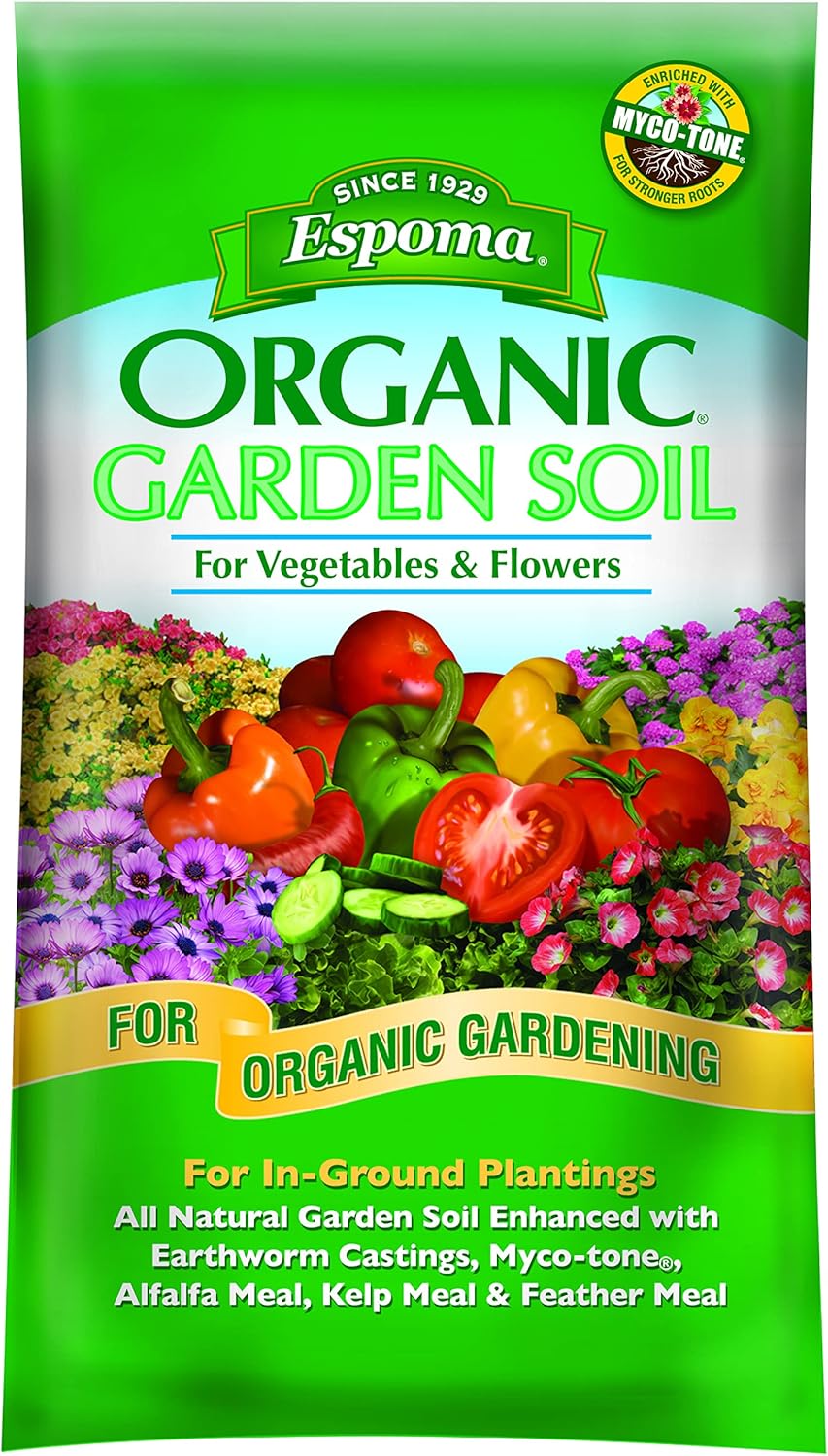
Espoma Organic Vegetable & Flower Garden Soil, 1 Cubic Foot
| Brand Name | Espoma |
|---|---|
| Volume | 1 cubic feet |
| Style Name | Peat Moss |
| Ingredients | Peat moss, composted materials, limestone, earthworm castings, alfalfa meal, kelp meal, feather meal, yucca extract |
This Espoma Organic Vegetable & Flower Garden Soil is a pre-mixed, organic planting blend intended for improving native garden beds at planting or transplanting time. It combines Canadian sphagnum peat moss, aged forest products or composted rice hulls, limestone for pH adjustment, and biological amendments such as earthworm castings, alfalfa meal, kelp meal, feather meal, and a proprietary mycorrhizae mix. In practice you work it into existing soil around transplants or mix into raised-bed fills to boost drainage, tilth, and early feed for young roots. The inclusion of mycorrhizae and worm castings supports root establishment and nutrient uptake without synthetic fertilizers. Because it is a 1 cubic foot bag formulated for spot improvements rather than full-bed replacement, plan for multiple bags for larger flower beds. Also the peat-based formula means it will hold moisture and may compact over time if not amended with additional coarse material for long-term structure.
Best for: Gardeners who want an easy, organic soil amendment to boost establishment of flowers and vegetables when planting or transplanting in existing beds.
Less Ideal for: Those needing a bulk topsoil or full-bed rebuild where large volumes or a mineral-based, non-peat mix are preferred.
- Organic formulation with natural amendments and no synthetic fertilizers
- Contains earthworm castings and mycorrhizae to help root establishment
- Balanced blend for use when planting or transplanting to improve native soil
- Includes pH-adjusting limestone to reduce the need for separate amendments
- Sold in 1 cubic foot bags so larger beds require many bags
- Peat-heavy mix can compact or retain moisture if not balanced with coarse material
Verdict: A convenient organic planting mix that speeds root establishment and improves native soil when setting out flowers or vegetables.
Garden Magic Michigan Peat Organic Potting Top Soil Blend, 40 lb

| Unit Count | 1 Count |
|---|---|
| Included Components | Michigan Peat – 5540 – 40lb |
| Item Highlight | Dark Reed Sedge Peat and Sand – Moisture Retaining Mix |
| Volume | 40 liters |
Garden Magic Michigan Peat Top Soil is a general-purpose, ready-to-use mix intended for both indoor pots and outdoor flower beds. It combines dark reed sedge peat with sand to balance moisture retention and drainage, which makes it useful as a planting medium, top dressing, or to loosen heavy clay when mixed into existing soil. Typical uses include filling raised beds, topping up garden beds before planting, and improving root conditions for flowers and vegetables. Notable features are its organic peat content and the formulation geared toward holding moisture without becoming waterlogged. Practical benefits include easier transplanting, better root aeration compared with straight clay, and a straightforward bagged product that needs no pre-mixing. Important limitations are that peat-based mixes can compact over time and may require periodic amendment with compost or fertilizer for long-term bed fertility, and peat is not a complete nutrient source so additional feeding is needed for heavy-feeding plants. The 40 pound bag is a convenient size for small beds but larger projects will need multiple bags.
Best for: Home gardeners working on flower beds or small raised beds who want an affordable, ready-mix that improves soil texture and moisture control without extra prep.
Less Ideal for: Large landscaping projects or gardeners seeking an all-in-one fertilized planting mix should look for bulk soil or amended mixes with added nutrients instead.
- Ready-to-use out of the bag for quick planting and top dressing
- Peat and sand blend balances moisture retention with drainage
- Works well to loosen heavy clay or improve light soils
- Suitable for both indoor containers and outdoor flower beds
- Peat can compact and lose structure over time without amendment
- Contains no listed nutrients so periodic fertilization is required
Verdict: A practical, budget-friendly ready mix that improves soil texture and moisture balance for small flower beds and container plantings.
Coast of Maine Cobscook Blend In-Ground Garden Soil, 1 cu ft

| Brand Name | Coast of Maine |
|---|---|
| Item Type Name | Plant Food |
| Included Components | SOIL |
| Unit Count | 1 Count |
Coast of Maine Cobscook Blend is an organic in-ground soil mix formulated to rebuild and enrich existing garden beds. It is typically used as a top-dressing or incorporation amendment when planting flowers, perennials, and landscape shrubs to improve moisture retention, drainage, and aeration. The blend includes compost, sphagnum peat moss and aged bark plus sea-derived ingredients such as kelp and lobster meal that supply slow-release nutrients and encourage soil biology. For gardeners who want a practical, low-maintenance solution, the product helps loosen compacted or clay soils and adds organic matter that supports steady root growth and soil life over time. Limitations are the small 1 cu ft bag size for larger beds and the need to reapply or supplement with additional compost over seasons for long-term fertility maintenance. It is best treated as a quality soil amendment rather than a sole growing medium for filling large new beds.
Best for: Gardeners who prioritize reliable, organic improvements to established flower beds and want a remedy that builds living soil and supports steady plant growth with minimal fuss.
Less Ideal for: People needing large volumes to fill new large beds or those looking for a ready-to-use potting mix for containers should consider bulk amendments or dedicated potting soils instead.
- OMRI-listed organic formula that supports biological soil health
- Contains compost, peat moss and aged bark to improve structure, drainage, and moisture retention
- Includes sea-derived amendments (kelp, lobster meal) for slow-release nutrients
- Formulated specifically for in-ground gardens and landscape plantings
- Small 1 cu ft bag is insufficient for large flower beds without multiple bags
- Not intended as a standalone potting mix for container plants
Verdict: Choose this blend when you want a dependable organic amendment that improves soil structure and sustains living soil in flower beds.
Back to the Roots Organic Expanding Coco Coir Potting Soil Brick

| Item Highlight | 10 lb compressed coco coir brick; peat-free; OMRI Listed |
|---|---|
| Item Type Name | Coconut Coir |
| Unit Count | 1632 Fluid Ounces |
| Volume | 2 cubic feet |
This 10 lb compressed coco coir brick expands into roughly 2 cubic feet of loose, airy growing medium when water is added, making it useful as a lightweight potting substrate, seed-start mix, or amendment for flower beds. It is peat-free and OMRI listed, so you get an organic, pH-balanced base that improves drainage and water retention without heavy soil bags. Typical use is rehydrating the block, fluffing the coir, then using it alone for containers or mixing it with existing garden soil to lighten clay and increase aeration. The main benefits are compact storage before use, consistent texture, and versatility for vegetables, herbs, and ornamentals. Limitations are that coco coir provides little native fertility, so plan to add compost or fertilizer for long-term beds, and it does not replace structured topsoil in deep flower beds where bulk volume and nutrients are needed. For gardeners who prioritize sustainable, peat-free amendments and want an easy-to-handle soil base, this coir brick is a practical choice.
Best for: Gardeners who want a peat-free, easy-to-store soil amendment for improving drainage and moisture retention in containers and flower beds and who will add their own nutrients.
Less Ideal for: People who need a ready-to-plant, nutrient-rich topsoil for establishing large or long-term flower beds without adding compost or fertilizer.
- Expands to about 2 cubic feet so one compact block yields substantial usable medium
- Peat-free and OMRI listed for organic gardening
- Lightweight and fluffy texture improves aeration and water retention when mixed into heavy soils
- Compact, easy to store compared with loose bagged soil
- Contains only coconut coir so it supplies little in the way of nutrients without added compost or fertilizer
- Requires rehydration and fluffing before use which adds a prep step
Verdict: Choose this compact, peat-free coco coir brick when you want an easy-to-store, organic amendment that quickly expands into a light, well-draining medium for containers and flower bed mixes.
Choosing the Right Soil for Flower Beds: Key Factors to Consider
Nutrient Balance and Release
Flowering plants need a steady supply of macronutrients and micronutrients during bud set and bloom. A soil with balanced levels of nitrogen, phosphorus, and potassium helps support leaf growth early and flower development later. Slow-release organic nutrients reduce the risk of a sudden nutrient flush that can favor foliage at the expense of blooms.
Also consider whether the soil contains measurable micronutrients like iron and magnesium, or whether it accepts simple mineral or organic amendments easily. This affects how often you will need to top-dress or feed through the season.
Drainage and Water Retention
Good flower-bed soil drains excess water to avoid root rot yet holds enough moisture between waterings so plants do not stress during dry spells. Drainage depends on particle size and the presence of coarse materials like sand or fine grit, while water retention benefits from organic matter such as compost or peat alternatives.
The ideal mix for many beds has a balance: coarse components to prevent saturation and organic components to buffer moisture loss. In heavy clay gardens, prioritize mixes that improve percolation. In sandy sites, choose soils with higher organic matter to increase water-holding capacity.
Soil Texture and Structure
Texture describes the proportion of sand, silt, and clay; structure refers to how particles aggregate. A crumbly, loamy texture with stable aggregates allows roots to penetrate easily, supports air exchange, and resists compaction under light foot traffic.
When assessing soils, look for mixes that remain friable after wetting and drying cycles. Long-term structure is supported by ongoing organic matter inputs and active soil life, so consider how the soil will change after a season of regular mulching and amendment.
Organic Matter and Biological Activity
Organic matter feeds soil organisms that cycle nutrients and improve structure. High-quality organic content increases cation-exchange capacity, provides slow-release nutrients, and helps soils recover from drought.
Pay attention to the type of organic material. Well-aged compost or stabilized organic amendments are preferable to fresh, high-nitrogen materials that can tie up nitrogen as they decompose. Soils that encourage earthworms and microbial activity will continue to improve the bed each season.
pH and Amendability
Most ornamental flowers prefer a near-neutral to slightly acidic soil. Soil pH affects nutrient availability, so choosing a mix that matches your plants or that is easy to adjust matters. Many commercial soils are formulated near neutral, but local tap water and common amendments can shift pH over time.
Assess whether the soil accepts lime or sulfur amendments well, and whether it contains buffering components like compost that moderate sudden pH changes. A predictable pH reduces the need for frequent testing and corrective treatments.
Cleanliness and Contaminant-Free Composition
A good flower-bed soil should be free of persistent weed seeds, large wood chunks, and contaminants that inhibit plant growth. Clean, screened mixes reduce early-season weeding and prevent uneven decomposition hotspots in the bed.
Also consider the source of compost and any biosolids. Soils with uncertain inputs or potential contaminants were excluded from our shortlist. Choosing a clearly labeled, well-processed soil reduces long-term maintenance and risk to sensitive ornamentals.
Preparing Existing Beds Before Adding New Soil
If you are refreshing an established flower bed, remove obvious perennial weeds and large debris first. Loosen the top 4 to 8 inches of soil with a fork or tiller if the bed is compacted; this encourages root penetration and allows the new soil to integrate effectively.
Work new soil into the top layer rather than burying it deeply. Amending the surface gradually over a season prevents abrupt layering that can impede root movement and water flow.
- Remove persistent weeds and roots before adding soil
- Loosen compacted soil to at least 4 inches depth
- Blend new soil with existing topsoil rather than layering it thickly
Matching Soil to Plant Types in the Bed
Different flowers have different root habits and moisture preferences. Shallow-rooted annuals need a looser, faster-draining top layer while heavier-rooted perennials benefit from deeper, more structured mixes. Group species with similar moisture and fertility needs to avoid frequent spot amendments.
For mixed beds, aim for a versatile loam with medium organic matter that can be locally adjusted with mulch or targeted amendments.
- Group plants by moisture needs
- Use a single base mix that can be amended locally
- Ensure deeper-rooted plants have at least 8 inches of friable soil
Seasonal Care and Top-Dressing Strategies
Top-dressing with a thin layer of compost each spring refreshes nutrients and improves biology without disturbing roots. Mulch after planting to retain moisture and suppress weeds; choose organic mulches that will gradually add to soil organic matter.
Avoid heavy cultivations in season that damage roots. Instead, use light top-up applications and foliar feeding when quick nutrient boosts are needed.
- Spring compost top-dress about 1 inch thick
- Apply 2 to 3 inches of organic mulch around plants
- Limit deep digging in established beds
Adjusting Soil for Site Conditions
In heavy clay sites, incorporate coarse sand or grit and generous organic matter to open structure and improve drainage. For very sandy soils, boost organic content and finer silt fractions to increase water and nutrient retention.
If your bed sits in a wind-exposed or elevated spot that dries quickly, prioritize mixes with higher water-holding capacity. Conversely, in low-lying areas prone to standing water, choose faster-draining blends or install raised beds.
- Add coarse grit in clay soils for better percolation
- Increase organic matter in sandy soils to retain moisture
- Consider raised beds for poorly drained sites
How We Chose the Best Soil for Flower Beds
Our selection focused on soils and mixes that gardeners commonly use in dedicated flower beds, then narrowed choices using practical performance filters. We prioritized mixes with documented nutrient balance and available organic matter levels that support both seedlings and established plants. Drainage characteristics and texture were measured by how quickly water percolates and whether the mix retains enough moisture between waterings without becoming compacted. We evaluated pH neutrality or amendability for common ornamental flowers, steady slow-release nutrient profiles, and the presence of stable organic material that supports soil life. Physical properties such as particle size distribution and absence of persistent large debris were considered, along with suitability for container-to-ground transplanting. Products with unclear composition, persistent weed seed contamination, or lacking basic organic content were excluded. The included criteria align with the scoring metrics and reflect what matters when building long-lived, productive flower beds.
FAQ
How deep should I replace soil in a flower bed?
Aim to improve at least the top 6 to 12 inches for most flowers. Many perennials establish roots deeper than annuals, so deeper preparation benefits long-term beds. If you cannot amend that deeply in one season, plan gradual improvements over multiple seasons.
Can I use garden soil from another area to fill flower beds?
You can, but check its texture and organic matter first. Bringing in heavy clay or very sandy soil without amendment can create poor conditions. If you use garden soil, screen out large debris and mix it with compost to balance structure and fertility.
Is potting mix appropriate for in-ground flower beds?
Potting mix is formulated for containers and often contains ingredients that are too free-draining or lightweight for in-ground beds. Use a garden-specific soil or a blend designed for flower beds, or mix potting media with native soil and compost to improve structure.
How often should I test bed soil pH and nutrients?
Test every one to three years depending on plant sensitivity and observed growth. Soils with regular amendments or heavy fertilization may need more frequent checks. Testing helps you make targeted adjustments rather than broad corrective applications.
Will adding compost every year cause nitrogen tie-up?
Well-aged compost is unlikely to cause significant nitrogen tie-up when applied in reasonable amounts. Fresh, high-carbon materials can temporarily immobilize nitrogen as they decompose, so use stabilized compost and avoid very large fresh applications before heavy planting.
Final Verdict
Choose a soil for flower beds by matching texture, drainage, and organic content to your garden conditions and plant types. Prioritize a balanced nutrient profile, stable structure, and clean, contaminant-free composition to reduce maintenance and support strong flowering. Balance tradeoffs: faster-draining mixes need more frequent watering, while high-organic mixes require monitoring for nutrient changes. Use the evaluation criteria above to pick the soil that best fits your site and planting plan, and plan seasonal top-dressing to maintain bed health.
