

Note: This article contains affiliate links. If you click on these links and make a purchase, I may earn a small commission at no extra cost to you. This helps support my research and content. Read my full affiliate disclosure here.
Keeping insects out of living spaces without trading off indoor air quality or safety is a common concern for gardeners, families, and anyone with pets. The right safe indoor insect repellent reduces nuisance pests while minimizing volatile chemicals and residues on surfaces. This guide focuses on carefully shortlisted options that perform in real homes and apartments while prioritizing low-toxicity ingredients and clear application directions. We evaluated candidates across effectiveness against typical indoor pests, toxicity and ventilation needs, duration of protection, and ease of use. The following summarizes those top picks and the factors that matter most when choosing a safer repellent for indoor use.
Top Picks at a Glance
| Best Overall The best all-around choice for most situations | EcoVenger All Purpose Insect Spray, Plant-Based 16 oz |  |
| Best Quality Built to a higher standard if you want something more solid | Wondercide Indoor Pest Control Spray, Lemongrass, 16 oz |  |
| Best Value The sweet spot between price and what you get | Mighty Mint Peppermint Oil Insect Repellent Plus Spray, 1 Gallon |  |
| Best Budget The cheapest option that still gets the job done reliably | STEM Plant-Based Bug Spray for Flies, Mosquitoes & Gnats, 10 oz |  |
| Highest Rated A top-rated pick with lots of positive feedback | Aromovial Peppermint Oil Spider Repellent Spray, 16 oz |  |
| Most Popular A crowd favorite that many people choose with confidence | Mighty Mint Peppermint Oil Insect Repellent Spray, 16 oz |  |
EcoVenger All Purpose Insect Spray, Plant-Based 16 oz

| Volume | 16 oz |
|---|---|
| Active ingredients | Geraniol, Cedarwood Oil, Citronella Oil, Sodium Lauryl Sulfate |
| Use | Indoor and outdoor |
| Kills | Multiple household pests and eggs |
EcoVenger All Purpose Insect Spray is a ready-to-use botanical formula intended for both indoor and outdoor spot treatments. It kills common pests on contact — ants, spiders, fleas, moths, roaches and more — and the label says it also attacks eggs and leaves a residual deterrent that lasts for days to weeks. Typical use is spraying baseboards, entryways, cracks and outdoor perimeters or treating obvious infestations in kitchens, bedrooms and patios. Notable features include plant-derived active ingredients (geraniol, cedarwood and citronella oils), a mild scent that dissipates, and a non-staining formula safe for most surfaces. The practical benefit is a lower-toxicity alternative to conventional pesticides that is safe to use around children and pets when used as directed. Limitations are that it is a spray-on, spot-treatment product rather than a broad prophylactic system and sensitive users should avoid eye contact; heavy or structural infestations may still require professional treatment or stronger products.
Best for: Buyers who want an effective, lower-toxicity insect spray for everyday indoor use and occasional outdoor perimeter treatments and who prioritize safety around children and pets.
Less Ideal for: People facing large-scale or established infestations that need continuous professional-grade control or integrated pest management solutions.
- Plant-based active ingredients (geraniol, cedarwood oil, citronella) reduce reliance on harsh chemicals
- Kills a broad spectrum of common household insects on contact and targets eggs
- Safe for indoor and outdoor use and formulated to be non-staining
- Leaves a residual barrier that provides continued protection for days to weeks
- Designed for spot treatments rather than whole-home automated control
- Nozzle contains delicate parts that can be damaged if mishandled
Verdict: A practical, plant-based spray that provides effective on-contact kills and residual indoor protection for families who want a safer alternative to traditional pesticides.
Wondercide Indoor Pest Control Spray, Lemongrass, 16 oz

| Item Form | Spray |
|---|---|
| Target Species | Ants, Roaches, Spiders, Flies, Fleas, Ticks, Mosquitoes, Silverfish, Moths, Gnats |
| Liquid Volume | 16 fluid ounces |
| Active Ingredients | 4.2% Cedar Oil; 1.5% Lemongrass Oil; 2.2% Sodium Lauryl Sulfate |
Wondercide Indoor Pest Control is a ready‑to‑use spray that uses essential oils to kill and repel flying and crawling pests around the home. You spray baseboards, cracks, kitchen and bathroom areas, pet bedding, and other problem spots from 8 to 12 inches to target visible insects or create a repellent barrier. Its active blend (cedar oil, lemongrass oil and other plant-derived ingredients) makes it a convincing alternative to conventional chemical aerosols for routine indoor use and for treating carpets, furniture and pantry areas. Practical benefits include a multi-surface formula safe for use around food and pets when label directions are followed, and an easy mist or targeted stream from the trigger sprayer. Important limitations are that it requires direct contact to kill flying insects, may need frequent reapplication for persistent infestations, and lemongrass can temporarily tint light fabrics so testing is recommended. Expect a user-friendly, lower-toxicity option best for preventative spraying and spot treatments rather than a one-time fix for heavy infestations.
Best for: Buyers who prioritize effective, lower‑toxicity indoor pest control and want a convenient spray they can use regularly around the house and pet areas to prevent and manage common household insects.
Less Ideal for: People facing a large or established infestation who need fast, long‑lasting residual control should consider stronger professional treatments or products designed for heavy infestations.
- Plant‑based active ingredients (cedar oil and lemongrass) offer a lower‑toxicity alternative to conventional pesticides
- Formulated and labeled for use around people and pets when directions are followed
- Versatile multi‑surface use for baseboards, cabinets, carpets, furniture and pet areas
- Included trigger sprayer allows both mist and targeted spray for spot treatments
- Requires direct contact to kill flying insects so misses some airborne targets
- May need frequent reapplication for ongoing infestations
- Lemongrass tint can temporarily discolor light fabrics if not spot tested
Verdict: A convenient, plant‑based indoor spray for buyers who want routine, pet‑friendly pest control and prevention without relying on harsh conventional insecticides.
Mighty Mint Peppermint Oil Insect Repellent Plus Spray, 1 Gallon

| Size | 128 oz |
|---|---|
| Ingredients | Peppermint oil, geraniol |
| Use | Indoor & Outdoor |
| Manufacturer | Pure Origin Products |
This is a concentrated peppermint-oil insect repellent sold in a one-gallon container intended for both indoor and outdoor use. You use it by spraying problem areas such as baseboards, entryways, storage spaces, patios, and other insect-prone corners; directions recommend spraying until surfaces are covered and repeating applications at least twice per week for ongoing prevention or spraying insects directly for a contact kill. The formula highlights peppermint oil and geraniol as active plant-based ingredients, which provides a fresh mint scent rather than harsh chemical odors and makes it suitable for households with pets and children when applied as directed. The gallon size is practical for refilling smaller bottles and treating an entire home or yard without frequent repurchases. Limitations are that it requires regular reapplication for lasting protection, effectiveness can vary by insect type and infestation level, and surfaces should be patch-tested because the label cautions testing before broad application.
Best for: Buyers who want a practical, lower-toxicity pest control option to treat multiple areas of a home or yard and prefer bulk product they can use to refill smaller bottles and maintain regular preventive treatments.
Less Ideal for: People seeking a one-time, long-lasting extermination solution for severe infestations or those who need a labeled, conventional pesticide for guaranteed control of specific stubborn pests.
- Plant-based formula with peppermint oil and geraniol that avoids synthetic insecticide fumes
- Large 128 oz gallon size reduces the need for frequent repurchases and is good for refilling smaller spray bottles
- Suitable for indoor and outdoor use on baseboards, entryways, patios, and storage areas
- Leaves a mild, minty scent instead of strong chemical odors
- Requires repeated applications (label suggests at least twice weekly) for preventive control
- Effectiveness may vary by pest and will not replace professional treatment for heavy infestations
Verdict: A cost-effective, plant-based gallon spray for routine indoor and outdoor pest prevention that is easy to refill and pleasant-smelling for pet-friendly households.
STEM Plant-Based Bug Spray for Flies, Mosquitoes & Gnats, 10 oz

| Size | 10 oz |
|---|---|
| Active Ingredients | Geraniol 1.47%, Lemongrass Oil 0.10% |
| Where to use | Indoor and outdoor (when used as directed) |
| Manufacturer | SC Johnson |
This STEM bug spray uses plant-based active ingredients such as geraniol and lemongrass oil in a 10 oz aerosol to kill flies, mosquitoes and gnats around the home. It is intended for light indoor spot treatment — misting windowsills, doorways and around furniture — and for targeted outdoor use on patios and near plants (avoid spraying edible plants). Directions advise holding the nozzle 6 to 12 inches from the target and reapplying after rain or cleaning. The formula is free of added dye and strong synthetic fragrances, and the manufacturer states it is safe around people and pets when used as directed, which makes it a practical choice for households that want a lower-odor, botanically based option. Limitations are that it is an aerosol intended for direct contact or short-term area treatment rather than long-lasting area protection, and users must follow safety directions to avoid spraying on food, people, pets or edible plants.
Best for: Buyers who want an affordable, lower-odor, plant-based spray to quickly knock down flies, mosquitoes and gnats in and around the home for occasional spot treatments.
Less Ideal for: People seeking a long-lasting perimeter barrier or continuous protection should consider other formulations such as residual sprays or repellents designed for extended coverage.
- Plant-based active ingredients (geraniol and lemongrass oil) offer a botanical alternative to harsh synthetic insecticides
- Suitable for both indoor and outdoor spot treatments when used as directed
- No added dye or strong chemical fragrance for lower odor during use
- Clear directions for application and recommended spray distance for targeted control
- Aerosol delivers short-term contact kill rather than long-lasting repellency
- Not for direct use on people, pets, food or edible plants and requires careful application
Verdict: A budget-friendly, plant-based aerosol that provides quick, low-odor knockdown of flies, mosquitoes and gnats for spot indoor use.
Aromovial Peppermint Oil Spider Repellent Spray, 16 oz

| Volume | 16 oz |
|---|---|
| Ingredients highlighted | Peppermint oil, geraniol |
| Use | Indoor and outdoor |
| Manufacturer | Aromovial |
This 16 oz Aromovial peppermint oil spider spray is a plant-based, ready-to-use repellent intended for targeted indoor and outdoor spots where spiders gather. You rotate the nozzle and spray corners, doorways, basements, garages, and patios for a quick-contact deterrent that leaves a fresh mint scent rather than harsh chemical odor. The formula lists pure peppermint oil and geraniol and is described as non-toxic and pet- and family-safe when used as directed, which makes it suitable for households wanting a low-toxicity option. It is convenient for spot treatments and regular maintenance because the scent lingers to provide ongoing deterrent effects without staining surfaces. Limitations are that it is a repellent rather than an insecticide so it works best for prevention and localized control rather than eliminating a heavy infestation, and effectiveness will vary with application frequency and environmental factors like rain or heavy foot traffic outdoors.
Best for: Buyers who prioritize reliable, low-toxicity household pest prevention and want a ready-to-use spray for routine spot treatment in shared living spaces.
Less Ideal for: People facing established or large spider infestations who need a killing insecticide or professional pest control services.
- Uses natural active ingredients (pure peppermint oil and geraniol) instead of synthetic pesticides
- Ready-to-use spray for easy targeted application around entryways and corners
- Described as pet- and family-safe when used as directed, suitable for scent-sensitive households
- Pleasant mint scent that leaves treated areas smelling fresh rather than chemical-like
- Designed as a repellent rather than a kill-all solution, so not ideal for heavy infestations
- Outdoor longevity can be reduced by rain or high-traffic areas requiring more frequent reapplication
Verdict: Choose this peppermint oil spray if you want a dependable, low-toxicity ready-to-use repellent for routine indoor spot protection.
Mighty Mint Peppermint Oil Insect Repellent Spray, 16 oz
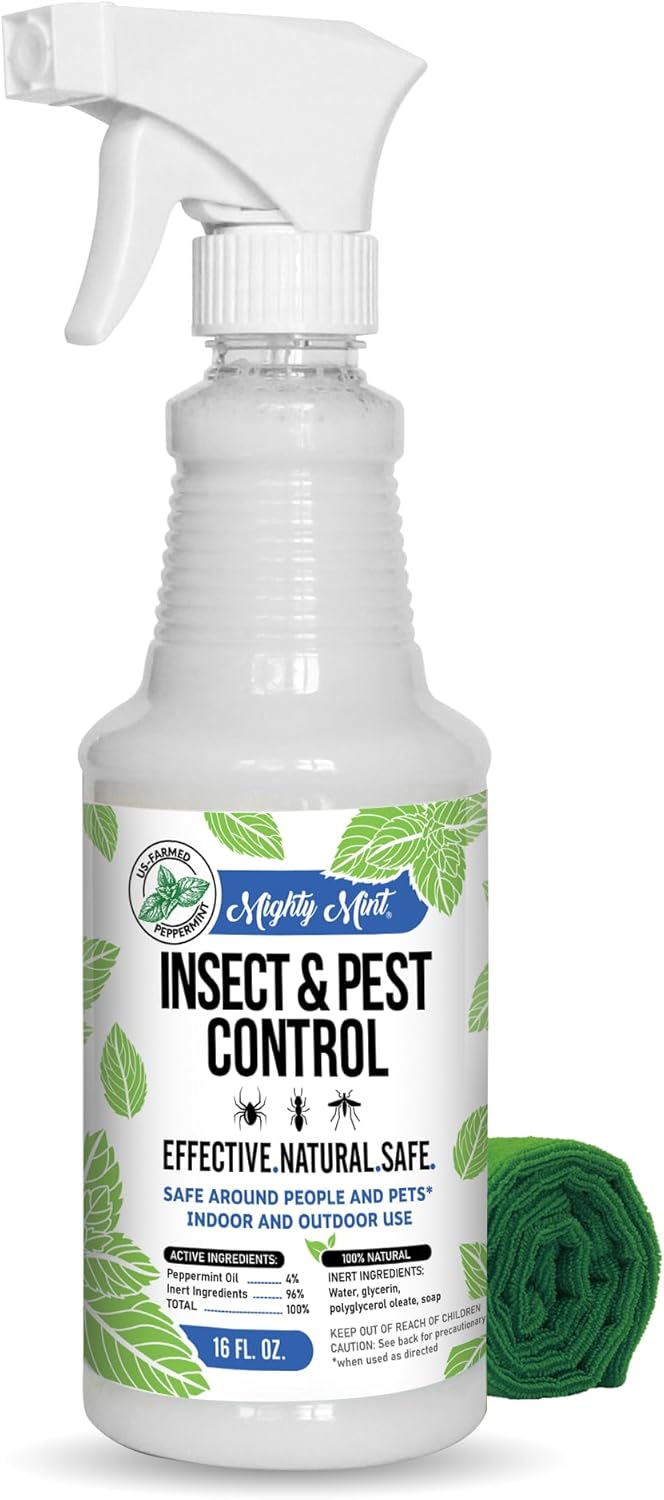
| Ingredients | Water, Glycerine, Polyglycerol oleate, Soap, Peppermint oil |
|---|---|
| Intended use areas | Indoor / Outdoor |
| Pests targeted | Spiders, ants, roaches and common insects |
| Ready-to-use size | 16 oz |
Mighty Mint is a plant-based, ready-to-use spray that uses concentrated peppermint oil to deter spiders, ants, roaches and other common pests around the house. You use it like a household spray: shake, target problem areas such as baseboards, entryways, patios and repeat treatments a couple times per week for sustained effect. The formula lists water, glycerine and soap as carriers and is free of synthetic fragrances, which helps it feel gentler than chemical insecticides and leaves a minty scent rather than harsh fumes. Practical benefits include quick targeted application from a 16 oz spray bottle, suitability for indoor and outdoor use, and nonstaining claims for most surfaces. Important limitations are that it is a repellent rather than a lethal insecticide so it may need frequent reapplication in heavy infestations, and the strong peppermint concentration can bother scent-sensitive people or pollinators if applied outdoors when they are present. Follow the safety directions to keep children and pets away until surfaces are dry and avoid topical skin contact.
Best for: Buyers who prioritize safer, plant-based pest control and want a spray they can use quickly around the home to reduce crawling insects without harsh chemical odors.
Less Ideal for: People facing a large or established infestation who need an immediate extermination solution should consider professional treatments or stronger insecticides.
- Plant-based peppermint formula that avoids synthetic pesticides and fragrances
- Ready-to-use 16 oz spray for quick, targeted indoor or outdoor application
- Formulated for use on baseboards, entryways, patios and similar surfaces without staining most materials
- Milder odor profile compared with chemical insecticides making it friendlier for households with pets or kids when used as directed
- Needs regular reapplication and is primarily a deterrent rather than a knockdown insecticide
- Strong peppermint scent may irritate scent-sensitive people and can affect pollinators if sprayed outdoors when active
Verdict: Choose this spray if you want a safer, plant-based peppermint repellent for quick indoor spot treatments that avoids strong chemical fumes.
Choosing the Right Safe Indoor Insect Repellent: Key Factors to Consider
Active Ingredients and Toxicity
Knowing what active ingredients a repellent uses is the first step to choosing a safe indoor product. Some actives are designed specifically for low-toxicity indoor use, while others are powerful neurotoxins intended for outdoor or agricultural settings. Evaluate ingredient lists for familiar low-volatile compounds or botanical actives and check whether the label explicitly states indoor suitability.
Toxicity matters for vulnerable household members. Formulations with minimal inhalation risk and low dermal irritation are better around children, pregnant people, and pets. Also consider whether the product leaves residues on countertops or fabrics; even low-toxicity actives can accumulate if used frequently.
Formulation and Delivery Method
Delivery format strongly influences exposure and convenience. Non-aerosol options such as gels, bait stations, plug-in devices, trap-and-capture units, and treated passive strips reduce airborne particles. Spray or pump formulations allow targeted application but may create fine droplets that linger in the air and settle on surfaces.
Some delivery methods provide continuous, low-level protection while others give quick knockdown and require reapplication. Think about where you will use the product: kitchens, bedrooms, living rooms, or enclosed basements each have different ventilation and surface concerns that affect which delivery method is preferable.
Target Pests and Mode Of Action
Different repellents and insect control products work best on specific pest groups. A repellent that deters flying insects might not affect crawling pests or pantry moths. Understand whether the product repels, incapacitates, or kills; repellents are generally about discouraging entry or landing, whereas control products aim to reduce existing populations.
Knowing the mode of action helps set expectations for timing and results. Repellents that disrupt insect sensory cues can prevent bites and nuisance behavior quickly, while those that interrupt feeding or reproduction reduce populations more slowly but more sustainably.
Duration and Reapplication Frequency
Duration of effect determines how often you will need to reapply or replace the device and influences overall household exposure. Longer-duration passive devices reduce the need for repeated handling and airborne sprays. Shorter-duration sprays can be appropriate for spot treatments but often require frequent reapplication, increasing cumulative exposure.
Consider whether the product lists protection hours, coverage per unit, or a recommended replacement schedule. Balance the convenience of longer protection against any tradeoffs in ingredient concentration or residue buildup.
Indoor Air Quality and Ventilation Needs
Some repellent formulations release volatile compounds that may trigger odors, respiratory irritation, or worsen indoor air pollution. If you or household members have asthma or allergies, choose products with low VOC emissions and follow ventilation guidance on the label.
Placement also matters. Devices placed in small enclosed rooms may concentrate active ingredients, while those used in well-ventilated spaces disperse more quickly. Opt for products with explicit ventilation recommendations and avoid using multiple aerosol products simultaneously in tight spaces.
Pet and Child Safety Considerations
Pets and small children are often closer to treated surfaces and the floor where residues accumulate. Choose products with childproof packaging or containment features and those that specify safety around domestic animals. Avoid leave-on sprays in areas where pets groom themselves or lie for long periods.
Also evaluate cleanup instructions and accidental exposure guidance. The best indoor options minimize the chance of ingestion or skin contact and provide clear first-aid steps if contact occurs.
How Different Formats Fit Household Routines
Match the format to how you use indoor spaces. Plug-in diffusers and passive strips work well in living rooms and bedrooms when you want continuous low-level protection without frequent handling. Bait stations and enclosed traps are good for kitchens and pantries where you want contained control and minimal residue on surfaces.
Sprays and pumps are useful for quick spot treatments, such as when you see flies or a mosquito indoors, but they demand more attention to ventilation and surface cleaning afterward. Consider whether you prefer a device that runs continuously or a product that you apply when needed.
- Plug-in devices offer steady coverage but require nearby electrical outlets.
- Enclosed baits reduce accidental contact and are suitable around pets.
- Sprays give immediate results but may leave surface residues.
Practical Placement and Room-by-Room Tips
Placement affects performance. For flying insects, position devices near windows, entryways, or where light attracts insects. For crawling pests, place baits or traps along baseboards, behind appliances, and near pantry margins.
In bedrooms, choose low-odor, low-emission options and keep devices away from bedding and sleep areas. In kitchens, use enclosed baits or traps to avoid contamination of food-prep surfaces and follow label guidance on distances from counters.
- Keep devices out of reach of children and pets.
- Replace or clean traps on the schedule recommended on the label to maintain effectiveness.
Combining Repellents With Nonchemical Measures
Nonchemical approaches reduce reliance on repellents and can make low-toxicity options more effective. Use screens on windows and doors, seal gaps and cracks, remove standing water, and store food in airtight containers to reduce attractants.
Physical traps and mechanical exclusion strategies often pair well with safer repellents. For example, sealing entry points reduces the number of insects that need to be repelled, extending the useful life of a passive device.
- Regular cleaning and decluttering remove hiding places.
- Proper food storage prevents pantry infestations that repellents do not address directly.
Minimizing Residues and Maintaining Indoor Air
After using sprays or mist devices, ventilate rooms according to label directions and wipe treated surfaces when safe to do so. For passive devices, follow replacement intervals and avoid placing them on food-contact surfaces. Routine cleaning will prevent dust and residue buildup that can collect active ingredients.
If someone in the household has respiratory sensitivity, prefer enclosed devices or targeted baits over aerosols. Monitor for odors or irritation and remove the device if symptoms appear.
- Open windows briefly after sprays to reduce indoor concentration.
- Store unused products in their original containers away from living spaces.
Read and Follow Label Instructions Carefully
Labels give the best guidance for safe indoor use, including ventilation, reapplication intervals, and first-aid steps. Even low-toxicity products can be misused; follow dose, placement, and timing instructions exactly.
When in doubt about a product's suitability for a specific room or around a pet, consult the label or manufacturer guidance before use. Clear instructions also make it easier to rotate or replace devices responsibly.
- Check for specific pest targets listed on the label.
- Follow disposal and recycling instructions for used devices.
How We Chose the Best Safe Indoor Insect Repellent
We prioritized products that are formulated and labeled for indoor use and that minimize exposure risks through lower-toxicity active ingredients, reduced volatile organic compound emissions, or non-spray delivery formats. Effectiveness against common indoor pests, such as mosquitoes, flies, ants, and stored-food insects, was measured by documented reduction times and typical coverage area claims. Longevity of protection and required reapplication intervals mattered because shorter protection can lead to more frequent indoor exposure. Ease of application and residue management were evaluated to reflect real household routines, including use around children and pets. We excluded outdoor-only formulations, agricultural pesticides, foggers intended for unoccupied spaces, and products that require professional installation or ventilation beyond normal household airflow. Safety documentation and ingredient transparency were important filters; products without clear ingredient lists or with labeling that contradicts indoor use were eliminated. Our criteria emphasize measurable pest reduction, clear safety guidance, low emission or contained delivery systems, and straightforward cleanup or removal.
FAQ
Are botanical repellents safe to use indoors?
Botanical actives can be lower in toxicity, but safety depends on formulation and concentration. Some botanical oils are strong irritants and may affect sensitive household members. Choose products labeled for indoor use and follow ventilation guidance.
How long should an indoor repellent remain active before replacement?
Duration varies by format and product. Passive devices often list weeks to months of protection, while sprays may last hours to days. Follow the product's stated coverage or replacement schedule and consider room size when estimating performance.
Can I use multiple indoor repellents at the same time?
Using several products simultaneously can increase airborne compounds and residues, which may raise exposure risks. It usually makes sense to use a single, appropriate format and supplement with nonchemical measures rather than layering multiple products.
What should I do if household members have asthma or allergies?
Opt for low-VOC, enclosed, or passive devices and avoid aerosol sprays. Ensure adequate ventilation after using any spray products and monitor for irritation. If symptoms persist, discontinue use and consult a healthcare professional.
Are bait stations safe around pets and children?
Enclosed bait stations reduce direct contact risk, but placement matters. Keep bait stations out of reach and follow label instructions for placement and disposal. If ingestion or exposure is suspected, follow the product's first-aid directions.
Final Verdict
When selecting a safe indoor insect repellent, prioritize indoor suitability, low inhalation risk, and a delivery method that fits your household routine. Balance effectiveness against the pests you actually encounter with how often you want to handle or replace the product. Consider combining a safer repellent format with exclusion and sanitation measures to minimize chemical use. Focus on clear labels, explicit indoor-use instructions, and products that limit airborne emissions or surface residues. That approach helps you reduce insect problems while protecting indoor air quality and the health of family members and pets.
